
ADL STRATOS DAC Review
ADL – Alpha Design Labs, a brand from the renowned Furutech Group of Japan, has recently unveiled the formidable STRATOS DAC. Hot off the production line, it was immediately dispatched to HiFiReport for a first-listen review. ADL’s desktop DAC lineup now features two models: the GT40α and the latest STRATOS. While the GT40α was already a highly versatile USB DAC, the STRATOS elevates functionality even further, becoming a veritable audio Swiss Army knife.
Building upon the GT40α’s impressive features – DAC/ADC, Phono Stage, headphone amplifier, and recording – the STRATOS boasts enhanced internal components, expanded connectivity, and support for higher-resolution formats. These upgrades include balanced analog outputs, 4x DSD playback, balanced headphone amplifier output, and a broader range of digital inputs, offering users unparalleled flexibility and versatility.
Multifunctional Design Beyond DAC
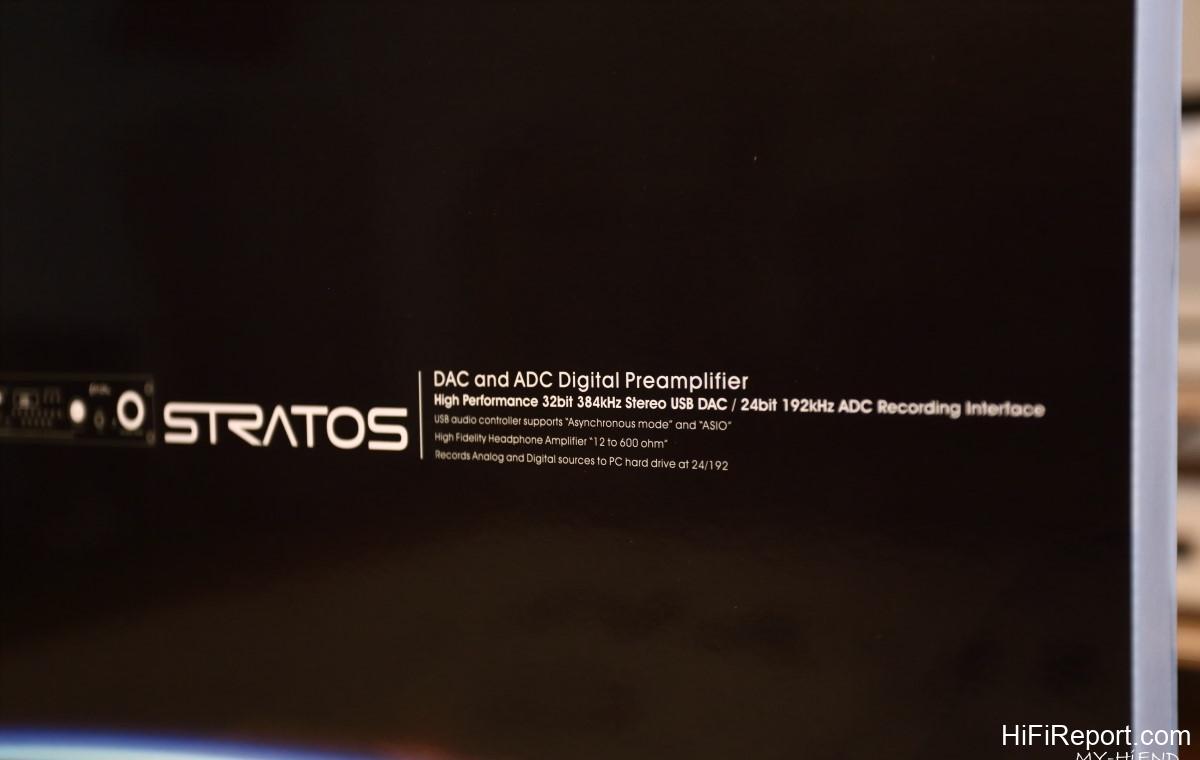
The STRATOS is brimming with features and power. The packaging proudly proclaims its DAC/ADC capabilities, pre-amplifier functionality, support for up to 32-bit/384kHz USB DAC input, a 24-bit/192kHz ADC recording module, and a headphone amplifier output capable of driving headphones with impedances ranging from 12 to 600 ohms.
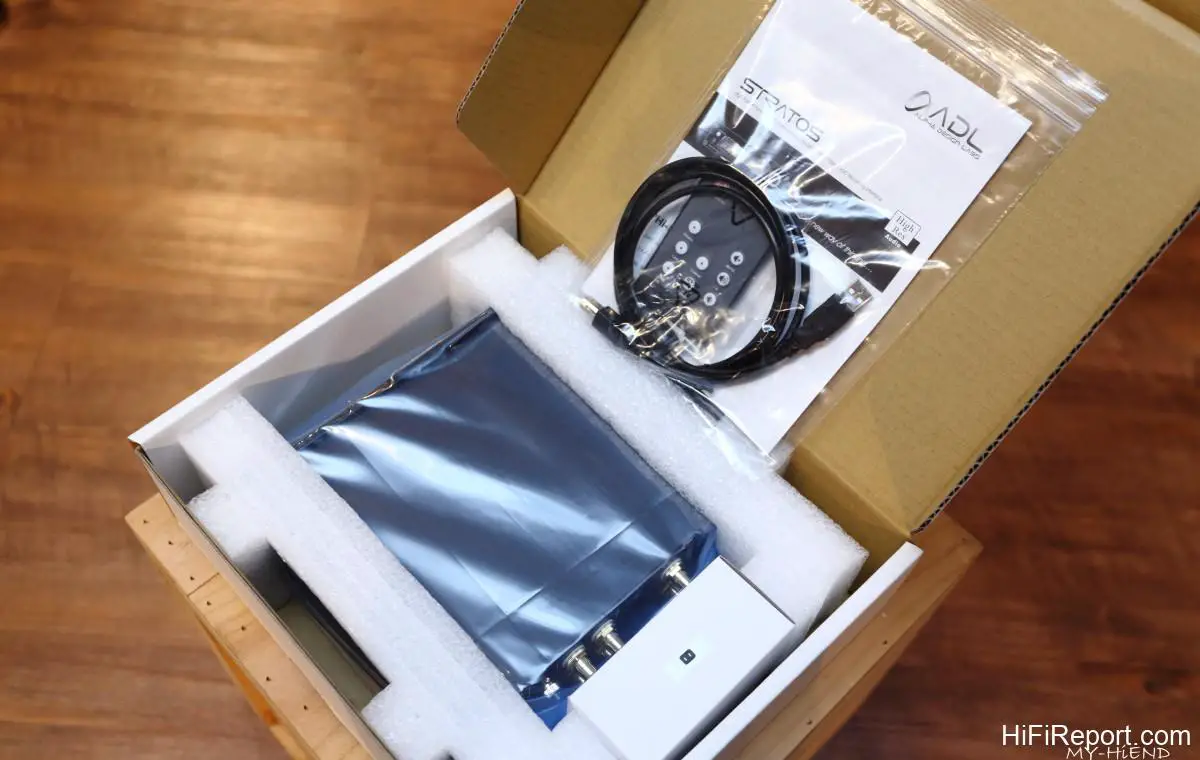
Upon unboxing, the accessories include a remote control, instruction manual, a USB cable, and an AC/DC power adapter. ADL employs a dual power supply approach: the USB chip draws power directly from the USB connection, while the provided AC/DC adapter, plugged into mains power, converts AC to 15V/800mA/12W DC to power all other input sources and amplification circuitry.
The manual’s cover prominently features “Hi-Res Audio,” underscoring its high-resolution music capabilities, and also highlights the included dedicated remote control.
Balanced Headphone and S/PDIF Inputs
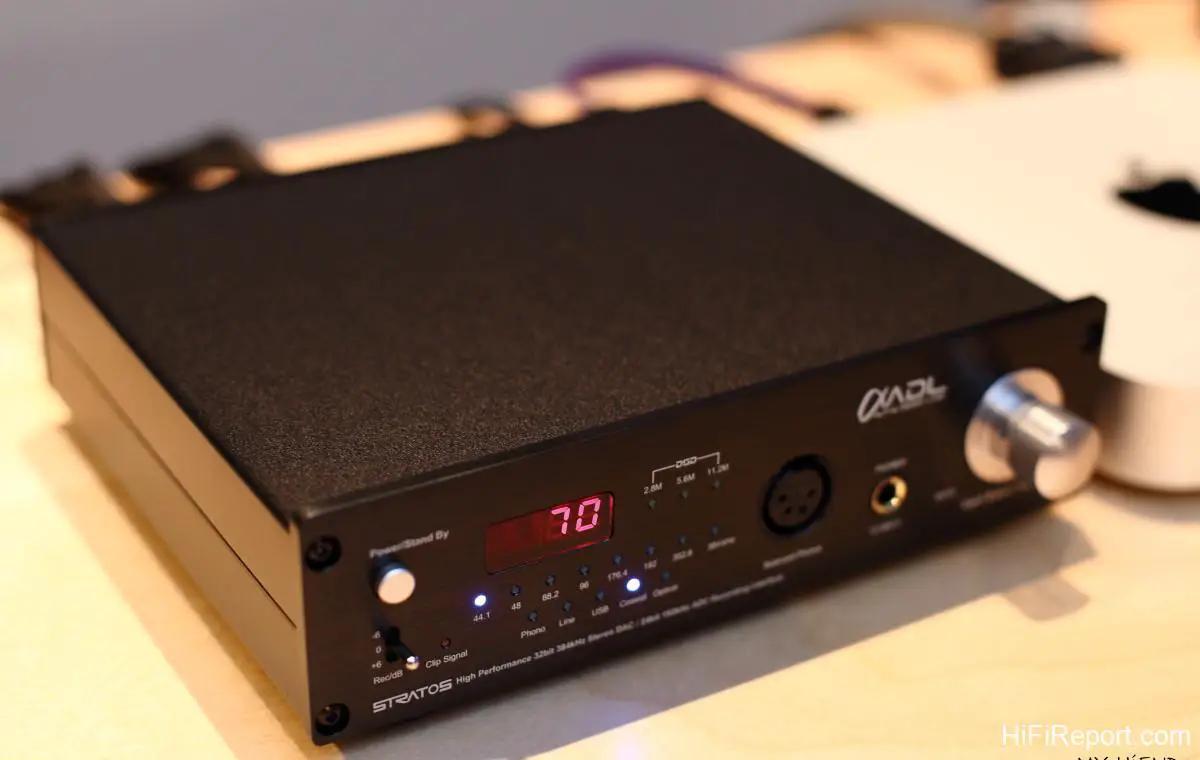
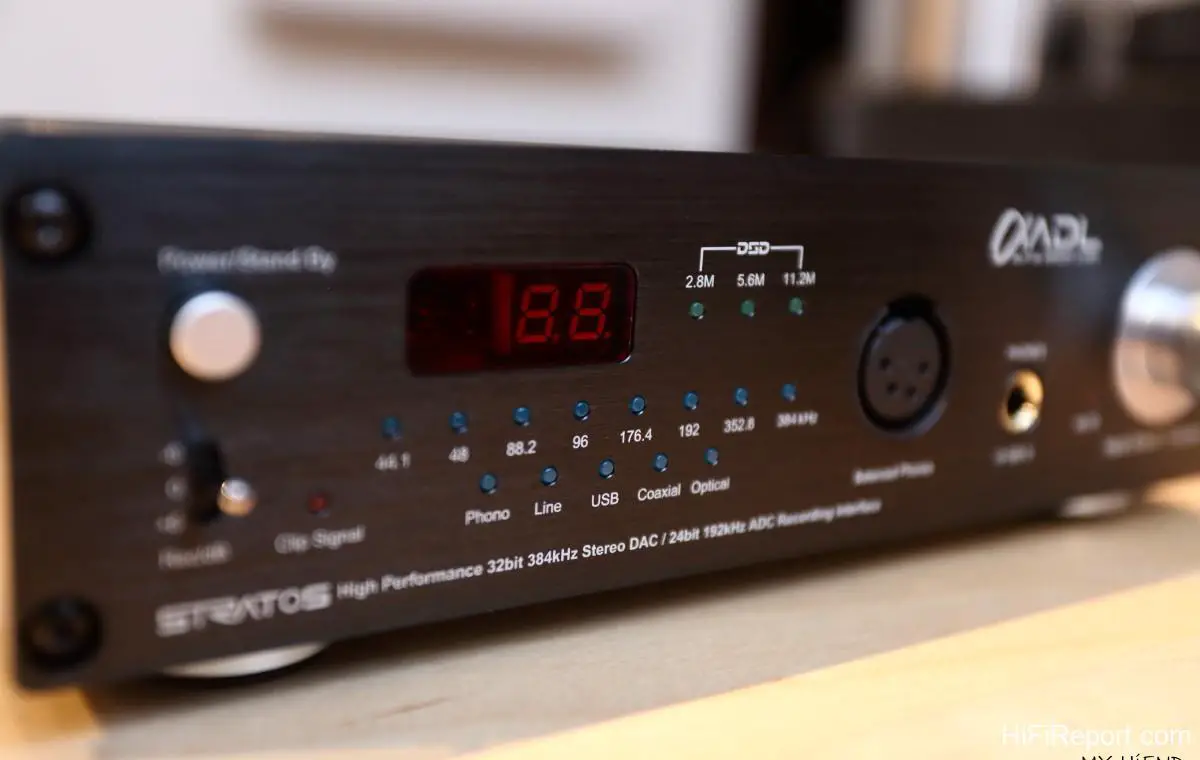
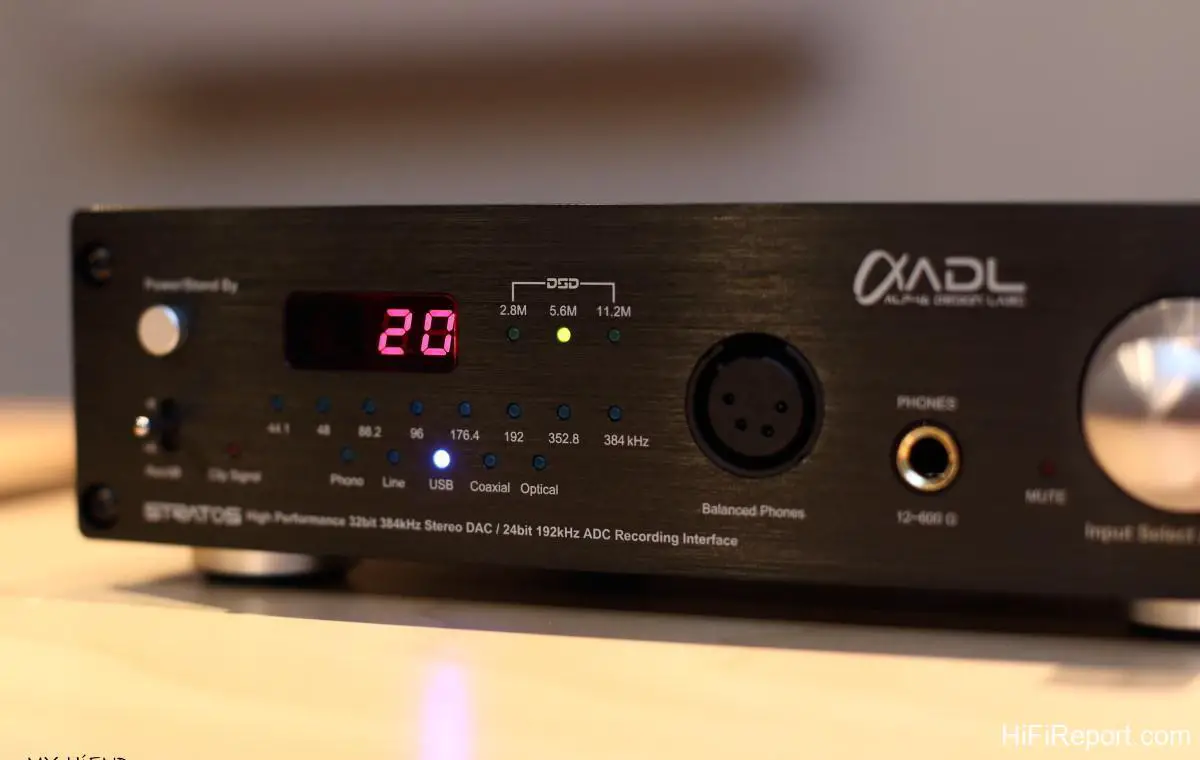
The front panel of the STRATOS reveals a prominent volume/input selector knob, utilizing a high-quality MUSES72320 electronic volume control. It features dual headphone outputs: a standard 6.3mm jack and a balanced XLR (4-pin) output. To the left, indicator lights display the extensive range of music sampling rates supported by the STRATOS, encompassing PCM up to 384kHz and 4x DSD files up to 11.2MHz.
Input options are comprehensive, including Phono, Line-level analog, USB digital, Coaxial digital, and Optical digital. A ±6dB recording gain adjustment is also available.
A front panel display primarily indicates the volume level. Beyond its headphone amplifier function, the STRATOS also operates as a pre-amplifier, with independent volume memory for each input source.
High-Resolution Audio Support
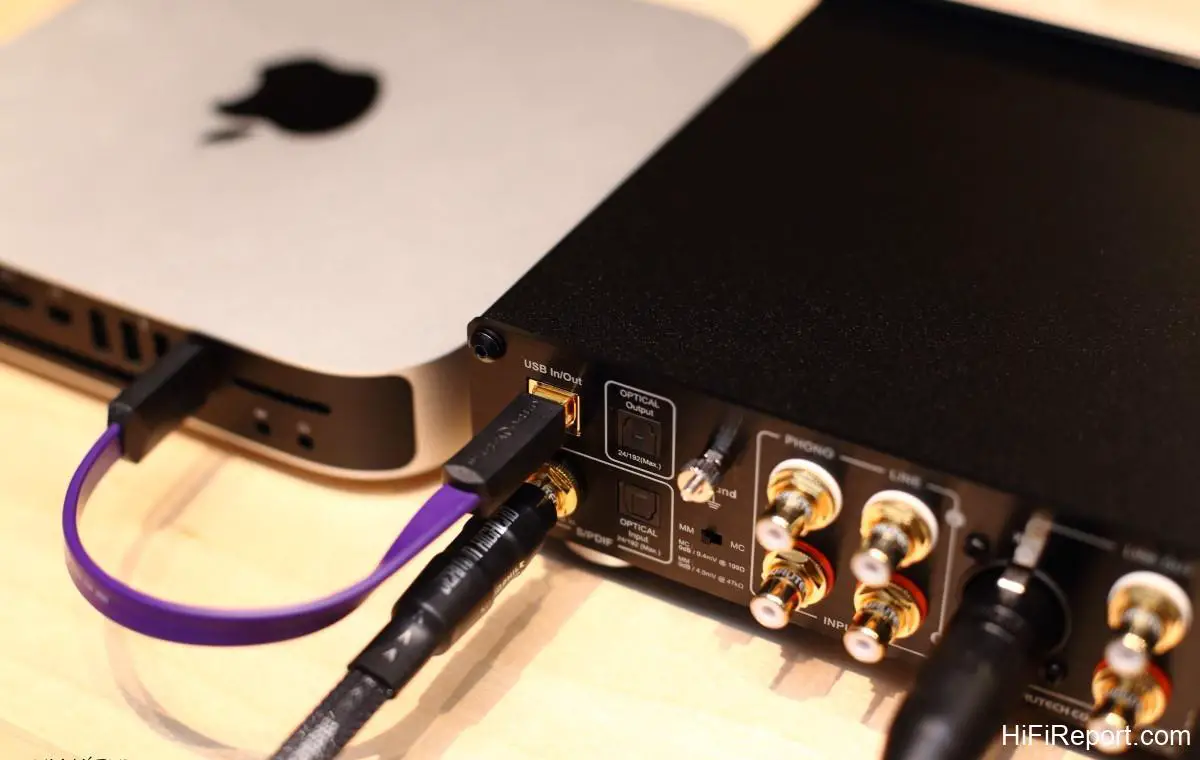
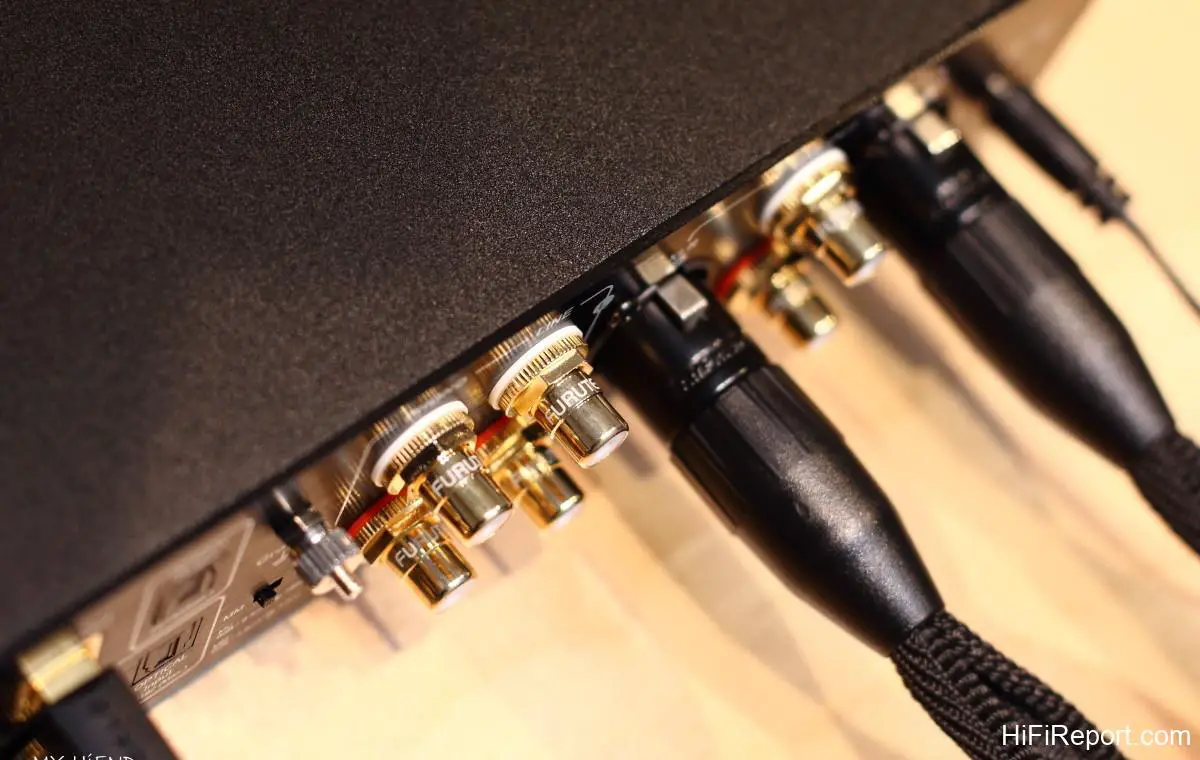
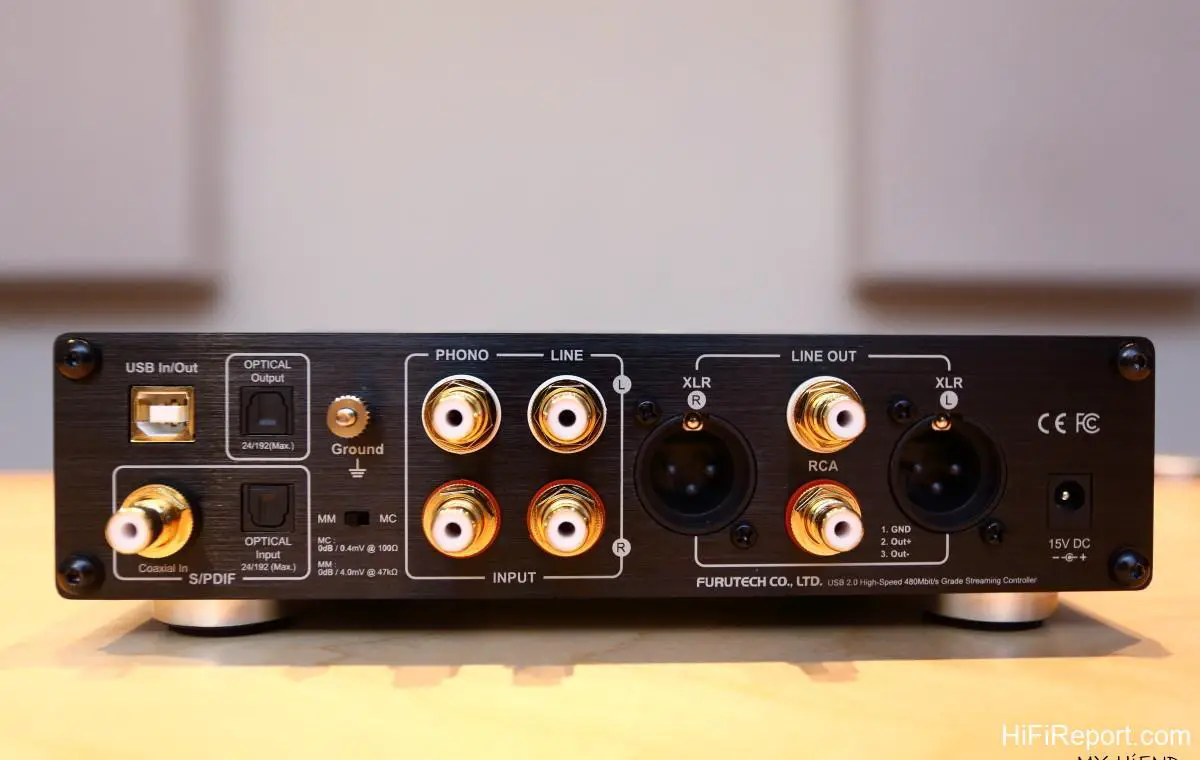
Examining the rear panel reveals both RCA and XLR analog outputs. Balanced output is a new addition for the STRATOS, as the GT40α only offered RCA outputs. Analog inputs include Phono and Line-level, with the Phono input offering MM/MC compatibility for different cartridge types, along with a grounding post. The Phono input can be paired with the recording function to digitize vinyl collections for computer-based management. The Line-in can also be utilized for ADC recording.
While the GT40α only provided USB digital input, the STRATOS expands digital connectivity with coaxial and optical inputs, supporting up to 24-bit/192kHz. The USB port serves for both input and output, utilizing a high-speed XMOS integrated chip. Input supports up to 32-bit/384kHz and 4x DSD files, while output is employed during recording to transfer data to a computer. An optical digital output, also supporting up to 24-bit/192kHz, is also included.
Versatile Functionality: DAC, ADC, Phono & Recording
The STRATOS employs the high-performance ESS ES9018K2M SABRE32 Reference Stereo DAC chip. The SABRE-2M DAC is an audiophile-grade component, supporting up to 32-bit/384kHz and commonly found in professional recording systems, mixing consoles, and digital audio workstations. Coupled with ESS’s advanced DAC architecture and Time Domain Jitter Eliminator technology, this chip delivers exceptional audio performance.
For analog-to-digital conversion, the STRATOS utilizes the CS5340 ADC chip, capable of converting analog inputs into digital files at resolutions up to 24-bit/192kHz. In its amplification circuitry, the STRATOS uses TI NE5532 OP Amps for Line, ADC, and DAC stages, and JRC NJM2068DD OP Amps for the Phono stage.
All of the STRATOS’s features are user-friendly and highly practical. In our testing, we had a Mac computer connected alongside a turntable, and even a CD player via coaxial and optical inputs. Headphones could be connected at any time. Despite its compact footprint, the STRATOS offers a wealth of possibilities. Connecting the STRATOS to a Mac is plug-and-play, while Windows users will need to download drivers from the official website.
Notably, when headphones are connected, the two-channel Line Out automatically mutes, preventing simultaneous speaker and headphone output.
The STRATOS utilizes Furutech’s renowned Teflon-insulated, gold-plated connectors throughout, including FP-900 RCA and FT-783M XLR terminals.
Plug-and-Play USB and ASIO Support
Practical testing with a USB connection to a Mac confirmed plug-and-play asynchronous transmission. Simply selecting “STRATOS” as the audio output in the computer’s sound settings is all that’s required. For Windows systems, driver installation is necessary, utilizing the ASIO protocol.
Upon USB connection, the Mac immediately recognized the ADL STRATOS. Simply select it as the output device.
Using Audirvana playback software, DSD music files played flawlessly right away. If DSD albums are not recognized, it’s likely due to synchronization settings with iTunes, as iTunes is incapable of DSD playback. Ensure synchronization is disabled and configure Audirvana to directly access your music library.
The STRATOS intelligently detects the incoming signal format and illuminates the corresponding indicator lights.
High-Performance Headphone Amplification with Balanced Output
For late-night listening sessions without disturbing others, headphones are the perfect solution. The STRATOS provides two headphone output options: a standard 6.3mm jack and a balanced XLR (4-pin) output. The headphone amplifier stage in the STRATOS utilizes three TI TPA6120A2 amplifier chips. Two are dedicated to the XLR balanced output, one per channel, while the third drives the 6.3mm stereo headphone output.
The TI TPA6120A2 is officially rated to drive headphones with impedances ranging from 12 to 600 ohms, boasting a dynamic range exceeding 120dB.
The STRATOS offers selectable phono stage gain for both Moving Magnet (MM) and Moving Coil (MC) cartridges. The phono stage circuitry employs JRC NJM2068DD OP amplifier chips.
Proper grounding when using a turntable can dramatically reduce hum and extraneous noise. Beneath the grounding post, a switch allows selection between MM and MC cartridge types, with clear labeling of voltage and impedance settings.
Pairing a THORENS turntable with the STRATOS yielded a remarkably clean yet warmly analog sound.
The ADL STRATOS is incredibly versatile. I auditioned this remarkably cost-effective multi-functional DAC extensively, connecting CD players, computers, turntables, and headphones. Regardless of the source, certain consistent qualities emerged: a pristine background, pure and uncolored sound, and consistently smooth, stable playback, all delivered with a sense of composure and precision.
Pristine Background and Engaging Sound
Starting with the Burlesque soundtrack played through a K-07 CD player, the STRATOS exhibited a neutral sonic character, devoid of overt warmth, maintaining a clean presentation without sounding clinical. For tracks with fast tempos and intricate arrangements, the STRATOS delivered with commendable clarity, smooth pacing, and tonal balance. Even during Christina Aguilera’s powerful vocal peaks, there was no hint of harshness or stridency.
The punchy mid-bass frequencies were rendered with agility and remained well-integrated with the vocals, creating a harmonious balance.
Faithful to the Source
Moving to Diana Krall’s *Live In Paris*, the sonic presentation shifted, revealing a more analog-like recording quality compared to the *Burlesque* soundtrack. The sound became richer and more substantial, enhancing long-term listenability, while still maintaining excellent clarity, capturing subtle nuances within the recording. On “Deed I Do,” the third track, a more upbeat and dynamic piece, the opening piano accompaniment was rendered with agility and brilliance.
The mid-section instrumental passages, characterized by rapid tempos, complexity, and intricate details, were reproduced with natural ease and spaciousness, even within the tightly arranged rhythm, making for an engaging and fatigue-free listening experience.
Engaging Phono Performance with Pristine Sound
Switching to vinyl playback with Stockfisch Records’ *VINYL COLLECTION*, compared to CD playback, the sound acquired a touch more analog richness while retaining its pristine clarity. This exceptionally well-recorded album revealed even more precise soundstage delineation.
For example, on the opening track, “NO SANCTUARY HERE,” the spatial rendering of the guitar was outstanding, showcasing at least three distinct layers of depth within the soundstage, from the lead vocals and harmonies to the instrumental accompaniment. Having also heard the CD versions of “STARS” (track 2) and “CARUSO” (track 4), both produced by Stockfisch Records, the vinyl versions presented notable differences.
Notably, on “CARUSO,” the vinyl version offered a more natural and appropriately sized sonic image compared to the CD, which sounded slightly overblown. Furthermore, the vinyl version surprisingly exhibited an even quieter background than the CD counterpart.
High-Resolution USB Playback and Source Transparency
Subsequently, I switched to a Mac Mini for playback, revisiting Diana Krall’s *Live In Paris*. Playing the same 44.1kHz files via the Mac revealed a subtle shift in sonic character – the sound became more refined, cleaner, and transparent. The piano accompaniment, for instance, gained a touch of brilliance, though perhaps sacrificing a hint of the analog warmth experienced with CD playback.
Moving to Reference Recordings’ *2011 HRx SAMPLER*, a 24-bit/176.4kHz high-resolution file, the higher bit depth and sampling rate demonstrably enhanced dynamic range and sonic density, enriching the overall listening experience.
Later listening through Sennheiser HD 800 headphones made the benefits of higher sampling rates even more apparent, revealing greater subtlety and detail retrieval, including a barely audible cough around the 10-second mark of the 9th track, a detail I had previously missed, even with other headphones.
Ample Headphone Drive and Neutral Presentation
Through headphone listening, I clearly discerned that regardless of the sampling rate, the initial sonic impression of different albums immediately conveyed whether they were worth continued listening. The differences in listening experience between albums were readily apparent – not subtle nuances, but rather fundamental sonic distinctions discernible within just 10-15 seconds of playback.
This demonstrates the STRATOS’s remarkable fidelity in revealing the inherent qualities of the source material. Indeed, the 24-bit/176.4kHz Reference Recordings albums auditioned exhibited demonstrably superior sonic quality compared to other albums of standard 16-bit/44.1kHz CD resolution.
For instance, listening to Jack Johnson’s *From Here To Now To You* and the *Kung Fu Hustle* soundtrack immediately revealed their sonic superiority, characterized by exceptional clarity, density, and balance.
Conclusion & Specifications
The ADL STRATOS DAC is an incredibly versatile piece of equipment, catering to a wide array of user needs with its diverse functionalities. Its support for high-resolution formats, including PCM up to 32-bit/384kHz and 4x DSD, is beyond reproach. Users need not question the STRATOS’s capabilities; the only concern is whether they can source music software of sufficient resolution to truly unlock its full potential.
With the increasing convenience of digital music, listening habits have evolved. While the ritual of browsing a vast vinyl collection remains a pleasure, sometimes a more streamlined listening experience is desired. The STRATOS’s excellent ADC empowers users to explore the world of audio recording, digitizing their vinyl collections for convenient computer-based access.
ADL has also invested considerable effort in the STRATOS’s headphone amplification stage, offering not only a standard 6.3mm output but also a dedicated XLR balanced headphone output, catering to more demanding audiophiles. Ultimately, the STRATOS provides enthusiasts with a wealth of features, clean, transparent, and faithful sound reproduction, and exceptional value for its price.
**Specifications**
* DAC Chip: ESS ES9018K2M SABRE32 Reference Stereo DAC
* ADC Chip: Cirrus Logic CS5340
* OP Amp Chips: TI NE5532, JRC NJM2068DD
* Headphone Amp Chips: TI TPA6120A2
* Digital Inputs: USB, Coaxial, Optical
* Analog Inputs: Line RCA, Phono RCA (MM/MC)
* Analog Outputs: Line RCA, XLR
* Digital Output: Optical
* Headphone Outputs: 6.3mm, XLR (4-pin)
* USB Input Maximum Support: PCM 32-bit/384kHz, DSD 11.2MHz
* Coaxial, Optical Input Maximum Support: 24-bit/192kHz
* Optical Output Maximum Support: 24-bit/192kHz
* Headphone Impedance: 12 ohm ~ 600 ohm