
Aesthetix Rhea Vacuum Tube Phono Preamplifier Review
Jim White, the driving force behind Aesthetix, has been an audiophile since childhood. His passion for audio magazines and, particularly, vinyl records began at the age of 13. After earning degrees in physics, mathematics, and electrical engineering, he joined Theta Digital in 1990. He played a key role in designing products like the Theta Casablanca and Dreadnaught. However, his love for analog audio never waned, and he continuously experimented with audio equipment design.
In 1993, Jim designed his first large-scale vacuum tube phono preamplifier in his garage, achieving instant success and marking the birth of Aesthetix.
The Jupiter series, Io phono stage, and Callisto preamplifier are all classic Aesthetix products. Later, the Saturn series was introduced, offering an even more comprehensive range. The Rhea phono preamplifier, reviewed here, is a member of the Saturn series. Rhea is a vacuum tube phono preamplifier, and vacuum tubes have always been Jim’s favorite. Its comprehensive specifications and settings make it compatible with various MC/MM cartridges, with a maximum gain of up to 75dB.
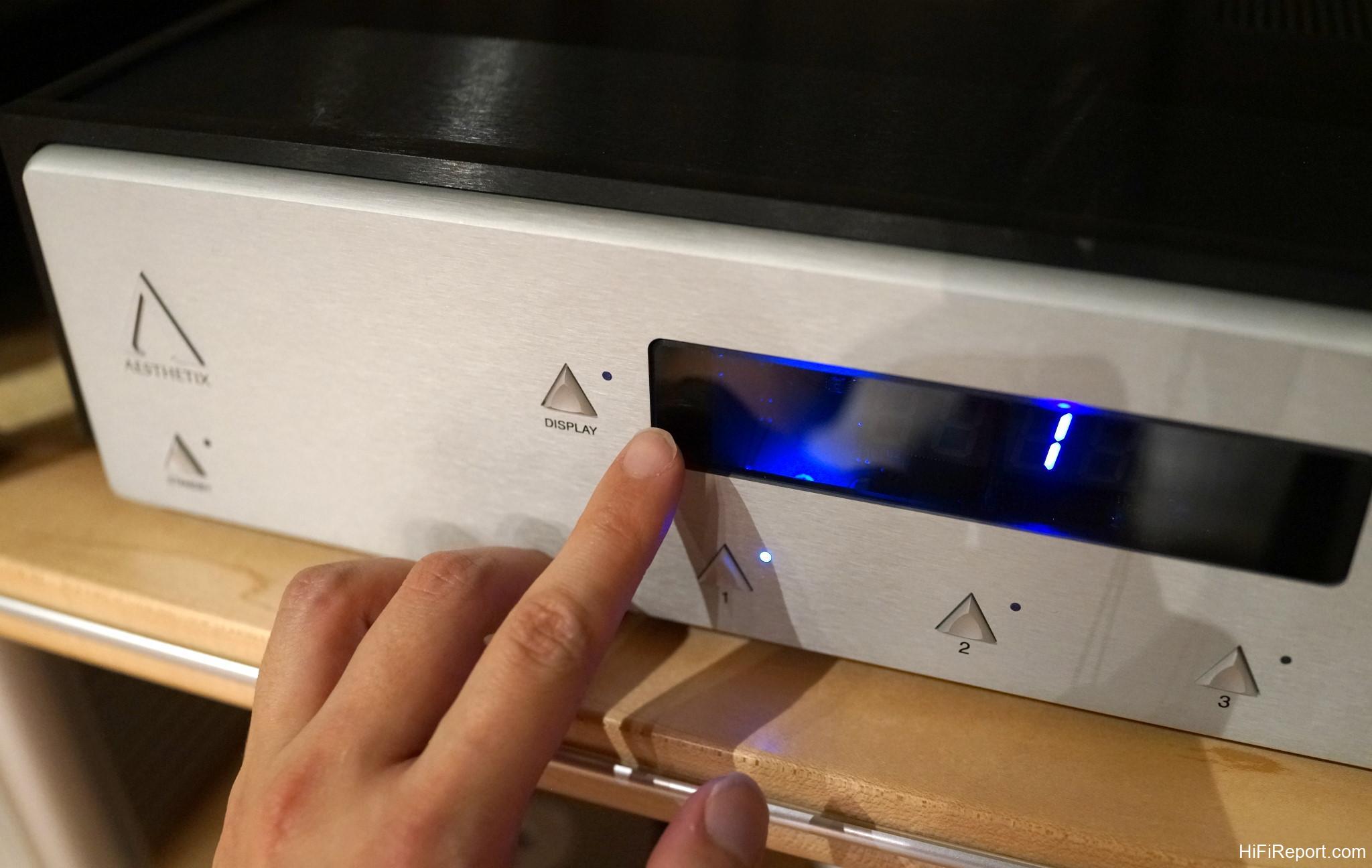
Rhea features three phono inputs, each with individually adjustable and memory-saved gain and impedance settings. This is incredibly convenient and cost-effective for users with multiple tonearms and cartridges, eliminating phono stage setup hassles. All functions can be operated via remote control. The dual-mono circuit design provides excellent channel separation and soundstage, and it also incorporates a built-in cartridge demagnetization function.
The user manual is crucial and contains many important operational details. A digital version can also be downloaded from the official website.
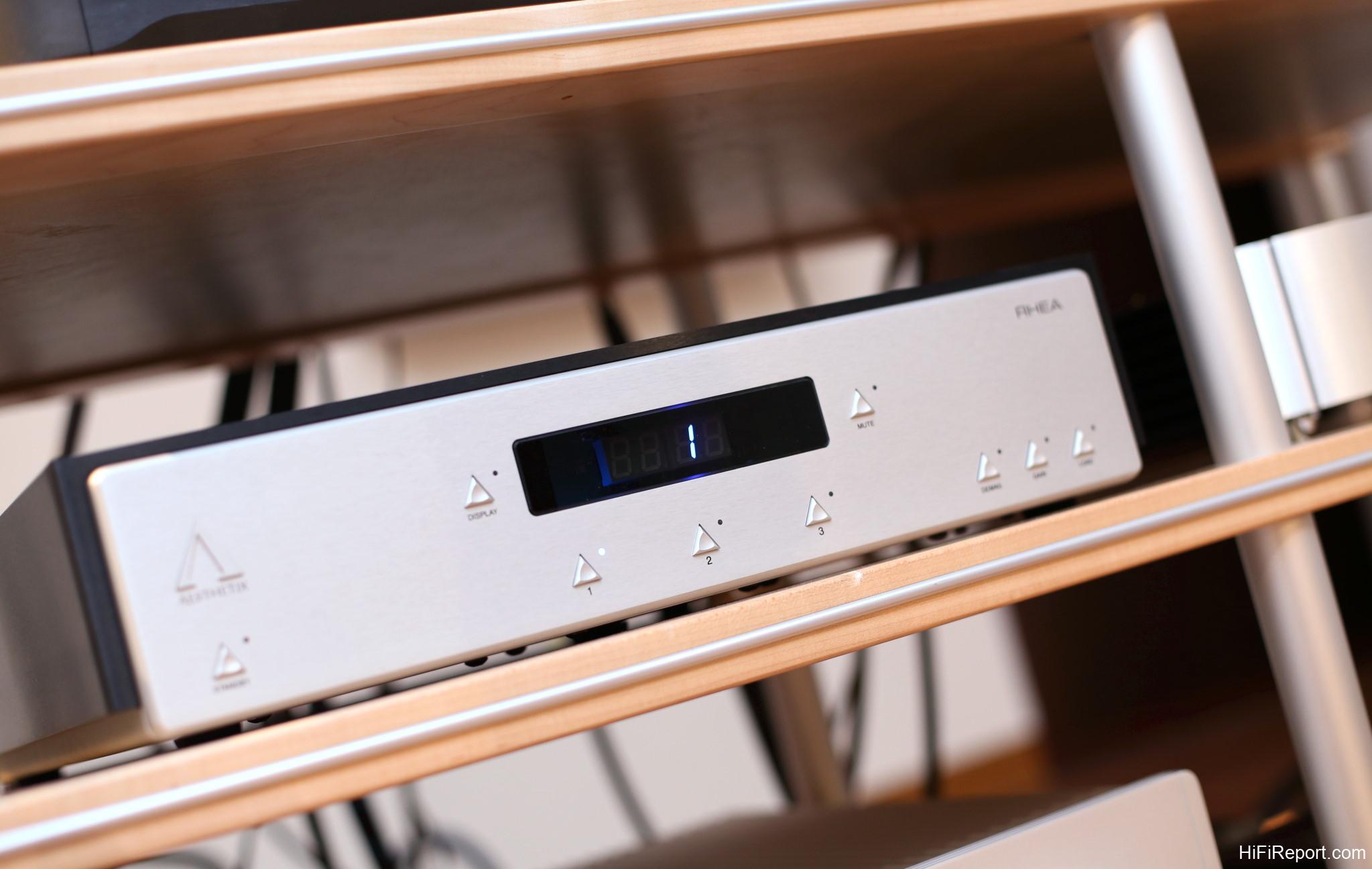
The buttons feature the same triangular design as the Aesthetix logo, making operation quite intuitive. Below the screen are buttons for switching between the three phono inputs (1, 2, 3). The gain and impedance for each input can be set and automatically memorized separately, which is very convenient. To the left of the screen is the DISPLAY button for brightness control, and to the right is the MUTE button, particularly useful in vinyl systems, for example, when changing records.
The three buttons on the bottom right are for DEMAG (demagnetization), GAIN, and LOAD (impedance) settings.
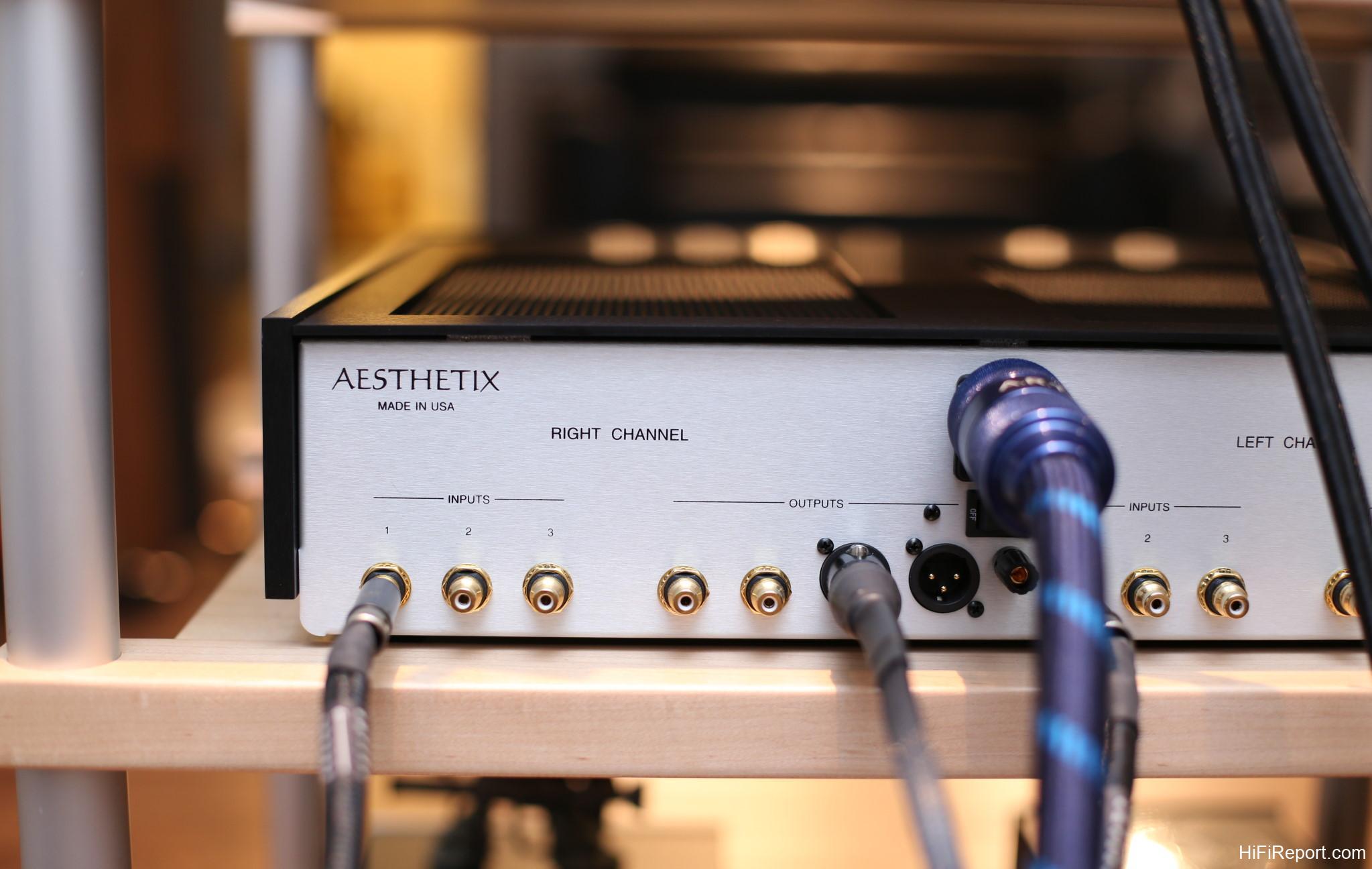
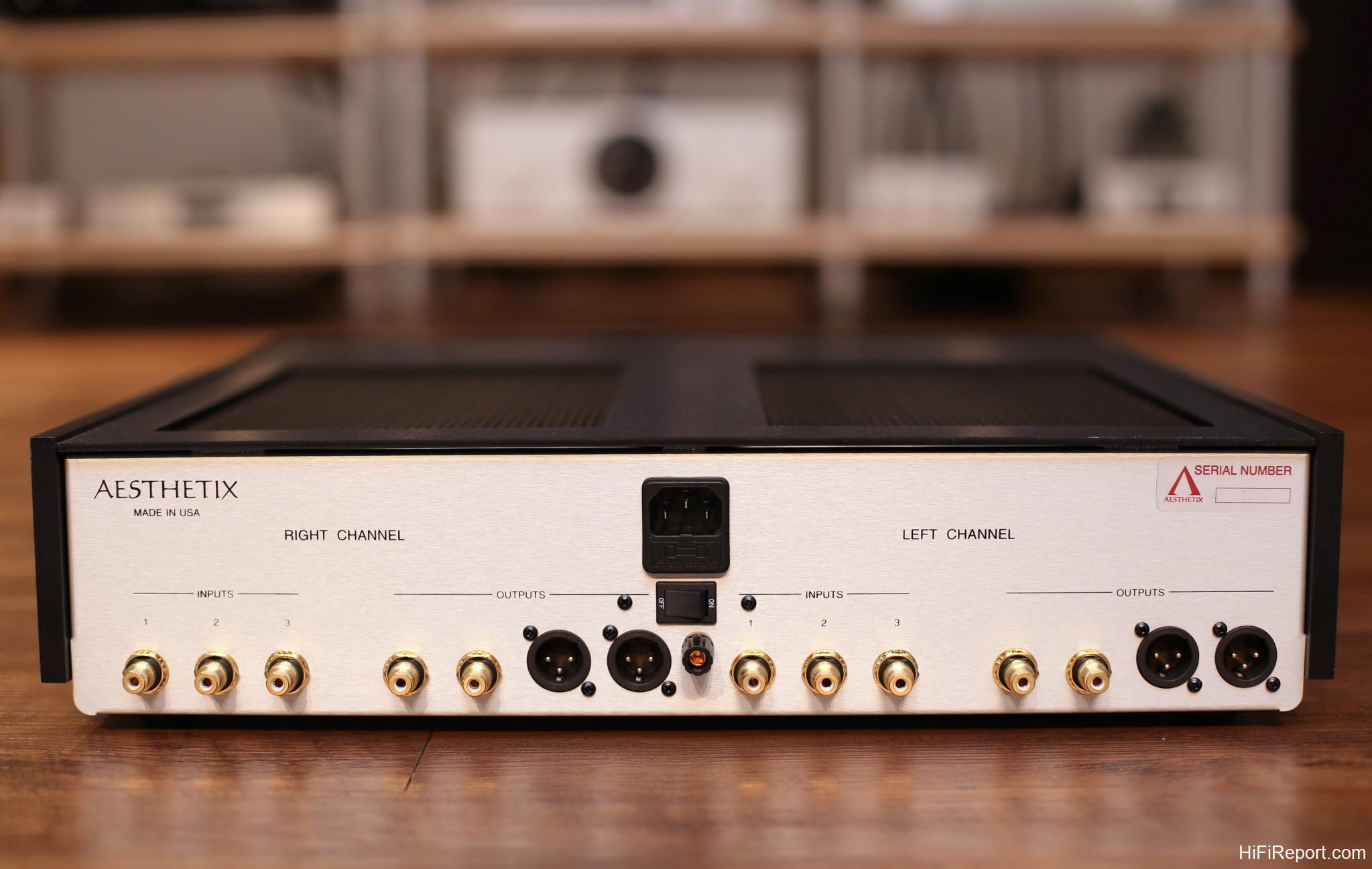
The rear panel features three RCA inputs, and outputs include two RCA sets and two XLR balanced sets. The XLR balanced output is 6 dB higher than the RCA output. Below the power socket is the ground terminal.
Circuit Analysis: Tube Hybrid Design
Rhea employs a hybrid circuit design, blending transistors and vacuum tubes. It utilizes an advanced microprocessor that can be completely deactivated when not in use, ensuring no impact on the audio signal. The power supply section uses a high-voltage output transformer and a high-current choke transformer, shielded in stainless steel.
Rhea’s components are carefully selected, including Roederstein resistors, RelCap film capacitors, Mercury Magnetics transformers, and Nichicon audio-grade electrolytic capacitors.
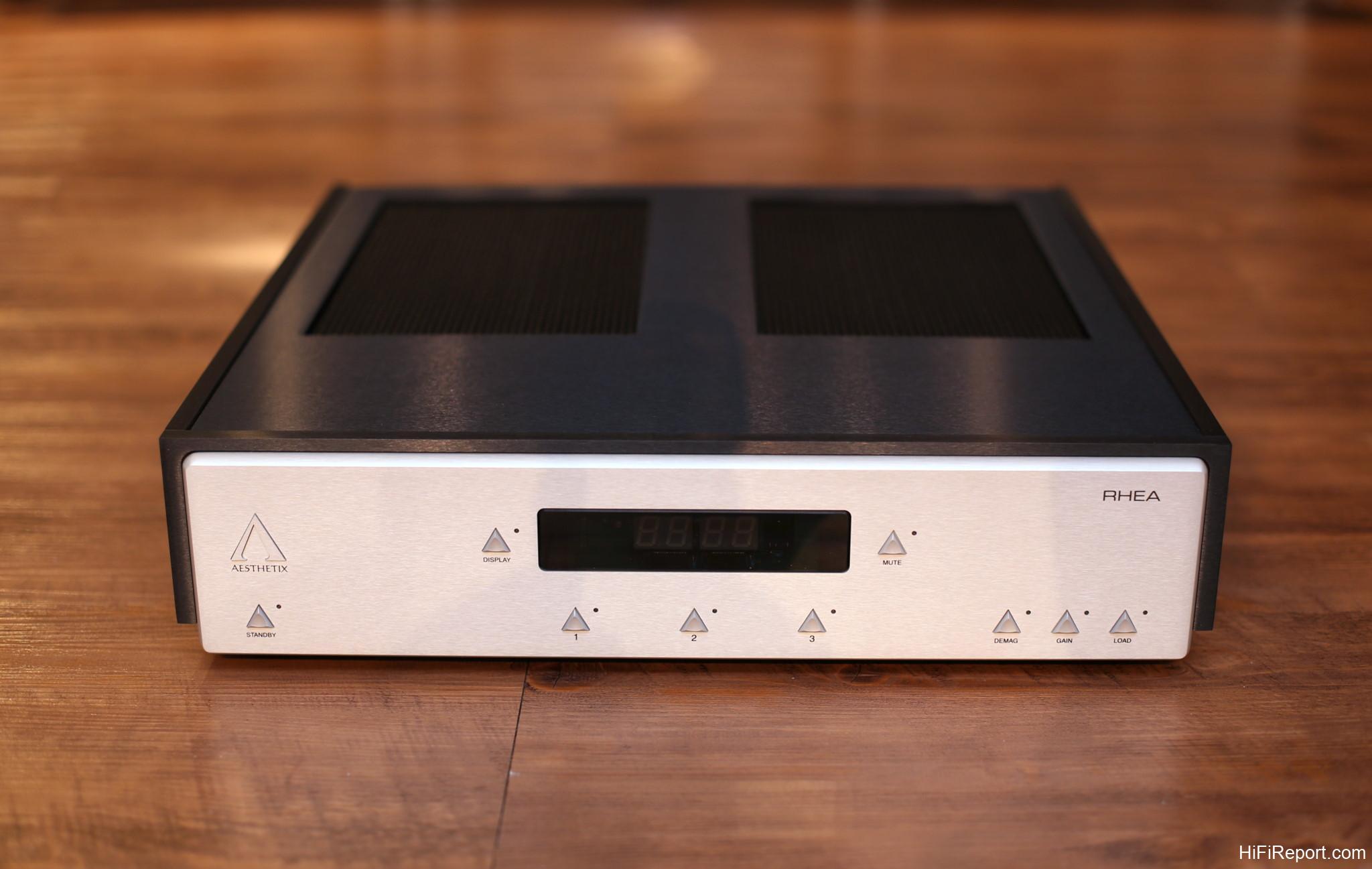
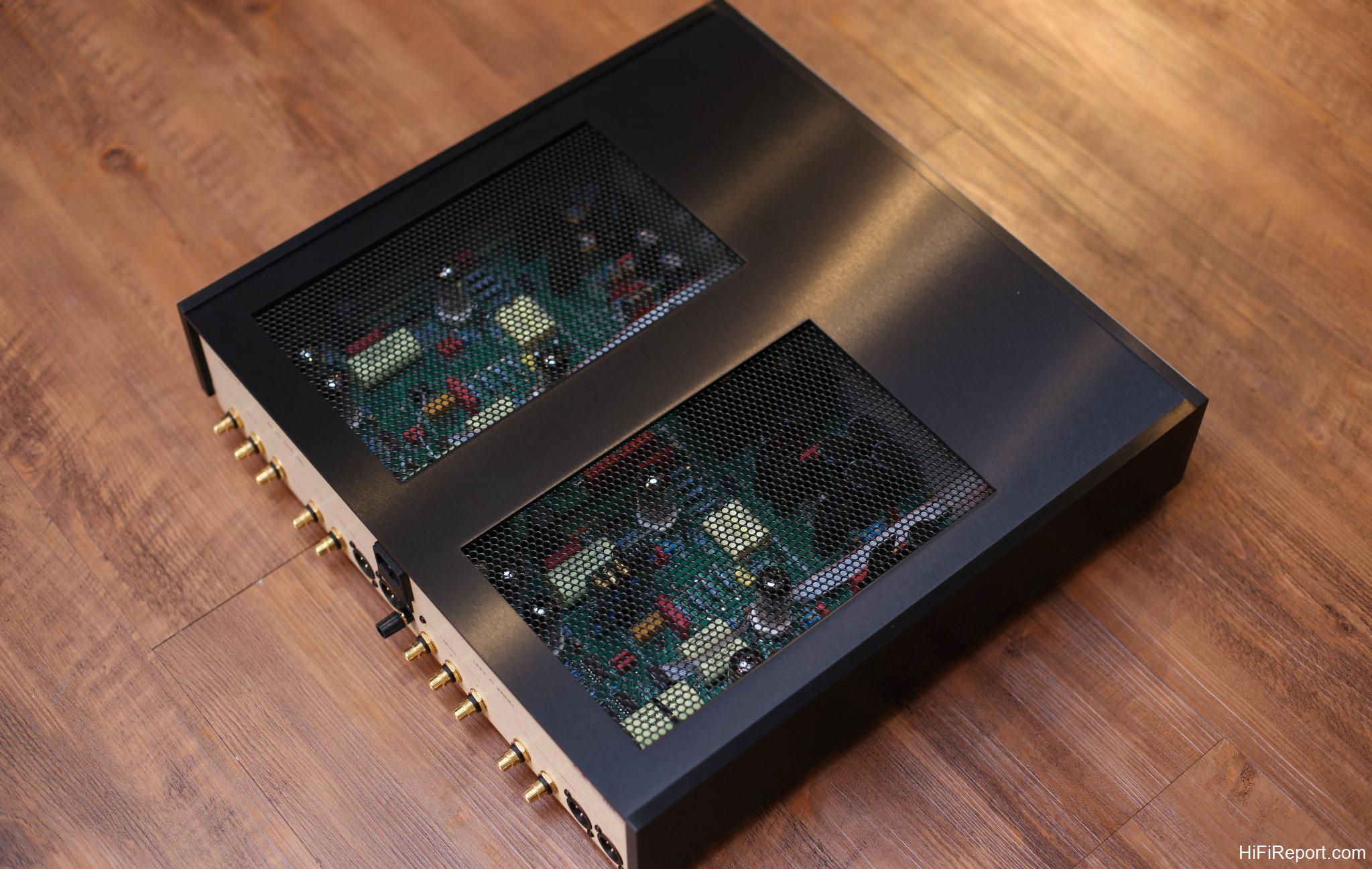
Due to its vacuum tube amplification, the unit operates at a higher temperature. The top panel features a mesh for heat dissipation. Users should ensure adequate ventilation when placing the unit, avoiding enclosed or stacked configurations.
Damping materials are strategically placed to absorb vibrations, highlighting attention to detail crucial for achieving excellent sound quality.
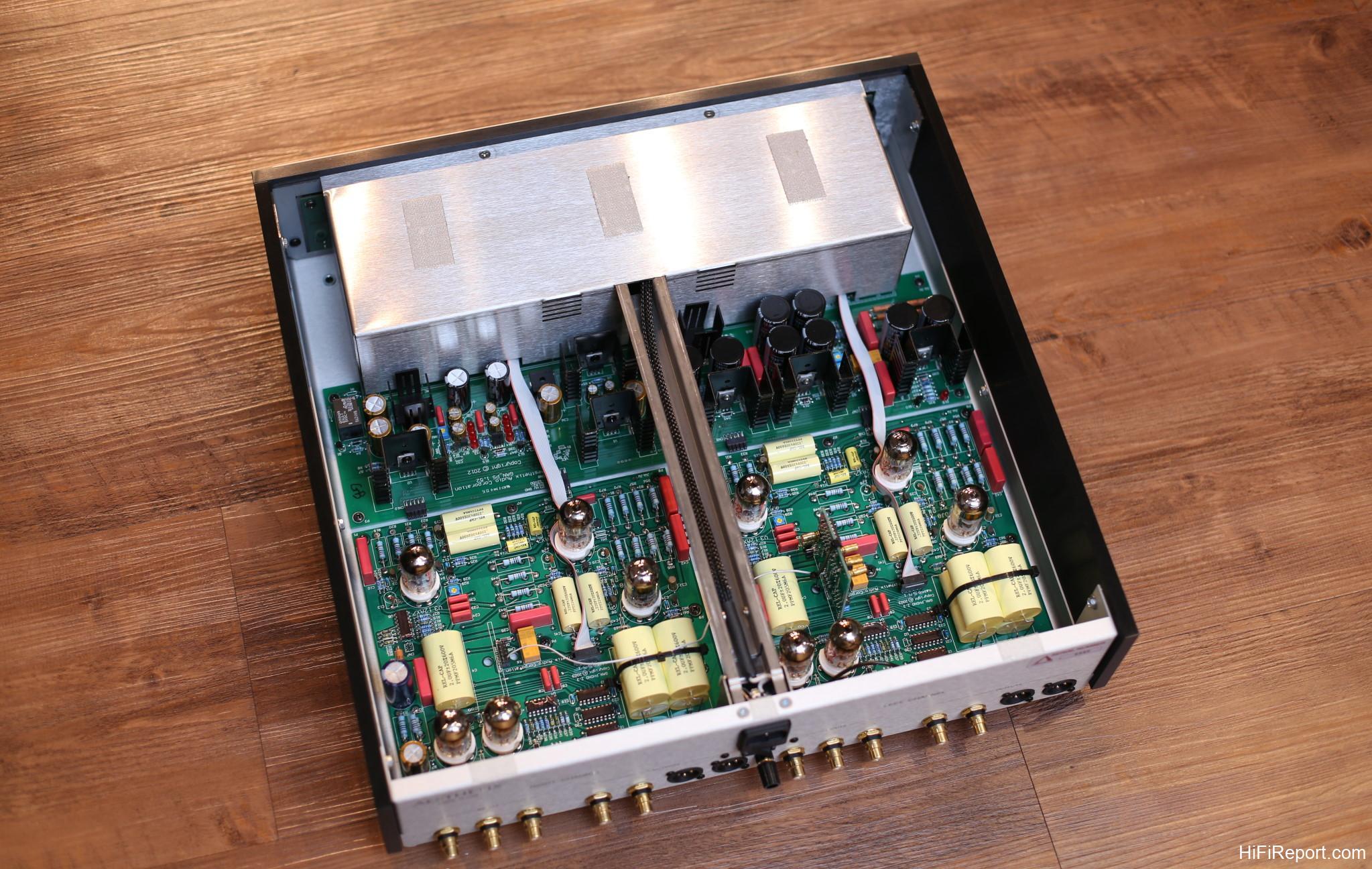
The fully symmetrical dual-mono design and the transformer isolated by a metal casing demonstrate robust, audiophile-grade construction. Each channel uses five vacuum tubes (V1 & V2 12AX7LP, 12AX7 or E83CCS, V3 & V4 12AX7WB, 12AX7 or E83CCS, V5 6922 (6DJ8)), totaling ten tubes. It’s no wonder the operating temperature is elevated. Users can also explore tube rolling, as different tubes can significantly alter the sound, offering greater tuning flexibility.
More detailed internal shots of the Rhea.
The included remote control operates all functions.
Phono Stage Settings Explained
The HiFiReport reference vinyl system, used for this review, consists of a Kiseki Blue N.S. MC cartridge, a Jakutis Analog turntable, and tonearm. The Blue N.S. has a relatively low output of 0.44 mV.
The Rhea manual provides clear setting recommendations. For a 0.44 mV output cartridge, a gain setting of 62 dB is suggested, which minimizes the signal-to-noise ratio. Gain setting is relatively straightforward, but impedance loading is less definitive. For the Kiseki Blue N.S. MC cartridge, recommended impedance settings range between 400 and 1000 Ohms. Previously, I typically set my phono stages between 200 and 500 Ohms. After extensive testing, I finalized on 250 Ohms.
Generally, lower impedance (higher Ohm value) can enhance high-frequency performance and dynamics but might result in excessive brightness. Conversely, higher impedance (lower Ohm value) exhibits the opposite characteristics.
Rhea’s impedance and gain adjustments are uniquely implemented by pressing the sides of the front display screen to adjust numerical values. The brightness of the screen and button LEDs is also adjustable.
Balanced outputs were used for this review.
Emotionally Engaging Sound: Time Stands Still
Playing one of my favorite movie soundtracks, “Cocktail,” starring Tom Cruise, featuring the theme song “Kokomo” by The Beach Boys, immediately reveals a phono stage’s resolution and dynamics. Rhea performed exceptionally, fully rendering the dynamics and details of the track. The warm, rich, and emotionally resonant tube sound truly brought The Beach Boys’ performance to life, transporting the listener back to scenes from the movie.
The bass was punchy and well-defined, the timbre of each instrument was highly distinct, and the overall musicality was outstanding!
Superb Soundstage and Density
Moving to classical music, I played the recording of the historic 1990 “Three Tenors” concert, featuring Luciano Pavarotti, Plácido Domingo, and José Carreras. This unprecedented event in classical music brought together these legendary voices. The performance included famous arias like “Nessun Dorma” from Turandot and “’O Sole Mio,” among other classics. The recording vividly captured the atmosphere of the 100,000-strong audience.
The applause and cheers were incredibly realistic, but the main focus was, of course, the captivating vocal interplay of the three tenors. Their voices were powerful and soaring, complemented by the orchestral accompaniment, creating an emotionally charged experience. Rhea’s soundstage control was a major contributor to recreating this grand scale.
Musicality, Musicality, and Musicality
Switching genres again, I played Diana Krall’s “Girl in the Other Room,” focusing on the third track, “Temptation,” a personal favorite. Diana Krall’s jazz ensemble is quite standard, featuring Krall on vocals and piano, along with guitar, double bass, and drums. The system should clearly delineate the timbre and presence of each instrument. Rhea delivered a remarkably authentic and musical performance, perfectly capturing the languid jazz rhythm.
The piano’s harmonic richness was complete, and the sonic density remained a strength. Each instrument contributed subtly, creating a fluid and harmonious performance.
Unique Demagnetization Feature: MC Cartridge Enhancement
Rhea includes a demagnetization function, exclusively for MC cartridges. Using it with MM cartridges may cause damage. The manufacturer recommends using it approximately once a week. In practical testing, the sound improvement after demagnetization was significant, with enhanced sonic purity, wider bandwidth, and greater dynamics. This feature is a definite bonus.
Upgraded Versions Available
Beyond the standard version reviewed here, Rhea also offers Signature and Eclipse versions. The Signature version features significant capacitor upgrades, such as custom Teflon hybrid coupling capacitors replacing the standard polypropylene capacitors. These enhancements improve resolution, extension, and sonic refinement, adding an airy quality to the sound. The standard feet are also upgraded to Harmonic Resolutions Systems (HRS) feet designed specifically for Aesthetix.
The Eclipse version further elevates component quality, using even higher-grade capacitors like Stealth, along with higher voltage transformers, enhanced heat dissipation, and improved isolation and damping. Users can choose the version that aligns with their budget.
Aesthetix Rhea Vacuum Tube Phono Preamplifier Specifications
* Inputs: 3 x RCA Phono Inputs
* Gain Settings (per input): 8 settings: 75, 68, 62, 56, 50, 44, 38 dB, and off
* Impedance Settings (per input): 9 settings: 47 K ohms, 10K, 5K, 2.5K, 1K, 500 ohms, 250, 125, and 75 ohms
* Outputs: 2 x RCA and 2 x XLR
* Output Impedance: 1K ohms (RCA), 600 ohms (XLR)
* Frequency Response: ± 0.25 dB, 20 Hz – 20 KHz
* Recommended Load: 10 k ohms or greater
* Tube Complement: 12AX7, 12AX7, 6922
* Power Consumption: 20W (Standby), 100W (Operating)
* Dimensions: 11.1 x 45.4 x 45.7 cm
* Shipping Weight: Approx.