
AirPulse A80 Active Speakers Review
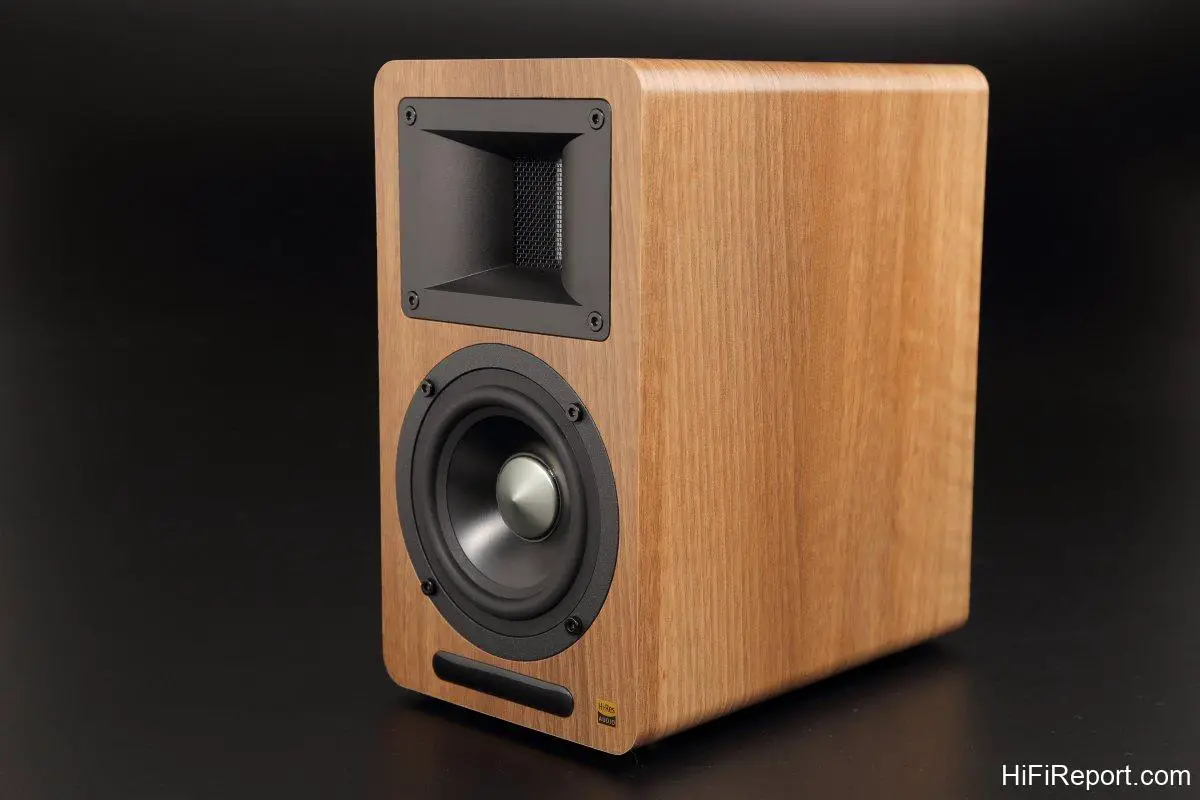
AirPulse is bolstering its active speaker range with the introduction of the A80! Following the A200, A300, and A100, AirPulse is now addressing the demand for listening in compact spaces, near-field monitoring, and desktop audio setups. The more diminutive A80 active speakers arrive with a remarkably accessible price point, continuing the brand’s tradition of delivering comprehensive features, outstanding performance and specifications, impeccable build quality, and a sound that is both precise, lively, and imbued with musicality. It appears the competition will be hard-pressed to even catch a glimpse of AirPulse’s tail lights.
Shared Technology and Design
The four active speaker models from AirPulse have been launched sequentially: A200 (5.5-inch woofer), A300 (6.5-inch woofer), A100 (5-inch woofer), and A80 (4-inch woofer). This chronological order reveals a development path starting with mid-sized models, progressing to larger formats, and subsequently moving towards smaller and mini designs.
While the four siblings in the AirPulse family might exhibit slight variations in interfaces and features due to their differing sizes, they fundamentally share a common lineage of technology and design. This includes the signature ribbon tweeter with a horn-loaded waveguide, a hallmark of AirPulse speakers. Ribbon tweeters inherently offer advantages like high efficiency, exceptional resolution, and extended high-frequency bandwidth. The addition of a horn waveguide refines the ribbon tweeter’s directivity, ensuring sound is delivered more directly to the listener, minimizing unwanted reflections from the listening environment.
Furthermore, the horn serves to enhance the ribbon tweeter’s performance, smoothing out the frequency response for a more pleasing sonic character and ensuring a more gradual roll-off at the lower end of its spectrum.
Another shared feature is the custom-engineered aluminum diaphragm mid-bass driver. Its rigid construction minimizes cone breakup, resulting in lower distortion and improved dynamic response. AirPulse also utilizes a proprietary 16-core XMOS processor, custom-designed with a parallel processing architecture. This shortens signal paths, reduces latency, and further minimizes distortion. Internally, the speakers operate entirely in the digital domain, employing a Class-D amplifier module with a high 768 kHz carrier frequency, contributing to a smoother, more fluid, and refined sound. Each driver is driven by a dedicated amplifier, effectively creating a bi-amped configuration that enhances channel separation. Throughout the research and development phase, Klippel computer-aided measurement and analysis tools are employed, ensuring a rigorous and meticulous engineering process.
These are just some of the shared technologies, many of which I detailed extensively in my review of the AirPulse A300, a review where I struggled to find fault. I won’t reiterate those points here, and will instead focus on the distinctive aspects of the A80.
Long-Throw Mid-Bass Driver Design
A significant departure for the A80 from its larger siblings lies in the magnetic circuit design of the mid-bass driver. While the A200, A300, and A100 all employ an underhung design, the A80 utilizes an overhung configuration. Why this change? An underhung design features a short voice coil within a long magnetic gap. As the voice coil moves, it remains entirely within the magnetic gap, ensuring precise magnetic control throughout its excursion. This results in greater linearity, lower distortion, and enhanced sonic accuracy. However, this design trade-off often leads to a leaner bass output, potentially sounding less full-bodied.
Conversely, an overhung design utilizes a longer voice coil, a common characteristic of long-throw drivers. During operation, parts of the voice coil move outside the magnetic gap and become less controlled. While this can result in a more substantial bass output and a richer, fuller sound, it can compromise linearity and increase distortion.
This illustrates that neither underhung nor overhung designs are inherently superior; their suitability depends on the specific design goals.
The A80’s mid-bass driver, at just 4.5 inches, naturally produces less low-frequency output compared to larger drivers. Therefore, adopting an overhung design helps to enhance the fullness and richness of the sound.
In contrast, the larger mid-bass drivers in the A100, A200, and A300 already deliver ample bass, eliminating concerns about a thin sound. Using an underhung design in these models allows for greater sonic precision, liveliness, agility, and improved layering.
AirPulse’s ability to intelligently apply different design principles to achieve a desired sonic outcome, rather than adhering rigidly to conventions or blindly chasing trends, demonstrates a true understanding of speaker design.
Furthermore, despite its compact 4.5-inch size, the A80’s mid-bass driver surprisingly incorporates a 35mm diameter voice coil, the same size as the A100. This larger voice coil offers better heat dissipation, preventing power compression caused by temperature increases during demanding dynamic passages.
Lower voice coil operating temperatures also contribute to increased durability, reducing the likelihood of future failures.
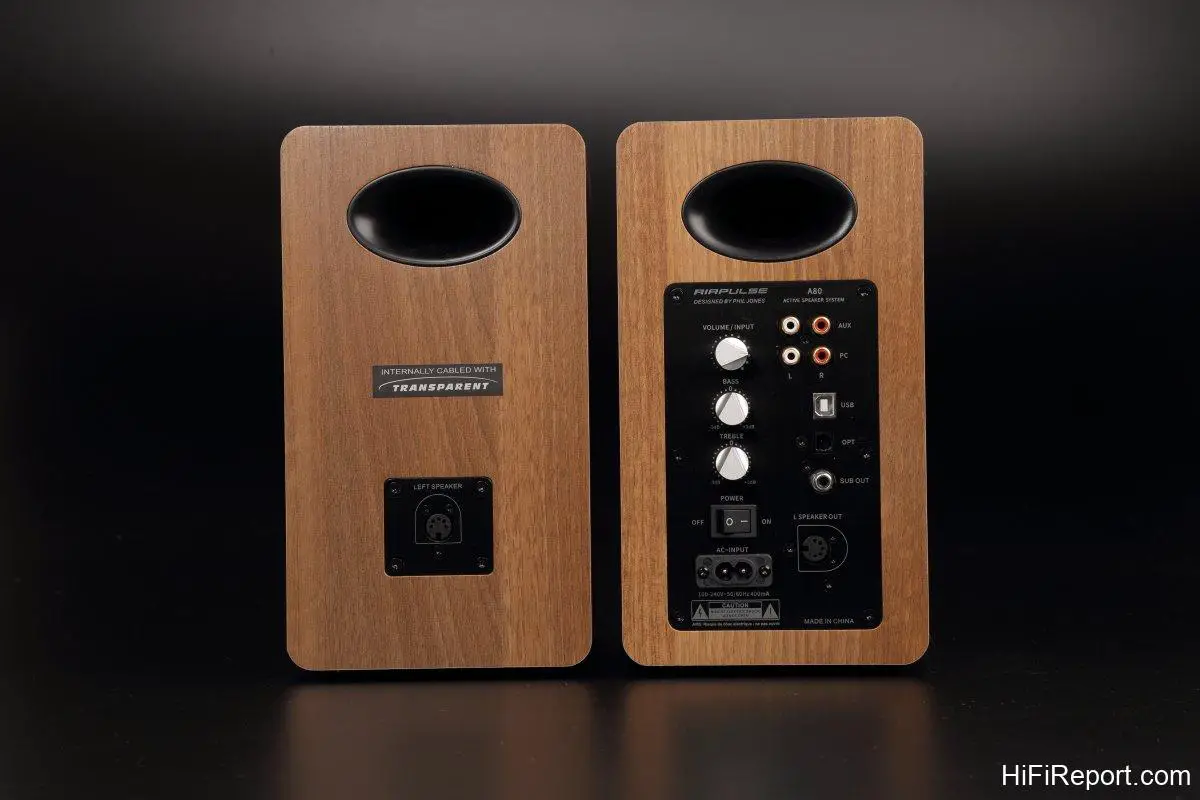
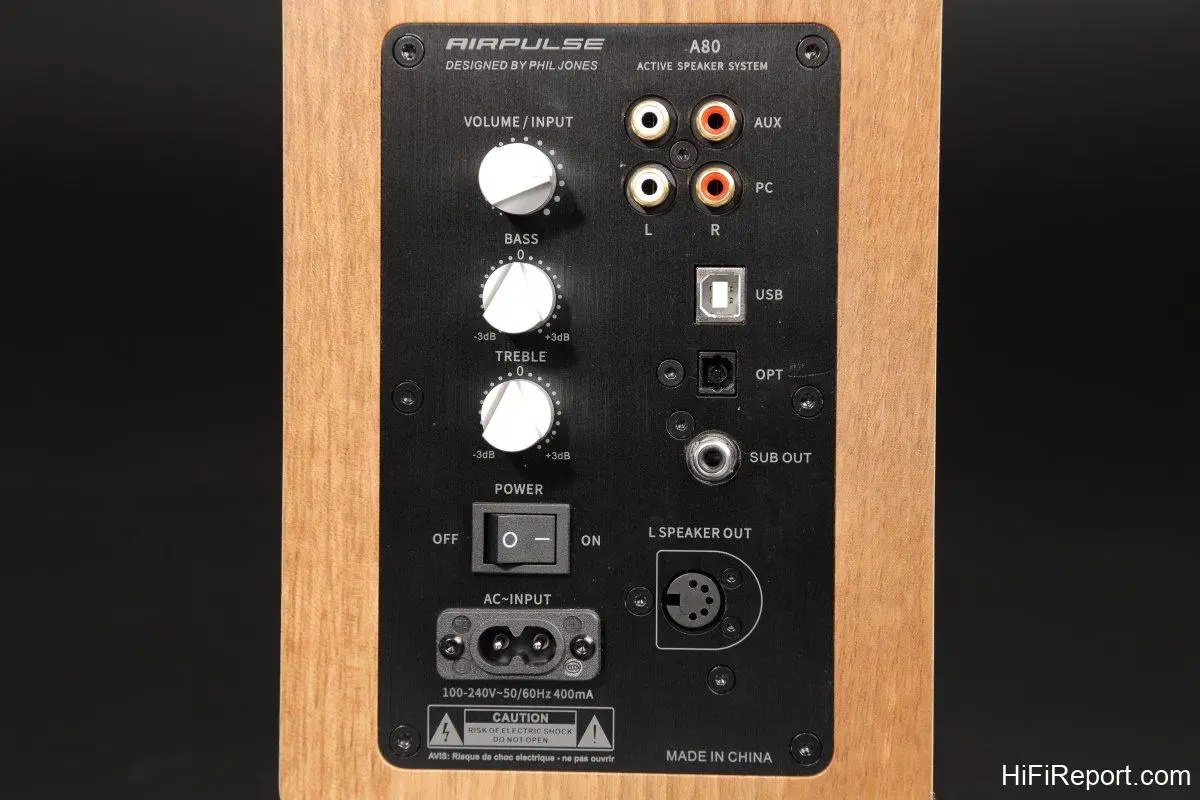
In terms of connectivity, the A80 mirrors the A100, featuring two sets of RCA stereo analog inputs, one USB input, one optical input, Bluetooth connectivity, and a subwoofer output. While it omits the XLR stereo analog input and S/PDIF RCA digital input found on the A300, the A80’s connectivity options remain more than sufficient for most users.
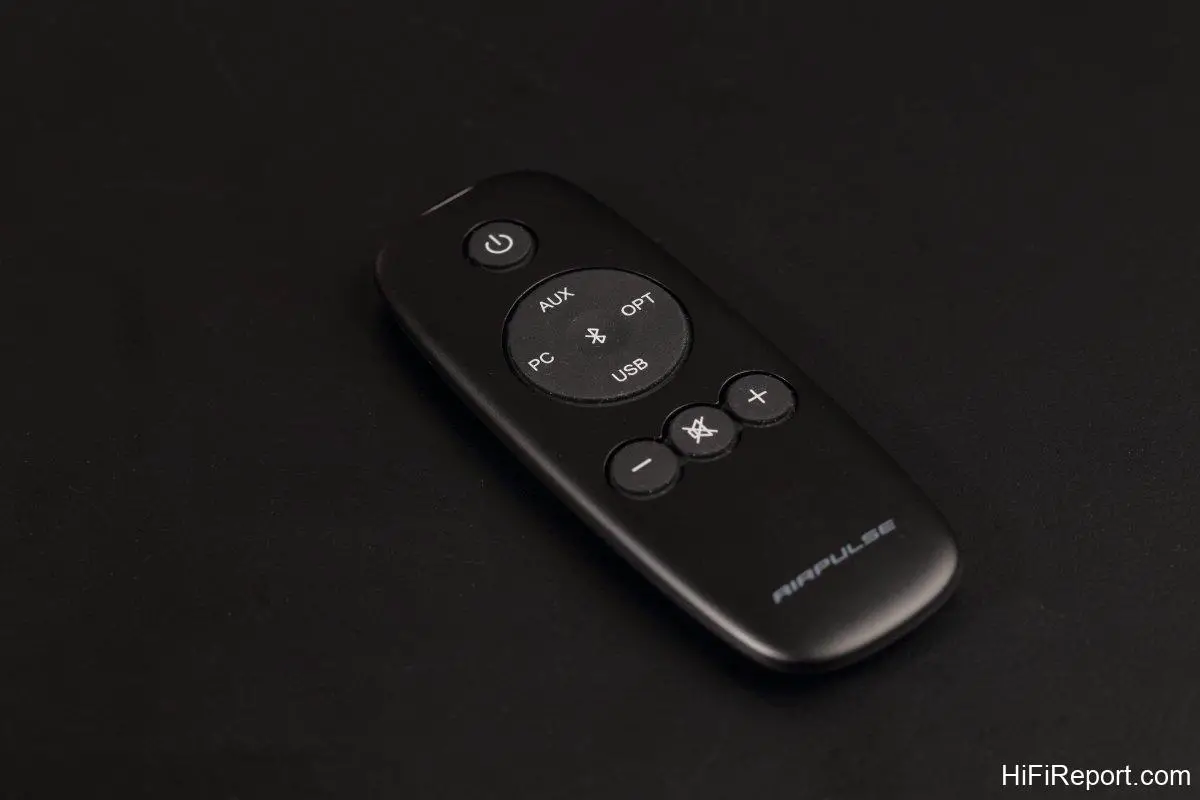
Additionally, the A80 includes a custom-designed remote control of commendable quality, allowing for power on/off, volume adjustment, and source selection. Frankly, many components costing several times the A80’s price fail to include a remote as refined and user-friendly as this one. AirPulse’s inclusion of this remote speaks volumes about their commitment to value.
Exceptional Desktop Performance
The A80’s compact form factor makes it ideally suited for desktop or shelf placement, a primary design intention. Therefore, my listening evaluation of the A80 was divided into two parts: desktop listening and general room listening, to fully explore its capabilities.
First, desktop listening.
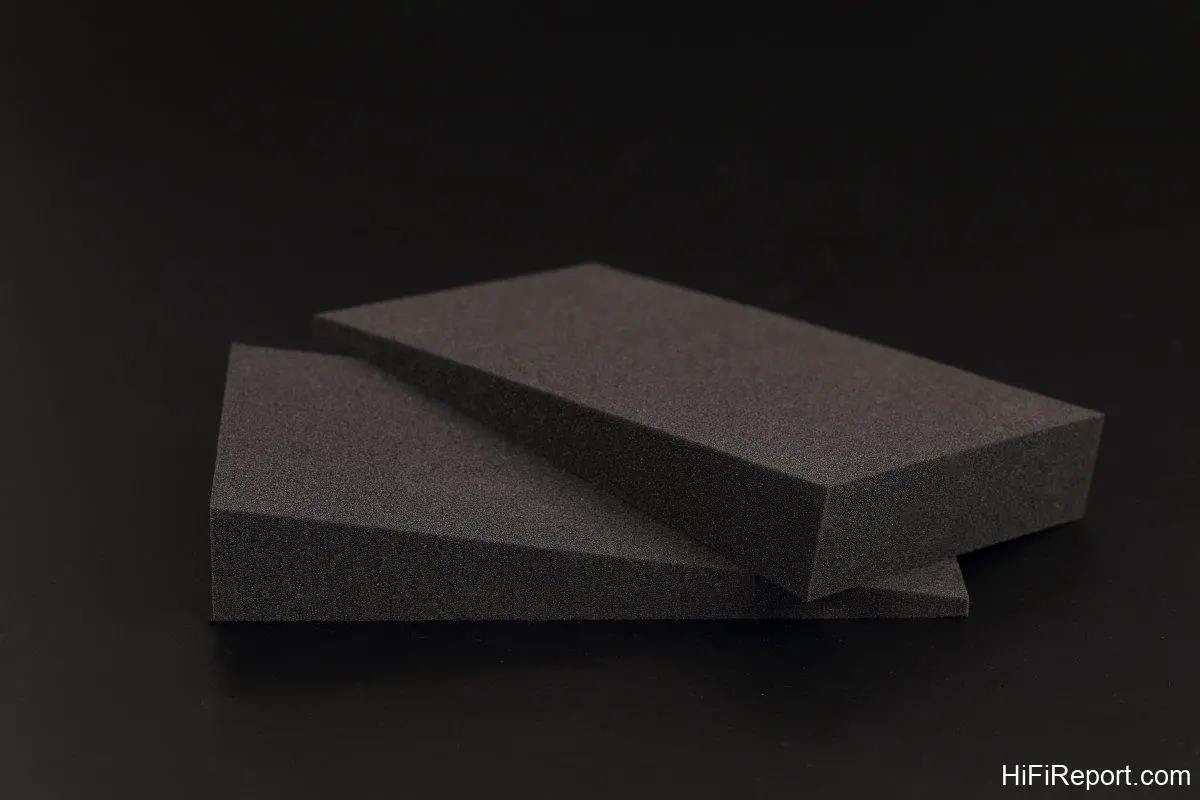
To facilitate desktop placement, the A80’s packaging includes two wedge-shaped foam pads. Positioning these under the speakers angles them upwards, directing the tweeters towards the listener, eliminating the need for separate stands or risers.
Initially, I set up the A80s on my usual writing desk for a preliminary listen.
Our office desks are relatively small and partitioned, which unfortunately caused the A80, with its respectable bass output, to exhibit some low-frequency booming, resulting in a less than ideal sonic experience.
Recognizing that most home desks are not partitioned, I relocated the A80s to a larger tabletop we use for product photography, simulating a more typical desktop listening scenario.
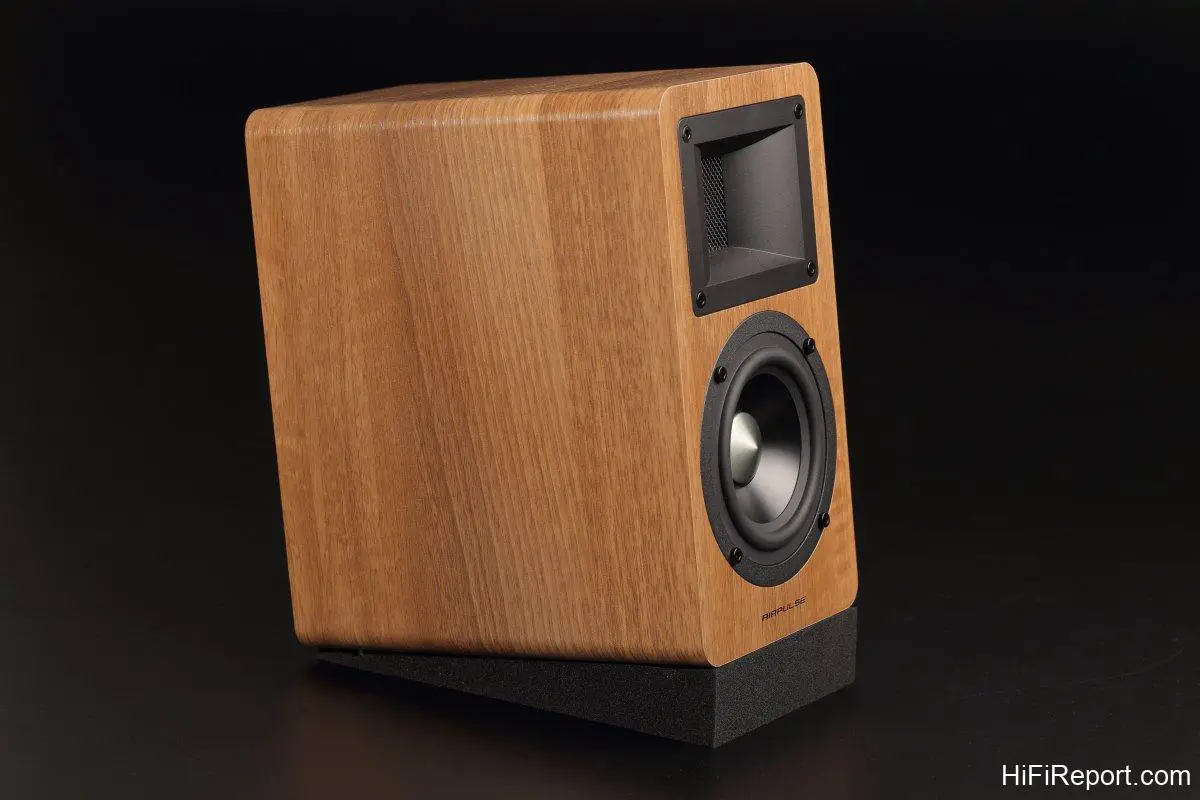
While this tabletop is quite large, I positioned the A80s relatively close together, and also sat in close proximity, mimicking a typical desktop setup. After some adjustments, I settled on a 70cm separation between the speakers, with no toe-in, and a listening distance of approximately 95cm. For the source, I used a Lindemann Limetree Network wireless streaming player, connected to the A80 via analog outputs, and began my listening session.
The most common challenge in desktop listening is managing low frequencies. We desire ample and full bass, but without muddiness or boominess. Desktop environments often make achieving this balance difficult.
The A80 completely avoided these pitfalls. Not only was the bass output ample and full, but it also exhibited clear definition and well-defined contours, with a natural downward extension and appropriate decay. The overall listening experience was relaxed and comfortable, representing a level of desktop audio quality rarely encountered.
I believe the unassuming foam pads played a significant role. They effectively isolated the speakers from the desktop surface, preventing vibrations from transferring and exciting resonances. This isolation also prevented vibrations from feeding back into the speakers, maintaining sonic clarity.
Furthermore, the density and firmness of the foam were perfectly judged. The bass remained articulate, well-defined, and responsive, without any sense of sluggishness or energy loss, and with minimal unwanted side effects.
It’s clear these foam pads were carefully selected by AirPulse, and users can confidently rely on them.
Clear, Bright, and Smooth Sound Quality
On the desktop, the A80 provided a listening experience that was both exhilarating and comfortable. For example, playing Li Zongsheng’s “Concert of Rationality and Sensibility,” many tracks feature powerful and deep bass drum strikes. Through the A80 in a near-field setup, each drum beat was distinctly delivered, with clear shape, sufficient weight, and impactful, fast transients. The listening experience was thoroughly enjoyable.
Guitar strumming is another area where the A80 excels. The sound quality is clear and bright, crisp yet smooth, completely devoid of harshness or dryness. Achieving this sonic character without a ribbon tweeter would likely be a significant challenge.
Exceptional resolution has always been a natural strength of AirPulse speakers, and the A80 is no exception. In my desktop near-field listening, I consistently heard clear articulation across all frequency ranges. High, mid, and low frequencies were rendered with distinct detail and texture. Reverberation and room ambiance were faithfully reproduced, creating a dense and immersive soundstage, almost like a vivid sonic picture.
Even better, the A80 possesses a wonderful sheen, adding a touch of sonic elegance to its clarity and realism, making the listening experience even more engaging.
Mariah Carey’s classic “Hero” immediately impressed me from the opening bars. The high frequencies blossomed, imbuing the piano and underlying strings with moisture and brilliance, resulting in a supremely comfortable and enjoyable listening experience.
Deserves a High-Quality Source
Next, I moved the A80s to speaker stands in the HiFiReport listening room, preparing for the second phase of listening in a more typical home environment.
For this stage, I paired the A80s with a Lumin U1 Mini streaming transport. The U1 Mini can connect to the A80 via USB or optical, creating an extremely streamlined yet fully featured playback system.
The U1 Mini was powered by a Telos QAC active power cable, a new offering priced near 100,000 NTD [approximately $3,000 USD]. Upstream of the U1 Mini was an Ansuz D-TC Supreme network switch, valued at $14,000 USD.
I understand this pairing is significantly disproportionate in terms of budget. However, my intention was to push the A80 to its limits, utilizing the best components at my disposal to see how much sonic potential could be extracted. I knew the A80’s exceptional resolution should reveal the benefits of a high-quality source, and I believe the A80’s performance far surpasses its price point, making a premium source a justifiable match.
The U1 Mini and A80 could be connected via either USB or optical. My first task was to determine which interface to use for listening.
After comparing both, I found that USB offered greater density and solidity, resulting in a more refined sound. However, optical revealed more detail, with better rendition of room ambiance, reverberation, and air. The textural nuances and timbral richness were also enhanced with optical, making live recordings feel more immersive and alive with the energy of the venue. Additionally, the sound via optical was more relaxed and smooth.
Ultimately, USB and optical presented different sonic profiles, each offering its own unique listening pleasure. I felt the optical connection was a better match for the A80’s character as a compact speaker, so I proceeded with optical for the remainder of my listening evaluation.
The HiFiReport listening room is quite large, but I wasn’t aiming to assess the A80’s performance in a large space. For this listening phase, I maintained a near-field setup, simulating a listening distance suitable for a room of approximately 4 square meters [~43 sq ft].
Playing the “Supreme Sessions 1” test disc at this distance, the A80 presented an incredibly full, rich, and exceptionally lively sound. The sound seemed to effortlessly find my ears, rather than requiring me to strain to hear it.
What do I mean by this? Simply that detail and energy levels were abundant, frequency response was balanced, and the overall sonic structure was cohesive and well-organized, resulting in an effortless listening experience.
For example, track 4 of “Supreme Sessions 1,” “Blue In Green,” features piano, pizzicato double bass, and drums. The A80 delivered remarkably satisfying bass – substantial in scale, ample in quantity, and rich in texture. There was no hint of bass deficiency.
Furthermore, I experienced a complete and richly textured musical picture. The soundstage was dense and enveloping, creating a sense of immersion. This was undoubtedly due to the A80’s ability to reproduce a wealth of soundstage detail, filling in the spaces between instruments, preventing them from sounding isolated.
This is the true essence of a well-rendered soundstage.
It sounded fantastic! As a side note, the A80 uses an figure-8 power connector, rather than the more common IEC connector with separate live, neutral, and ground pins. This means the power cord can be inserted in either orientation. It’s important to note that only one polarity will be correct. Users should experiment with both orientations to find the one that yields the most accurate soundstage presentation.
An Emotionally Engaging Experience
I had already experienced the A80’s impressive detail retrieval capabilities when listening on my desktop, particularly with Jennifer Warnes’ renowned “Famous Blue Raincoat” album. Now, paired with even higher-quality components, the level of detail was further enhanced.
Listening to Jennifer Warnes’ vocals on “Famous Blue Raincoat” was even more emotionally engaging. Her voice sounded not only realistic and direct, but also the subtle breathiness and rasp in her vocal delivery were rendered with exceptional clarity and delicate texture. This highlighted Jennifer Warnes’ unique vocal characteristics, creating a deeply moving listening experience.
I’ve heard this album on countless systems, but in terms of emotional impact, few have matched the A80.
This album also revealed that the A80’s bass performance is unlike that of a typical small speaker. Not only is the bass output plentiful and full, with excellent weight and scale, but the overall frequency balance is also superb. The proportions are just right, and the top-to-bottom extension is natural. Within a reasonable listening distance, the A80 can deliver ample sound pressure and a balanced sonic presentation, much like a larger speaker.
As mentioned earlier, the A80’s mid-bass driver utilizes an overhung, long-throw design, in contrast to its siblings, to achieve a fuller bass response. However, I found the bass to be remarkably natural and not artificially boosted or exaggerated. The overall sonic coherence remains excellent, indicating that the A80’s voicing is not overly manipulated. Instead, AirPulse adheres to its established philosophy of allowing the inherent sonic qualities of the materials, components, and circuits to shine through. Any adjustments are subtle circuit-level refinements aimed at fine-tuning the sound without compromising performance, preserving the speaker’s inherent liveliness and accuracy.
Composed Even in Complex Passages
Moving on to Quatuor Ebene’s “Fiction” album, a collection of classical arrangements of film scores and classic songs for string quartet. Track 3, “Nature Boy” from the film “Moulin Rouge,” showcased the A80’s ability to reproduce the rich timbral variations of the string instruments. The music felt exceptionally vibrant and alive, with excellent transient response. Whether it was the pizzicato cello or the percussion, each note was rendered with clarity and appropriate decay, demonstrating the A80’s 4.5-inch mid-bass driver’s agility. Crucially, the speed was both quick and controlled, with consistent timing across the frequency range, making the musical phrasing incredibly engaging.
Track 5, a rendition of the Beatles classic “Come Together,” further highlighted the A80’s capabilities. The track is filled with a variety of percussive and string effects – pizzicato, bowing, scraping, and more – creating a colorful and richly textured sonic tapestry.
Finally, listening to the soundtrack from the movie “La La Land,” I was surprised to find that the A80 handled the expansive soundstage and complex musical arrangements of the opening track with remarkable composure. Even at higher volumes, the sound remained uncompressed, and the sonic balance and structure remained intact. As long as the listening position isn’t too far away, the sound pressure level is more than capable of being room-filling.
The most captivating moment was the scene where Mia participates in an impromptu audition. Her voice was reproduced with clear and natural sibilance, just the right amount of body, and a wonderfully direct quality. Her image was close and large, creating a sense of intimacy, intensifying the emotional impact.
Isn’t this precisely what we expect from a near-field monitor? As a reviewer who loves both music and hi-fi, after experiencing the A80, it’s hard not to enthusiastically recommend it. AirPulse has once again created a remarkable product. They have skillfully imbued the A80 with a clear sonic identity and captivating performance, while maintaining signal accuracy and fidelity. And they’ve done it at an incredibly accessible price point, perfectly meeting the needs of budget-conscious consumers.
If you are a discerning and rational consumer, I highly recommend seeking out an audition as soon as possible. The A80 is poised to be in high demand upon release, and you might face a considerable wait to get your hands on a pair.
Specifications
* Type: 2-way 2-driver active speaker
* Drivers: Horn-loaded ribbon tweeter × 1, 4-inch aluminum cone mid-woofer × 1
* Amplifier Module: 100W RMS
* Frequency Response: 52 Hz – 40 kHz
* Inputs: AUX stereo × 1, PC stereo × 1, Bluetooth, Optical, USB
* Dimensions (H × W × D): 283 × 160 × 255 mm