
Albedo Metamorphosis XLR Cable Review
What sonic characteristics come to mind when you think of silver cables? For many audiophiles, the descriptions often revolve around speed, energy, heightened resolution, exceptional high-frequency extension, a brilliant sheen, tight and controlled bass, precise imaging, and a vast soundstage. These are all hallmarks of high-performance audio, and for a long time, I shared this perception. However, my experience with the Albedo Metamorphosis XLR signal cable has been a revelation. I’ve discovered that silver cables can possess a quality that transcends mere performance – they can be utterly, captivatingly beautiful.
Liquid Silver Origins
Albedo, a cable manufacturer hailing from Poland, was founded in 1996. For over two decades, they have remained steadfast in their commitment to a single principle: utilizing only pure silver conductors in their cables.
You might wonder, while dedication to silver cables is indeed unique, numerous brands incorporate pure silver into their designs. What distinguishes Albedo? The answer is profound. Albedo’s approach to crafting pure silver, and even their higher-grade single-crystal silver cables, begins at the very source – with liquid silver.
The majority of audio cable brands in the market typically source semi-finished cable components from specialized manufacturers. These components have already undergone processes like smelting, drawing, stranding, and insulation. The cable brands then handle the final stages of processing, stranding, assembly, and testing in their own facilities to create the finished product.
Albedo, however, deviates from this norm. They procure raw silver as their base material, and subsequently, every stage of the production process is meticulously executed within their own factory.
Proprietary Technology
Albedo states that their process begins with melting raw silver material, followed by meticulous refinement. This crucial stage is conducted under a protective atmosphere of inert argon gas, with temperature control maintained within a remarkably precise ±1°C margin. This stringent process yields the highest purity silver, or single-crystal silver for their mid-to-high-tier cables.
The subsequent step is wire drawing. Albedo has developed specialized drawing and pressing techniques, executed at a deliberately slow pace to preserve the integrity of the silver crystal lattice structure.
While wire drawing is a common process, the inclusion of pressing technology might raise eyebrows. This is because Albedo employs not only cylindrical conductors but also flat, rectangular conductors in certain cable designs, necessitating the development of their unique pressing method.
Following drawing or pressing, the conductors undergo a critical heat treatment phase to relieve internal stresses. This process, too, is performed under argon gas shielding. Albedo emphasizes that this heat treatment is paramount in shaping the conductor’s characteristics and sonic performance, demanding utmost precision and care.
The entirety of Albedo’s manufacturing process, carried out in-house with meticulous handcraftsmanship and stringent procedures, naturally contributes to a slower production pace and, consequently, a higher price point.
Hair-Fine Single-Crystal Conductors
Albedo’s current product portfolio centers around signal cables, speaker cables, and digital cables, notably excluding power cables. Their signal cable range extends to phono cables, while their digital offerings include USB cables alongside AES/EBU and coaxial options.
The analog signal cable category boasts the most granular tiering, spanning six distinct levels. The Metamorphosis XLR signal cable under review here occupies the second-to-top rung, just below the flagship Metamorphosis Signature.
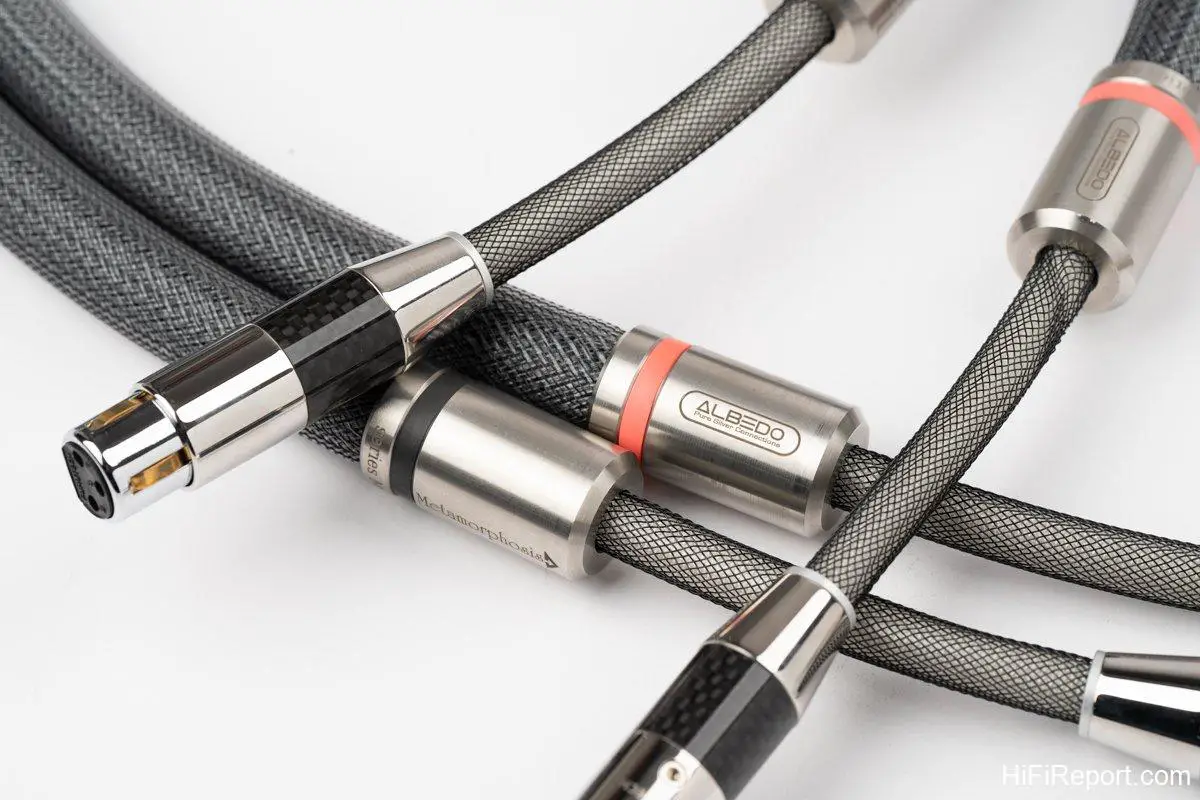
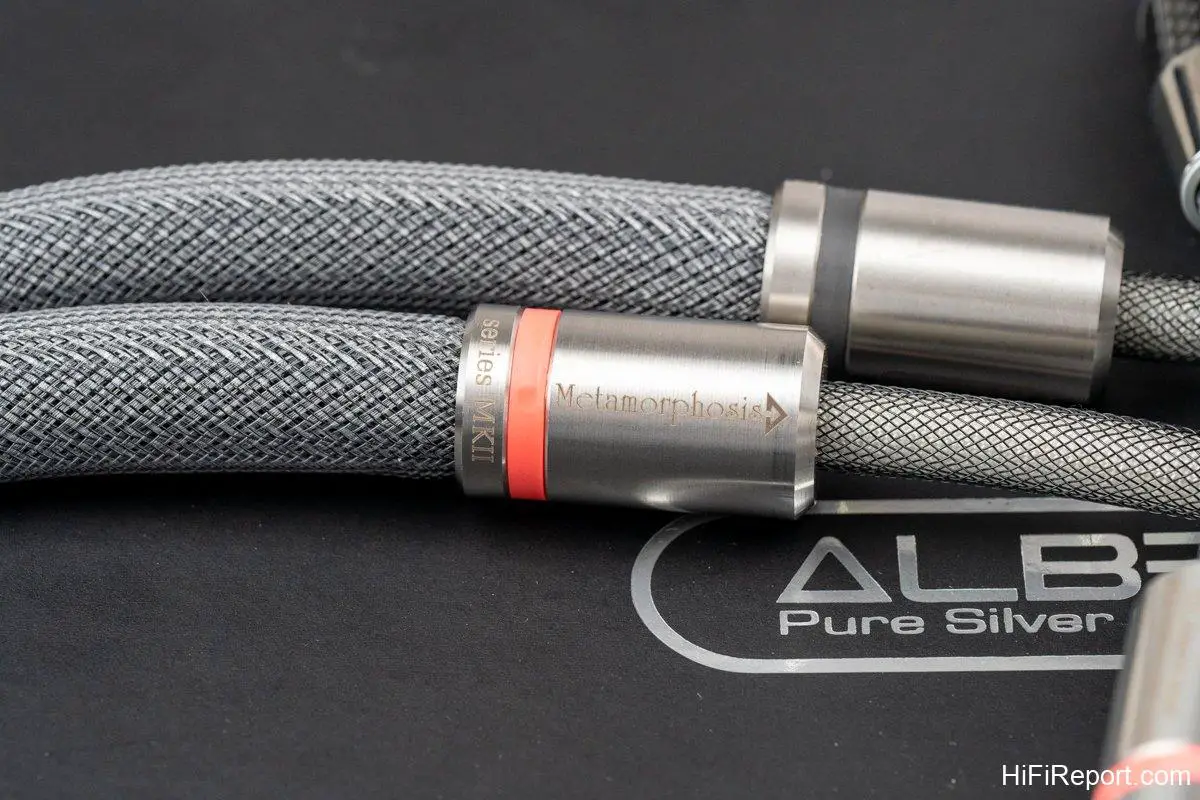
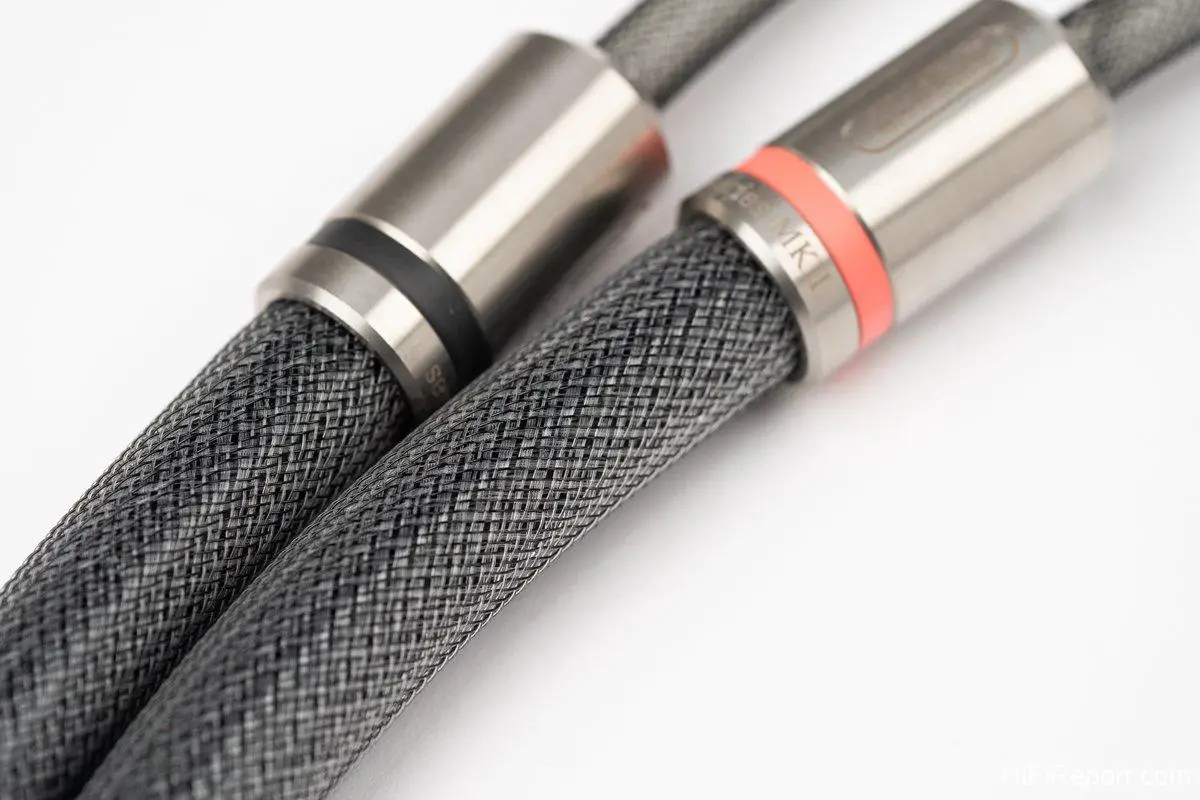
This MK II iteration of the Metamorphosis XLR signal cable presents a subdued yet elegant silver-grey aesthetic. The build quality is exceptional, on par with any top-tier cable available.
Internally, the conductors are composed of scores of hair-fine, solid-core single-crystal silver strands. Each individual strand undergoes polishing with natural diamonds, ensuring an impeccably smooth surface to facilitate unimpeded electron flow.
Each conductor is then individually insulated with Teflon and further wrapped in Aramid fiber to provide effective damping.
These insulated conductors are then encased within a silicone mesh sheath, offering protection against static interference.
Such refined conductors demand equally sophisticated connectors.
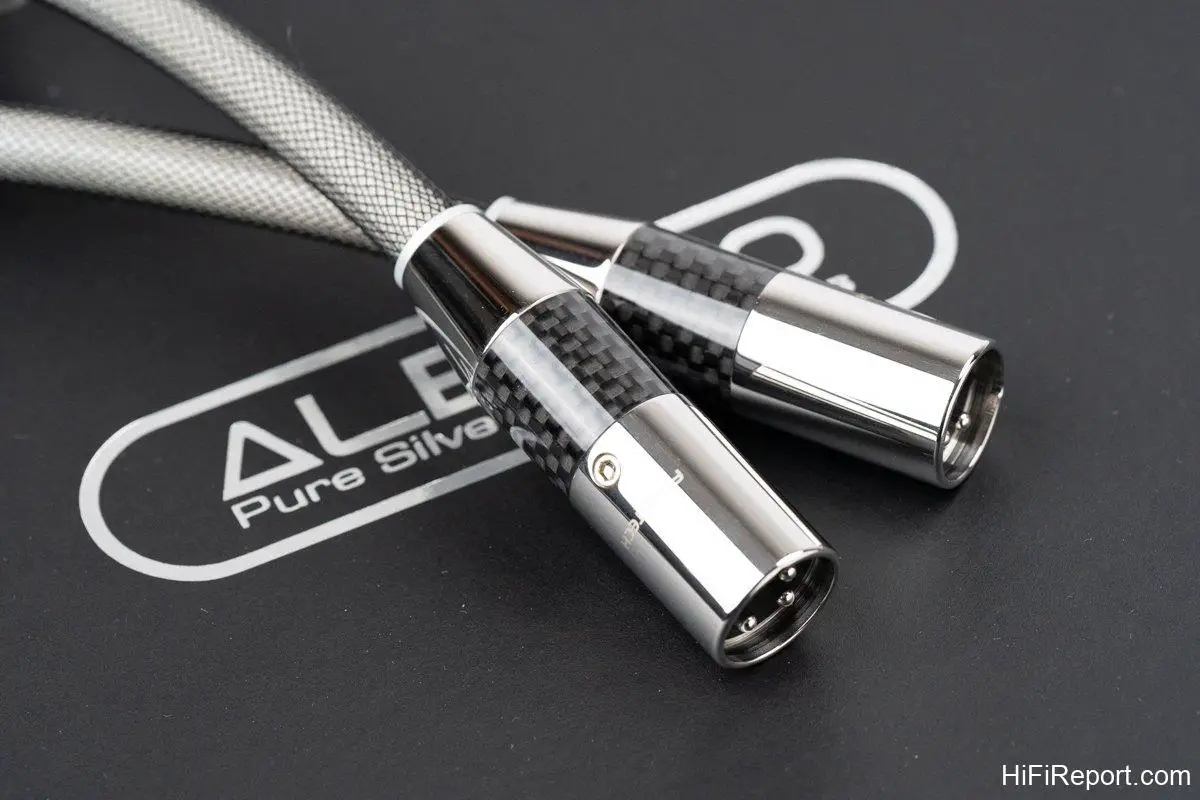
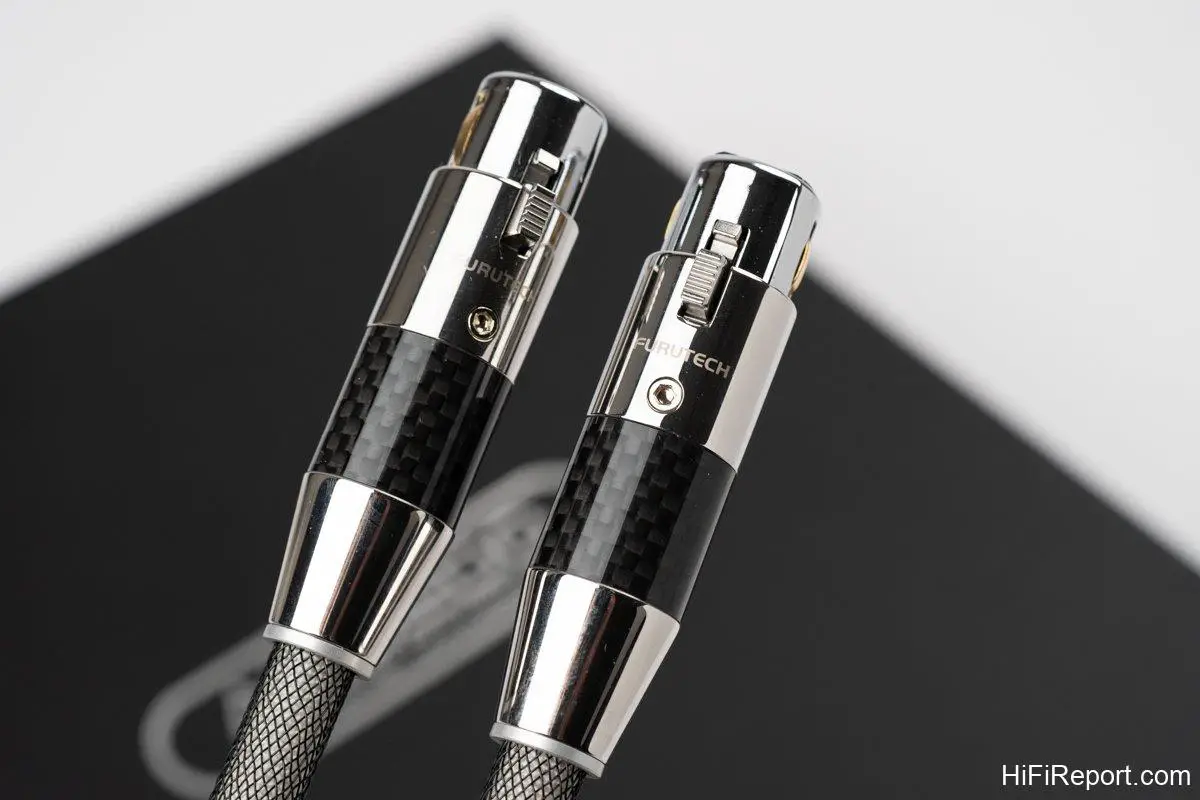
The Metamorphosis signal cables are available in both XLR and RCA configurations, both utilizing high-end Furutech connectors. The XLR variant employs the CF-601 connector, while the RCA version features the CF-126. These connectors not only guarantee optimal signal transmission but also provide a supremely satisfying tactile experience during connection and disconnection.
Lingering Listening Sessions
The listening evaluation took place in my home listening room, utilizing a system comprised of the Auralic Aries G1 wireless streamer, Audiobyte Black Dragon DAC, Holo Audio Serene preamplifier, NuPrime Evolution STA power amplifier, and Aurum Cantus Grand Harmony loudspeakers.
The Metamorphosis XLR cables were inserted between the DAC and preamplifier, with the Harmonic Technology Para-I balanced cable, a single-crystal copper design, serving as the comparative reference.
While termed a ‘listening test,’ my experience was more akin to an extended period of living with the Metamorphosis XLR.
Unlike some silver cables I’ve encountered that seem to constantly strive for attention, eager to impress with overt sonic fireworks, the Metamorphosis XLR fostered a relaxed and effortless musical engagement. It allowed me to simply sink into the music, reveling in its inherent harmony, fluidity, and the intrinsic beauty of instrumental timbres.
I didn’t consciously seek out its defining traits or strengths, yet I found myself spending considerably more time immersed in music than usual.
Exquisite Micro-Dynamics
Of course, as this is a review, I must attempt to articulate its qualities.
I would pinpoint the most captivating aspect of the Metamorphosis XLR as its silken smoothness.
Its sonic texture is remarkably supple, fluid, and refined. Its character is even-tempered and poised, its presentation natural and unforced, without any sense of contrived emphasis.
Images and sonic contours are not etched or overtly sharp, as can be the case with some silver cables. Instead, they are rendered without harsh edges or grain, ensuring a consistently non-fatiguing listening experience.
When reproducing linear instruments, such as strings, the sonic lines are exceptionally fluid and utterly comfortable. Even during demanding fortissimo passages, the lines remain composed and free of any hint of strain. In essence, it simply sounds beautiful.
This sonic profile leans towards a more musically engaging presentation, rather than a strictly direct, hyper-realistic, or clinical monitoring character. Yet, the dynamic gradations remain remarkably vivid, especially in quieter passages where micro-dynamic nuances are rendered with exceptional clarity. This imbues the music with richer expressiveness and a more palpable atmosphere.
The Metamorphosis XLR’s personality is not assertive, aggressive, or attention-seeking. Rather, it is refined, amiable, and focused on harmonic coherence – a truly congenial component to integrate into any system.
Its frequency balance is outstanding, with both high and low-frequency extension unfolding naturally and effortlessly. The background is remarkably silent, the sonic foundation impeccably clean, and the timbre possesses an extraordinary purity, authenticity, and freedom from any discernible imperfections.
Exquisite Strings
The Metamorphosis XLR excels at conveying the intrinsic beauty of acoustic instrument timbres, and stringed instruments, in particular, are rendered with breathtaking loveliness. Listening to Trevor Pinnock and The English Concert’s performance of Bach violin concertos, the string ensemble’s lines are perfectly balanced in weight and delicacy. The texture is airy yet substantial, exhibiting both a sense of density and remarkable transparency.
The string timbres are lustrous, pristine, and fluid, with a richly hydrated quality, but never veer into ostentatious excess that could sound artificial or contrived.
Regarding soundstage, the Metamorphosis XLR doesn’t aggressively emphasize separation, but instead prioritizes a natural and accurate presentation. The scale of each instrumental section is quite generous, with clear and coherent proportions, resulting in a sound that is fuller and more musically engaging compared to the reference cable.
Despite being a silver cable, its perceived pace is slightly relaxed, contributing to a particularly lush and interwoven string ensemble presentation. The lines are remarkably smooth, creating the impression of a longer reverberation time within the performance space, or perhaps a heightened sense of resonance, resulting in richer, more opulent timbres.
Enhanced Spatiality
And what about piano? Taking Claudio Arrau’s rendition of Chopin Waltzes as an example, the Metamorphosis XLR imparted a softer initial attack to the piano notes. Coupled with the naturally smooth sonic character of the Aurum Cantus Grand Harmony loudspeakers, the piano notes took on an even more rounded quality, leaning away from a purely agile and percussive presentation. Yet, the timbre remained captivating. The Metamorphosis XLR not only faithfully revealed the piano’s textural nuances but also unveiled a richer tapestry of piano resonance, sustain, and reverberation. This twofold effect enhanced both the timbral richness and the perceived spatiality, culminating in a more harmonious and engaging sonic picture.
A system capable of such timbral beauty would be remiss not to be tested with brass instruments.
Listening to John Williams conducting the Berlin HiFiReport Orchestra in his iconic film scores, particularly the rousing trumpet fanfare in “Raiders March” from Indiana Jones, was a pure delight through the Metamorphosis XLR. The sound possessed not only a delicate sheen and a smooth, liquid texture but also an open, soaring, and effortlessly airy quality. It was both brilliant and unburdened, propelling the music’s escalating grandeur.
As additional instrumental sections joined the fray, and the orchestration grew in complexity, the Metamorphosis XLR maintained its composure, delineating clear layers and a cohesive musical canvas, further drawing me into the musical experience.
The Metamorphosis XLR possesses a remarkable ability to enhance sonic harmony and beauty. Systems that tend towards leanness, harshness, excessive brightness or hardness, listening fatigue, or an overly analytical character, or those lacking in timbral richness and beauty, could greatly benefit from the transformative touch of the Metamorphosis XLR.
Sonic Metamorphosis
Are you familiar with the meaning of the word “metamorphosis”? In biology, “metamorphosis” refers to a transformative process, like a caterpillar becoming a butterfly, or a tadpole developing into a frog. In a broader literary sense, it signifies a profound change or transformation.
Initially, I confess I was puzzled by Albedo’s choice of such an unusual name for their cable. However, after extended listening, the rationale became clear. Through the Metamorphosis XLR, the sound truly undergoes a metamorphosis – it becomes more beautiful.
Specifications
* **Model:** Albedo Metamorphosis XLR Signal Cable
* **Conductor Material:** Pure Silver