
Amphion Argon 0 Review
Once again, I find myself in the company of Amphion, but this time, it’s with their most diminutive bookshelf speaker, the Argon 0.
And small it truly is, fitting comfortably within the span of an adult hand. Don’t let the size fool you, though; attempting a one-handed lift reveals a surprising heft – the Argon 0 carries more weight than its dimensions suggest.
This compact nature is a boon for placement, allowing it to blend seamlessly into various environments, from desktops to bedside tables. However, Amphion understands that even small enclosures demand rigidity to minimize cabinet resonance, ensuring a pure and direct sound. The Argon 0’s unexpected weight is a testament to this design philosophy.
Amphion’s product line is structured into two primary series: the higher-tier Argon and the entry-level Helium. Both families offer bookshelf, floor-standing, and center channel options, catering to both stereo enthusiasts and home theater aficionados across different budgets and needs.
Model names follow a simple convention: series name followed by a number. Larger numbers denote larger speakers, positioning the Argon 0 as the smallest member of the Argon family.
(Indeed, as the ‘zero’ model, who could be smaller?)
Titanium and Aluminum Drivers
Upon unboxing, a strong sense of déjà vu washed over me. Had I encountered this speaker before? A quick dive into our equipment review archives confirmed my suspicion.
I had indeed reviewed a virtually identical Amphion speaker, yet it was the Helium 410, a step below in their hierarchy.
The Helium 410 and Argon 0 share an uncanny resemblance, boasting identical cabinet dimensions and remarkably similar specifications.
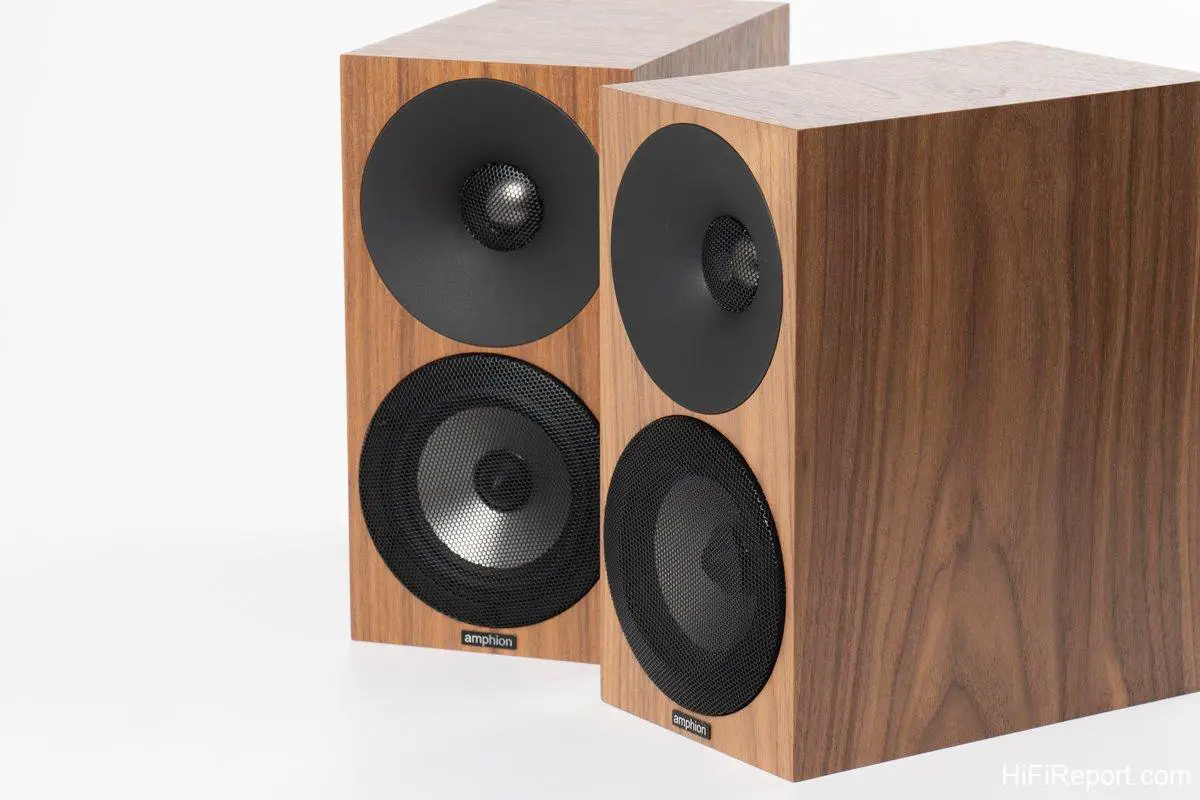
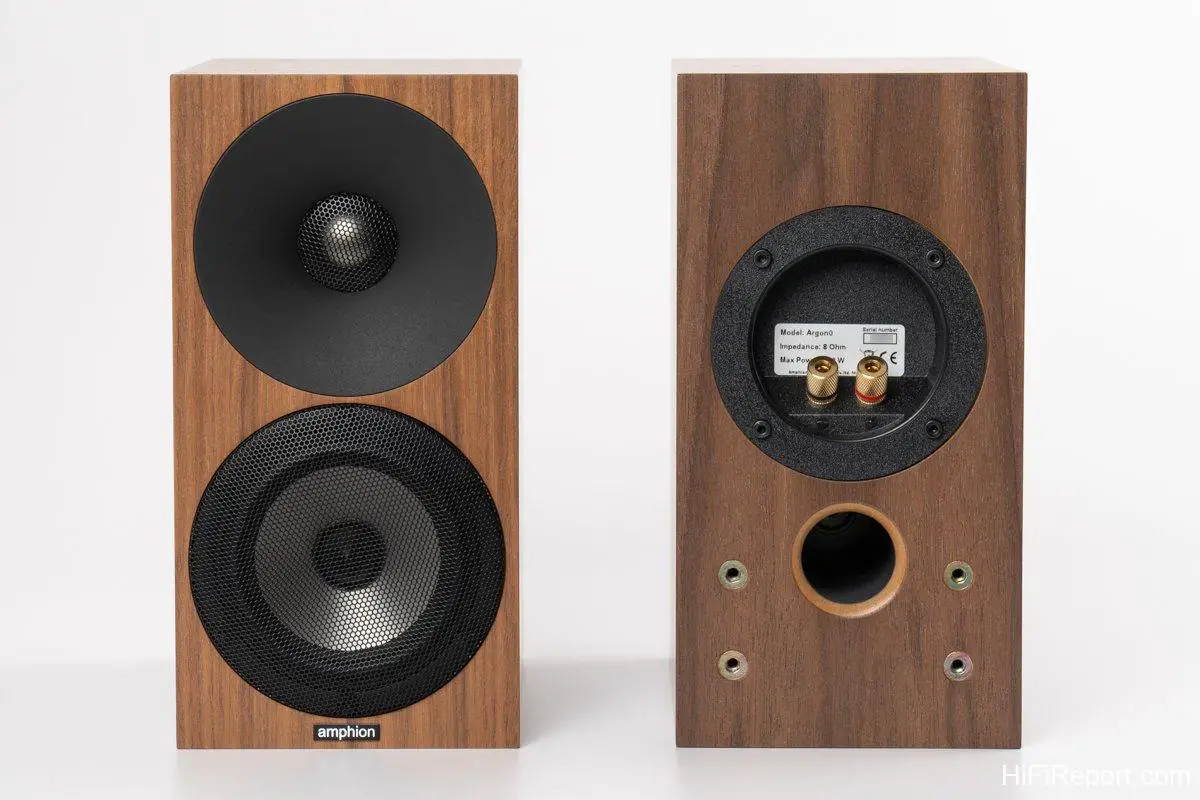
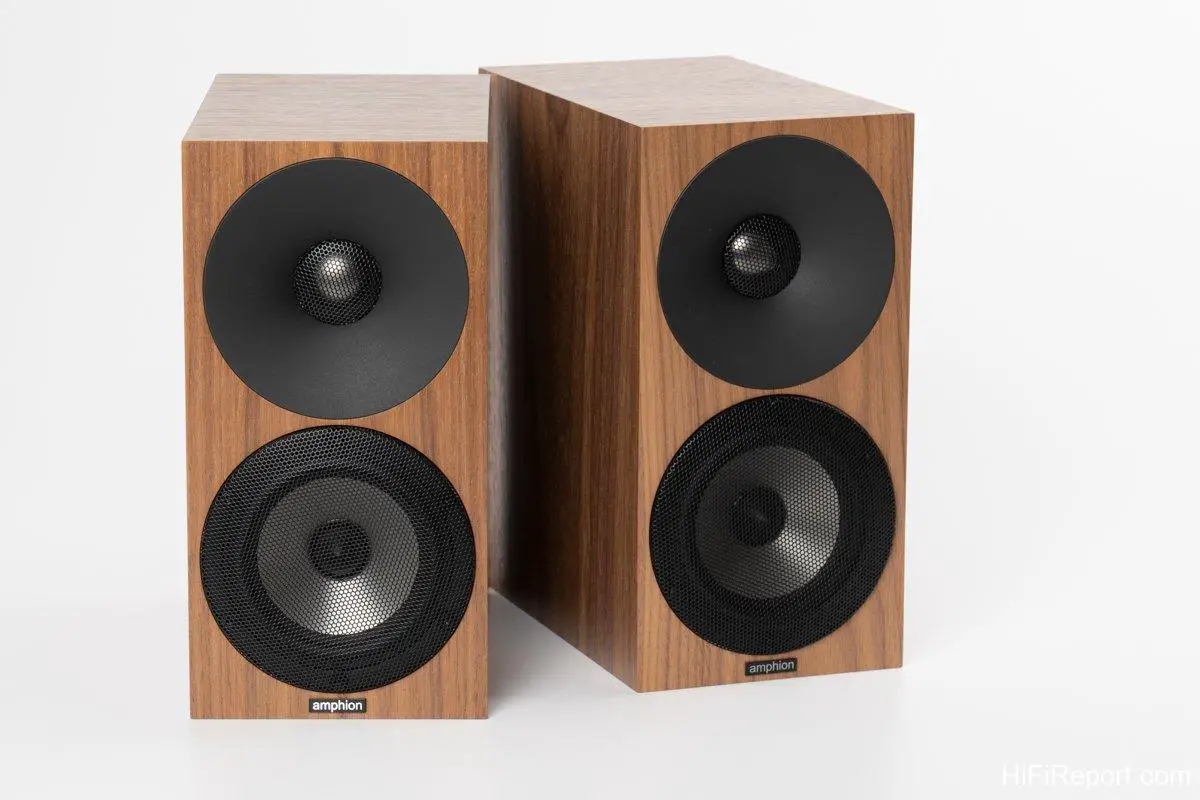
Both employ a 2-way, 2-driver bass-reflex configuration, feature a 1-inch titanium dome tweeter, incorporate Amphion’s signature Uniformly Directive Diffusion (U/D/D) waveguide around the tweeter, utilize metal mesh grilles for driver protection, and sport rear-firing bass reflex ports.
Side-by-side, distinguishing between these two models becomes a genuine challenge.
Time Alignment and Dispersion
The key differentiator lies in the woofer. The Helium series utilizes paper cone woofers, while the Argon series steps up to aluminum alloy diaphragms.
The Argon 0 features a 4.5-inch aluminum alloy woofer, its metal grille meticulously pressed into a three-dimensional geometric pattern that mirrors the driver’s contours.
The crossover point between the tweeter and woofer is strategically set at 1.6kHz, well outside the human ear’s most sensitive frequency range.
Furthermore, the crossover network is specifically tuned for optimal time-phase coherence, a hallmark of Amphion speakers, endowing the Argon 0 with exceptional 3D soundstage reproduction capabilities.
For those with an appreciation for minimalist aesthetics, Amphion speakers are sure to resonate.
The Argon 0, in keeping with Amphion’s design language, presents a clean, square cabinet with sharp lines. The circular U/D/D waveguide is seamlessly integrated into the cabinet’s rectilinear form.
Adding to their appeal, these speakers are entirely manufactured in Finland, cabinets included – a rare commitment to origin and quality.
Minimalism in Practice
Amphion’s dedication to minimalism extends beyond mere visual design, permeating their production and manufacturing ethos.
Standard color options include black and white, but a nuanced approach offers four distinct variations based on cabinet, grille, and waveguide color combinations, alongside the walnut veneer finish of our review sample.
For bolder tastes, a palette of eight optional grille colors allows for further personalization.
Through this streamlined approach, Amphion achieves remarkable visual diversity for the Argon 0.
Homely Design Stands
Listening sessions took place in the HiFiReport listening room. A Telos EMP streamer, running Roon (with a Macbook Pro as Roon Core), served as the source, drawing music from Tidal and Qobuz. Digital output via USB fed a NuPrime DAC-10H, which in turn passed the signal to a NuPrime Evolution STA stereo power amplifier, driving the Argon 0 speakers.
Nearfield listening was employed, with speakers positioned 1.2 to 1.4 meters apart, forming an equilateral triangle with the listening position. A degree of toe-in was applied, aiming the speakers towards the listener’s outer shoulders.
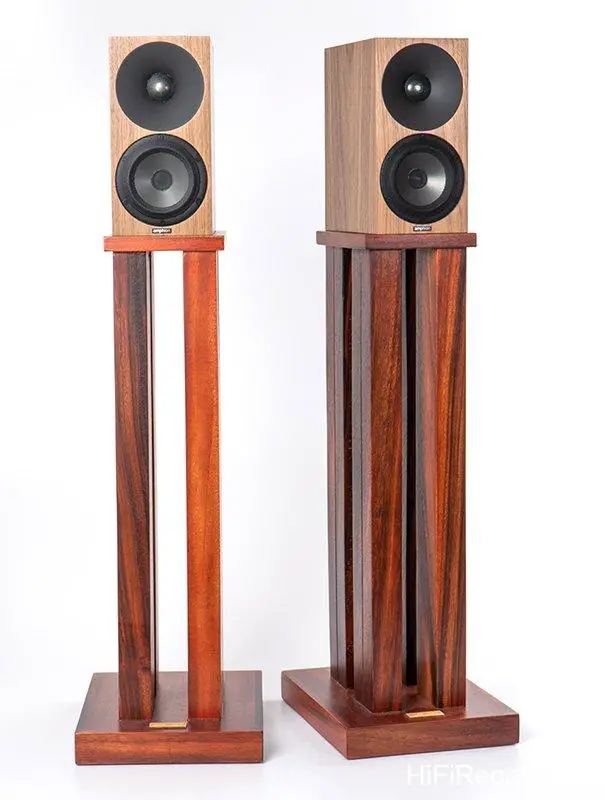
While I envision the Argon 0 ideally placed on TV consoles, side tables, or desks – aligning with its lifestyle and home-centric design – our office setting necessitated speaker stands.
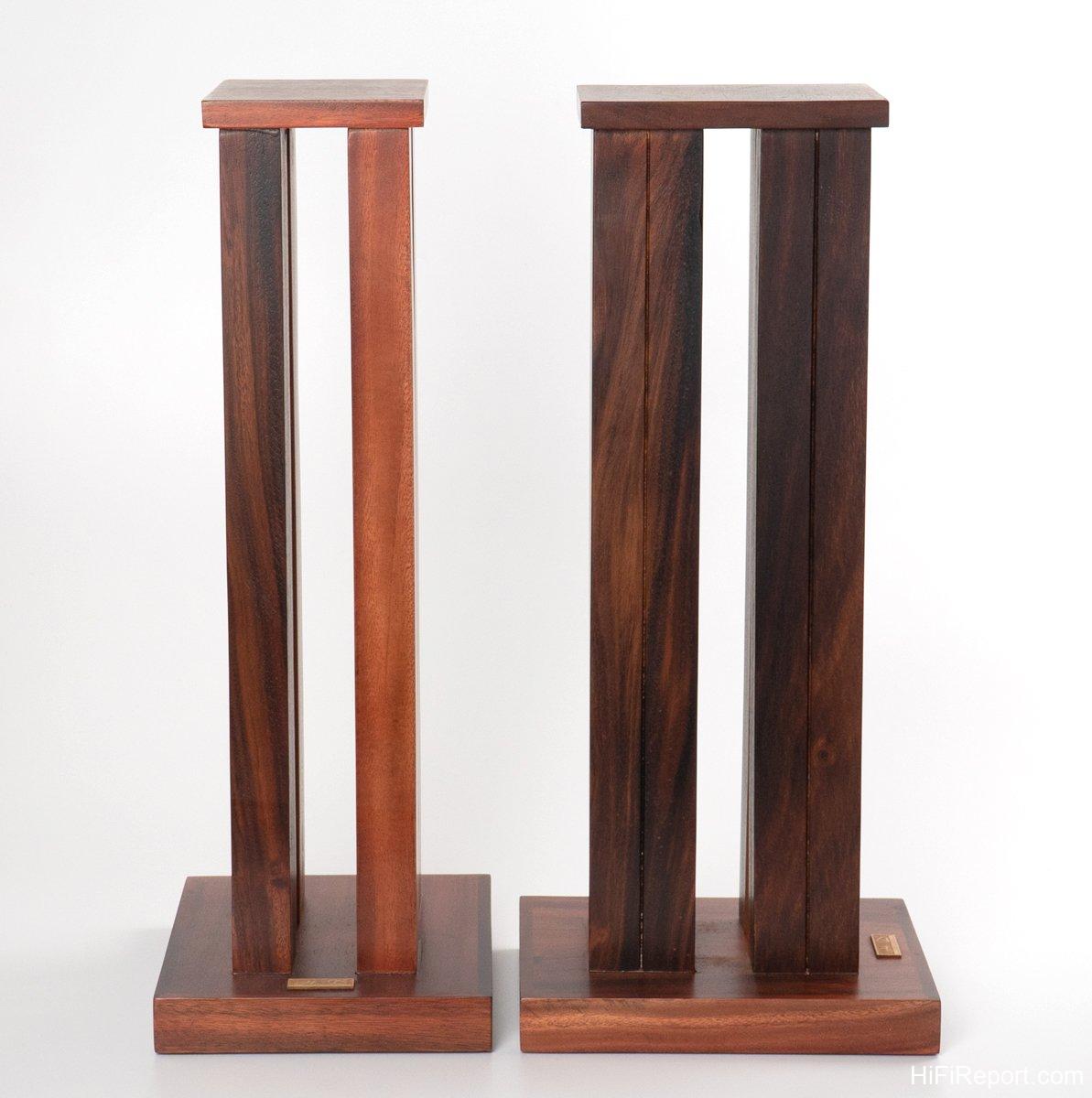
Accompanying the speakers were Homely Design (HD) stands, crafted from solid walnut. These stands featured steel plates embedded within their bases, adding substantial weight to dampen vibrations and enhance stability.
The stands, considerably heavier than the speakers themselves and standing at a height of 70cm, proved a fitting pedestal for the diminutive Argon 0.
Rich Midrange and Clarity
The Argon 0 delivers a sonic signature consistent with the Amphion family: a warm, full, and substantial midrange, coupled with commendable clarity.
Despite employing metal diaphragms for both tweeter and woofer, any hint of metallic harshness is absent. Instead of aggressiveness, the sound leans towards a gentle softness, a characteristic that encourages extended, fatigue-free listening.
During Diana Krall’s “All or Nothing at All,” the opening bass notes, while exhibiting the inherent low-frequency limitations of the speaker’s size, presented a pleasingly crisp and articulate character. Crucially, the bass remained substantial, particularly with moderate speaker spacing, yielding full and solid note reproduction, impressive for a speaker of this stature.
I found myself particularly enjoying the Argon 0’s rendering of Diana Krall. Imaging was precise, the stereo soundstage expansive, and the nuances of her vocal delivery richly detailed.
Yet, and this is crucial, there was no trace of harshness, not even a hint.
Despite the wealth of detail, even at elevated volumes, sibilance, breath sounds, and plosives remained smooth and non-fatiguing.
To reiterate, absolutely no harshness.
Immersive Nearfield Stage
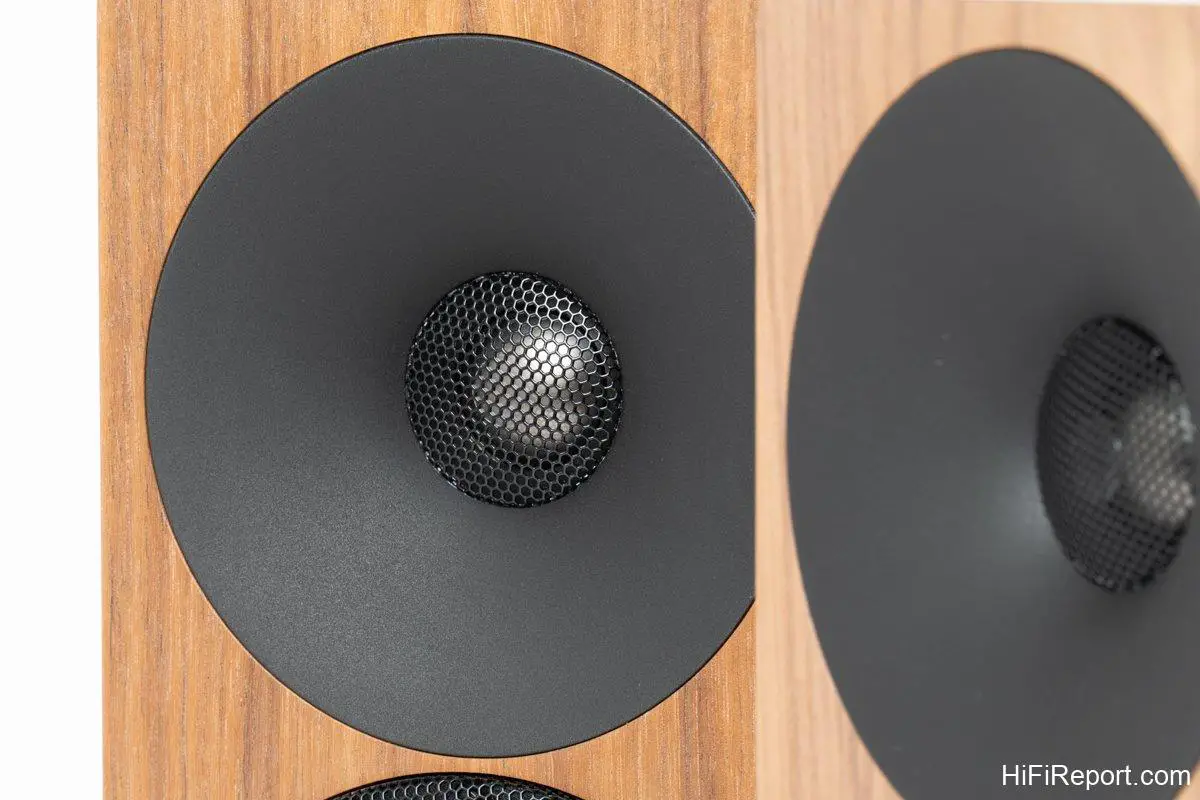
Amphion’s U/D/D waveguide technology plays a vital role in controlling sound dispersion, minimizing reflections from side walls, floor, and ceiling, and expanding the sweet spot.
This design also subtly recesses the tweeter, aligning its acoustic center with that of the woofer, aiming for a more coherent point-source radiation pattern.
This proves particularly effective in nearfield listening scenarios like mine.
Listening to Kyrie Kristmanson’s “Song X,” where the instrumentation is sparse, relying on percussion and finger snaps to accompany her vocals, the Argon 0 excelled.
It not only presented sharply defined imaging but also precisely located the percussion elements within the soundstage. A miniature yet tangible stage materialized before me.
Even at moderate volumes, a wealth of musical information is readily accessible – not just audible, but almost visually present.
Expansive 3D Soundscape
The more complex and richly layered the music, the more the Argon 0’s (or indeed, any Amphion speaker’s) virtues become apparent.
Daniel Yvinec’s “Yvinek” album, for instance, blends acoustic instrumentation with electronic textures, creating a dreamlike sonic atmosphere.
Leaning into the listening position in front of the Argon 0s, I was instantly immersed in an ethereal soundscape. The sound was enveloping, the textures palpably real. The saxophone’s lower register resonated with the subtle rasp of air against the instrument’s tubing.
The soundstage reproduction was truly remarkable.
Home Theater Versatility
Amphion explicitly highlights the Argon 0’s suitability for television use, promising enhanced audio for movies and TV shows.
Practical experience confirms this.
The clear, substantial, yet gently softened midrange, devoid of harshness, combined with the speaker’s excellent soundstage capabilities, makes it a compelling option for home theater applications.
I simply connected the USB cable to my computer and sampled movie clips via My Video.
Dialogue reproduction was full and articulate, and action sequences, such as car chases and gun battles, were rendered with impressive dynamism. Front-stage sound effects flowed seamlessly, and the impact of explosions and crashes belied the Argon 0’s compact size.
In smaller spaces and at nearfield distances, the Argon 0 delivers genuinely engaging home theater performance.
2.1 System Enhancement
I strongly encourage Argon 0 owners to consider adding a subwoofer.
During my evaluation, I integrated a Velodyne MicroVee 8-inch active subwoofer. Bypassing surround sound processing, I routed the preamp output directly to the subwoofer, setting the crossover around 65Hz and fine-tuning the subwoofer level by ear.
The addition of a subwoofer elevated the overall sonic experience considerably. Improvements extended beyond bass extension and depth, enriching the midrange and treble frequencies as well. The music gained dimensionality, richness, and a more organic, lifelike quality. Movie sound effects gained impact and visceral excitement.
A 2.1 configuration with a subwoofer is indeed a recommended approach from Amphion themselves.
Listening to Anne-Sophie Mutter’s “Across the Stars” album, without a subwoofer, the soundstage unfolded clearly, and details were crisp, but the bass felt somewhat lacking, resulting in a leaner lower register. Higher volumes were needed to impart weight to the music.
However, pushing small speakers to higher volumes can introduce strain, with cabinet resonances becoming more apparent, sometimes manifesting as a nasal coloration.
With the subwoofer integrated, I could maintain a volume level optimal for the Argon 0s, yet achieve a weighty and solid sound. The enriched sonic foundation enhanced the musical expression.
Whether it was the grandeur and intensity of “Rey’s Theme” or the eerie mystery of “Dracula: Night Journey,” a solid low-frequency foundation proved essential to convey the full emotional depth of the music.
Furthermore, the addition of a subwoofer allowed for slightly wider speaker placement.
Desktop Audio Excellence
For desktop listening, the Argon 0 seems almost purpose-built.
Its small footprint is ideal for space-constrained desks. Paired with a USB DAC and amplifier, it forms a simple yet high-quality desktop audio system.
Perfectly suited for both music and video playback from a computer.
However, when placed directly on a desktop, vibration isolation is crucial. Employing isolation pads or spikes is highly recommended to prevent desktop resonance from muddying the sound and introducing distortion.
My desktop listening impressions were formed using an IKEA work desk, simulating a typical desktop setup.
A Must-Try for Small Speaker Lovers
Just as enjoyable as my prior experience with the Helium 410, the Amphion Argon 0, a small pair of bookshelf speakers, delivers rich and engaging musical enjoyment.
Amphion’s expertise in professional studio monitor design informs their home audio offerings. This professional-grade technology, concealed beneath Amphion’s minimalist aesthetic, is the true essence of their speakers.
If you appreciate small speakers, if you value elegant small speakers, if you seek elegant, sonically rewarding, and practical small speakers, then experiencing the Amphion Argon 0 is simply essential.
Reference Components
Source: Telos EMP, NuPrime DAC-10H
Amplifier: NuPrime Evolution STA
Subwoofer: Velodyne MicroVee subwoofer
Cables: Tromba Marina OCC-1 speaker cable / Xsymphony Precision One power cable / Tromba Cypher-OCC USB cable
Accessories: MYSTJ Audio CMS audio rack / ASI tuning devices
Specifications
**Amphion Argon 0**
* Type: 2-way, 2-driver bass-reflex bookshelf speaker
* Drivers: 1 x 1-inch titanium dome tweeter, 1 x 4.5-inch aluminum cone mid-woofer
* Crossover Frequency: 1,600Hz
* Impedance: 8 ohms
* Sensitivity: 86dB
* Frequency Response: 50Hz – 25kHz (+/- 6dB)
* Recommended Amplifier Power: 20 – 120 watts
* Dimensions: 259 x 132 x 220 mm (H x W x D)
* Weight: 4 kg