
Ansuz D-TC Supreme Power Switch Review
Network Switch for Audio?
Is this really happening? An audio review about a network switch? Yes, you read that right. And it’s not just a review unit; we bought it for ourselves! That’s how impressive the Danish-made Ansuz D-TC Supreme Power Switch is – even the editor-in-chief couldn’t resist taking the plunge.
Digital Streaming vs. CD and LP
Digital audio streaming began its ascent in the early 21st century. Two decades of progress, fueled by ever-increasing network bandwidth and advancements in cloud computing, along with subscription-based music streaming services, have made vast music libraries like Apple Music, Spotify, and KK Box accessible for a modest monthly fee. For the discerning listener, services like Tidal and Hi-Res offer high-resolution audio streaming. Network streaming is undeniably the present and future of music consumption. Therefore, achieving parity between digital streaming and established high-fidelity formats like CD and vinyl is a crucial consideration in assembling a top-tier audio system.
While many audiophiles focus on music servers, CD ripping, and NAS applications, the “network switch” often goes unnoticed. It wasn’t until around 2019 that dedicated audio brands started releasing such products, revealing that the network switch could be the “last mile” in achieving truly exceptional digital streaming sound, a critical bottleneck in network audio and video quality.
Bottleneck Discovered at Munich High End
I first encountered Ansuz’s network switch at the 2019 Munich High End Show. Michael Borresen, the driving force behind Ansuz, passionately explained the crucial role of the switch in network streaming playback.
Michael spoke with the zeal of a discoverer, emphasizing the network switch as a vital link in achieving high-fidelity digital streaming. He highlighted the innovative technologies Ansuz had incorporated, referring to their product line as “Power Switches.”
As Michael elaborated, I translated his points for my colleagues from HiFiReport Audio. However, I, along with HiFiReport’s owner, Mr. Hu, and store manager, Mr. Cai, remained cautiously optimistic. Ansuz’s technical claims sounded impressive, but the Munich show floor lacked the controlled environment for A/B comparisons. We couldn’t ascertain the true magnitude of the D-TC Supreme’s impact in that setting. Nonetheless, Ansuz’s technical explanations were compelling, suggesting a solid engineering foundation. We concluded that a proper evaluation would require an in-house audition once the unit arrived.
Premium Price for a Power Switch
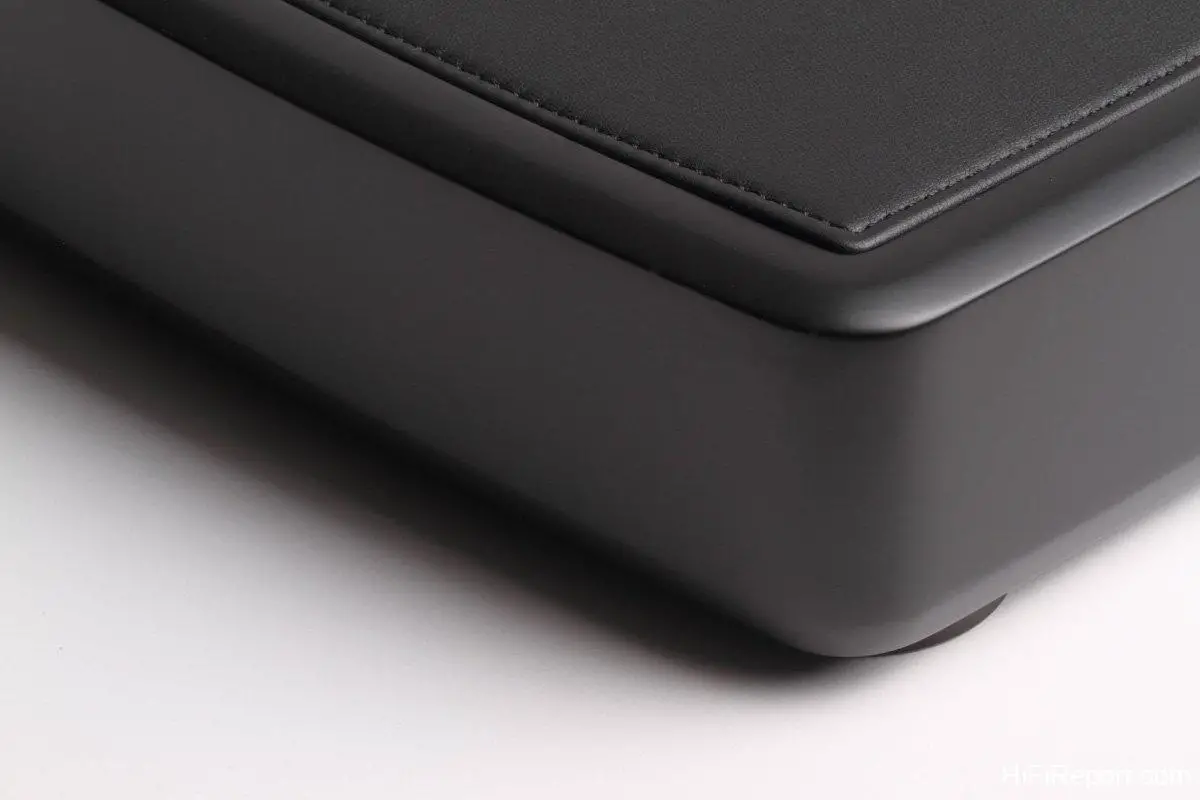
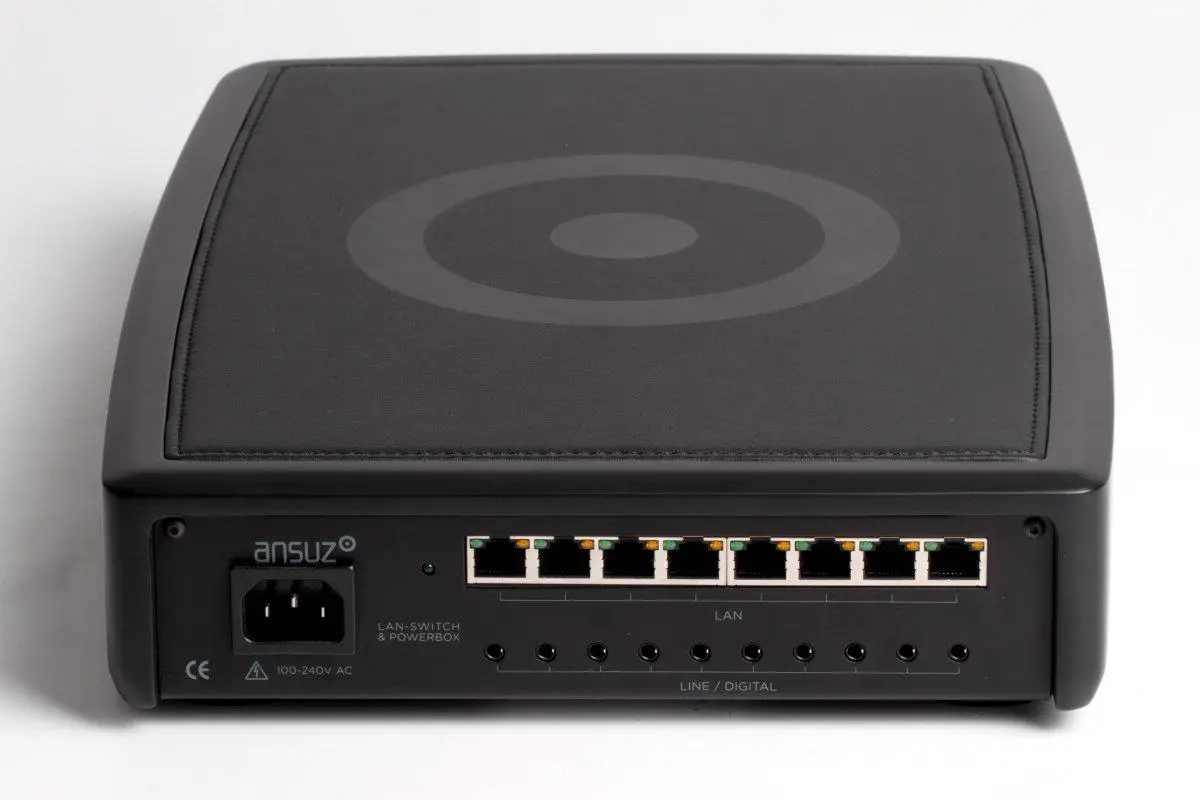
The prototype models showcased in May 2019 hinted at a four-tier lineup of Ansuz “Power Switches,” ranging from the entry-level Power Switch X-TC to the A2, D2, and the flagship D-TC Supreme.
HiFiReport Audio introduced these to the market with reference prices starting at approximately $2,400 USD for the X-TC (NTD 76,800). The A2 followed at around $3,600 USD (NTD 115,200), the D2 at $6,000 USD (NTD 192,000), and the top-of-the-line D-TC Supreme commanding a hefty $14,400 USD (NTD 460,800).
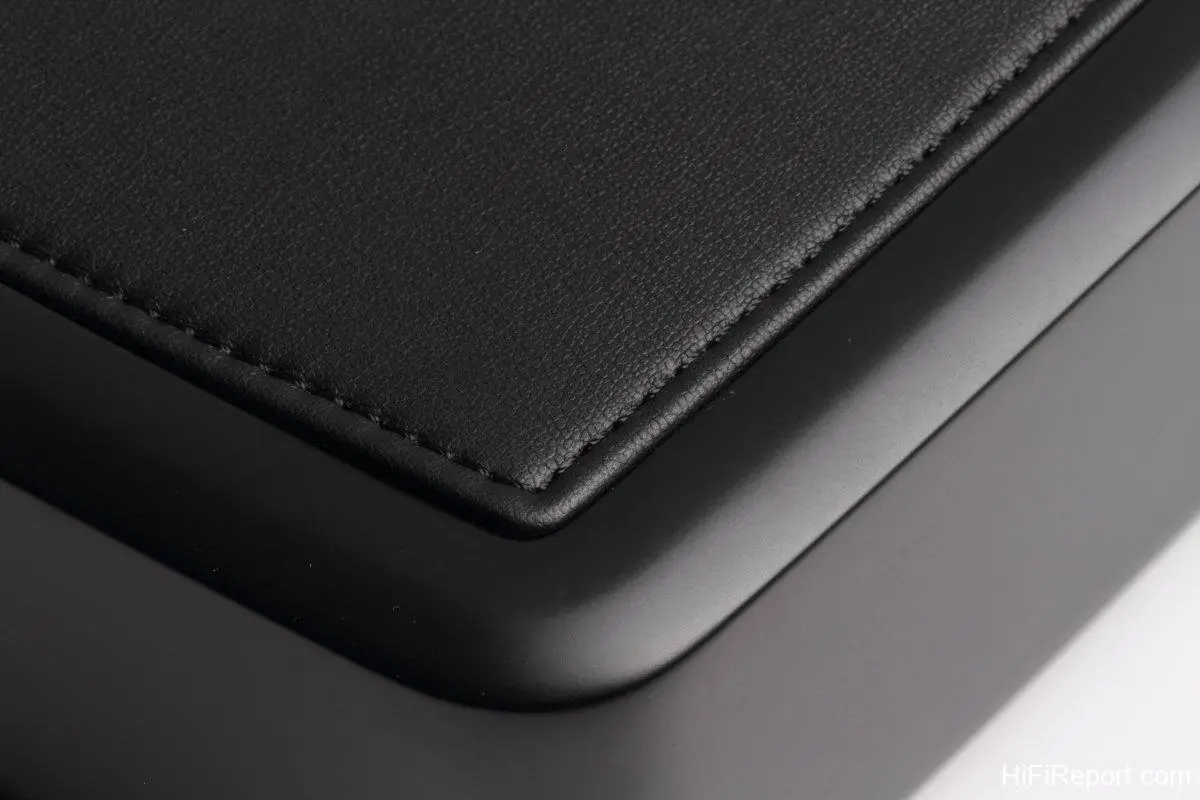
The D-TC Supreme’s price tag rivals that of a motorcycle, and even the entry-level X-TC could buy you a Gogoro electric scooter. This for a device that, at its core, is still a black box performing the same function as a network switch from any major 3C manufacturer. How could Ansuz justify such a price premium simply by labeling it “audio-specific”? Marketing this would be a challenge, to say the least.
Hooked at First Listen – An Unplanned Addiction
When the complete Ansuz Power Switch series landed in Taiwan in late 2019, my initial apprehension returned. I had never reviewed a network switch before. If a review unit was sent, how would I even approach it? My understanding was limited. Moreover, Ansuz’s pricing was undeniably high-end. What if the sonic benefits were negligible? Caught between the desire to review and the fear of the unknown, HiFiReport Audio announced they would be hosting an Ansuz product launch event featuring the entire Power Switch range.
Perfect. A product launch event is news. I could cover it as an event report, and learn more about the technology. The manufacturer would surely provide technical details, a valuable learning opportunity. So, Editor-in-Chief Lin Zhiyu and I decided to attend, aiming to understand the products and decipher Ansuz’s value proposition.
Unexpectedly, the product launch event turned into an instant addiction.
Had I known, I might have skipped it!
Dramatic A/B Comparison
HiFiReport’s launch event was exclusively for audio media, hosted by store manager Mr. Cai. He adeptly explained the installation, usage, and sonic principles behind the Power Switches, covering aspects like vibration isolation, grounding, and power conditioning. However, my primary concern remained sound quality. Unless there was a demonstrable improvement, Ansuz’s pricing would be unjustifiable.
The demonstration involved an Esoteric N-05 network streamer. The same music tracks were stored on both a NAS and a USB drive. The Power Switch was inserted in the network path between the NAS and the N-05, while the USB drive played directly, bypassing the network entirely. Logically, the USB drive, with its shorter signal path, should have been less susceptible to interference. Yet, to my surprise, the entry-level X-TC Power Switch, when inserted in the NAS path, outperformed the direct USB connection.
The second comparison pitted an Asus network switch against the X-TC. Again, the difference was immediately apparent. Finally, the X-TC was compared to its own sibling, the A2. The A2, in turn, surpassed the X-TC.
This was unexpected. The magnitude of the A/B differences was striking. My mind raced, trying to comprehend why simply swapping a small Power Switch could yield superior sound compared to a direct USB connection. Furthermore, how could Ansuz, an audio company, so decisively outperform Asus, a networking giant, in what is fundamentally a networking function? The sonic upgrade was so significant, it exceeded all my expectations.
Identifying the Weakest Link in Streaming
Astonished, I realized the need to delve deeper into Power Switches. This was uncharted territory in audio, a blue ocean where network switch optimization was largely ignored. Ansuz had seized a first-mover advantage.
However, Ansuz isn’t alone in recognizing this opportunity. Korean manufacturer SOtM and Japanese brand Melco have also released similar products, confirming that network switches are indeed a previously overlooked weak link in the digital music streaming chain. These pioneering brands identified this untapped market in 2019, offering solutions to address this critical bottleneck.
Deciding to Go for the Flagship
Intrigued, I decided the best way to understand the Power Switch was to acquire one for personal exploration. Ansuz presented a challenging choice with its four models, all sharing the same chassis size but differing internally. From an audiophile’s perspective, starting with the entry-level X-TC and gradually upgrading if improvements were evident seemed logical. However, as an audio reviewer, a thorough evaluation demanded a deeper dive.
At the product launch, we heard the X-TC versus A2 comparison, revealing clear sonic distinctions between the levels. However, the D2 and D-TC Supreme remained untested. My mind was set on acquiring a unit for in-depth study. I told HiFiReport’s Mr. Hu that rationally, the D2, being superior to the A2 and more affordable than the top model, would be a good choice. But my ultimate desire was to go straight to the flagship. I asked HiFiReport to negotiate a media discount with Ansuz for the D-TC Supreme. If feasible, we would purchase the flagship for extended evaluation; otherwise, the D2 would suffice.
Mr. Hu took up the challenge. A few days later, he informed me that Ansuz, upon learning of HiFiReport’s intention to purchase for research, offered a generous price. The decision was made: we would go for the D-TC Supreme. However, due to initial production quantities and the D-TC Supreme’s premium price, only one unit was initially ordered. A customer in Kaohsiung, after hearing it, was so impressed he bought it immediately. Consequently, the D-TC Supreme was temporarily out of stock, requiring a wait for the next batch.
Patience is a virtue, especially for good audio. The D-TC Supreme arrived at the editorial office before the Lunar New Year.
Unraveling the Switch’s Impact
Why does the Ansuz Power Switch enhance digital music streaming? Frankly, even now, as I write this review, I can’t claim to fully understand it. Ansuz’s website emphasizes “noise reduction” as the key to superior sound, a principle universally acknowledged in audio. But the magnitude of the D-TC Supreme’s effect remains somewhat enigmatic. I received technical documentation from Ansuz, and while it provided insights, a complete comprehension eludes me. Nevertheless, I can offer a simplified explanation based on my understanding.
The core technology in the D-TC Supreme revolves around Ansuz’s proprietary noise suppression techniques. Specifically in the power supply section, Ansuz employs a range of custom-wound coils, each with unique specifications, designed to combat power supply noise. The effectiveness of these noise-suppressing coils is quantifiable; a greater quantity translates to enhanced noise reduction. Lower power supply noise results in a darker sonic background and improved dynamic range.
Ansuz Noise Suppressing Technology: Deconstructed
The essence of the D-TC Supreme’s power conditioning lies in its utilization of these specialized coils. Ansuz categorizes them under the umbrella term “Tesla Coil” (TC). The fundamental passive version is the P-TC (Passive Tesla Coil). Electrically energized versions are designated A-TC (Active Tesla Coil). AC-TC (Active Cable Tesla Coil) denotes coils integrated with power cord conductors, and AS-TC (Active Square Tesla Coil) refers to surface-mounted coils on circuit boards.
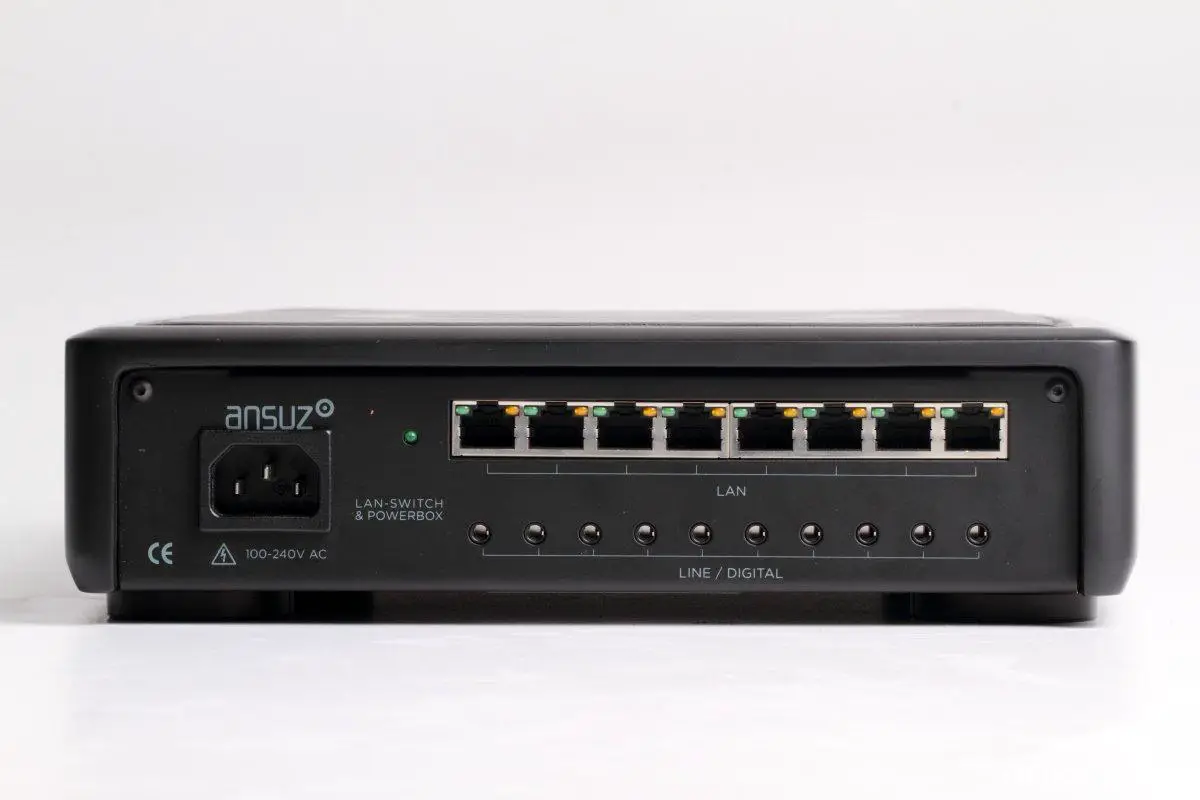
All coil windings are constructed with a double-inverted twist, generating a repulsive force to counteract noise. However, variations in application necessitate subtle differences in coil geometry, hence the diverse nomenclature.
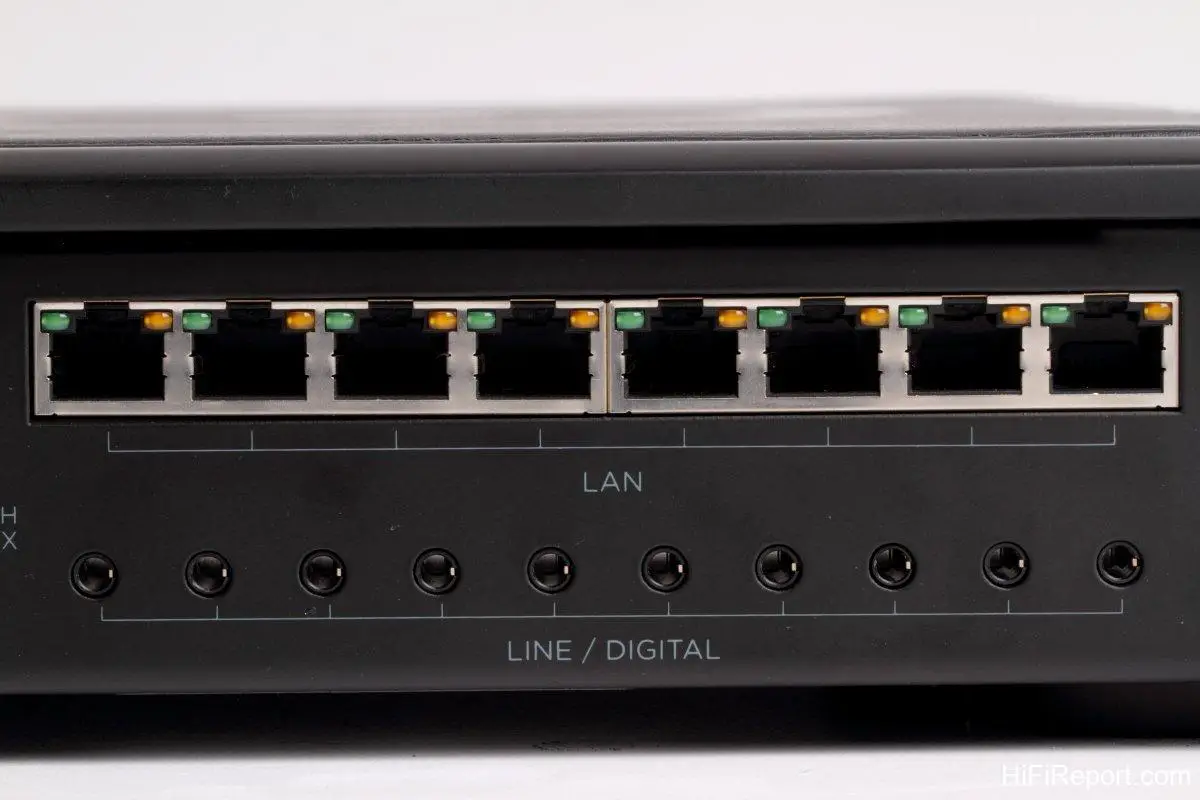
Ansuz asserts the quantifiable nature of their Tesla Coils: more coils equate to greater noise suppression. Among the Power Switch models, the entry-level X-TC utilizes 12 AS-TC units but omits AC-TC coils. In contrast, the A2, D2, and D-TC Supreme all incorporate 2 AC-TC units, with the AS-TC count escalating to 48.
Intriguingly, the Tesla Coil count in the D-TC Supreme appears similar to the A2 and D2. However, the D-TC Supreme distinguishes itself by incorporating an additional 60 A-TC units. Accommodating this increased component density necessitates a dual-layer circuit board, maximizing noise suppression in the power processing stage.
Analog Dither Technology
Beyond specialized coils, Ansuz employs a proprietary “Analog Dither” technology, termed Ansuz AD. Noise suppression via coils alone is deemed insufficient; hence, the integration of Ansuz AD.
Dither, traditionally a digital domain concept, involves introducing minute amounts of random noise to lower-bitrate data to mitigate harmonic distortion, suppress unwanted harmonics, and minimize quantization errors. While established in digital audio and video, Ansuz’s Analog Dither applies an analog approach. It operates on the principle of injecting controlled random noise to interact harmonically with existing noise, thereby enhancing the clarity of the audio signal.
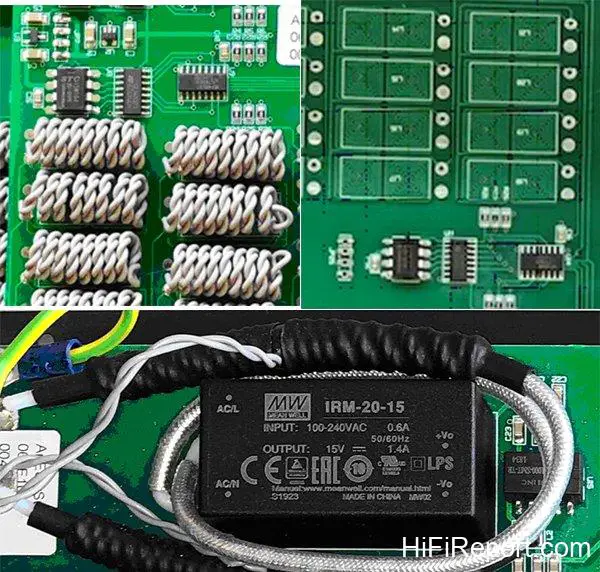
Ansuz states this technology was originally developed for radar systems in aircraft and naval vessels, designed to maintain signal clarity in high-vibration environments.
Ansuz AD, like Tesla Coils, is a quantifiable technology. More is better. The entry-level X-TC features a single Ansuz AD unit, the A2 and D2 each have two, and the D-TC Supreme boasts five.
AARC: Radio Frequency Interference Absorption
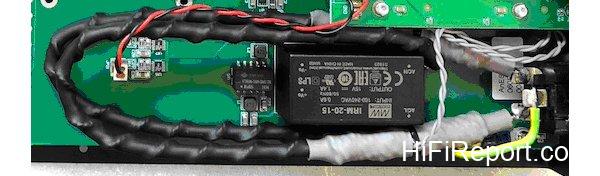
The D-TC Supreme and D2 models exclusively incorporate Anti-Aerial Resonance Coil (AARC) technology. AARC coils are wound around internal power wiring to absorb ambient radio frequency (RF) interference.
Internal wiring acts as an antenna, susceptible to external noise. In the GSM era, this manifested as intermittent “tick-tock” noise. In the 3G and 4G era, RF interference presents as a subtle white noise floor. AARC effectively mitigates this by absorbing external RF, eliminating low-level white noise.
The D-TC Supreme and D2 models exclusively incorporate Anti-Arial Resonance Coil (AARC) technology. This is a coil wound around the outer layer of internal power wiring. Its purpose is to absorb invisible radio frequency (RF) in the air.
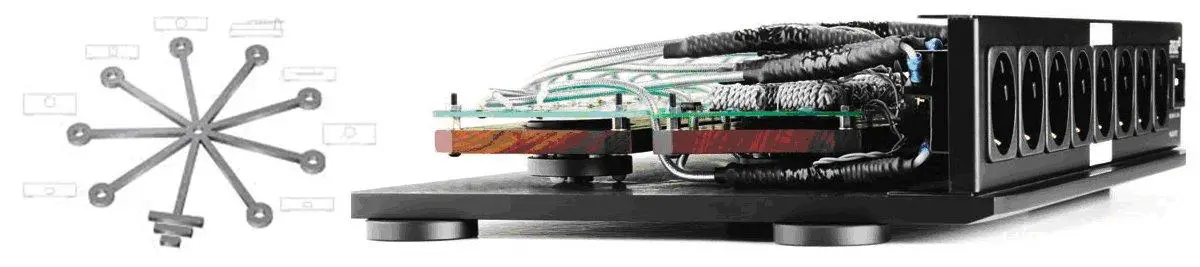
Finally, two technologies are shared across all four Power Switch models: Star Grounding and Internal Resonance Control. Star grounding addresses power grounding optimization, while Internal Resonance Control manages mechanical resonance within the chassis.
Left: Star Grounding and Right: Internal Resonance Control
Focus on Power and Vibration
I’ve attempted to distill the D-TC Supreme’s unique technologies into the simplest terms possible. However, you may have noticed the conspicuous absence of any discussion regarding network functionality. Indeed, in terms of core networking capabilities, the D-TC Supreme offers no groundbreaking features. It provides a high-performance Ethernet interface with Quality of Service (QoS) processing, data transport, half-duplex, and full-duplex transmission modes, mirroring the specifications of any quality 3C network switch. The D-TC Supreme’s differentiation lies in its proprietary Tesla Coils, Analog Dither, AARC RF absorption, Star Grounding, and Internal Resonance Control. These Ansuz-exclusive, audio/video-centric technologies constitute the D-TC Supreme’s value proposition and Ansuz’s competitive edge.
Having navigated this technical deep dive into Ansuz’s innovations, I hope I haven’t tested your patience. I understand many audiophiles prioritize sonic performance over technical intricacies. However, my decision to place an order with Ansuz at the HiFiReport product launch, opting for the flagship D-TC Supreme, underscores my profound interest in the very real impact of “Power Switches.”
Weakest Link Theory in Audio
Frankly, prior to the HiFiReport audition, I was skeptical of the Power Switch’s potential. I expected perhaps a marginal improvement. But after experiencing it firsthand, I realized network switches might indeed be the “last mile” for exceptional digital streaming.
A fundamental engineering principle dictates that a system’s overall performance is limited by its weakest link, not its strongest. This is often referred to as the “chain theory” or “barrel theory.” A chain’s strength is determined by its weakest link, not the strongest. A barrel’s capacity is limited by its shortest stave, not the tallest. The analogy holds true for audio systems: overall performance is capped by the weakest component.
In digital streaming, attention is typically directed towards music servers, DACs, power cables, signal cables, and even network cables. Until recently, the network switch remained an overlooked “weakest link.”
Digital Streaming Elevated to CD and LP Standards
With the D-TC Supreme in place, HiFiReport’s digital music streaming capabilities have undergone a significant transformation. Our previous setup, employing Zyxel or Netgear switches, involved selecting reputable brands without scrutinizing specifications, as we hadn’t recognized the network switch as a critical bottleneck. Stable network connectivity was the primary concern. However, the D-TC Supreme has elevated NAS-based streaming to a level comparable to CD and LP playback. Is it truly that transformative? Am I about to reignite the CD versus LP debate, now incorporating digital streaming? No. In the CD versus LP discourse, my stance is: any enduring music format or medium possesses inherent merit. CDs offer certain advantages, LPs offer a distinct sonic flavor. Both formats, when optimized, can deliver exceptional sound, albeit with subtle sonic nuances inherent to their respective technologies.
However, in recent years, even high-resolution digital streaming from NAS sources often fell short of top-tier CD performance. Whether in terms of sonic density, detail retrieval, or soundstage spaciousness, NAS playback often lagged. Cloud-based streaming services like Apple Music or Spotify via Bluetooth further widened the gap. CD and LP retained a palpable solidity and sonic authority.
Comprehensive Improvement in Digital Streaming
The D-TC Supreme’s integration has rendered NAS-streamed music fuller and more rounded, with enhanced sonic density. Mid-bass impact and image solidity are improved, and soundstage height, width, and depth expand noticeably. Once connected, it’s hard to disconnect.

Technically, the D-TC Supreme reduces noise. Subjectively, the listening experience reveals a profoundly blacker background, devoid of underlying noise. Sonic purity is elevated. This quieter backdrop enhances dynamic contrasts, expands the soundstage, and imbues digital streaming with a more natural and engaging musicality, fostering deeper listener immersion.
In essence, with the D-TC Supreme, CD, LP, and digital streaming now form a triumvirate of high-fidelity options, each with its own strengths and subtle sonic characteristics, offering distinct listening pleasures.
Consider Jacqueline du Pré’s iconic performance of the Elgar Cello Concerto with Sir John Barbirolli conducting the London Symphony Orchestra. I compared the 2017 Abbey Road 24-bit/96kHz remaster on 180g vinyl against the CD and a 16-bit/44.1kHz file stored on the NAS. The digital files were identical; only the storage medium differed. The comparison focused on the sonic nuances across these playback formats.
Format Showdown: Same Music, Different Mediums
The format comparison employed a Lindemann Musicbook Source / Power 1000 pre/power amplifier combination driving Wilson Audio Alexia 2 loudspeakers. The D-TC Supreme was inserted between the NAS and the Musicbook Source. CD playback utilized a North Star Design CD Transport / USB DAC 32. The LP source was a Linn LP 12 Klimax turntable, the most expensive component in the setup, exceeding a million in value. The Musicbook Source, while capable of network streaming, is priced more modestly. This comparison wasn’t entirely level playing field, but the D-TC Supreme dramatically elevated digital streaming’s performance.
The Elgar Cello Concerto opens with a powerful orchestral statement. Du Pré’s intense, weighty, and melancholic cello melody immediately establishes dramatic tension. As the cello recedes, woodwinds emerge from the soundstage depths, engaging in a poignant dialogue. The orchestra reiterates thematic motifs, building musical intensity from quiet introspection to a tense climax. A powerful orchestral response follows, shifting from minor to major key, a release from melancholy into a warmer, more nostalgic tone. The return of the minor key finds the cello in lament.
The Elgar Cello Concerto’s brilliance and Du Pré’s definitive interpretation are well-documented. I’ve heard this recording countless times. However, comparing CD, LP, and digital streaming versions in this context was a first. The LP 12 Klimax naturally held court, presenting du Pré’s cello with palpable presence and emotional intensity. The North Star CD player, while sonically competent, was less musically engaging.
Finally, the NAS playback with the D-TC Supreme was assessed. The sonic background was impressively black, even quieter than the LP 12 Klimax. Soundstage depth and width were on par with the vinyl. Notably, the cello’s powerful opening notes and the subsequent woodwind entrances from deep within the soundstage were rendered with remarkable realism.
Unprecedented Digital Streaming Performance
I must confess, I’ve never experienced digital streaming sound this good at HiFiReport. The D-TC Supreme, a seemingly simple addition, delivers a transformative sonic upgrade, exceeding my initial expectations.
One might question how a single D-TC Supreme, placed after countless network switches in the broader internet infrastructure, can yield such a significant improvement. The analogy of power cables applies. Utility-supplied electricity is ostensibly uniform, yet power cable changes at the component level audibly impact sound. The D-TC Supreme acts as a network noise purifier, installed just before the digital streaming player. It unlocks a quieter sonic backdrop, revealing richer detail, a more expansive and natural soundstage, allowing digital streaming to rival CD and LP.
My decision to opt for the flagship D-TC Supreme over the D2 now feels vindicated. Had the D2 also offered a significant upgrade, I might have been compelled to borrow the D-TC Supreme for comparison, potentially leading to another upgrade. Now, I can simply enjoy the pinnacle of Power Switch technology.
Network switches represent a nascent blue ocean market. Most digital streaming enthusiasts, like the HiFiReport team initially, likely employ standard switches from mainstream manufacturers, overlooking dedicated audio solutions. Few realize the transformative potential of a specialized network switch.
I anticipate a surge of audio brands entering this market in the coming years, incorporating diverse technologies, including clock synchronization, refined network interfaces, and vibration isolation. Ansuz’s approach, centered on meticulously engineered Tesla Coils to combat internal power supply noise, complemented by star grounding, vibration control, and Analog Dither, has secured them a valuable first-mover advantage.
Entry-Level D-TC: A Gateway to Improvement
The D-TC Supreme is undeniably expensive, orders of magnitude pricier than typical 3C network switches. However, for dedicated audiophiles seeking peak performance, the Power Switch warrants serious consideration as the “last mile” in digital streaming audio. While the D-TC Supreme represents the summit, the entry-level X-TC provides a more accessible entry point. If its benefits are immediately apparent, then exploring higher-tier models becomes a compelling proposition.
Specifications
* **Type:** Network Switch
* **Functions:** QoS, Half-duplex mode, Full-duplex mode, Energy-saving function
* **Dimensions:** 69 × 261 × 377 mm (H × W × D)
* **Flagship Store (Taipei):** No. 155, Section 1, Jinshan South Road, Taipei City, Phone: 02-2321-2138
* **Flagship Store (Taichung):** No. 676, Civic Road, Xitun District, Taichung City, Phone: 04-2251-3388
* **Flagship Store (Kaohsiung):** No. 510 Jiuru 1st Road, Kaohsiung City, Manager Huang: 0929-810-806
* **Website:** www.lamusique.com.tw