
Apertura Edena Evolution Review
Apertura’s founder, Christian Yvon, established his own Prologue Research & Development studio in 1978, even before founding the Apertura brand. This company, while not producing loudspeakers itself, was dedicated to a wide range of loudspeaker-related research. During this period, he conducted numerous acoustic experiments for loudspeaker design, including his proprietary DRIM (Dual-Resonant Intermodulation Minimum) crossover design.
Beginning in 1979, he developed the Dialogue, Apologue, Analogue, and Epilogue loudspeakers for Goldmund. He also went on to design for other companies such as Focal, Sonus Faber, Point Source, Auditor, Capriccio Continuo (Joseph Szall), and Einstein, solidifying his status as a luminary in the loudspeaker design world.
In 1982, Christian Yvon decided to establish his own loudspeaker brand, Apertura, a name signifying the opening of a new philosophy. His goal was to create loudspeakers with the lowest coloration, minimal phase distortion, shortest impulse delay, and least cabinet resonance. The first model, the Reference, was launched in 1983, followed by many other models which will be omitted here for brevity. During this period, Christian Yvon collaborated with a loudspeaker manufacturing factory.
By 2009, due to a divergence of opinions, his partnership with this factory ceased. In 2010, he began collaborating with Eric Poyer to establish a new company, Stentor. Christian Yvon took charge of design, while Eric Poyer, with over 20 years of manufacturing experience, oversaw production, continuing the legacy of Apertura loudspeakers. Between 2010 and 2013, the Armonia, Onira, Ariana, Edena, and Enigma models were introduced. Kalya followed in 2014.
Currently, Apertura’s product line features eight loudspeakers. The flagship is the Enigma MK2, followed by the Adanamte, and then the Edena Evolution. Below these are the Forte, followed by the Armonia Evolution, Stela, Sensa, and Swing. Additionally, four models – Kalya, Edena, Armonia, and Ariana MK2 – are no longer in production. In 2018, to celebrate its 35th anniversary, Apertura launched the Edena Evolution.
The key differences from its predecessor, the Edena, lie in the tweeter and the crossover, with a corresponding increase in price.
First Impressions and Design Innovations
At first glance, the Apertura Edena Evolution might lead many to believe there’s a hidden driver behind the black felt surrounding the ribbon tweeter. This is not the case; the felt serves to reduce the acoustic diffraction from the ribbon tweeter. Loudspeaker designers are well aware of diffraction, but with conventional tweeters, it’s often left unaddressed, a practice Christian Yvon himself followed.
However, in his ribbon tweeter designs, this treatment is unique to Apertura loudspeakers, demonstrating a meticulous attention to even the subtlest influences. Beyond reducing diffraction, this felt also improves off-axis response and high-frequency dispersion, a testament to Christian Yvon’s ingenuity.
The Edena Evolution features a 22 cm diameter woofer from Seas of Norway, mounted on a metal frame. Its diaphragm employs an “Isotactic Matrix” weaving technique, a woven polypropylene material that offers superior lightness, rigidity, and damping characteristics. To facilitate long excursion, the woofer utilizes a long-throw voice coil design. A distinctive feature is its voice coil former, constructed from titanium alloy with a diameter of 130mm.
This substantial former is capable of supporting a large diaphragm area, minimizing deformation during movement.
The ribbon tweeter in the Edena Evolution hails from Fountek () in Jiaxing, China. This is a new generation of ribbon tweeter, featuring a planar metallized polymer diaphragm (a thin layer of aluminum deposited on a polymer base) driven by neodymium magnets. It’s worth noting that China possesses over 80% of the world’s rare earth resources necessary for neodymium magnet production, establishing it as a major supplier.
Consequently, a significant proportion of ribbon tweeters found on the market originate from China. Its diaphragm surface area is twice that of the previous Edena tweeter, allowing it to produce sufficient sound pressure without excessive drive, thereby reducing distortion, enhancing dynamic range, and improving resolution.
Crossover and Construction
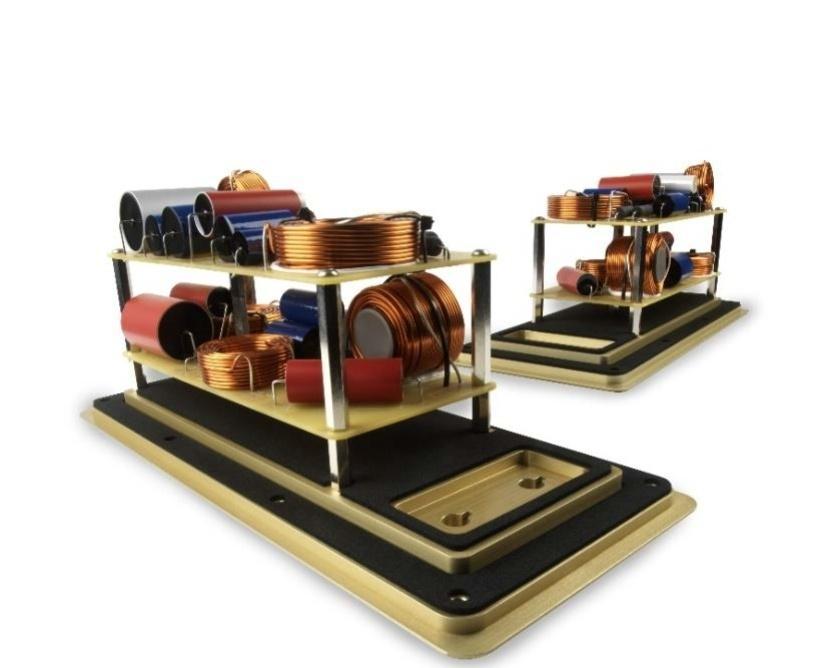
The new crossover network is notably complex. Despite being a two-way design, it employs Apertura’s unique DRIM structure, featuring a triple-slope attenuation that achieves a 90-degree cutoff frequency while also controlling phase distortion. The capacitors used in the crossover are carefully selected premium components from manufacturers like Jantzen, Mundorf, LCR, and Intertechnik. The final choice of capacitor is determined during matched measurements.
Jantzen inductors are used, representing a high-end selection.
Even more impressive is that each crossover network is measured and calibrated to match its specific tweeter and woofer. The crossover is not assembled using direct wiring but rather hand-wired on a 140 µm thick copper foil. When mounting crossover components, special attention is paid to preventing magnetic interference. The speaker terminals are made of silver-plated pure copper.
The cabinet for the Edena Evolution is not manufactured in France but in China. It’s undeniable that China’s large-scale production capabilities and willingness to invest in tooling, particularly in the quality of its surface finishes, often surpass what European and American manufacturers can achieve. Due to cost advantages and genuinely excellent quality, most loudspeaker cabinets in Europe and America are now manufactured in China and then shipped back for assembly.
For an irregular cabinet design like the Edena Evolution, manufacturing in France would result in exceptionally high costs.
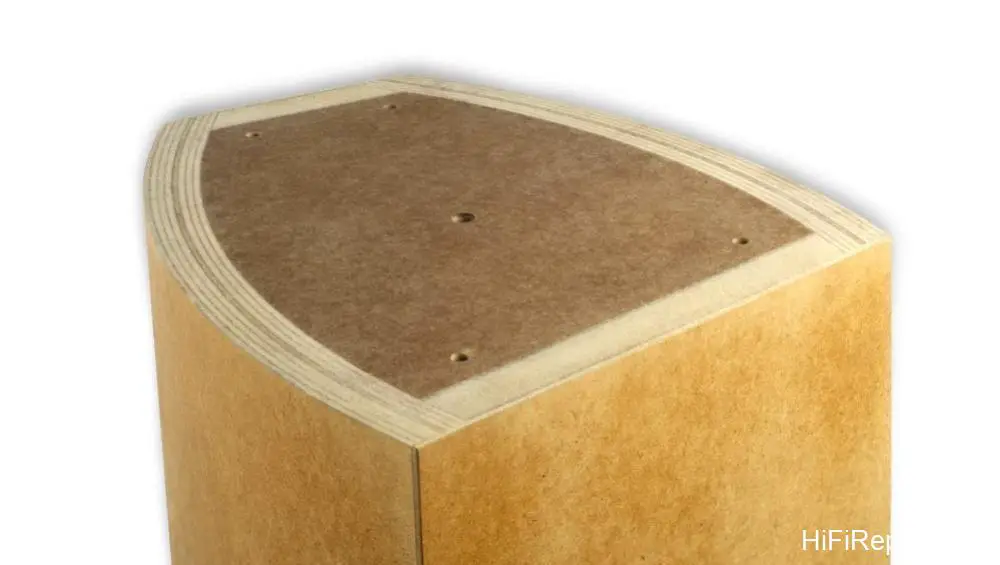
A closer examination of the Edena Evolution’s cabinet reveals curved side panels with slanted front and back surfaces, while the top and bottom remain parallel. This unconventional shape serves a dual purpose: breaking up internal parallel walls to reduce the intensity of internal standing waves, and effectively creating an intentional toe-in angle. Naturally, if this angle is not to your preference, you can adjust the speaker placement accordingly.
The cabinet walls are constructed from multiple layers of thin MDF, a technique that minimizes cabinet vibration. On critical areas like the front baffle, the thickness is doubled compared to other sections. Internal bracing is strategically implemented, and appropriate damping materials – three types, each suited for different vibration suppression needs – are applied.
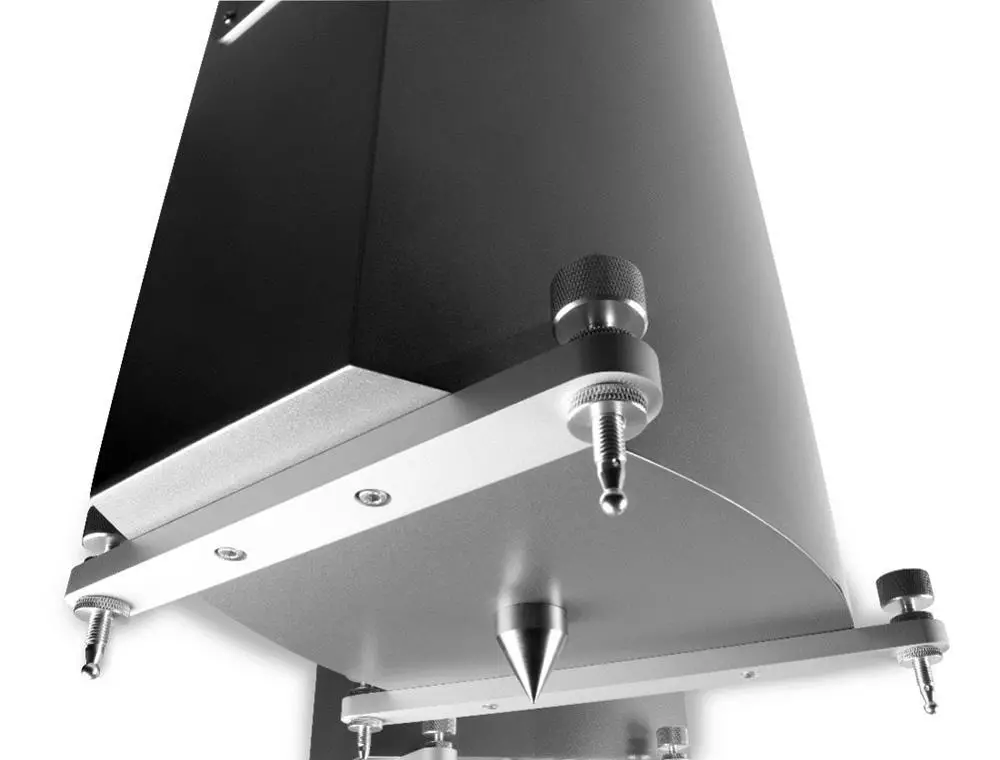
The speaker’s outrigger feet also showcase thoughtful design. The Edena Evolution features a base with four feet. However, upon flipping the unit, you’ll find a separate spike positioned on the central axis of gravity, serving to provide mechanical grounding. This allows cabinet vibrations to be more effectively transferred to the floor (could Goldmund’s mechanical grounding concept have originated from Christian Yvon?).
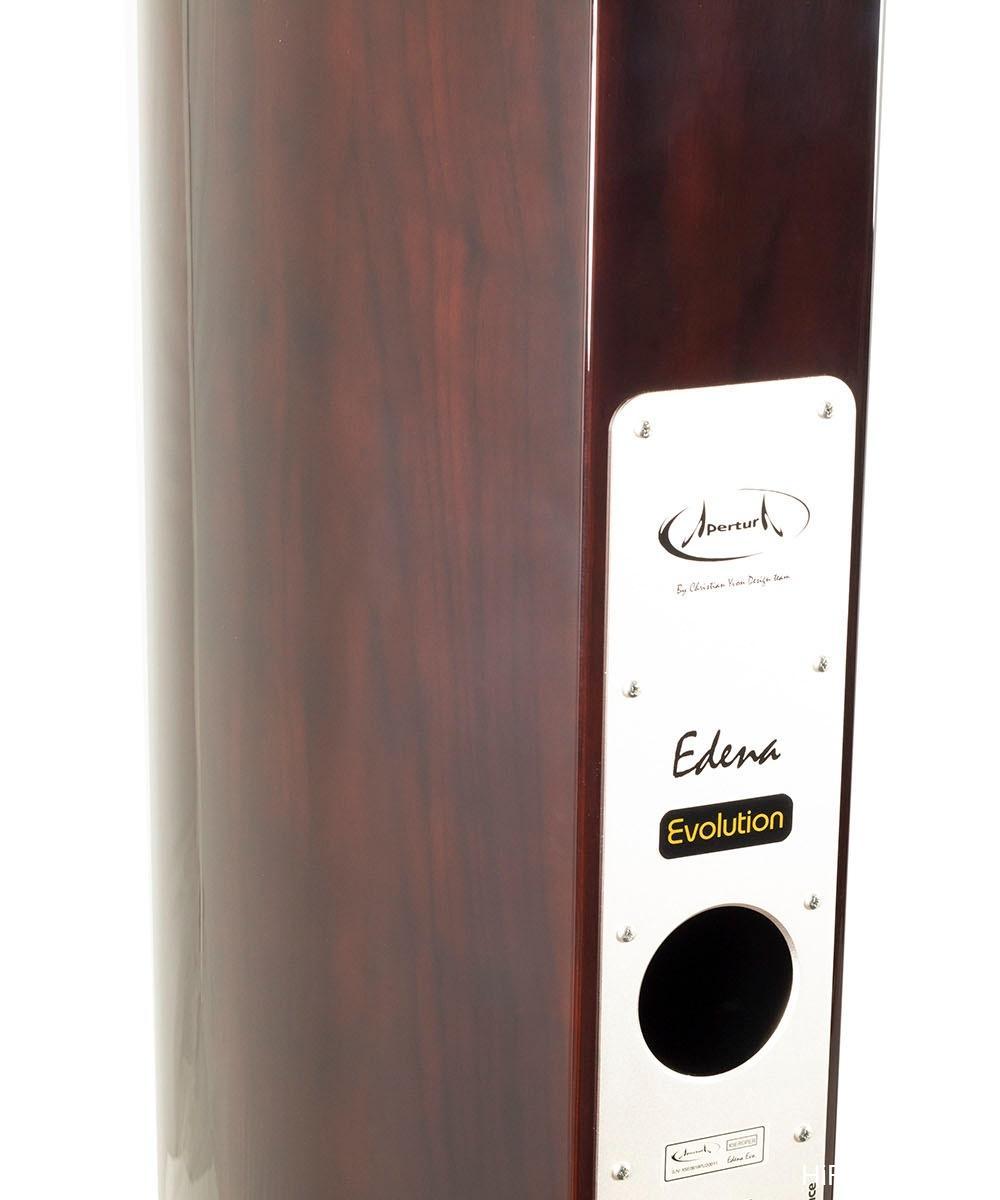
Additionally, the Edena Evolution comes with a grille that attaches via five magnets, rendering it invisible when fitted.
A Harmony of Design and Sound
Up to this point, it’s evident that while the Apertura Edena Evolution may not boast a lavish or ostentatious exterior, its various design elements are exceptionally well-executed. For instance, the two-way design simplifies the crossover and streamlines the connection between the tweeter and woofer. Similarly, the irregular cabinet shape effectively reduces internal standing waves.
Furthermore, the woofer is positioned at a high point to prevent floor reflections from impacting the clarity of the mid-range and bass frequencies. The inclusion of a rarely seen mechanical grounding system adds another layer of sophisticated engineering. These design choices instill significant confidence in the Edena Evolution.
A two-way loudspeaker is relatively straightforward to design as a compact bookshelf model. However, achieving excellence in a large floorstanding design presents distinct challenges. Typically, floorstanding speakers utilize larger woofers than bookshelf models. When a woofer’s size increases, its extension into the upper mid-range can be compromised compared to smaller units. Therefore, sourcing a woofer that excels in both high and low-frequency extension is crucial.
The Edena Evolution’s crossover point is set at 2800 Hz, and it employs a substantial 8-inch (22 cm) woofer. For an 8-inch woofer to extend upwards to 2800 Hz is no small feat, especially when it also needs to reach down to 35 Hz. This indicates that the performance of the Edena Evolution’s woofer must be exceptionally superior for these design advantages to be realized. Clearly, this Seas driver is more than capable of handling the task. What frequencies are we hearing at 2800 Hz?
During my listening sessions with the Edena Evolution, I positioned myself close to the woofer and found that most instruments and vocals originate from it. Conversely, the ribbon tweeter did not reproduce instrumental or vocal presence, but rather the subtle “shhh” sounds.
The Importance of the “Shhh”
Is the “shhh” important? Extremely so. It is responsible for reproducing the overtones of instruments and vocals. Without these overtones, the timbres of instruments and voices would be incorrect, and the desirable qualities of brilliance, sweetness, moisture, and silkiness would vanish. You might wonder if conventional tweeters can’t achieve a 2800 Hz crossover point and extend up to 30 kHz. Of course, they can. Diamond or ceramic tweeters can even reach 60 kHz.
I believe Christian Yvon’s primary consideration for tweeters lies in “headroom.” The radiating surface area of this ribbon tweeter is several times larger than that of a conventional dome tweeter, allowing it to more effortlessly reproduce sufficient instrument and vocal overtones, ensuring a more accurate timbre rather than a subjectively “stronger” treble.
Listening Experience
The Edena Evolution was auditioned in my spacious, open-plan listening room, paired with a Spectral DMC 30SS preamplifier and a Pass X350.5 power amplifier, with digital signal originating from a Weiss DAC 502 4ch. I have heard Apertura loudspeakers numerous times at the Munich High End Show, and my impressions have consistently been positive.
During the 2024 Munich High End Show, I remarked, “A 50-watt amplifier driving such a large loudspeaker as the Apertura Enigma MK II produced a remarkably good, even excellent, sound.” Such a statement at a major audio show speaks volumes about the loudspeaker’s capabilities. Given that the Edena Evolution features a simpler design than the Enigma MK II, with one fewer woofer, its sound should be even purer.
Indeed, my initial impression upon listening to the Edena Evolution at home was the complete absence of aggression in the high frequencies. The treble was both clear and graceful, dispelling the common misconception of harshness associated with ribbon tweeters. Furthermore, I found the piano reproduction to be particularly captivating.
The Edena Evolution presented pianos with an excellent sense of physicality and a rich woody character, clearly identifiable as acoustically generated rather than from an electronic keyboard. I also noted the abundance of piano overtones, with sweet upper notes and natural, relaxed extension in the lower register, avoiding any sense of hardness.
For example, when listening to Maria João Pires’ rendition of Chopin’s Cello Sonata, the piano accompaniment, though secondary, possessed a captivating beauty and authentic touch that rivaled the cello. Listening to Murray Perahia’s performance of Mozart’s Piano Concerto No. 21 (with the English Chamber Orchestra), the piano’s woody resonance was particularly profound, imbuing the instrument with a remarkable sense of realism.
Similarly, Evgeny Kissin’s performance of Liszt’s “Consolations” showcased a piano that was both true and beautiful, conveying the tactile sensation of fingers on keys and producing notes that seemed to roll out with both roundness and substance. The sheer beauty of the piano’s tone, enriched by abundant overtones, was simply breathtaking.
The Voice of the Cello and Violin
Next, let’s discuss the cello’s portrayal by the Edena Evolution. I often say that a comprehensive audition of piano, violin, cello, and string quartet is sufficient to gauge an audio system’s capabilities, as these instruments form the bedrock of audio reproduction. If these fundamental sounds are not rendered well, more complex musical pieces, whether classical, pop, or jazz, will inevitably suffer due to a distorted foundational tone.
Among these instruments, the cello is arguably the most challenging to reproduce accurately. Its characteristic nasal quality and relaxed nature are difficult to capture, and many cello reproductions sound lifeless, dull, and devoid of vibrancy. How does the Edena Evolution fare? As mentioned, the cello in the Chopin “Cello Sonata” was rendered with liveliness, a pleasing sense of relaxation, and an accurate nasal quality.
Listening to the album “Muse” by Sheku Kanneh-Mason and Isata Kanneh-Mason, the Edena Evolution’s cello possessed a captivating immediacy, a relaxed demeanor, and captured the subtle elasticity of string friction. The minute noises generated during bow-string transitions were clear and abundant, adding to the cello’s realism.
At this moment, the accompanying piano was also exceptionally beautiful, possessing both sweetness and a round, lustrous quality. At this juncture, I can confidently state that the Edena Evolution’s cello reproduction is both authentic and highly pleasurable. This is likely attributable to the Edena Evolution using a single woofer to reproduce the cello’s entire range, avoiding the transitional and phase issues that can arise between separate mid-range and bass drivers.
How does the Edena Evolution handle the violin? Let’s begin with string ensembles. On Christian Li’s recording of Vivaldi’s “The Four Seasons,” I sometimes found the string section to be slightly on the bright side, perhaps a bit too piercing. However, with the Edena Evolution, this recording became warm, sweet, and restrained, yet without sacrificing resolution.
Clearly, the Edena Evolution’s ribbon tweeter, with its inherent spaciousness, prevents the treble from sounding strained or aggressive.
In truth, string ensembles should inherently possess a warm, transparent, and sweet character. If they sound aggressive, it’s more likely due to student ensembles with inferior instruments and unrefined playing techniques, not the sound of a professional string orchestra. Therefore, the Edena Evolution’s performance with string ensembles is truly commendable.
Next, I selected Bomsori’s performance of Waxman’s “Carmen Fantasy.” On some systems, the violin on this recording can be somewhat prominent, so I chose it specifically to test the Edena Evolution. Wow! The violin on the Edena Evolution was equally beautiful, exhibiting no harshness or aggression. It was sweet, slightly reserved, with a rich woody character that allowed for the perception of the strings’ softness and elasticity. It seems Christian Yvon possesses genuine mastery.
Listening to Michael Rabin’s performance of Paganini’s “24 Caprices,” featuring only a solo violin, the Edena Evolution revealed every nuance of the instrument. The violin’s tone possessed a woody character, its body resonance was rich, and the subtle noises of bow changes and string friction were plentiful. Yet, these sounds were not jarring but rather enhanced the realism. Of course, the most beautiful aspect was the inherent tonal quality of the violin itself.
The entire recording was a pleasure to listen to, leaving the ears refreshed and filled with a sweet afterglow. This level of violin reproduction is comparable to loudspeakers costing significantly more.
One more piece, Itzhak Perlman’s rendition of Dvořák’s “Romance” (with Seiji Ozawa conducting the Boston Symphony Orchestra), presented a soft, restrained, and sweet violin solo, complemented by a refined, silken, and sweet orchestral accompaniment. The orchestral bass frequencies sounded elastic, soft, and possessed natural depth, akin to observing clouds from an airplane window. While this description might be abstract, there are no more concrete terms to convey the experience.
Vocal and Ensemble Performance
How does the Edena Evolution handle vocals? Listening to the “Barcarolle” from Offenbach’s “The Tales of Hoffmann,” performed by Edita Gruberova and Claudia Eder, not only were the singers’ voices beautiful, sweet, and full-bodied, but the accompanying harmonies and instrumental passages were layered with exceptional clarity. The woodwinds, in particular, sounded wonderfully sweet.
Listening to Marina Rebeka’s rendition of “Ave Maria D. 839,” her voice was utterly captivating. The phrase “the human voice is the most beautiful instrument” felt particularly apt here. Two-way loudspeakers possess inherent advantages in many respects, and vocal reproduction is one of them.
The Edena Evolution’s 22cm woofer is capable of fully rendering the entire vocal range without the interference of a separate crossover for the bass frequencies, allowing her voice to sound more complete and beautiful.
How does the Edena Evolution perform with string quartets? Listening to the Kodály Quartet perform Haydn’s String Quartet No. 62, the four string instruments produced a beautiful harmony with a slight sense of cohesion. The performance texture of each string instrument was authentic, with rich body resonance. The violins, even in their upper registers, remained unstrained, maintaining a relaxed and sweet tone.
Listening to the Emerson Quartet perform Mendelssohn’s String Quartet No. 2, the exquisite listening experience could be described as silken, with a subtle vibrato capturing the texture of string friction. This nuanced, lifelike rendering suggests that the Edena Evolution’s tweeter and woofer are highly agile, capable of reproducing even the most delicate musical signals.
Notably, even at low volumes, the Edena Evolution retains its detail, making it an excellent choice for audiophiles concerned about disturbing neighbors.
Orchestral and Popular Music
How does the Edena Evolution handle orchestral music? I must apologize; when compared to my accustomed large-scale systems, the orchestral power and scale of the Edena Evolution are limited. For instance, when listening to Bernstein’s rendition of Mahler’s Symphony No. 2 with the New York Philharmonic, if my system’s soundstage were a 100-inch television, the Edena Evolution’s “soundstage image” would be closer to a 65-inch television.
In terms of overall dynamic range and sheer power during climactic passages, the Edena Evolution is also constrained, unable to deliver truly earth-shattering energy.
However, the Edena Evolution excels in reproducing the layering of inner voices, its resolution, and its rapid transient response. Similarly, listening to Shostakovich’s Symphony No. 4, conducted by Myung-Whun Chung with the Philadelphia Orchestra, the Edena Evolution can achieve clarity (“not chaotic”), but its sense of grandeur and low-frequency energy remains limited. Perhaps, for many listeners, the Edena Evolution’s level of presence and bass energy might be perfectly adequate.
How does the Edena Evolution perform with pop and jazz music? It is sufficiently lively, dynamic, and authentic. For example, listening to Dhafer Youssef’s “Sevdah,” the gentle plucking of the double bass has a true texture, as does the drum kit. The delicate cymbal strikes, with their subtle shimmering decay, are particularly captivating. On Dominic Miller’s track “When I Close My Eyes,” the recording features a rich, deep, yet unaggressive bassline.
The Edena Evolution reproduces this with a charming, soft, and deep descent that trails off beautifully. Other instruments are also rendered with gentleness and authenticity, creating a very comfortable listening experience. If you are not seeking bombastic pop music, the Edena Evolution will undoubtedly satisfy. Of course, if your preference is solely for heavy metal, then the Edena Evolution may not be the ideal choice.
These Edena Evolution loudspeakers will be exhibited in Room 1125 at the TAA Hifi Show at the Grand Hyatt Hotel in August. Following the exhibition, they are rumored to be heading to Shangfeng Audio in Taichung. If you reside in Taichung, a visit to Shangfeng Audio is highly recommended to experience them firsthand.
Conclusion
After listening to the Apertura Edena Evolution, I’ve come to appreciate that the French approach to sound aesthetics differs from that of the Germans, Americans, or even the British. The Edena Evolution, for instance, places a strong emphasis on overall musical balance, detail retrieval, and the beauty of its sonic quality and timbre. The two-way design of the Edena Evolution reflects the designer’s pursuit of lower distortion, purer sound, beautiful timbres, and authentic performance textures.
If these elements are your priorities when purchasing loudspeakers, the Apertura Edena Evolution should be an excellent fit for you.
Specifications
* **Product Type:** Two-way floorstanding loudspeaker
* **Release Date:** 2018
* **Drivers:**
* 8x12mm Ribbon tweeter
* 220mm Mid-woofer
* **Frequency Response:** 35Hz-30kHz
* **Crossover Frequency:** 2,800Hz
* **Sensitivity:** 89dB (2.83V/m)
* **Average Impedance:** 8 ohms
* **Weight:** 22 kg
* **Dimensions (WHD):** 235 x 1110 x 317mm
System Components
* **Digital Source:** Weiss DAC 502 4ch.
* **Preamplifier:** Spectral DMC 30SS
* **Power Amplifier:** Pass X350.5