
Apple AirPods (3rd Generation) Review
Overview
Apple’s AirPods have been the most recognizable true wireless earbuds on the market since their debut in 2016, and the third-generation model represents the most significant update to the standard line yet. Released on October 18, 2021, these earbuds borrow heavily from the AirPods Pro—shorter stems, a contoured design, force sensor controls, a MagSafe charging case—while retaining the open, non-sealing fit that made the original AirPods so popular.
Priced at $179 at launch and later settling around $169 (frequently discounted to roughly $140), the third-gen AirPods occupy a middle ground between the $129 second-gen model and the $249 AirPods Pro. They offer noticeably better sound than their predecessor, spatial audio with head tracking, and an IPX4 water-resistance rating. What they don’t offer is active noise cancellation, and their open design means isolation is essentially nonexistent. Whether that’s a feature or a bug depends entirely on your listening habits and ear geometry.
Expert reviewers were generally positive but measured. SoundGuys gave them a 6.4 overall score, praising the feature set while dinging the fit and isolation. PCMag awarded 3.5 out of 5, calling the bass natural and rich but lamenting the inconsistent fit. Macworld gave them an Editors’ Choice award, declaring them the upgrade users had been waiting for. Business Insider was more cautious, suggesting most buyers would be better off spending a bit more for the AirPods Pro. The consensus is clear: these are solid earbuds with genuinely improved sound, but the open design remains a polarizing choice.
It’s worth noting that Apple has since released the AirPods 4, which replace this model. However, the third-gen AirPods remain widely available and frequently discounted, making them relevant for anyone seeking a deal on premium open-earbuds.
Design and Build
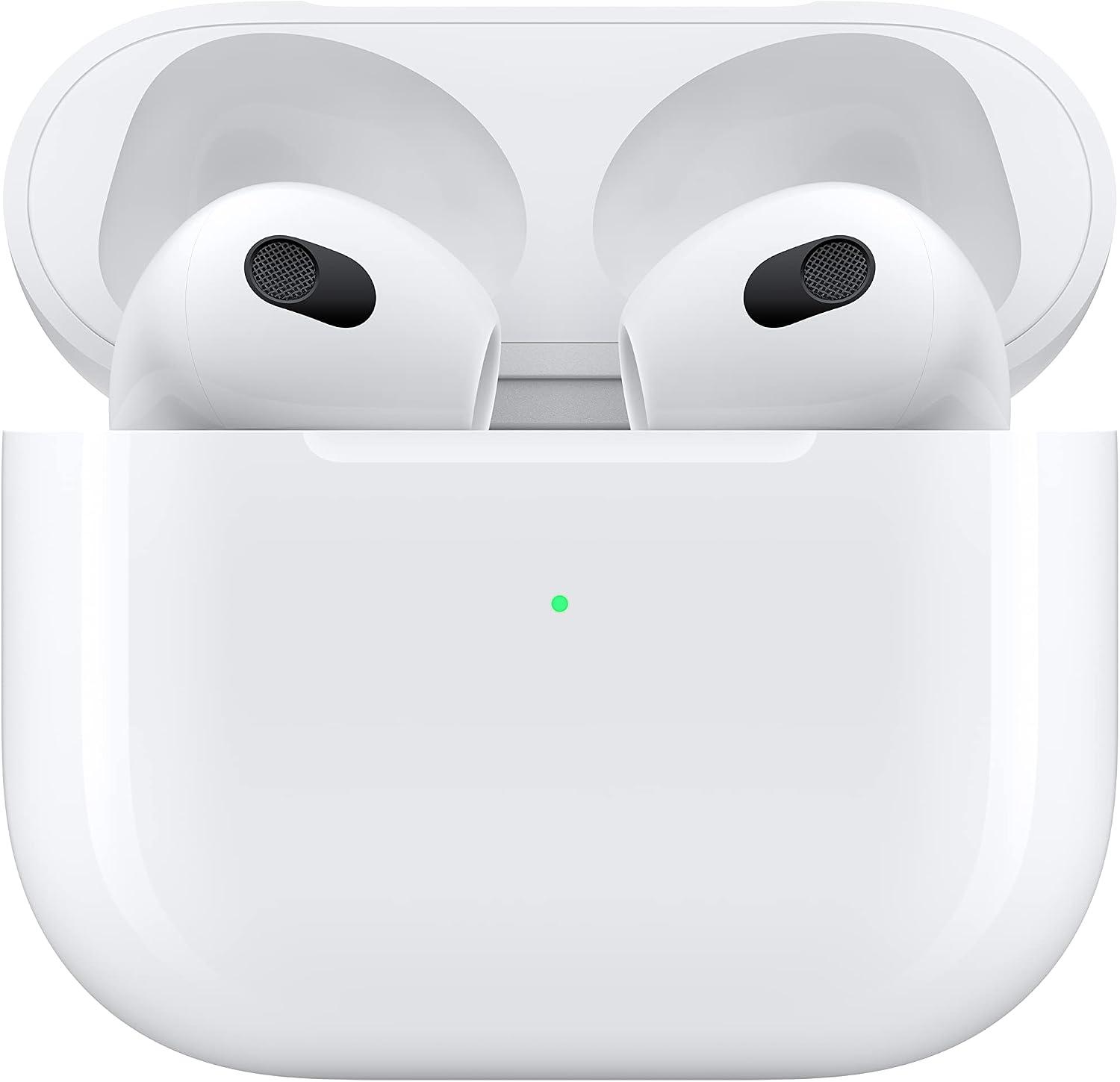
The third-gen AirPods are immediately recognizable as a hybrid of the older AirPods and the AirPods Pro. The stems are significantly shorter—1.21 inches compared to 1.59 inches on the previous generation—and the earbud body is more contoured and angled to sit more naturally in the ear. The overall aesthetic is sleeker and more modern, though the one-size-fits-all approach means the fit is still a roll of the dice.
Apple moved to a flatter, wider charging case that resembles the AirPods Pro case more than the tall, narrow case of earlier generations. The case supports three charging methods: Lightning, MagSafe, and standard Qi wireless charging. This is a notable upgrade from the second-gen model, where wireless charging was a paid option. The case itself carries an IPX4 rating, matching the earbuds—a first for the standard AirPods line.
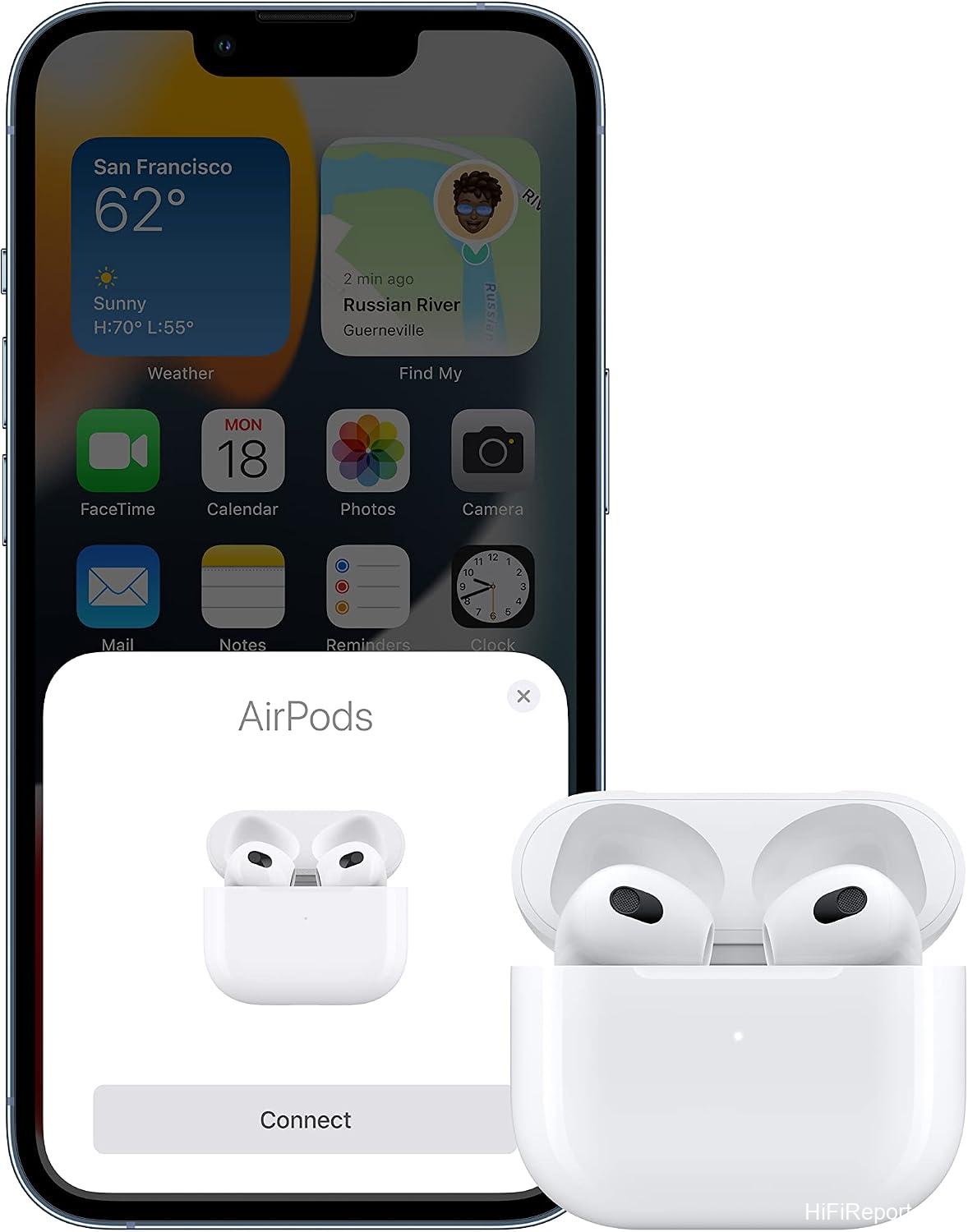
Build quality is what you’d expect from Apple: solid, clean, and minimal. A skin-detect sensor replaces the optical sensor used in previous models, using light reflections to determine whether the earbuds are actually in your ear rather than just in a pocket or case. This prevents the accidental playback that plagued earlier models when you stowed them away. Multiple customer reviews noted this as a meaningful improvement in daily use.
Not all build feedback was positive, however. One customer reported a misaligned left earbud with sharp, exposed edges straight out of the sealed box—a quality control lapse that shouldn’t leave the factory. Another reported a persistent clicking sound in the right earbud from an Amazon-sourced pair that disappeared with a replacement bought directly from an Apple Store. These appear to be isolated incidents, but they’re worth keeping in mind.
Sound Quality and Audio Features
The biggest story with the third-gen AirPods is the step up in audio performance. Apple redesigned the internal driver, and the difference is immediately noticeable when comparing side by side with the second-gen model. Bass response is the most dramatic improvement—tracks that turned into a muddy mess on the older AirPods retain their punch and separation. Macworld’s testing found that busy, heavy tracks like Foo Fighters’ “These Days” and Mötley Crüe’s “Kickstart My Heart” avoided the muddiness that plagued the second-gen, while CeeLo Green’s “Bright Lights Bigger City” maintained clean stereo separation and subtle background details.
PCMag praised the natural, rich bass depth and crisp, clear highs, noting that the new driver delivers some of the best bass they’ve heard from an open-earbud design. Business Insider similarly found more clarity and better instrument separation than previous generations, with significantly refined and more present bass. Several customer reviews echoed this, with one describing the bass as incredible and likening the experience to a subwoofer inside your head.
Adaptive EQ, an Apple feature that uses an internal microphone to continuously analyze and adjust the sound to the shape of your ear, is present here and works across iOS, Android, and Windows. RTINGS measured the sound signature as essentially flat, with bass underemphasized by roughly 5 dB and treble slightly underemphasized by about 2 dB—consistent with an open design that can’t rely on a seal for bass reinforcement.
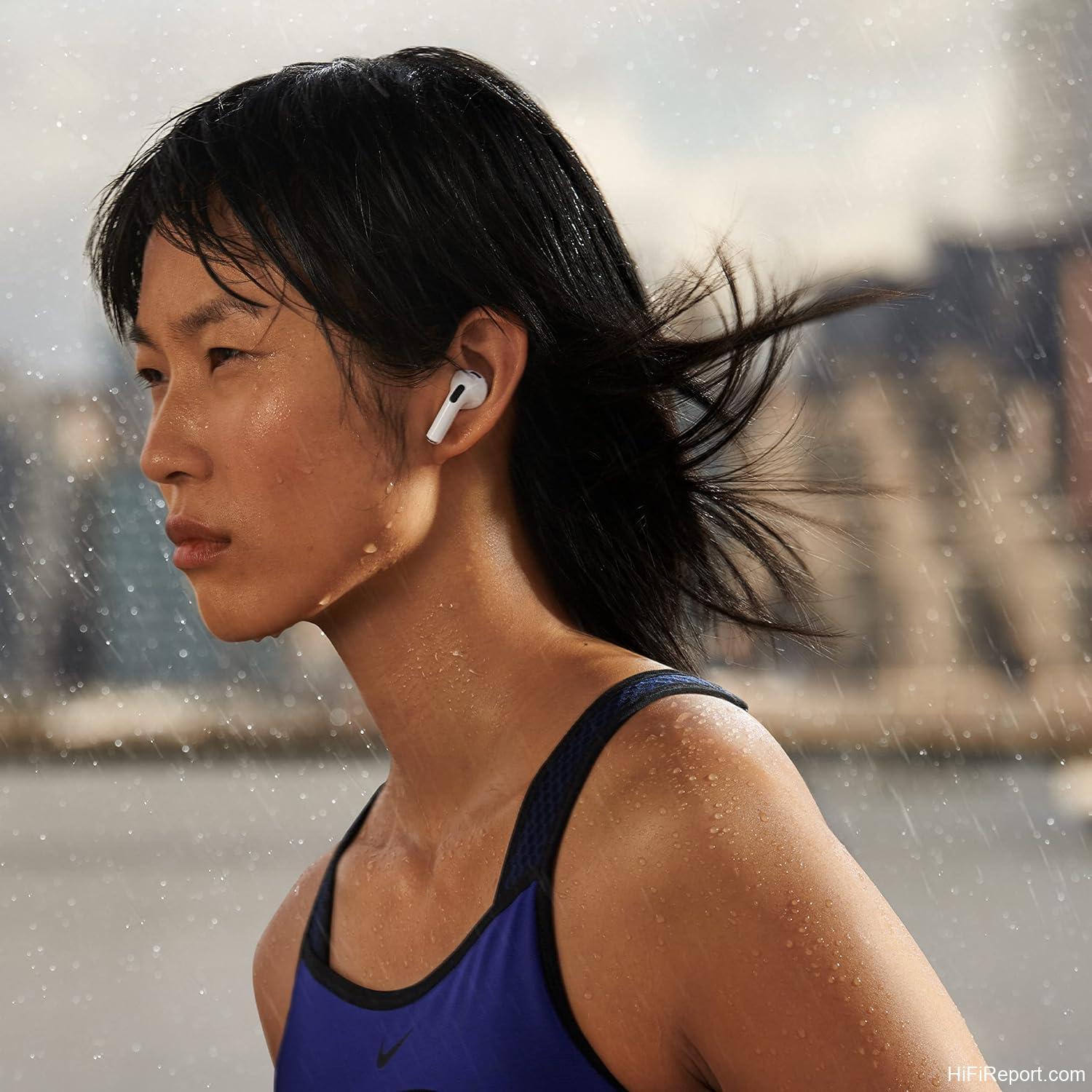
Spatial audio with dynamic head tracking is the marquee software feature, and it works much as it does on the AirPods Pro. When watching video on an iPhone, iPad, Mac, or Apple TV, the earbuds use accelerometers and gyroscopes in both the earbuds and the playback device to track your head position relative to the screen. The audio field adjusts accordingly—if you turn your head left, the sound stays anchored to the device in front of you, with your right ear receiving more of the signal. Multiple customer reviewers called this feature awesome and mind-blowing, noting that it adds a genuinely immersive layer to video content.
For music, spatial audio creates a wider, more open soundstage on stereo tracks, though Macworld noted it can sometimes lose subtle audio cues. Dolby Atmos content through Apple Music sounds fantastic according to expert reviewers, though Business Insider’s experience was more mixed, finding that spatial audio could make things sound rather thin and hollow and that Dolby Atmos sometimes amplified lows while muffling mids and highs.
It’s important to temper expectations. These are open earbuds with no seal, and they will never match the audio accuracy of the AirPods Pro or dedicated in-ear monitors. One particularly thorough customer reviewer conducted extensive A/B testing against the Razer Hammerhead and found the AirPods 3 produce a more intimate, inside-your-head sound with less texture and detail than some competitors, but offer thicker bass rumble and a more balanced frequency response across the spectrum. The same reviewer noted that wired headphones still outperform wireless across the board, and that the AirPods 3 are best suited for electronic music, hip-hop, and dance—genres where an intimate, forward sound is desirable.
Battery Life and Charging
Battery life is a genuine strength. The earbuds deliver up to 6 hours of listening time on a single charge, up from 5 hours on the second-gen and bettering the AirPods Pro’s 4.5 hours. With the MagSafe charging case, total listening time reaches up to 30 hours according to Apple’s spec sheet. PCMag listed 24 hours for the case, a figure that may reflect a different testing methodology or an earlier measurement.
The case supports Lightning, MagSafe, and Qi wireless charging—a versatile trio that covers virtually any charging setup you might have. MagSafe is particularly convenient if you already own a MagSafe puck for your iPhone; just drop the case on and it snaps into alignment automatically. Customer reviewers appreciated the wireless charging convenience, with one specifically calling out the ability to recharge on a standard wireless charger as a highlight.
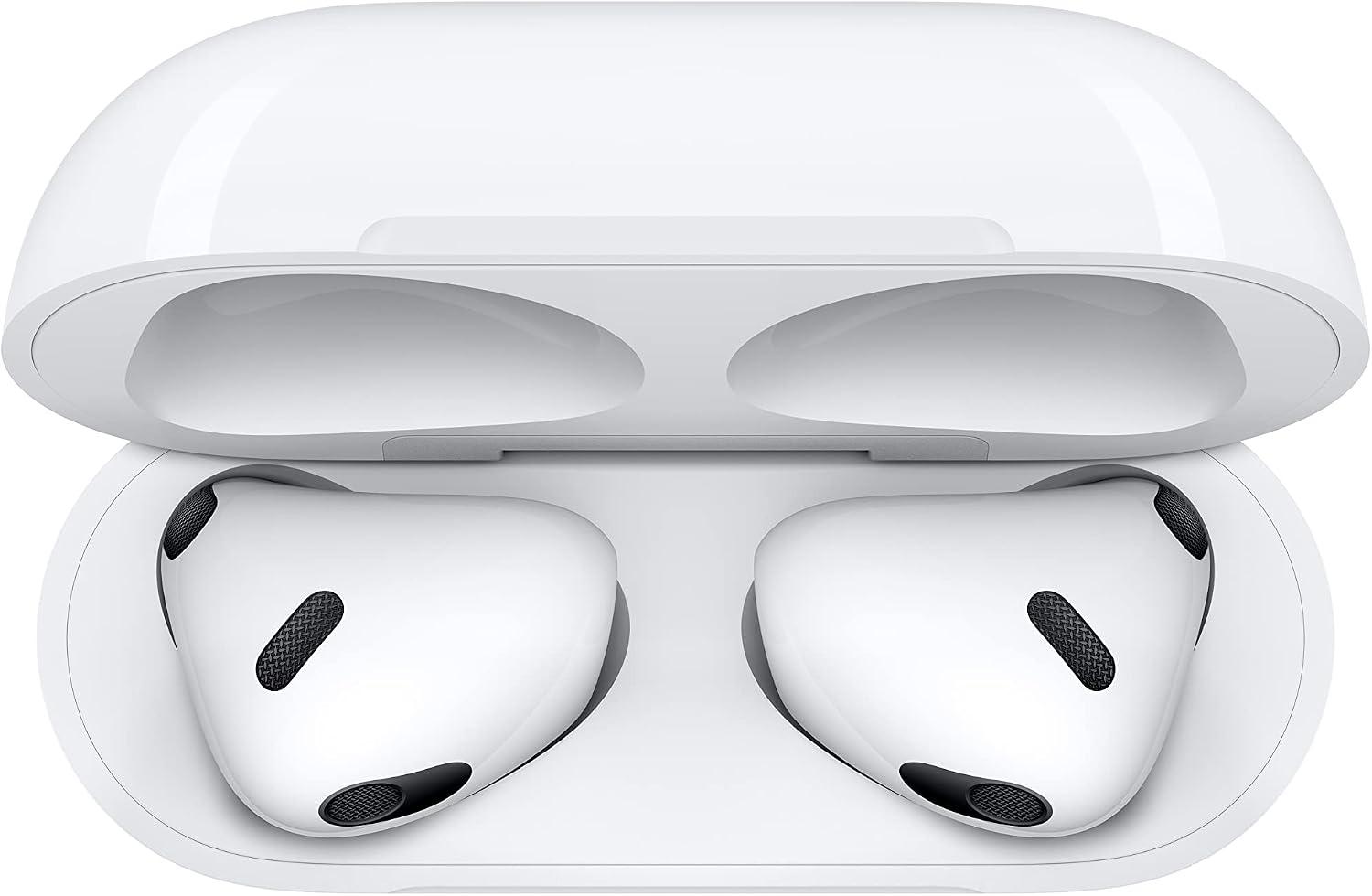
A skin-detect sensor contributes to battery efficiency by ensuring playback pauses only when the earbuds are actually removed from your ear, not when they’re sitting in a dark pocket or drawer. This prevents wasted playback time and helps real-world battery life more closely approach the rated figures.
© hifireport.com – Original review content by hifireport.com. Reprinting without written permission is not allowed.
Connectivity and Ecosystem
The H1 chip returns from the second-gen AirPods and AirPods Pro, and it continues to power the seamless pairing and switching experience that defines the AirPods ecosystem. Setup is nearly instantaneous on iOS devices, and the earbuds automatically switch between devices signed into the same iCloud account—an iPhone, iPad, Mac, or Apple TV—based on which device is actively producing audio. Hands-free Siri is available with a simple “Hey Siri” command, and your iPhone can announce messages and notifications through the earbuds.
Audio sharing lets two sets of AirPods connect to a single iPhone, iPad, iPod touch, or Apple TV—a niche but genuinely useful feature for sharing a movie or song with a companion without disturbing others. The Find My integration has been improved with a precision finding feature similar to AirTags, and you can now ring the earbuds even while they’re in the case. Several customers appreciated this, though one reported frustration when a lost earbud outside the case couldn’t be located despite being nearby.
For Android and Windows users, the news is less exciting. The AirPods 3 function as standard Bluetooth earbuds on non-Apple devices, and Adaptive EQ does work across platforms, but the marquee features—spatial audio, automatic switching, hands-free Siri, audio sharing—are Apple-only. One customer reviewer noted that connecting AirPods to non-Apple branded electronics was rather unforgiving, and another had trouble connecting to a non-macOS operating system on a dual-boot MacBook. Business Insider was blunt: most of the features that make these earbuds special are limited to Apple hardware, so Android owners can keep moving.
Fit and Comfort
This is where the AirPods 3 become genuinely divisive. The contoured design is a departure from the simpler shape of the first two generations, and the earbud body is noticeably larger. For some users, this is a revelation—multiple customer reviews described the fit as perfect, secure enough for running and jumping, and comfortable enough to wear for four or more hours at a time while forgetting they were even in. One reviewer who had tried both the AirPods Pro and second-gen AirPods found the third-gen shape absolutely perfect and gave it top marks for fit.
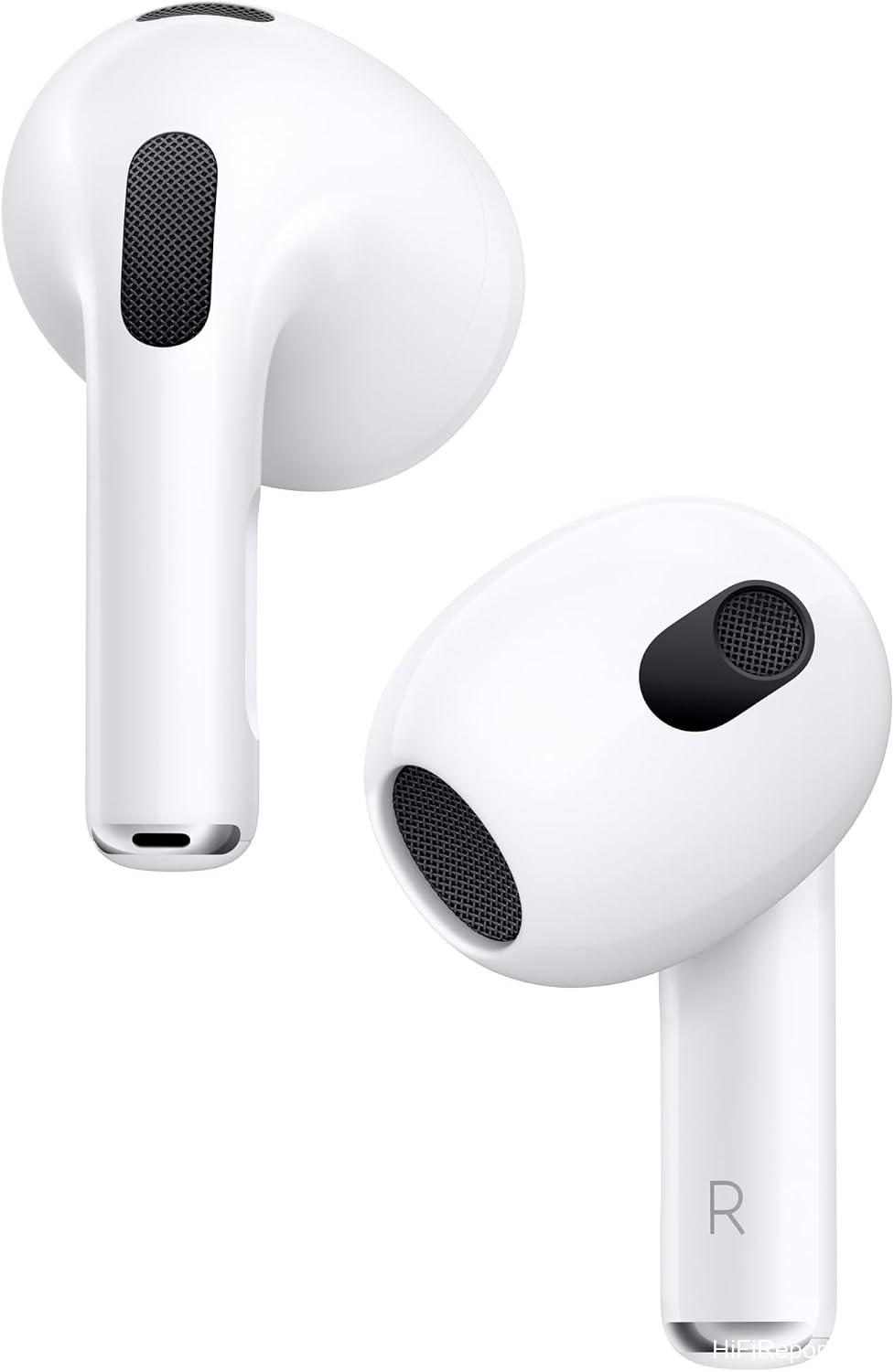
For others, the new shape is a dealbreaker. The larger bud body doesn’t sit well in smaller ears, and a significant number of customer reviews reported pain, discomfort, or the earbuds simply falling out. One reviewer couldn’t listen for more than ten minutes without needing to remove them and massage their ears. Another, who had worn the original wired EarPods and first-gen AirPods without issue, found that the third-gen design fell right out and didn’t stay in at all. The advice to try before you buy appeared in multiple reviews.
Expert reviewers echoed this polarization. SoundGuys rated comfort at just 3.9 out of 10, citing the poor fit and lack of isolation. PCMag noted that the fit doesn’t feel secure enough for rigorous exercise and that the inconsistent fit can result in an imbalanced stereo image. Macworld acknowledged that fit is highly dependent on your personal ear shape. Stuff magazine found them surprisingly comfortable and able to be worn for long periods, but noted they sit more securely than earlier generations—a relative improvement that still won’t help those whose ears simply don’t match the new geometry.
The open design has no silicone eartips and creates no seal, which means zero passive noise isolation. SoundGuys rated isolation at a dismal 0.6 out of 10. This is by design—Apple is targeting users who want to remain aware of their surroundings—but it means these earbuds are poorly suited for noisy environments like airplanes, trains, or busy offices. Several customer reviewers noted that simply turning up the volume was enough to overcome most ambient noise, but that’s a workaround, not a solution.
What Customers Are Saying
With over 41,000 ratings on Amazon and an average of 4.6 out of 5 stars, the third-gen AirPods are overwhelmingly well-received by the broader customer base. The reviews we sampled reveal clear patterns in both praise and criticism.
On the positive side, sound quality was the most frequently cited strength. Customers consistently noted a clear improvement over the second-gen AirPods, with richer bass, better clarity, and more instrument separation. The spatial audio feature drew enthusiastic responses, with multiple reviewers calling it immersive and a standout feature. Battery life was another commonly praised aspect, with the 6-hour per-charge figure meeting or exceeding expectations. The force sensor controls were generally preferred over the older tap controls, and the skin-detect sensor’s improved accuracy was appreciated. Many customers who specifically chose these over the AirPods Pro because they dislike silicone eartips were happy with that decision.
This article is the original property of hifireport.com. All rights reserved. Unauthorized reproduction is strictly prohibited.
The fit, however, was the dominant complaint. A substantial minority of reviewers found the larger, contoured design uncomfortable or impossible to keep in their ears, particularly those with smaller ear canals. This was the most common reason for negative or mixed reviews. The lack of active noise cancellation was frequently mentioned, though most acknowledged this was expected given the open design. A few customers reported quality control issues including a persistent clicking sound in one earbud, faulty audio wiring that caused intermittent cutouts, and a misaligned earbud with sharp edges. The Find My feature drew mixed feedback—some loved the precision tracking, while others experienced location unavailability for nearby earbuds. A handful of reviewers also noted difficulties with the Amazon return process, advising others to be certain they wanted to keep the product before purchasing online.
Pros and Cons
Pros:
- Significantly improved sound quality over second-gen, with richer bass and better clarity
- Spatial audio with dynamic head tracking for immersive video and music
- Adaptive EQ works across iOS, Android, and Windows
- Up to 6 hours per charge, 30 hours total with case
- MagSafe, Qi wireless, and Lightning charging options
- IPX4 sweat and water resistance for earbuds and case
- Force sensor controls are a meaningful upgrade over tap controls
- Skin-detect sensor prevents accidental playback
- Seamless Apple ecosystem integration with H1 chip
- No silicone eartips—ideal for those who dislike in-canal seals
Cons:
- No active noise cancellation
- Essentially zero noise isolation due to open design
- Fit is highly ear-dependent; larger buds may not suit small ears
- No adjustable EQ
- Key features (spatial audio, auto-switching, hands-free Siri) are iOS-only
- No USB-C charging
- AirPods Pro are often available for not much more money
- Occasional quality control issues reported
Verdict
The Apple AirPods (3rd Generation) are the best version of Apple’s standard open-earbuds yet, and if your ears happen to match their contoured shape, they’re a genuinely excellent product. The sound quality improvement over the second generation is substantial and immediately apparent, with bass that finally has real depth and punch. Spatial audio is a legitimate wow feature for video content, and the battery life, charging flexibility, and ecosystem integration are all class-leading.
But the open design remains the fundamental tradeoff. No seal means no isolation, no active noise cancellation, and a fit that’s entirely dependent on your ear geometry. For a significant minority of users, the larger contoured buds simply won’t stay in or will cause discomfort. And with the AirPods Pro frequently available for $180–200, the value proposition of the third-gen at $169 (or $140 on sale) is tighter than it should be. If you want noise cancellation, the Pro is the obvious choice. If you specifically want open earbuds and your ears cooperate, these are the best option in Apple’s lineup.
The arrival of the AirPods 4 further complicates the picture, as Apple has now brought active noise cancellation to the standard AirPods line. But for bargain hunters willing to buy a previous-generation product, the third-gen AirPods at a discount remain a compelling option—provided you understand exactly what you’re getting and what you’re not.
Specifications
- Product Name: Apple AirPods (3rd Generation) Wireless Earbuds with MagSafe Charging Case
- Manufacturer: Apple
- Model Number: MME73AM/A
- ASIN: B09JQL3NWT
- Release Date: October 18, 2021
- MSRP: $179.00 (launch); later $169.00
- Earbud Dimensions: 19.2 x 18.3 x 30.8 mm
- Case Dimensions: 46.4 x 21.4 x 54.4 mm
- Earbud Weight: 4.3 g (0.141 ounces)
- Case Weight: 37.9 g
- Chip: Apple H1
- Water Resistance: IPX4 (earbuds and case)
- Battery Life: Up to 6 hours per charge; up to 30 hours total with MagSafe Charging Case
- Charging: Lightning, MagSafe, Qi wireless
- Connectivity: Bluetooth (true wireless)
- Controls: Force sensor (playback, calls, Siri, track navigation)
- Special Features: Spatial audio with dynamic head tracking, Adaptive EQ, skin-detect sensor, hands-free Siri, automatic device switching, audio sharing
- Active Noise Cancellation: No
- Transparency Mode: No
- Enclosure Type: Open-back
- Sound Signature: Flat (bass slightly underemphasized, treble slightly underemphasized)
- Spatial audio with dynamic head tracking places sound all around you.Note : If the size of the earbud tips does not match the size of your ear canals or the headset is not worn properly in your ears, you may not obtain the correct sound qualities or call performance. Change the earbud tips to ones that fit more snugly in your ear
- Adaptive EQ automatically tunes music to your ears
- All-new contoured design