
Aqua LinQ Streamer Review
Have you ever had the experience of buying a streaming device or digital source, only to find a few years later that its upgrade flexibility is limited? This inflexibility leaves you unable to support new music services or enjoy the manufacturer’s technological advancements on your older model, putting you in the dilemma of whether to replace your device.
If you have such concerns, Aqua’s LinQ streaming transport will certainly put your mind at ease. It adopts a unique modular technology, allowing you to enable new functions, support new services, or upgrade performance by replacing modules, ensuring your device remains evergreen.
Modular Design for Expanded Service Support
Speaking of modularity, you might say that it’s nothing new, as many devices already use modular designs. You’re right; modular design is not unusual, and many devices utilize it. However, LinQ’s modularity is different.
Currently, most modular designs in the market focus on input/output interface modules. For example, preamplifiers can optionally include DAC cards or phono stage cards, or digital transports can offer different output interfaces, thereby giving the device more versatile compatibility.
LinQ’s modularity, on the other hand, focuses on different streaming service formats. It allows LinQ to support a wider range of network services while maintaining optimal sound performance, all while keeping the platform itself consistent.
LinQ is a streaming transport, also known as a network bridge. Its function is to convert network streaming music signals into digital audio formats and then transmit them to a DAC for playback. Therefore, LinQ only has one input interface: network input.
LinQ only supports wired LAN input and does not have Wi-Fi input.
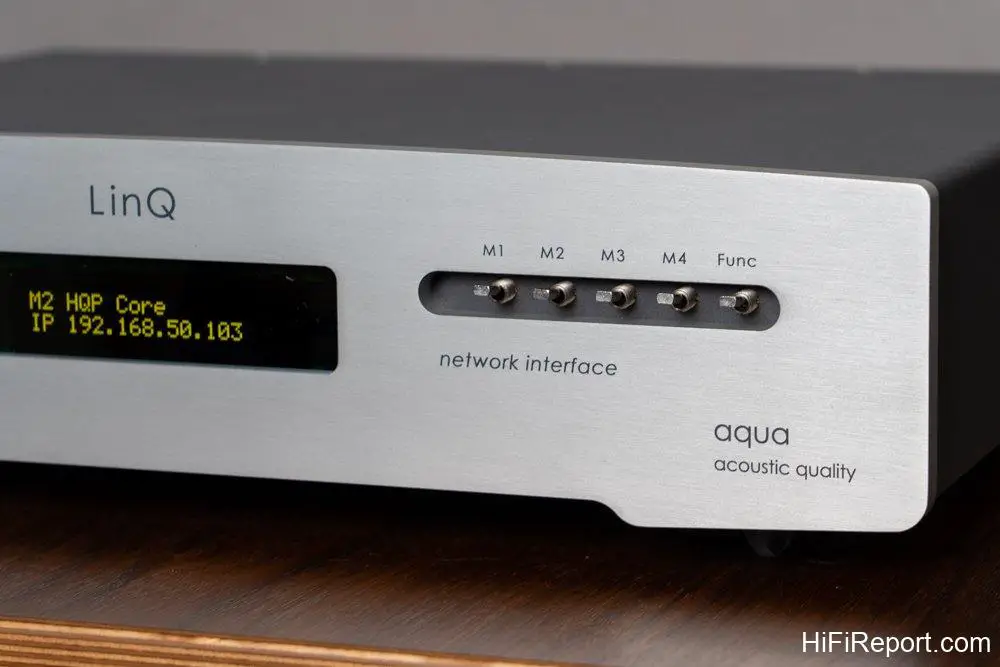
There are five output interfaces: AES/EBU, dual AES, SPDIF RCA, SPDIF BNC, and Aqua’s proprietary AQlink interface.
You might be wondering, why no USB output? Aqua believes that USB can degrade sound quality and is not a superior digital audio interface. Aqua recommends using the I2S interface instead. AQlink is based on I2S, using RJ45 network cables for connection, specifically supporting Aqua DACs, and can transmit up to 32bit/384kHz PCM and DSD128 formats.
Basically, what remains constant in LinQ are the input/output interfaces, chassis, power supply, control, and other fundamental architectures. Aqua calls this an “extremely streamlined long-life platform.” The internal module cards, however, are constantly replaceable. This modularity allows Aqua to keep pace with the times, supporting different streaming protocols or services, or achieving even better sound performance.
Electrical Isolation Across All Modules
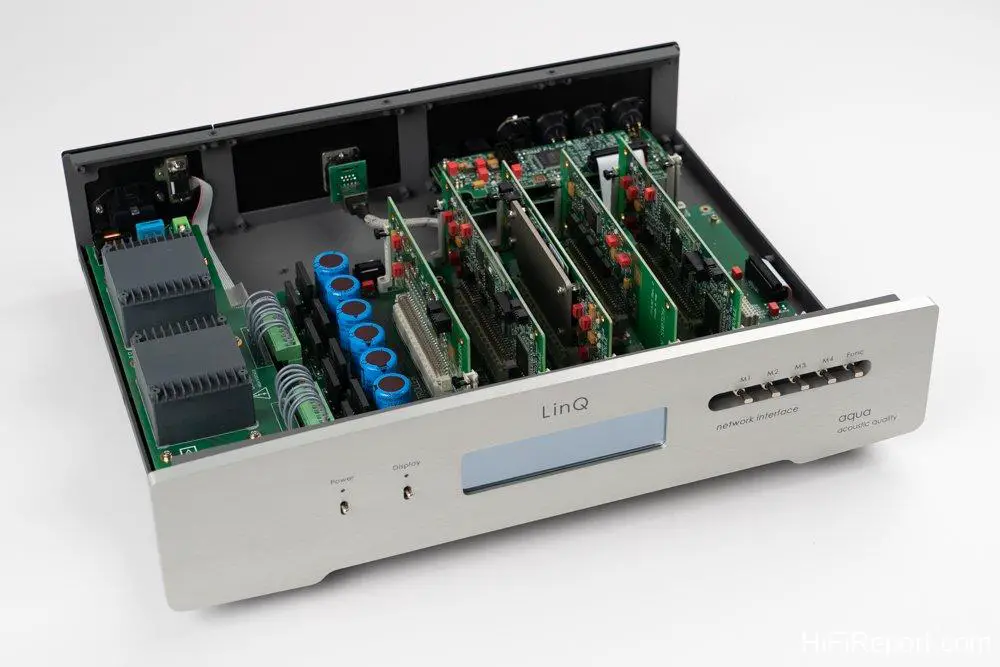
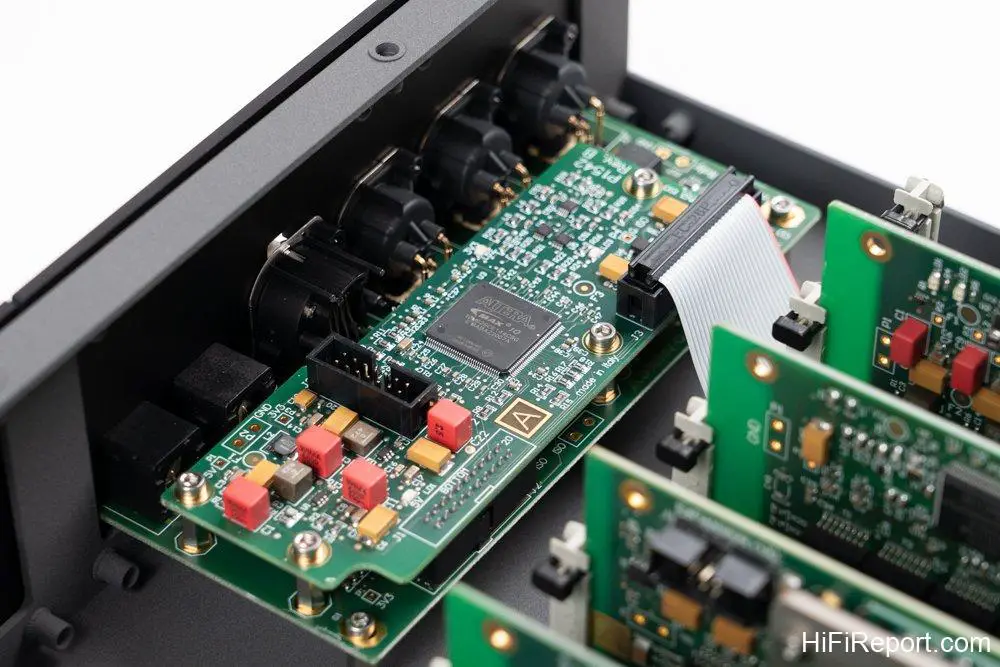
Opening the LinQ’s case reveals a main circuit board with six module card slots. Each slot is labeled with text, namely Controller, Lan Switch, Module A, Module B, Module C, and Module D. The cards in the Controller and Lan Switch slots are included with the device and are essential for LinQ to function, so they do not need to be purchased separately. The other module cards are optional.
From the labels, it is clear that the Controller slot houses the main control circuit board of the LinQ, equivalent to a computer motherboard. The Lan Switch slot contains Aqua’s own developed LAN switch card, akin to a built-in network switch. According to Aqua, this unique design can effectively isolate network noise and greatly enhance sound quality.
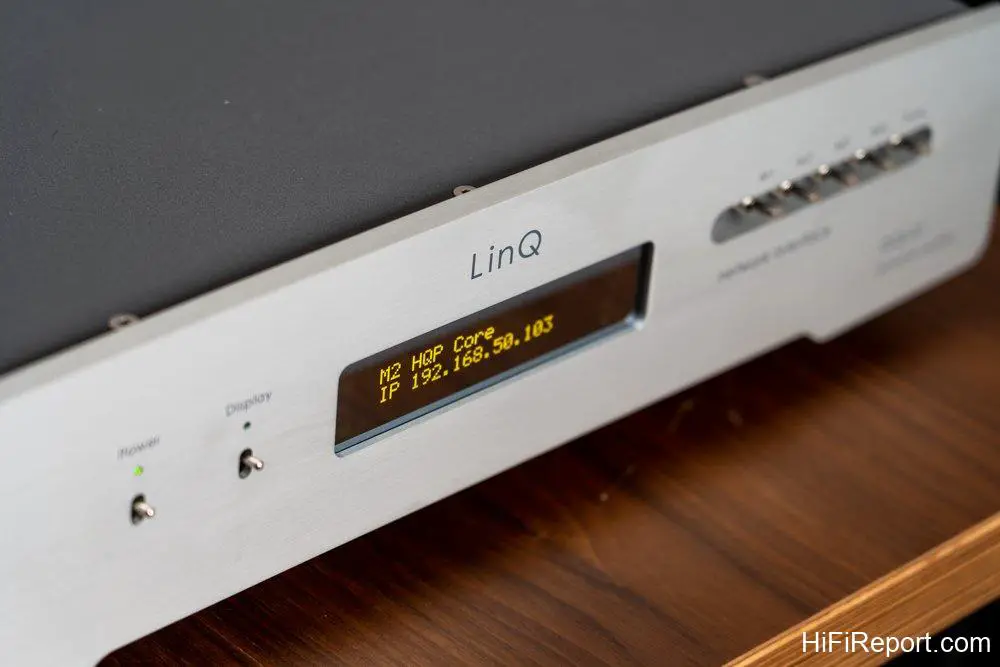
The Module A to Module D slots are used to install module cards related to streaming services. These four slots correspond to the M1 to M4 buttons on the front panel, used to switch between different services.
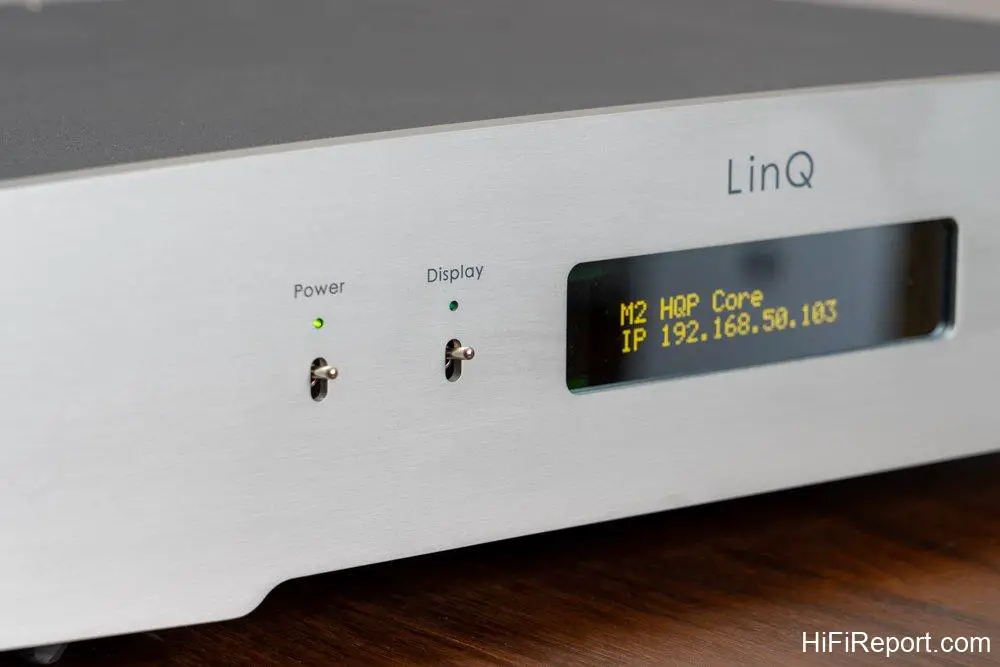
The reviewed LinQ unit already had HQPlayer NAA card, HQPlayer Core card, and UPnP DLNA card installed in Module A to Module C slots, respectively. Module D slot was empty. I will describe the functions of these cards later.
Now, here’s the crucial point.
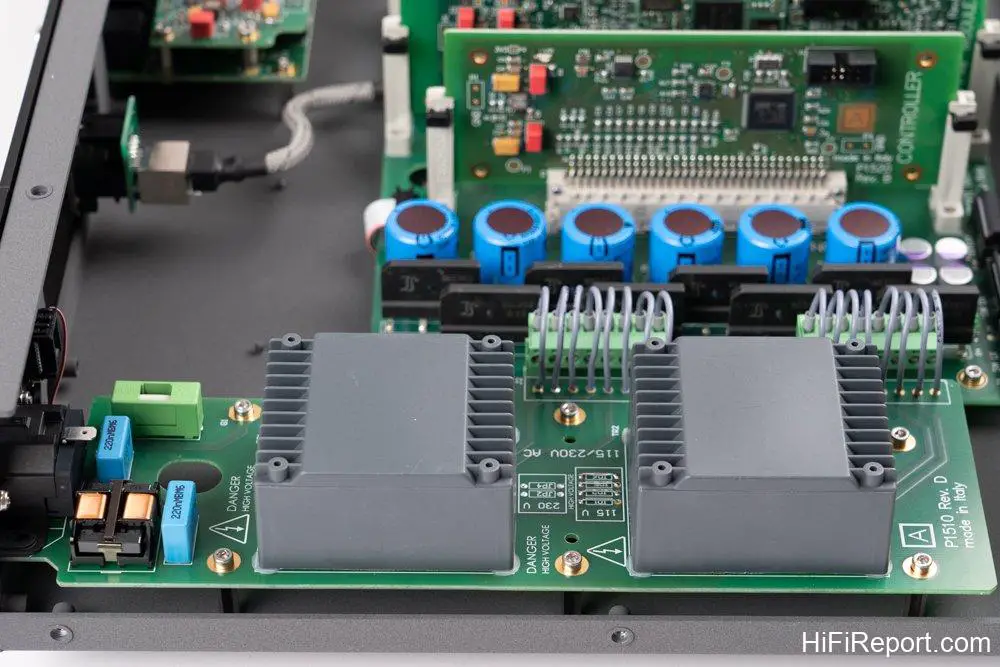
LinQ is a highly modular device, with both the system and network sections being modular cards. These cards are not only independent but also have their own power supply circuits. This effectively reduces power interference between them.
Secondly, the network signal path of each module has electrical isolation measures, which can prevent network noise crosstalk.
Furthermore, each module is the result of Aqua’s long-term research and optimization, with sound quality as the primary consideration. More importantly, this modular design ensures maximum flexibility in use and future upgrade possibilities. As technology advances or new streaming features are developed, LinQ can benefit through card replacement or addition.
Fully Embracing HQPlayer Technology
Let’s now look at the network functions provided by the optional module cards.
As mentioned earlier, the reviewed LinQ unit is equipped with three module cards. The UPnP DLNA card is straightforward; it indicates that LinQ supports UPnP functionality. By using a UPnP-compatible third-party remote control app, such as BubbleUPnP or mconnect Player, you can play music files stored on network storage devices or mobile phones, or listen to streaming services like Tidal and Qobuz.
The other two cards are the HQPlayer Core card and the HQPlayer NAA card. These give LinQ two major advantages. Firstly, HQPlayer supports Roon Ready, meaning LinQ also supports Roon Ready. This allows users to enjoy Roon for music management and playback. Roon offers a user-friendly and convenient interface, powerful features, and also supports Tidal and Qobuz.
Secondly, although Roon is used as the operating interface, the signal transmission path still adopts HQPlayer’s streaming technology, not Roon’s RAAT protocol. In other words, users enjoy both the convenience and powerful database features of Roon, and the excellent sound quality of HQPlayer, one of the world’s most renowned audiophile playback software, achieving two benefits in one.
However, to implement HQPlayer technology, why does LinQ need to install two HQPlayer module cards? In fact, the HQPlayer NAA card is a module developed by Aqua earlier. It is designed for CAT (Computer As Transport) players already using HQPlayer software to utilize LinQ as a renderer. In this scenario, simply connect a network cable between the computer and LinQ to directly transmit HQPlayer’s proprietary NAA audio signals to LinQ.
The problem is, most audiophiles probably wouldn’t specifically set up a computer capable of running HQPlayer just because LinQ has HQPlayer NAA functionality, right? Therefore, Aqua developed the HQPlayer Core card, essentially embedding an HQPlayer core inside LinQ to act as a player. After playing music, the signals are transmitted in NAA format to the HQPlayer NAA card via internal network connection, fully leveraging the technological advantages of HQPlayer.
Are there other streaming players on the market doing this like LinQ? To my knowledge, this is currently unique.
A Sense of Live Atmosphere
After discussing LinQ’s design, let’s talk about the sound.
The listening process was conducted in two parts, first in the HiFiReport listening room and then at my home.
Why two locations? The reference system in the HiFiReport listening room is comparable in price to LinQ, allowing LinQ’s capabilities to be fully realized.
Listening at home was to utilize my Roon setup and Roon interface for playback, to understand the advantages of LinQ with HQPlayer technology.
First, listening in the HiFiReport listening room.
I set LinQ to UPnP DLNA mode and played files stored on a NAS, all ripped from CDs.

LinQ was connected to a Merging NADAC via AES/EBU interface. Other reference equipment included an EC 4.8 preamplifier, EAR 509 tube power amplifiers, and Wilson Audio Alexia 2 speakers. The reference source was a YBA CDT450 CD transport.
Listening to a few pieces of music casually, I quickly sensed the elements expected of a high-quality digital source, including rich detail, a relaxed and natural listening experience, a sense of live atmosphere, and engaging musicality. LinQ possesses all of these qualities.
Taking the familiar “Jazz at the Pawnshop” as an example, before the music officially started, I felt the subtle chatter in the bar was more lively than I had heard before, immediately highlighting LinQ’s detail-rich characteristic.
The sound of the vibraphone in the music was also impressive. The percussive feel of the mallet hitting the metal keys was not only crisp but also gentle. The resonance in the resonator tubes was particularly long, and the timbre was both transparent and warm, with a good sense of weight in each note. It was very comfortable to listen to.
The clarinet plays an important role in this piece. I heard a solid yet agile sound, completely free of harshness, sharpness, or dryness.
In short, LinQ can present the thickness and atmosphere inherent in the recording. The sound is warm, completely devoid of the coldness often associated with digital devices.
Another example is the Artemis Quartet’s performance of Schubert’s String Quartet No. 15 in G major. LinQ’s clean, transparent, clear, and precise characteristics not only presented the texture and grain of the string timbres in richer detail but also gave the sound a sense of realism, making the communication of musical emotion more direct and intense.
Also, in Herbie Hancock’s “River: The Joni Letters” album, the third track “Both Sides Now” begins with a two-minute solo. Through LinQ, I heard more information, including the piano’s sustain, the lingering reverberation in the space, and the colorful timbres brought by rich harmonics. All of these made listening more enjoyable.
HQPlayer Setup in Roon
The second part of the listening session moved to my home, mainly to explore what HQPlayer technology could bring to LinQ.
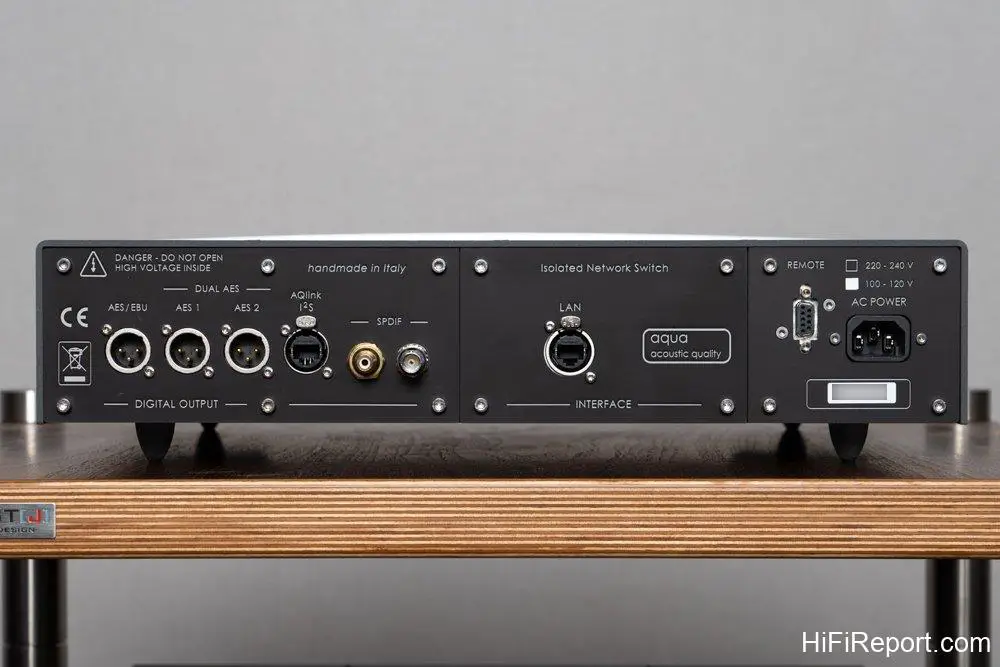
First, HQPlayer player must be added in Roon. How to do it? Step one, switch LinQ to HQPlayer Core mode. On this LinQ unit, the HQPlayer Core module card is installed in Module B slot, corresponding to M2 position on the front panel. Press the M2 position switch. At this time, “M2 HQP Core” and an IP address will appear on the screen.
Step two, find the “HQPlayer” item at the bottom of the “Setup” page in Roon and press “Add HQPlayer” on the right.
Step three, enter this IP in the pop-up dialog box.
Step four, in Roon’s “Audio” page, enable the newly added HQPlayer device and name it.
Step five, in the output device options in the lower right corner of the Roon main screen, select the device you just named.
Step six, return to the LinQ panel and switch the position to HQPlayer NAA position, which is M1 on this unit.
Step seven, operate playback with Roon, and sound will be outputted.
Vivid Micro-Dynamics
During the listening session at home, LinQ was still outputting via AES/EBU, connected to a Holo Audio Spring 3 DAC, EC 4.8 preamplifier, NuPrime EVO One power amplifier, and Aurum Cantus Grand Harmony speakers via balanced digital cable. Although this system is completely different from the HiFiReport listening room system, and the level is also quite different, I had an immediate impression upon first listen: the detail performance is better.
This improvement is certainly due to the HQPlayer Core + NAA modules.
Taking Joshua Bell’s performance of Tchaikovsky’s Violin Concerto No. 1, first movement, as an example, the very first note was different. The density of the string section was excellent, with no lack of the rosiny texture of bow-string friction. The sound was soft, smooth, and flowing, and the width and depth of the soundstage were immediately apparent.
At this point, although the entire orchestra was in a quiet musical passage, it possessed a calm, solemn aura.
In the following fortissimo section, LinQ demonstrated a clear structure across the entire frequency range, excellent low-frequency resolution, rich low-frequency layering, and vivid dynamic contrast. Even at extremely high sound pressure levels, the listening experience was still relaxed.
After the middle section of the piece, there is a long violin solo. Through LinQ’s playback, the details in the quietest passages were crystal clear, and the micro-dynamics were also very vivid. Especially the solidity of the sound image was excellent. The sound was prominent and concrete, yet natural.
Music Comes Alive
In addition, I also found LinQ’s sonic background to be very transparent, the timbre very direct, and the sound picture very realistic. It felt like nothing extraneous was added to the sound, allowing the details in the recording to be fully reproduced. I not only heard the music, but also the atmosphere. The music and atmosphere were conveyed together, creating a very pleasant and enjoyable listening experience.
In comparison, my Aries G1 was noticeably inferior. The sound became simpler and less realistic.
Finally, I made another comparison, playing the same music file through the HQPlayer Core module and the UPnP DLNA module respectively, to see what the difference was.
My Roon Core is installed on a NAS, and the music files are also on the NAS. In addition, the NAS also has UPnP server software MinimServer installed. So, by using different remote control apps, I could easily make the comparison.
What were the results? HQPlayer Core was clearly better than UPnP DLNA, better in terms of micro-dynamics, subtle musical expressions, liveliness, atmosphere, spatial information, image outlines, etc. In short, the music was more alive.
An Unquestionably Excellent Streaming Transport
LinQ is an unquestionably excellent streaming transport. It can maximize and accurately output network streaming audio, allowing users to enjoy rich listening pleasure. Especially with the addition of HQPlayer, it is even more powerful. If you want to hear the best of LinQ, you should use its HQPlayer modules.
Currently, all LinQ units imported are the highest-level version, which already includes HQPlayer Core + NAA modules and UPnP DLNA module, allowing you to reach the peak in one step.
Of course, to conveniently use HQPlayer Core + NAA modules, Roon is indispensable. If you don’t have Roon yet, it’s okay. For LinQ, it’s worth spending money on Roon. And I dare say, once you’ve used it, you’ll wonder why you didn’t start using it sooner.
Specifications
* Type: Streaming Transport
* Input: LAN (RJ45)
* Outputs:
* 1. AES/EBU – Up to 24bit/192kHz PCM, DSD64
* 2. Dual AES – Up to 24bit/384kHz PCM, DSD128
* 3. I2S (RJ45 AQlink) – Up to 32bit/384kHz PCM, DSD128
* 4. SPDIF RCA – Up to 24bit/192kHz PCM, DSD64
* 5. SPDIF BNC – Up to 24bit/192kHz PCM, DSD64
* Supported Streaming Methods (Modules Required): UPnP, Roon Ready, HQPlayer NAA, Squeezelite (coming soon), Tidal Connect (coming soon)
* Source: YBA CDT450 CD Transport
* DAC: Merging NADAC
* Amplifiers: Electrocompaniet EC 4.8 Preamplifier / EAR 509 Power Amplifiers
* Speakers: Wilson Audio Alexia 2
* Cables: Tromba Mandolin XLR Signal Cable / Tromba Marina OCC-1 Speaker Cable / Xsymphony Precision One Power Cable / Transparent Reference XL AES/EBU Digital Cable
* Accessories: Tiglon TMR-2 Audio Rack / MYSTJ Audio CMS Audio Rack / ASI Tuning Devices
“`