
Arendal 1961 Tower Floorstanding Speaker Review
A few months ago, I had the pleasure of experiencing Arendal Sound’s 1723 Tower S THX floorstanding speakers. Their warm tonality, rich texture, clear imaging, and abundant detail, coupled with impressive dynamics and a lively soundstage, left me with an excellent first impression of Arendal Sound.
Having heard Arendal scale down their flagship 1723 series into the 1723 S, I began to fantasize about the top-tier 1723 series. I wondered how much more impactful listening to Carl Orff’s “O Fortuna” from Carmina Burana, Mahler’s Symphony No. 1’s fourth movement, or Hans Zimmer’s film scores would be on those compared to the 1723 Tower S THX. However, the speakers that arrived were the even smaller 1961 Tower.
It seems Mory International is deliberately whetting my appetite!
Petite Entry-Level Floorstanders
Upon unboxing, the 1961 Tower revealed itself to be significantly smaller and lighter than the 1723 Tower S THX.
Its height, just under a meter, might appear somewhat diminutive in HiFiReport’s listening room. However, in a typical apartment living room, it would be just the right size.
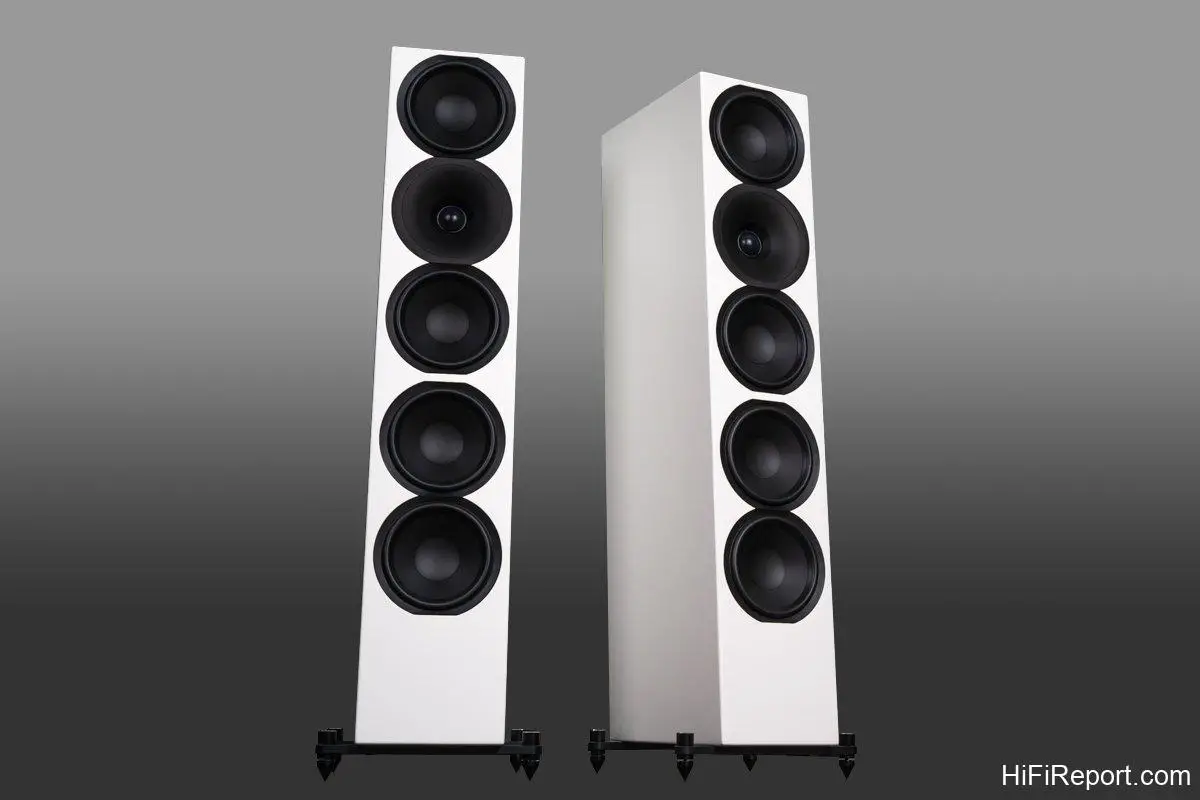
The aesthetics of the 1961 Tower closely mirror the 1723 Tower S THX.
It features the same vertically aligned driver array, the same circular waveguide surrounding the tweeter, and the same backward-leaning cabinet design – the overall design language is unmistakably consistent with HiFiReport.
The only difference lies in its smaller dimensions and a more streamlined cabinet.
The reduced driver sizes also result in a narrower front baffle, giving the speaker a slimmer and more aesthetically pleasing profile.
In fact, I believe the 1961 Tower boasts a higher WAF (wife acceptance factor) than the 1723 Tower S.
Unsurprisingly, the 1961 series is indeed derived from the 1723 series.
For Arendal Sound, the 1723 represents their ideal and standard. However, to make Arendal Sound accessible to a broader audience, they scaled down the speaker dimensions and lowered the price, giving rise to the more approachable and competitively priced 1961 series.
Low Distortion Driver Design
In terms of driver configuration, the 1961 Tower, as the flagship of its series, adopts a similar 5-driver, 2.5-way configuration to the 1723 Tower. It employs a custom 28mm silk soft dome tweeter paired with smaller 5.5-inch woofers compared to the 1723 Tower S THX.
This 28mm tweeter diaphragm is exceptionally lightweight and exhibits excellent damping characteristics.
For cost considerations, the magnetic system utilizes a ferrite magnet with a CCAW (copper-clad aluminum wire) voice coil and magnetic fluid cooling. This is complemented by a specially designed large aluminum heat sink featuring multiple ventilation holes to facilitate airflow and heat dissipation, effectively reducing distortion.
Signature Waveguide Integration
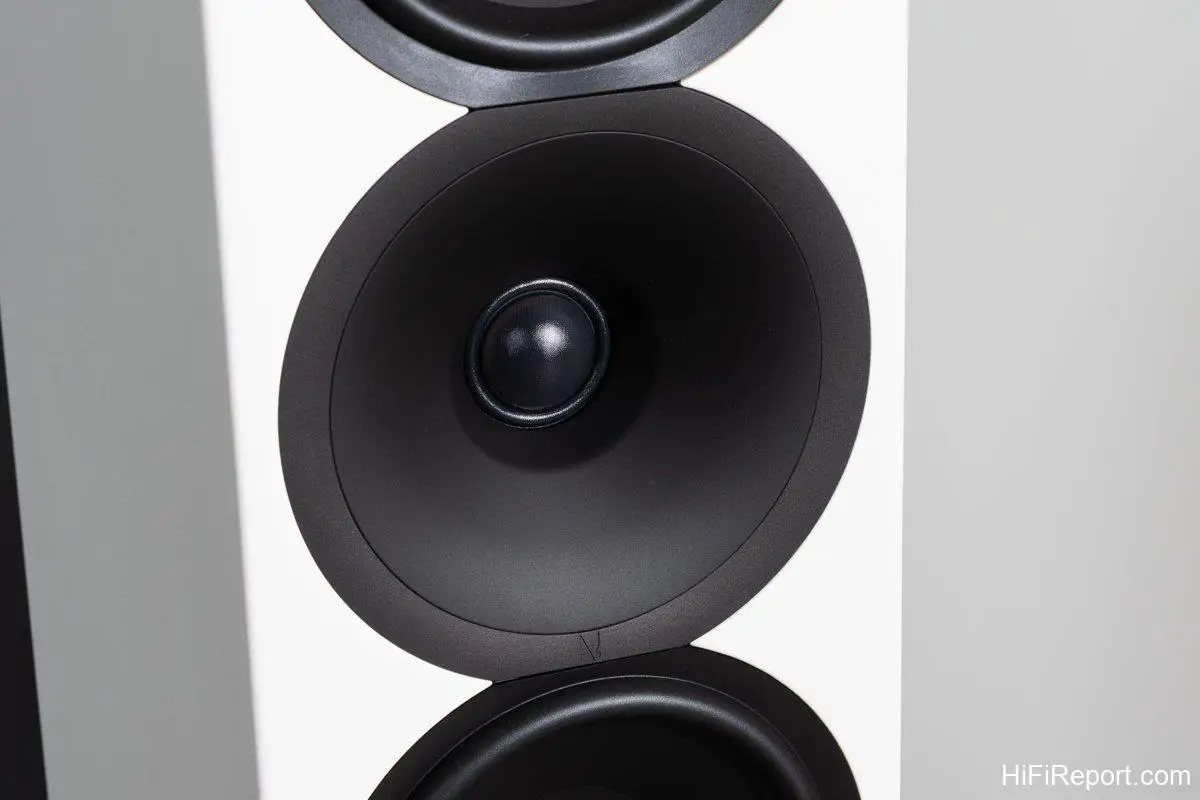
A standout feature of Arendal Sound speakers is the circular waveguide surrounding the tweeter.
This waveguide is present in the 1723, the 1723 S, and even in the entry-level 1961 series.
It’s arguably the most recognizable characteristic of Arendal Sound speakers. Its carefully calculated geometry allows it to effectively increase the tweeter’s sensitivity by 6dB, while also reducing distortion at the lower end of the tweeter’s frequency range and controlling its dispersion angle. This design enhances the off-axis response of the tweeter in the 1961 (and indeed all Arendal Sound speakers).
Behind the tweeter, there’s an independent air chamber filled with damping material and equipped with vent holes. This design isolates the tweeter from back wave interference.
(Image/Courtesy of Arendal)
Scientific Manufacturing Philosophy
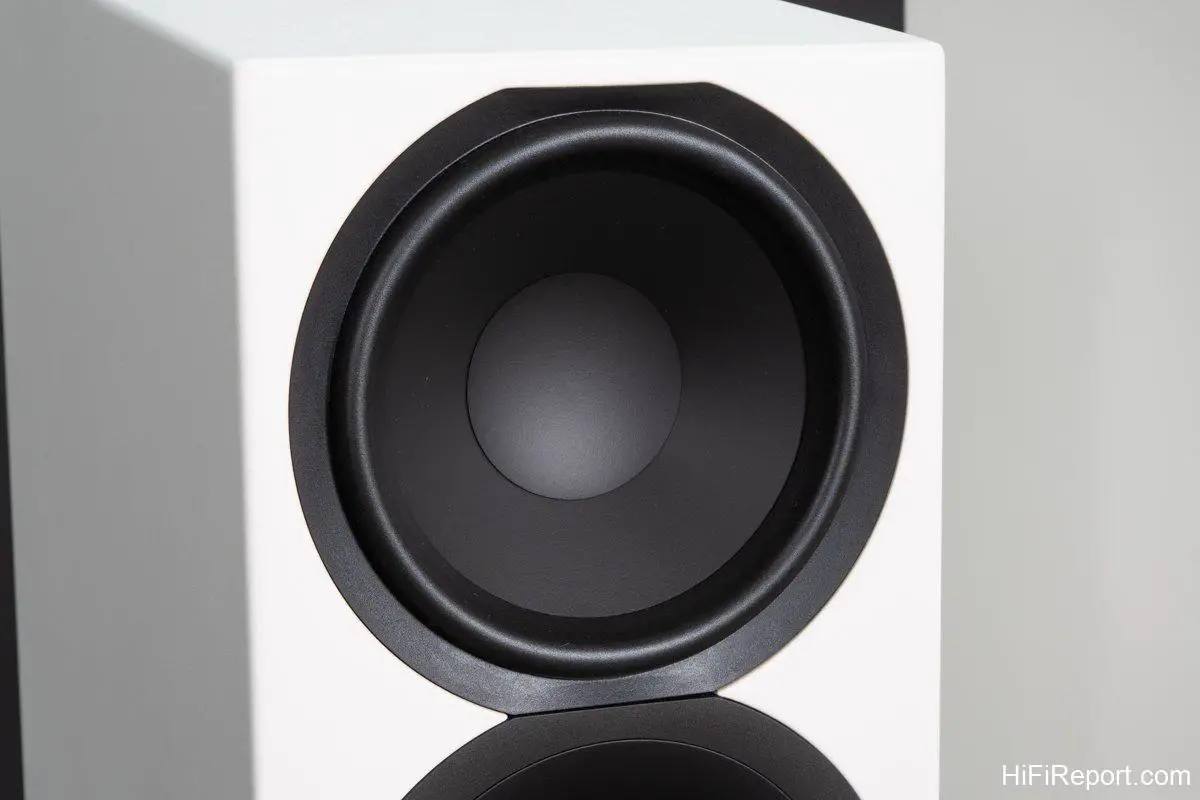
The 5.5-inch woofer also shares design principles with the 1723 series.
The cone diaphragm is constructed from long-fiber pulp and treated with their proprietary damping coating. This pushes the woofer’s resonance frequency far above the crossover point of 1500Hz.
The selection of materials for the magnetic system, surround, and spider is meticulously optimized for precise performance without introducing any unwanted coloration.
Driver designs undergo Finite Element Analysis (FEA), creating models of materials, geometries, and magnetic systems. These models are iteratively analyzed to achieve the optimal design.
Furthermore, they utilize Klippel laser measurement systems for precise testing, ensuring the accuracy of driver movement.
Arendal Sound is not merely an assembler of off-the-shelf components; they are driven by a scientific approach, with every design choice grounded in reason.
The cabinet construction is another hallmark of Arendal Sound.
While most wooden speaker cabinets utilize MDF (Medium Density Fiberboard), Arendal Sound insists on using HDF (High Density Fiberboard). HDF is denser than MDF, resulting in lower resonance.
In the 1961’s cabinet, Arendal Sound employs HDF with thicknesses ranging from 15 to 50mm, depending on the panel and its location, with the front baffle being the thickest.
It’s worth noting that the maximum thickness reaches a substantial 50mm – a testament to the solid and robust build of Arendal Sound speakers.
Ported or Sealed Cabinet Options
Arendal Sound offers a unique feature regarding cabinet configuration.
They retain the bass reflex port but also provide foam plugs, allowing users to choose between ported or sealed operation based on their room environment and preferences.
Plugging the ports transforms the cabinet into a sealed enclosure.
With the ports plugged, the 1961 Tower’s bass extends down to approximately 49Hz, with a roll-off slope of about 12dB/octave.
If your speakers are placed close to a wall, which typically boosts bass frequencies by 6-12dB, sealing the ports can yield a more natural and balanced sound.
Conversely, removing the foam plugs unleashes the 1961 Tower’s bass extension down to 39Hz. This not only increases bass quantity but also imparts a warmer sonic character, making it suitable for larger rooms or placements further away from the back wall.
No Plastic Components
Arendal Sound holds several intriguing perspectives.
Firstly, they resolutely avoid using any plastic components in their speakers.
They believe plastic negatively impacts sound quality. Consequently, their products are constructed solely from wood and metal, with no plastic materials used.
Furthermore, their philosophy on speaker spikes is unconventional.
While spikes are commonly perceived as vibration isolators, Arendal Sound believes their primary function is stability.
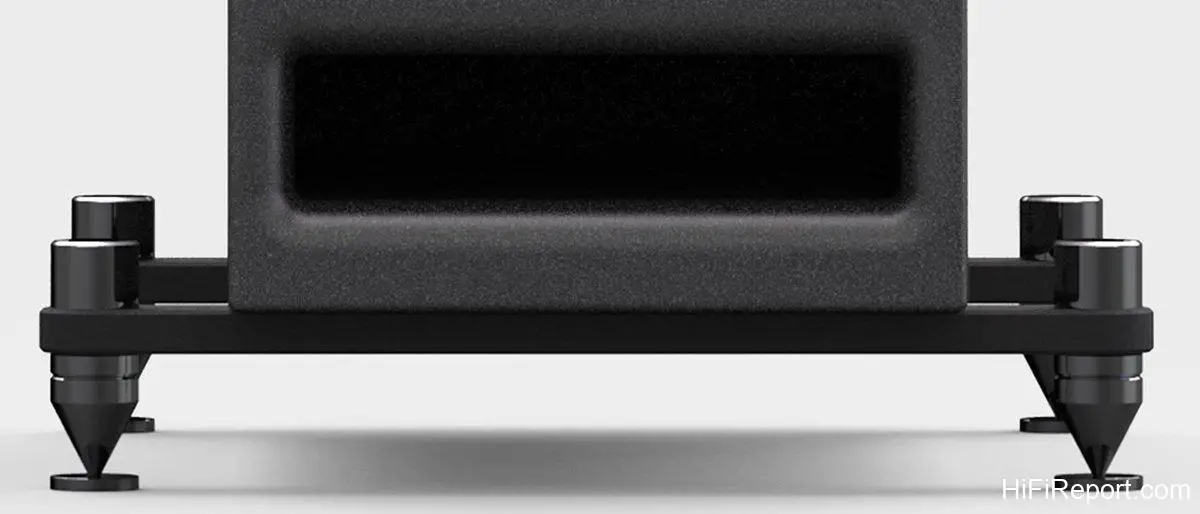
They intentionally designed extended outrigger feet, positioning the spikes wider than the speaker’s footprint. This enhances the speaker’s stability.
Stability, they argue, is the foundation of good sound.
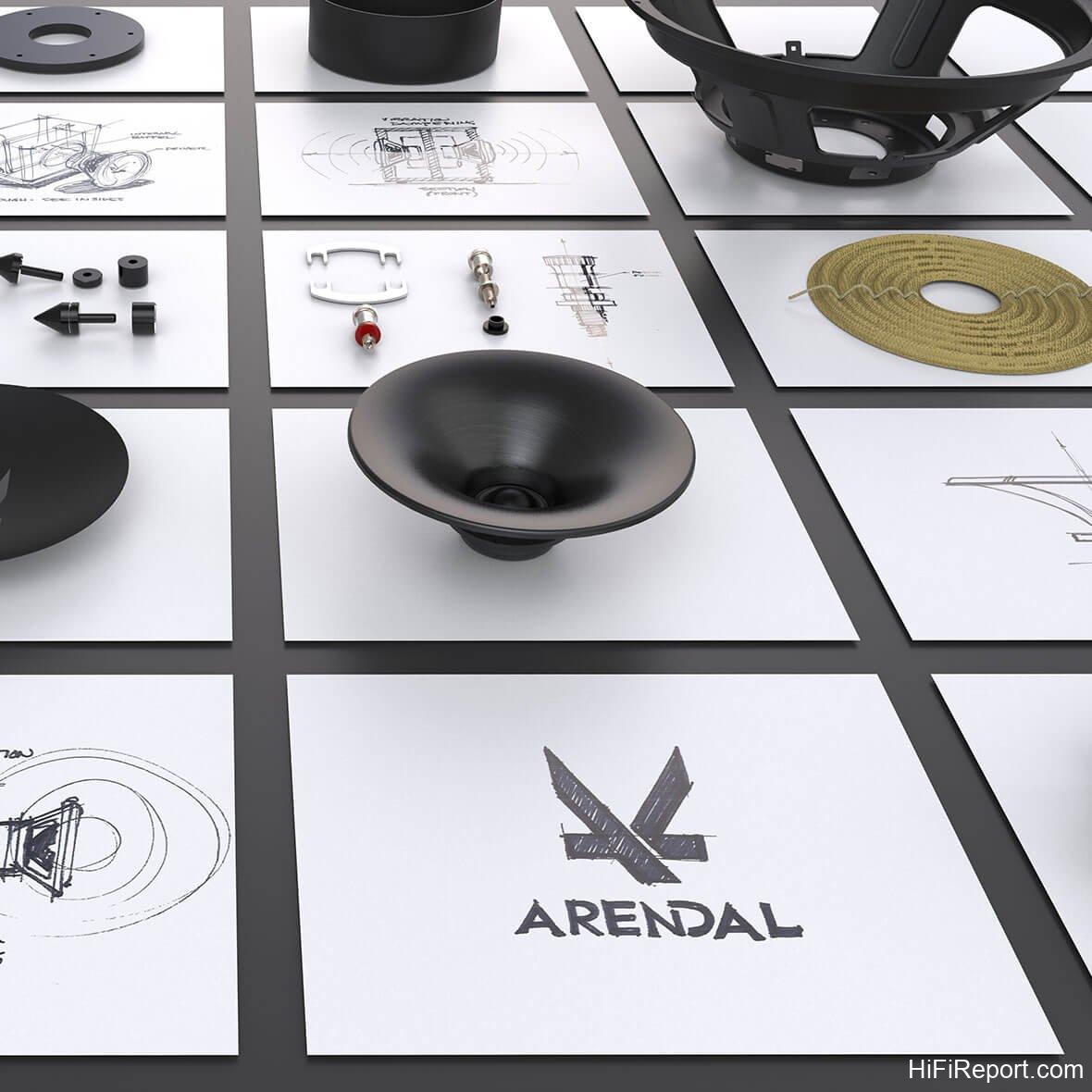
Perhaps Arendal Sound is right, and stability is the true purpose of speaker spikes, while vibration isolation is merely a secondary, perhaps overstated benefit. (Image/Courtesy of Arendal)
Amplifier Pairing Flexibility
The 1961 Tower speakers I received were brand new. Unboxing new speakers is always a mixed experience.
The joy lies in the complete unboxing experience and appreciating the manufacturer’s attention to packaging details.
In this regard, Arendal Sound deserves high praise. Their packaging is truly exceptional. All accessories are housed in separate cardboard boxes, nestled within custom-cut foam inserts, ensuring each component is securely protected.
The speaker itself is encased in a non-woven fabric bag with a drawstring closure, meticulously tied and secured.
Every step of the unboxing process revealed the manufacturer’s dedication. Unboxing new Arendal speakers is genuinely a delightful experience.
However, new speakers also mean the necessity of break-in.
While some may dispute the need for speaker break-in, experience suggests that speakers do benefit from a period of run-in. No need for specific break-in tracks; simply playing your usual music over a few days will allow the sound to become smoother, more natural, and the extended frequency ranges will enhance musical engagement.
I am a firm believer in speaker break-in. Therefore, after unboxing, I played music casually while searching for the ideal amplifier pairing.
The 1961 Tower is remarkably easy to drive. Even the Oriole OSA-88-1BV tube amplifier from Willsenton drove them effortlessly and pleasantly.
However, I preferred the KECES S-300 power amplifier. This newly released KECES power amp delivers surprisingly excellent sonic performance. Its ample power and exceptional control make it hard to find a more well-rounded power amplifier in the sub-$3000 price range.
Particularly after listening to the KECES S-300 driving the 1961 Tower with the Justice League movie soundtrack and Reference Recording’s Tutti orchestral compilation, I decided to use the S-300 as a reference component for evaluating the 1961 Tower.
Inherited Arendal Sound Signature
The sonic character of the 1961 Tower closely mirrors that of the previously auditioned 1723 Tower S THX. Both share a solid and warm texture, rich information retrieval, clear and precise imaging, and the ability to convey dynamic nuances in music.
The 1961 Tower, being physically smaller with smaller drivers, understandably exhibits slightly less energy and headroom compared to the 1723 Tower S THX.
However, in typical apartment living rooms, the 1961 Tower’s size and sonic output are perfectly matched, rendering any perceived “shortcomings” negligible.
Orchestral Music – Layered and Detailed
Listening to the 1961 Tower was a thoroughly enjoyable experience.
I’ll start with the two albums mentioned earlier. The Tutti CD was already in the North Star CD player in the listening room. While warming up the 1961 Tower, I simply pressed play and went about my business.
Hearing the music emanating from downstairs, I couldn’t resist going down for a closer listen.
Despite its smaller stature, the 1961 Tower produced an open and expansive sound, carrying the warm characteristics I had previously experienced with the 1723 Tower S THX. The sound was devoid of any harshness or aggression. Playing Rimsky-Korsakov’s “Dance of the Tumblers” from “The Snow Maiden,” the orchestra unfolded across a wide stage with distinct layers. The ensemble playing possessed weight, and the percussion created a lively atmosphere. The two-beat dance rhythm was invigorating.
The delicate shimmer of the triangle, aided by the circular waveguide, was exceptionally clear and distinct.
Arendal Sound’s shallow waveguide effectively controls dispersion and enhances tweeter efficiency.
While the weight and impact of the bass drum might not match the 1723 Tower S, the 1961 Tower, as a compact floorstanding speaker, delivered a satisfyingly full and robust drum sound.
Track eight featured a passage from Bruckner’s Symphony No. 9’s second movement. This Scherzo, under Stanislaw Skrowaczewski’s baton, was vibrant and energetic. The short, staccato string notes conveyed a lively character, with playful pizzicato passages adding to the amusement.
When the forte passages arrived, the strings displayed texture and density. Arendal’s speakers’ solid and full-bodied nature rendered the strings particularly rich and lush.
Despite its smaller size, the 1961 Tower’s ability to reproduce the depth and weight of low-frequency strings far exceeded expectations for a speaker of this size.
Clear Vocals and Dynamic Agility
Moving on to the Justice League soundtrack, the opening track, “Everybody Knows,” is performed by Sigrid, a fellow Norwegian artist from Arendal Sound’s hometown.
Sigrid’s vocals were clear, well-defined, and rich in detail.
The soundtrack’s dynamic range was impressive. The low-frequency rhythm track carried substantial weight, while the accompanying strings remained clearly audible.
This experience reinforced my decision to pair the 1961 Tower with the KECES S-300. The S-300’s excellent control kept the 1961 Tower in check, ensuring clarity and distinct layers without any muddiness or ambiguity.
As the music progressed through Danny Elfman’s score, the layers and textures built upon each other, creating a magnificent sonic architecture.
In “Batman on the Roof,” the 1961 Tower demonstrated its low-frequency prowess.
And in “Hippolyta’s Arrow,” the opening passages featuring acoustic bass instruments possessed tangible texture and physicality.
Just as the music swelled to near-peak levels, it instantly receded to a pianissimo.
The 1961 Tower’s dynamic capabilities were not only evident in the Tutti album but even more pronounced in this soundtrack.
Made for Michael?
I also wanted to use Michael Jackson’s music as an example.
Listening to Michael’s “History: Past, Present and Future, Book I” album, this exceptional compilation sounded incredibly engaging on the 1961 Tower.
The full and solid sonic texture, a hallmark of Arendal speakers, rendered Michael’s vocals focused, clear, and richly detailed.
Michael’s recordings are renowned for their fullness and richness, free from any thinness, harshness, or stridency – representing the pinnacle of 80s and 90s pop music recording quality.
Listening to “They Don’t Care about Us,” the opening sounds of children playing created a sense of space. Synthesizer pads sustained long notes before a powerful and impactful rhythm section erupted.
Turn it up! Arendal welcomes you to crank the volume.
That’s not their marketing slogan, but my observation.
However, upon hearing such potent and solid drum sounds, you’ll instinctively want to increase the volume, just as I did.
A searing electric guitar solo in the track was delivered by the 1961 Tower with enveloping warmth and passion.
In “Black or White,” the opening father-son dialogue was incredibly vivid, like watching a movie. The father’s angry knocking on the door, the off-screen reprimands, the son’s rebellious responses, the sound of a cassette tape being inserted – it all felt cinematic. This is what I mean by the high artistry of pop music recording from that era; every Michael Jackson song is a masterpiece of engineering.
But the brilliance doesn’t stop there. Keep listening, and don’t turn down the volume.
The more I listened, the more I wondered: Was the 1961 Tower designed specifically for Michael Jackson’s music?
Expressing True Sonic Textures
To dispel any notion that the 1961 Tower is solely about power and suited only for high-energy orchestral pieces, pop music, or film scores, I offer another example: Tore Brunborg’s saxophone paired with Kjetil Bjerkestrand’s organ.
The saxophone’s texture was simply exquisite. Do you appreciate the sound of reed instruments, the air flowing through the metal tubing, creating a warm yet slightly coarse texture? Don’t underestimate the 1961 Tower, thinking it’s only for movies. Its ability to reproduce the texture of a saxophone is truly remarkable.
Regarding the organ, I listened to music on Tidal, lacking detailed information to determine if it was a pipe organ or an electronic organ, though I suspect the latter.
Here, the 1961 Tower showcased its bass reproduction capabilities. The bass was deep, warm, enveloping, and pervasive, filling the air.
Such bass performance from a compact floorstanding speaker is truly exceptional.
HiFiReport’s listening room is spacious, and the speakers were positioned away from the back wall. I preferred the sound with the foam plugs removed, allowing the 1961 Tower’s reflex ports to breathe freely.
This affected more than just bass extension; removing the plugs and allowing the ports to breathe resulted in a more open and natural sound, with less restraint and constriction.
Essential on Your Shopping List
I’ll conclude here.
Arendal Sound is a brand unfamiliar to many, and I, too, was unacquainted with them before Mory International became their distributor.
However, this second encounter with their speakers has impressed me. From their appearance, build quality, and packaging, Arendal speakers exude appeal. And when you hear their sound, you’ll share my sentiment that listening to music is a truly joyous experience.
The 1961 Tower, while the entry-level and most compact series, inherits all the hallmarks of Arendal Sound.
I would even argue that in typical 200-300 sq ft apartments, a pair of 1961s in the living room might be a more ideal fit than the 1723.
If you prioritize quality over brand recognition, add Arendal Sound to your shortlist for your next speaker upgrade.
Specifications
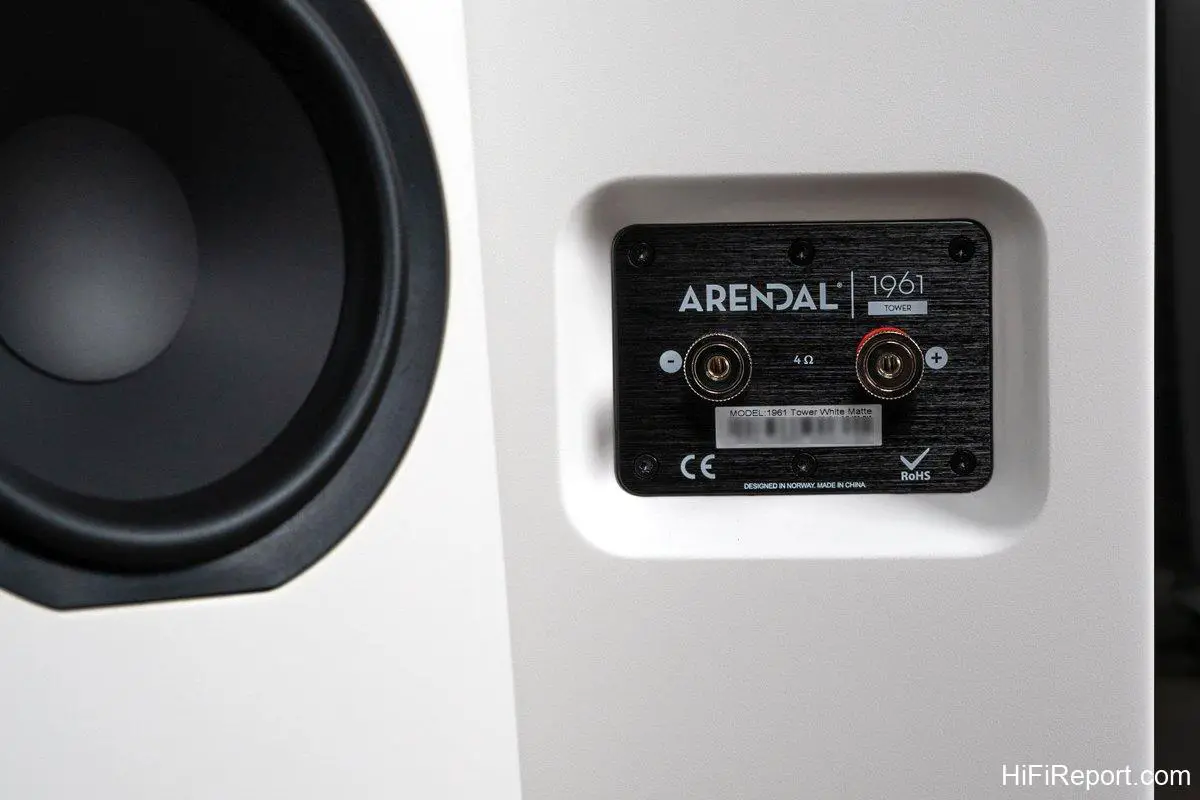
* Type: 5-driver, 2.5-way bass-reflex floorstanding speaker
* Drivers: 28 mm tweeter × 1, 5.5-inch woofer × 4
* Enclosure: Sealed / Bass Reflex
* Sensitivity: 87 dB
* Frequency Response: Sealed 49 Hz ~ 20 kHz, Ported 39 Hz ~ 20 kHz (+/-3dB)
* Crossover Frequencies: 120 Hz, 1500 Hz
* Impedance: 4 ohms
* Recommended Amplifier Power: Up to 400 W @ 4 ohms
* Break-in Time: 50 hours
* Dimensions: 878 × 163 × 285 mm (H × W × D)
* Weight: 17.9 kg