
Audient EVO 4/EVO 8 Review
In the post-pandemic era, as staying home increasingly becomes the norm, sales have surged not only for products like audio systems, headphones, home theater setups, TVs, and projectors, but also for a different category: compact, portable, and easy-to-use audio interfaces. Alongside microphones, these interfaces are the ideal tools for many professional creators and amateur enthusiasts looking to try their hand at home recording .
The Home Recording Trend
For instance, the Audient EVO 4 and EVO 8, reviewed here, boast a small footprint, lightweight design, and performance comparable to professional studio gear, offering exceptional value for money.
Established in 1997 by David Dearden and Gareth Davies, Audient is a major manufacturer of recording equipment. These two gentlemen were previously founding partners of the renowned mixing console design company DDA in the 80s and 90s. Armed with extensive sales experience from DDA, they decided to stick to their principles and founded Audient after the advent of digital mixers.
Audient’s Legacy
The brand’s mission was to create analog consoles that delivered superior performance, better sound quality, and outstanding value.
Following dedicated efforts, Audient launched the flagship ASP8024 mixing console. This analog console gained widespread acclaim for its ease of operation and excellent sound quality. Over 20 years later, you can still find it in thousands of recording studios worldwide.
After being acquired in 2013 by Simon Blackwood, the former CEO of well-known UK music label Focusrite and electronic synthesizer brand Novation, Audient began developing home recording equipment with a more innovative perspective, subsequently releasing several such products.
The EVO Philosophy
Audient’s latest audio interfaces, the EVO 4 and EVO 8, come packed with powerful and convenient features. To give readers a deeper understanding of their capabilities, I visited the listening space of the distributor, Taiwan High End, located on Wenzhou Street in Taipei. Mr. Chen Chien-yu, the Sales and Marketing Manager, provided a detailed introduction and practical demonstration.
According to Mr. Chen, the EVO 4 and EVO 8 can easily meet the diverse recording needs of professional engineers, broadcasters, and amateur creators alike – their performance is truly impressive.
EVO 4: Compact Powerhouse
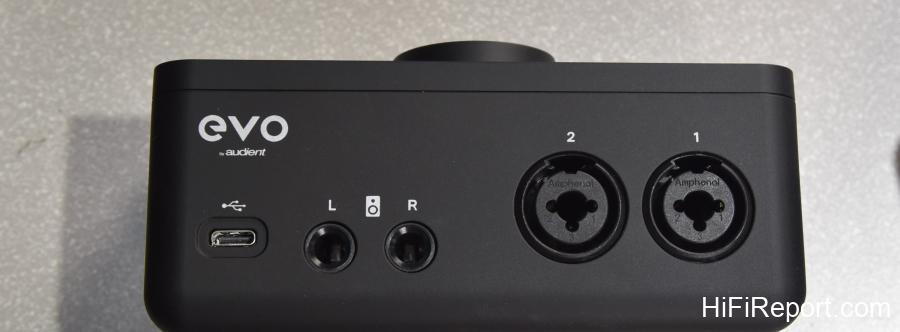
First, let’s look at the design of the EVO 4. It features a compact, elongated form factor. This interface is equipped with two microphone preamps, allowing creators to connect two microphones simultaneously. It offers a gain range of up to 58dB, providing clear audio quality comparable to professional studio levels. For output, it supports one set of speakers and one set of headphones, enabling users to quickly switch between different monitoring setups to verify the completeness of their work.
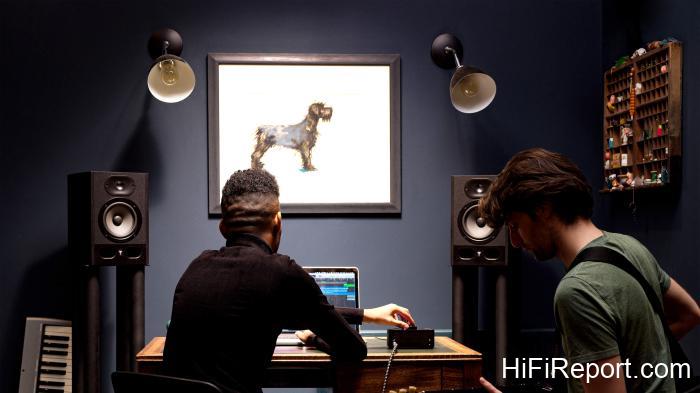
The digital-to-analog conversion performance is excellent, supporting sample rates up to 24bit/96kHz and boasting a dynamic range of 113dB, allowing creators to work at a quality level closest to the original sound. Additionally, it includes a dedicated JFET DI input for instruments, allowing direct recording of guitars, bass, and other instruments.
EVO 8: Expanded Options
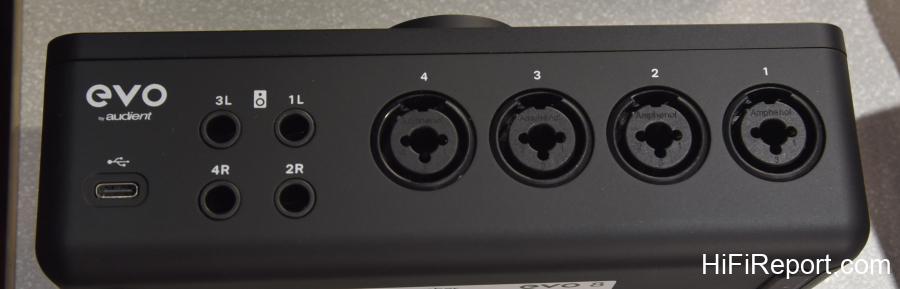
Next, let’s examine the EVO 8. It also adopts an elongated design, longer than the EVO 4. It features four microphone preamps, offering the same gain of up to 58dB and a dynamic range of 113dB, matching professional studio standards. For output, it can connect two sets of speakers and two sets of headphones for monitoring. A unique circuit design gives its preamps a warm character while still ensuring the microphone captures accurate sound quality.
Like the EVO 4, it includes a dedicated JFET DI input for instruments, allowing real-time instrument recording and easily accommodating various creative formats.
Shared EVO Features
Both the EVO 8 and EVO 4 provide +48V phantom power to each microphone track, ensuring microphones receive sufficient power to perform at their best and significantly enhancing the quality of recordings. It’s worth noting that since both interfaces are powered via a USB connection, they can begin recording instantly simply by connecting to a computer. This means they can be ready to capture inspiration whenever it strikes, making the creative process much more convenient.
Hands-On Experience
Next, Mr. Chen demonstrated the practical operation workflow. First, connect the EVO 8 or EVO 4 to a computer and download the drivers from Audient’s website. Once the drivers are installed, simply select the input source and you’re ready to create using your preferred recording software. The entire process is remarkably straightforward.
You can use your system’s built-in recording software, your go-to application, or if you don’t have any software installed, you can use the bundled Cubase LE software included with both interfaces.
Multi-Track Capability
Creators familiar with audio software will recognize Cubase. Although the bundled version is LE, it still allows working with individual tracks and editing content across more than 16 tracks. When combined with the EVO series’ advantage of multi-track recording (for example, the EVO 4 offers 2 microphone tracks, while the EVO 8 provides double that with 4), even entry-level creators can perform detailed editing and mixing.
It’s important to emphasize that the EVO series’ ability to record to separate tracks is a significant advantage. Many similar products on the market lack this multi-track functionality, leading to the frustration of realizing you can’t perform detailed processing after recording, often resulting in a less refined final product.

Smartgain Explained
Notably, both the EVO 4 and EVO 8 feature Audient’s exclusive “Smartgain” function. This feature automatically detects microphone volume and perfectly adjusts the input level accordingly. For EVO 4 users, you’ll notice two buttons on the right side of the unit: the lower button adjusts monitoring output volume, while the upper one is the Smartgain (Monitor Mix) button.
After pressing this button, simply speak into the microphone repeatedly, and the system will automatically balance the volume level.
For EVO 8 users, since there isn’t a dedicated button on the unit, the function is controlled via the software on your computer. When using this feature, the volume for your speakers, headphones, and microphones will all be adjusted to a balanced state, ensuring your final recording is as close to the original sound quality as possible. Even novice users can avoid potential errors caused by unfamiliarity with the recording process by using Smartgain, leading to consistently high-quality results.
Loop-back for Streaming
For home recording creators, a good audio interface should not only support multi-track work but also ideally offer a Loop-back function for added convenience. Why is this so? In recent years, the pandemic has significantly increased the demand for live streaming and remote meetings. However, interfaces with a Loop-back function often come with a higher entry barrier for new users. Both the EVO 8 and EVO 4 reviewed here fully support the Loop-back function.
This feature allows you to directly record the audio playing on your computer. This means audio from Skype interviews, remote live streams, online meetings, or remote collaboration sessions can be recorded in real-time directly into your mixing project. In practice, any audio playing on your computer is captured in real-time as a separate, independent track, making editing and mixing incredibly convenient!
Design & Performance
Following Mr. Chen’s detailed introduction and practical demonstration, I was genuinely impressed by Audient’s strong R&D and manufacturing capabilities, evident in both the design and features of the EVO 8 and EVO 4 interfaces. In addition to the practical functions mentioned earlier, creators using the EVO series interfaces can also customize their workflow, creating a simplified process tailored to their own usage habits, making the act of creation simpler and more intuitive.
EVO vs iD Series
Compared to Audient’s iD series, which I have reviewed previously, the EVO 8 and EVO 4 offer a simpler operation mode that’s easier to grasp. They are also significantly lighter, making them highly recommended for beginner users or creators who frequently need to transport their gear.
In terms of digital sampling, both the EVO 8 and EVO 4 employ excellent digital-to-analog conversion circuit designs, with a maximum sample rate of 24bit/96kHz, capable of recording content very close to the original sound quality. Furthermore, these two interfaces provide ultra-low latency monitoring and allow for very quick switching between monitoring outputs, enabling creators to record their work more efficiently and in real-time.
Final Recommendation
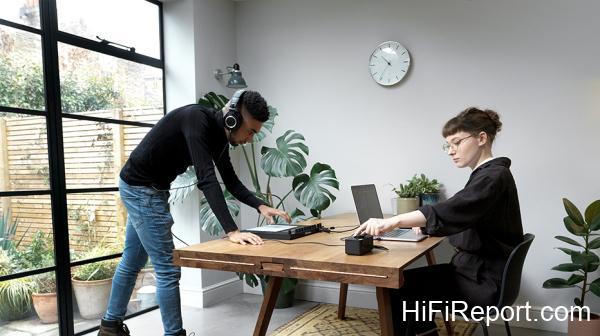
For absolute beginners, I highly recommend visiting the physical store of Taiwan High End. The helpful and professional staff there will guide you step-by-step, from initial setup to the process of recording your first piece, helping you discover the joy of audio creation from scratch and produce your own unique work. In conclusion, the EVO 8 and EVO 4, both available for just a few hundred US dollars, are outstanding in terms of appearance, features, and sound quality.
The ability to perform multi-track recording alone gives them a significant edge over many products in the same class, not to mention the included professional-grade audio editing software. The value for money is truly exceptional. I highly recommend them whether you’re a beginner looking to try home recording or a user wanting to upgrade your equipment!
Additionally, if you purchase the official product through Taiwan High End, the distributor provides a 3-year warranty service, making the value truly unbeatable!
Specifications: EVO 4
* Type: Audio Interface
* Inputs / Outputs: 2 Inputs / 2 Outputs
* Microphone Inputs: 2
* Outputs: 1 Headphone, 1 Speaker
* Special Features: Loop-back, Smartgain (Automatic Mic Volume)
* Power Connector: USB 2.0 Type-C
* Bundled: Charging Cable, Cubase LE Recording Software
* Dynamic Range: 113dB (ADC/DAC)
* Sample Rate: Up to 24bit/96kHz
* Preamps: EVO Preamp (58dB Gain)
* Instrument Input: JFET DI
* Phantom Power: +48V (per channel)
Specifications: EVO 8
* Type: Audio Interface
* Inputs / Outputs: 4 Inputs / 4 Outputs
* Microphone Inputs: 4
* Outputs: 2 Headphones, 2 Speakers
* Special Features: Loop-back, Smartgain (Automatic Mic Volume, software controlled)
* Power Connector: USB 2.0 Type-C
* Bundled: Charging Cable, Cubase LE Recording Software
* Dynamic Range: 113dB (ADC/DAC)
* Sample Rate: Up to 24bit/96kHz
* Preamps: EVO Preamp (58dB Gain)
* Instrument Input: JFET DI
* Phantom Power: +48V (per channel)