
Audio-Technica ATH-CLR100iSBK SonicFuel In-Ear Headphones Review
A compact dynamic driver, 16-ohm impedance, and a wide frequency response define the SonicFuel’s position in the wired in-ear class: a neutral-tuned, travel-friendly set that pairs an in-line mic and control button with three sizes of silicone tips. The product ships in five color options, and the wired design means no battery, no Bluetooth handshake, just plug and listen. The listening verdict comes down to source quality. Paired with a solid output, these buds deliver a natural, detail-rich sound that several long-term owners call the most honest tuning they have encountered at this tier. Fed from a phone’s built-in DAC, the same set sounds flatter and less engaging, a gap that shows up repeatedly in the owner reviews below.
The Numbers First
- Driver: Dynamic, one per side
- Impedance: 16 ohms
- Connectivity: Wired, in-line mic and control button
- Ear tips: Three silicone sizes (S / M / L)
- Colors: Black, white, lime green, blue, pink
What’s Inside
The spec sheet documents a dynamic driver per side and a 16-ohm impedance, with no further breakdown of the transducer assembly, diaphragm material, or acoustic chamber design. The stated frequency range, starting at 25 Hz, spans the standard audible band with a slightly rolled-off sub-bass shelf. Audio-Technica does not publish a cross-section or a driver topology diagram for the SonicFuel line, so the internal construction stays at the level the spec sheet provides: a single dynamic driver per side, a wired connection, and a compact housing that seats in-ear without excess bulk. The 16-ohm load keeps the signal current low, which is why the set works off a phone’s headphone output without a dedicated amplifier.
The Tuning
The SonicFuel’s bottom line is a neutral, natural signature with no artificial bass boost, and the tuning rewards a clean source.
Bass and Mids
The sub-bass region plays at a moderate level without a shelf boost. One long-term owner who listens to trance, rock, and new-age material described the bass as “poking” rather than “punching” and called that trade-off satisfying for the genres they play. Another owner noted the set lacks the extra weight that bass-forward in-ears deliver, and a third called the low end “lacking” for their taste. The mids, by contrast, sit forward enough that vocals and spoken word stay clear without effort. That is why several owners who use the buds for video meetings and lectures report the voice range as their favorite part of the signature. The 16-ohm impedance means the set drives from any portable source, but the tuning still pulls more detail out of an output with a flat frequency curve.
Treble and Detail
The upper register is where the SonicFuel earns its “clear” label. A German owner called the sound “clearer and more pleasant” even after hours of continuous listening, and an Indian owner confirmed a neutral profile with no artificial treble extension. The wide upper-frequency extension gives headroom for cymbal decay and air without the shrillness that plagues some budget in-ears. A gaming owner playing Counter-Strike noted that overlapping in-game sounds stay distinct and do not muddy into each other, a result that points to controlled upper-mid and treble staging rather than an energetic peak. A Brazilian owner added that the highs are “well highlighted without being too shrill” and the bass has “good impact without overlapping other sounds.”
Fit, Tips and Seal
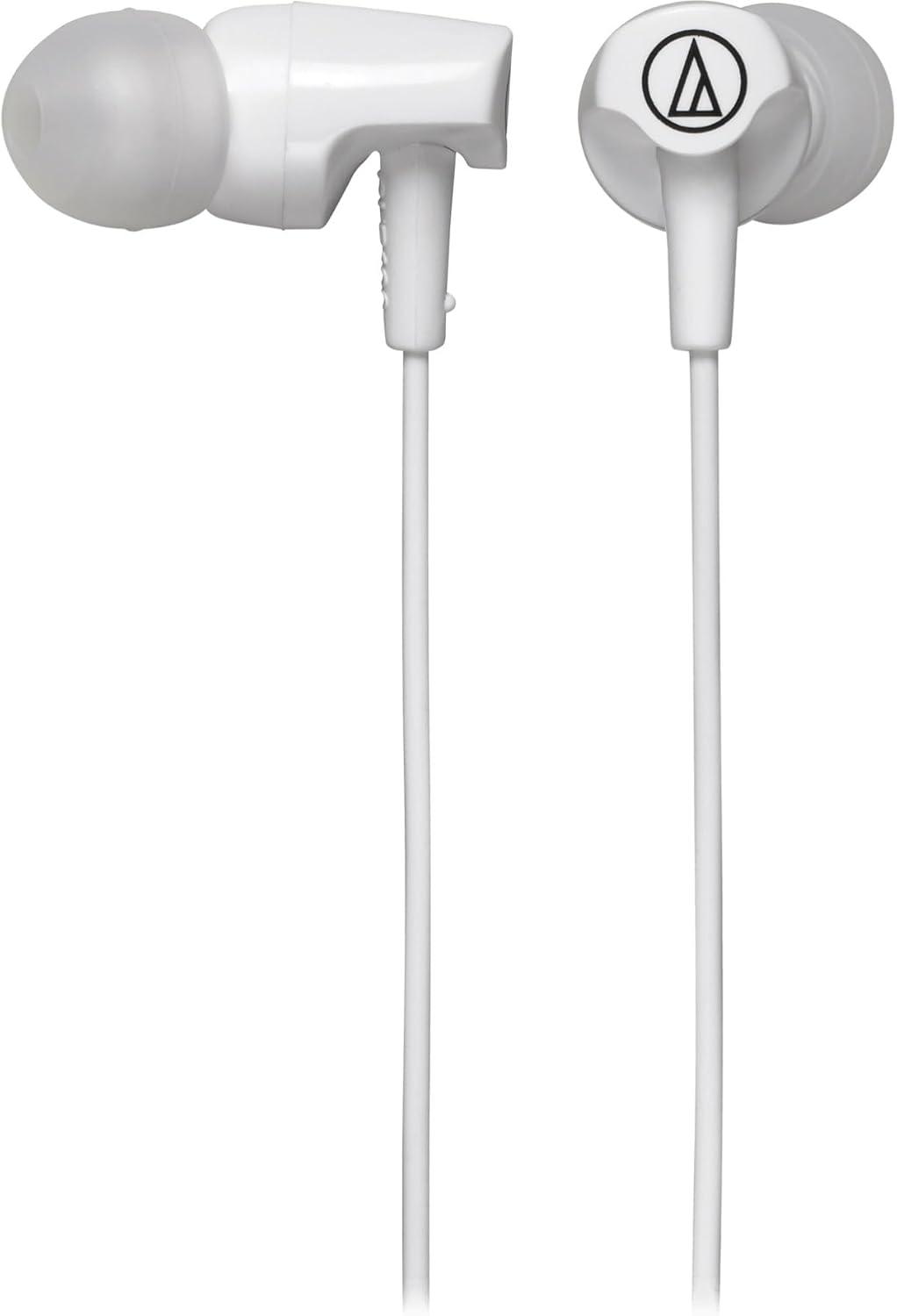
The three silicone tip sizes (S, M, L) cover most ear canals, and the slightly angled nozzle shape helps the housing wedge into the concha during movement. One gym-going owner credited that angle with keeping the buds seated through sets where other in-ears dislodged within minutes, and recommended adding a shirt clip for extra insurance against wire tug. For desk use, the lightweight shells and the medium-tip fit earned top comfort marks from a user who wore them through all-day video calls. Isolation is strong for a passive in-ear. A Brazilian owner reported the medium tips sealed well enough that workplace noise dropped to background level, and the product listing cites outstanding sound isolation as a design goal. The S and L sizes exist for the outliers, and an owner who could not get the medium tip to seat found the large tip resolved the gap within minutes.
Cable, Plugs and Build
The cable is a fixed, non-detachable wire with an in-line mic and a single control button for calls, play, pause, and track skip. The plug is a straight 3.5 mm jack, which one owner noted was at odds with the product image showing an angled connector; the actual hardware ships straight. Build quality is the most consistent complaint across the review set. Multiple owners described the cable as thin, plasticky, and brittle, with the solder joint at the control button or the plug end being the first point of failure. One owner who had a set for nearly a year diagnosed a broken solder connection at the in-line circuit board and repaired it with a variable-heat hobby iron. Another reported one side going silent after two weeks of use. The 16-ohm load means the cable carries a light signal, so there is no technical reason for the thin gauge, but at this tier, that is the trade. The in-line button handles play, pause, fast-forward, reverse, next and previous track, and answer or end calls on compatible smartphones and portable devices, including iOS.
Time With the Music
The SonicFuel performs best when the source itself is clean, and owners who pair it with a proper sound card or a low-noise DAC get a result that several call surprising for the price class.
A gaming owner who runs the buds through an external sound card with custom EQ tuning described the set as “extremely good” for competitive titles like Counter-Strike, where overlapping footsteps and ambient cues need separation rather than bass weight. The same owner warned that plugging the set directly into a phone’s built-in output flattens the sound to “super mediocre,” a reminder that the tuning is source-dependent and that a weak input swallows the detail the driver is capable of.
For spoken-word and podcast listening, a Canadian owner found the volume level and clarity sufficient for lectures and long-form audio, and the compact shell size made the set comfortable in public settings where a bulkier monitor would draw attention. A German owner specifically called out the fatigue-free quality after extended sessions, noting the sound stayed comfortable over long stretches without the ear-tire effect that a boosted treble peak would produce.
This article is the original property of hifireport.com. All rights reserved. Unauthorized reproduction is strictly prohibited.
The genre sweet spot lands in anything with a wide but even mix: electronic, rock, ambient, and dialogue-heavy content all come through with separation. Bass-forward hip-hop or sub-heavy tracks will feel thin, and owners who want a punchy low end are better served by a set with a boosted response curve. A fourth-generation owner of these buds, who keeps a stockpile because the cable eventually fails, calls the overall sound “extremely good” when the right EQ profile is applied.
What Owners Say
The praise centers on three themes. Sound quality for the price is the most repeated note, with owners comparing the tuning favorably against sets that cost multiples more. Comfort and fit rank second; the lightweight shell, the angled nozzle, and the three tip sizes keep the buds seated through long wear. The in-line mic and control button earn separate thanks from meeting-heavy users who call the voice input clear and the button response reliable. One owner who has cycled through dozens of earbud sets over the years placed the SonicFuel in their top tier for natural, uncolored sound and noted they kept buying replacements even after the first set failed.
The complaints cluster around durability. Cable failure, whether at the plug, the in-line board, or the solder joint, is the most common reason a set dies. The build feels thin and the plastic has a brittle snap that owners anticipate will not survive more than a year of daily handling. A minority of reviewers find the bass too restrained for their taste, and one owner called the mic poor when not connected to a quality input, though others report it as clear for standard video calls. The split is clear: the tuning wins the room, the cable loses it.
Strengths and Weaknesses
Strengths
- Neutral, natural tuning with good treble detail and no artificial bass boost
- Comfortable, lightweight fit with three tip sizes for a secure seal
- 16-ohm impedance drives easily from phones, laptops, and dedicated DACs
- In-line mic and control button handle calls and playback on iOS and Android
- Owners compare the sound favorably to sets costing multiples more
Weaknesses
This article is the original property of hifireport.com. All rights reserved. Unauthorized reproduction is strictly prohibited.
- Fixed cable is thin and prone to solder-joint or plug-end failure within a year
- Bass extension is moderate; sub-heavy genres feel thin
- Sound quality drops noticeably when fed from a phone’s built-in output
- The 3.5 mm plug is straight, not angled as some product images suggest
- No detachable cable, so a failed wire ends the set entirely
The Verdict
The SonicFuel serves a specific listener: someone who wants a natural, detail-forward sound without a bass boost, who drives the set from at least a decent output, and who can tolerate a fixed cable that may need replacing after a year of daily use. If your listening is heavy in dialogue, podcast, ambient, or competitive gaming where sound separation matters more than low-end slam, the tuning lands in the right place. The 16-ohm load drives from any portable source. A phone with a clean DAC or a laptop with a good sound card will pull more detail out of the driver than a cheap built-in output will, and the difference is audible within the first track. For the basshead or the wireless-only commuter, the set will feel flat and the fixed wire will be a liability. For the neutral-tuned listener who keeps spare tips and a shirt clip in the drawer, the SonicFuel is a workhorse that earns a place in a rotation, and the owner reviews suggest a strong habit of buying a backup set before the first one dies.
Spec Sheet
- Model: Audio-Technica ATH-CLR100iS SonicFuel (iS denotes in-line mic and control)
- Driver: Dynamic, one per side
- Impedance: 16 ohms
- Frequency response: 25 Hz to the upper audible range
- Connection: Wired, 3.5 mm straight plug
- In-line features: Microphone and control button (play, pause, skip, next, previous, call answer and end)
- Ear tips: Three silicone sizes, S / M / L
- Colors: Black, white, lime green, blue, pink
- Compatibility: Smartphones and portable audio devices, including iOS
- Cable type: Fixed, non-detachable
Questions Owners Ask
Do the tip sizes make a big difference in fit and isolation?
The three silicone sizes cover most ears, and owners who found the medium tip loose reported the large tip sealed properly within minutes. A secure seal matters more than tip material for passive isolation, so try the small tip before defaulting to medium if the canal is narrow. One owner in Brazil swapped from medium to large and noted the seal held for hours of work without adjustment.
Will the cable hold up under gym or daily use?
Multiple owners report the wire as thin and brittle, with failures at the solder joint near the in-line button or at the plug end. A shirt clip reduces wire tug, but the cable is fixed and not user-replaceable, so a broken wire ends the set. One owner repaired a solder joint with a variable-heat hobby iron, which is the only workaround noted in the reviews.
Does the in-line mic work well for video calls?
This article is the original property of hifireport.com. All rights reserved. Unauthorized reproduction is strictly prohibited.
For Zoom and similar meetings, several owners call the mic input clear and the button response reliable for all-day wear. One gaming-focused owner rated the mic as poor when not connected to a quality input, so mic performance tracks the host application’s audio path. The control button handles play, pause, fast-forward, reverse, and call answer or end on compatible devices.
Do I need an external sound card or DAC to get the full range?
The 16-ohm impedance drives from any portable source, but owners consistently report the set sounds flat and unimpressive when plugged into a phone’s built-in output. Connecting through an external sound card or a laptop with a clean DAC opens up the treble detail and midrange separation that the driver is capable of delivering. One owner who A/B tested the two scenarios called the difference between “super mediocre” and “extremely good.”

- 8. 5 mm drivers provide crystal-clear sound with excellent depth and detail
- In-line control with mic for answering/ending calls, and controlling music & video playback (on compatible smartphones & other portable devices)
- Three sizes (S/M/L) of silicone ear tips provide custom fit for long-wearing comfort and outstanding sound isolation