
Audiobyte Black Dragon DAC Review
What can you expect from a digital-to-analog converter that costs less than $2,300 USD? This price point, while not exactly cheap, still sits above the true entry-level market, which generally falls below $1,600 USD.
And what about a more advanced DAC? What price do you think it deserves? A retailer might set it at $3,200 USD, which is low, leaving consumers hesitant: can you really get a quality product at this price? The range between $1,600 and $3,200 USD is an even tougher sell. The product’s positioning is ambiguous – is it entry-level, or is it advanced? The Audiobyte Black Dragon finds itself in this awkward price bracket, and to make matters worse, it lacks visual flair. As its name suggests, it’s a dark, unassuming box. The entire chassis is black, with no apparent design flourishes, just a sturdy little tank. The fins on the sides are for heat dissipation, indicating a purely functional design philosophy.
A nearly $2,300 USD DAC that looks like this? How will retailers sell it? How will consumers justify buying it? Once they hear it, they’ll understand.
Once they compare it, they won’t hesitate to buy it.
Not Out of Place Among Far Pricier Hi-End Equipment
This is a DAC filled with surprises. It might be unassuming in appearance, but it possesses remarkable capabilities.
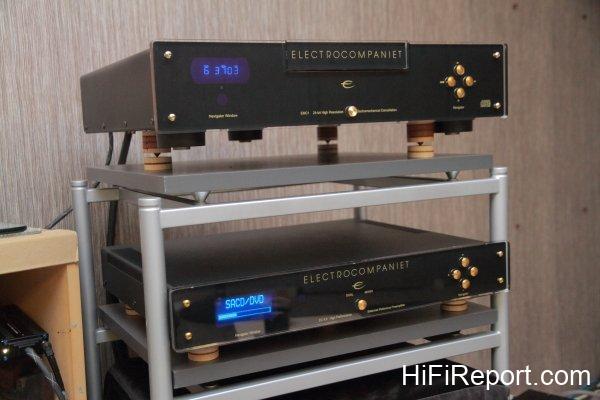
I’ve heard it several times before, but it was always a supporting player. This time, however, the Black Dragon took center stage. The supporting cast included the Electrocompaniet EMC 1 MK4 CD player, EC 4.8 preamplifier, EC Nemo monoblock power amplifiers, Franco Serblin Ktema speakers, the sister brand Rockna Wavedream Net digital streaming transport, and a full set of ASI cables.
It felt like a Hollywood blockbuster production where a cast of A-list actors were relegated to supporting roles, while the lead was an up-and-coming newcomer. A film like that would undoubtedly generate a lot of buzz.
The setup I heard at HiFiReport that day mirrored this scenario. However, if these big-name actors were willing to support this newcomer, it signified that the actor was something special; and if they performed well, they could become a star overnight.
On that day, listening to the Black Dragon, I realized that although this combination was practically impossible in reality, this little black dragon truly proved its worth.
Can I just refer to it as the Black Dragon? Using the original Name makes it feel friendlier, and the article flows better without the constant insertion of English words.
What makes it so good? For the more standard audiophile descriptions, you can refer to another review. Additionally, the manufacturer recently upgraded the Black Dragon to support the DSD512 format and added Bluetooth remote control functionality.
All currently sold Black Dragons are the updated version, and previous owners can opt for a paid upgrade at a cost of only approximately $385 USD. After the upgrade, someone also compared the differences between the new and old versions. The reviewer bought the Black Dragon after hearing it in 2015, and this year he became the first user to upgrade. For users who already own the Black Dragon, the quick suggestion is to upgrade; for those who are not yet Black Dragon users, the suggestion is consider it as your DAC upgrade, because it is a shortcut, the most direct shortcut to Hi-End level.

Two Key Elements of a Hi-End DAC: Technical Prowess and Artistic Sensitivity
With so Much reviews already written, what more can I add? Therefore, I’ve decided to approach it from a different angle, writing a less conventional review.
What do you expect from a Hi-End DAC? I believe there are at least two qualities that any component of a Hi-End audio system should achieve.
First, it must be able to clearly distinguish between the nuances in various recordings, including recording techniques and file formats. This relates to the technical capabilities of the equipment.
Second, it should transport you into the music. What does this mean? A true Hi-End audio system should allow you to naturally overlook the sound reproduction and either bring the performance to you or transport you to the atmosphere of the musical performance. We’re not talking about perfect “original sound reproduction” here, but rather the concept of “immersion,” immersing oneself in a feeling or environment. The emphasis is not on the sound, but on the music – this is the artistic level of audio.
Whether at the technical level or the humanistic and artistic level, the goal of audio equipment is the music it plays. When the technical level of the audio equipment is high, you can hear more information in the music; when the artistic level of the equipment is high, you can listen more deeply. Hi-End audio should be like this: letting you hear more, letting you hear deeply.
Audio is Important, but Music is Even More Important
But there’s a catch.
Many audiophiles focus their energy on the hardware (equipment) while neglecting the importance of the software (recordings). They might strive to find equipment with excellent sound, but do they equally value the quality of the software? In reality, the software is paramount.
The entire audio system, regardless of price – from a simple phone and earbud setup to a multi-million dollar luxury system – ultimately serves the music; it’s all about playing music.
When you have a good audio system, you should also have software that matches it in quantity and quality. High-quality recordings, in particular, are crucial.
Interestingly, some recordings marketed for their audiophile quality may not be as impressive as they seem. Conversely, some recordings that might initially seem unremarkable can, with the right playback, evoke deep emotions and lingering satisfaction.
Both of these experiences relate to one thing in an audio system: information. Some recordings that are easy to play and provide a pleasing listening experience may not necessarily be rich in information; they’re simply pleasant. Those overlooked recordings might simply be victims of an audio system that fails to unearth enough information.
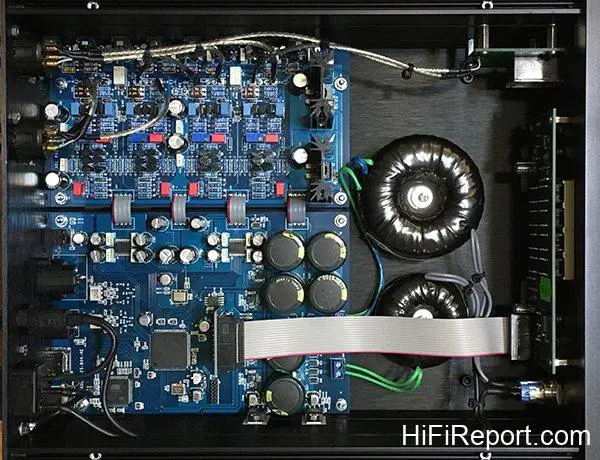
The entire audio system can be seen as a process of amplifying and transmitting the musical signal. The musical signal is picked up at the source, possibly undergoing digital-to-analog conversion, and then amplification.
Therefore, better audio systems emphasize minimizing distortion and signal loss during the reproduction of the musical signal. This is what audiophiles strive for.
However, if the music being played doesn’t contain that information in the first place, even the most excellent audio system can’t work miracles. The audio system can only passively reproduce the sound to the best of its ability based on the signal it receives. If the hidden information within the music hasn’t been previously unearthed, it will sound mediocre. Once it’s unearthed, the music takes on a whole new character.
This is why we pursue better audio, and it should also be the reason we pursue higher-quality music – having good audio with poor music is like having a hero with no place to use their skills; having good music with insufficient audio performance is like burying artistic treasures.
The Black Dragon Possesses a High Degree of Recording Discrimination
The Black Dragon is the gatekeeper that allows you to assess the value of your music collection. It completely reflects the essence of the musical signal, whether it’s from a CD or a digital file.
Of course, there are other devices on the market with this capability, but in terms of recording discrimination, the Black Dragon surpasses any DAC under $3,200 USD, and by a significant margin.
Perhaps it can be put this way: in terms of price, it’s the most outstanding performer in its price range; in terms of performance, it’s the most affordable option among its peers.
Discrimination Challenge #1: Distinguishing Sampling Rates and PCM vs. DSD
In the HiFiReport listening room, as I listened through comparisons with HiFiReport’s owner, the Black Dragon proved invincible. You could always discern the subtle differences in the music.
For example, he created a playlist featuring track four, “Et misericordia,” from the album “Magnificat,” in six different versions: 24bit/44.1KHz, 24bit/96KHz, 24bit/192KHz, 24bit/352.8KHz (all Flac), DSD128, and DSD256.
With PCM formats, the higher the sampling rate, the more focused the sound became, with clearer sound sources and better separation between them. Lower sampling rates resulted in a looser, slightly more blurred sound.
From 44.1K to 96K, to 192K, and then to 352.8K, each step up brought noticeable changes, all consistent in direction. Subjectively speaking, once you heard the higher resolution, it was hard to go back.

The same differences were observed between DSD128 and DSD256. Interestingly, there were perceptual differences between PCM and DSD. Comparing 24bit/352.8KHz and DSD128, the PCM emphasized resolution with a sharper sound, while DSD was relatively smoother and more balanced in terms of sound contours.
Additionally, PCM felt cleaner, while DSD offered a better sense of air. Based on this description, you might wonder: “When I buy files online, should I choose high-resolution PCM or DSD?” That depends on your personal sound preference.
Interesting, isn’t it? The Black Dragon reveals all these differences.
Discrimination Challenge #2: File Quality is Everything
It doesn’t stop there. Earlier, I mentioned the issue of music file quality. He also conducted a series of demonstrations showcasing how the Black Dragon could distinguish between recordings of varying quality.
First, he used The Carpenters’ 1973 self-titled album as an example. This album compiles their singles released between 1969 and 1973, with the famous “We’ve Only Just Begun” as the opening track.
He first played the CD, an early US pressing. After listening to the song, he played a DSD64 file. The two sounds were worlds apart.
The DSD64 file initially sounded round, warm, and smooth, with well-defined and tangible sound sources. In comparison, the CD sounded slightly rougher, with a more noticeable tightness in dynamic passages.
“The DSD seems to sound better.” “Really? Listen to the CD again.” He put the CD back on.
Oh! The CD’s soundstage was much wider and deeper, with significantly richer musical information. Compared to this, the DSD64 file was truly uninteresting. Not only was the soundstage and imaging smaller, but the biggest difference was in the information and bandwidth. It seemed like there wasn’t headroom, reality is the dynamic was compressed.
What’s the point of a high end speakers if it lacks the information, bandwidth, and a compressed soundstage a. “Could this DSD64 be a homemade one?” “Yes, it was given to me. I heard the source was a vinyl rip by an audiophile.” “The ripping technique was good, and the vinyl was in good condition with a quiet background, but something was missing.” Even though it was a DSD64 file, it couldn’t match the Red Book standard CD.
It’s clear that you can’t judge solely by specifications; you have to listen with your ears and judge with your heart.

Next, he switched to Elissa Lee Koljonen’s “Heartbreak” album, starting with the first track, Milstein’s arrangement of Chopin’s Nocturne No. 20. He first played the CD, also an early US pressing, and then the DSD64 file.
This time, DSD undoubtedly won. It not only had richer details and a better sense of air, but it also retained the smoothness of the sound contours, making the music sound more natural and flowing than the CD. The CD was already very good, but the DSD took it to another level.
The same experience occurred with Julia Fischer’s performance of the Tchaikovsky Violin Concerto. The EMC-1 UP MK4 could only play the CD layer of this disc, but even the CD sounded great. Switching to the native DSD64 file, it was different again. It was not only smooth and natural, but the stage layers were clearer, and the dynamic contrast was more vivid. The native DSD file undeniably surpassed the CD in sound quality.
His point was: the source of the music determines its quality.
A Side Note: Purchasing Files Through Legal Channels is the Best Policy
Many people search for free downloadable music files online. I’d like to sincerely advise that, firstly, we have no way of knowing the origin of these files. They might be genuine files released by the original manufacturers, or they might be upsampled files created by enthusiasts. The quality is inconsistent, and using incorrect files can mislead you. Secondly, music falls under intellectual property rights. For the sake of original rights, it’s best to purchase downloads through legal channels.
Discrimination Challenge #3: Different Ripping Methods, Different Sound Quality
Another interesting comparison was to let the Black Dragon reveal the differences in CD ripping methods. Two CDs, one of Carreras’ famous South American Mass, and the other the soundtrack to the movie “Atonement.”
Both rounds of comparison involved comparing the CD to its ripped file counterpart.
In the first round, with the Kyrie from Misa Criolla, the CD slightly edged out the file. The CD won with a slightly wider and deeper soundstage and more solid and full-bodied drum sounds. However, the file’s sound quality was very close to the CD, making it difficult to distinguish between them without careful listening.
The second round was a different story. As soon as the file was played, it was clear it was losing, and it was a loss that started from the jump ball and never recovered. The biggest flaw was the diffuseness. The sound was completely scattered, especially the bass, which was loose and lifeless, making the music sound dull and uninteresting.
These two rounds of comparison revealed three differences between the two files. The Kyrie, which was closer to the CD, was a WAV file ripped using EAC software at 1:1 speed. The “Atonement” soundtrack, which showed a greater difference, was a FLAC file ripped using EAC at a faster speed.
Moreover, the former was ripped using a desktop computer’s built-in SCSI interface old CD-ROM, reading and converting slowly, while the latter was ripped using a portable, slim external optical drive. Different formats, different ripping speeds, and different optical drives resulted in vastly different performances.

Based on the above listening comparisons, the Black Dragon’s ability to discern the essence of sound is truly remarkable. It can easily cross the threshold of Hi-End source at this price, that’s quite impressive.
But there’s something even more captivating.
The Artistic Aspect is Difficult to Articulate, but Extremely Important
When it comes to sound, you can listen with your ears, but when it comes to music, you have to experience it with your heart. This might sound a bit metaphysical, but this is the realm of Hi-End audio – to elevate the listener from listening to sound to appreciating music.
In the past, there was a saying in the audio world: “like being there.” Many criticized this as exaggerated and unrealistic, arguing that live music undergoes recording, mastering, and playback, passing through numerous stages. Furthermore, the sound production principles of speakers differ from those of real instruments or voices, and there are dynamic limitations. How can it be like being there? This criticism is undeniable in its reasoning, but these discussions remain focused on the physical sound, not the psychological perception.
Beauty is spiritual, abstract, and intuitive. Returning to the beginning of this section, in terms of appreciating musical art, it’s a personal psychological activity related to aesthetics. It’s your heart that’s being asked.
Audiobyte’s focus is on science, and audio equipment is indeed a product of science. However, audio equipment must serve art; its job is to reproduce music. What comes out of the Black Dragon is music, not just sound.
What’s the difference? It enables one to appreciate the music, enter its atmosphere, and be moved by its emotions.
Transparent Image, Lively Soundstage, Rich Details
It has a remarkably transparent image. I couldn’t sense any barrier between me and the music being played. In terms of transparency, the Black Dragon is top-notch, regardless of price.
It has a very lively soundstage, with clear imaging, tangible sound sources, high independence of sound sources, and a vibrant, dynamic energy. In this regard, it can compete with any DAC in the $10,000 USD range.
Furthermore, it’s incredibly rich in detail. The subtle textures in the music are all discernible – the nuances in a vocal trill, the layers in a trembling throat, the subtle movements of a pouting mouth. These details build up to create authenticity.
Distinct and Rich Layers, Wide and Orderly Soundstage
The Black Dragon has another ability that’s unique among DACs in its price range: it has rich layers. I’m not referring to spatial layers here, but rather layers of texture, color, and dynamics.
The same blue can have different shades. Add a touch of another color, and the blue changes again. Add gold or pearl powder? It becomes a shimmering blue or pearl blue.
Similarly, cotton comes in various forms – pure cotton, combed cotton, mercerized cotton, and various blends – all feel different. As for dynamic layers, it’s about the contrast between strong and weak. The Black Dragon is clear in the quiet passages, so even the faintest sounds are audible, creating a clear and distinct contrast.
Texture, color, and dynamics all have layers, and the Black Dragon can express these differences. This alone speaks to its exceptional quality. Its soundstage is wide, with breadth, depth, and height. The Black Dragon can reproduce the spatial environment in which the music was recorded.
The depth, in particular, is remarkable. Many DACs can create width, but when it comes to depth layering, they struggle to extend it while maintaining order.
Making You Forget About Audio and Focus on Music
When all of the above elements are combined, the Black Dragon possesses an extraordinary musicality. It’s an alluring charm that draws you into the wondrous realm of music. At that moment, you won’t be thinking about the audio equipment; you’ll only be thinking about the music. Even historical mono recordings can be this captivating. This is what Hi-End audio should be. The Black Dragon lowers the barrier to Hi-End to a level affordable for everyone.
There’s Always Something Better
I’ve said so much about it. Is the Black Dragon really that amazing, truly invincible? Of course not. It still has its limitations.
Just comparing it to its sister brand’s Rockna Wavedream DAC reveals that there are indeed “dragon-slaying swords” out there.
During my listening session at HiFiReport, towards the end, I asked them to replace the Black Dragon with the Wavedream DAC. “Are you sure you want to do this? It’s going to be brutal.” “Yes, please replace it. I want to know how much the Black Dragon differs from the Wavedream.”
As Liza Ferschtman’s performance of Mendelssohn’s Violin Concerto began, I knew that the “dragon-slaying sword” was real. The Wavedream DAC’s sound was grander, the soundstage wider, the dynamic performance more effortless, and the sound contours smoother, making the music flow more naturally and feel more organic.
The Black Dragon, in comparison, felt smaller in scale, with a tighter, more precise sound. The advantage the Black Dragon has over other DACs in its price range can be mirrored to the advantage the Wavedream DAC has over the Black Dragon
In terms of commanding the world, the Black Dragon isn’t quite there yet. It takes something with the capabilities of the Wavedream DAC to compete for the title of supreme martial arts master.
The Peerless Sword in its Price Range
I listened to the Black Dragon at HiFiReport and also brought it home for a trial. I can confidently say: if you care about music, not brand recognition, then this is it.
The Audiobyte Black Dragon is undoubtedly the peerless sword among DACs under $3,500 USD , and even under $5,000 USD. It’s a match for any challenger! I’m usually decisive when it comes to great value products within an affordable price range.
This time, did I buy it?
Specifications
* Type: USB DAC Headphone Amplifier
* Digital Inputs: USB, S/PDIF coaxial, AES/EBU, Toslink, I2S over HDMI
* Analog Outputs: RCA, XLR
* Headphone Output: 6.3mm phone-jack
* Supported Sampling Rates: Up to 32bit/384kHz PCM, DSD512
* Maximum Output: Single-ended 10Vpp, Balanced 20Vpp, Headphone Amplifier 800 mW/32Ω
* Dimensions: 240 × 90 × 300 mm (W × H × D)
* Weight: 4.5 kg