
Audiolab 6000N Player Review
Just recently, while browsing online shopping sites, I realized that a 512GB TF memory card only costs a little over $60 USD. A single phone memory card can store roughly 0.5TB, enough space for a massive music library. This makes wireless streaming possible directly from your phone, without necessarily needing a PC or NAS for sharing, provided your home audio system has streaming capability.
However, if you purchased a Hi-Fi system five years ago, having a USB DAC function was considered quite good (though it still required pairing with a computer or dedicated music server to play digital files). If you now wish to upgrade without replacing your existing equipment, simply adding a network streamer will do the trick. And if you want to maximize your budget while still achieving excellent sound, I believe the focus of this article, the audiolab 6000N Play, can fulfill your needs.
Meet the Audiolab 6000N Player
Audiolab is a well-known, established British brand. I reviewed their new integrated amplifier from the 6000 series, the 6000A, just last year. The 6000N Play is the latest addition to the 6000 series and is also audiolab’s first dedicated network streamer. The Audiolab 6000A has a suggested retail price of around $985 USD, and surprisingly, the 6000N Play, housed in the same size chassis as the 6000A, is priced at merely around $555 USD!
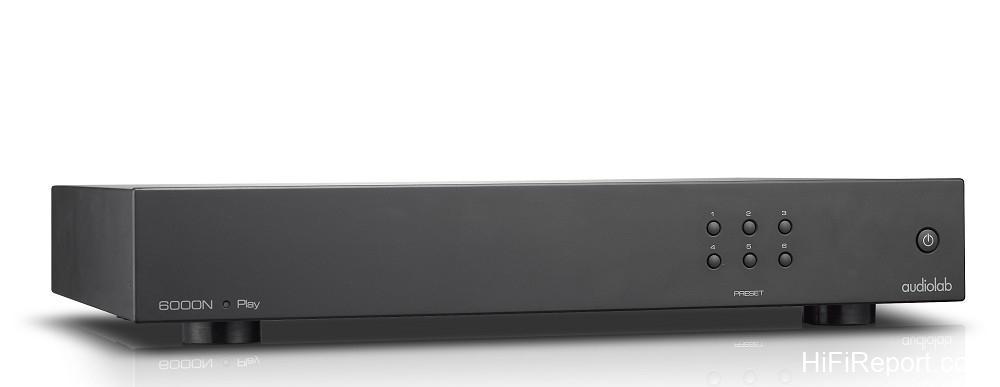
Finding a streamer under $600 USD is difficult these days, and most products in this price range are typically small, ‘lunchbox-sized’ units often housed in plastic casings. The 6000N Play, however, boasts a standard-sized metal chassis. Launched in the latter half of last year, it immediately won a Product of the Year award from What Hi-Fi in the UK, being the most affordable streamer among the winners in its category.
Connectivity and Features
The 6000N Play is equipped with dual-band Wi-Fi and also offers a wired network connection option. It utilizes dts Play-Fi wireless streaming technology, enabling seamless integration with other Play-Fi devices (such as Play-Fi wireless speakers) for whole-home multi-room audio setups. Play-Fi components located throughout the home can be grouped into different zones. Within a single zone, all devices can synchronize playback of the same music, which is perfect for parties.

Alternatively, you can keep devices ungrouped, allowing each Play-Fi component to play different music selections independently. All music playback and volume control for your entire Play-Fi system can be managed effortlessly using just a single smartphone.
When connected to the network, the 6000N Play can play music files shared from a computer, NAS, or dedicated music server. It can also directly access and stream music files stored on your smartphone or tablet via Wi-Fi. Even when streaming from a phone, the digital audio signal is transmitted losslessly over Wi-Fi, ensuring superior sound quality compared to Bluetooth. Play-Fi natively supports multi-bit Hi-Res music files, with compatibility up to 192kHz/24bit.
I personally tested and confirmed full support for AIFF, FLAC, and WAV files at 192kHz/24bit. Connecting the 6000N Play to the internet also opens up access to various online streaming music services such as Spotify, KKBox, internet radio, and TIDAL.
Technical Design and Components
Most source components under $600 USD are compact with limited internal space, often relying on external power adapters. Switched-mode power supplies inevitably generate a certain amount of noise. While filtering circuits can be used to mitigate noise after the power enters the device, anyone who has replaced a standard adapter with a linear (traditional) power supply knows that the original source device is capable of much more.
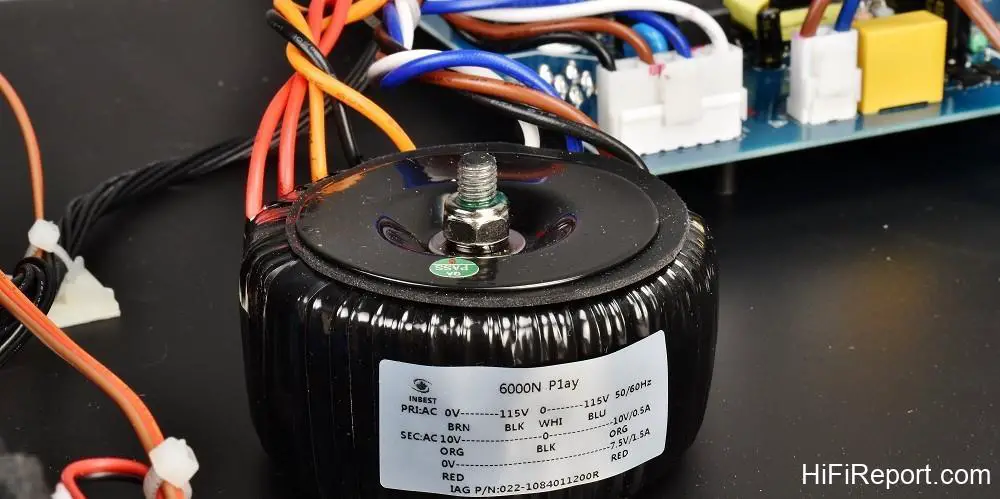
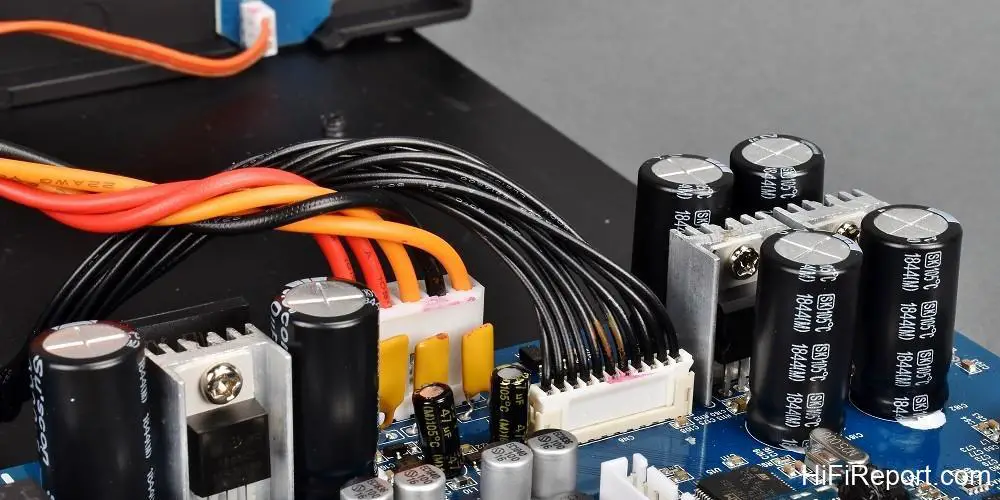
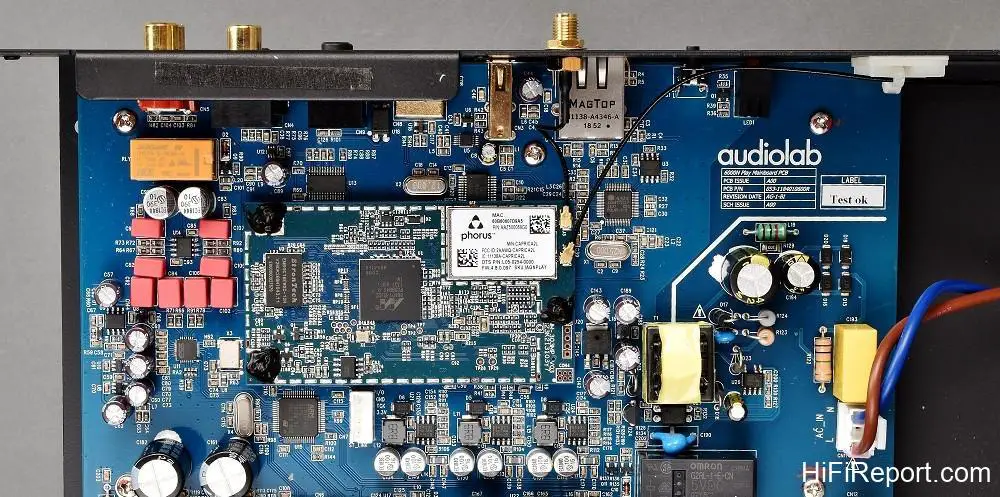
The 6000N Play adopts a more serious approach to its power supply circuit, utilizing a toroidal transformer for power delivery. This choice isn’t solely because a toroidal transformer fits well into a slim chassis; it also offers lower magnetic leakage. The unit implements separate power supplies for the digital and analog sections. Two secondary windings from the transformer feed rectifier and filter circuits, followed by voltage regulators on the main circuit board.
The digital circuitry is powered by a 7805 three-terminal voltage regulator IC, while the audio circuitry employs a dual-supply (positive and negative voltage) configuration using LM317 and LM337 regulator ICs.
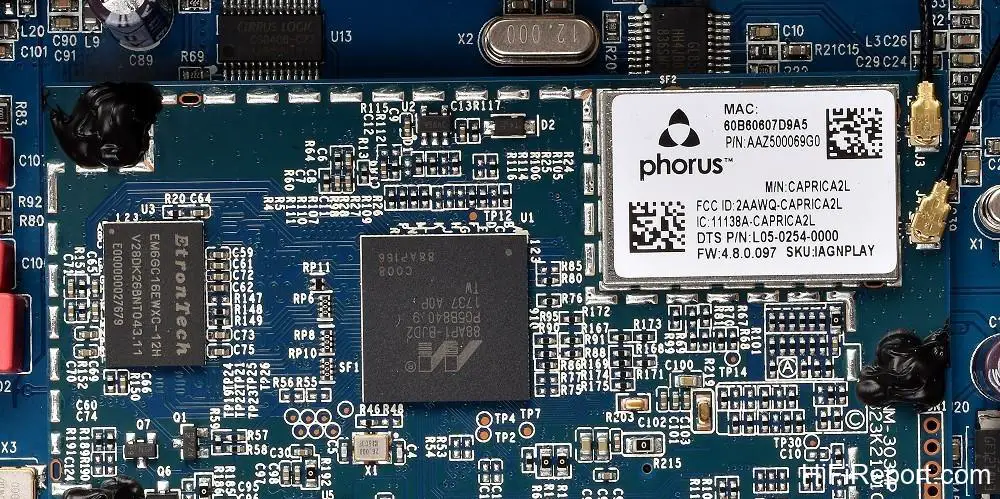
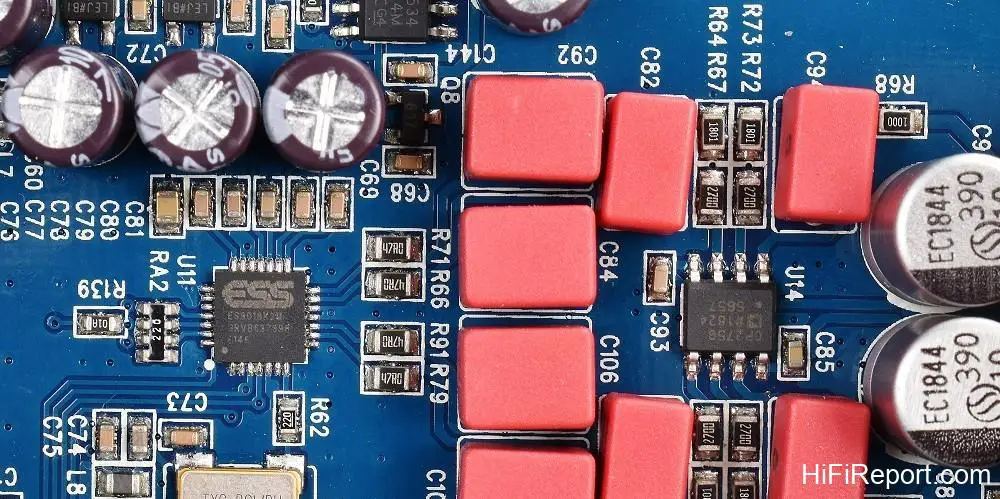
In terms of the main circuitry, the 6000N Play is equipped with a Phorus wireless network card supporting dts Play-Fi. After the digital audio signal enters from the network card or S/PDIF inputs, it undergoes digital-to-analog conversion using an ESS ES9018K2M 32-bit DAC chip. This is a high-performance chip, known for its high signal-to-noise ratio (127 dB) and low distortion (THD+N: -120dB). Following the DAC chip is an Analog Devices OP275 dual OPA chip.
This chip’s input stage combines JFET and BJT technology, providing low noise, low distortion, high slew rate, and wide bandwidth characteristics. Comparing the features of the OPA chip with the DAC chip, it’s clear this is a well-matched design focused on achieving low noise, low distortion, and high resolution. In fact, the components used in this unit’s DAC circuitry are remarkably similar to those built into the 6000A.
Even at such an affordable price, the 6000N Play boasts high-quality components; you can even spot WIMA PP capacitors in the audio circuit!
Listening Impressions
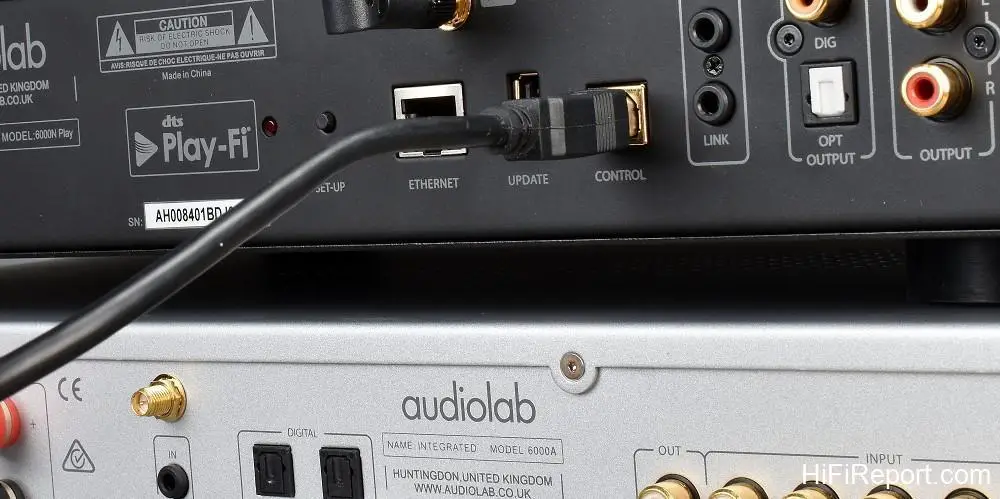
For this review, I paired the 6000N Play with the 6000A. The combined cost of the two units is under $1550 USD. I reviewed the 6000A in issue 288 of our magazine, noting its remarkably neutral sound and high resolution, which makes it easy to discern the sonic characteristics of source components. This pairing works exceptionally well together. The 6000N Play includes a USB ‘control cable’.
By connecting the 6000N Play and 6000A with this cable, you can use the dts Play-Fi App to control the 6000A’s volume through the 6000N Play. The 6000A doesn’t use the DAC chip for digital volume control; instead, it uses an analog volume control chip, which offers greater dynamic range and better sound quality compared to digital volume attenuation.
The 6000N Play can be connected to the 6000A via analog outputs (using two single-ended audio cables) or digital audio outputs (using a 75-ohm digital coaxial cable or Toslink optical cable). When using the digital connection, the 6000N Play sends a PCM signal to the 6000A for digital-to-analog conversion. The transmitted sample rate and bit depth are the same as the multi-bit music file being played, up to a maximum of 192kHz/24bit.
In digital input mode, the 6000A offers three digital filter options: Phase (Minimum Phase), Fast (Sharp Roll-off), and Slow (Slow Roll-off), allowing for three distinct sound characteristics. Using the 6000N Play’s analog output to the 6000A introduces a fourth sound characteristic, and users can further fine-tune the sound by experimenting with different audio cables.
Since most users of network streamers primarily use the analog outputs (as most Hi-Fi amplifiers don’t have built-in DACs), the following listening impressions are based on the 6000N Play’s analog output performance.
The sonic characteristics of the 6000N Play’s analog output exhibit subtle differences compared to sending a digital signal to the 6000A (using the 6000A’s built-in DAC). According to Editor Liu’s “Audio Five Elements” analogy, the latter leans towards the “Water Element,” presenting a neutral, soft, and transparent sound. In contrast, while the 6000N Play’s two-channel analog output shares a similar timbre with the 6000A, it carries some characteristics of the “Wood Element.”
To be more precise, the 6000N Play reminds me of many traits associated with traditional British sound: its warm, substantial midrange upholds the excellent tradition of British audio equipment. Listening to Bob James and Nathan East’s “The New Cool,” you can clearly appreciate the 6000N Play’s high-density midrange and loose, full bass. This solid ‘lower foundation’ makes it easier for a budget audio system to achieve good balance.
With such a strong foundation in the midrange and bass, the treble doesn’t need to be overly reserved. Its high frequencies are just slightly softened, taking the edge off. Listening to Gidon Kremer and Daniil Trifonov perform Preghiera, the 6000N Play gracefully conveys the texture, sheen, and resonance of the violin’s body. Even though this piece is a duet solely featuring piano and violin, the delicate, fluid, naturally sweet, and beautiful musical expression is quite captivating.
I truly appreciate the 6000N Play’s elegance and sweetness; its sound is very relaxing. Playing orchestral music at a normal volume reveals a wide soundstage with good depth, positioning the orchestra in a fan shape behind the speakers. It presents rich details and layers against a quiet background without needing to increase the volume.
In terms of overall personality, the 6000N Play’s sound is more open and youthful than traditional British products, with a slightly stronger bass punch and a bit more speed. Consequently, this unit’s strength extends beyond conveying the nuances of classical music; it also allows listeners to fully immerse themselves in the rhythm and groove of popular music.
Potential Shortcomings
Of course, budget products cannot be without their shortcomings. I believe the 6000N Play has two main disadvantages. Firstly, its USB-A terminal is solely for firmware upgrades and does not support playing music files from USB storage devices. Audio must be transmitted over the network, so ensuring smooth network performance at home is crucial to prevent stuttering when playing Hi-Res music files.
Secondly, because the 6000N Play uses dts Play-Fi, it doesn’t ‘directly’ support DSD music file playback. I personally experimented with two conversion methods to play DSD files stored on a smartphone or tablet. Using the BubbleUPnP App as a server, DSD files can be converted to WAV 44.1kHz/16bit. If using a PC as a music server with foobar2000 sharing enabled, DSD files can be configured to convert to WAV 192kHz/24bit for playback by the 6000N Play.
Value and Recommendation
I personally differentiate between low-priced and mid-priced streamers based on differences in circuit architecture. Many mid-priced streamers costing over $1550 USD adopt a dual-mono fully balanced DAC architecture, which can deliver higher dynamics and resolution than the 6000N Play.
However, $1550 USD is sufficient to purchase an entire system consisting of the audiolab 6000N Play and 6000A, and this system’s overall performance surpasses that of most stream-integrated amplifiers in a similar price range. As for the 6000N Play itself, it stands tall among low-priced streamers under $1550 USD. Its sound performance, components, and build quality far exceed what is merely expected for its price; it would still be excellent value even at double the cost!
Given the audiolab 6000N Play’s extremely high cost-performance ratio, it deserves our highest recommendation.
Specifications
* Type: Wireless Network Streamer
* Digital Output Level: 500±50mVpp
* Digital Coaxial Output Impedance: 75 Ohms
* Digital Output: Up to 192kHz/24bit
* Analog Audio Variable Output: 0 – 2.1V
* Frequency Response: +/-0.5dB (20Hz-20kHz, ref.1kHz)
* Total Harmonic Distortion: <0.003% (1kHz @0dBFS, BW=20-20kHz) * Signal-to-Noise Ratio: >115dB (A-weighted)
* Analog Output Impedance: 100 Ohms
* Standby Power Consumption: <0.5 Watts * Power Consumption: 22 Watts * Terminals: Network Port ×1, Wi-Fi ×2, USB Type A (Update) ×1, USB Type B (Control) ×1, 12V Trigger (IN/LINK one each), Digital Coaxial Output ×1, Toslink Optical Output ×1, Analog 2-channel Single-ended Output ×1 * Dimensions (W×H×D): 445×65.5×313 mm * Weight: 4.5 kg