
AudioSolutions Figaro L Review
My first encounter with AudioSolutions speakers from Lithuania proved to be remarkably harmonious. The Figaro L graced the HiFiReport editorial department for a delightful period, providing countless hours of musical enjoyment.
Isn’t listening to music the essence of writing audio reviews? Does that imply listening to music with other equipment isn’t enjoyable? Actually, my point is that the Figaro L is exceptionally easy to integrate and fine-tune. Its gentle and accommodating character makes it sound excellent with virtually any pairing.
Some audio components possess a stronger personality and may not sound immediately impressive. They require careful matching and gradual adjustments to unlock their full potential. In contrast, the Figaro L is like a good-natured new acquaintance, effortlessly compatible with everything. Its smooth and refined sonic signature is relaxing and stress-free, making every minute of listening a pure pleasure.
A Young Hi-Fi Brand Founded in 2011
AudioSolutions is based in Vilnius, the capital of Lithuania. Founded in 2011 by Gediminas Gaidelis, the company is relatively young in the realm of Hi-End audio, with just over a decade of history.
Prior to establishing AudioSolutions, Gediminas Gaidelis was already involved in the audio industry, primarily serving the Lithuanian domestic market. His initial focus was on delivering high-quality sound at affordable prices. Lithuania experienced rapid economic growth between 2000 and 2009 after gaining independence from the former Soviet Union in 1990. This economic boom fueled substantial growth in the domestic market, enabling the young Gediminas Gaidelis to accumulate initial capital, which became the foundation for launching AudioSolutions.
Success in the Lithuanian market didn’t limit Gediminas Gaidelis’s ambitions for his audio venture. He envisioned a larger international market and aspired to enter the Hi-End sector. Consequently, in 2011, he founded AudioSolutions, repositioning the product line to Hi-End levels. Leveraging the relative cost advantages of manufacturing in Lithuania, AudioSolutions could offer a superior performance-to-price ratio.
(Image Source: AudioSolutions Official Website)
High-End Value Proposition
Considering the Figaro L’s price point of approximately $10,000 USD in the US market, many Hi-End brands at this price typically offer bookshelf speakers. Yet, the Figaro L is a substantial floor-standing speaker weighing over 70 kilograms. This immediately highlights the exceptional value proposition of the Figaro L.
AudioSolutions currently offers four product lines. The flagship is the Vantage 5TH Anniversary series, representing the culmination of their technological prowess with striking aesthetics. Next is the Virtuoso series, incorporating many technologies from the flagship but with a more understated design. Following is the Figaro series, which the company states took six years of research and development to complete. Below Figaro is the entry-level Overture series, currently in its third generation, the O3 model.
Mid-Range Speaker, Impressive Size
Despite being positioned as a mid-range model, the Figaro L exhibits meticulous material selection and build quality.
Upon arrival at the HiFiReport editorial office, the Figaro L was encased in two large wooden crates. The sheer size of these behemoths delivered to the listening room initially left us unsure how to begin unpacking. We had to request specialized assistance. If unpacking the Figaro L was this demanding, we shuddered to imagine handling the even larger Figaro XL. However, consumers need not worry; rest assured that your dealer will manage everything upon purchase.
While the packaging crates were indeed massive, the Figaro L itself, once unpacked, presents a relatively refined appearance.
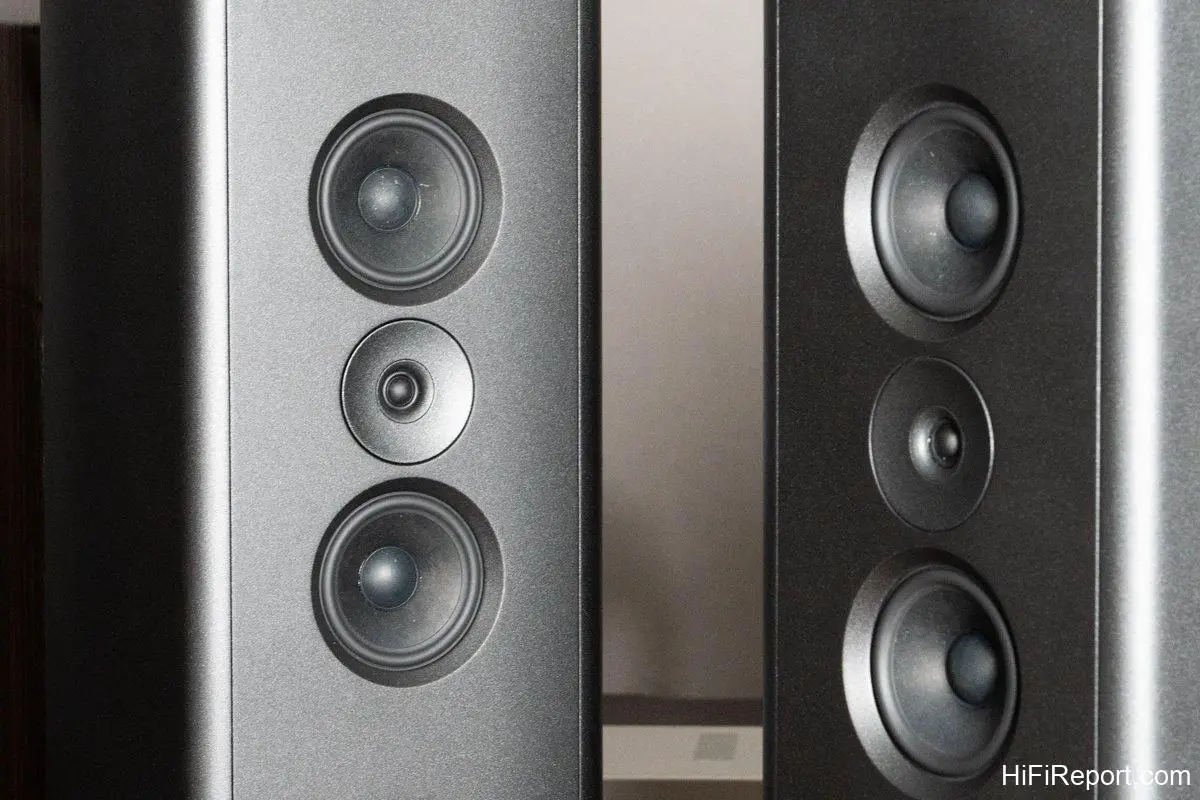
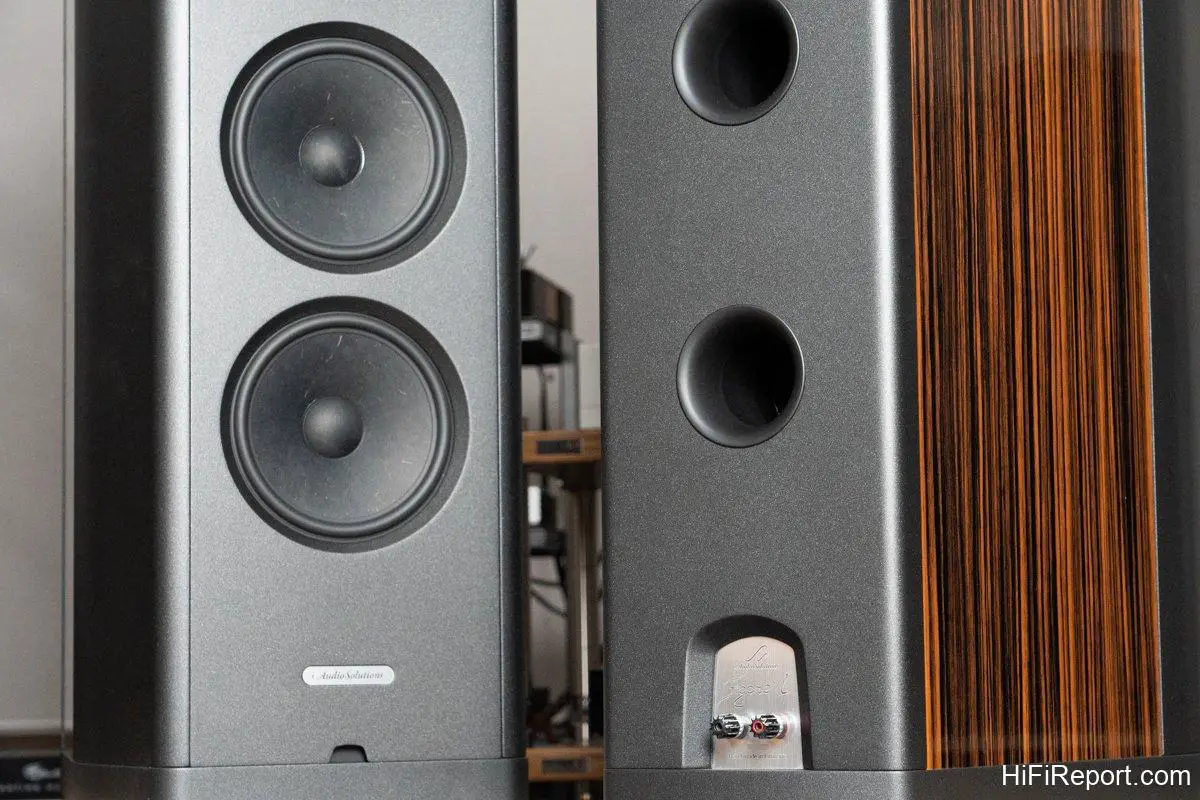
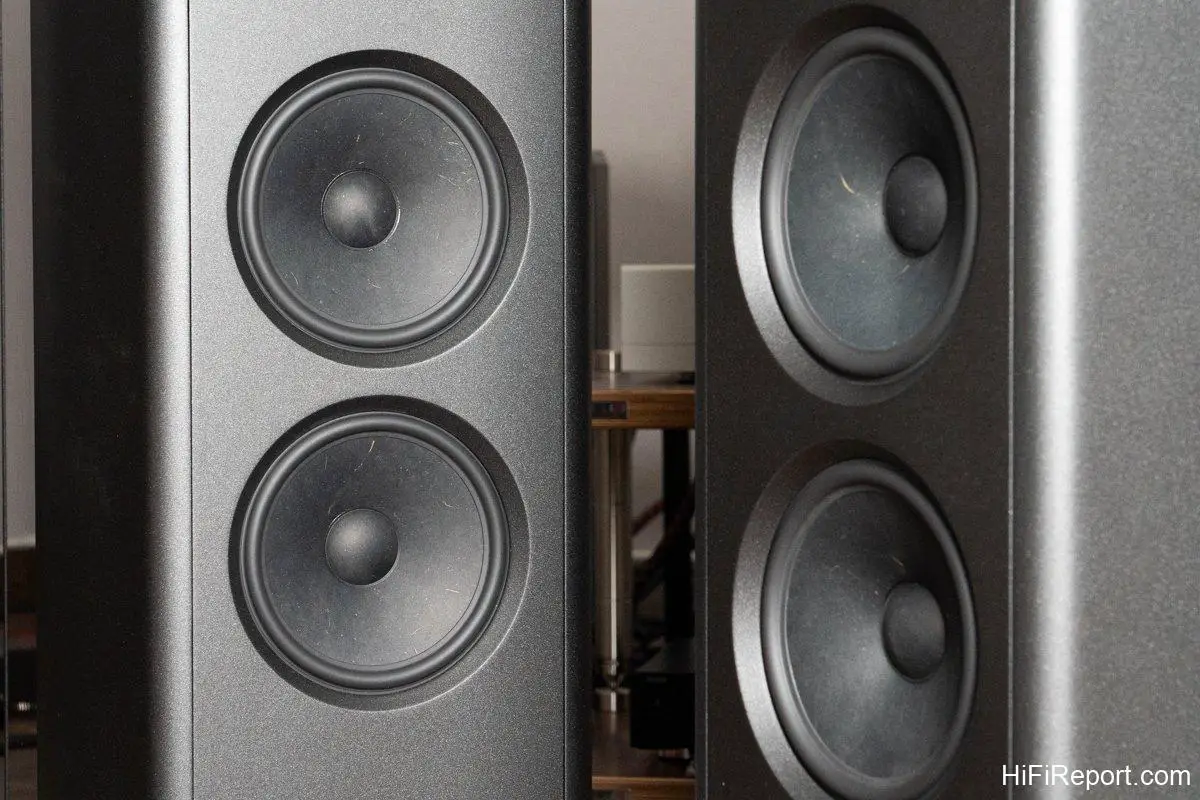
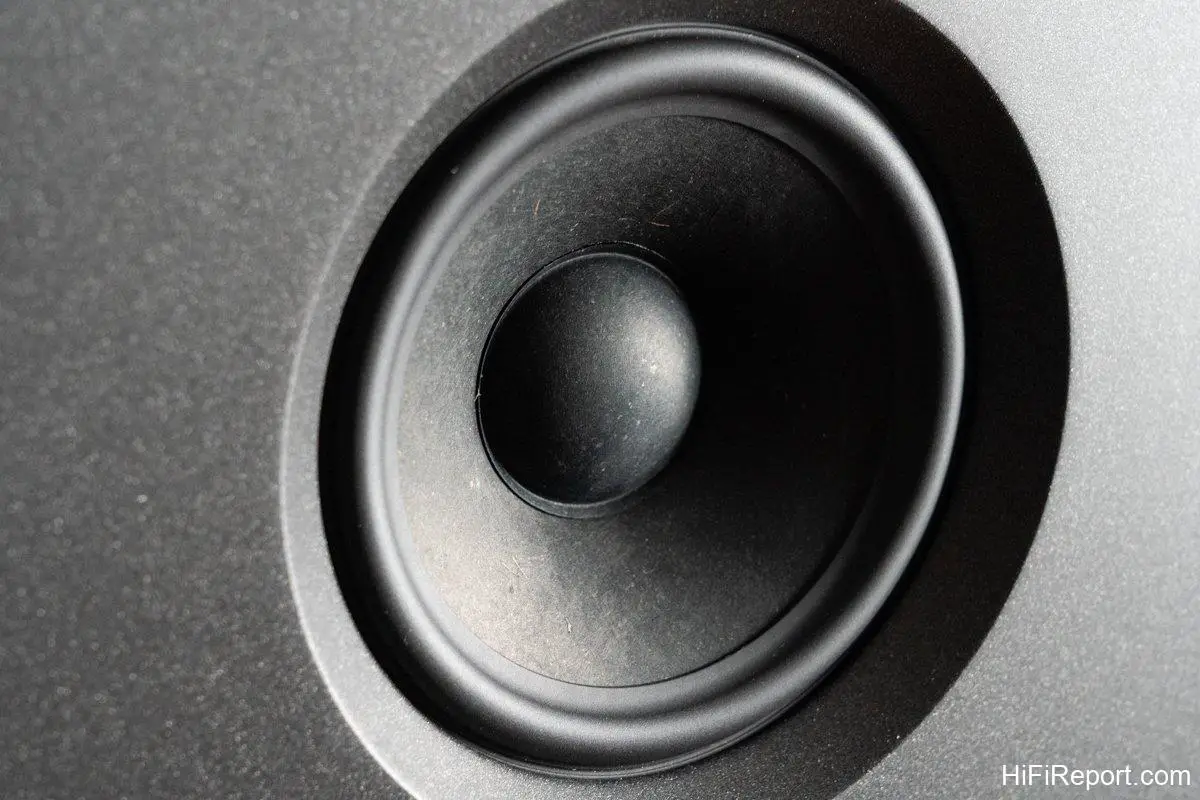
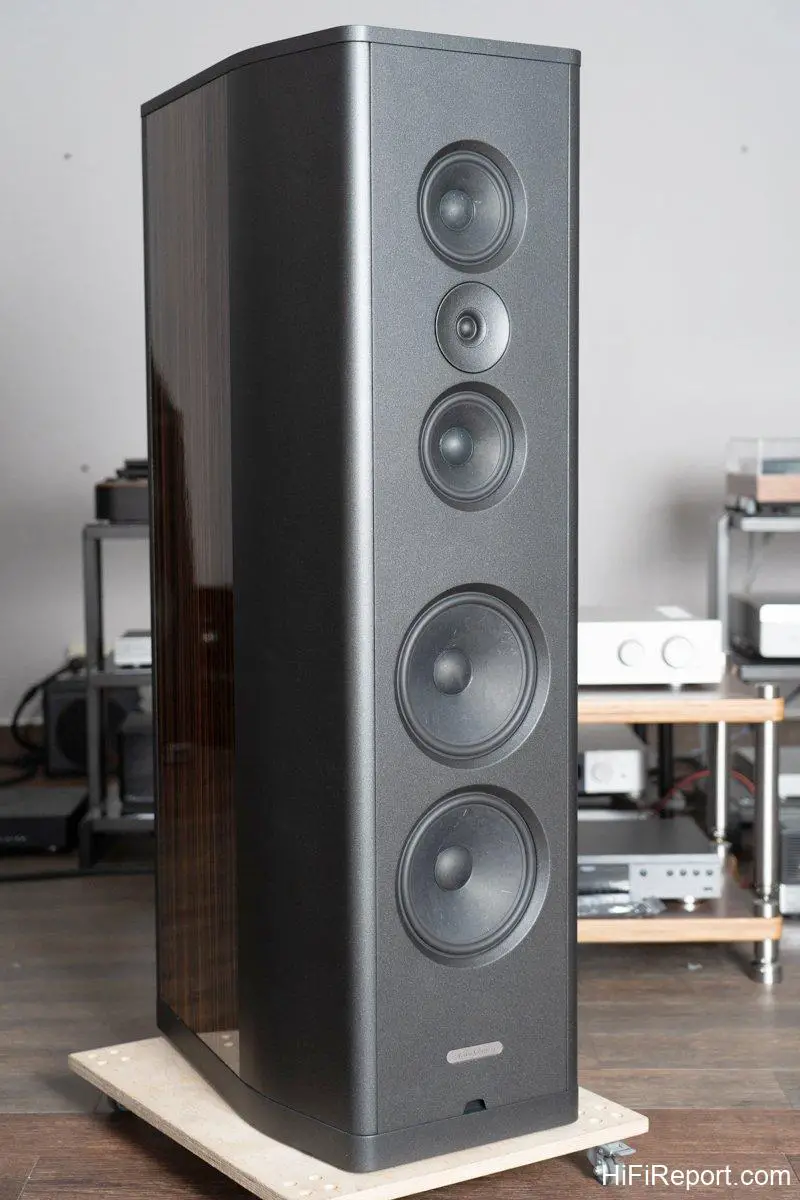
Standing at 123cm tall, slightly shorter than our reference Wilson Audio Alexia 2, the Figaro L employs an MTM (Midwoofer-Tweeter-Midwoofer) point source configuration, supplemented by dual 9-inch woofers. The speaker’s front baffle features a discreet matte black finish, while the cabinet sides are adorned with a lustrous wood veneer piano lacquer, exuding an understated yet luxurious aura.
Crossover Point Away from Auditory Sensitivity
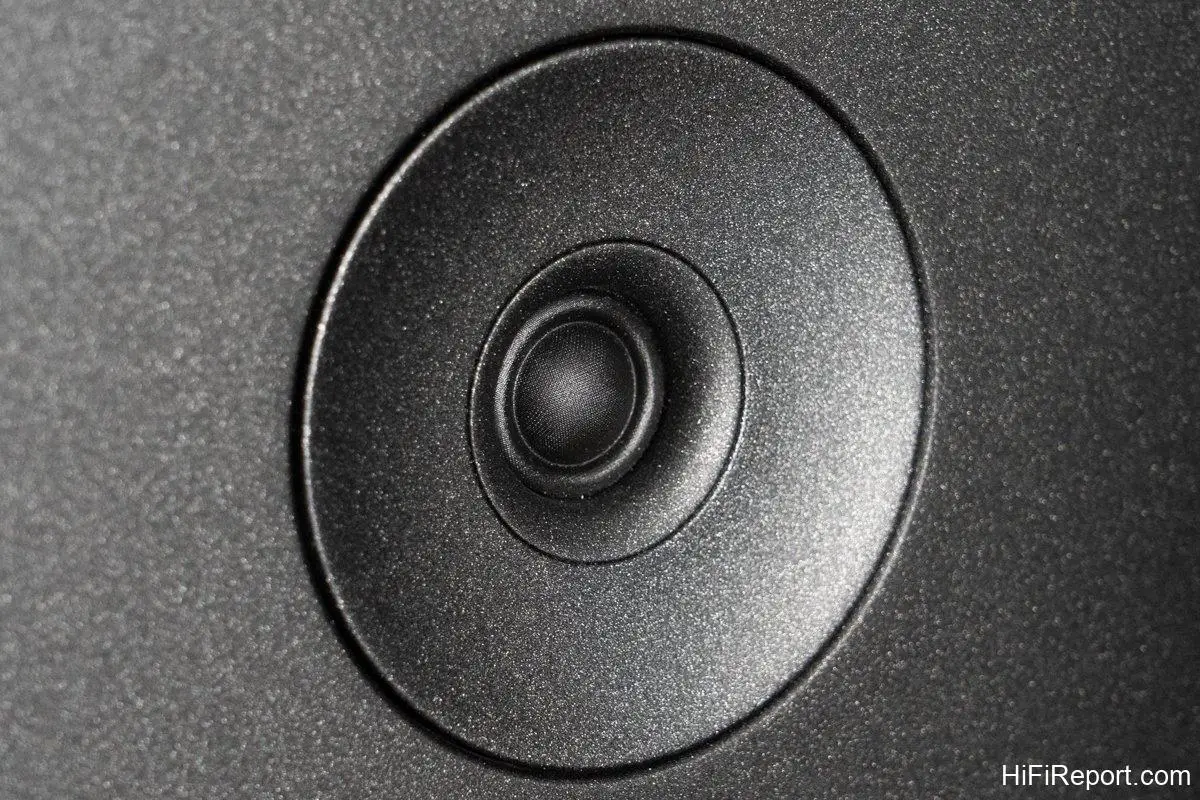
The drivers used in the Figaro L are custom-made by Danish SB Acoustics for AudioSolutions. A 1-inch silk soft dome tweeter is placed within a Mini-Horn waveguide, paired with dual 6-inch ER paper cone midrange drivers. ER signifies “extra rigidity.” These three drivers handle frequencies above 400 Hz. To ensure seamless integration between the tweeter and midrange, the crossover point for the mid-high frequencies is set at 4 kHz. This strategic choice aims to distance the crossover point from the human ear’s most sensitive range of 1 kHz to 1.5 kHz.
Why avoid crossover points around 1 kHz to 1.5 kHz? Our brain’s ability to discern sound direction relies on the time difference in sound arrival between our ears. This sensitivity to sound direction varies with sound wavelength. Frequencies higher than 1.5 kHz have wavelengths shorter than the distance between our ears, making it easier for the brain to pinpoint their direction. This is what we commonly refer to as directivity. Frequencies lower than 1.5 kHz have wavelengths longer than the distance between our ears. As frequency decreases and wavelength increases, the brain’s directional perception diminishes. Hence, low frequencies are considered non-directional, while high frequencies are directional, with the degree of directivity changing with frequency.
Because human auditory localization ability is roughly delineated around 1.5 kHz, the 1 kHz to 1.5 kHz range is where the brain’s directional discrimination is most acute. Setting the crossover point away from this sensitive region helps avoid phase discrepancies at the transition between the tweeter and midrange.
The Figaro L’s 4 kHz crossover point is quite high. This necessitates high-performance midrange drivers capable of extending up to 4 kHz and also covering down to 400 Hz. These two midrange drivers are arguably the soul of the Figaro L’s sound.
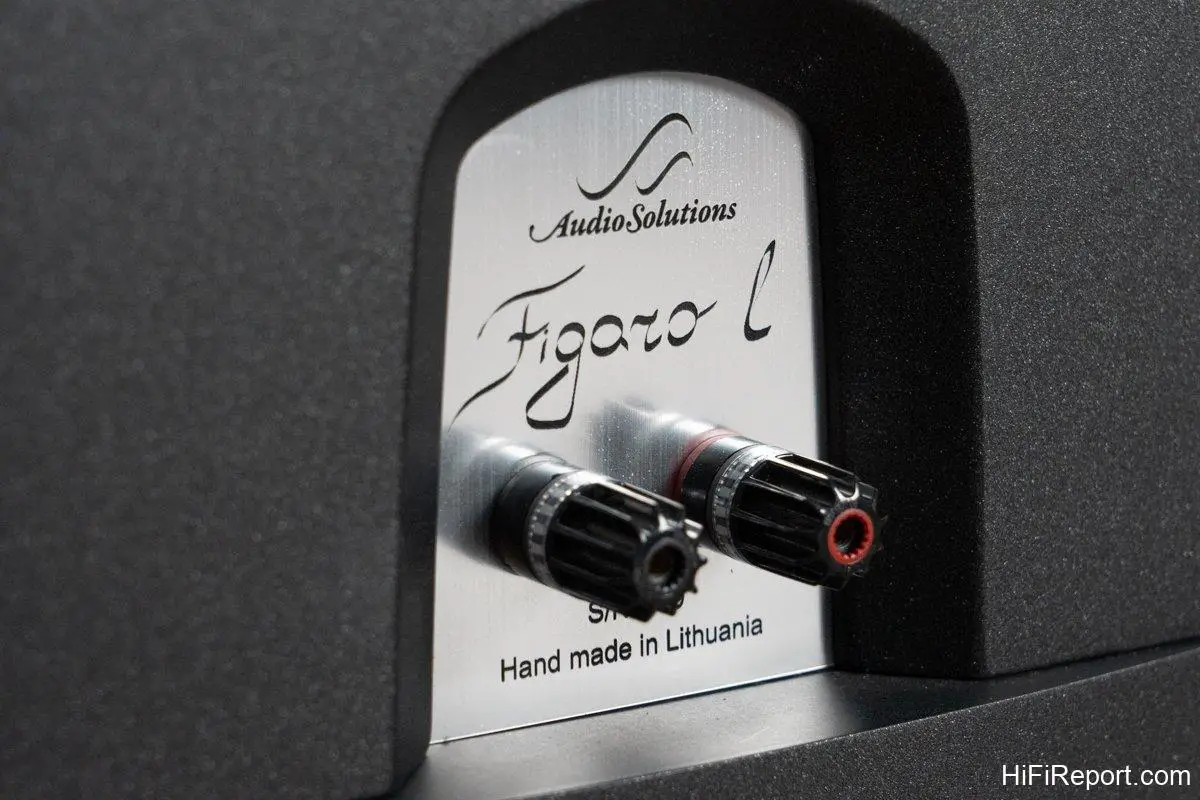
Regarding the crossover design, the manufacturer only specified the crossover frequencies and didn’t disclose further technical details. However, they emphasized the use of German WBT NextGen speaker terminals, specifically the pure copper versions. These terminals provide a secure connection and minimize Eddy Current effects at the contact points, preventing irreversible nonlinear distortion.
Self-Locking + Box-in-a-Box Cabinet Construction
Beneath the Figaro L’s outwardly simple and elegant cabinet lies a wealth of engineering. AudioSolutions employs two key technologies: Self-Locking cabinet joints and Box-in-a-Box construction. These techniques enable each panel of the Figaro L’s cabinet to act as a damping element for others, effectively eliminating unwanted resonance and interference.
While the manufacturer hasn’t revealed extensive technical details, I surmise that Self-Locking likely refers to traditional woodworking joinery, such as mortise and tenon, rather than simple glued box construction. This is a more labor-intensive approach. Box-in-a-Box designs, while not unique to AudioSolutions and seen before, are also relatively complex and demanding to implement. Each added process step increases cost. However, in the pursuit of superior sound, eliminating unwanted cabinet resonance is a fundamental principle of speaker design. AudioSolutions utilizes Self-Locking and Box-in-a-Box techniques to tackle cabinet resonance issues.
15 External Finish Options
The cabinet’s internal engineering may be hidden from view, but AudioSolutions’ attention to external aesthetics is remarkable. The company offers an impressive 15 color options. The standard Xiralic metallic silver paint, originally developed for automotive coatings, is particularly striking. The review sample sent to HiFiReport featured a wood veneer piano lacquer finish, an upgrade option. While a wide range of colors is appealing to customers, it presents inventory management challenges for dealers, who might choose to stock a few mainstream colors and offer other specialized colors as custom orders.
Some might dismiss this as “just more color choices,” but the manufacturing process is actually quite complex. Automotive paint can be high-temperature cured because car bodies are made of steel that won’t deform. However, speaker cabinets are typically constructed from MDF. High-temperature curing would cause MDF to warp. Therefore, speaker cabinet painting often involves multiple coats and repeated polishing, making it time-consuming and labor-intensive. AudioSolutions’ willingness to offer 15 colors, allowing speakers to better integrate with home décor, reflects a commitment to customizability that differentiates their products and enhances their competitiveness.
EAR, Linear Acoustics, Pass Amplifiers in Rotation
During the Figaro L’s time at HiFiReport, I placed the speakers on wheeled dollies. As AudioSolutions didn’t include spikes or feet, I was concerned about potentially scratching the simulated wood flooring in our listening room. Using dollies might slightly compromise bass transparency, a factor to consider in my sonic descriptions. However, even with this setup, the Figaro L’s smooth and enjoyable musicality, coupled with its easy-to-drive nature, made the listening experience thoroughly pleasurable.
The Figaro L remained in the editorial department for an extended period, affording me ample opportunity to experiment with different amplifier pairings. I rotated through three sets of amplifiers: our in-house EAR 868P preamplifier and 509 MK II power amplifiers, and two solid-state integrated amplifiers, the Linear Acoustic LA V120 and the Pass INT-25.
The source components remained consistent: a YBA CDT 450 CD transport paired with a Merging NADAC for digital, and a Linn LP12 Klimax (with built-in phono stage) for analog.
Easy to Drive, Easy to Pair, Easy on the Ears
Initially, I listened to the Figaro L with the EAR pre-power amplifier combination for an extended period and was highly satisfied. The 100-watt power amplifiers effortlessly drove the Figaro L, delivering smooth and agreeable musicality. Even with demanding dynamic passages, the system never faltered. Later, with the arrival of the LA V120 and INT-25, I re-evaluated the Figaro L, confirming its easy-to-pair nature. The LA V120, rated at 120 watts, delivers 220 watts into the Figaro L’s 4-ohm impedance, resulting in even better bass control. The transient response and sense of pace were noticeably more lively and immediate compared to the 100-watt 509 MK II. This is expected, given the higher power output and solid-state design, which generally offers higher damping factor and tighter bass control.
However, switching to the INT-25, a Pass integrated amplifier adhering to their pure Class A design with only 25 watts of output, revealed surprising results. When listening to small-scale chamber music, the high-power amplifiers didn’t offer a significant advantage. While I needed to increase the volume slightly, the 25 watts of the INT-25 paired with the Figaro L still produced a warm, smooth, and richly detailed sound. This demonstrated that the Figaro L isn’t demanding to drive; the focus should be on the quality of the front-end components rather than relying on brute force power.
After rotating through these three amplifier sets, I ultimately returned to the 868P and 509 MK II pre-power combination. The Figaro L, with its classic silk soft dome tweeter and paper cone drivers, possesses a warm and refined sonic character. Paired with tube amplification, the sound gains an extra layer of richness and flavor. In contrast to the LA V120 and INT-25, the solid-state pairings, while offering greater immediacy, lacked some of the velvety smoothness. The Figaro L’s allure lies in its warm and delicately luminous sound. The EAR tube amplifiers further accentuated this captivating quality. Thus, after cycling through different options, I found myself back with the 868P and 509 MK II.
Relaxed and Expansive Soundstage
Physically, the Figaro L is a medium-large sized speaker, effortlessly creating a sense of spaciousness. With a slight volume increase, the mid-bass presence expands, generating an impressive sense of scale.
Listening to EggPlantEgg’s “Love You More Than I Thought Possible,” the opening kick drum and keyboard chords are firmly anchored deep within the soundstage, while sustained chords extend broadly to the left and right, underpinning the lead singer Abin’s focused vocals at the center. As harmonies and the band join in, the harmonies fill the rear of the soundstage, and two electric guitars trade licks from left to right.
I’m aware these are studio-produced effects, but through the Figaro L, young rock music sounds incredibly energetic. The recording’s compression is well-managed, enhancing the impact of the mid-bass. The drum fills inject rock and roll heat. Of course, listening to this track on the Figaro L also evokes scenes from the movie “Man in Love.”
Moving to another pop recording, John Mayer’s “Why Georgia,” the sonic presentation shifts dramatically. The soundstage becomes more intimate. The acoustic guitar intro sounds as if John Mayer is playing right in front of you. The Figaro L beautifully renders this sense of intimacy. As the music progresses and more instruments are layered in, the sense of space expands. First, a supporting acoustic guitar enters, followed by electric guitar, electric bass, and finally, drums. The Figaro L gracefully unfolds the soundstage from near to far, presenting a vibrant and full musical picture. In terms of high-frequency reproduction, the Figaro L’s tonality leans slightly towards the darker side, contributing to a smoother musical expression. Cymbal crashes from drum fills are crisp but not harsh. I would characterize the Figaro L’s sonic personality as smooth, sweet, and possessing an appealing richness.
Chamber Music Virtuoso
If you appreciate chamber music, the Figaro L is undoubtedly a highly compatible speaker. Whether paired with the LA V120, INT-25, or the 868P and 509 MK II, the Figaro L consistently delivers a gentle and endearing musical character. In fact, all three amplifier pairings performed admirably with chamber music. My preference for tube amplification was primarily to enhance the mid-range richness and warmth. This reinforces my earlier point about the Figaro L being easy to drive and pair; focusing on amplifier quality is more crucial than sheer power.
What makes the Figaro L captivating for chamber music? I’ll cite the example of Hilary Hahn and Pierre-Laurent Aimard’s rendition of Beethoven’s Violin Sonata No. 5 “Spring.” The first movement’s melody is boldly presented by the violin, with long notes followed by lively rhythmic figures, conveying a gentle vitality. Subsequently, the piano echoes the violin melody. The Figaro L imbues Hahn’s violin with vibrant energy, while Aimard’s piano unfolds expansively. The piano’s rich sonority contrasts with the focused violin. Beethoven orchestrates the two instruments in a call-and-response, with recurring melodic phrases alternating. The Figaro L renders the violin with a warm, smooth luster. Even at the violin’s highest registers, it maintains its intensity without becoming strained or edgy. Combined with the piano’s ample sound, it creates a rich chamber music atmosphere. The Figaro L, with its effortless presentation characteristic of larger speakers, transforms the listening space into a miniature concert hall.
Beyond the warm and refined high-frequency sheen, the Figaro L also excels in soundstage localization. Listening to the Alban Berg Quartet’s recording of Beethoven’s String Quartet No. 16, the fourth movement opens with a slow passage. The cello emerges from the right of the soundstage, while the first and second violins are positioned on the left, with the viola in the center-right. The Figaro L clearly delineates the relative positions of the four instruments. The images are focused, yet the sonic lines are smooth, not sharp. Throughout my listening experience with the Figaro L, I was consistently impressed by its smoothness. Melodic lines are beautifully rendered, yet in a relaxed and unforced manner.
Dynamic Nuances Clear, Never Harsh
Even when encountering sharp transients, the Figaro L maintains a degree of high-frequency ease. For example, listening to “Cookin’ With The Miles Davis Quintet,” specifically “My Funny Valentine,” Miles Davis’s muted trumpet playing, particularly in the higher registers, can have a piercing edge. However, through the Figaro L, while the trumpet’s soaring high notes and tonal shifts are clearly audible, the harshness is tempered. The Figaro L captures the emotional intensity of Davis’s trumpet playing without overemphasizing any stridency.
For those seeking an intensely live and raw sonic experience, the Figaro L might slightly soften the trumpet’s edge. However, this slight smoothing enhances the overall richness of the swing atmosphere. In contrast, the piano’s warm key strikes and the robust, textured double bass underpin the performance, with the plucked bass notes rhythmically complementing the piano. The Figaro L, with its relaxed presentation and gentle tonality, lends a (yōnglǎn – lazy, languid) quality to the jazz swing.
Brahms Sounds Beautiful, Truly Romantic
For the Figaro L’s ultimate test, I turned to Leonard Bernstein conducting the Vienna Philharmonic in Brahms’s Symphony No. 2. Among Brahms’s four symphonies, the first and third are more assertive in character, while the second and fourth are relatively more lyrical and gentle. Listening through the Figaro L, the experience was not only gentle but also revealed layers of depth within the expansive soundstage.
The first movement opens with a three-note motif in the cello section, followed by the brass section emerging from the rear of the soundstage. Many listeners focus on the rich and warm brass tones, interwoven with the woodwinds, but often overlook the underlying, undulating three-note motif. Subsequently, the violin section enters from the left of the soundstage, echoing the woodwinds in the center, leading into the surging second theme.
The Figaro L’s substantial sonic presence makes Brahms’s orchestral textures dense and cohesive. The cello’s rich tone on the right of the soundstage and the violin’s brighter sound on the left intertwine, creating Brahms’s characteristically dense and weighty musical fabric. Through the Figaro L, the contrast between the cello’s richness and the violin’s brilliance is evident, harmonized by the woodwinds in between. Within the overall rich tonality, the expansive soundstage rendering provides a sense of individual instrumental lines.
Listening to Brahms on the Figaro L is truly beautiful and romantic.
Irresistibly Smooth Musicality
The experience of listening to the Figaro L was pure enjoyment. Although I experimented with three different amplifier pairings, the Figaro L proved to be remarkably accommodating, sounding excellent with each. It exhibited no demanding or finicky tendencies.
Sonically, the Figaro L undoubtedly leans towards a smooth, refined, and warm character. The mid-range possesses a substantial presence, the high-frequency extension is silky and smooth, and the bass is naturally full-bodied. In presenting the gentler aspects of music, the Figaro L is undeniably appealing.
Of course, some listeners who prioritize aggressive sonic performance might find the Figaro L’s sonic foundation somewhat soft. However, pairing the Figaro L with the 868P and 509 MK II, with their slightly rich and colorful musicality, creates an addictive listening experience. The irresistibly smooth tonality is a form of romantic indulgence in the world of audio. Isn’t this another kind of romantic pursuit in audio enjoyment?
Reference Equipment
* **Sources**: YBA CDT450 CD Transport, Merging NADAC, Linn LP12 Klimax
* **Amplifiers**: EAR 868P Preamplifier, EAR 509 MK II Power Amplifiers, Linear Acoustic LA V120 Integrated Amplifier, Pass INT-25 Integrated Amplifier
* **Speakers**: AudioSolutions Figaro L
* **Accessories**: Tiglon TMR-2 Audio Rack / MYSTJ Audio CMS Audio Rack / ASI Tuning Devices
Specifications
* **Type**: 3-way 4-driver bass reflex floor-standing speaker
* **Drivers**: 1 x 1-inch silk soft dome tweeter; 2 x 6-inch ER paper cone midrange drivers; 2 x 9-inch ER paper cone woofers
* **Frequency Response**: 25 Hz – 25 kHz
* **Sensitivity**: 92 dB
* **Impedance**: 4 ohms
* **Crossover Frequencies**: 400Hz, 4,000Hz
* **Maximum Power Handling**: 140W (280W peak)
* **Dimensions (HxWxD)**: 1230 x 356 x 618 mm
* **Weight**: 70 kg (per speaker)