
Avantgarde Zero TA XD Review
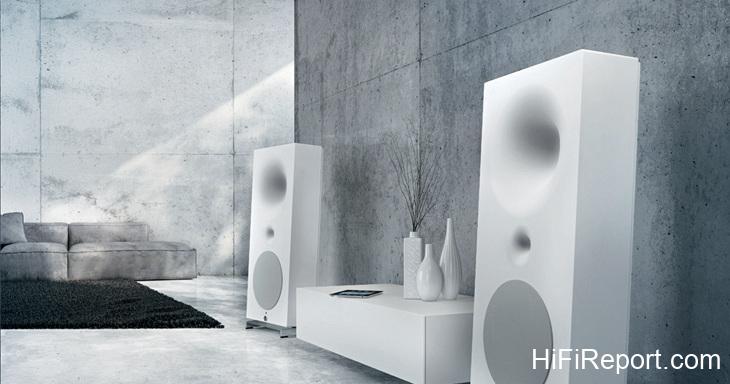
Among Avantgarde’s diverse speaker lineup, the Zero 1, launched in 2014, has always held a special fascination for me. As the smallest and most affordable model in their range, it represents the most accessible pathway to integrating horn technology into a typical home environment. Furthermore, the Zero 1 stands as Avantgarde’s sole fully active speaker, eliminating the need for a separate amplifier and the usual concerns about amplifier matching.
All that was required was a source component to assemble a minimalist, high-end audio system.
Back in 2014, the home high-end audio market saw very few active speakers employing DSP digital crossovers. Neither the industry nor consumers were fully aware of the future potential of such designs. Yet, Avantgarde was already pioneering the use of FPGA for digital crossover and phase correction at that time. This early adoption underscores the German horn speaker specialist’s innovative spirit and leading position in both concept and technology.
Three years after the Zero 1’s debut, Avantgarde introduced the Zero TA XD version, the subject of this review. This speaker features a semi-active architecture. The high and mid-range horns are passive, requiring an external amplifier for power, while the bass section incorporates a built-in active amplifier. While this design might appear different from standard passive speakers, it’s actually the same configuration used across all of Avantgarde’s other models.
The Zero TA XD merely reverts to their mainstream design philosophy.
Why introduce a semi-active Zero TA XD? The primary reason is to allow audiophiles the pleasure of pairing different amplifiers, offering the ability to fine-tune the sound through various component combinations – a flexibility absent in the fully active Zero 1. Horn speakers, with their high sensitivity, are incredibly sensitive to the nuances of upstream equipment.
Users don’t need to worry about amplifier power output; the focus is simply on pairing amplifiers with the best possible sonic quality. This offers far more flexibility in amplifier selection compared to matching with conventional speakers, making the semi-active Zero TA XD a highly engaging option for discerning listeners.
However, the value of the Zero TA XD extends far beyond its amplifier-matching convenience. Despite being Avantgarde’s entry-level model, it incorporates numerous unique design features. The deeper I delved into its engineering, the more fascinating I found this speaker to be. It’s almost as if it simultaneously fulfills every audiophile’s wish list. Let’s explore these distinctive aspects one by one.
The Advantages of Horn Technology
Whenever I write about Avantgarde speakers, I inevitably find myself recounting the advantages of horn technology, and this instance is no different. Horn design is indeed the defining characteristic of Avantgarde speakers, and only by understanding its superiority can one truly grasp the value of the Zero TA XD.
The first advantage of horn speakers is their exceptionally high sensitivity. Some might ask, “Aren’t many dynamic or full-range speakers also very sensitive? Why specifically choose a horn speaker?” Let’s compare the differences between the two types. While some dynamic speakers can achieve high sensitivity, this benefit primarily aids the amplifier, allowing it to drive the speakers more easily.
For the speaker itself, the amount of air the driver must move remains constant; high sensitivity doesn’t reduce the driver’s workload.
Consider horn speakers, however. The horn placed in front of the driver acts as an energy amplification device. By restricting the directionality of sound waves, it concentrates their energy forward. Thus, a horn not only increases speaker sensitivity, reducing the amplifier’s effort, but also significantly lightens the driver’s burden. The driver needs only minimal excursion, or a smaller diaphragm can move air, and the horn’s gain will produce sufficient sound pressure.
Simultaneously, the most minute musical details are delivered more directly to the listener’s ears. Simply put, the high sensitivity achieved by horn speakers is fundamentally different and irreplaceable compared to other high-sensitivity dynamic speakers.
Avantgarde’s Unique Horn Design and Technologies
While horns offer undeniable advantages, they also have drawbacks. According to Avantgarde’s research, traditional exponential horn designs inherently suffer from flaws. Such horns assume sound waves radiate from a flat plane. As sound expands through an exponential horn, it not only introduces coloration but also creates a peak at the lower end of its frequency range. Avantgarde’s spherical horns, on the other hand, are calculated based on the actual spherical expansion of sound waves.
This approach results in a more linear and consistent frequency response across the entire range, a smoother low-frequency rolloff, and, with a 180-degree opening, better dispersion than traditional exponential horns with their 90-degree opening.
Another characteristic of traditional horn speakers is the necessity of using compression drivers. A compression driver is a device placed between the driver and the horn that pressurizes the sound waves. Its throat diameter must be smaller than the driver diaphragm. The principle is similar to pinching the opening of a water hose to make the water flow stronger and faster.
The sound wave energy emitted by the diaphragm is boosted after passing through the narrower compression driver, and then combined with the horn opening, further increasing playback sensitivity and allowing the driver to work more easily.
Predictably, compression drivers are a crucial component of traditional horn speakers. However, Avantgarde chooses to abandon this device. Why? Because their research indicates that if the compression driver excessively boosts the speed of sound transmission, it leads to non-linear distortion.
While compression drivers are necessary for increasing playback sound pressure in outdoor PA horn speakers requiring high volume, they have a negative impact on domestic horn speakers that prioritize low distortion. The horn midrange driver is the core of music reproduction in Avantgarde speakers, responsible for the most critical frequency range. Therefore, Avantgarde’s horn midrange drivers are consistently designed without compression drivers, and the Zero TA XD under review is no exception.
Avantgarde’s horn midrange is certainly not just a simple horn flare added in front of the midrange driver. Avantgarde has two key technologies that replace the function of a compression driver. One is Omega Driver Technology, which, through a high-impedance voice coil, significantly improves the damping factor between the speaker and the amplifier.
According to the manufacturer, Omega Driver Technology can increase the amplifier’s control over the driver by up to 450% and reduce the negative impact of speaker cable length by 80%.
Furthermore, Avantgarde’s Omega Driver Technology incorporates powerful magnets and a narrowed magnetic gap between the voice coil and the pole piece to further enhance driver control. Pay special attention to Avantgarde’s narrow gap design. This structure demands extremely high precision in voice coil assembly, significantly increasing manufacturing costs. Standard production drivers typically cannot adopt such a design due to cost and yield considerations.
However, Avantgarde’s self-manufactured drivers challenge this high-difficulty structure, demonstrating both their extremely high assembly precision and their commitment to pushing the boundaries of horn speaker performance.
Another crucial element Avantgarde employs to replace the compression driver in the midrange horn is their proprietary CDC (Controlled Dispersion Characteristic) technology. This technology is somewhat similar to traditional compression drivers, creating a chamber at the horn throat, just in front of the midrange driver.
This CDC chamber serves two purposes: first, it precisely controls sound wave dispersion, and second, it achieves a mechanical crossover effect, completely replacing the passive crossover network. This allows the Zero TA XD’s horn midrange to seamlessly integrate with the horn tweeter and the active bass section.
The Revolutionary Crossover-Free Midrange
This design is so significant it warrants special emphasis. As mentioned earlier, the Zero TA XD’s horn midrange driver is the core of music reproduction. By eliminating the passive crossover network, this midrange driver is essentially connected directly to the amplifier, operating in a full-range state. The horn then amplifies the music signal, which is unaffected by crossover attenuation and distortion, reproducing it with the utmost realism and lowest distortion.
To put it another way, revealing the subtlest musical details and micro-dynamics is already a strong point of horn speakers. Now, by removing the interference of a passive crossover, the Zero TA XD’s horn midrange can unleash the full potential of the horn to its absolute limit. Wouldn’t you agree this is a major breakthrough for horn speakers?
Are the midrange drivers in all Avantgarde speakers designed without a crossover network? Not entirely. Currently, in Avantgarde’s product line, only the Zero TA XD allows the horn midrange crossover network to be eliminated. This is why I said at the beginning of the article that you should absolutely not underestimate the Zero TA XD just because it’s an entry-level model.
The Zero TA XD holds an irreplaceable and extremely important position within Avantgarde’s lineup, and even in the century-long history of horn speaker development.
To further explain the Zero TA XD’s crossover-free horn midrange design, this achievement is only possible through the combination of CDC technology and precisely calculated spherical horn curvature. Together, the Zero TA XD’s horn midrange can achieve a mechanical crossover with a high-frequency rolloff slope of -12dB and a low-frequency rolloff slope of -18dB. This allows for proper integration with the horn tweeter and the active bass section.
Avantgarde’s investment in research and development to enhance the precision of the spherical horn is almost beyond imagination. Besides using computers for precise horn curvature calculations, the choice of horn material is also critical. Avantgarde discovered that using wood or fiberglass for horns is not ideal because both materials require polishing after shaping the horn form. This polishing process reduces the precision of the horn’s curved surface.
Therefore, Avantgarde opts for plastic injection molding. The steel mold error must be controlled within ±0.05mm, and the horn, injection molded under 2,500 tons of pressure, requires no polishing and can be painted. Its precision remains at ±0.05mm, ensuring that the curvature of every horn is precisely consistent, meeting Avantgarde’s exacting standards.
All Avantgarde horns are made using ABS plastic injection molding, except for the Zero series models where the horns are integrated with the speaker cabinet. For these, Polyurethane material is used for injection molding. This material allows for cabinet hardness adjustment through different formulations and contains fine pores, providing better damping characteristics and reducing resonant coloration from the horn and cabinet.
The Zero series cabinets also feature numerous integrated matrix reinforcing structures to further enhance cabinet rigidity.
Finally, let’s summarize the advantages of Avantgarde’s spherical horns using the data provided by the manufacturer. With Avantgarde’s spherical horn, playback sensitivity is significantly increased, the driver’s workload is drastically reduced, transient response speed is improved, and distortion is notably lowered.
According to measurements by Dr. Anselm Goertz from Aachen University, the addition of Avantgarde’s spherical horn allows the driver’s dynamic range to increase by 8 times, distortion to decrease by 90%, and musical details to increase by 10 times. Furthermore, it takes only 0.0000125 seconds for musical playback energy to rise from 0 to 130dB.
More importantly, the driver diaphragm returns to a state of silent rest from a high sound pressure of 130dB in the same 0.0000125 seconds, with absolutely no lingering delay. This exceptional performance allows Avantgarde’s horn speakers to far surpass conventional dynamic driver speakers, closely approaching the low distortion and transient speed of electrostatic speakers.
The Powerful Active Bass Section and DSP
Having discussed the advantages of Avantgarde’s horns, let’s move on to the Zero TA XD’s active bass section. Besides the active design with a built-in amplifier, two key elements warrant attention: the 12-inch large-sized bass driver and the DSP digital crossover and EQ equalization.
First, let’s talk about the Zero TA XD’s 12-inch bass driver. The closest model in Avantgarde’s lineup to the Zero TA XD is likely the higher-tier Uno Fino Edition. Initially, I thought the Zero TA XD was simply a Uno Fino Edition with a different cabinet. However, upon closer examination, I realized the two are quite distinct. The Uno Fino Edition uses a 10-inch bass driver, while the Zero TA XD employs a 12-inch driver.
Furthermore, the horn diameters differ, and the cabinets are newly designed, requiring recalculation of all parameters.
When a bass driver exceeds 10 inches, I consider it a “large driver” speaker. Early classic speakers like the B&W 801 featured a 12-inch bass driver per channel. What are the benefits of a large-sized bass driver? With a larger diaphragm area, it can move more air, resulting in a typically more relaxed mid-bass sound. Although the Zero TA XD is Avantgarde’s entry-level speaker, it possesses the relaxed character associated with large drivers, which is quite exceptional.
Not only that, driven by the powerful 500-watt built-in amplifier, the Zero TA XD’s 12-inch bass driver is not only relaxed in tone but also fast in attack and decay. The bass doesn’t linger with a slow tail. The ultra-low frequencies can even extend down to 18Hz, a capability hard to match with typical passive large-sized driver speakers. It’s no wonder the manufacturer refers to their active bass as a “Subwoofer”.
In simple terms, the Zero TA XD allows you to enjoy the relaxed character of a large-sized bass driver while simultaneously possessing the powerful control and extreme low-frequency extension capabilities of an active subwoofer, completely overcoming the drawbacks of large bass drivers.
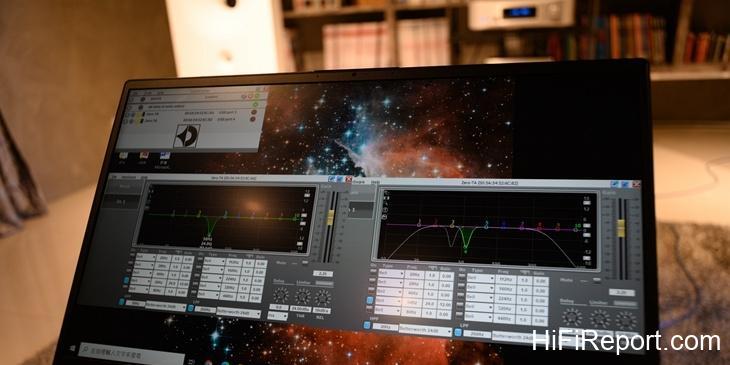
Next, let’s discuss the DSP digital crossover and EQ equalization technology. Currently, the active bass section in all Avantgarde speakers features this technology. It not only allows setting the bass crossover point and rolloff slope but also provides 10 bands of digital EQ equalization. Each EQ band allows fine-tuning of Q value and level.
Without question, this is a very professional digital EQ, enabling users to fully control the seamless integration between the Zero TA XD’s horn high/midrange and the bass section, thereby adjusting the optimal mid-bass characteristics. The 10-band digital EQ can also be used to correct frequency response based on room measurements (using software like REW), making the speaker’s overall performance in the listening space more natural and balanced, and addressing low-frequency room mode issues.
Regarding the use of the digital EQ, the numerous adjustment parameters might seem daunting, but it’s actually quite easy to get the hang of. By connecting both speakers to a computer via USB, you can make real-time adjustments and immediately hear the difference. If you prefer not to delve into parameters, the factory presets offer 20 different bass equalization modes, sufficient for various music genres.
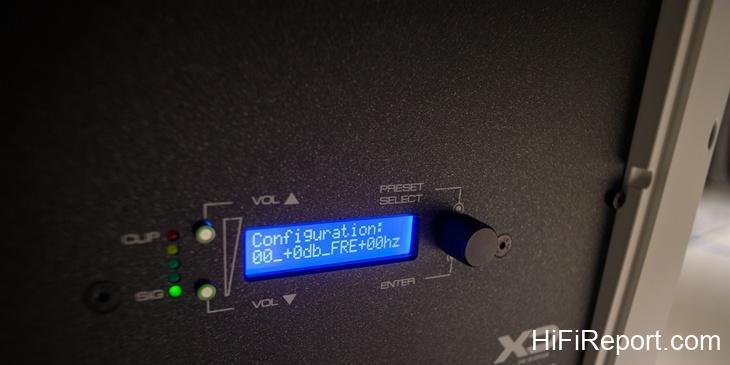
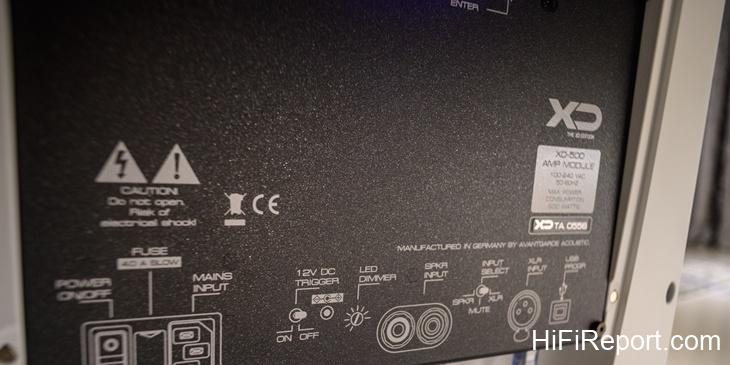
If you wish to make your own adjustments, the system allows you to store up to 60 parameter combinations. If you don’t even want to connect a computer, you can select from 10 equalization modes based on combinations of bass level and crossover points directly on the small screen on the speaker’s rear panel. This powerful DSP digital EQ is definitely worth experimenting with.
Listening Impressions
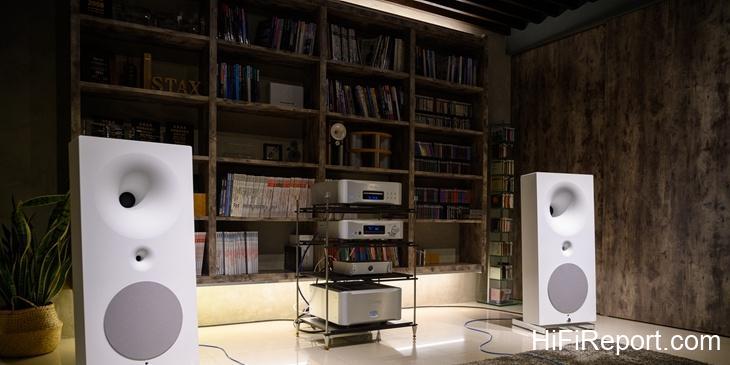
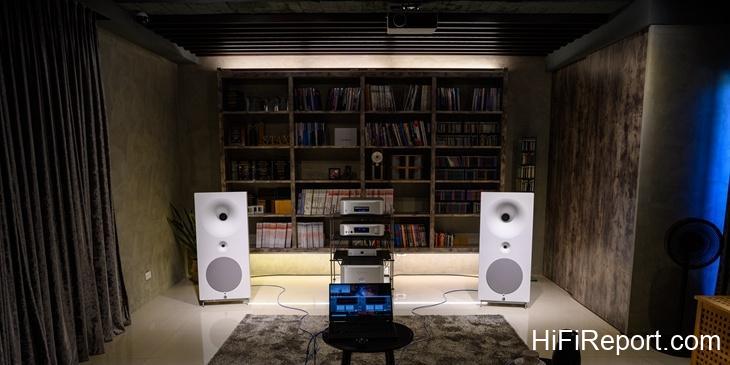
This listening session took place in the listening room of the local distributor, Sheng Qi. The listening position was approximately 4 meters from the speakers. If the distance is shorter, shims must be added to the base to adjust the speaker’s backward tilt, ensuring time alignment across all frequencies.
Regarding toe-in angle, although the manufacturer recommends significant toe-in so the speakers fire directly at the listening position, at a distance of four meters, only slight toe-in was needed to achieve precise focus, and musical details were already remarkably clear. This demonstrates the excellent sound wave dispersion of Avantgarde’s spherical horns.
Starting with the bass test, while Avantgarde speakers are best known for their horn mid and high frequencies, their active bass is also extremely powerful. However, the Zero TA XD’s slender cabinet volume made me initially concerned about potential limitations in bass quantity. I decided to challenge it directly with Beyoncé’s “Partition”. The Zero TA XD unleashed its full power without reservation.
The electronic bass at the beginning of the track was not only abundant in quantity but also incredibly well-controlled. Even at high volumes, there was not the slightest hint of losing control or collapsing. Even more impressive was its ability to delve into the lowest extreme frequencies while maintaining a full, yet not tight, bass texture.
Next, listening to “Oil Rig” from the “Man of Steel” soundtrack, recorded with 12 drum kits playing simultaneously, the drum beats were fast and solid, and the relaxed, massive sound waves continuously washed over me. The bass energy seemed inexhaustible. This kind of extremely relaxed and powerful bass is likely beyond the capability of typical small-sized bass drivers.
If I were to nitpick, I’d say the Zero TA XD’s bass layering could be improved, perhaps not matching the ultra-controlled and distinctly layered bass performance of Avantgarde’s higher-end models.
Playing Olivier Latry’s organ performance at Notre Dame Cathedral in Paris, I must admit the Zero TA XD’s bass felt a bit too potent. A real pipe organ doesn’t typically have such intensely powerful and controlled bass energy. However, with moderate adjustment of the digital EQ, it was possible to reproduce the natural, soft texture of the pipe organ’s bass. With a conventional speaker, such bass fine-tuning capability would likely be unavailable.
Listening to Richter’s performance of Beethoven’s Piano Sonata No. 23, “Appassionata,” a studio recording from his 1960 visit to New York, the high sensitivity of the Zero TA XD’s horns particularly highlighted the master tape hiss. However, this didn’t detract from the musical enjoyment, as the piano keystroke details were equally clearly amplified by the horns. Even the subtle rustling sounds during the performance were faithfully reproduced, creating a more authentic listening experience.
Listening to Dang Thai Son’s live recording from his winning performance at the 1980 Chopin Piano Competition, through the Zero TA XD’s reproduction, I could clearly sense Dang Thai Son’s keystrokes were more crystalline and transparent, with more distinct and fluid dynamic changes. The low-frequency keystrokes were unleashed with greater fearlessness. Particularly noteworthy was the exceptionally clear and defined presentation of keystroke force.
This sensation was akin to driving a supercar – the instantaneous,。Zero TA XD,。(The previous sentence fragment was incomplete in the source, translating the meaning of the analogy) …the instantaneous burst of power is direct and exhilarating, and the condition of the road surface is reflected more directly and clearly. The piano performance presented by the Zero TA XD gave me such a real feeling.
Listening to Kyung Wha Chung’s live performance of Schubert’s Fantasy D934 at Suntory Hall, Tokyo in 1998, the Zero TA XD was able to frankly present Kyung Wha Chung’s focused and incisive violin playing without making the violin sound tense or hard. The violin tone was clear and uncolored, without the “cupped” sound often associated with horns. Subtle changes in expression during the performance were fully reproduced, and the details were noticeably richer than with typical speakers.
Frankly, you really have to hear a horn speaker to understand just how many details are hidden within a recording.
Finally, testing vocals, listening to tenor José Carreras’s singing, I found that the Zero TA XD did not overly emphasize a full or bloated midrange. When singing at the highest peak, his voice soared effortlessly. Listening to Lou Reed singing “Vanishing Act,” the midrange was also not overly prominent, but the chest resonance had a rich texture, and the details like saliva sounds were particularly clear and realistic.
Listening to soprano Kathleen Battle singing Bach’s “Ave Maria,” her ethereal and pure voice seemed to shine on a dark stage, indicating the Zero TA XD’s precise image positioning and extremely pure and beautiful sound quality.
Fulfilling Audiophile Dreams
How many audiophile dreams does the Zero TA XD actually fulfill?
First, its high-sensitivity horn mid-high frequencies fully reveal the characteristics of upstream equipment while allowing the drivers to work more effortlessly, significantly reducing distortion.
Second, the horns fully reveal the subtlest and most powerful dynamics in music and thoroughly excavate all details within the recording.
Third, Avantgarde’s spherical horns offer better dispersion and allow horn speakers to integrate seamlessly into a home environment.
Fourth, the horn midrange eliminates the pollution of passive crossover networks, solving a major challenge in speaker design.
Fifth, the 12-inch bass driver delivers a relaxed mid-bass texture.
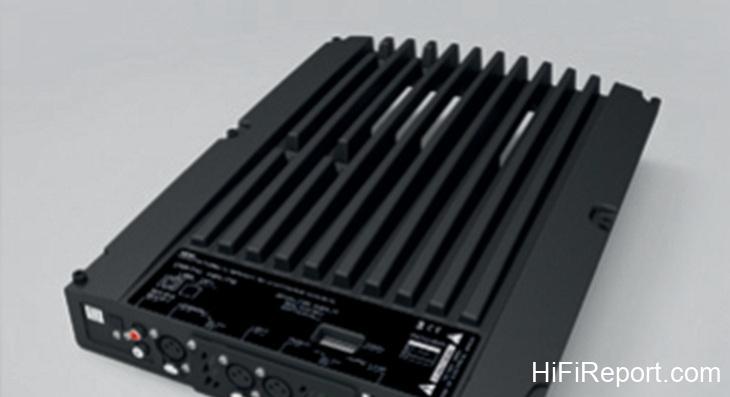
Sixth, the active bass fully controls the bass driver, resulting in faster transients and deeper low-frequency extension.
Seventh, the digital EQ allows users to fine-tune bass characteristics and correct room acoustic issues.
Need I say more? So many advantages are gathered in the Zero TA XD. If you are an audiophile, I believe you will be as excited as I am and want to own a pair of these speakers.
Specifications
* Type: Semi-active horn speaker
* Launch Year: 2018
* Drivers:
* 25mm tweeter / 77mm diameter horn × 1
* 125mm midrange driver / 190mm diameter horn × 1
* 300mm (12-inch) bass driver × 1
* Frequency Response: 18Hz – 20kHz
* Sensitivity: > 104dB
* Crossover Points: 300Hz / 4,000Hz
* Impedance: 8 ohms
* Recommended Amplifier Power (for horns): > 10 watts
* Built-in Bass Amplifier: Class D, 500 watts
* Dimensions (WHD): 490 × 1,040 × 318 mm
* Weight: 39 kg
Key Features
* High-sensitivity horn mid-high frequencies fully reveal upstream equipment characteristics, reduce driver workload, and significantly lower distortion. * The crossover-free horn midrange eliminates passive network pollution, fully reveals the subtlest and most powerful music dynamics, and thoroughly extracts all recording details.
* The 12-inch bass driver provides a relaxed mid-bass texture, while the active design fully controls the bass driver, resulting in faster transients and deeper low-frequency extension. * Digital EQ allows users to fine-tune bass characteristics and correct room acoustic issues.
Usage Notes
* The manufacturer recommends amplifiers of 10 watts or more for driving the horn mid-highs. Please prioritize amplifiers with pure sound quality and a quiet background.
* The built-in digital EQ is very powerful; it is highly recommended to experiment with it.