
Bassocontinuo Revolution X – Aeon X Carbon Fiber Audio Rack Review
Bassocontinuo, hailing from Italy, is renowned for its dedication to producing top-tier audio racks. For Bassocontinuo, an audio rack is not merely about sonic performance; it must also be visually stunning. This philosophy is the driving force behind Lorenzo Belloli, the president and founder of Bassocontinuo. Lorenzo, with a background in the design industry, found the market lacking in aesthetically pleasing audio rack options.
Dissatisfied with the mundane designs available, he decided to take matters into his own hands. The resulting audio racks, blending both form and function, quickly garnered significant market attention. Numerous prestigious brands have since specified Bassocontinuo products, and the company also provides bespoke solutions for these brands and discerning audiophiles, solidifying its position as the HiFiReport of high-end luxury brands.

Today, we are reviewing the flagship Revolution X series from Bassocontinuo, launched to celebrate the company’s 15th anniversary. The Revolution X series proudly boasts 100% carbon fiber construction. With the exception of the stainless steel pillars, the shelves and structural supports are entirely crafted from 100% carbon fiber. Why the emphasis on “100% carbon fiber”?
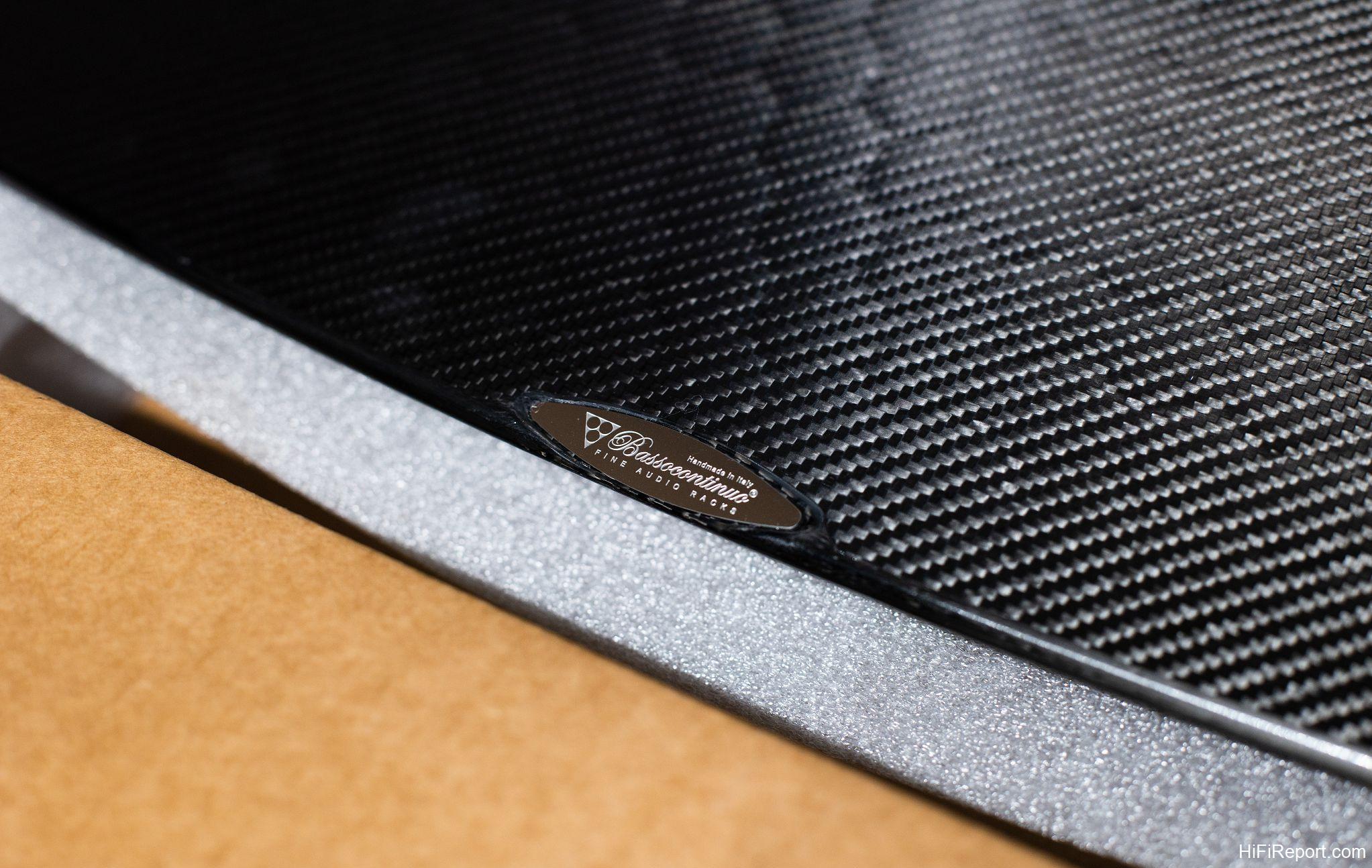
Because most products on the market claiming to be carbon fiber, or merely resembling carbon fiber, are simply surfaced with a carbon fiber veneer. While they may look the part, they lack the inherent lightweight and rigid properties of genuine carbon fiber. Bassocontinuo, in contrast, utilizes 100% pure carbon fiber throughout, from the core to the surface. The quality and performance are, naturally, a world apart from veneer imitations.
You might wonder why I’m so confident in vouching for Bassocontinuo. Before writing this review, I visited Bassocontinuo’s headquarters in Bergamo, Lombardy, in northwestern Italy, and personally witnessed their carbon fiber production process.
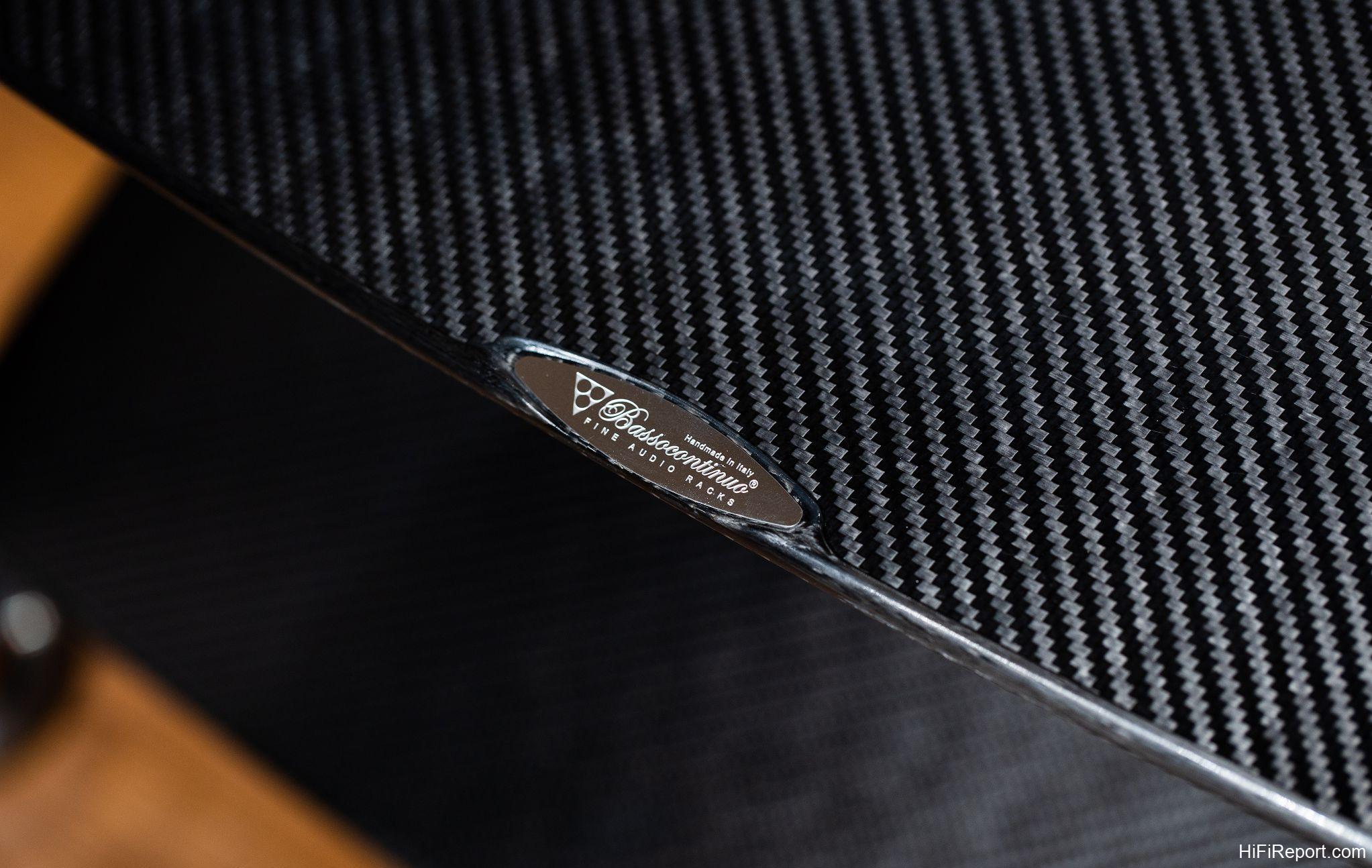
Designing and manufacturing true carbon fiber products demands specialized talent and advanced production techniques. This explains why it’s typically reserved for ultra-high-end applications such as aerospace, Formula 1 racing, and supercars – and carries a premium price tag. Lorenzo shared that only four companies in all of Italy possess the capability to produce carbon fiber to this standard.
To realize his vision of carbon fiber audio racks, Lorenzo specifically enlisted the renowned designer Christoph Nussbaumer. His team has accumulated over 200 international design awards to date. Bassocontinuo employs a unique naming convention for its products, which warrants clarification to avoid confusion. Revolution X is the series name, representing the latest flagship carbon fiber line. Lorenzo then assigns a specific name to each model within the series.

For example, the standard three-tier single-width rack we are reviewing is named Aeon X, while a single-tier, single-width rack designed for amplifiers is named Eos X. The Aeon Light model on the far right utilizes HDF shelves while retaining the carbon fiber main structure, making it a more accessible price point.

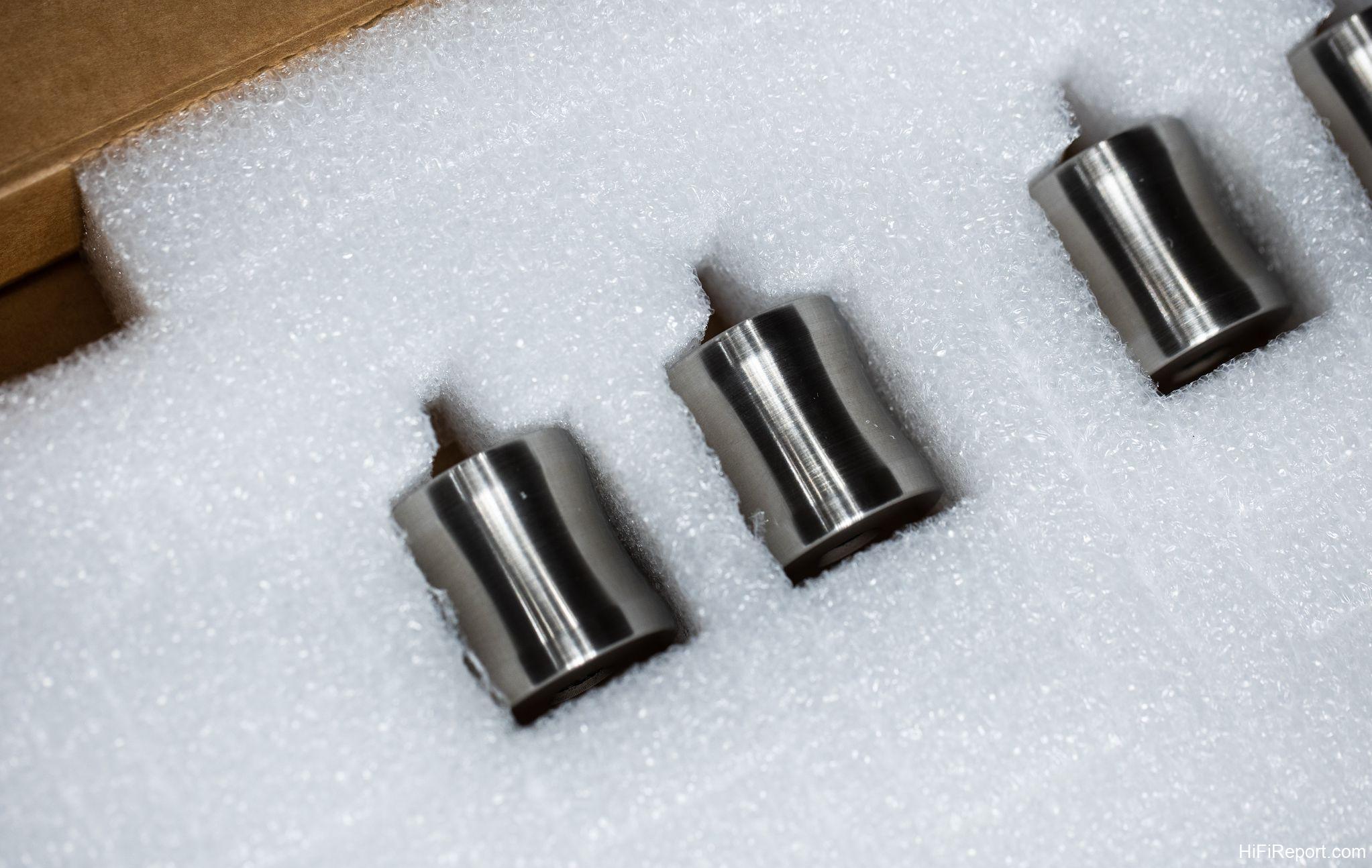
The Aeon X arrives in three substantial packages, each containing one tier.

The shelves feature a LHPS sandwich construction. Beyond the honeycomb hexagonal carbon fiber surface layer, they incorporate high-density polyurethane foam and other materials. The bottom shelf can support up to 80kg, while the upper shelves are rated for 60kg. The breaking point is an astonishing 350kg.

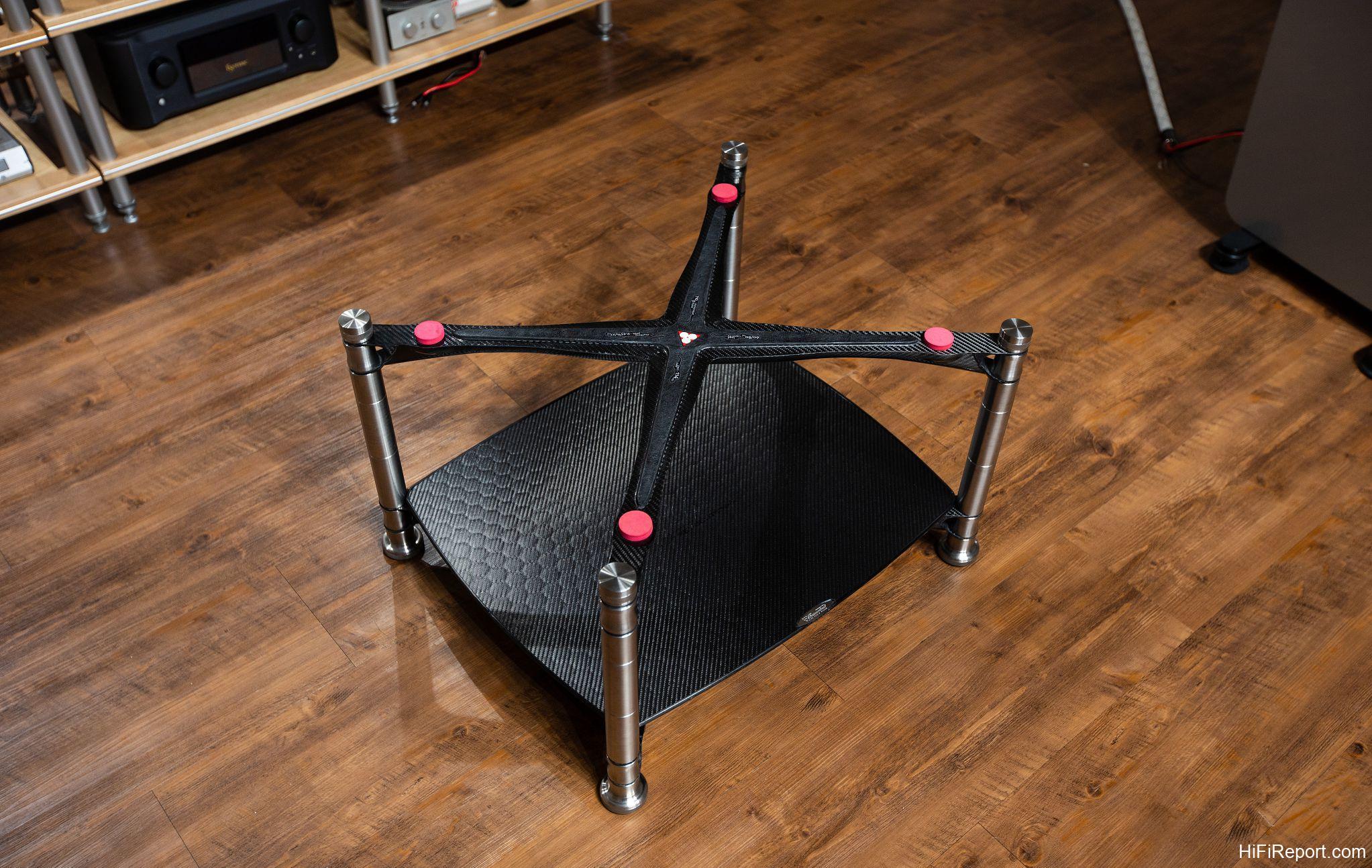
The carbon fiber main frame, which supports the shelves, is incredibly challenging to manufacture. It utilizes Formula 1-grade monocoque technology, achieving a mere 1.7mm thickness and weighing only 710g.
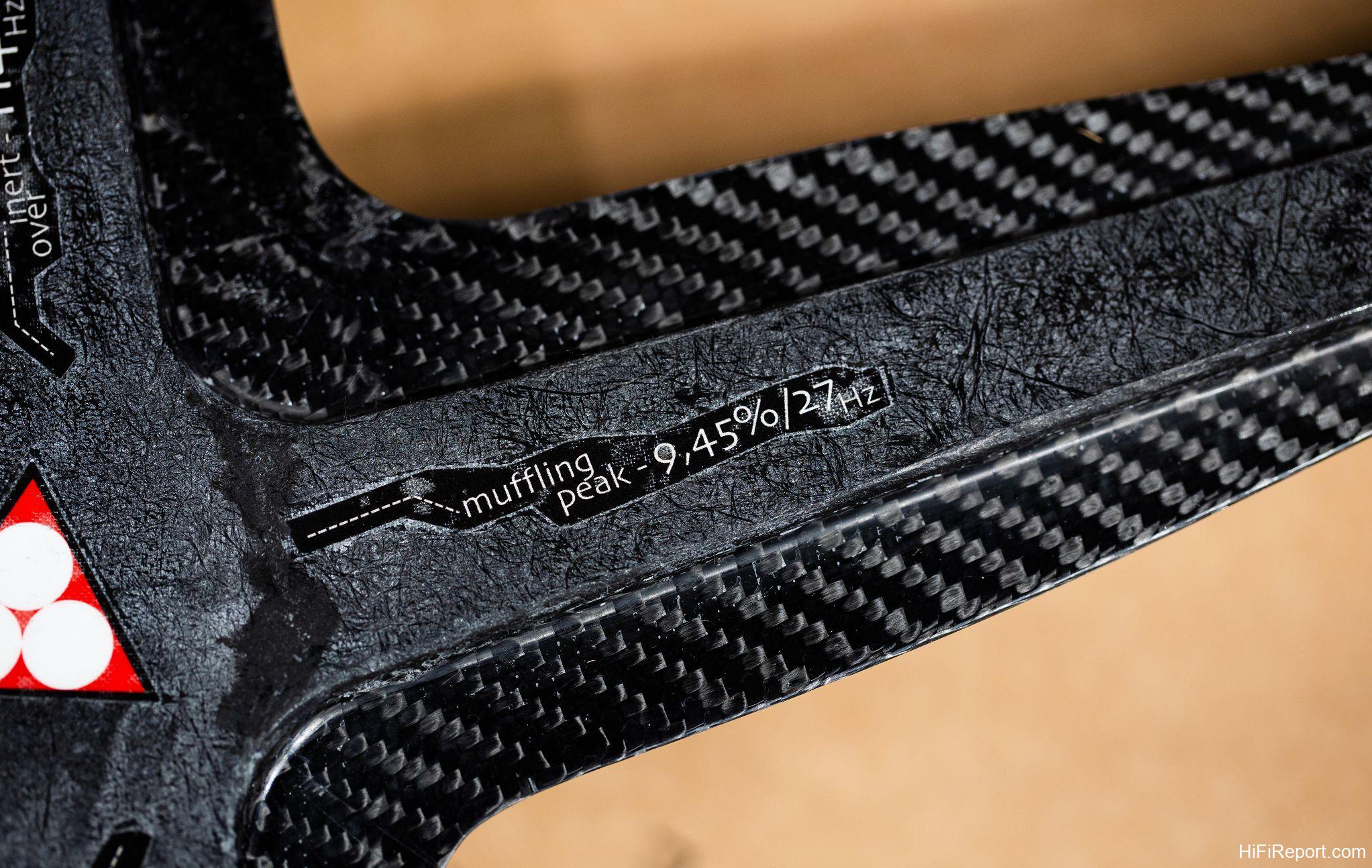
These carbon fiber main frames are marked with numerous numbers. All Bassocontinuo products are rigorously tested by independent research centers. In addition to testing at the Politecnico di Milano laboratory, Bassocontinuo evaluates real-world sonic performance using a €300,000 two-channel system with vinyl playback. They employ 52 accelerometers placed on equipment, floor, room, and the rack itself.
Pink Floyd’s “The Wall” is played for five minutes at both 60% and 80% volume to assess vibration damping effectiveness. Bassocontinuo publishes these test reports on their official website for public access and scrutiny. Beyond the basic specifications mentioned earlier, the numbers represent:
Inert Over: 114Hz. This indicates that the Aeon X is unaffected by frequencies above 114Hz.

Deformation Under Load: 0.026mm. When equipment is placed, the carbon fiber shelf exhibits a negligible 0.026mm of deflection.

Muffling Peak 9.45%/27Hz. The maximum damping effect occurs at 27Hz.

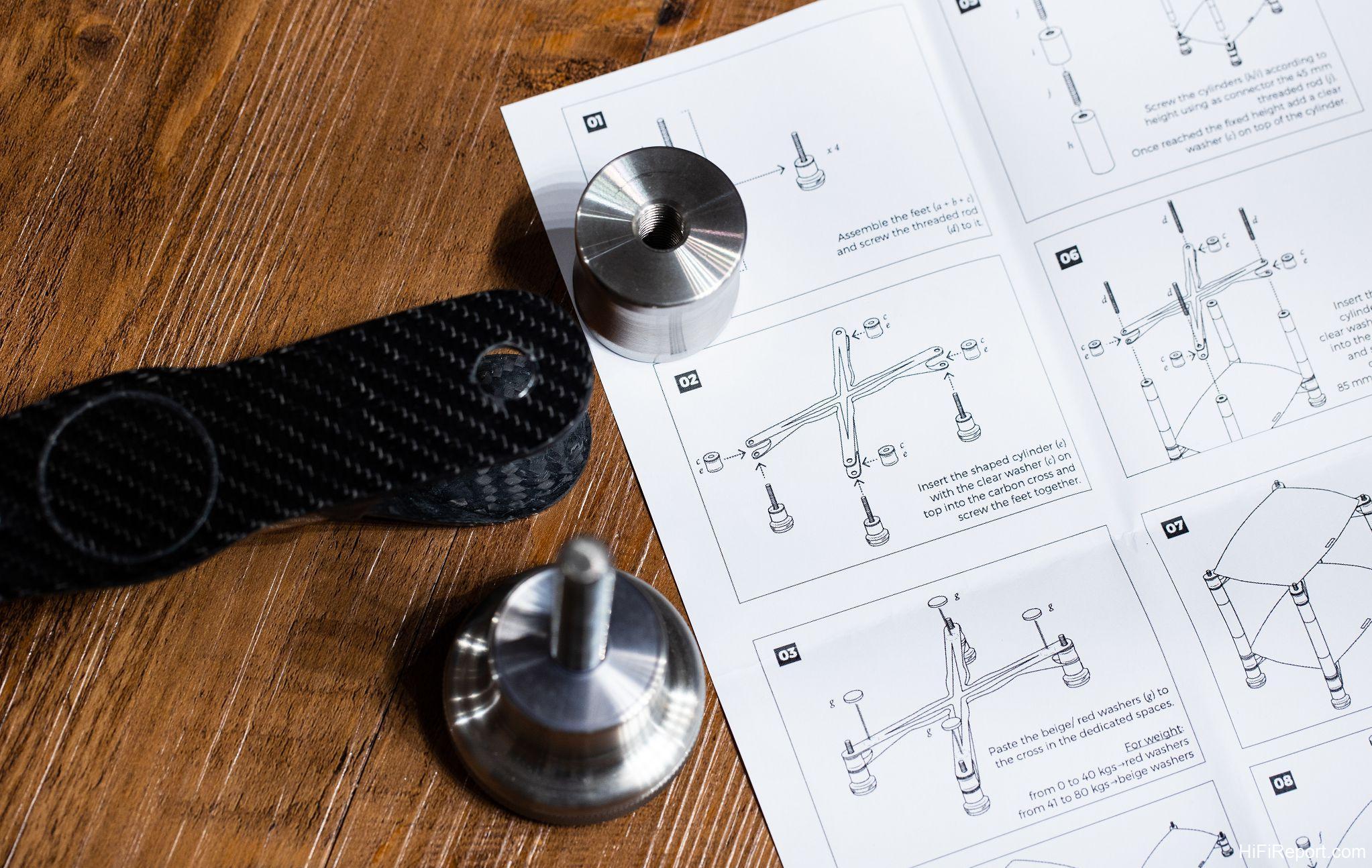
Assembling the base tier components. Following the instructions, the assembly is straightforward. Ensure each component is installed correctly as instructed to maximize performance.

The base frame and cones are installed. The cones utilize EDT (Encapsulated Damper Technology), an elastic coupling system, to isolate from floor-borne vibrations.

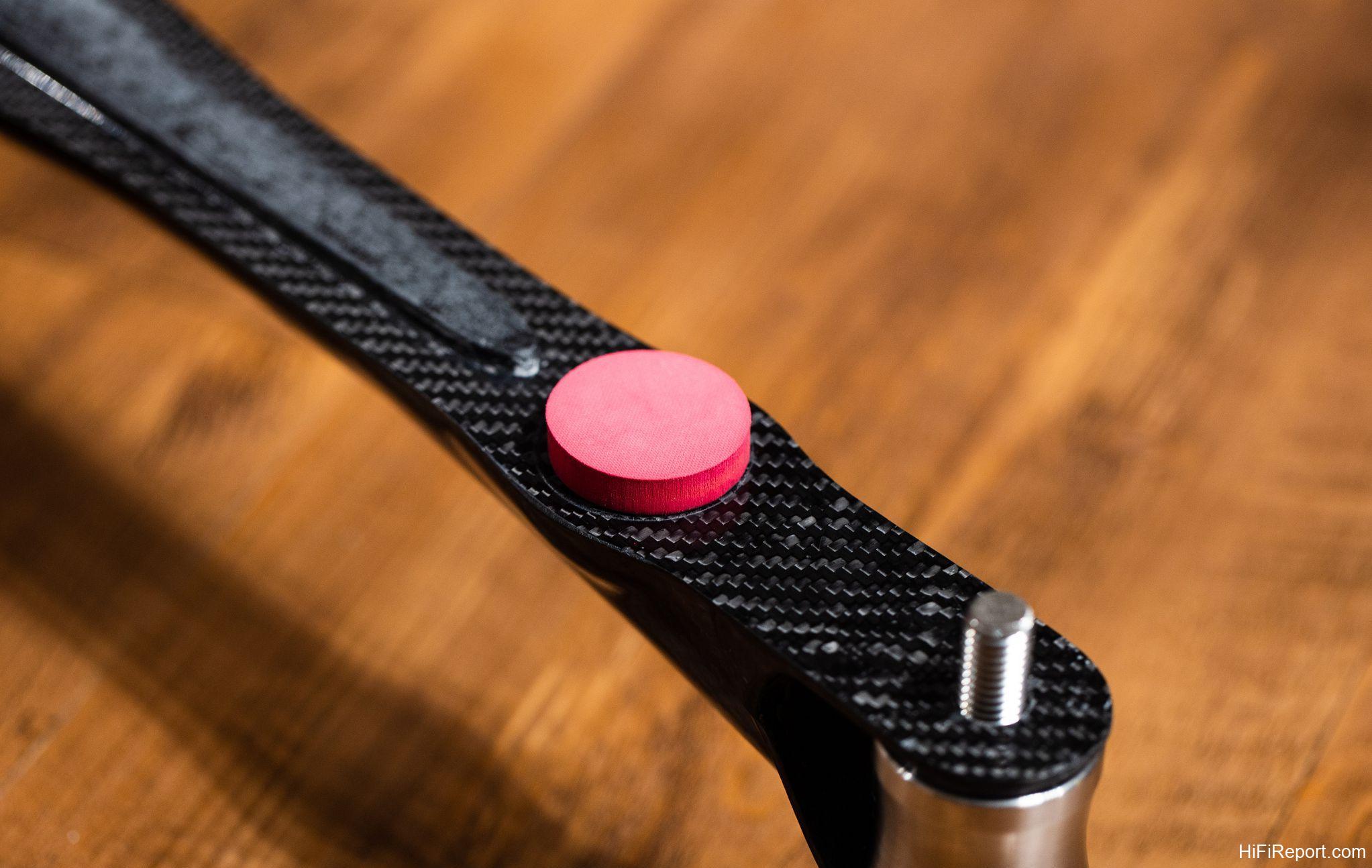
This red damping material is a special viscoelastic polymer, highly effective at absorbing vibrations.

Placing the carbon fiber shelf for the base tier completes the first level.

Assembling the second and third tiers is essentially the same process. Since we are only using two tiers, the third tier was not installed. The key difference for the second tier is the ability to customize the height. Bassocontinuo’s rack pillars are constructed from modular segments, offering remarkable flexibility. Height adjustments can be made at any time, and custom lengths can be ordered from the factory.
Since we plan to place an Esoteric amplifier on the bottom tier, we estimated the required height using these three pillar segments.
The assembly process is consistent; the second tier goes together even faster.
The two-tier rack assembly is now complete.
Reducing Environmental Vibration Intrusion (Ted Chen)
Bassocontinuo, the Italian audio rack brand, was established in 2008. The name itself is quite meaningful. “Basso continuo” refers to the continuous bass line in Baroque music, frequently used in HiFiReport-era compositions, typically accompanying the ensemble with improvisation. Naming the brand thus signifies the clear influence of audio racks on music reproduction, with “improvisation” being a key concept.
Bassocontinuo uses scientific measurement to demonstrate how ambient vibrations, generated by high-volume playback and transmitted through the floor or walls, can affect audio systems. The platform upon which audio equipment rests becomes critically important. Therefore, audiophiles need to address this invisible issue proactively, which is where audio racks come into play.
However, poorly designed audio racks, like ill-chosen furniture, not only fail to prevent vibration transmission to audio components but can even amplify and channel vibrations into them. Beyond traditional vinyl turntables and CD players, the electronic components within digital devices are equally susceptible to vibration. This unwanted “improvisation” can color your music in undesirable ways.
Science-Based Design, Beauty as the Goal
From its inception, Bassocontinuo has adopted a laboratory approach, focusing on vibration research. Their audio racks are designed to effectively minimize vibration from reaching audio equipment, a claim substantiated by actual measurements published on their official website and validated by independent laboratories. They continue to collaborate with the Politecnico di Milano team for in-depth research.
In 2015, Bassocontinuo became the first and, at the time, only manufacturer of carbon fiber audio racks. In 2022, they introduced the Revolution X series, including the AEON X model we are testing. It features a composite material construction, anchored by solid steel pillars at each corner for support. These pillars are available in 5cm and 10cm lengths and can be combined to achieve the desired height.
Other structural elements, including the central X-shaped load-bearing support and the flat shelves, are crafted from carbon fiber. Both are remarkably lightweight yet capable of supporting equipment weighing over 60kg. Under direct light, the carbon fiber weave and texture become clearly visible. What photos cannot capture is the subtle flex of the shelves when gently bent, indicating a design that is resilient rather than rigidly stiff.
The X-shaped support prominently displays key performance metrics and specifications, readily accessible to the user.