
Blade Two Meta Review
Founded in 1961, KEF reached its 60th anniversary in 2021. While significant celebrations were planned, the global pandemic and component shortages curtailed the festivities and delayed new product launches. In 2022, KEF finally unveiled several products to mark the occasion, including the LS60 floorstanding wireless active speakers, alongside the Blade One Meta and Blade Two Meta. The Reference series also received the “Meta” designation.
It seems likely that all future KEF speakers will incorporate this technology.
Unveiling Meta Technology
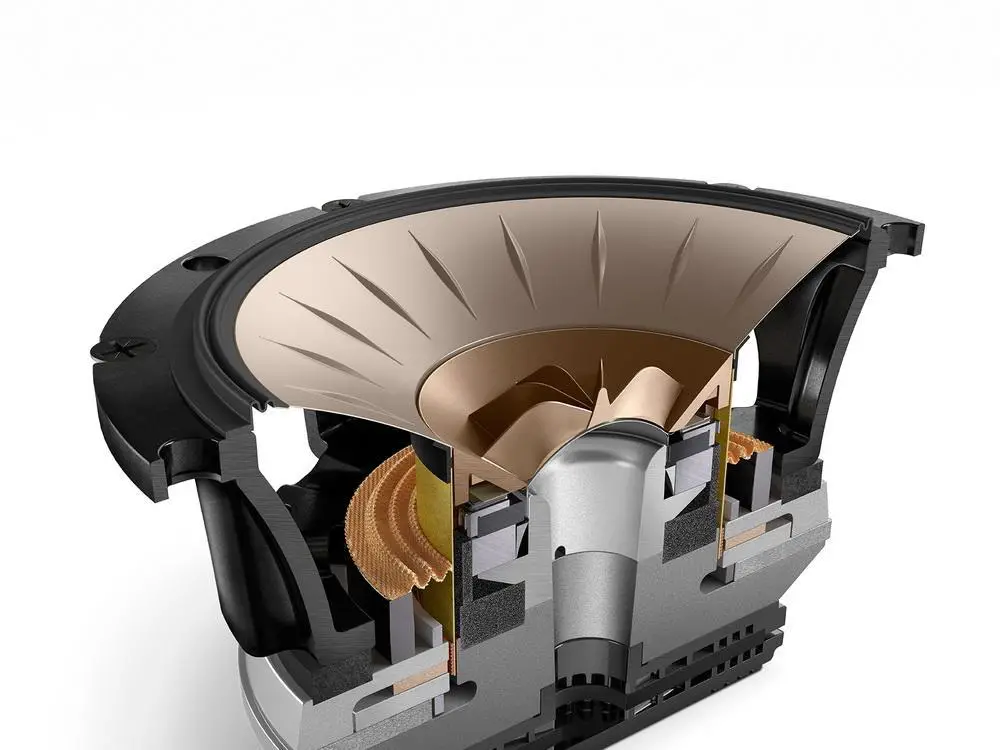
What exactly is “Meta”? It’s an innovative, labyrinthine absorption device fitted to the rear of the Uni-Q driver’s tweeter. This absorbent material and technology are known as Metamaterial Absorption Technology (registered trademark: MAT), developed in collaboration between KEF and a university in Hong Kong, specifically by a research unit called the Acoustic Metamaterials Group. “Meta” is simply an acronym derived from the first four letters of “Metamaterial.”
The first product to feature Meta was the LS50 Meta, launched in 2020.
Outwardly, the Meta device appears as a black disc with a maze-like pattern. Its primary function is to absorb the backwave energy generated by the tweeter diaphragm above 600Hz. One might wonder how this non-foam black disc absorbs high frequencies. The answer lies in the quarter-wavelength absorption theory. To effectively absorb a specific sound wave, the thickness of the absorbent material must equal one-quarter of that sound wave’s wavelength.
For instance, to absorb 100Hz, with a wavelength of 3.44 meters, you would theoretically need 86 cm of absorption material. The conical absorbers found in anechoic chambers are also designed based on the quarter-wavelength principle; their thickness indicates the lower frequency limit of their effective absorption.
However, the Meta is neither traditional absorbent foam nor conical. So how does it work? The ingenious engineers utilized the quarter-wavelength theory but transformed “thickness” into long, winding channels. Each Meta disc contains 30 channels of varying lengths, from 0.5 cm to 25 cm. Using the quarter-wavelength principle, you can calculate the corresponding frequencies: the 25 cm channel corresponds to 344 Hz, while the 0.5 cm channel corresponds to 17,200 Hz.
These 30 channels on a single Meta disc can absorb an impressive 99% of the tweeter diaphragm’s backwave. Why not use Meta to absorb mid or low frequencies? The reason is simple: the wavelengths of mid and low frequencies are significantly longer than high frequencies, making this absorption method impractical for them. Perhaps KEF is already exploring similar techniques to absorb mid and low-frequency backwaves.
The Evolution of Uni-Q
KEF began researching coaxial drivers even before 1988 but struggled to overcome the challenge of magnet size. Early magnets weren’t efficient enough, and housing separate magnets for both the tweeter and mid-bass driver within a coaxial structure presented significant volume issues. This changed in 1988 with the commercial application of powerful neodymium magnets, which solved the tweeter magnet problem for coaxial designs.
Overcoming numerous obstacles, KEF launched its first 1-inch tweeter and 8-inch mid-bass driver Uni-Q coaxial driver. This first-generation 8-inch Uni-Q was initially used in their C95 speaker.
In 1989, KEF introduced the second-generation Uni-Q, shrinking the mid-bass driver to 6.5 inches while retaining the 1-inch tweeter. The first product to feature this was the 105/3. The third generation arrived in 1994, primarily improving the mid-bass driver’s surround with no major structural changes. It debuted in the Model Four. The fourth generation, released in 1997, also focused on surround enhancements and was first used in the Q15.
The fifth-generation Uni-Q, introduced in 2005, marked the first time metal diaphragms were used. Before this, Uni-Q tweeters employed silk soft domes, and mid-bass drivers used plastic cones. The fifth generation switched to a titanium alloy tweeter diaphragm, while the 6.5-inch mid-bass driver remained plastic. This version was first seen in the Model 201.
The sixth generation, released in 2006, brought significant improvements to the titanium tweeter, adopting an elliptical ring and spherical dome, along with vents behind the driver to reduce voice coil heat. It premiered in the 207/2.
The seventh generation was also released in 2006, with the most notable improvement being radial ribs on the surface of the mid-bass driver’s plastic cone to increase diaphragm rigidity. This was initially used in the egg-shaped KHT3000 series. The eighth generation, introduced in 2008, reduced the mid-bass driver size to 4.5 inches, and the major innovation was the addition of the “tangerine” waveguide to the tweeter. It first appeared in the egg-shaped KHT3005SE.
The ninth generation saw the most significant improvement in the mid-bass driver’s diaphragm, adopting a composite of lithium, magnesium, and aluminum, reinforced with radial ribs made from liquid crystal polymer. The first product to use this was the original Blade. From this point forward, both the Uni-Q’s tweeter and mid-bass driver utilized metal diaphragms.
The tenth-generation Uni-Q, launched in 2010, featured an improved tangerine waveguide and a wave-shaped surround for the 6.5-inch mid-bass driver. It was first used in the Q300. The eleventh generation, introduced in 2014, focused on refinements to the voice coil-diaphragm connection and other details, and the mid-bass driver size changed to 5 inches. This version first appeared in the Reference 5.
The twelfth-generation Uni-Q was released in 2018, adding absorbent damping material in the gap between the tweeter and mid-bass driver. The R11 was the first product to incorporate this. In 2020, KEF launched the twelfth-generation Uni-Q with the addition of the MAT absorption design, first featured in the LS50 Meta.
12th Gen Uni-Q Meta Improvements
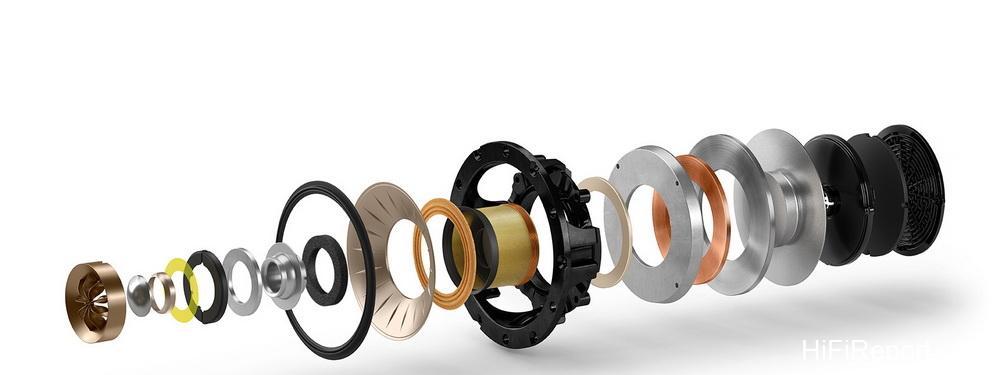
With such a long history of refinement, what specific improvements does this 12th generation Uni-Q Meta bring? First, the 5-inch aluminum mid-bass driver surround offers longer excursion. Second, shock-absorbing material is placed between the frame and the magnet assembly to prevent mutual interference from vibrations. Third, a copper ring (also known as a Faraday ring) has been added to the mid-bass driver’s magnet assembly.
This reduces inductance variations caused by voice coil movement, thereby lowering distortion. Fourth, absorbent material has been added to the gap between the 1-inch aluminum tweeter and the midrange. Fifth, the opening angle of the midrange diaphragm has been optimized to improve the dispersion of sound waves from the tweeter. Sixth, the tweeter dome has been refined. Seventh, the patented tangerine waveguide has also been improved.
Eighth, the addition of MAT absorbs 99% of the tweeter diaphragm backwave.
Enhanced Woofer Performance
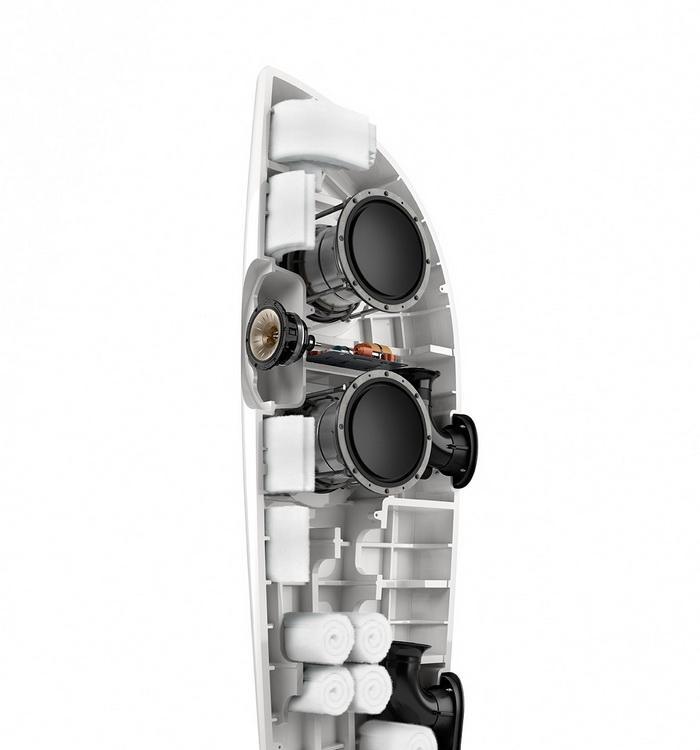
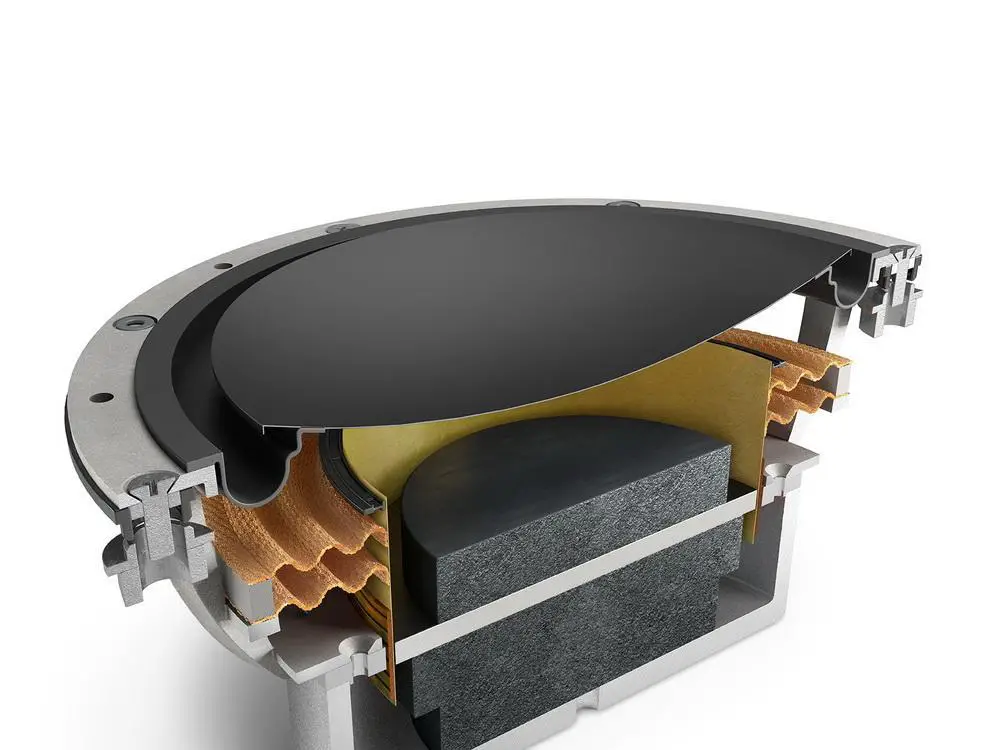
We’ve covered the many improvements to the Uni-Q driver. What about the bass drivers? First, damping material has been added between the diaphragm and voice coil. This allows the use of lower-slope crossover filters, whereas previously higher-slope filters were necessary. Second, airflow outlets have been created between the frame, voice coil, and diaphragm, allowing the backwave of the bass driver diaphragm to escape quickly. Additionally, the woofers are mounted back-to-back.
This cancels out the kinetic energy of the two drivers moving in opposition, reducing vibrations transmitted to the cabinet. It also helps create a more spherical sound dispersion. Through years of refinement to both the Uni-Q and the bass drivers, the Blade’s horizontal dispersion angle has reportedly expanded from 130 degrees to a remarkable 180 degrees. If actual measurements confirm this, it’s incredibly impressive.
The Blade Design Philosophy
Now that we’ve reviewed the crucial Meta technology and Uni-Q evolution, let’s return to the main subject, the Blade Two Meta. KEF began developing the first-generation Blade back in 2009, collaborating with New York design firm ECCO and designer Eric Chan. Its form was inspired by “Bird In Space,” a 1923 sculpture by the modernist sculptor Constantin Brancusi (1876-1957). Brancusi was Romanian but worked primarily in France and was also a painter and photographer.
While “Bird In Space” resembles a willow leaf, KEF named their speaker “Blade” and launched it in 2011.
Notably, KEF had only just showcased their iconic Muon flagship speaker (designed by the renowned Ross Lovegrove) at the Milan Furniture Fair in April 2007. The bold design and material choices seen in both Muon and Blade demonstrate that while KEF is a long-established speaker manufacturer, their products consistently innovate and embody a youthful spirit, with constant technological advancements within.
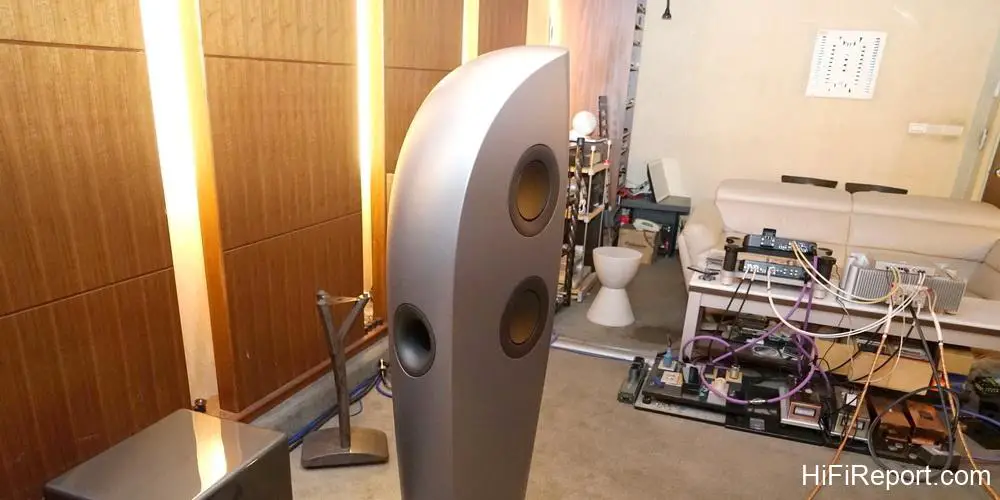
After many years since its initial launch, the Blade has finally been updated with the Meta technology. Observing the Blade Two Meta’s exterior reveals a highly streamlined cabinet constructed from composite materials. Frankly, this shape could not be achieved using traditional MDF or aluminum panels. The cabinet is likely formed by pouring composite material into two pre-made molds, with internal bracing ribs already in place during the molding process.
Once set, the two halves are bonded together. I attempted to find the seam up close, but due to the subdued lighting, it wasn’t visible.
The Blade Two Meta stands 1,461mm tall, is 338mm wide, and has a maximum depth of 475mm. There are no right angles anywhere, nor any parallel surfaces. Its flowing form is reminiscent of the traditional Taiwanese “Shihlin knife.” The widest part of the Blade Two Meta’s front panel perfectly accommodates the Uni-Q coaxial driver and its shallow waveguide. On each side are two 6.5-inch bass drivers.
These upper and lower pairs of woofers are mounted independently within the cabinet to prevent mutual interference. The two woofers on each side are mounted back-to-back and tightly coupled. This arrangement not only allows the woofers to cancel out the kinetic energy from their piston-like movement, reducing vibrational interference with the cabinet, but also helps create a more spherical sound dispersion.
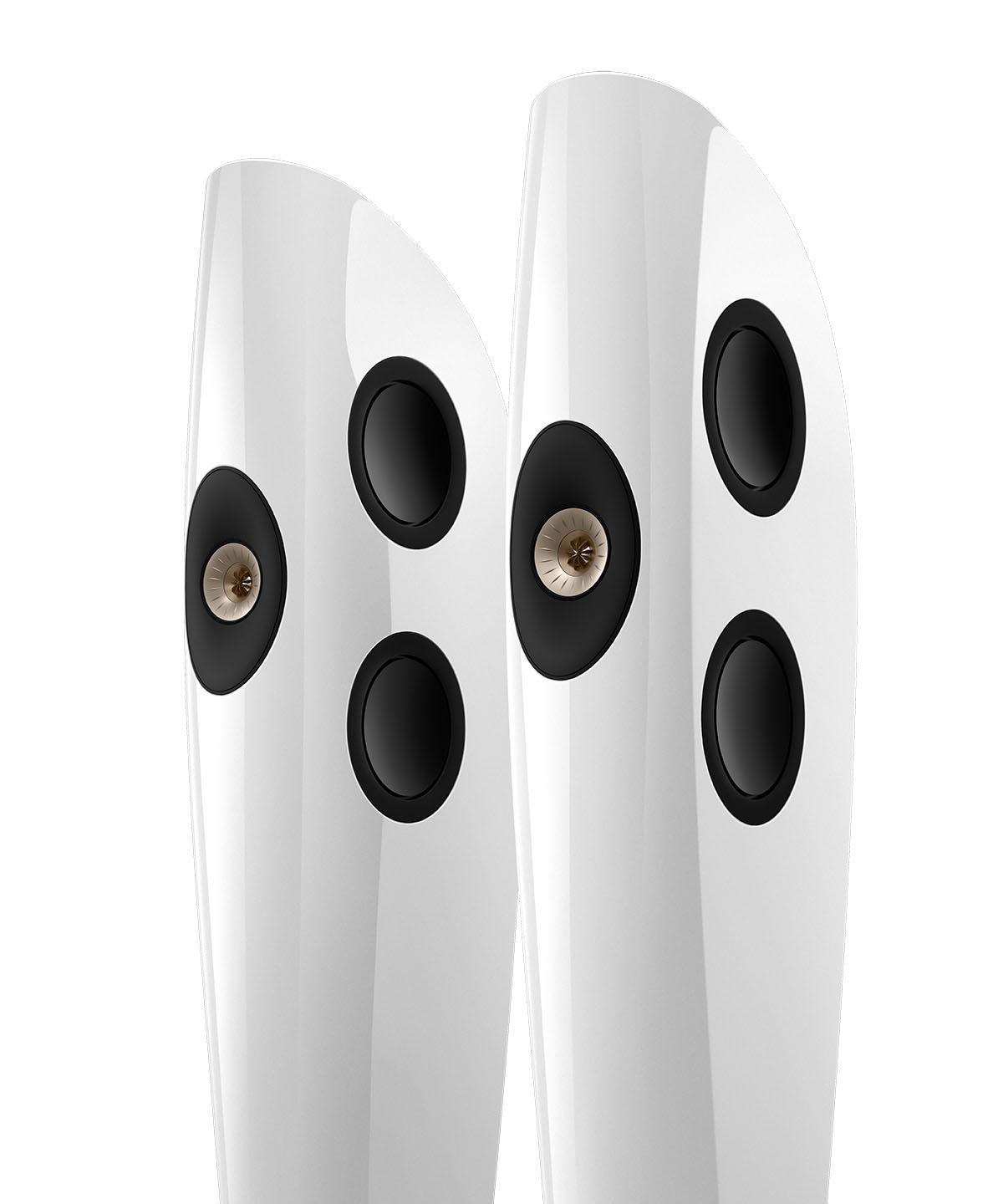
What are the advantages of this shape? In practice, one notices that the Blade’s physical presence seems to disappear within the soundstage, delivering excellent soundstaging – KEF’s concept of a “Single Apparent Source,” widely believed to be the world’s first pair of speakers achieving this. Generally, the larger Blade One is suitable for larger spaces, while the Blade Two is a better choice for smaller rooms.
The rear of the Blade Two Meta features two bass reflex ports, one above the other. The speaker terminals appear to have three sets for high, mid, and low frequencies, but the central set is actually a tightening screw. To bi-wire the speakers, this screw must be loosened; for standard single-wire connections, it should be kept tightened.
Setup and Listening Environment
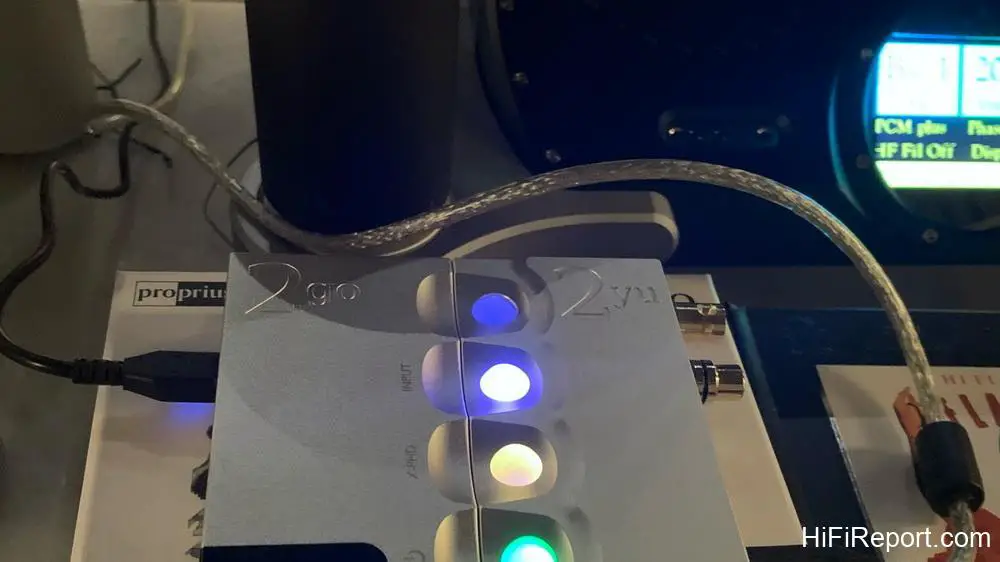
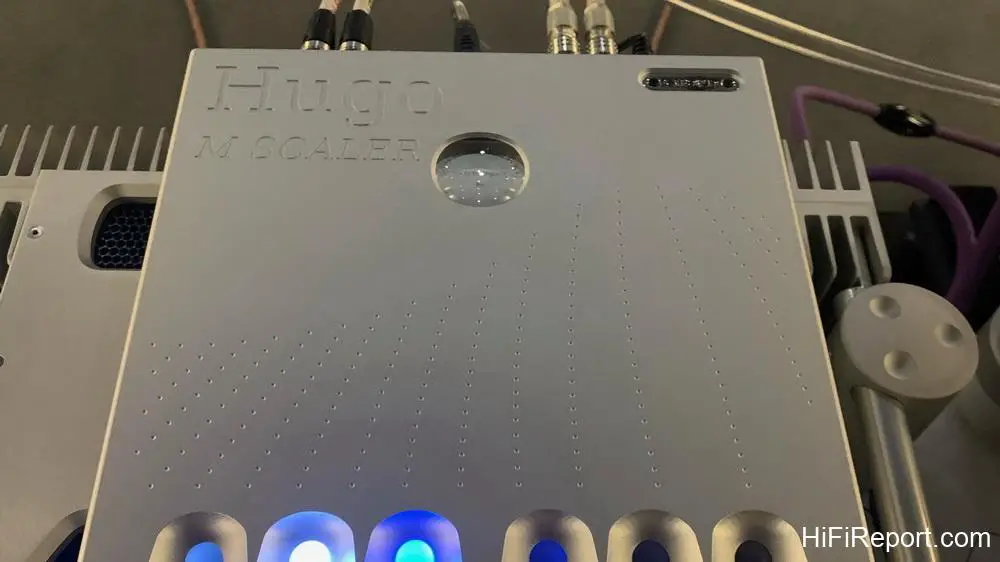
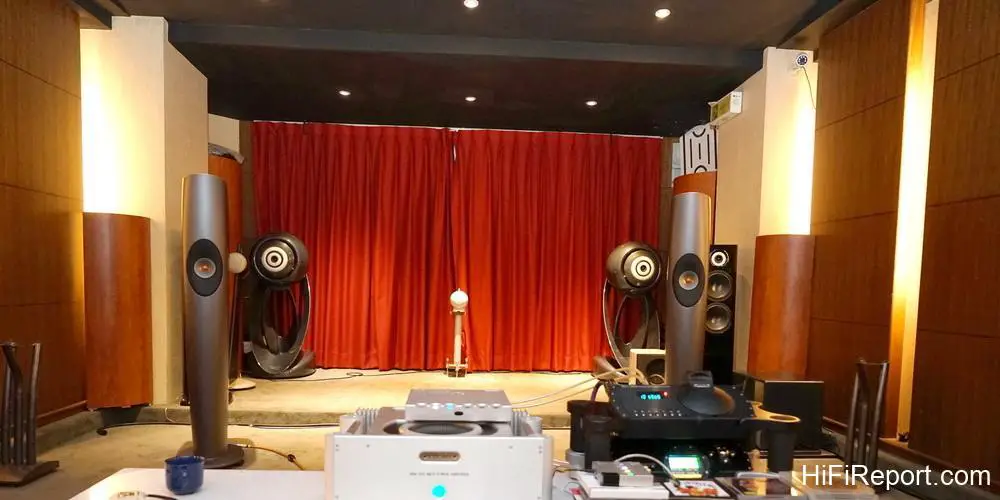
The audition took place in the basement listening room of Audiophile store in Taipei’s Minsheng East Road. The digital source chain consisted of a Chord Hugo 2 Go + 2Yu streamer paired with a Hugo M Scaler upsampler. The preamplifier was a Chord Dave (with built-in DAC), and the power amplifier was a Chord SPM 1050MK2, providing 200 watts per channel into 8 ohms. Listening was exclusively done via Tidal.
The basement listening room at Audiophile is spacious, measuring at least ten *ping* (approximately 33-35 square meters). It has a soft acoustic character with considerable absorption and diffusion elements, including curved diffusers. I’ve listened to equipment in this room several times and taken measurements; achieving such a balanced acoustic environment is genuinely difficult.
In other words, listening to equipment here almost always yields positive results, allowing the gear’s inherent qualities and sonic characteristics to fully shine without room-induced colorations.
I recall speakers usually being placed quite far forward in this room. This time, I measured the distance from the front edge of the speakers to the rear wall, finding it to be approximately 3.1 meters. This kind of distance from the rear wall is rarely possible in home environments but is crucial for preventing destructive cancellation in the 50-100Hz range caused by reflections from the wall behind the speakers.
A simple calculation for the cancellation frequency: 3.1 meters × 4 = 12.4 meters (the wavelength canceled out by the out-of-phase reflection).
344 meters (approximate speed of sound in air at room temperature) ÷ 12.4 meters = 27.74Hz. Actual measurements indeed showed a significant dip around 31Hz. However, this dip is largely irrelevant to the speaker itself, as the Blade Two Meta’s specified frequency response extends down to 33Hz ±3dB. Furthermore, true 31Hz extreme low frequencies are rarely present in music unless deliberately played on an organ or piano.
Thus, positioning the speakers 3.1 meters from the rear wall in this space offered only benefits, not drawbacks.
Auditioning the Sound
With everything ready, I began playing music, starting with a popular track: Lady Gaga’s “Hold My Hand” from “Top Gun Maverick.” I began at a relatively low volume. “Hmm?” I thought. “This seemingly ‘slender’ speaker can produce such powerful sound?” But this volume wasn’t enough for my testing standard, so I turned it up further. Indeed, the energy was abundant, full-bodied, bouncy, and dynamic, with plenty of raw impact – truly exhilarating to listen to.
I listened carefully and detected no distortion, breakup, or muddiness. This confirms that the Blade Two Meta’s Uni-Q coaxial driver and its four 6.5-inch bass drivers can handle very high volume levels. The specifications claim the Blade Two Meta can achieve sound pressure levels up to 116dB, which seems believable. Although the Blade Two Meta’s sensitivity is only 86dB, the Chord SPM 1050MK2’s output of 200 watts per channel should have no trouble driving the Blade Two Meta to its limits.
Specific Listening Examples
Next, I listened to Huang Xiao Hu’s “Priceless.” Her voice was familiar, and the Blade Two Meta reproduced it quite neutrally, which is a characteristic of KEF speakers. The thump of the kick drum and the sound of the bass were full-bodied and tightly controlled. Despite the large room, the Blade Two Meta managed to fill it with sound without sounding thin – quite impressive. Even more impressive was the soundstage presentation.
The Blade Two Meta truly melted into the environment, making its physical presence visually irrelevant, allowing me to focus solely on the precise positioning of instruments and vocals within the soundstage.
Following that, I listened to Terry Lin’s “Single Love Song.” Lin’s soaring, clear, and sweet voice floated through the space. The sweetness and luster were evident, with no dryness. The snare drum had significant weight and impact, and coupled with the tender yet virtuosic electric guitar playing, the music was highly emotionally engaging. Again, the kick drum and bass had ample body, exceeding expectations based on the Blade Two Meta’s willow leaf-like shape.
Then I played Sandy Lam’s “Li Xiang Lan.” Sandy Lam’s distinctive melancholic voice is easily recognizable, and the Blade Two Meta precisely positioned her voice in the center of the soundstage. The understated accompaniment of the cello and guitar was reproduced with excellent texture and timbre. From the vocal, cello, and guitar timbral presentation, I again felt the Blade Two Meta’s neutral characteristic: faithful and beautiful, but without an exaggerated sense of artificial glamour.
After listening to these initial tracks, I was already convinced of the Blade Two Meta’s “disappearing” ability, but I still wanted to test it with Yosi Horikawa’s “Bubbles.” This track sounds like numerous table tennis balls and other spheres of varying weight and density bouncing around in space, underpinned by electronic bass. It creates a wonderful sense of physical presence, localization, layering, and depth.
As expected, the Blade Two Meta again astonished me with its wide and deep soundstage, with layers pulled far apart and imaging exceptionally clear. Each bouncing table tennis ball or other sphere had a palpable sense of its physical presence bouncing around, while the Blade Two Meta’s physical form seemed to vanish into the air. From this track, it was very clear that the Blade Two Meta also excels in reproducing the physical presence of sound.
The Blade Two Meta’s sound is crisp but not aggressive. When I listened to Nils Lofgren Band’s “Drifftin’ Man,” the crisp steel-string guitar spread widely, and I could feel the crispness in the air, yet it was never aggressive or fatiguing on the ears. I believe this listening experience is related to the very low distortion of the drivers themselves.
The Blade Two Meta reproduced the violin with delicacy and expressiveness. The lines were full and round, not flat or thin. The violin tone was inwardly focused, not outwardly projected. You might say it wasn’t overly flamboyant, but it had plenty of moisture and sweetness and was highly listenable. When I heard Itzhak Perlman playing “Can You Hear Me” from the movie soundtrack “Yentl,” the violin sounded incredibly comfortable, without pressure.
It’s like comparing a dazzlingly beautiful woman to a subtly charming woman who improves with time – which one would you prefer? For me, I’d choose the latter.
Power Handling and Dynamics
The high, mid, and low-frequency ranges of the Blade Two Meta are well-balanced, something I noticed when listening to several pieces of chamber music. For instance, I listened to “5 Bagatelles” from the album “A Family Affair” by the Moreau family. This piece was performed by a quartet consisting of cellist Edgar Moreau and his siblings (two violinists, one pianist – three brothers and one sister).
The harmonies of the two violins were beautiful, the cello pizzicato was realistic, and the piano sounded natural. The four instruments created a beautifully balanced musical aesthetic, sweet, lustrous, and full of moisture.
When I listened to Vivaldi’s “The Four Seasons,” performed by Christian Li (born 2007) and the Melbourne Symphony Orchestra, the Blade Two Meta displayed excellent dynamics and musical vitality. Christian Li was only in his early teens when this recording was made, but you would never guess his age from the performance – he is truly a violin prodigy.
The recording is full of dynamic beauty and power, yet the Blade Two Meta didn’t make the music sound harsh or aggressive; instead, it left a lingering sense of sweetness and richness.
Next, I listened to Mendelssohn’s Symphony No. 3, conducted by Thomas Dausgaard with the Swedish Chamber Orchestra. This piece is also full of vitality and dynamic bounce. The Blade Two Meta’s four back-to-back bass drivers delivered powerful kinetic energy, driving the low frequencies of the entire orchestra with the force of a sports car engine.
Frankly, when I’ve listened to speakers like the LS50, which use only the Uni-Q driver, their low-frequency performance is naturally rolled off and simply cannot reproduce this level of energy, nor can they be played at such high volumes.
This is because a single Uni-Q driver, responsible for reproducing the full frequency range, has limits on its low-frequency handling capacity to avoid distortion. In contrast, the Blade Two Meta crosses over the lower midrange and bass frequencies below 450Hz to those four dedicated bass drivers. This significantly increases the Uni-Q’s capacity to handle frequencies above 450Hz, allowing the speaker to play loudly without strain.
Therefore, you can confidently turn up the volume when listening to orchestral music.
I also listened to Sibelius’ Symphony No. 3, conducted by Klus Makela with the Oslo Philharmonic. The elastic quality of the orchestral bass at the beginning of the first movement immediately highlighted the Blade Two Meta’s control in the low frequencies, as I heard a highly rhythmic and elastic bass foundation. The overall orchestral image was very wide, which is also achieved thanks to the solid bass energy providing a strong foundation.
Not only was the bass performance excellent, but the massed strings sounded substantial, not airy and thin. From the comprehensive performance on these two symphonies, I found that the Blade Two Meta not only excels with string sections but also handles brass and woodwinds with equal balance, reproducing their appropriate weight and instrumental texture. This truly demonstrates the outstanding performance of the Uni-Q coaxial driver.
Finally, I listened to “End of the War” from the “Curse of the Golden Flower” soundtrack, composed by Shigeru Umebayashi. The piece opens with deep, impactful bass drums and a mysterious male bass chorus. The shape of each drum hit was clearly discernible, full-bodied, coherent, and free of distortion. As the piece progressed, the drums seemed to get larger, and the pitch lower, but the Blade Two Meta handled it all with ease.
This shows just how capable those four drivers are – you don’t have to worry about what kind of music you play.
Conclusion: A Top Tier Speaker
KEF is a speaker manufacturer with a very high level of technical expertise, evident in their willingness to publish harmonic distortion data for their speakers. They not only manufacture excellent drivers but also boldly experiment with different materials and shapes for cabinet design. The Blade Two Meta is one such outstanding product.
While I couldn’t isolate precisely how much the Meta technology contributed during my listening session, the speaker’s overall excellent performance is an undeniable fact.
The KEF Blade Two Meta can perfectly complement any decorative style and perform optimally regardless of the room size. Especially notable is its ability to disappear into the air while playing music, never “getting in the way of listening” – a quality many speakers lack. If you have a high-end budget for speakers, the KEF Blade Two Meta should definitely be on your priority list.
Technical Specifications and Summary
Specifications
* **Product Type:** 3-way, 6-driver, bass-reflex floorstanding speaker
* **Launch Year:** 2022
* **Drivers:**
* Uni-Q Meta coaxial driver (1″ tweeter, 5″ midrange) × 1
* 6.5″ bass driver × 4
* **Frequency Response:** 33Hz-35kHz ±3dB
* **Crossover Frequencies:** 450Hz, 2.2kHz
* **Nominal Impedance:** 4 Ohms (minimum 3.2 Ohms)
* **Sensitivity:** 86dB
* **2nd & 3rd Harmonic Distortion (90dB/1M):**
* <0.5% (40Hz – 100kHz) * <0.2% (200Hz – 2kHz) * <0.1% (2kHz – 20kHz) * **Weight:** 35.3 kg * **Dimensions (WHD):** 338 × 1,461 × 475 mm *