
Bose Pro 2 Series Review
Facing a dynamic and demanding professional market, Bose Pro naturally needs to possess superior technical capabilities. Today, Bose Pro can meet the audio playback requirements for various scales and functional needs, from massive public address loudspeakers to miniature wall-mounted speakers – they have products for everything. Furthermore, they provide comprehensive solutions covering both hardware and software, making them a leading brand in the professional domain.
Given such robust technical prowess, it’s naturally a breeze for Bose Pro to satisfy home theater needs using its products, potentially even delivering performance that surpasses typical consumer-grade offerings. To allow Taiwanese consumers to recognize the advantages of Bose Pro’s products, the Taiwanese distributor specifically assembled a product series suitable for general home use and recommended it to us for review – this is the 2 Series.
Due to this background, you won’t find products if you search online for “Bose 2 Series.” The only place with coverage is our company’s Puru Audiovisual website, and we use the official brand name, which is Bose Professional.
However, the products within the 2 Series are indeed mature, well-developed designs created by Bose Pro. If you search using the detailed model numbers of these products, you can find the official webpages and complete information.
Components of the 2 Series
The 2 Series consists of five FreeSpace FS2SE small speakers and one Sub1 powered bass module. As they originate from the professional sector, their interfaces and features differ slightly from typical home products. Nevertheless, the distributor’s choice of these products is well-justified. For instance, the FS2SE is very compact and includes a complete wall-mount kit, saving significant space when mounted.
Similarly, the Sub1 subwoofer features a narrow front design, which also helps save space in a home environment and is less likely to obstruct movement.
Configuration and Home Theater Suitability
So, are these professional-grade speakers suitable for home use? The configuration of the 2 Series is indeed somewhat different from common home theater setups. In a typical home theater, many people use larger left and right speakers, sometimes even resorting to a “United Nations” mix of speaker brands, often with the center channel speaker looking distinct from the others, in order to accommodate music listening needs.
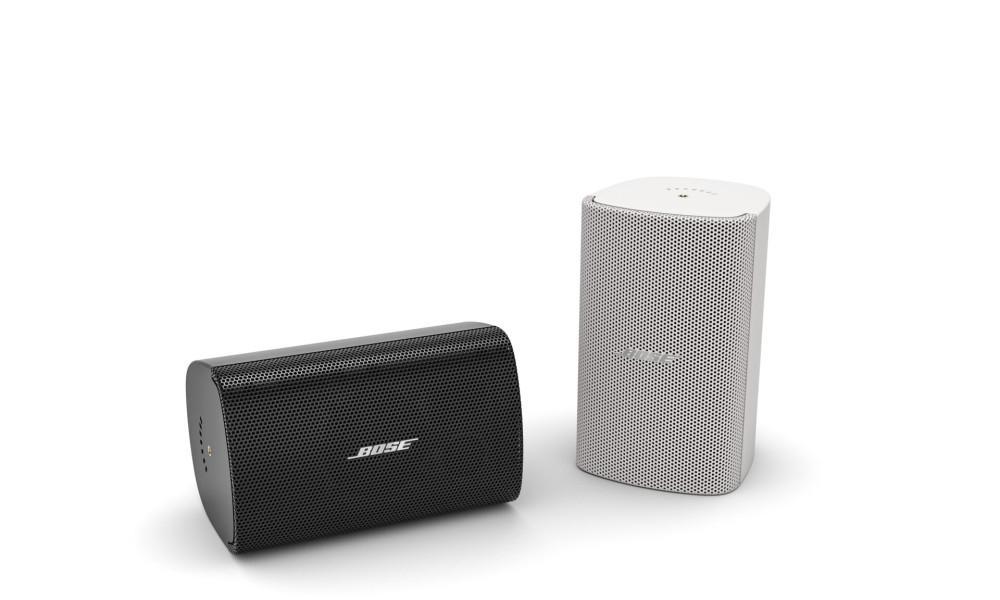
The 2 Series, however, is a combination of five identical satellite speakers plus a subwoofer. In fact, from a professional theater perspective, this configuration offers advantages in rendering theatrical sound effects.
Firstly, having five identical speakers (including the center channel) means their sound quality and timbre are completely consistent, achieving perfect multi-channel integration. Sound effects moving between speakers will not exhibit changes in quality or shape. This consistency provides excellent results in rendering the trajectory, size, and density of moving sound effects, as well as aspects like surround immersion and soundstage reproduction.
The advantage of a large subwoofer is even easier to understand: when reproducing action-packed movie sound effects, the ultra-low frequencies can deliver greater sound pressure, energy, and impact.
Acoustic Design
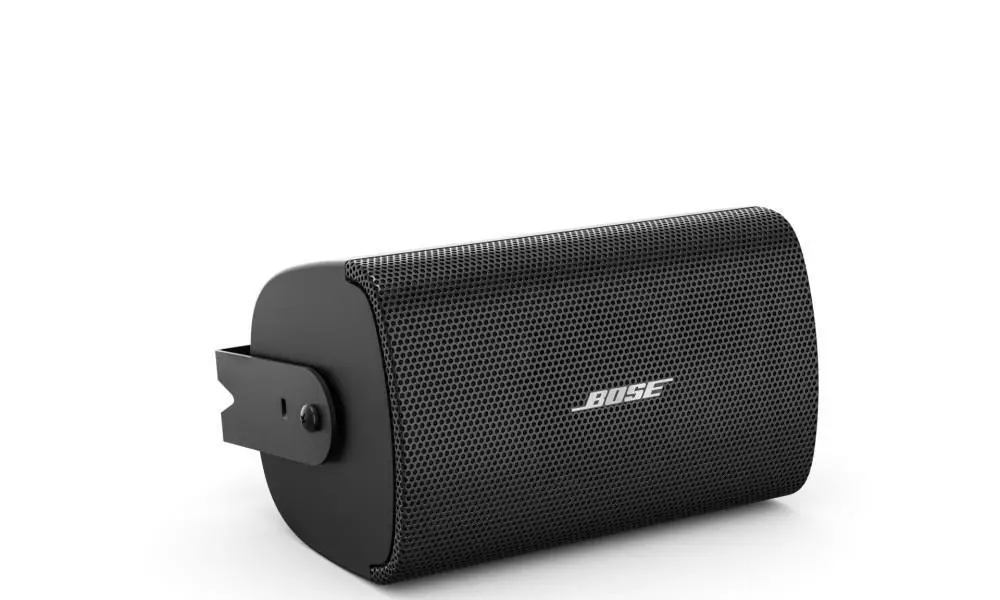
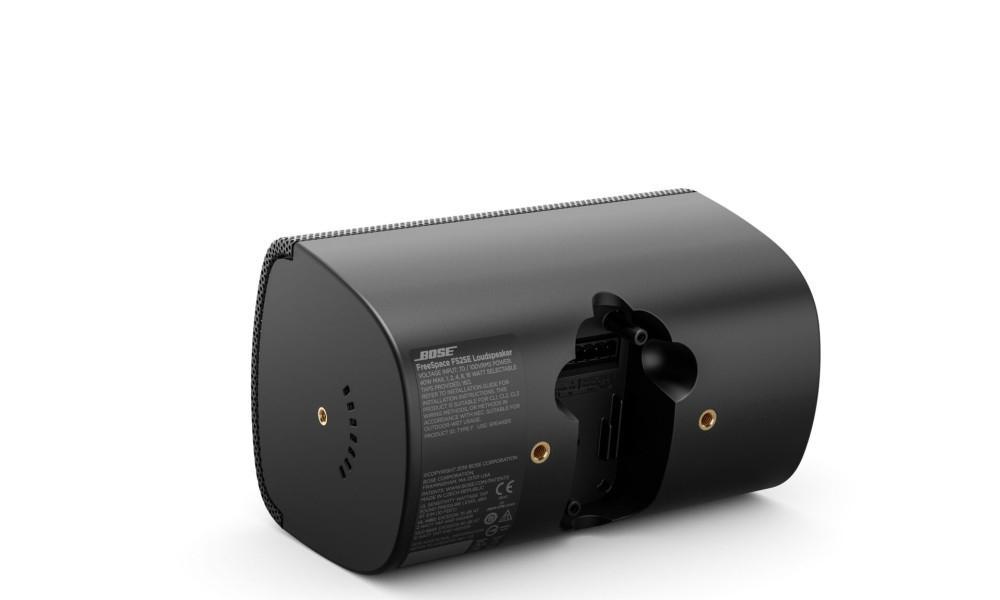
In terms of acoustic design, the small FS2SE speaker features a 2.25-inch full-range driver on its front. The manufacturer provides complete mounting brackets and accessories for both wall mounting and tabletop placement. While many wall-mounted speakers of this size exist, the FS2SE’s design is more sophisticated. It’s a “bass-reflex design,” incorporating a port within the cabinet to guide airflow.
This utilizes the back wave generated by the diaphragm’s movement to enhance the performance and extension of the bass frequencies – a technique commonly employed by Bose. If you remove the grille, you’ll see an opening in the top left corner of the diaphragm; this is the opening of the bass-reflex port, allowing its mid-bass extension to reach lower than comparable products.
Next, let’s look at the design of the Sub1 subwoofer. It features a 7×13-inch oval bass driver on its front. The driver is sizable, possesses long-throw characteristics, and has reinforcing structures on its surface to enhance diaphragm rigidity. According to Bose Pro, this design allows the Sub1 to achieve the low-frequency output capability of a traditional 12-inch subwoofer without requiring the latter’s bulky, square cabinet.
Inside the Sub 1, a 480-watt Class D amplifier drives the unit. Its low-frequency extension reaches 40Hz (-3dB). While not the absolute highest specification in the industry, don’t underestimate its low-frequency output power. The voice coil behind the diaphragm measures a full 2 inches, and the maximum sound pressure level can reach 118.6dB, with transient peaks even hitting 124.6dB.
Just looking at the specs, you know this is a powerful subwoofer, and this contributes significantly to the 2 Series’ key sonic characteristic.
As both of these speakers are derived from professional applications, they both feature daisy-chaining capabilities, allowing you to connect more satellite speakers or more subwoofers to create stronger sonic immersion and impact. However, if you purchase the 2 Series 5.1 package, you naturally won’t need these functions; a standard home theater receiver will suffice. For our review, we paired it with a Denon AVR-X4800H surround receiver to form a 5.1 system.
If you’re aiming for a Dolby Atmos setup, you can add more satellite speakers to create a 5.1.2 or other configurations; you can consult with the dealer for potential solutions.
Listening Impressions
Moving on to actual listening impressions, the most prominent characteristic of this system is its extremely powerful deep bass. The Sub1, after all, comes from the professional realm. Despite its slim design, its ultra-low frequency sound pressure and energy can easily overwhelm typical slim home subwoofers. However, because its output is so strong, it’s highly recommended to manually check the settings after automatic room correction to prevent excessive ultra-low frequencies.
While increasing the amount of deep bass is desirable when pursuing a theatrical sound effect, it’s still important not to let it become too unbalanced. If there’s too much deep bass, it can mask details in other frequency ranges, reducing overall richness. If you experience booming in the ultra-low frequencies, it might be a room-related issue. Moving the subwoofer away from corners or walls is recommended, as this can improve the effect.

Another point to note is the crossover frequency. I initially set it to 100Hz, meaning the subwoofer handled everything below 100Hz. The result felt like the subwoofer was slightly too prominent. However, because the satellite speakers’ low-frequency limit is only about 85Hz, there wasn’t much room for adjustment. I eventually lowered the crossover point to 90Hz.
Although it was only a 10Hz difference, it felt like a significant change; the proportion of bass became more appropriate, and details in the mid and high frequencies emerged more effortlessly.
Because the satellite speakers use only a single 2.25-inch full-range driver to handle all frequencies above 90Hz, they naturally lack the sonic thickness or spaciousness of larger speakers. Vocals can feel a bit tighter. However, when the full system is playing and reproducing action movie sound effects, this doesn’t feel like an issue. One reason is the successful bass-reflex design of the FS2SE.
If you remove the grille and play intense sound effects like gunshots, you’ll notice bursts of air energy shooting out from the front port. Even at a distance of 10cm, you can feel it being “blown” on. This strong energy dissipation naturally reflects in the sound. The second reason is the incredibly powerful ultra-low frequencies from the partnering Sub1. The resulting overall sound is highly impactful and never feels weak or insubstantial.
With proper adjustments, watching movies with this speaker system is incredibly enjoyable, especially the powerful ultra-low frequencies, which can easily shake the entire listening room. During testing, colleagues were constantly drawn in to see what speakers were producing the sound. What started as me testing alone eventually turned into a group viewing session.
What struck me most was the 4K movie “Midway” on Disney+. Any sound effects emphasizing the low-mid range felt incredibly fierce, such as the engine noise of fighter planes and the sounds of anti-aircraft cannons firing. They seemed to sound bigger than on ordinary systems. As a result, many sequences in the film became much more exciting.
For example, when bombers dived down towards the Japanese carriers, not only could you hear the powerful engine sounds, but you could also hear masses of anti-aircraft fire exploding or whizzing past your ears, making you feel as if you were charging towards the carrier amidst the battlefield – it really gets your blood pumping.
Furthermore, when fighter jets were tailing each other in evasive maneuvers, you could feel the engine sounds moving from side to side in the listening room with a huge sense of physical presence, accompanied by the intense sounds of machine gun fire and hits on the aircraft’s skin. It was all extremely thrilling.
Conclusion
In the past, when reviewing Bose speaker products, I often felt that the brand’s designs possessed the ability to “punch above their weight.” This review of the Bose Pro 2 Series gave me a similar feeling. The satellite speakers are not large, and paired with the slim subwoofer in a basic 5.1 configuration, they delivered a sense of power and impact comparable to a large theater system. Especially if used in typical Taiwanese listening spaces under eight ping (approx.
26 square meters), its sense of immersion, bass quantity, and sonic impact will feel very strong. Action movie sound effects, in particular, will be incredibly stimulating. Coupled with the space-saving design that doesn’t obstruct movement, it’s a highly effective choice. (End of article)
Key Features
* Satellite speakers can be wall-mounted or tabletop placed.
* Satellite speakers feature a bass-reflex design.
* All five satellite speakers are the same model.
* Satellite speakers are available in white and black options.
* Satellite speakers support various connection methods.
* Satellite speakers have IP55 protection rating.
* Powered subwoofer features a slim cabinet design.
* Sub1 subwoofer delivers powerful bass.
* Sub1 subwoofer features daisy-chaining capability.
Specifications
* **FS2SE Satellite Speaker**
* Design: Bass-reflex
* Driver: 2.25-inch full-range driver
* Frequency Response: 85Hz~19kHz
* Sensitivity: 84dB
* Maximum SPL at 1 meter: 96dB
* Power Handling: 16 watts (64 watts peak)
* Dimensions (without mount): 199×113×135mm
* Weight: 1.63 kg
* **Sub1 Powered Bass Module**
* Design: Powered
* Driver: 7×13-inch oval bass driver
* Frequency Response (-3dB): 40~180Hz
* Built-in Amplifier: Class D 480 watts
* Crossover Frequency: 200Hz
* Maximum SPL: 118.6dB (124.6dB peak)
* Connections: XLR and 0.25″ TRS input terminals ×2, XLR output terminals ×2, SubMatch Input, SubMatch Thruput
* Adjustment Functions: Bass output mode (2 settings), EQ (2 settings), Phase (3 settings)
* Dimensions (H.W.D.): 533×260×529mm
* Weight: 15.5 kg