
Chario Aviator Aria Speaker Review
Previously on HiFiReport, we’ve explored other models in Chario’s Aviator series, including the Ghibli bookshelf speakers, Amelia compact floorstanders, and Cielo mid-sized floorstanders. As you might have gathered from those reviews, the Aviator series draws its names from the world of aviation. Ghibli, for instance, was a renowned Italian military aircraft during World War II, Amelia honors Amelia Earhart, the pioneering aviator who first flew solo across the Atlantic, and Cielo is simply Italian for “sky.”
When we reviewed the Cielo, the Aria, the subject of this review, was still under wraps. The name “Cielo” (sky) might have led one to assume it was the Aviator flagship, the ultimate expression of the series. After all, what could be grander in the context of flight than the sky itself? However, the true top-of-the-line model has now emerged: the Aria, named for “air.” Without air, there is no sky, and certainly no flight.
Unique Driver Configuration
The Aria, befitting its flagship status within the Aviator range, takes cues from the esteemed Academy Serendipity, Chario’s ultimate statement speaker, albeit in a more approachable package.
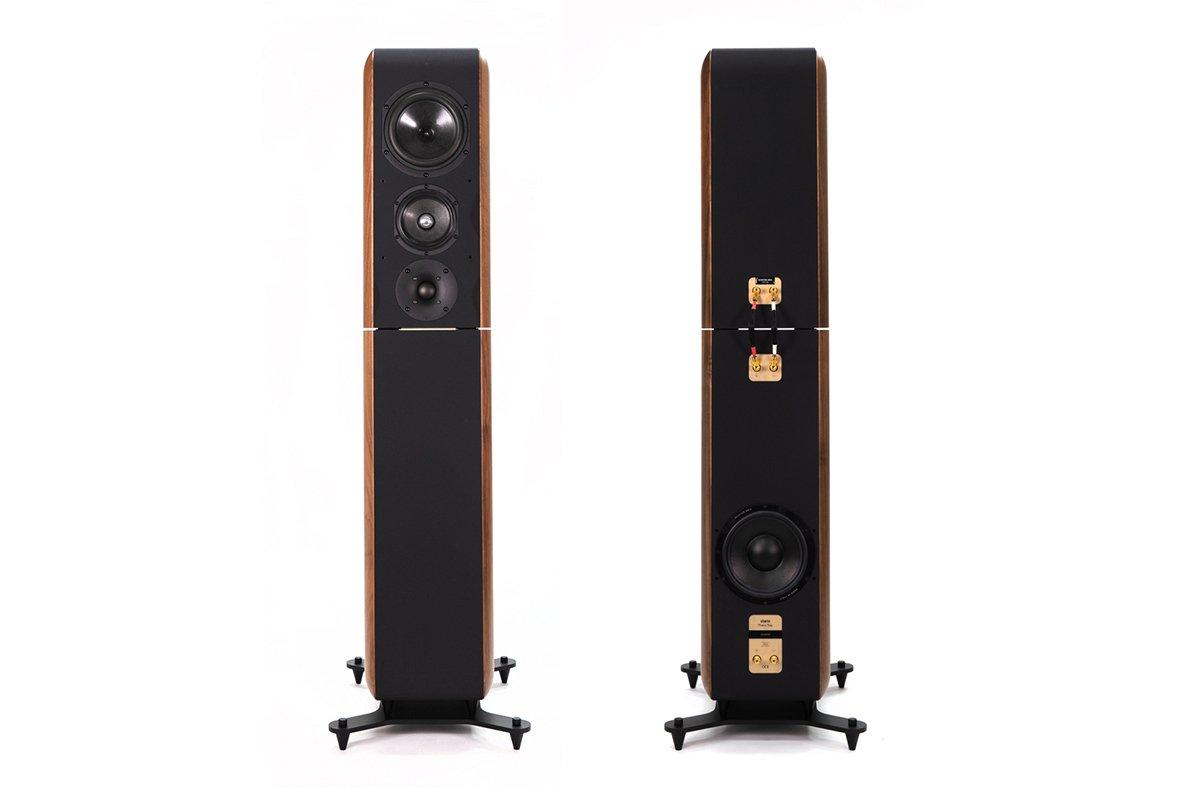
The Aria employs a sophisticated five-way configuration, with the cabinet ingeniously split into upper and lower sections. The upper section houses a complete three-way system, while the lower section manages the remaining two bass frequencies. Adding to the complexity, the cabinet construction differs significantly between the sections. The upper section is a sealed enclosure, while the lower section utilizes a bass-reflex design with downward-firing ports integrated into the cabinet base – a rather unique approach.
Let’s begin by examining the upper section.
The driver arrangement in the Aria’s upper cabinet adheres to Chario’s signature inverted configuration. The tweeter is positioned at the bottom, the midrange in the center, and the woofer at the top.
Does this unconventional layout compromise the soundstage, causing it to sound unnaturally low? Not at all. The Aria projects a remarkably accurate soundstage with precise image localization, avoiding any sense of imbalance or a grounded sonic perspective. In fact, I found the Aria’s soundstage, imaging, and localization to be exceptionally clear and defined, demonstrating the distinct advantages of Chario’s inverted array.
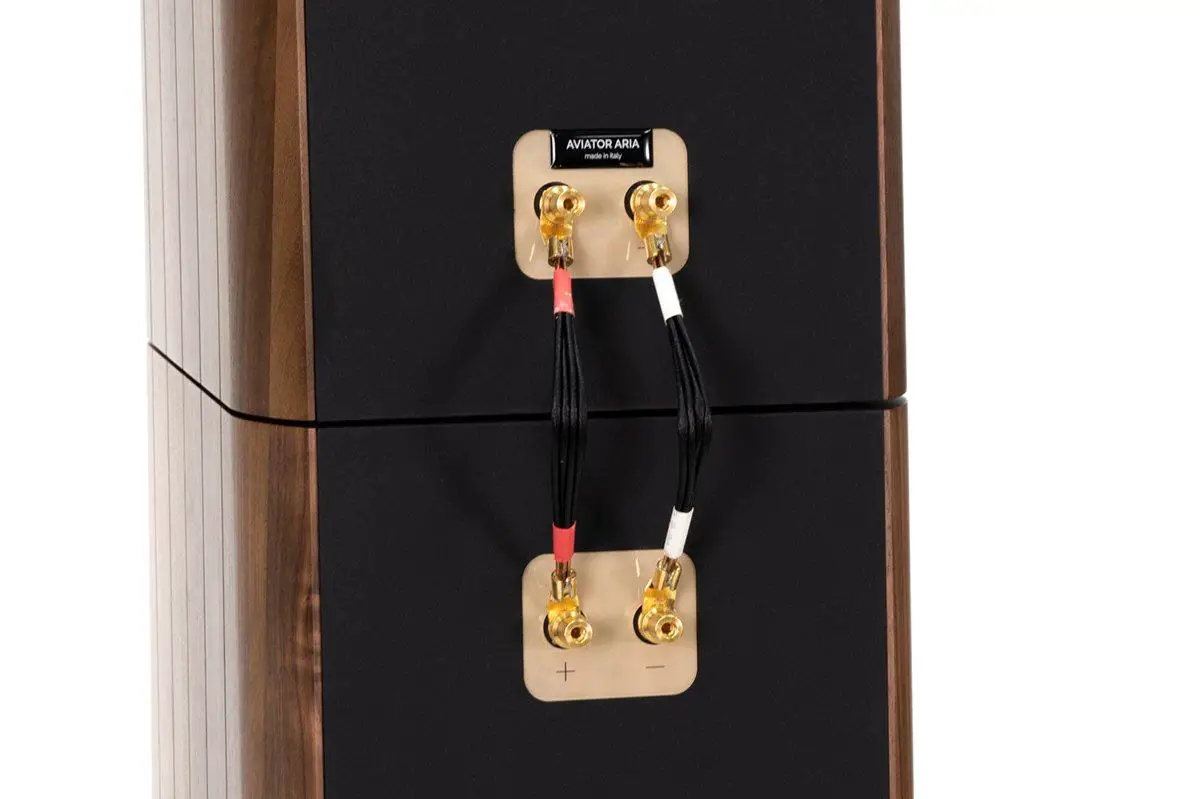
It’s worth noting that Chario recommends listeners position their ears at the height of the midrange driver axis, rather than the tweeter axis as is typical with most speakers. Therefore, with the Aria, there’s no need to consciously lower your listening position to align with the tweeter; normal seating is perfectly suitable.
The tweeter in the Aria is Chario’s custom-designed 38mm silk soft dome unit, designated T38. It incorporates a shallow waveguide faceplate which, in combination with its large diaphragm, facilitates a smoother downward frequency extension. This allows for a lower crossover point, moving it away from the ear’s most sensitive frequency range and contributing to a more seamless and natural sound.
For both the midrange and woofer, Chario utilizes Rohacell Full-Apex Poly-Ring cones, although their shapes differ considerably. The midrange cone exhibits a shallower profile and features a metal phase plug at its center, while the woofer cone has a steeper slope and a pointed, inward-curving dust cap without perforations.
This sophisticated driver technology is also found in the flagship Serendipity, highlighting its trickle-down lineage.
Designed for Room Integration
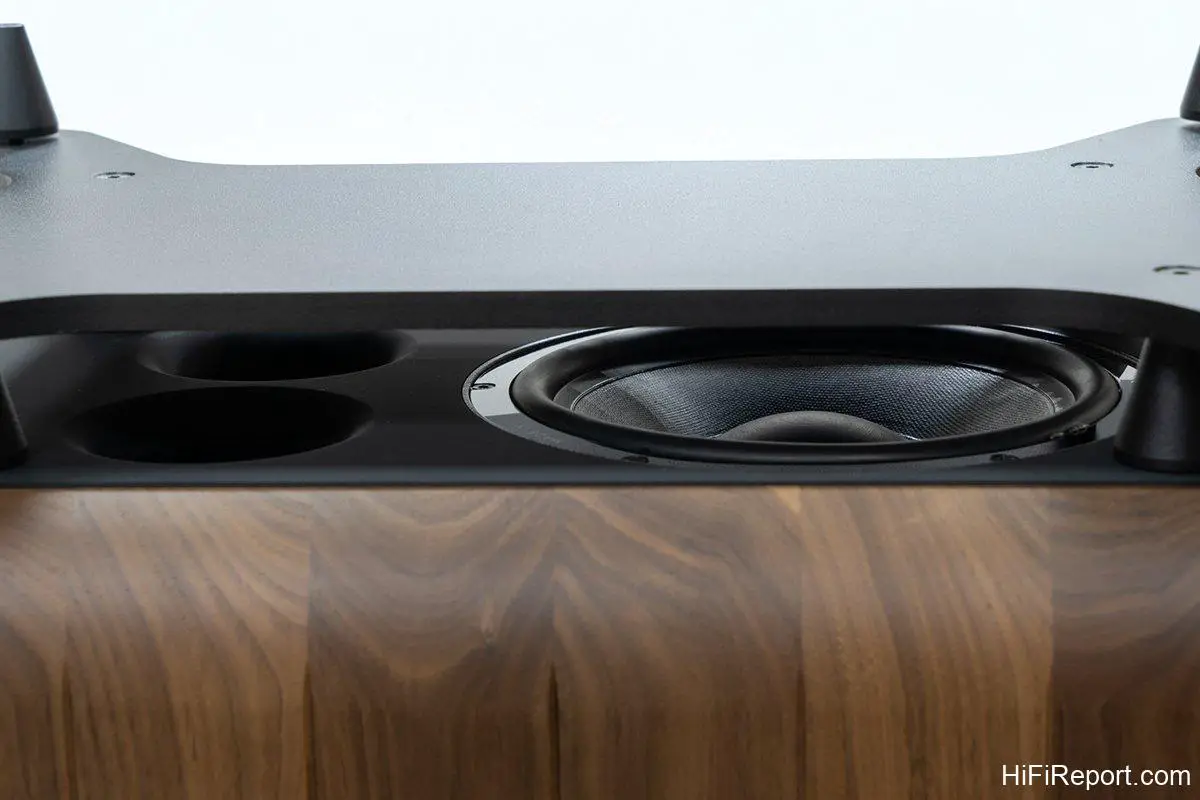
The Aria’s lower cabinet section is equipped with two 200mm sub-bass drivers. One is located on the rear of the cabinet, towards the lower center, firing backwards, while the other is positioned at the base, firing downwards.
These two sub-bass drivers operate in distinct frequency ranges, complementing the three-way upper section to create a comprehensive five-way system.
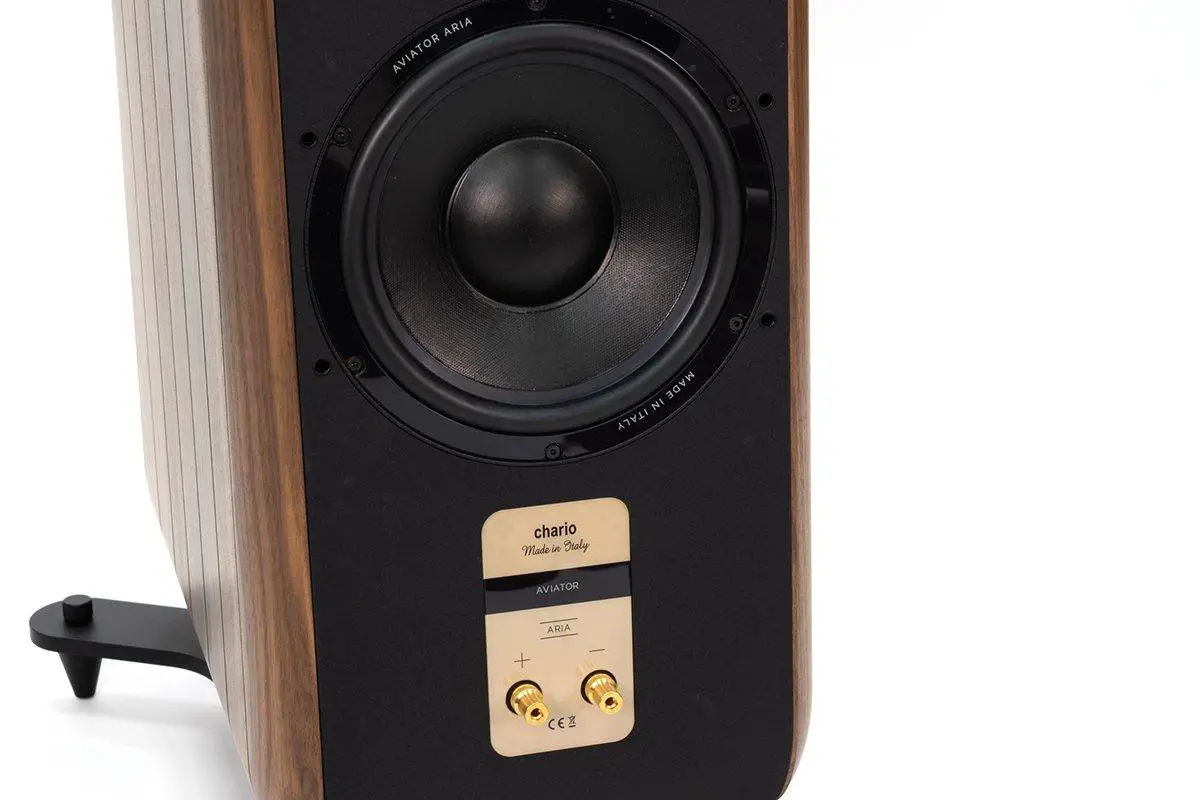
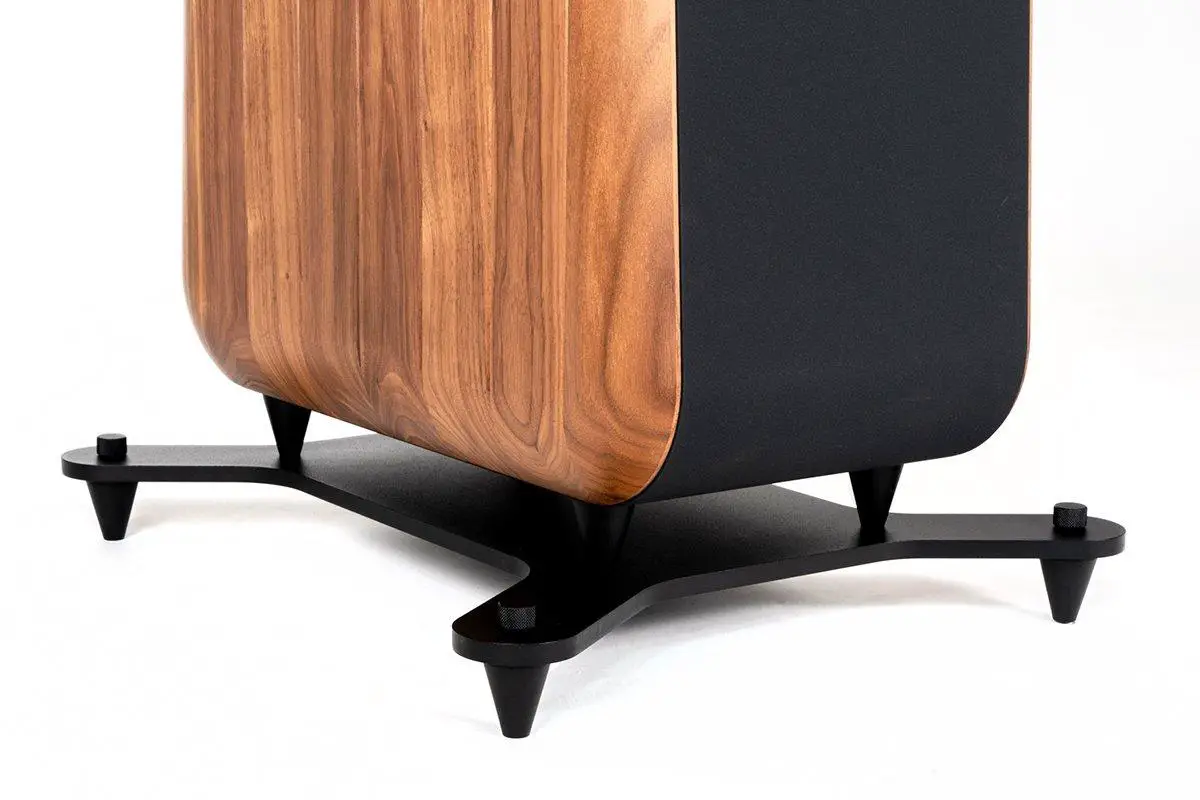
In addition to the downward-firing driver, the cabinet base also incorporates two bass-reflex ports, directing airflow downwards. To ensure unimpeded airflow, Chario provides a substantial steel plinth that can be attached to the cabinet base. This plinth, secured by four metal cones, elevates the speaker, creating the necessary space for air circulation.
Optional spikes can be fitted to the four corners of the steel plinth for enhanced floor coupling.
Alternatively, the Aria can be used without the steel plinth, resting directly on the floor via its four cones. In this configuration, the downward-directed airflow will interact with the floor surface, likely resulting in a different sonic character compared to using the plinth. Listeners are encouraged to experiment with both configurations to find their preference.
However, it’s important to note that without the plinth, the speaker’s footprint is reduced, making it potentially less stable and more susceptible to tipping, especially in households with children.
The lower section, with its downward-firing port, is a bass-reflex design, a unique feature emphasizing room integration.
Why this intricate design? In fact, this design philosophy extends throughout the Aviator series. Even the smallest two-way bookshelf speaker, the Ghibli, features a bottom-mounted bass-reflex port.

These elaborate design choices are intended to make the Aviator series highly adaptable to diverse listening environments, allowing the low frequencies to interact harmoniously with the room, rather than clashing and creating acoustic problems.
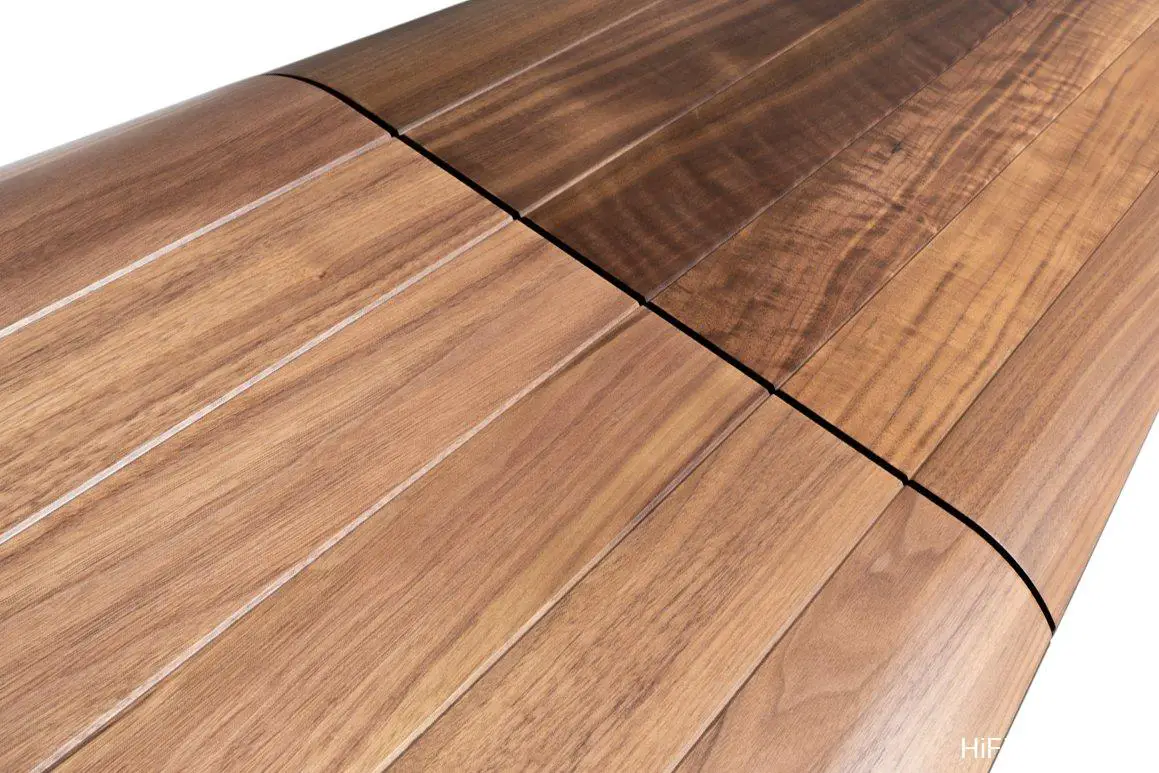
Furthermore, the Aria employs curved side panels and a cabinet devoid of sharp edges to minimize and control cabinet reflections. This approach ensures that listeners receive a greater proportion of direct sound, leading to more accurate sonic reproduction, precise imaging, and a well-defined soundstage.
Chario consistently emphasizes that even in untreated listening spaces, typical home environments, the Aria can effortlessly integrate and deliver an exceptional listening experience.
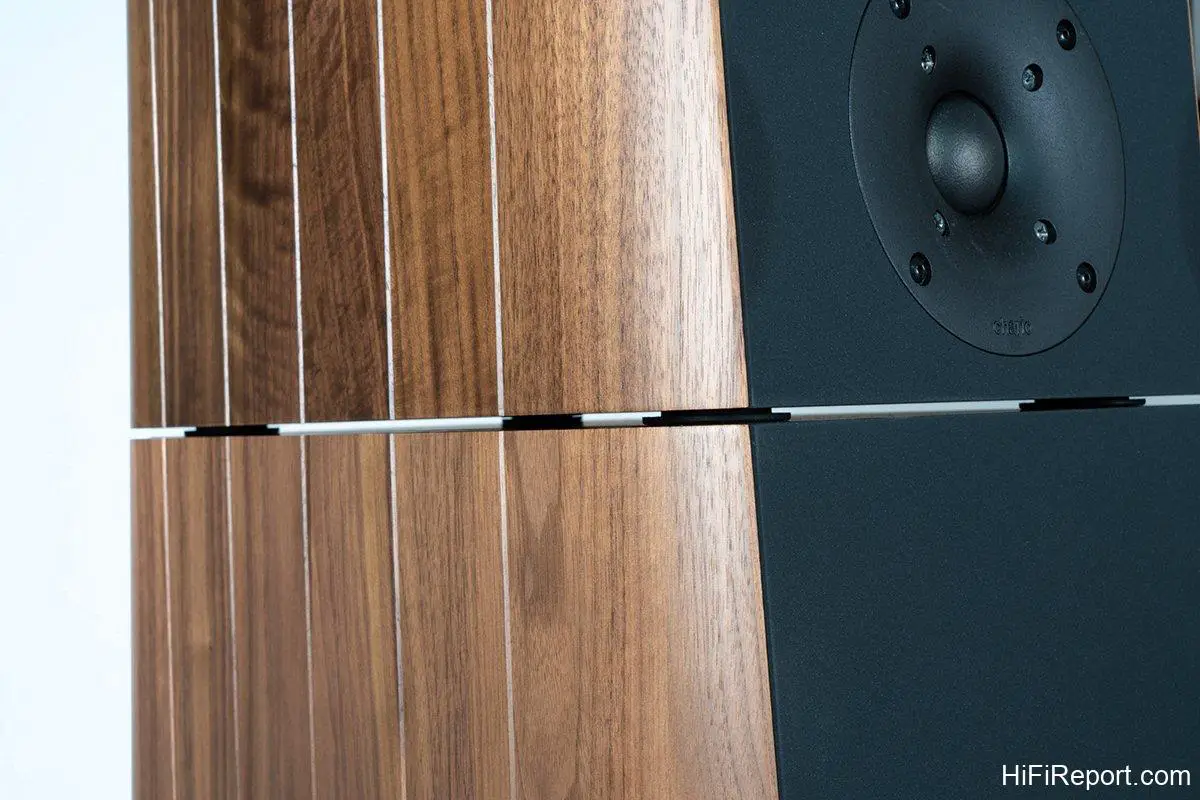
The Aria’s cabinet construction consists of a central HDF (High-Density Fiberboard) main structure flanked by solid wood side panels. The combination of HDF and solid wood results in an exceptionally rigid and inert cabinet.
The Aria exclusively utilizes Italian walnut solid wood, lending a warm, refined texture and an inviting aesthetic reminiscent of fine wooden furniture.
Balanced and Refined Sound
The listening evaluation was conducted in the HiFiReport listening room. Fortuitously, Norma Audio’s Revo SC-2 LN preamplifier and Revo PA-160 MR monoblock power amplifiers were on hand, alongside our reference North Star Design USB DAC32. This ensemble created a system with a distinctly Italian sonic signature.
The source was a Lumin U1 Mini streaming transport, used to play music files stored on a NAS (Network Attached Storage) device.
Even in our generously sized listening room, the Aria presented a substantial presence. Fortunately, Chario recommends a minimum listening distance of just 2.5 meters, making the Aria suitable for typical room sizes.
I began with familiar music, selecting Jennifer Warnes’ “Famous Blue Raincoat” album. The opening track, “First We Take Manhattan,” immediately captivated. This rock-infused track, with its driving rhythm, was rendered with enhanced vivacity and dynamism by the Aria. Each crisp “pah” of the snare drum rimshot was clean, articulate, and invigorating. The drum sound possessed clear impact, with precisely defined shape and location. The bassline was distinct and unambiguous.
Despite its considerable size, the Aria’s bass is not of the overly lush or bombastic variety. Instead, it is finely proportioned, refined and agile, fast and precise, yet capable of reaching deep into the lower registers. In essence, the Aria presents an exceptionally balanced frequency response, exuding a refined and sophisticated sonic character.
The saxophone in track 3, “Famous Blue Raincoat,” further showcased the Aria’s sonic finesse. The instrument’s sonic contours were not only clear and tight, possessing a realistic metallic texture, but also firm yet delicate, with a pleasing sheen. The timbre was elegant, beautiful, and even hinted at a touch of vividness.
Jennifer Warnes’ vocals were intensely engaging, her voice imbued with a palpable emotional depth that commanded attention.
Overall, the listening experience remained relaxed and effortless, characterized by a smooth, flowing texture devoid of any sense of strain.
The Aria, paired with Norma amplification, did not present a thick, weighty sound, but rather a pure, exquisite, light, and lively presentation, characterized by exceptional transparency, superb brilliance, and rich detail. The high-frequency performance was particularly noteworthy.
In the lower frequencies, the sense of pace was well-judged. While perhaps not delivering bone-jarring impact, the bass was clear, deep, and remarkably layered.
Rich Tonal Palette
The soundtrack to the film “” (The Great Buddha+) revealed the Aria’s exceptional ability to reproduce a rich tonal palette.
Track 1, “” (Secrets Under the Redwood Table), unfolded like a vivid sonic tapestry, showcasing a diverse range of timbres, including clean-toned guitar, delicate cymbal taps, crisp drum beats, muted guitar strums, high-register and low-register bass lines. The listening experience was truly captivating.
Track 5, “” (Having Difficulties), presented a clean-toned guitar on the right channel, a distorted guitar on the left, and electric bass centrally positioned. The distinct timbral characteristics of these three instruments were rendered with both realism and beauty through the Aria, highlighting its admirable timbral richness. Similarly, track 4, “” (Belly Button’s Friend), featured a classical guitar. The plucked nylon strings exhibited excellent density without sacrificing softness, and the brightness was just right – not dull or overly mellow. Each note was dynamically distinct, with exceptionally well-defined image outlines. The beautiful timbre was achieved without compromising precision.
Furthermore, the Aria’s low-frequency performance was surprisingly impressive.
The Aria’s cabinet configuration essentially functions as a 2.2 system, combining sealed three-way speakers with dedicated subwoofers. The bass was clean, articulate, and fast. Deep bass extension was remarkably natural and layered, with seamless integration between the upper and lower frequency ranges.
For instance, in “,” during “,” the bass notes exhibited excellent imaging and elasticity, sounding light, rounded, and possessing ample depth with effortless and natural downward extension.
Another example is track 13, “” (Existence), the end-credits song performed by film composer Lin Sheng-xiang. Following the brief, muffled “dong” of the bass drum kick, the Aria clearly reproduced the downward extension of the note, clean and distinct, as if effortlessly conveying this subtle, deep resonance. This underscores the unique effectiveness of the Aria’s low-frequency design.
Realism and Beauty Combined
Listening to string music through the Aria, powered by Norma amplification, is a true audiophile delight. For example, playing “The Piazzolla Project” by the Artemis Quartet and pianist Jacques Ammon, the strings possessed a touch more sheen than strictly neutral, but it wasn’t simply a glossy smoothness. There was also a hint of viscous texture and a sweet, nasal resonance. The result was a sound that was both convincingly real and undeniably beautiful, utterly captivating.
Moreover, the Aria balanced this inherent smoothness with a clear sense of dynamic energy, ensuring that when the tango music became passionate and intense, it was conveyed with ample tension and drive. The sound quality remained tight and controlled, with no shortage of urgency or dynamism, avoiding any sense of softness or limpness that would only be suitable for background listening.
Without this dynamic tension, the essence of tango would be significantly diminished.
Additionally, I noted that instrumental localization was consistently precise and clear, the imaging was sharp and well-defined, and the overall sonic picture was highly engaging and vivid.
Does the Aria maintain its refined composure when pushed to higher volumes? Playing the energetic dance sequence from track 1 of the “La La Land” soundtrack, the Aria’s tall stature shaped the soundstage into a well-proportioned, columnar form, with distinct upper, middle, and lower registers, and clearly delineated highs, mids, and lows, free from any muddiness or congestion. In previous listening experiences with this track on other systems, I often encountered an overly prominent lower end, a triangular soundstage, and bass that was difficult to control. However, the Aria exhibited none of these issues. Its bass prioritized quality over quantity, with excellent imaging, tight pacing, and rich layering, never sounding loose or uncontrolled.
Another notable strength of the Aria is its lively and engaging character. For instance, when playing track 4, “A Lovely Night,” the duet between the male and female leads, the Aria’s rich detail and gentle nature clearly conveyed the vocal nuances of both singers. Sibilance and plosives were rendered naturally and appropriately, resulting in a relaxed and comfortable yet engaging listening experience. The music was full of energy and rhythmic drive, perfectly capturing the atmosphere of the movie scene.
In short, the Aria possesses the scale and well-defined structure of a large speaker while retaining the agility and liveliness often associated with smaller designs – a rare and commendable combination.
Finally, listening to Pletnev conducting the Russian National Orchestra in Shchedrin’s Carmen Suite, the subtle, low-frequency string texture in the 1 minute and 40 second “Introduction” track, when reproduced by the Aria, was not particularly weighty, but remarkably clear, demonstrating the speaker’s exceptional low-frequency resolution.
When the climax of track 2, “Dance,” arrived, the Aria revealed a superb 3D soundstage structure, layered, organized, and completely free from any muddiness or ambiguity. The only minor reservation was that the sound could perhaps benefit from a touch more grandeur and weight to further enhance the authority of the symphony orchestra, which would elevate the performance to an even higher level of perfection.
However, I believe this aspect could be fine-tuned through careful system matching, presenting no significant obstacle.
An Elegant Addition to Your Home
The Aria, while appearing substantial, is ultimately a refined and elegant speaker, particularly when paired with equally sophisticated Italian electronics from Norma Audio. The resulting sound is pure, exquisite, transparent, and beautiful, with a captivating sheen, leaving a lasting impression.
Despite its size, the Aria is remarkably amplifier-friendly and adaptable to various listening spaces, without exhibiting any of the problematic low-frequency behavior often associated with larger speakers.
Even better, its natural and understated wood finish will seamlessly complement your home décor, adding a touch of warmth and sophistication, becoming an integral part of your living space.
Specifications
* Type: 5-driver, 5-way floorstanding speaker
* Drivers: 38 mm T38 silk soft dome tweeter × 1, 165 mm Rohacell midrange × 1, 165 mm Rohacell woofer × 1, 200 mm Nat-Fiber sub-bass driver × 2
* Sensitivity: 95 dB
* Recommended Amplifier Power: Up to 250 watts / 4 ohms
* Impedance: 4 ohms
* Dimensions: 1,427 × 270 × 500 mm (H×W×D)
* Weight: 80 kg / each