
Dali Kore Speaker Review
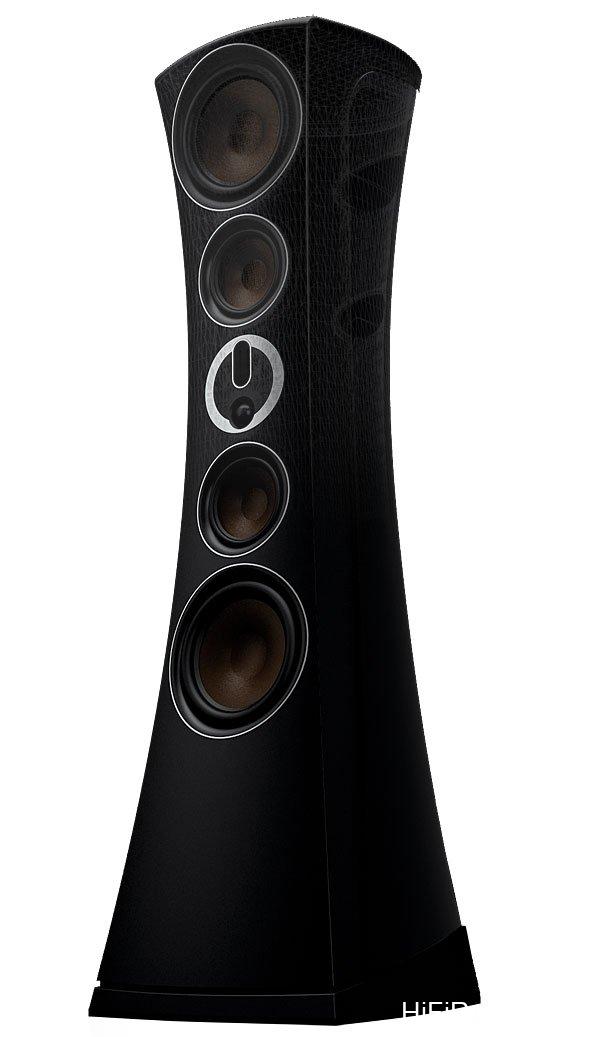
For years, Dali has been considered an “affordable Hi-End” brand, catering to a wide range of consumers and audiophiles in the mid-to-high price range and below. However, with the release of their new flagship speaker, the Kore, last year, the price tag has multiplied several times compared to the previous flagship, the Epicon 8. It has significantly surpassed the “affordable” level and entered the realm of high-priced High-End audio.
This naturally leads one to wonder if Dali is attempting to showcase their top-tier research and development capabilities by launching an ultra-high-priced product.
Based on my extensive experience listening to Dali speakers across various levels over the years, coupled with my recent audition of the Kore at HiFiReport, I can confidently say that Dali has consistently been a leader in its class, and their prowess is self-evident.
40 Years of Technological Prowess
Founded in 1983, Dali is celebrating its 40th anniversary this year. According to Dali, the Kore represents the pinnacle of their 40 years of speaker design and manufacturing expertise.
So, did the Kore emerge out of thin air? Of course not.
The Kore is a culmination of all the technologies and experiences Dali has accumulated over the past 40 years in designing and manufacturing speakers. It is presented through the Kore at the most opportune moment – their 40th-anniversary celebration.
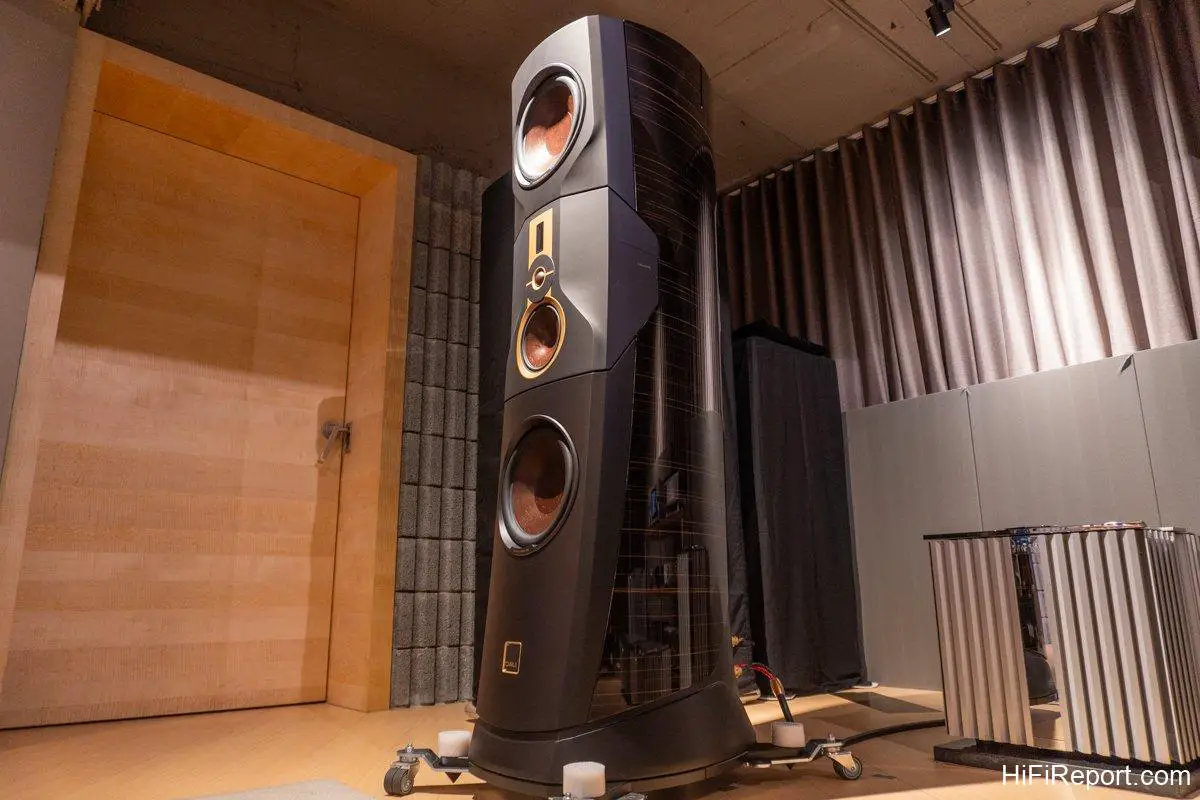
In fact, the origin of the Kore can be traced back to the Eminent ME9 speaker, conceived by Dali in 2008. The Eminent ME9 was a large speaker with a distinctive funnel-shaped design, featuring two woofers, two midranges, and a hybrid tweeter combining a soft dome and a planar diaphragm, arranged symmetrically in an MTM configuration.
Dali had already created a prototype of the Eminent ME9 by 2011, but the financial crisis that began in 2008 was still causing significant instability, leading Dali to temporarily shelve the project.
The Kore draws inspiration from the industrial design concept of the Eminent ME9 speaker, incorporating more ideas and technologies, and has seen substantial investment.
For instance, Dali invested in computer-controlled 5-axis CNC equipment to achieve more precise machining. They also acquired painting robots, which are not only more environmentally compliant but also enable the Kore to boast a higher quality and more aesthetically pleasing finish. Dali even directly invested in a long-established, renowned Danish furniture manufacturer, which is responsible for crafting the Kore’s beautifully curved cabinet.
Furthermore, component and material suppliers are all based in Denmark, ensuring excellent supply quality, reliable delivery times, and smooth communication.
8 Design Principles
Based on acoustics, electro-acoustic principles, and manufacturing considerations, Dali adheres to 8 design principles, which can also be seen as 8 goals or conditions that all Dali speakers must meet and possess.
What are these 8 principles? Here’s a simplified list:
* **Individual Assembly:** Each pair of speakers is assembled and tested from start to finish by a single, experienced, and highly skilled technician.
* **Low Loss:** From signal input to sound output, minimizing loss is paramount. This is considered in every aspect of design, from the bass reflex port, cones, surrounds, spiders, voice coils to the magnetic circuit system.
* **Realistic Soundstage and Imaging:** Reproducing a believable and immersive soundstage with accurate instrument placement.
* **Time Coherence:** Ensuring that sound waves from all drivers reach the listening position simultaneously.
* **Wide Dispersion:** Achieving broad sound dispersion and smooth off-axis frequency response.
* **Clarity:** Ensuring excellent driver integration, seamless frequency response, and low phase shift for maximum clarity.
* **Low Cabinet Resonance:** Minimizing cabinet resonance, as high resonance can dissipate energy and introduce coloration.
* **Amplifier Friendliness:** Designing speakers to be an easy load for amplifiers, with linear impedance characteristics to ensure stable operation.
The Kore aims to achieve these 8 goals as well. Let’s delve into the specific implementations Dali has made for it.
Balanced Drive – Dual Voice Coil Technology
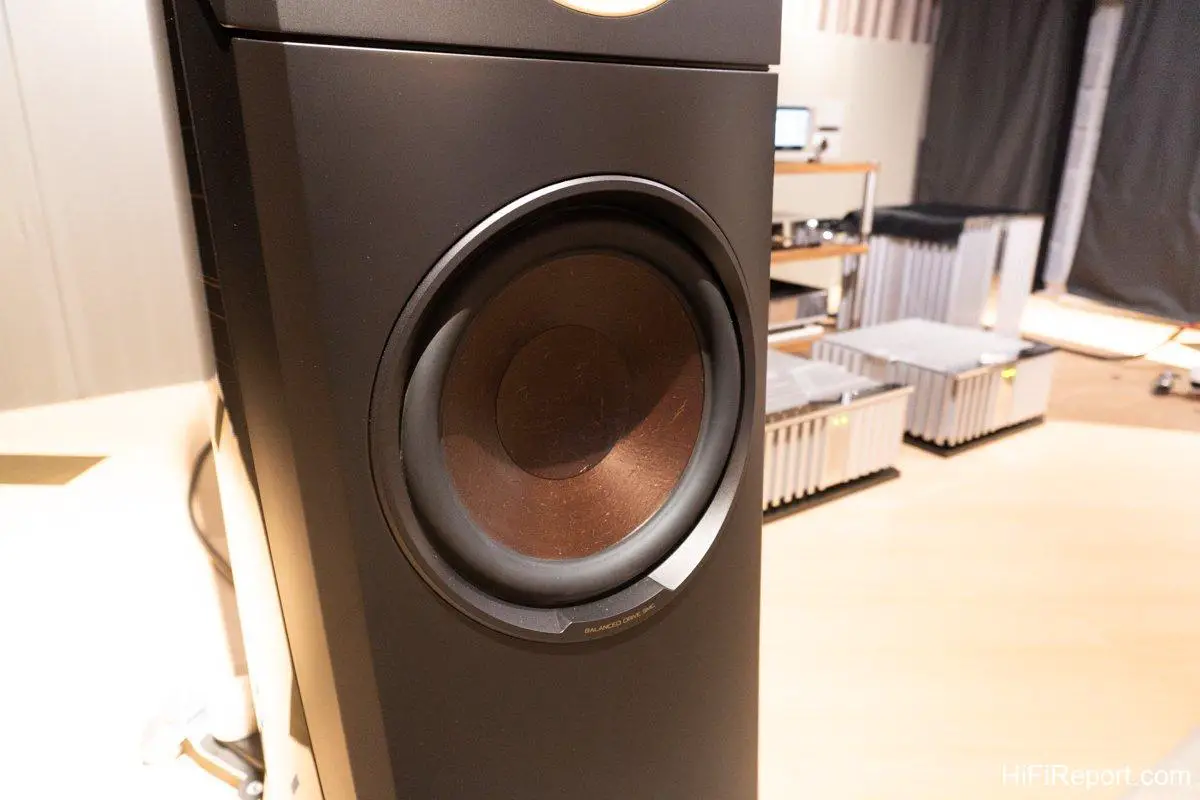
Starting with the drivers, all the drivers used in the Kore are brand new designs, developed specifically for this model. Notably, both the 7-inch midrange driver and the 11.5-inch woofer incorporate Dali’s acclaimed Balanced Drive SMC technology.
Balanced Drive SMC is essentially a combination of two technologies – Balanced Drive and SMC – integrated within a single driver, addressing two distinct issues: non-linearity in the voice coil system’s motion and signal loss in the magnet system.
Let’s first discuss Balanced Drive – dual voice coil technology.
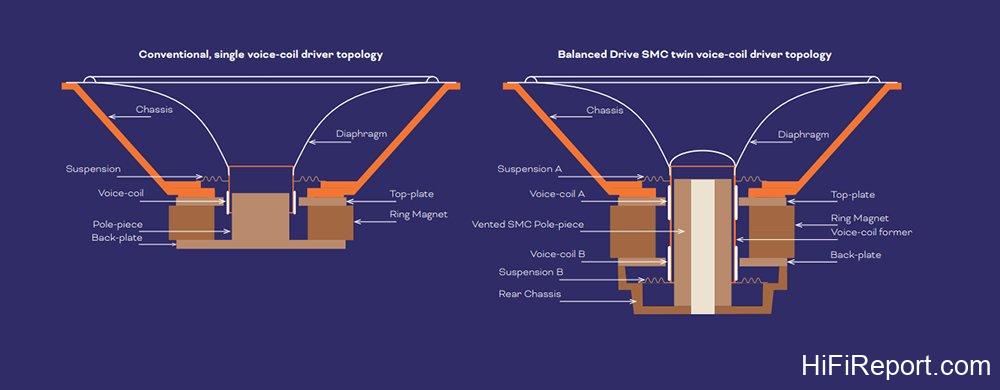
While the concept of dual voice coil balanced drive is not new, dating back to the 1970s, its adoption has been limited due to patent protection and technical complexities. Now that the patent has expired and with Dali’s utilization of computer-aided design and advanced manufacturing techniques, they have successfully created dual voice coil balanced drive drivers for the Kore. The advantage is a significant reduction in distortion, particularly odd-order harmonic distortion, and a decrease in dynamic compression.
A traditional single voice coil driver (left) versus Dali’s dual voice coil balanced drive driver (right), featuring dual voice coils, dual spiders, and dual pole pieces.
In a conventional single voice coil design, as the volume increases and the voice coil approaches its excursion limits, i.e., the edge of the pole piece’s magnetic field, distortion increases.
In contrast, the dual voice coil design places one voice coil in front and the other behind, with corresponding pole pieces positioned front and rear. As one voice coil moves inward into the magnetic field, the other moves outward, counteracting directional non-linearity. This significantly reduces distortion.
Furthermore, dual voice coils effectively mitigate the impact of power compression. During vigorous voice coil motion, high temperatures are generated, increasing resistance and leading to power compression. Dual voice coils effectively alleviate this issue.
Thanks to Balanced Drive, the Kore’s woofer boasts an impressive ±10mm linear excursion, resulting in lower odd-order distortion and no dynamic compression when reproducing large dynamic swings and extremely low frequencies.
While the Kore’s midrange driver doesn’t require such large excursions as the woofer, it still benefits from low distortion and reduced dynamic compression. It also boasts exceptional sensitivity and is easily driven, contributing to more accurate sound reproduction.
SMC – Soft Magnetic Compound
SMC stands for Soft Magnetic Compound. To understand SMC, one must first understand hysteresis. Hysteresis refers to the phenomenon where a highly magnetically permeable metal, when placed in an alternating magnetic field that constantly changes direction and frequency, undergoes continuous magnetization and demagnetization, causing magnetic flux changes and energy loss resulting in heat generation.
In speaker drivers, the pole piece is typically made of magnetic metal, often iron-containing materials, for high magnetic permeability. However, this inevitably leads to hysteresis effects, causing energy (signal) loss, heat generation, and distortion as magnetic flux changes with frequency.
Dali ingeniously utilizes SMC soft magnetic compound to construct the pole piece. SMC possesses high magnetic permeability to carry magnetic flux but extremely low electrical conductivity, approximately one ten-thousandth that of iron. Its hysteresis loss is very low, generating minimal heat, and magnetic flux remains stable regardless of the voice coil’s AC frequency, resulting in low distortion.
SMC is a granular material that can be molded into desired shapes, making it suitable for pole piece fabrication.
Dali began developing SMC with the Epicon series in 2012. It is now in its second generation, Gen-2, used in the Kore. Gen-2 SMC has 2.5 times lower electrical conductivity than the first generation, further reducing hysteresis, loss, and distortion.
Dedicated Enclosures for Dual Woofers
The Kore incorporates two 11.5-inch Balanced Drive SMC woofers, featuring a wide 60.7mm voice coil diameter for excellent control.
The cone material is Dali’s signature wood fiber, combined with a honeycomb structure layer to form a sandwich cone, balancing lightweight properties with high rigidity and appropriate damping characteristics.
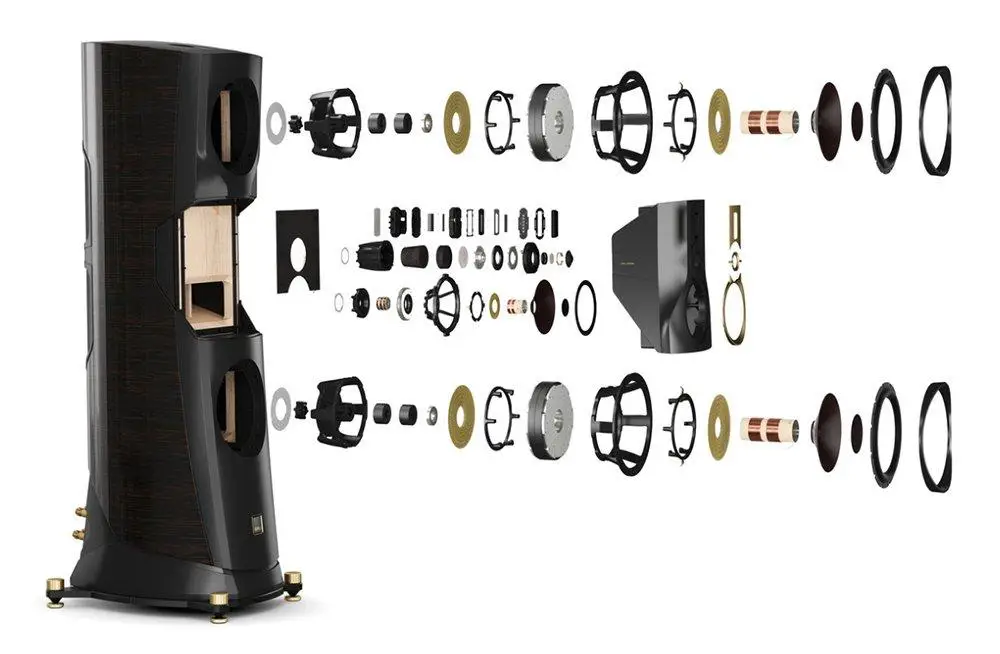
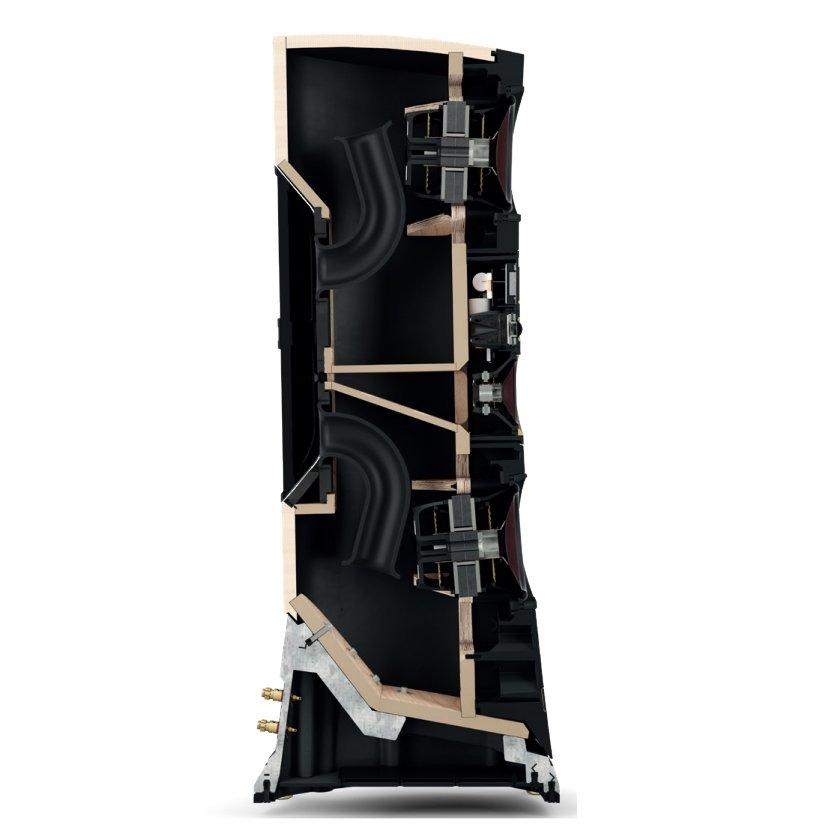
The two woofers are positioned on the upper and lower sections of the cabinet, each with its own independent enclosure and bass reflex port.
The bass reflex ports are integrally molded to reduce resonance, with enlarged flared openings at both the inlet and outlet to ensure smooth airflow and minimize turbulence noise.
Notably, the crossover frequencies for these two woofers are not identical. The upper woofer’s crossover point is slightly lower than the bottom one, creating a phase difference between them. This is designed to control vertical sound dispersion, preventing the upper woofer’s output from radiating towards the floor and instead directing it towards the listening area.
Midrange Driver with Intentionally Small Surround
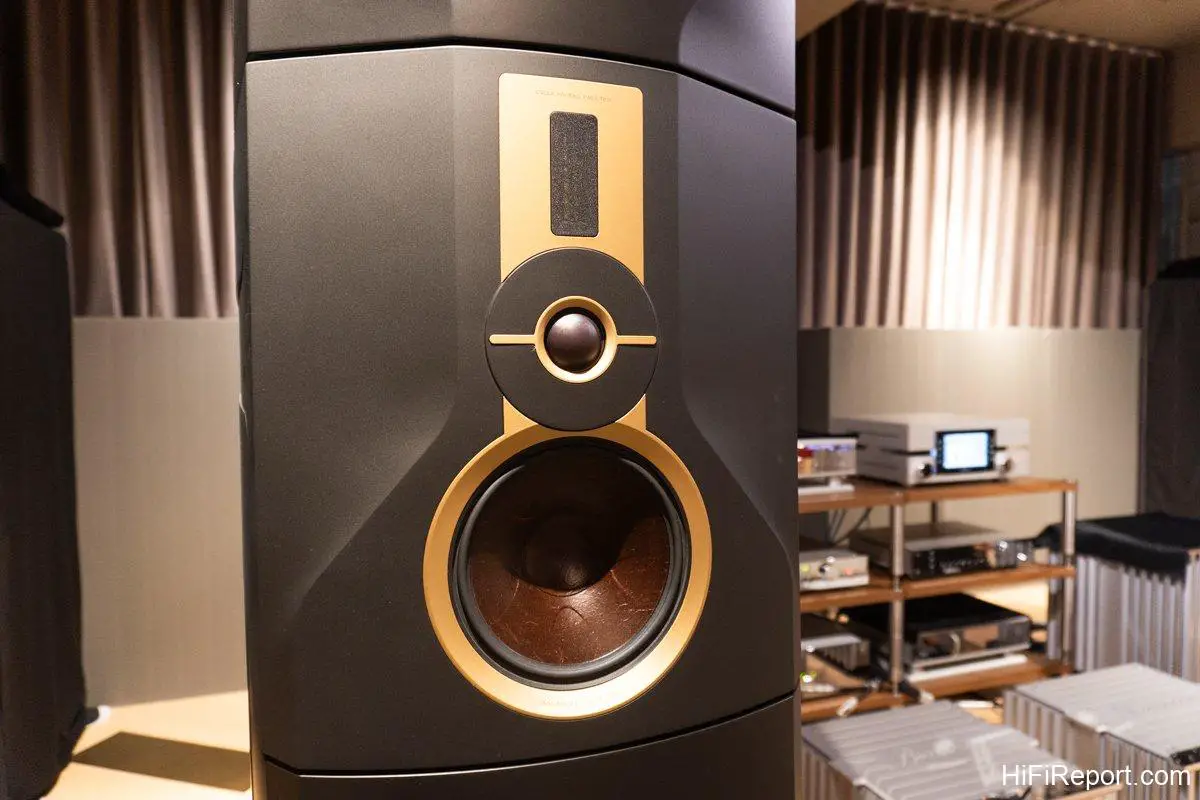
The midrange frequency range plays a crucial role in music reproduction, as it is the most sensitive range for human hearing. For this reason, Dali designed a dedicated midrange driver specifically for the Kore, a first for Dali, highlighting the importance placed on the Kore.
The Kore’s midrange driver also utilizes Balanced Drive SMC technology. The cone is made of lightweight and rigid wood fiber material, paired with a high-rigidity titanium voice coil former and a specially designed surround. This surround is designed to minimize non-linear damping, thereby enhancing sensitivity and reducing loss.
Unlike the woofer, the Kore’s midrange driver does not require large excursions. Therefore, a relatively small rubber surround is employed. This allows any unwanted sound pressure generated by the surround and cone moving in opposite phases to be shifted to higher frequencies, reducing overall midrange driver distortion.
Furthermore, the smaller surround is lighter and more agile, resulting in faster music response and higher efficiency.
The cone of this midrange driver uses a newly developed wood fiber formula with an improved stiffness-to-mass ratio.
The surface is embossed with a complex relief structure and hand-coated to create varying thickness across the cone. This allows for localized control of stiffness and damping ratios, enabling finer and more precise control over cone characteristics to achieve the desired sonic performance.
Like the woofers, the Kore’s midrange driver also has its own independent enclosure, designed as a rearward-tapering tube, similar to a transmission line. This gradually absorbs the back waves from the cone, preventing them from propagating forward.
The transmission line terminus remains open, allowing air to freely enter and exit, preventing internal air pressure buildup that could affect cone vibration or even cause resonance.
In addition, the midrange driver incorporates a Faraday ring, which reduces third harmonic distortion above 475Hz by approximately 20dB.
Soft Dome Tweeter Enlarged to 35mm for Improved Low-End Extension
Since the Dali 700 in 1990, Dali has adopted a hybrid tweeter combining a soft dome and a planar diaphragm, which has become a Dali hallmark. The Kore is no exception, but it uses a brand-new EVO-K tweeter developed specifically for it. The soft dome tweeter’s diameter has been increased to 35mm, 10mm larger than typical domes, effectively doubling the radiating area and improving low-end extension. This allows for a lower crossover point at 2.1kHz, moving the resonant frequency further away from the high-pass filter frequency, which is beneficial for crossover design.
Moreover, the larger 35mm dome tweeter has a larger voice coil with improved heat dissipation, eliminating the need for ferrofluid cooling.
To further reduce the soft dome tweeter’s resonant frequency while absorbing and dissipating back wave radiation, a bullet-shaped rear chamber with heat sink fins is incorporated. This aids in heat dissipation and significantly reduces power compression.
The EVO-K ribbon tweeter has also been improved. It features a better neodymium magnet system, redesigned waveguide, and rear heat sink. These enhancements not only improve dispersion and integration with the 35mm dome tweeter but also increase efficiency by 8dB while reducing distortion and dynamic compression.
Meticulous Cabinet Design
The cabinet design and construction are also highlights of the Kore. Not only is it aesthetically pleasing with exceptional craftsmanship, but the internal structure is meticulously designed to minimize resonance, contributing to purer sound quality.
The Kore’s curved back panel is a single piece, formed by pressure-bending a 28mm thick birch plywood core with 4mm wood composite layers. This structure is highly effective in suppressing resonance.
The curved back panel is joined to the 30mm birch plywood front baffle, with internal bracing for added structural strength and to divide the internal space into independent chambers.
The Kore’s drivers are not directly mounted to the wooden cabinet, which could transmit vibrations. Instead, they are mounted on separate baffles made of different materials and then integrated with the cabinet.
The midrange and tweeter baffles are made of die-cast aluminum and are attached to the cabinet with silicone damping material.
The silicone damping material reduces the resonant frequency without completely suppressing it, maintaining sonic vitality.
The woofer is mounted on a cast resin composite baffle, which is then bolted to the cabinet. The resin composite material contains mineral components and has a complex structure to enhance rigidity and reduce resonance.
The Kore’s base is also meticulously designed. It is not simply a few iron legs bolted on but a precision-shaped base cast from resin composite material. Steel frames are then bolted to the underside. The base has a complex internal structure and weighs 34kg, providing stable support for the 148kg speaker and preventing resonance. The woofer’s crossover is also sealed within the base to avoid interference between the woofer and inductors.
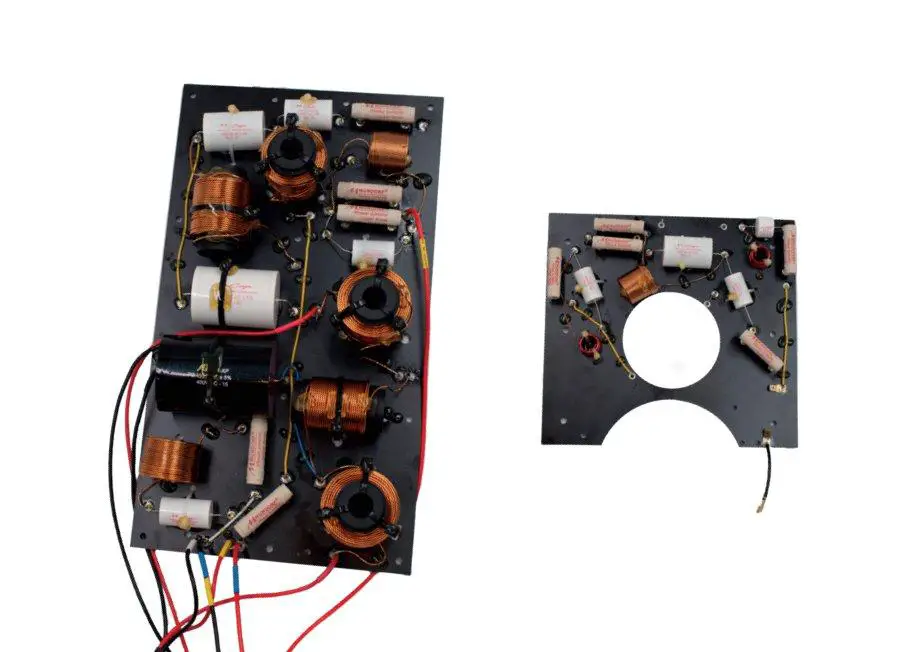
The Kore’s crossover is also unique, featuring the world’s first SMC-Kore inductor.
The SMC-Kore inductor is wound on a Gen-2 SMC core. Compared to conventional air-core inductors, the SMC-Kore inductor has lower DC resistance and is less susceptible to crosstalk between inductors. This allows them to be placed closer together, shortening the signal path.
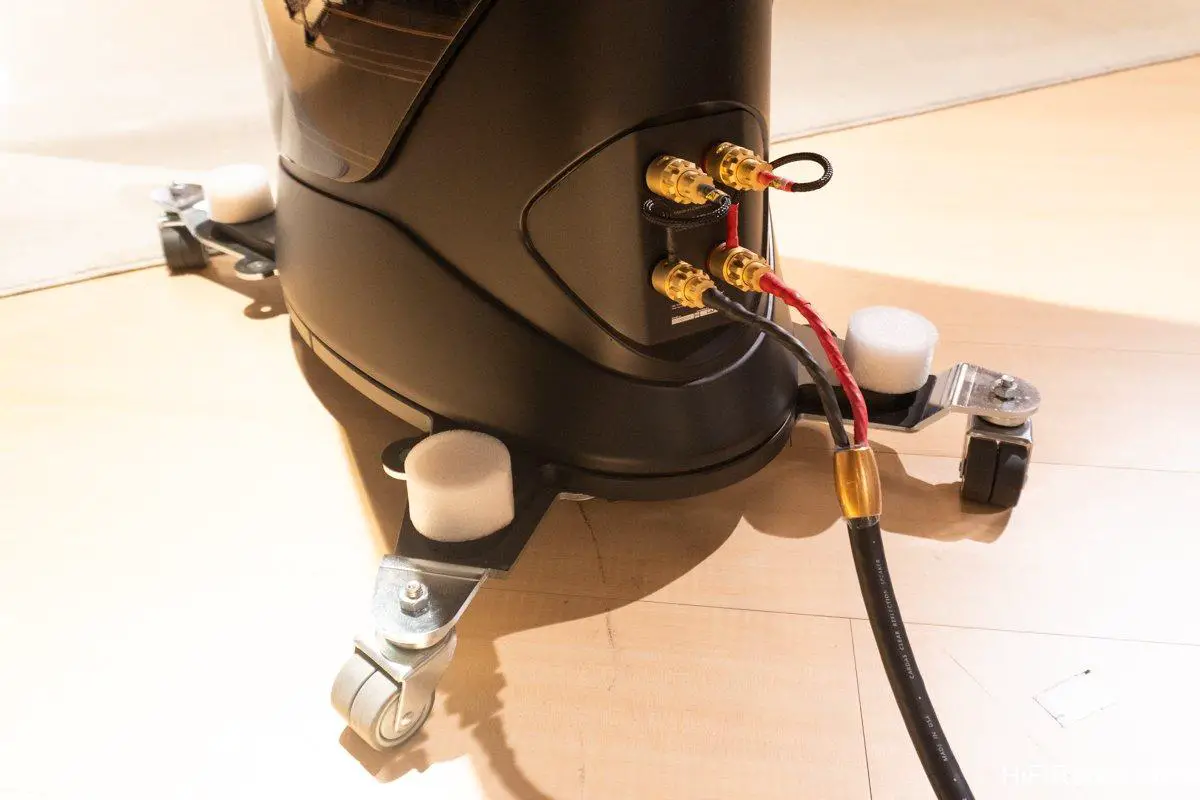
The speaker terminals are custom-designed by Dali, featuring large knurled nuts and a self-locking mechanism. They can easily clamp Y-lugs or bare wire. For banana plugs, the self-locking mechanism ensures a tight connection.
Wheels for Easy Positioning and Removal
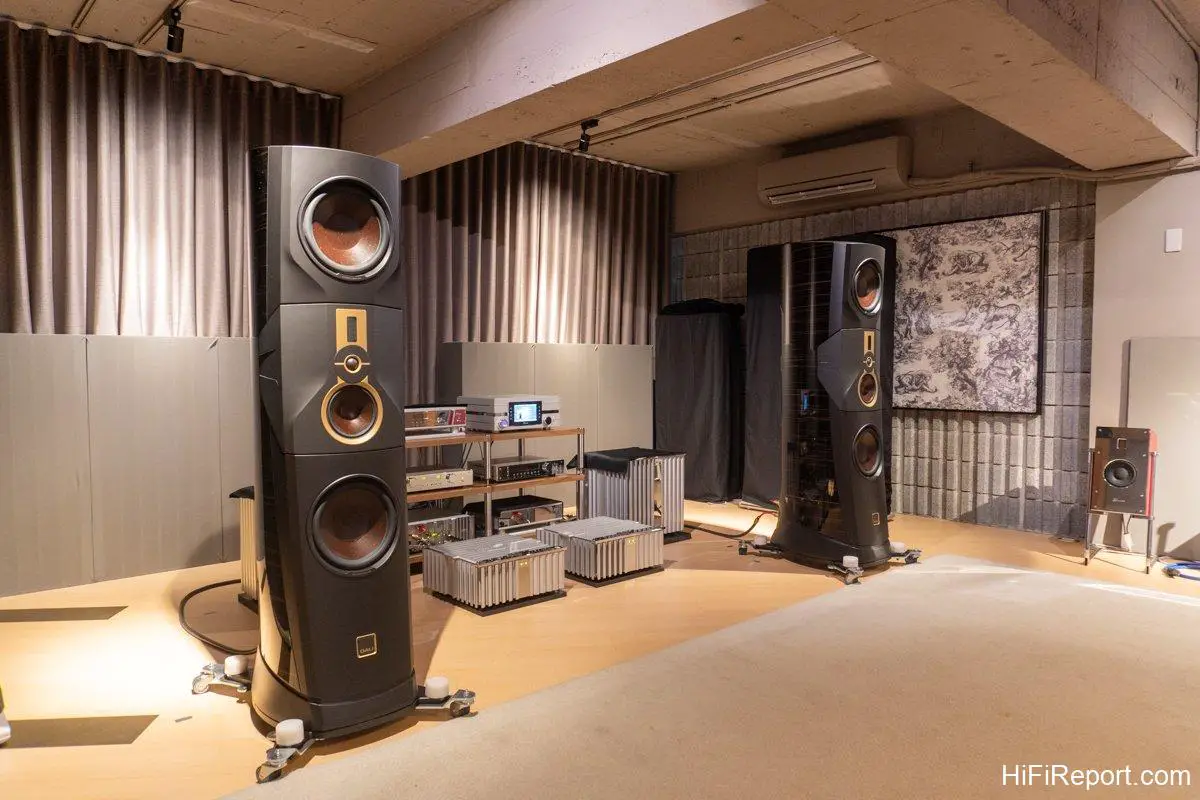
The listening session took place in HiFiReport’s largest listening room. The system was all Burmester, including the 111 all-in-one player, 088 preamplifier, and two 911 MK3 power amplifiers. The 911 MK3 is a stereo amplifier that can be bridged to mono, increasing power from 350 watts/4Ω to 770 watts/4Ω, which should be sufficient for the Kore.
Before the formal listening began, HiFiReport staff informed me that the Kore was brilliantly designed, even with wheels, allowing me to adjust positioning as desired.
Indeed, wheels are essential for speakers weighing 148kg, otherwise moving or repositioning them would be back-breaking. Importantly, the Kore’s wheels are easily removable. Once moved to the desired location, simply turn the included spikes downwards to lift the wheels off the ground, and they can be detached.
This design is incredibly thoughtful, deserving a 10/10 just for this feature!
Precise and Fast Bass
The Burmester system can play CDs, so the listening session primarily focused on CDs. First, I played jazz vocalist Jane Monheit’s “Taking a Chance on Love” album. Track 1, “Honeysuckle Rose,” is an upbeat and lively song, beginning with pizzicato double bass, followed by piano and drum accompaniment. There’s also a double bass solo interlude in the middle, making the double bass a crucial element in this song. If the bass were muddy or sluggish, the song’s liveliness would be significantly diminished.
Through the Kore, the bass texture was exceptionally clean, clearly conveying the double bass’s plucked tone and texture. The note definition was distinct, with excellent speed and a bouncy quality. However, it wasn’t overly damped, with appropriate sustain and elasticity, making it feel neither rushed nor hurried. This is the kind of bass I appreciate.
In terms of bass quantity, it was full-bodied and rich, but not excessive, remaining a precisely controlled type.
The Kore projected a vast soundstage, but the instrument sizes remained appropriate, and the proportions of different instruments were clear and rational – in short, accurate.
Its tonal quality is slightly warm, while maintaining a very clean and transparent sonic foundation, with ample moisture and no dryness or harshness. It’s the familiar Dali sound – pleasing and easy to listen to.
Playing track 2, the ballad “In the Still of the Night,” which features strings as the main accompaniment, the Kore revealed the strings with clear and rich layers, along with ideal density, indicating excellent depth.
The string lines were very clear. I felt they could be a bit softer and more mellow, so I adjusted the toe-in to be flat, with the speakers pointing straight forward. The texture became softer and more comfortable to listen to.
Returning to track 1, although the bass’s image became slightly less defined, it remained bouncy and powerful. The Kore’s bass is truly excellent!
A Surge of Exhilaration
The Kore’s bass prowess extends beyond this.
For instance, listening to the Chick Corea Akoustik Band’s self-titled album, featuring a trio of piano, double bass, and drums, the album contains several fast-paced tracks. Through these, the Kore’s excellent speed became apparent. Drum beats were clear, quick, and with short decays, and the image was complete, allowing the kick drum to clearly descend.
I instinctively turned up the volume, listening at high sound pressure levels. I experienced explosive dynamics, like a barrage of firecrackers. My exhilaration surged, and the music was incredibly vibrant, yet without feeling strained. This was because the overall balance and strict order were maintained, which was astonishing. It is truly the culmination of 40 years of technology from a top-tier speaker manufacturer.
Track 4, “Sophisticated Lady,” is a slow piece with more musical pauses. Clear piano sustain and room reverberation could be heard, conveying the sense of space excellently and showcasing exceptional detail retrieval.
In the opening section, only the piano plays a gentle melody in the high register at a soft volume. Later, the bass and drums join in, and the music becomes grander. At this point, I clearly perceived a significant difference in the sense of scale. When the bass and drums entered, the soundstage’s lower register seemed to expand, and the scale instantly became massive. This demonstrates that despite its large size, the Kore is also very agile, comparable to smaller speakers, and highly accurate, faithfully presenting the recording’s content and changes.
Full and Rich Bass with Cleanliness and Freshness
Next, I played Accustic Arts’ test disc “Uncompressed World Vol. III,” an excellent male vocal compilation album with pop and jazz styles, featuring refined arrangements and performances, and high-quality, yet unforced, recordings. It is suitable for both pure listening enjoyment and evaluating audio systems.
Through the Kore, this was likely the best I’ve ever heard this CD. The soundstage scale was grand, and the proportions of the vocals and each instrument were appropriate – simply put, very natural, unexaggerated, with accurate and realistic timbre. The sound was very human and organic.
The music’s structure was clearly delineated, with distinct layers. Therefore, while achieving immense sound pressure and full, rich bass, the sound remained clean and fresh, without any excess.
The Kore’s high-quality bass was a guarantee of this CD sounding great. The bass was clean, clear, full, agile, and layered. The midrange and treble had excellent depth and a wonderful warmth in their texture. It was simply outstanding!
Sound Free of Mechanical Artifacts
Another example is pianist Chen Pi-hsien’s 2019 recital recording, included in the 2020 HiFi Show commemorative CD. Through the Kore, the sound was clear, precise, and imbued with human warmth, free of mechanical artifacts. The timbre was realistic and beautiful, with a touch of richness and a wonderful crystalline quality (likely from the Burmester components). Everything was just right.
The piano note density was excellent and effortless. When low notes were struck, the lower register scale expanded naturally, dense yet transparent – the essence of large speakers.
Playing track 2, a slow piece, natural sustain and reverberation between phrases could be clearly heard, creating a concert hall-like ambience. Even though I was seated quite far from the Kore, very soft passages were still clearly audible, demonstrating the speaker’s sensitivity.
Finally, I concluded with orchestral music, choosing Boulez conducting the Vienna Philharmonic Orchestra in Mahler’s Symphony No. 5. The Kore revealed sounds I hadn’t heard before, and the slow passages seemed even slower, while the fast passages were faster, widening the dynamic range.
Why did I feel this way? Perhaps it’s because the Kore’s detail retrieval across the entire frequency range is exceptional, with extremely high resolution, making the music more fluid and dense. Combined with a wide dynamic contrast and rich gradations between loud and soft passages, the overall dynamic range felt immense. This made the quiet parts more subtle and the slow parts even slower, especially in the fourth movement, which was almost tear-inducing.
This rendition of Mahler was more impassioned, more tragic, and more impactful. Even after listening, I was still deeply moved.
No Compromises
The time spent with the Kore felt shorter than it actually was. Although reluctant, the audition had to end.
As expected from a culmination of 40 years of technology and experience, there were no shortcuts, no secret techniques, and no mysticism. Instead, it was the result of solid, continuous research and validation, creating true prowess in crafting top-tier speakers.
This is a speaker that makes no compromises in any aspect, capable of both delicacy and power, suitable for both intimate and grand settings, and able to provide maximum satisfaction across all genres of music. Highly recommended.
Specifications
* Type: 5-driver, 4-way bass reflex floorstanding speaker
* Drivers: 1 x 10 x 55 mm ribbon super tweeter, 1 x 35mm soft dome tweeter, 1 x 7-inch Balanced Drive SMC midrange, 2 x 11.5-inch Balanced Drive SMC woofers
* Frequency Response: 26Hz – 34kHz
* Sensitivity: 88dB
* Nominal Impedance: 4 ohms (minimum 3.2 ohms)
* Recommended Amplifier Power: 50–1,000 watts
* Maximum SPL: 118dB
* Crossover Frequencies: 390 / 2,100 / 12,000 Hz
* Dimensions: 1,675 × 448 × 593 mm (W×H×D)
* Weight: 148 kg