
Dali Rubicon 5 Floorstanding Speaker Review
Looking for a “safe choice” in loudspeakers? Something that handles all genres of music well, is easy to pair with amplifiers, and avoids harshness? Dali immediately comes to mind.
Within the Dali lineup, if I were to recommend a series, Rubicon would be my top pick.
Four years ago, I had the pleasure of experiencing the Rubicon 8, the flagship model of this near-flagship series. Its sound was both refined and powerful, equally at home with elegant classical music and energetic rock and roll. That experience left a lasting impression.
Beyond that, I’ve also listened to Dali’s flagship Epicon 8 and, further down the range, the renowned Menuet standmount speaker and the excellent value Oberon series launched in 2018.
My conclusion is that Dali speakers, regardless of size or series hierarchy, consistently uphold a unified sonic aesthetic.
Why do I emphasize this point? Because for a loudspeaker company of this scale to maintain such a consistent sonic identity is truly remarkable.
In 2015, the year after Dali introduced the Rubicon series, a bestseller called “The Silo Effect” was published by Financial Times columnist Gillian Tett. She argued that large corporations tend to become compartmentalized, forming siloed departments with poor communication between them. The result? Departments operate in isolation, producing outputs that seem to belong to different companies entirely.
From a global corporate perspective, Dali might not be considered a “large corporation.” However, within the current audio industry landscape, a company with 150 employees and an annual production of 250,000 pairs of speakers is definitely substantial.
That’s why I say their product consistency is so noteworthy. It indicates excellent internal management and a highly coordinated company culture. This is also why I consider Dali a “reassuring” brand for consumers. It’s not just about sound performance; the brand itself inspires confidence.
This might seem like a digression, but it’s not. Having experienced so many Dali speakers over the years, and now having the opportunity to listen to the Rubicon 5, I felt it important to share my understanding and perspective on the Dali brand.
Now, let’s delve into why I consider the Rubicon series worthy of recommendation.
Signature Dual Tweeter Module
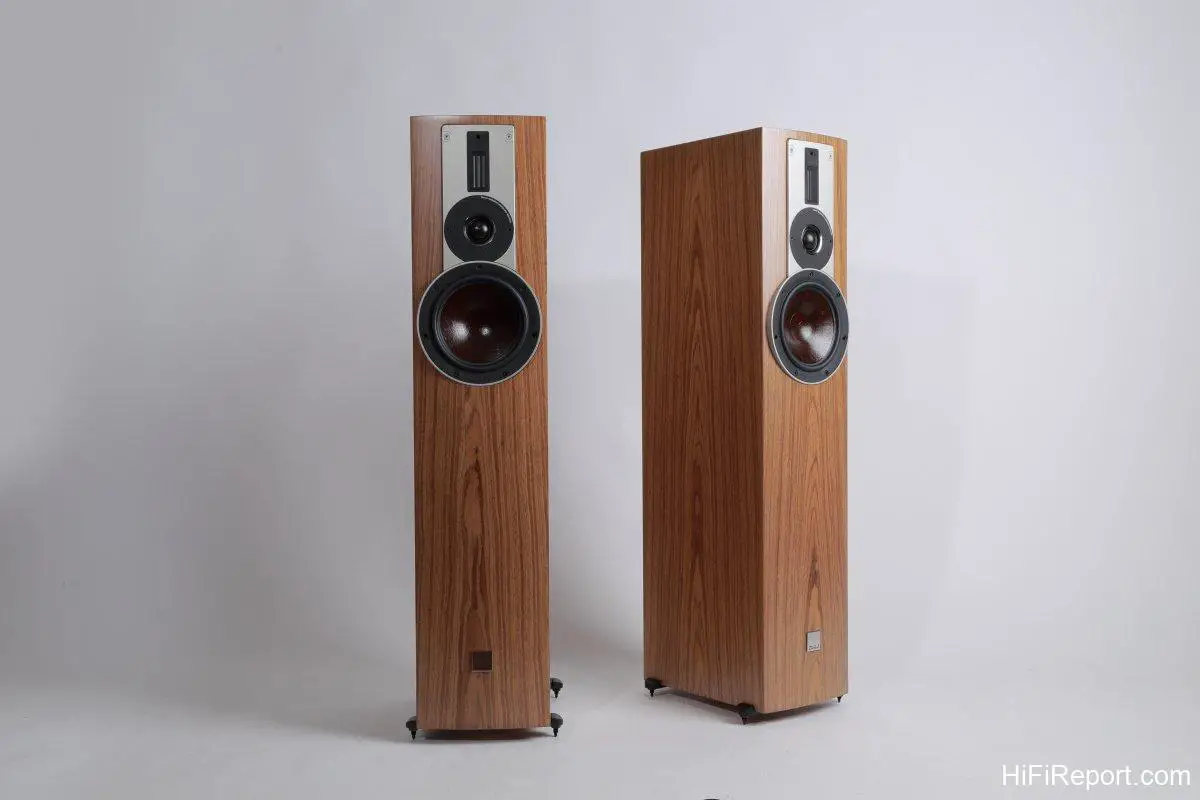
The Rubicon series includes three floorstanding models. The largest, Rubicon 8, boasts three woofers, Rubicon 6 has two, and Rubicon 5 features a single woofer. However, all three Rubicon floorstanders inherit the classic design of the flagship Epicon series: the dual tweeter module.
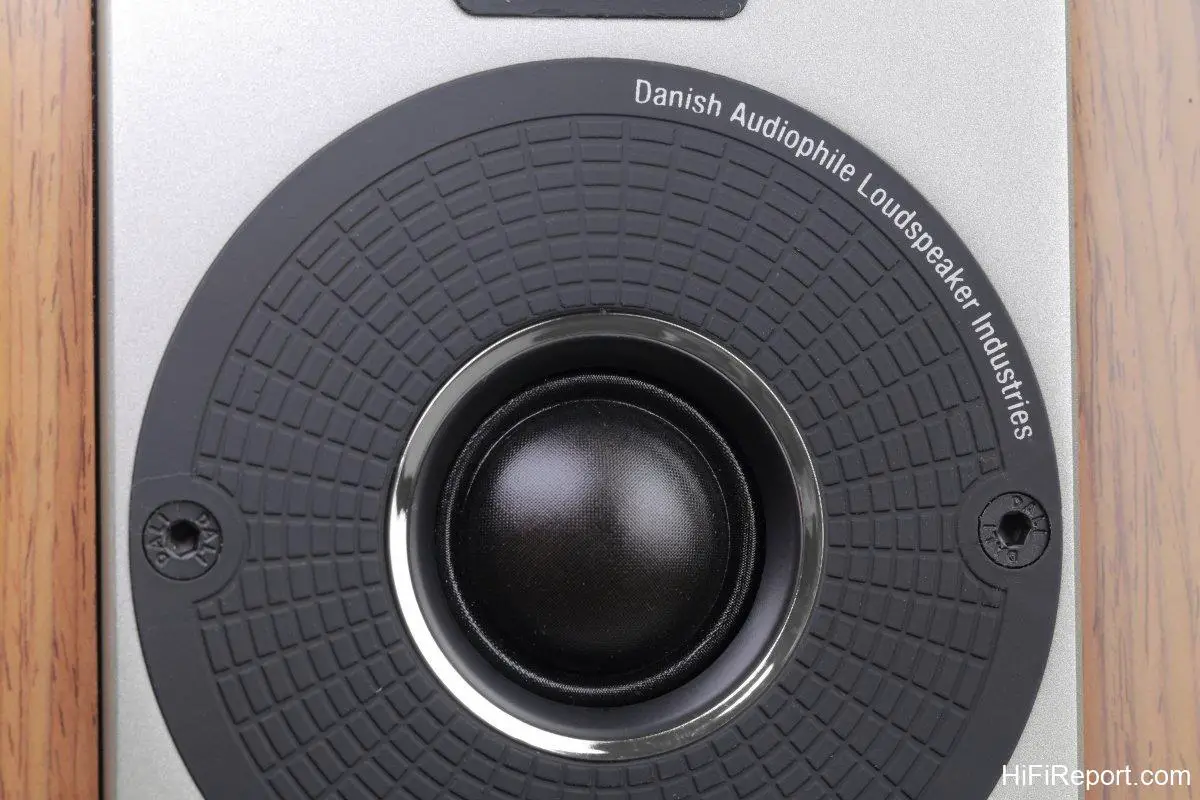
The Rubicon’s dual tweeter module combines a 17×45 mm ribbon super tweeter with a 29mm silk soft dome tweeter. A single silk soft dome tweeter would suffice, and the one used in the Rubicon 5 is exceptionally lightweight. Not only is the diaphragm mass low, but the voice coil also utilizes CCAW (copper-clad aluminum wire) for even lighter mass and faster response. The Rubicon 2 bookshelf model in the series uses only this silk soft dome tweeter, achieving a frequency response up to 26kHz.
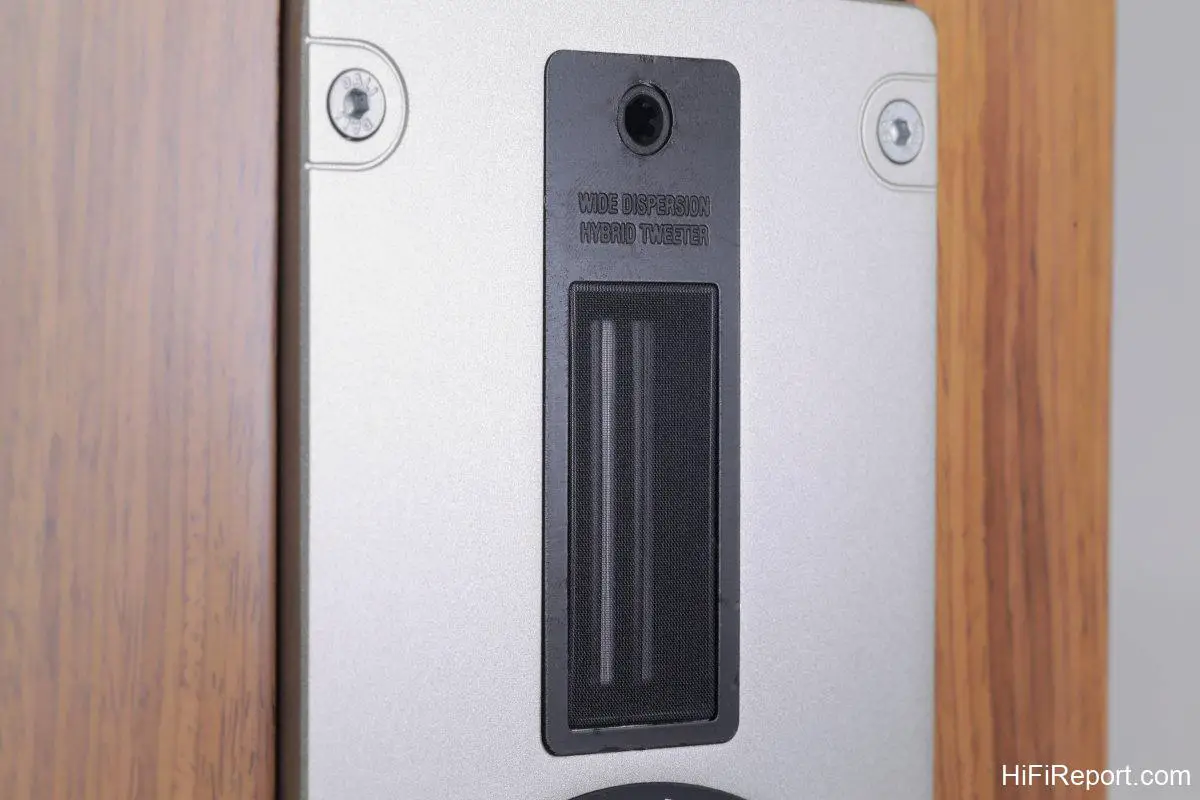
However, Dali added a ribbon tweeter to extend high-frequency performance even further, reaching an impressive 34kHz. Ribbon tweeters offer faster response, enhancing the reproduction of overtones and subtle nuances. Their superior horizontal dispersion also broadens the listening area, liberating listeners from the “sweet spot.”
Dali strategically divides the workload between these two tweeters. Frequencies above 14kHz are handled by the ribbon tweeter, acting as a super tweeter. The silk dome tweeter takes charge from 14kHz downwards, seamlessly integrating with the mid-bass driver. While this design isn’t unique to Dali, they have refined it over many years, mastering its implementation. Furthermore, with in-house driver manufacturing, they have complete control over optimizing performance.
SMC Technology Wood Fibre Woofer
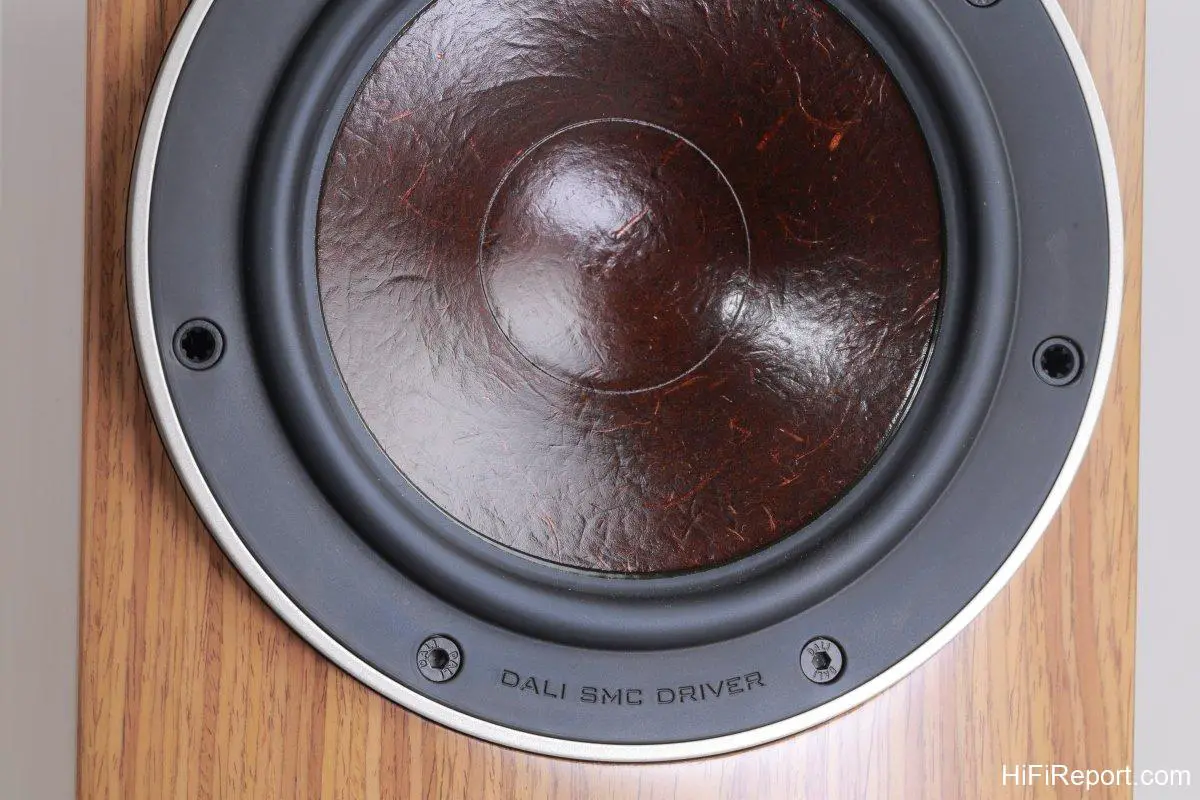
The Rubicon 5 employs a single mid-bass driver to cover all frequencies below 2.9kHz. This driver is also designed and manufactured by Dali. The wood fibre cone, a hallmark of Dali speakers, contributes significantly to their consistent sonic signature.
Upon close inspection, Dali’s wood fibre cone exhibits an uneven, irregular surface. Why not make it smoother? This intentional irregularity is precisely what Dali seeks. They believe that a diaphragm should not only be lightweight and rigid but also resist resonance. By using wood fibres of varying lengths and creating an uneven surface, they effectively dampen cone resonances, minimizing coloration.
However, the cone is not the only impressive aspect of this mid-bass driver. While the cone material is used across their entire product range, some complex technologies are not universally applicable. The Rubicon mid-bass driver incorporates SMC technology, a feature proudly displayed on the driver frame.
SMC, short for Soft Magnetic Compound, is a specially developed magnetic powder formulation by Dali to mitigate “hysteresis” in driver magnets. SMC magnets boast “extremely high magnetic permeability and very low electrical conductivity.” This significantly reduces distortion during driver movement. Additionally, a copper cap, akin to a Faraday ring, is installed in the center of the magnet, further improving voice coil inductance variations and stabilizing impedance characteristics, making the speaker easier to drive for amplifiers.
Attention to Detail
Beyond the sophisticated drivers, the Rubicon 5’s cabinet is also meticulously constructed. The MDF cabinet features a substantial 25mm thick front baffle. Securing drivers to such a rigid baffle minimizes unwanted vibrations. Internal bracing further isolates the mid-high frequency section from the bass section, preventing interference.
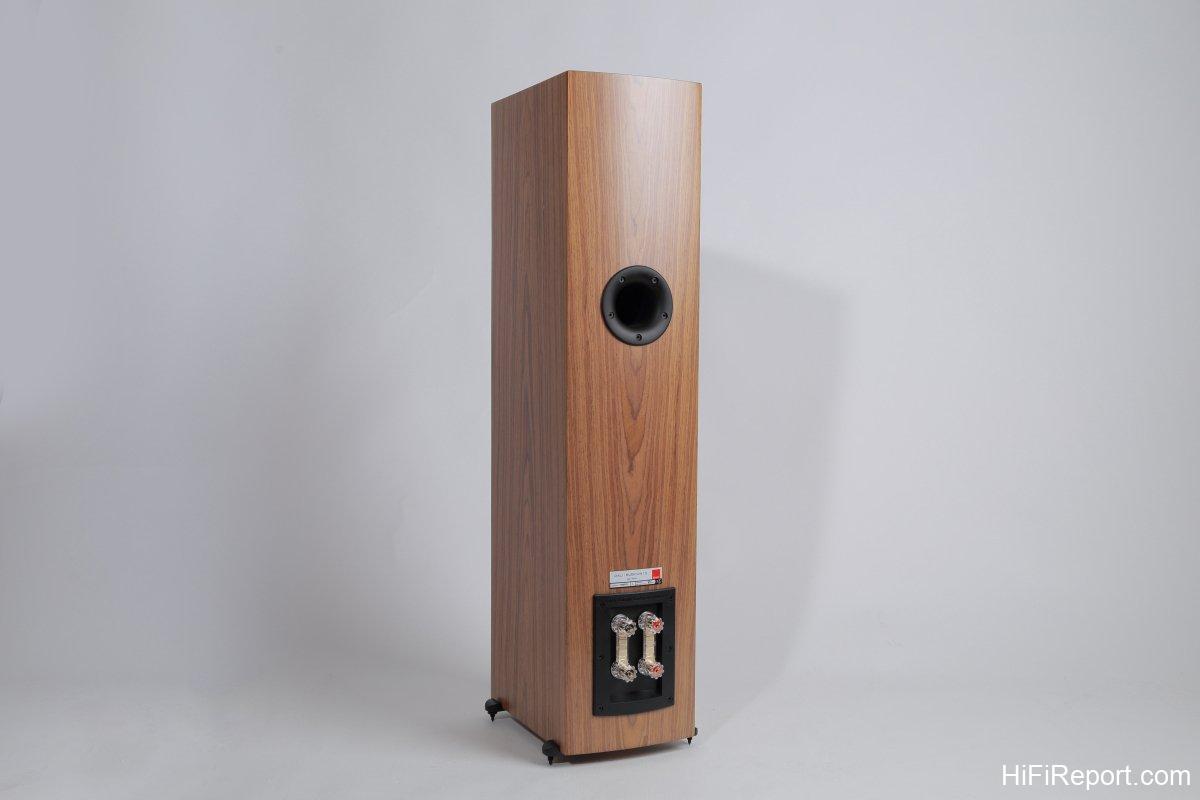
The Rubicon 5, with its single mid-bass driver, has fewer internal compartments compared to models like the Rubicon 8 with three woofers, where each woofer resides in its own independent chamber, explaining the three rear bass reflex ports on the Rubicon 8.
While the Dali Rubicon series presents a simple and understated aesthetic, many design details reveal the manufacturer’s dedication. For instance, the front baffle isn’t flat but subtly curved. The acoustic benefits of this may not be explicitly stated by Dali, and I won’t speculate. However, it undeniably adds an extra layer of manufacturing complexity and cost.
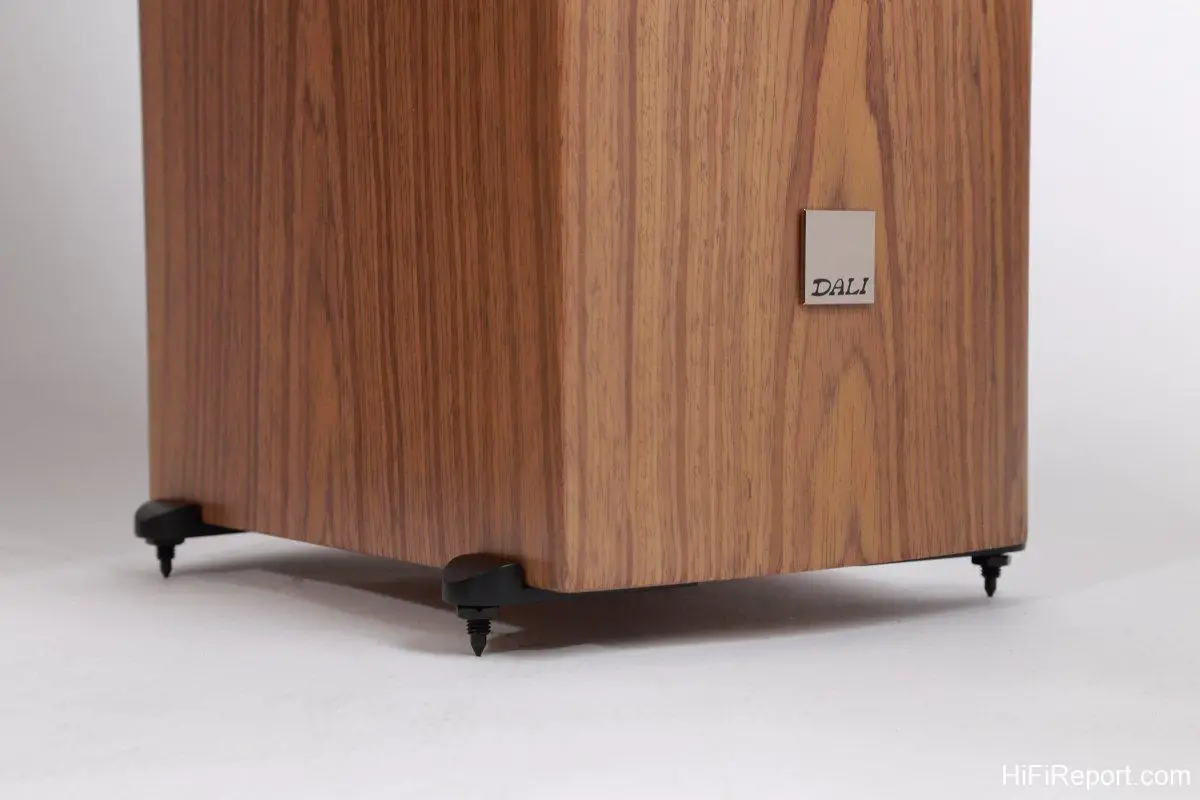
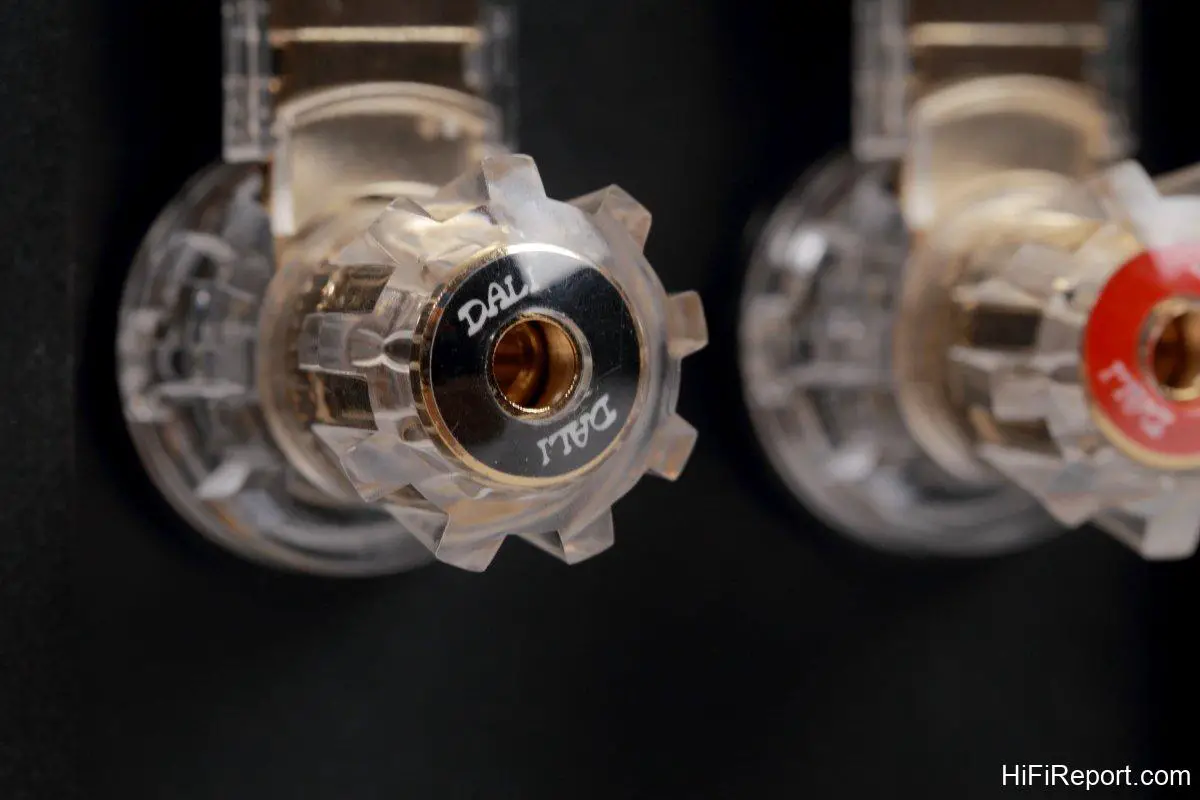
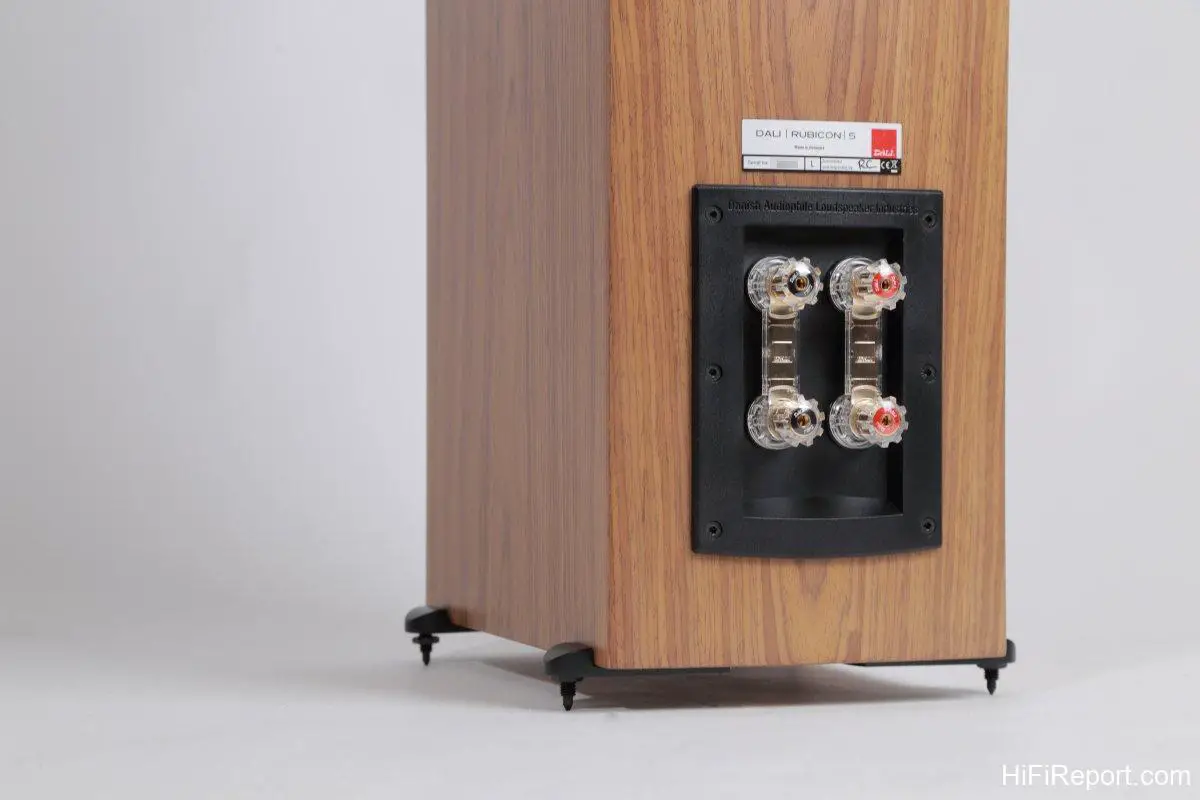
The included outrigger feet are easy to install and adjust, with the necessary tools provided. The speaker terminals exude quality, engraved with the Dali logo, and the large knobs offer a satisfying tactile feel. Even the metal jumpers are fitted with plastic insulators – small details that speak volumes about Dali’s commitment to quality.
Much of what I’ve described about the Rubicon’s design and Dali’s technology is simply relaying information. My personal assessment begins now.
Essentially a “Larger Bookshelf” Speaker
The Rubicon 5 is compact. Dali’s specifications list a height of 89cm and a weight of approximately 15kg. Unboxing was effortless, easily managed single-handedly. But how should they be positioned? This size is typical of small floorstanding speakers.
With speakers of this size, I often treat them as bookshelf speakers, perhaps “slightly larger bookshelf” models. Is this approach valid? In the HiFiReport listening room, I paired the Rubicon 5 with a Linear Acoustic LAV-60 MK2 integrated amplifier. After some adjustments, I settled on a speaker spacing of approximately 185cm, positioned facing directly forward with no toe-in.
According to Dali, the Rubicon 5’s tweeter module offers excellent dispersion, negating the need for direct aiming at the listener. Initially, I positioned the speakers wider apart, around 2 meters, with a slight 7-degree toe-in. However, I felt the sound lacked fullness, with a somewhat thin midrange. I questioned if this was truly the Dali sound I knew.
I then experimented by gradually reducing the speaker spacing and correcting the orientation to face directly forward, eliminating toe-in. Indeed, after comparisons, facing forward proved to be the optimal configuration. Not only did the highs become more controlled, but the midrange also emerged more prominently, and the soundstage deepened, creating a more natural sense of space.
The Dali Rubicon 5’s sonic character, as I anticipated, leans closer to a bookshelf speaker presentation compared to the Rubicon 8 or Rubicon 6. The bass is sufficient yet restrained, allowing music to convey considerable scale without low-frequency dominance overshadowing the beauty of the mid and high frequencies.
Relatively speaking, the Rubicon 5 exhibits the imaging and soundstaging characteristics of a bookshelf speaker. Its brilliant high-frequency performance reveals detail, imbuing music with captivating vibrancy. The overall tonal balance is natural and neutral, yet with a touch of brilliance, radiating lively energy.
On the other hand, its bass response is ample. Whether playing pop, jazz, blues, or rock, it never feels lacking. And when directly compared to bookshelf speakers, the Rubicon 5 surpasses them in bass stability and overall sonic ease. It offers the advantages of a bookshelf speaker without its limitations, which is precisely the appeal of this type of small floorstanding speaker.
Ample Energy, Expansive Soundstage
Listening to Bruckner’s Symphony No. 9 conducted by Wand with the Berlin Philharmonic, the Rubicon 5, despite its diminutive size, still produced a grand sound. If it were truly a bookshelf speaker, I would call it a sonic marvel. But the Rubicon 5’s added cabinet volume and dual tweeter module enable it to deliver even more.
Take the Scherzo second movement, for example. Bruckner’s tempo marking, “Bewegt, lebhaft – Trio, Schnell,” translates to “Moving, lively – Trio, Fast.” The opening music is imbued with unease and a sense of the uncanny. Woodwinds intone sustained notes, strings engage in pizzicato dialogue, and then the orchestra forcefully and robustly reiterates the theme. Bruckner even adds inner voices to heighten the musical tension.
This movement is full of fluctuating sonic energy, alternating between delicate woodwind passages with light string accompaniment and moments of full orchestral power erupting forth. The Rubicon 5 presented a clear and transparent soundstage, precisely locating each section of the orchestra. While the first movement was already impressive, it was in this Scherzo, with its rapid dynamic shifts, that the Rubicon 5’s strengths truly shone.
At moderate volumes, the Rubicon 5 maintains excellent balance. At higher volumes, the limitations of a small floorstanding speaker become apparent compared to the effortless ease of the Rubicon 8. However, the perception of ease and spaciousness is also influenced by room size and listening volume. I am simply sharing my observations.
Astonishing Dynamic Explosiveness
Even with that caveat, compared to typical bookshelf speakers, the Rubicon 5 still sounds more spacious and expansive. Dali bookshelf speakers have never been known for sounding small. Their Menuet model is a prime example. Despite its tiny size, it projects a surprisingly large sonic presence. The Rubicon 5, however, is even more potent and energetically rich than such bookshelf speakers.
Listening to Tchaikovsky’s Symphony No. 6, “Pathétique,” conducted by Gergiev with the Kirov Orchestra, the melancholic strings in the first movement unfolded with dense, expressive tension, building layer upon layer. It highlighted both the composer’s romantic and beautiful melodies and the conductor’s intense and passionate interpretation.
After the lengthy exposition, as the music prepared to enter the development section, Tchaikovsky directs the volume to drop to an almost inaudible pppppp, with the bassoon playing an extremely soft sustained note as a prelude to the development. Then, suddenly, the orchestra explodes with ffff fortissimo, launching into the development section with a jarring impact.
The Rubicon 5, though small, possesses considerable dynamic capability. It meticulously conveyed the subtle nuances of the barely audible bassoon and then unleashed the explosive energy of the development section with impressive force. Even though I was anticipating the dynamic shift, I was still startled by its impact.
The ensuing music races forward, with searing brass and timpani pounding out profound sorrow. The Rubicon 5 depicted a vast stage and deep soundstage, coupled with the biting brass, creating a truly captivating experience.
Unleashing its Ferocity!
With its expansive soundstage and lively character, the Rubicon 5 naturally excels with live recordings. Marcus Miller’s “Tutu Revisited,” a tribute to Miles Davis, is a prime example. It’s a live recording of exceptional quality and performance.
The audience roar at the beginning of “Tomaas” conveys a sense of spaciousness. Synthesizers then create sounds that are both enveloping and shimmering like the aurora borealis. A muted trumpet delicately opens the piece, followed by the drums, eliciting enthusiastic cheers from the audience. The bass then enters, followed by the saxophone.
It’s truly captivating! The drums are punchy and agile. The Rubicon 5’s speed is evident, making the drums sound decisive and sharp. The trumpet’s metallic timbre is vivid, and the bass is full-bodied and articulate, one soaring upwards, the other rumbling beneath. Five musicians on stage compete and collaborate, creating a rich, vibrant, and wildly unrestrained sonic tapestry.
In “Tutu,” this live version surpasses even Miles Davis’ original studio recording in excitement. The explosive energy at the beginning alone is astonishing. Both tracks are iconic from Miles’ “Tutu” album, composed by Marcus Miller. Here, performed live under Miller’s leadership, they are even more potent and fiery, perhaps due to the live setting. He slows down the tempo, expands the layers, incorporates more improvisation, and injects greater variation.
The Rubicon 5, when reproducing this unrestrained music, also becomes unrestrained. A good speaker should be versatile, performing equally well across genres. It should faithfully reproduce whatever you feed it. That’s the hallmark of a truly excellent loudspeaker.
Bass Authority Without Bloat
Dali speakers, known for their warmth, are always pleasing with jazz. Listening to Oscar Peterson Trio’s “We Get Requests,” the opening track “Quiet Nights of Quiet Stars,” an Antônio Carlos Jobim classic “translated” into a jazz trio arrangement by Oscar Peterson, offers a unique charm.
The Rubicon 5 rendered the piano with warmth and fullness, its sustain shimmering with a gentle brilliance – subtle, not overpowering, yet showcasing its full splendor. The bass plucks alongside, notes clear, rounded, and with a slightly soft, springy quality. Listening to the bass reveals the difference between a small floorstander and a bookshelf speaker. The spaciousness in bass reproduction is simply different.
In the second track, “The Days of Wine and Roses,” the drums are energetic and lively. The delicate cymbal sounds are remarkably crisp, and the drum strikes are clean and powerful. Listening to jazz like this evokes the ambiance of a cozy jazz club – utterly captivating.
In “You Look Good to Me,” the piano plays the main melody at the beginning, while the bass harmonizes with arco bowing on the right side, like two parallel melodies in dialogue. Observing fugue-like phrases appearing in jazz is quite intriguing. The texture of the bowed bass, with its slightly rough and viscous quality, contrasts beautifully with the clear piano articulation and the bright, delicate cymbal taps from the drums on the left. It’s truly exquisite.
Despite its compact size, the Rubicon 5’s bass performance is anything but muddy. The bass is ample, and remarkably clear.
Detailed Yet Smooth
Still unconvinced? Let’s try another jazz recording: Holly Cole’s “Don’t Smoke in Bed.”
The opening track, “I Can See Clearly Now,” starts with powerful bass plucks. Each note is distinct and impactful. On the Rubicon 8, the bass would undoubtedly be fuller and rounder, but the Rubicon 5 is more than sufficient. In a typical living room, placing the Rubicon 5 on a TV cabinet and close to the wall would further enhance bass response.
On this album, Holly Cole’s vocals are rich in sibilance. The Rubicon 5 provides ample detail retrieval without being excessive, making the listening experience relaxed and comfortable. The imaging is spacious and relaxed, devoid of the pressure associated with overly dense sound. Yet, the level of detail doesn’t seem diminished. Holly Cole’s vocal expressions almost become visually palpable.
“Get Out of Town,” a Cole Porter composition, opens with another bass solo. The Rubicon 5 delivers clean bass, free from muddiness. Beyond the excellent songwriting, this album demands clean, articulate, and bouncy bass, and vocals that balance detail and smoothness without harshness. Striking this balance is challenging.
And the Rubicon 5? It inspires confidence.
A Reassuring and Faithful Companion
The Dali Rubicon 5 is petite yet possesses ample energy. Beneath its unassuming exterior lies technology trickled down from Dali’s flagship series. It can whisper gently or sing powerfully. It can evoke a languid jazz night or a vibrant carnival.
These speakers fit seamlessly into smaller living rooms, placed on either side of a TV, feeling perfectly at home. As I mentioned at the beginning of this review, Dali is a reassuring brand, and the Rubicon 5 is a reassuring speaker.
Specifications
* Speaker Type: 2 ½-way bass reflex floorstanding speaker
* Drivers: 1 x 17×45 mm ribbon super tweeter; 1 x 29mm soft dome tweeter; 1 x 6.5″ wood fibre cone woofer
* Frequency Response: 45 Hz – 34 kHz
* Sensitivity: 86 dB
* Impedance: 4 Ω
* Maximum SPL: 107 dB
* Recommended Amplifier Power: 60-150 Watts
* Crossover Frequencies: 2.9 kHz, 14 kHz
* Dimensions: 890 × 195 × 339 mm (H × W × D), excluding base
* Weight: 15.7 kg