
Diamond Micro 2 Signal Cable Review
These Crystal Cable Diamond Micro 2 interconnects aren’t review samples; they represent a personal upgrade to my portable audio setup. My trusty Diamond Micro, a companion for over a decade of lectures and presentations, finally succumbed to wear and tear with a faulty RCA connector. Serendipitously, the revamped Diamond 2 series debuted, making the Diamond Micro 2 a natural successor.
Decade-Long Lecture Companion
In my years as an audio reviewer, I’ve always championed music over mere hi-fi. When I’m out and about, my focus is solely on the music, not the gear. After all, equipment can be replaced at will; money can buy you great hardware. However, the cultivated appreciation of music runs deeper – it’s not something you can simply purchase. This philosophy has driven my music lectures since 2008, a journey that continues to this day.
While the Covid-19 pandemic reduced the frequency of music lectures, it did afford me more time to develop fresh content.
For music lectures, audio equipment is essential. I often tell attendees that even the most eloquent presentation will fall flat if delivered through poor sound quality, like music played directly from an iPhone. Emotional connection hinges on sonic fidelity.
Therefore, before any lecture, I always inquire about the sound system being used. It’s a vital tool for my presentations.
However, lecturing in diverse venues means encountering varied audio setups. To fine-tune the sound, I keep a couple of sonic “secret weapons” in my bag: a portable USB DAC and interconnect cables.
My portable USB DAC has seen several iterations. Starting with the Meridian Explorer, I then transitioned to the Lindemann USB DAC, which served me for the longest time. Last year, I upgraded to the iFi Go-Blu, adding wireless Bluetooth capability alongside wired connectivity. Its lightweight design and versatility – it works even with just an iPhone – make it incredibly convenient for lectures.
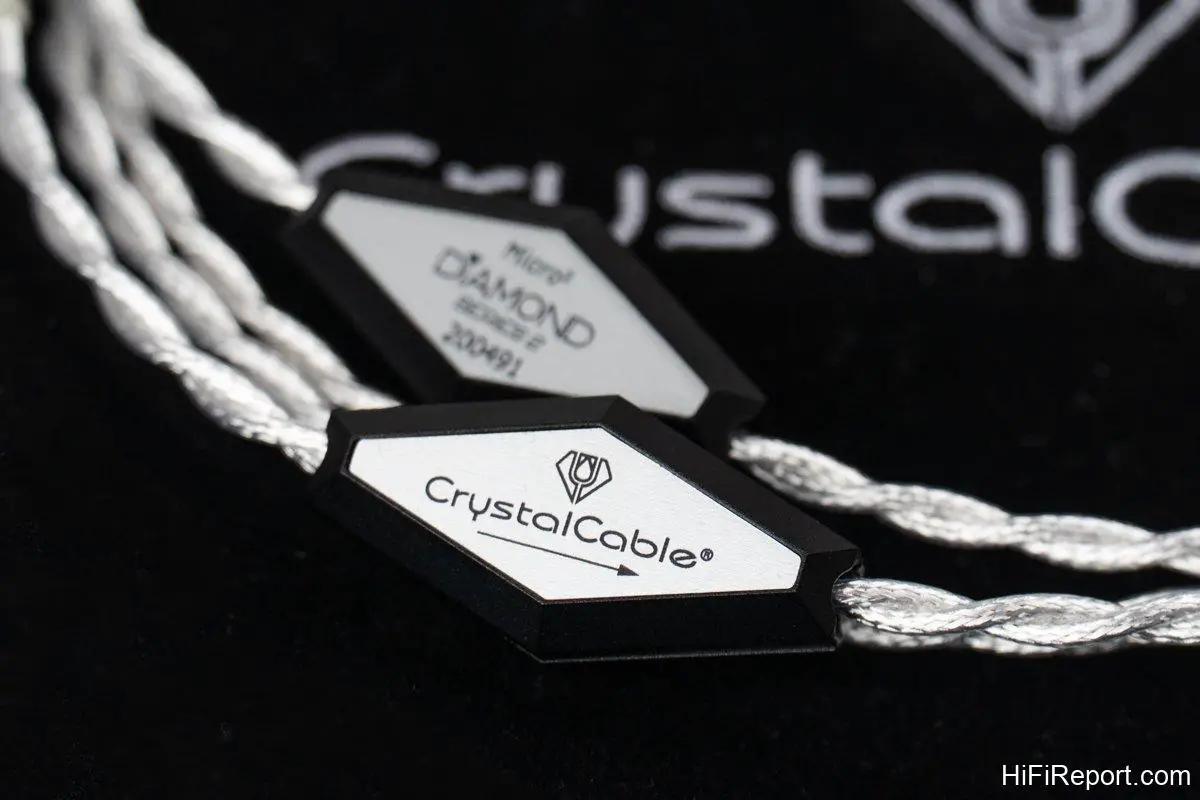
For portable cables, my constant companion has been the Crystal Cable Diamond Micro for over ten years. The reasons for sticking with it are simple: first, the silver-gold alloy delivers a beautiful, vibrant sonic luster, bringing music to life. Second, it’s hard to imagine a more lightweight interconnect than the Diamond Micro. For someone who travels and lectures, equipment that minimizes backpack weight is a godsend.
Diamond Micro 2: A Natural Upgrade
But even the battle-hardened Diamond Micro eventually showed its age. Frequent plugging and unplugging across different systems, enduring travel and backpack compression, took their toll. One RCA connector suffered internal damage, severing the connection within.
The replacement choice? Obvious: Crystal Cable, specifically the newly released Diamond Micro 2.
Does the editor not know of other excellent cables? Of course, there are many superb interconnects. However, none match Crystal Cable’s combination of slimness and lightness. Hence, my progression from Diamond Micro to Diamond Micro 2 prioritizes the balance between sonic upgrade and portable weight. While the top-tier Da Vinci series undoubtedly offers superior sound, its significantly higher price and the stiffness and weight of the Da Vinci cable itself are impractical for my portable needs. Diamond Micro 2 remains the ideal choice.
My backpack’s Crystal Cable arsenal actually includes more than just the Diamond Micro. I also carry a Duet RCA to 3.5mm cable, specifically for use with the Go-Blu.
Both of my portable audio essentials are from Crystal Cable. Once I’ve optimized the venue’s sound system to a certain degree, these cables add that extra touch of sonic refinement, elevating the musical atmosphere.
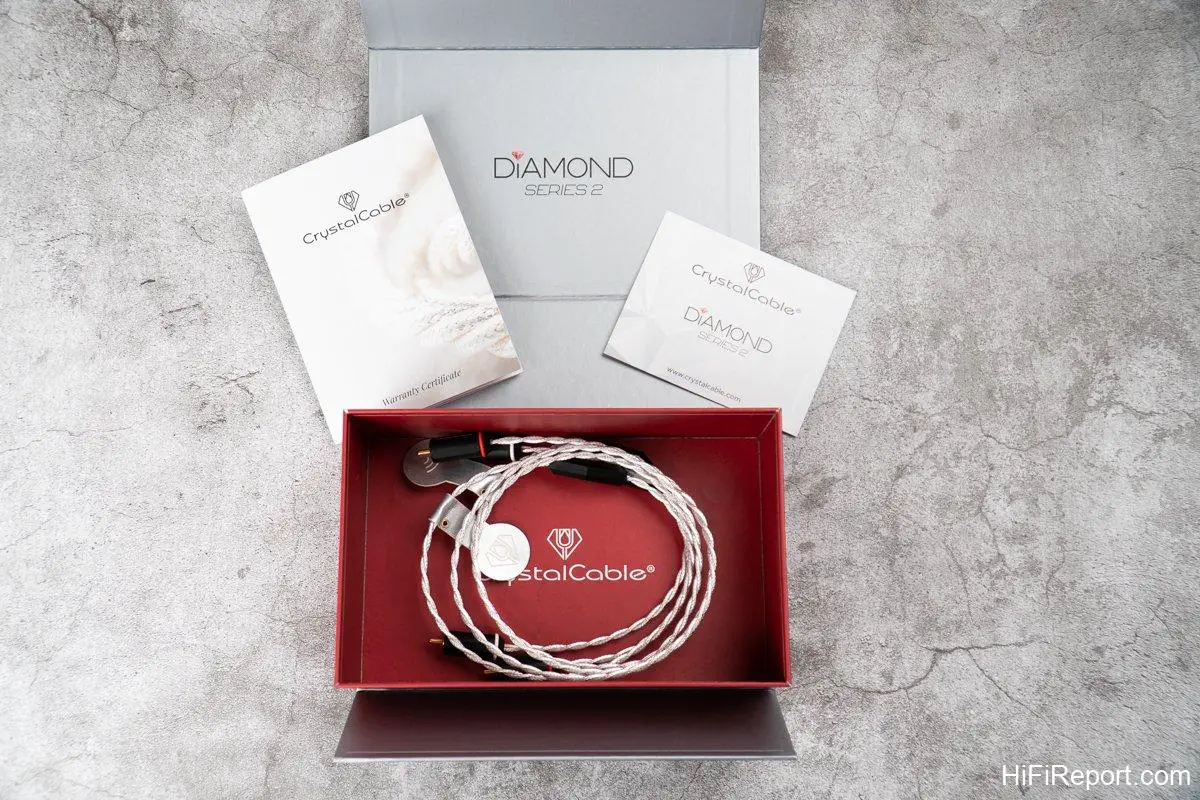
Diamond 2: A Generation of Evolution
The evolution from Diamond to Diamond 2 took twelve years, bringing advancements in both conductor and construction.
The new generation of Crystal Cable incorporates NFC anti-counterfeiting tags. Using a smartphone app, scanning the NFC tag on the cable connects to the official website, verifying its authenticity and lineage. If the cable isn’t recognized, it’s a fake. This NFC verification is essential for peace of mind when purchasing used cables.
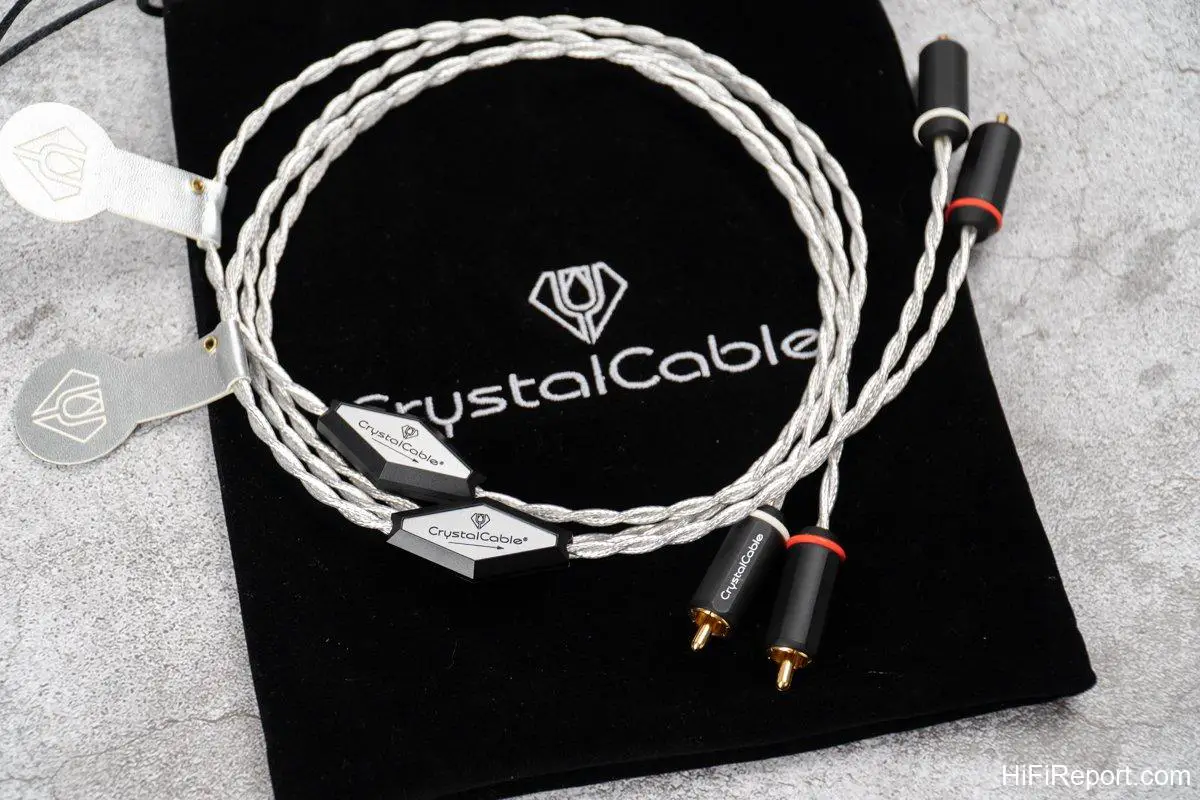
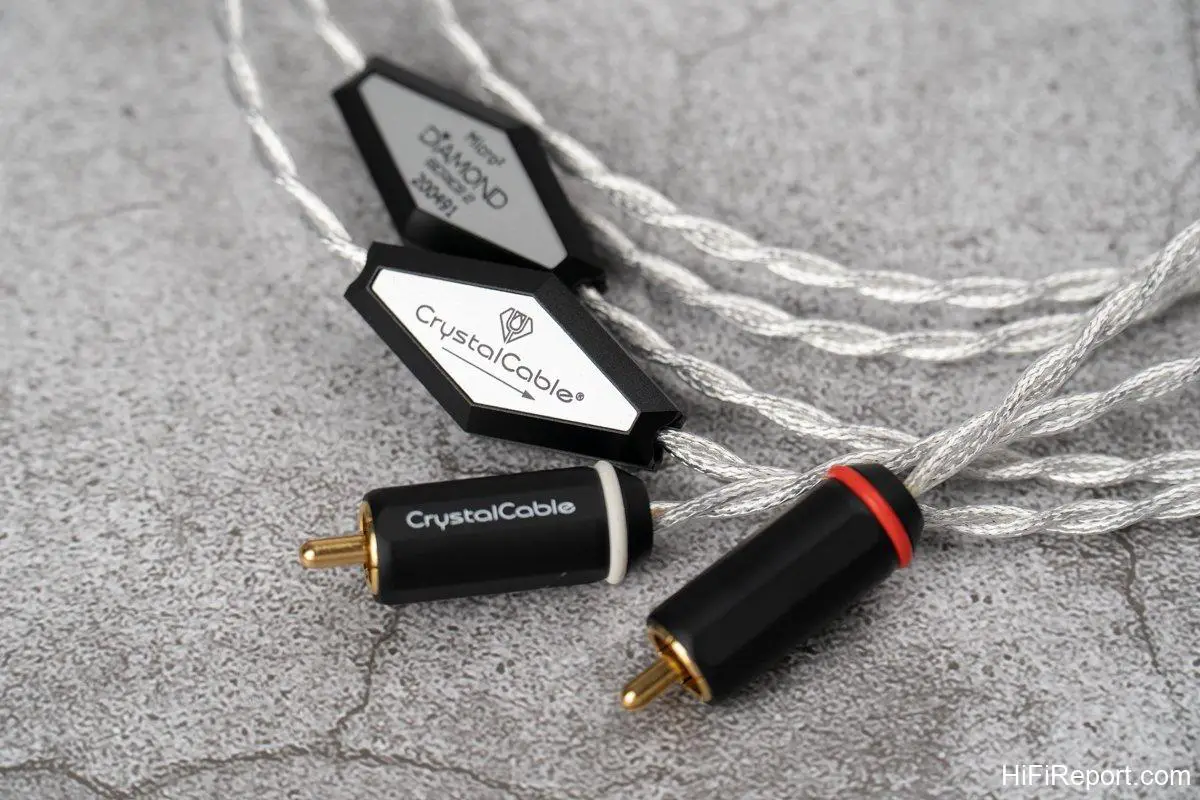
Structurally, the most noticeable difference in the Diamond Micro 2 is its dual-strand construction. This effectively doubles the material compared to the original Diamond Micro. The conductor remains Crystal Cable’s signature silver-gold alloy (Silver Gold Alloy), where gold fills the gaps between silver crystals, creating a smoother conductor surface. The new SG2 silver-gold alloy is claimed to have even higher purity, although the manufacturer hasn’t released detailed technical specifications.
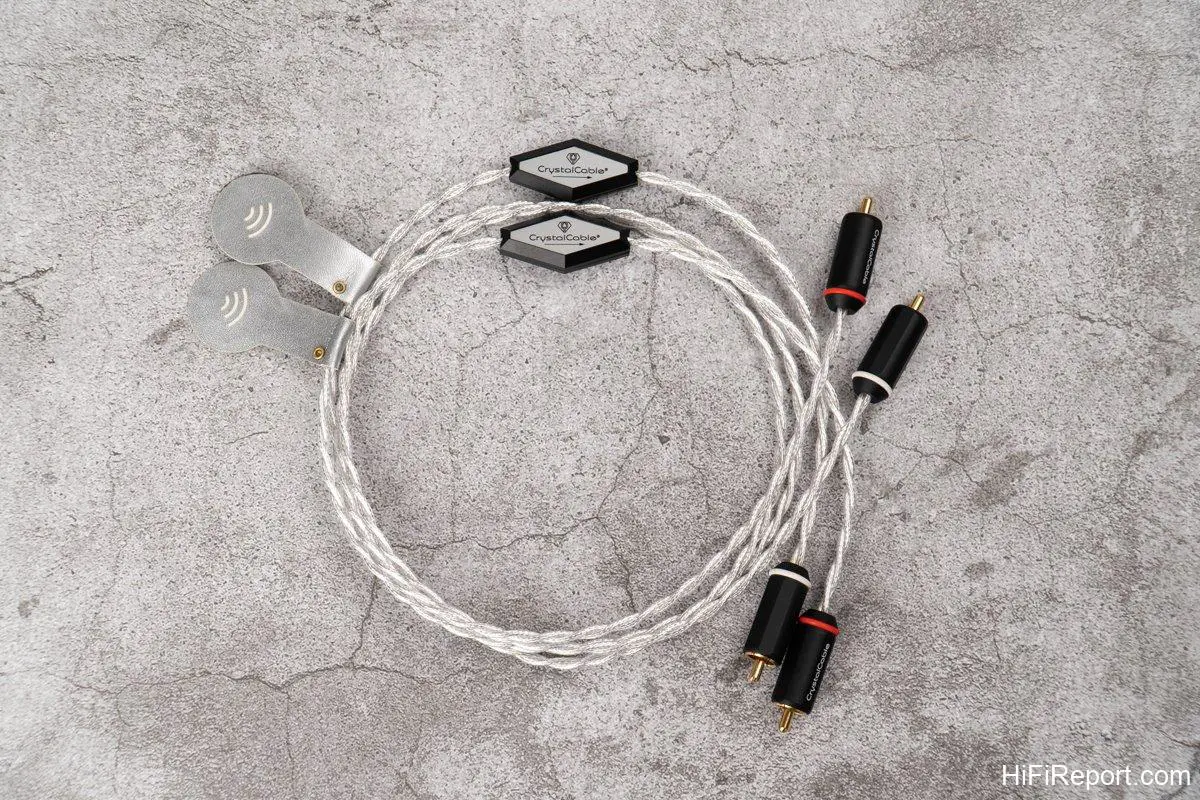
The coaxial structure is retained, with the silver-gold alloy surrounded by Teflon and DuPont Kapton insulation. Shielding is provided by a silver-plated copper mesh, and the outermost layer is transparent Teflon, resulting in a sleek, silver-white cable. The conductor gauge in Diamond 2 cables has also increased by 1.5 to 2 times.
The Value of Comparison
These structural upgrades suggest that Diamond 2 could offer significant improvements over its predecessor in two key areas of audio performance.
First, the increased conductor gauge likely enhances low-frequency performance, particularly in terms of quantity. Second, the dual-strand twisted structure should improve channel separation.
However, theoretical predictions are just that—theories. In audio, listening is believing. No amount of theory can compensate for poor sound. And only through comparison can we truly appreciate the nuances of improvement. Without comparison, our existing systems might always seem “good enough.”
Noticeable Mid-Low Frequency Enhancement
My Diamond Micro 2 arrived around the Lunar New Year and was happily put to work in the HiFiReport listening room. Despite being new, the cable sounded remarkably refined right out of the box. I connected the Diamond Micro 2 between an EAR 868P preamplifier and a Merging NADAC, driving EAR 509 MK II monoblocks and Wilson Audio Alexia 2 loudspeakers.
After over a decade with the original Diamond Micro, the upgrade to Diamond Micro 2 was immediately impactful. The most significant improvement was in the mid-low frequency range, with enhanced weight and impact. The Diamond Micro 2 delivered tighter, more substantial bass, noticeably increasing the solidity of the music.
A Relatively High-Value Choice
I’ve auditioned Crystal Cable’s higher-end Artist series cables. In terms of pure sonic excellence, the Artist series is undoubtedly superior, but their price is also considerably higher. However, the Diamond Micro 2 shares the sonic character of the Artist series, making it a relatively high-value option at its price point. If you’re looking to experience Crystal Cable, the Diamond 2 series is an excellent starting point.
The Diamond Micro 2’s sonic signature clearly exhibits the bright, lustrous quality characteristic of silver cables, mirroring the original Diamond Micro. However, the Diamond Micro 2 possesses a noticeably richer mid-low frequency foundation. Listening to Bill Evans’ “My Foolish Heart” from “Waltz For Debby,” the delicate brushstrokes on the drums, subtly positioned behind the stage, complement the piano’s melodic musings. The double bass lays down a full-bodied harmonic foundation. Diamond Micro 2 not only delivers the bright, sparkling highs of silver but also adds mid-low frequency fullness, lending the piano a touch of roundness and imbuing the bass notes with sufficient thickness, capturing the laid-back, swinging mood of jazz.
Focused Soundstage, Beautiful Imaging
The Diamond Micro 2’s enhanced mid-low frequency weight and focus are particularly evident with Bach’s Cello Suites. Listening to Starker’s classic recording, the familiar “Prelude” from BWV 1007, the master’s concentrated presence becomes even more palpable. The cello is focused and centered within the soundstage, while the recording’s spatial ambience expands naturally. Subtle details like Starker’s breathing and the delicate sounds of his left hand moving and pressing on the fingerboard enhance the music’s realism, drawing the listener closer to the recording venue. This, I believe, is the enduring allure for audiophiles – the quest to glimpse the artist’s spirit through recordings, knowing we can never truly return to the moment of creation.
The focused soundstage and fluid sonic lines are strengths of the Diamond Micro 2. Take Tsai Chin’s “Chance” album, for example. The recording has a beautiful balance between vocals and instruments. However, if Tsai Chin’s voice sounds excessively large in your system, it might not be accurate. This is where the Diamond Micro 2 interconnect can be beneficial. For systems with overly large imaging, the Diamond Micro 2 can tighten and focus the soundstage, restoring a more accurate sense of proportion between vocals and instruments.
Home Upgrade
After the Diamond Micro 2 served time in the HiFiReport editorial office and accompanied me through reviews, I initially intended to pack it for my lectures. However, with the switch to the iFi Go-Blu USB DAC, my portable cable needs shifted to a Duet 3.5mm to RCA cable. The RCA-terminated Diamond Micro 2 became redundant for portable use, so I brought it home for a personal system upgrade.
Since I spend most of my time listening to equipment at the office, I wanted to simplify my home system. I switched to Kali IN-5 active studio monitors, with a Lindemann Network player serving as both streamer and USB DAC. This simple two-component system only needed a quality interconnect, and the Diamond Micro 2 arrived at the perfect time.
Enhancing Active Monitors
I purchased the IN-5s last year, finding them to be the best value active monitors currently available. They aligned with my desire to simplify my home system. Subsequently, I brought my Chartwell LS 3/5s to the office for colleagues to use, providing a classic speaker option for their reviewing work.
The IN-5s possess a true monitor character, prioritizing accuracy and neutrality. Adding the Diamond Micro 2 injects a touch of silver cable’s refined sparkle into the highs, while tightening and speeding up the bass response.
Listening to Marcus Miller’s “Blast” from the “Free” album, the explosive electric bass is exhilarating. The IN-5’s 5-inch woofer naturally can’t match the bass output of the floorstanding speakers in the office, but considering their compact size, they produce a substantial low end with impressive speed – remarkable value. With the Diamond Micro 2, the electric bass gains even greater speed and definition. The funky bass lines, whether plucked or slapped, exhibit deep extension on the downbeats and a wild energy on the upbeats, highlighting the electric bass solo’s soaring emotion. The Diamond Micro 2’s refined sonic lines ensure a focused, punchy bass image. If your system sounds loose or weak in the bass, the Diamond Micro 2 is worth trying; it can significantly improve low-frequency precision and energy.
String Quartet Clarity
Home listening is about comfort and enjoyment, not chasing volume or dynamics like in the office. Marcus Miller was just a quick test to assess the Diamond Micro 2’s capabilities. After that, it was time for relaxed music listening.
If you’ve heard audiophiles say that silver cables, while bright, can be fatiguing, you must try the Diamond Micro 2. Crystal Cable’s reputation, and my decade-long reliance on their cables, stems not just from the silver cable’s unique high-frequency refinement, but more importantly, from the beautiful musical flow they deliver. Listening to the old Decca recording of “Rossini: Sonate a quattro,” Accardo’s violin introduces the glistening main theme, answered by the quartet. The Diamond Micro 2 not only makes the violin theme prominent and bright but also solidifies the cello’s sonic lines. The viola’s solo tone contrasts beautifully with the violin. If you’ve ever struggled to distinguish the viola from the violin in string quartet recordings, try the Diamond Micro 2. It can help you rediscover the vibrant character of string quartets.
A New Home Audio Partner
While the Duet has replaced the Diamond Micro 2 as my current portable lecture companion, bringing the Diamond Micro 2 home for use with the simple IN-5 active monitor system has been a rewarding upgrade. It adds a touch of silver cable sparkle to the neutral monitor character and imbues the mid-low frequencies with a taut, springy energy. I anticipate the Diamond Micro 2 will be a long-term partner in my home system, providing countless hours of musical enjoyment.
Specifications
* Type: Analog Signal Cable
* Conductor: Silver-Gold Alloy
* Connector: RCA (XLR version also available)