
Dynaudio BM5 MKIII Review
Many music lovers, when first venturing into the world of two-channel audio, often lack a comprehensive understanding of sonic performance and standards. Consequently, they tend to gravitate towards sound profiles they immediately enjoy. Some might adore rich, thick midranges, others crave powerful bass, and some prefer crystal-clear highs. These preferences are entirely natural.
However, after spending some time with hi-fi equipment, most people begin to appreciate the crucial importance of “balance.”
Think of it like taste – it’s unlikely anyone would eat only extremely sweet, salty, or spicy food their entire life. Truly memorable culinary delights seldom rely on just one flavor. For instance, a dish with a sweet base might need a touch of acidity to truly stand out. Similarly, the dishes you find most delicious likely balance saltiness with spice, or spiciness with sourness. Even simple dishes incorporate the natural flavors, textures, and resilience of their ingredients.
Why bring up cooking? Not to give a cooking lesson, of course, but to illustrate that any decent high-end system, even one that emphasizes certain frequencies, will still reproduce other parts of the sound spectrum. They might be less prominent, perhaps layered subtly beneath, but the human ear cannot filter out auditory information; the brain receives it all. What’s the long-term effect?
When you encounter a truly balanced and comprehensive system, you might feel surprised, even moved, and find yourself asking, “Is this the same song I usually listen to?”
The Pursuit of Balance in Audio
In such scenarios, some audiophiles consider upgrading to equipment with a more balanced presentation. Studio-grade monitor speakers often enter the equation. However, this typically raises a common concern: “Can professional monitor speakers integrate into daily life? Won’t they sound too sterile?” I can confidently say the answer is yes, and the results are often better than anticipated. My advice is to choose a brand with a solid reputation in both the Hi-End and professional studio realms.
Introducing the BM5 MKIII
This publication previously reviewed the Dynaudio LYD 48, another monitor-type speaker, awarding it a “Best Recommendation.” While the LYD 48 leans more towards dedicated professional studio use, the BM5 MKIII offers greater flexibility. It’s equally adept at professional tasks, everyday music listening, or even forming part of a home theater system.
Since Dynaudio launched the first BM5 and BM10 in 1996, the BM series has evolved through four generations, a testament to its enduring success and market acceptance.
A Legacy of Success: The BM Series
The BM5 MKIII can be seen as an improved iteration of the BM5A MKII. A preliminary look at the exterior reveals a redesigned back panel, primarily due to the switch from Class AB to Class D amplification. The most significant difference is the removal of the heat sink on the BM5 MKIII and more prominent placement of the sound adjustment controls. To facilitate use in a standard two-channel system, the BM5 MKIII also adds RCA inputs.

While the drivers appear similar visually, the BM5 MKIII features upgraded drivers, extending the frequency response from 48Hz–21kHz to 42Hz–24kHz.
Design Evolution and Key Differences
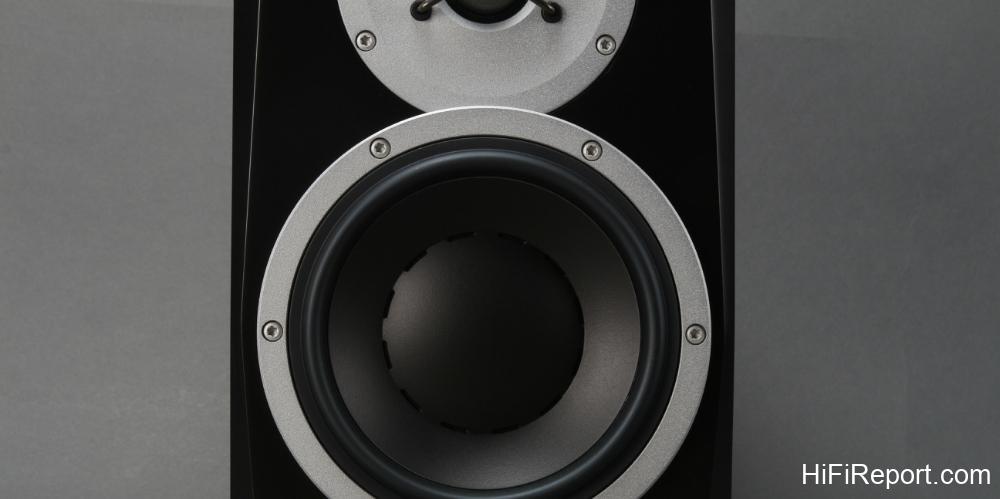
Delving into the driver technology, the BM5 MKIII’s 7-inch mid-woofer utilizes a one-piece cone and dust cap made from Dynaudio’s proprietary lightweight, rigid Magnesium Silicate Polymer (MSP). This material enhances sonic accuracy. The manufacturer expresses strong confidence, stating that thanks to the BM5 MKIII’s more efficient DSP-controlled Class D amplifier, it achieves better SPL (Sound Pressure Level) compared to the BM5A MKII, despite the visual similarity of the drivers.
The BM5 MKIII boasts an SPL of 118 dB, while the BM5A MKII is 117 dB.
The BM5 MKIII drivers feature handcrafted pure aluminum frames and voice coils, offering the advantage of being lightweight for faster, more accurate transient response, resulting in quicker, cleaner sound. The tweeter uses Dynaudio’s classic D28 series technology. For bass reflex, the BM5 MKIII replaces the round port of the BM5A MKII with a slot-shaped design similar to the BM6. This design provides compression and diffusion functions and is more effective at reducing port noise.
Notably, the BM5 MKIII cabinet also incorporates unique asphalt damping plates internally, effectively suppressing vibration and reducing noise.
Driver Technology and Cabinet Construction
Dynaudio has adjusted the crossover point for the BM5 MKIII from the BM5A MKII’s 1,500Hz up to 1,900Hz. The crossover slope has also been revised from 6dB/oct to 12dB/oct. This change minimizes interference between high and low frequencies while ensuring a more natural transition between frequency bands. As a bonus, the BM5 MKIII features an automatic bias function, auto-adjusting for different voltages like 110V/230V, making it very convenient to use.
Furthermore, to prevent amplifier overload, Dynaudio has specially designed a thermal protection mechanism for the BM5 MKIII’s amplifier. This system activates if overheating occurs, protecting the internal integrated circuits and drivers from damage. It works by incorporating a limiter in the woofer circuit; if the current flowing exceeds a threshold, the circuit gain automatically reduces to protect the driver.
Technical Details and Protection
Although the BM5 MKIII is positioned as a near-field monitor speaker, it can also be used in multi-speaker setups. Besides serving as a two-channel stereo pair, it can be integrated into a home theater system or used as surround speakers, offering significant flexibility. It can also connect to Dynaudio’s dedicated volume controller for convenient remote operation.
The BM5 MKIII also includes a sleep mode: if no signal is detected for 20 minutes while powered on, it automatically enters sleep mode. This allows for more relaxed listening and consumes only 0.3W in sleep mode, which is negligible.

Versatility and Convenience Features
As an active monitor speaker, the BM5 MKIII offers sound adjustment features. Controls on the rear panel allow for flexible tuning to suit personal preferences. For instance, the HP (High Pass) switch lets you filter out low frequencies below 60Hz or 80Hz, depending on your preference and whether you’re using a subwoofer. The LF, MF, and HF knobs provide Bass Boost/Cut, Mid-Frequency Notch Filter, and Treble adjustment respectively. If you feel the bass is insufficient, you can set LF to +2dB.
Similarly, if the midrange peaks are too high, you can set the MF knob to -2dB.
Another control on the BM5 MKIII is the Level Trim, a sensitivity adjustment knob. This allows you to match the speaker’s sensitivity to the output level of your source component, achieving optimal performance. In simple terms, if you feel the speakers are overloading or not powerful enough with your source, you can adjust the sensitivity to +4 or -10 as needed.
Review Context and Setup
To ensure the listening environment closely resembled a typical home setup, I used a TEAC-UD505 as the source, connected to my laptop, and fed lossless audio files via XLR balanced output to the BM5 MKIII. Before the review, there was an amusing incident that stood out. Colleagues in the office often pair equipment based on their own considerations. At the time, a colleague was testing the BM5 MKIII with other gear.
Even from my desk, about 20 meters away, I could clearly feel the rich, full bass of the BM5 MKIII!
Test Setup: Laptop / TEAC-UD505, using Lovan audio rack.
Listening Room: Our publication’s Room 3 (4.2m long, 3.5m wide, approximately 4.5 ping / 161 sq ft).
Listening Impressions: Initial Thoughts
When it came time for the actual review, I casually placed the BM5 MKIII in a parallel position, picked a random song, and hit play. To my surprise, I couldn’t stop listening. Before I knew it, the track had played twice, and as I was about to start the third listen, I remembered I needed to pause and collect my thoughts before continuing. During that third listen, I noted my initial impressions of these speakers: clear imaging, natural timbre, and fullbodied sound across all frequencies.
Detailed Listening Impressions
I was astonished that they could reproduce subtle details like the singer’s slight exhale at the end of phrases, or the sound of a quick swallow or intake of breath between lines. Even vocal techniques and transitions were rendered clearly. Crucially, sibilance sounded remarkably natural!
Concluding solely based on a vocal-centric track might seem incomplete, so I proceeded to test the speakers with several large orchestral pieces to further evaluate their imaging. Karajan’s rendition of “Valse Karajan” particularly impressed me. The waltz’s repeating, progressively building melody was handled beautifully by the BM5 MKIII. For speakers of this size, describing the performance as grand and overwhelming would not be an exaggeration.
What was even more remarkable was that amidst the powerful presentation, the overall soundstage maintained excellent separation – strings remained distinct from winds, and the bass drum was clearly defined. This level of organization was truly striking.
After the large-scale test, I moved on to chamber music, specifically violin and piano concertos. As expected, the BM5 MKIII maintained its characteristic relaxed and spacious sound. This trait is quite rare for speakers in this price range; the performance was both effortless and precise, never sounding sluggish. The imaging of the violin and piano was excellent. Even during rapid passages, the presentation remained vivid and coherent, everything flowing smoothly without becoming blurred.
It was quite surprising.
Next, I sampled several jazz tracks. Across all of them, the BM5 MKIII delivered bass with significant weight and fullness, even a sense of bounce, yet it never overpowered the music. The bass line confidently guided each piece forward. What particularly struck me was the natural timbre of the saxophone, almost sounding lazy, as if the musician right before me was truly enjoying playing with others.
On a related note, despite employing a Class D digital amplifier, I could still discern a faint hint of tube-like warmth (often referred to as “fried bean” or tube rush sound).
However, given the BM5 MKIII’s robust bass performance, I couldn’t let it off easy. I proceeded to test several rock and pop tracks. After listening, I had only one conclusion: the bass was truly punchy and immensely satisfying! But I also noticed something important: despite the powerful bass, there was excellent layering across different genres!
Using the album by Omnipotent Youth Society as an example, from my listening position towards the wall behind the speakers, the instruments were layered distinctly: guitar, electronic synth sounds, vocals, bass, and finally the kick drum. Even during passages with simultaneous instruments or rapid kick drum sequences, the sound never faltered.
Practical Adjustments Based on Listening
Regarding the gain adjustments, my testing showed that adjusting the sensitivity significantly improved the overall soundstage depth and presence of the BM5 MKIII. If you find the sound lacks three-dimensionality or softer recordings sound too quiet with your source, try adjusting the sensitivity to +4. For the three-band gain, based on my bass test, simply setting LF to +2 makes the bass more prominent, intensifying the drum and electronic bass frequencies and providing a more solid foundation.
Conclusion: Versatility and Musicality
Some audiophiles believe monitor speakers prioritize accuracy over musicality. Frankly, I used to think that way too, but the BM5 MKIII completely defies that notion. Beyond the clear and natural imaging of instruments mentioned earlier, almost every sound carries a touch of warmth, like being bathed in the gentle rays of a warm afternoon sun. They can serve as a comfortable background presence for daily life or be used for serious musical appreciation.
If you’re considering a versatile piece of equipment, the BM5 MKIII is an excellent choice, equally suited for critical monitoring and relaxed listening.
Key Features
* 7-inch woofer with natural bass extension.
* Handcrafted aluminum voice coil drivers reduce coloration.
* DSP-controlled Class D amplifier for improved efficiency and transient response.
* XLR and RCA inputs for versatile connectivity and flexible use.
* Adjustable sound characteristics to suit various music types.
* Still Made in Denmark.
Specifications
* Type: 2-way, 2-driver Bass Reflex
* Drivers: 1 × 28mm D-281 Soft Dome Tweeter, 1 × 7-inch MSP Cone Mid-Woofer
* Frequency Response: 42Hz~24kHz
* Crossover Point: 1.9kHz
* Amplifier Output Power: Tweeter 50W / Mid-Woofer 50W
* Maximum SPL: 118dBA (pair)
* Crossover Slope: 12dB / oct
* Dimensions: 186×320×296mm (W.H.D)
* Weight: 7.7kg