
Dynaudio Bookshelf Speaker Review
This is an extraordinarily unique speaker in Dynaudio’s history.
I first encountered the latest Dynaudio The Bookshelf speaker at the international audio exhibition at the end of 2024.
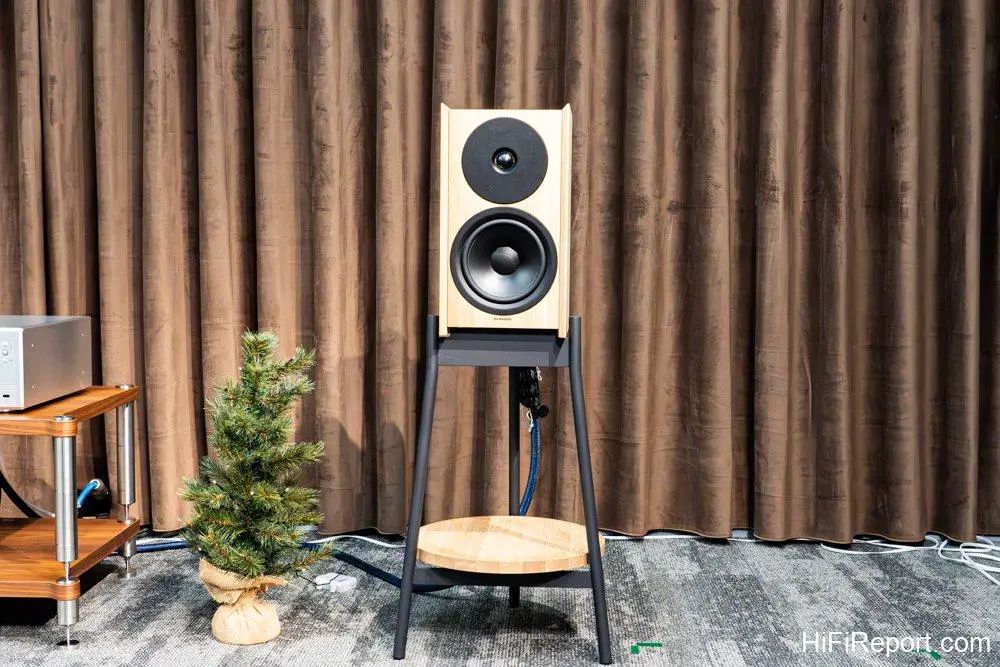
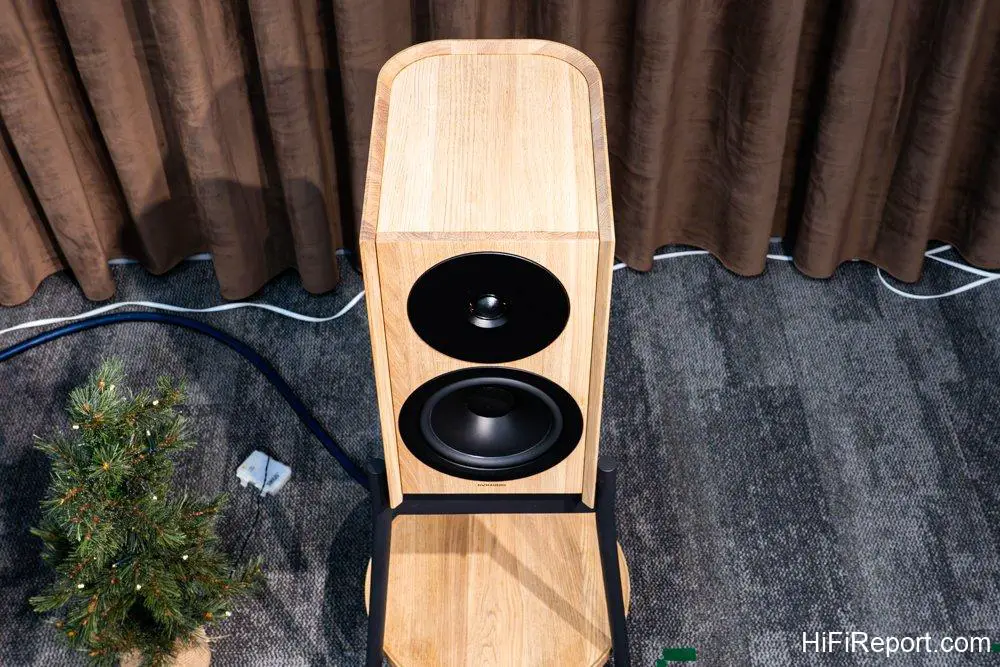
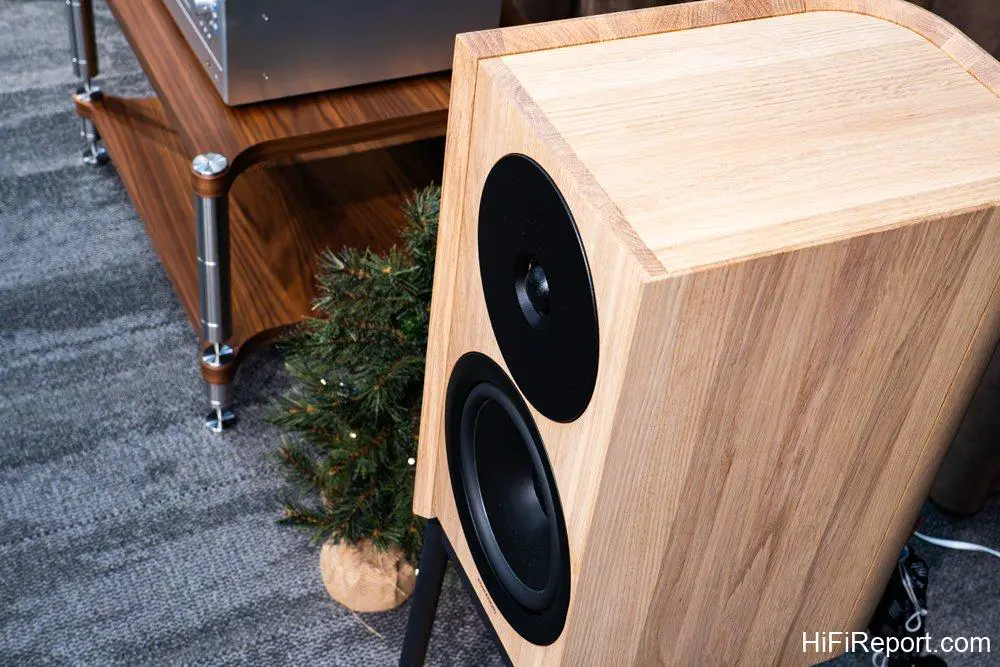
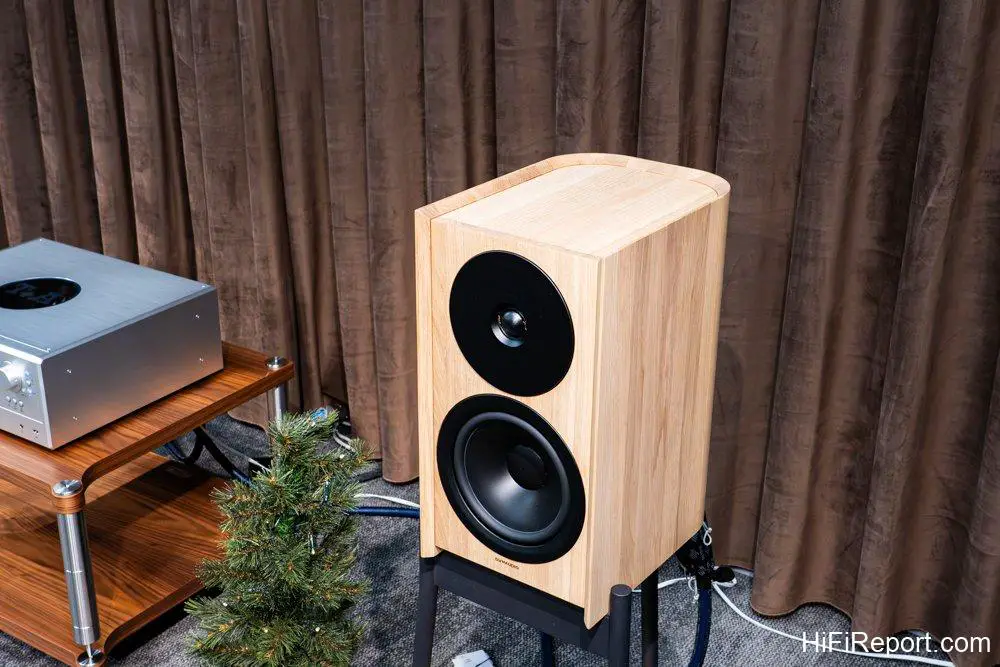
This speaker breaks away from Dynaudio’s traditional design philosophy. The cabinet is crafted from solid oak sourced from Hokkaido, Japan. Its surface texture and color are naturally appealing, offering a direct tactile feel.
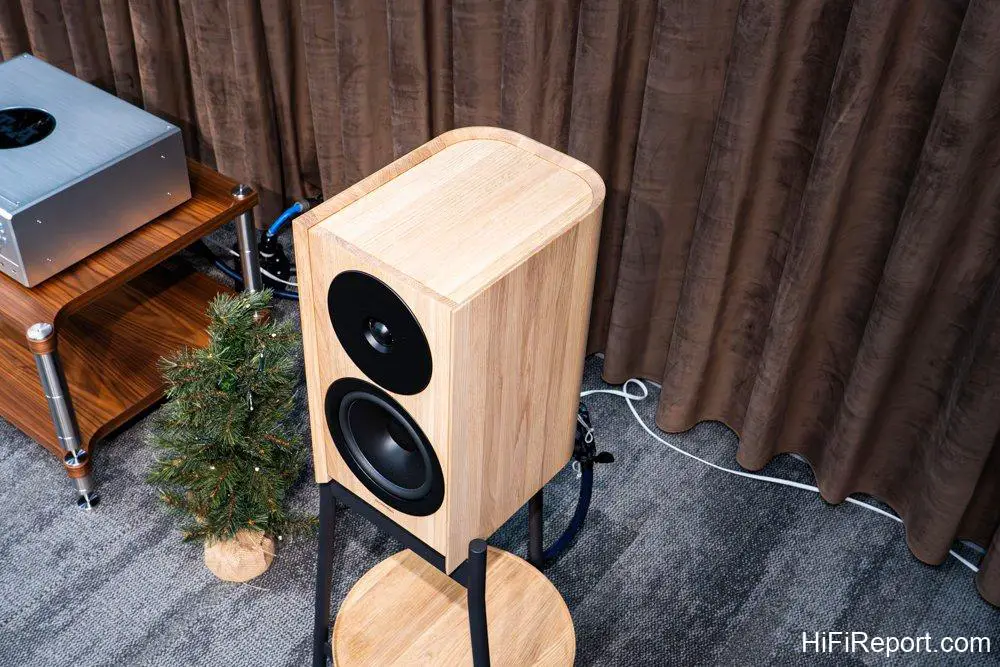
The styling is also fresh and innovative, featuring distinct sharp edges combined with curved rear corners. Paired with a stand resembling a plant stand or a small side table, it clearly leans towards a lifestyle aesthetic, a significant departure from the pragmatic image we’ve long associated with Dynaudio.
This pair of The Bookshelf speakers is truly special!
Collaboration with Japanese Design Studio
Is this really a Dynaudio product? The speakers are indeed manufactured by Dynaudio, but the overall exterior design is the work of the renowned Japanese design team, Keiji Ashizawa.
This is a product born from a collaboration between Denmark and Japan.
Keiji Ashizawa’s designers have infused the essence of “Japandi” into The Bookshelf speaker.
“Japandi” is a portmanteau combining “Japan” and “Scandi” (short for Scandinavia). It represents a fusion of Japan’s Muji-style aesthetics and Wabi-sabi philosophy with the Scandinavian design principles rooted in pragmatism, emphasizing functionality and a palette dominated by light colors.
These two design movements share a common characteristic: they both embody the philosophy of “minimalism” and “practicality.”
In terms of the design itself, they exemplify what Less Is More means in the realm of Hi-Fi aesthetics.
Regarding materials, they tend to favor natural elements, seeking to highlight the inherent texture of the material.
If it’s solid wood, the goal is to let the wood reveal its own color, grain, and texture.
This “Japandi” style, whether you call it “Nordic Muji” or “Japanese Nordic,” looks simple but is actually quite challenging to execute.
Pure geometry, natural coloration, devoid of any extraneous decoration – how does one convey beauty with this approach? Simply restoring a natural material and doing nothing else doesn’t qualify as Nordic Muji style.
Skilled design demands careful consideration of every detail, including lines, curves, etchings, and material grain.
The simpler the design, the more critical perfect detailing becomes.
Paradoxically, simpler designs are often the most difficult.
Historically, Dynaudio speaker cabinets have been made from MDF, often finished with real wood veneer.
Keiji Ashizawa’s designers chose to use solid Japanese oak from Hokkaido for the cabinet construction.
Using MDF for speaker cabinets isn’t solely about cost savings; it’s more about the material’s uniform density, which makes it easier to control resonance.
In contrast, solid wood is harder to control and can even warp if not processed correctly.
Consequently, most speakers on the market use MDF for their cabinets.
Keiji Ashizawa Designs, Karimoku Crafts
As mentioned, the Japandi design style and material selection prioritize nature, with raw and solid wood being the materials of choice.
Therefore, material preparation requires exceptional effort.
Keiji Ashizawa has a long-standing collaboration with the well-known Japanese furniture company, Karimoku. One specializes in design, the other in manufacturing, bringing various creative ideas to fruition.
The Bookshelf is no different. Karimoku sources Japanese oak logs from Hokkaido through its own channels, sending them to the Karimoku factory in Gifu Prefecture for processing.
All the wood must be left to dry for at least 3-6 months. Only after the moisture content is confirmed to meet standards is the wood cut and shaped into cabinets.
Apart from a necessary thin coat of protective finish, the cabinet surface receives no additional treatment – no veneer, no paint finish. This approach maximally preserves the natural texture of the oak.
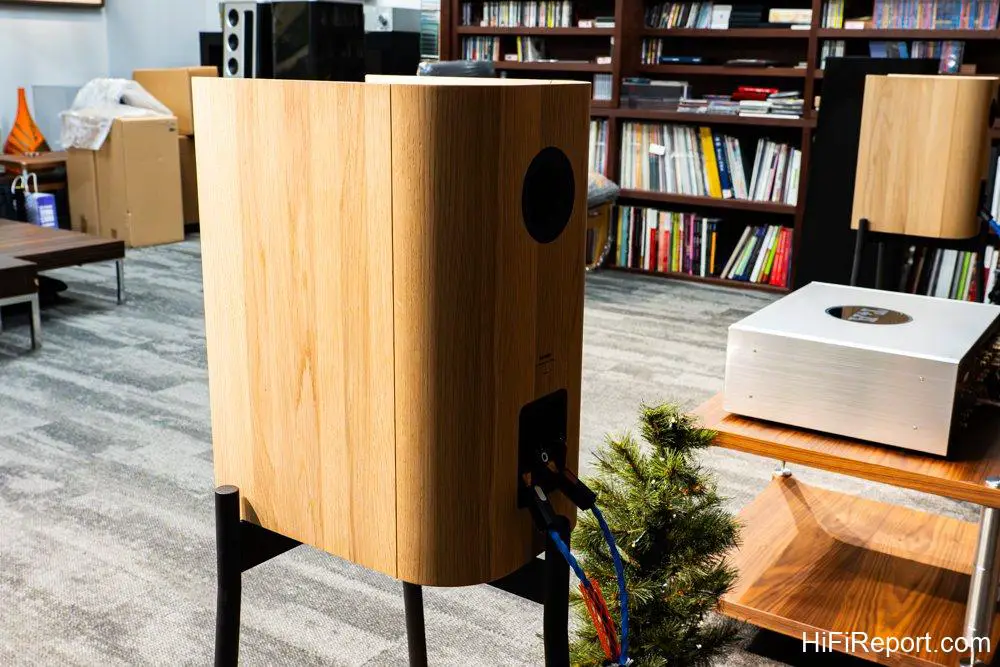
Consequently, these natural wood grain patterns are not only visible but also tangible.
Speaker and Stand: A Lifestyle Ensemble
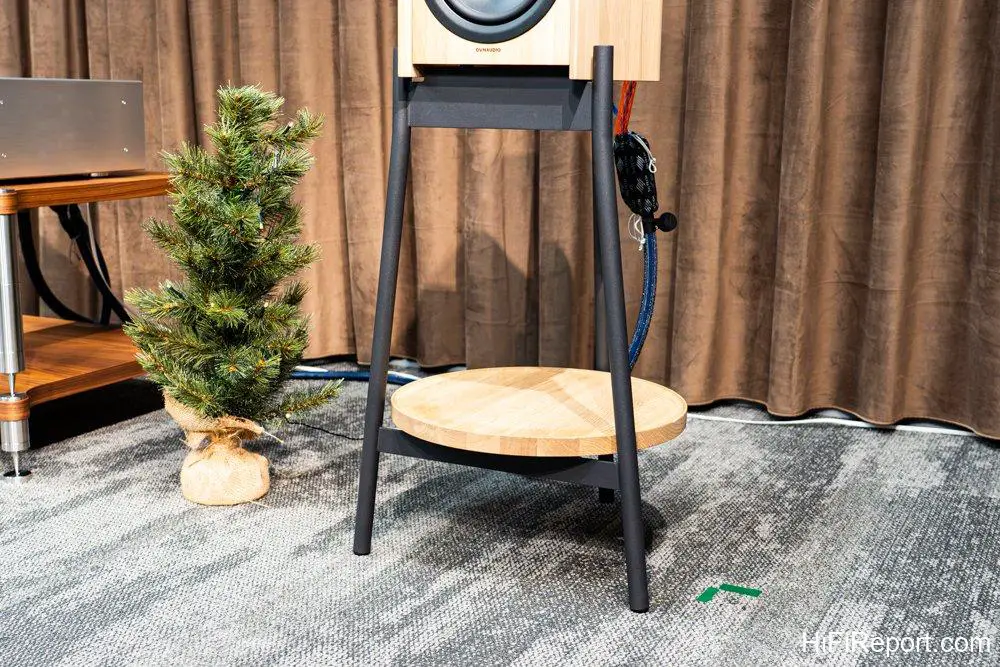
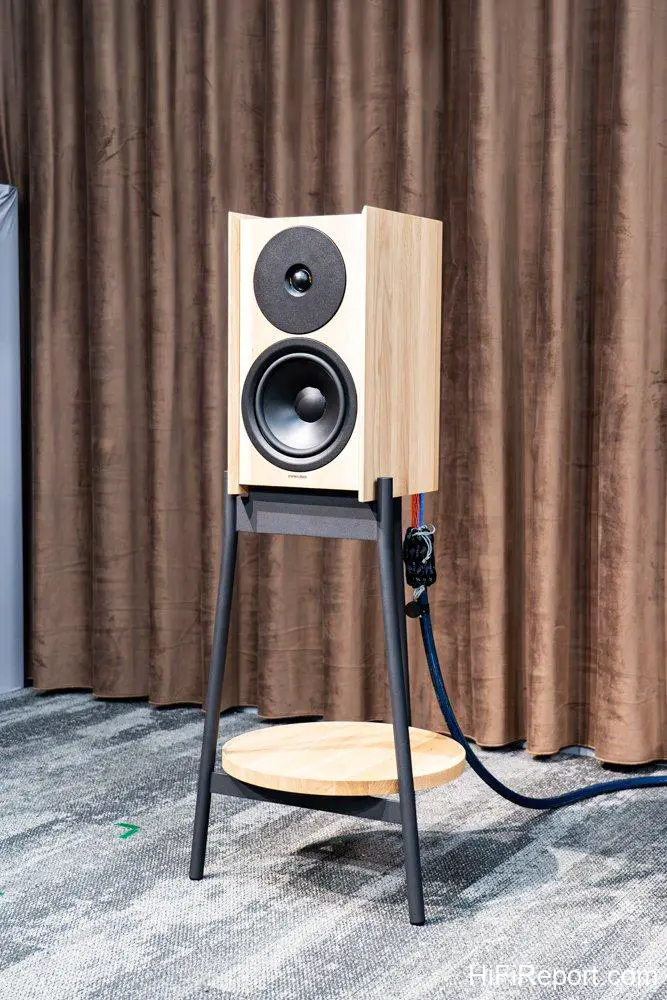
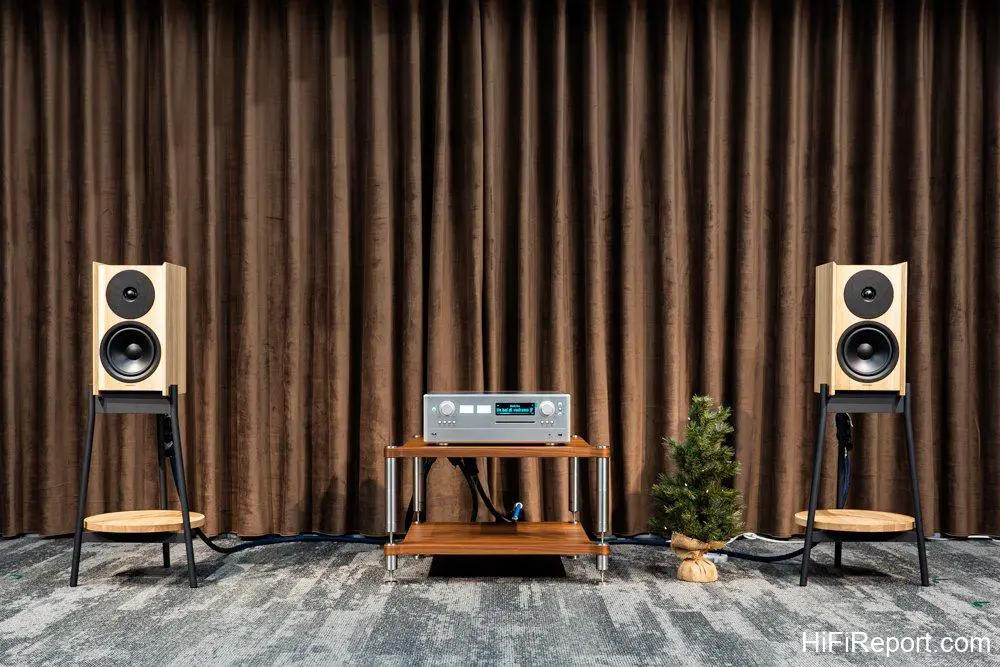
In addition to the speaker body itself, The Bookshelf includes a stand designed to perfectly interlock with the protruding edge on the front of the speaker. The legs of the stand then extend downwards, continuing the lines.
The base of the stand features a circular tray, providing a space for books, plants, ornaments, or other objects.
The Bookshelf isn’t just a speaker for listening to music; it’s an integral part of the living space.

From the front, the speaker cabinet is square, the drivers are round, and the rear corners are curved, culminating in a circular tray below.
The entire The Bookshelf system beautifully integrates simple geometric shapes – squares and circles, circles within squares – creating endless aesthetic appeal.
Dynaudio The Bookshelf is truly stunning.
A Journey from Japan to Denmark and Back
From native Hokkaido wood species to processing at the Gifu Prefecture factory, then traveling halfway across the globe to Denmark, The Bookshelf gradually took shape through various journeys.
This is Dynaudio’s most unique speaker to date.
Being a Dynaudio product, The Bookshelf is naturally not just about looks.
While the exterior boasts the natural purity and fluid harmony instilled by Keiji Ashizawa’s Japandi design, the sound performance is entrusted to Dynaudio’s acoustic team for completion.
Featuring Flagship-Grade Esotar 3 Tweeter and NeoTec MSP Woofer
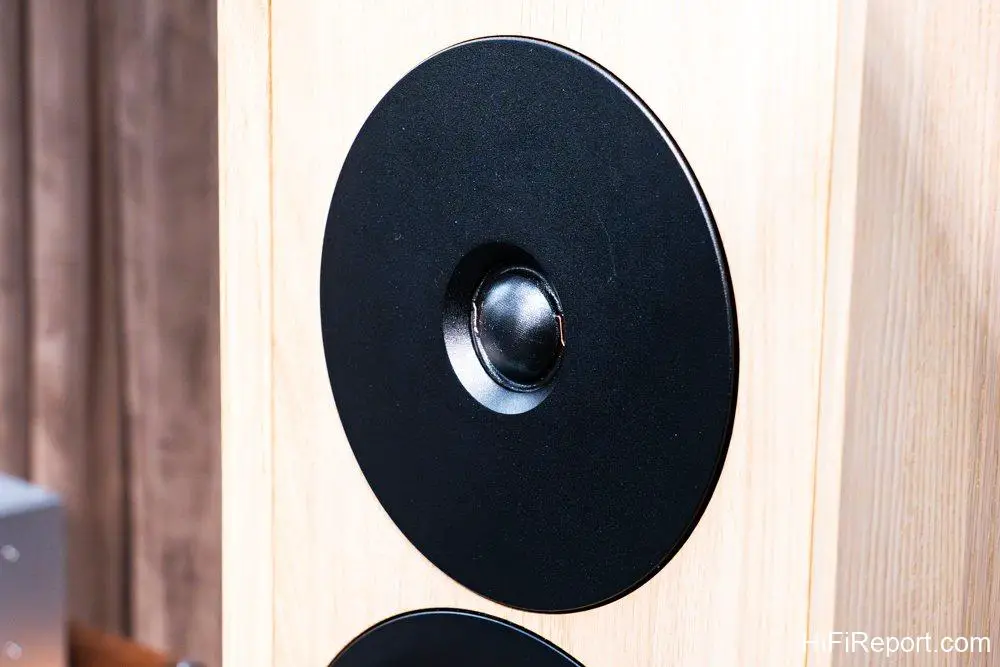
The Bookshelf is equipped with Dynaudio’s latest-generation Esotar 3 soft-dome tweeter.
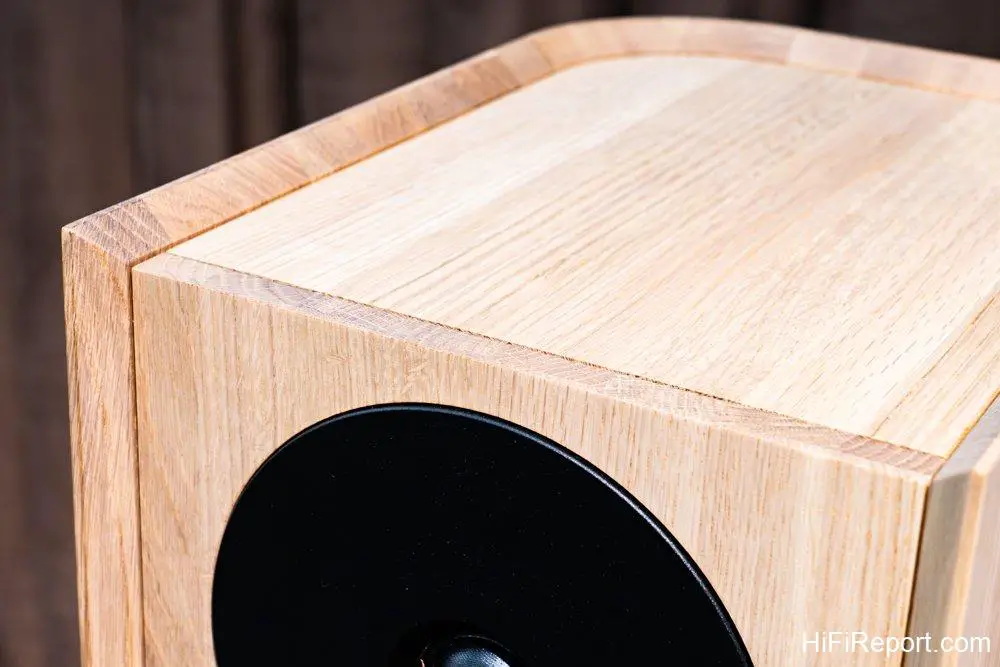
The most distinctive feature of this tweeter is a plastic device called Hexis located behind the diaphragm.
This Hexis is designed to break up the back wave from the tweeter, facilitating damping material absorption of the back wave energy. This prevents the back wave from interfering with the tweeter’s operation, naturally reducing distortion.
Furthermore, the Hexis offers an additional benefit: precisely because of this “hard-backed” Hexis protection, the tweeter is less prone to damage from accidental touch.
The Esotar 3 tweeter is commonly used in Dynaudio’s higher-end speakers. Its inclusion in The Bookshelf signifies its product positioning to a considerable extent.
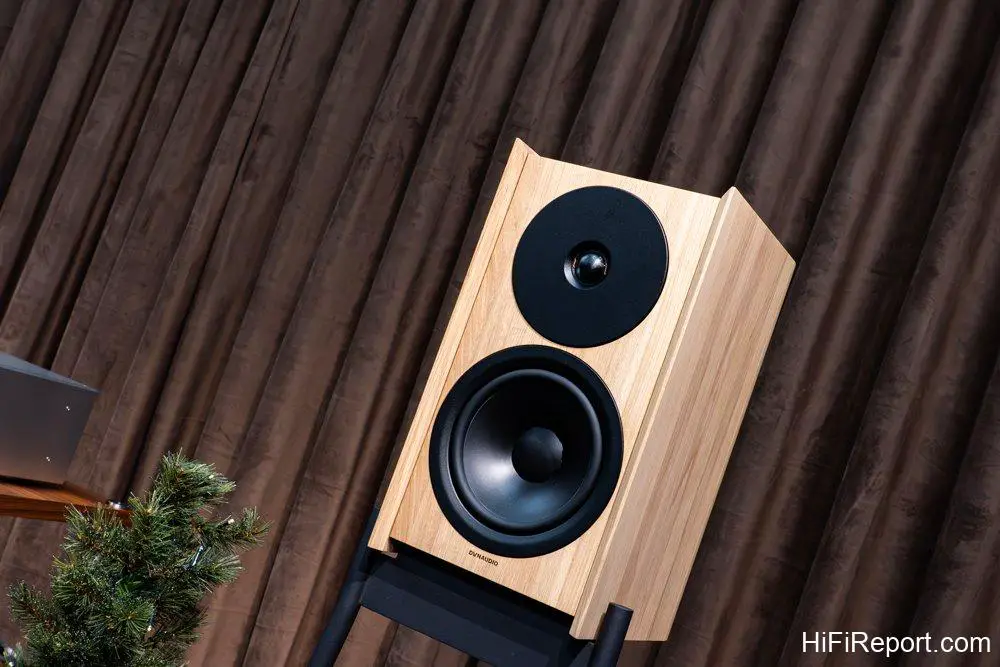
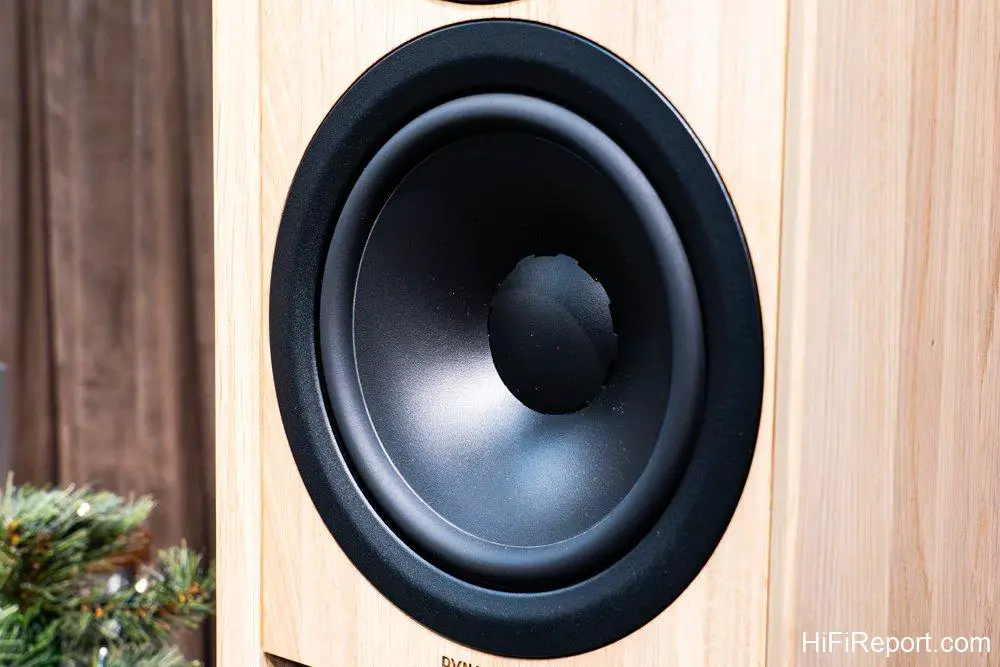
The woofer is an 18cm NeoTec MSP diaphragm driver, featuring an aluminum wire voice coil with a glass fiber former, driven by a powerful neodymium magnet. It is mounted on a driver frame designed for excellent airflow and heat dissipation.
This woofer unit is also far from ordinary; it’s essentially the same woofer used in the flagship Confidence 20 bookshelf speaker, now migrated to The Bookshelf.
It’s not an exaggeration to say that The Bookshelf is the “Nordic Muji” version of the flagship bookshelf speaker.
Even with the same drivers, the crossover must be completely redesigned for different speaker cabinets.
The Bookshelf’s crossover underwent months of rigorous testing, listening, measurement, and modification. Aided by the equipment in Dynaudio’s own Jupiter acoustic laboratory, it was finally optimized for the best design.
So, don’t be fooled by The Bookshelf’s simple, beautiful Muji-style exterior, thinking it’s just a lifestyle speaker.
No! Its sound is actually quite audiophile-grade.
A Simple System, Delivering Remarkable Sound
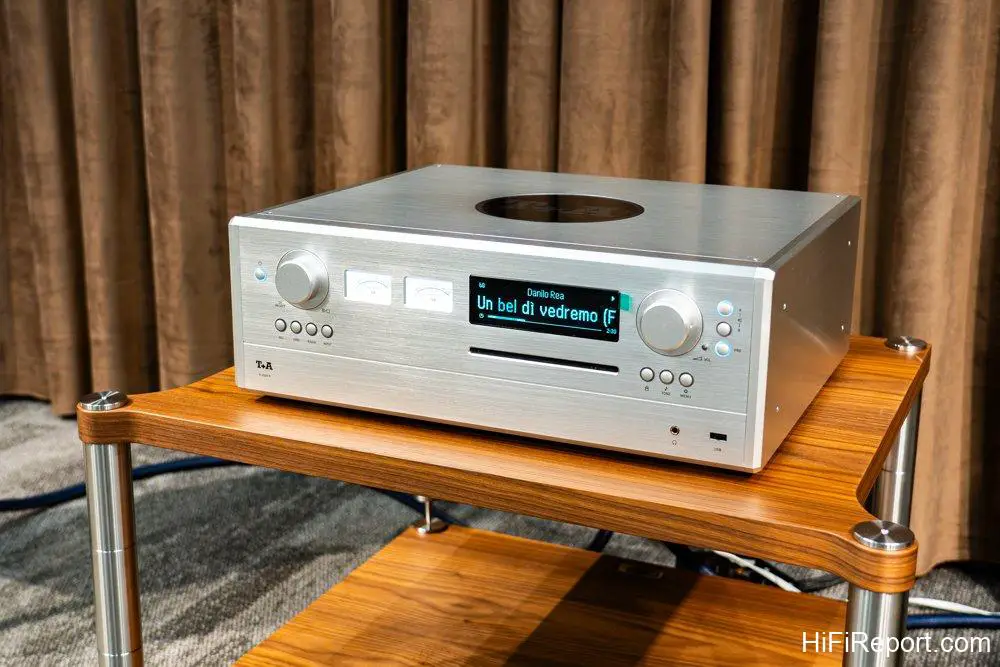
I had the opportunity to listen to The Bookshelf in HiFiReport’s listening room. The setup was kept equally minimalist, using a single multifunctional T+A R2500 R streaming integrated amplifier, acting as source, DAC, and amplifier, to drive The Bookshelf.
The piano played by The Bookshelf paired with the T+A R2500 R sounded incredibly realistic, possessing a rich, full-bodied texture.
Reproducing piano is no easy feat. First, the piano has a wide frequency range. Second, its dynamics are powerful. Third, its sound production mechanism via hammered strings is unique. Fourth, the tonal layers of the piano are extremely rich.
However, with this combination, all four points were handled successfully.
Although The Bookshelf is merely a two-way, two-driver bookshelf speaker, its bass performance was surprisingly good. While perhaps not as deep as a floorstanding speaker, it certainly wasn’t incapable of conveying the authoritative presence of the “king of instruments.”
Furthermore, its energy output is abundant. Driven by the R2500 R’s 140W, the performance remained consistently composed, clearly articulating high contrasts between soft and loud passages.
Taking Danilo Rea’s album “Lirico” as an example, this recording features Rea’s jazz-style arrangements of opera arias performed as solo piano pieces. A single piano sounds as if a soloist and orchestra are performing together, with emotions surging richly and profoundly, deeply moving the listener.
Instruments can sing, and music can convey emotion. In the piece “Your Voice Opens My Heart,” the continuous low-frequency chords are deep and powerful, truly impactful. This impact isn’t just auditory; it’s emotional.
During his performance, Danilo Rea occasionally hums and improvises with grace notes; all these details are clearly audible. As for the lifted finger movements used for syncopated effects, although they are part of the music, hearing them so clearly makes it feel as if you can see the pianist’s seemingly hesitant pauses.
Listening to this mellow, solid piano tone further reveals Danilo Rea narrating story after story from the operas at the piano, making one feel as though they are witnessing scene after scene.
Clear Details, Open and Spacious Soundstage
Detail reproduction has always been a Dynaudio strength. In John Williams’s album “The Berlin Concert,” the track “Hedwig’s Theme” begins with the striking of a glockenspiel with metal resonance tubes. This section hides sonic details.
A glockenspiel produces sound by striking metal bars with mallets. If there are resonance tubes below, they contribute a resonant sound. This is precisely what happens here. You can hear the sound of the mallet hitting the metal bar, followed by the ringing of the resonance tubes, which then reverberate and blend into a rich timbre.
Listening further, you immediately perceive the wide soundstage presented by The Bookshelf. I was engrossed in taking notes on my Macbook, completely unaware of the speakers’ physical presence; the soundstage was naturally laid out before me.
The layers of orchestral sections intertwined and swelled before me, especially during the development of the broomstick flying motif in the latter half, which descends relentlessly without pause, even the theme of Hedwig the owl looking back was transformed into a full orchestral arrangement, sounding even richer.
Hearing this lush and substantial orchestral music, and perceiving the clear structure within it, The Bookshelf is hardly just Lifestyle; it’s fundamentally Audiophilestyle!
Lively Vocals, Energetic Performance
An open sound combined with abundant information translates into The Bookshelf’s excellent sense of liveliness.
Consider Sara Bareilles’s live performance recording, “Brave Enough: Live at the Variety Playhouse.” The arrangement for this performance is simple, mostly featuring Sara singing and playing an electric piano. This makes it easy to focus attention on her singing.
Sara’s live performance is incredibly captivating. Not only is the emotional intensity heightened, but there are also many improvisations and interactions with the audience. Whether a system sounds lively or not, you’ll know by listening to this album. Can it create the illusion of being transported to the venue? If so, it succeeds.
Sara’s singing exhibits significant dynamic variations; the contrast between soft and loud passages is a source of emotion. As for the details of her diction, they are completely clear here. Not only are the details audible, but they don’t sound harsh or sibilant; instead, they possess a smooth, mellow quality.
Sometimes, what we perceive as detail is actually distortion and coloration. What Dynaudio has been striving for over the years, investing resources and effort, is to reduce distortion. They succeeded with the flagship Confidence series, with the classic Consequence, with the Contour series, and with The Bookshelf, we can confirm they have succeeded again.
Punchy Drums, Clear Vocal Textures, Well-Defined Player Positioning
Another example is James Blood Ulmer’s live recording, “Live at the Bayerischer Hof.” Unlike Sara Bareilles’s recording, this album includes drums, allowing The Bookshelf’s speed and impact to be heard.
In the track “Cry,” the drums have an imposing presence. The electric bass provides a steady rhythmic foundation at the back, while the drum kit adds many accompaniment variations beyond the basic rhythm. The impactful drum sound is truly exhilarating to listen to.
As for James Blood Ulmer’s slightly hoarse, rich voice and the bluesy flavor created through vibrato, all such details are clearly presented. The interwoven music created by the electric guitar, drums, bass, and other musicians is tightly organized and rich, presented clearly and precisely.
The Bookshelf’s ability to construct the musical scene is truly impressive.
Excellent Sense of Presence and Effortless Bass Reproduction
Hans Zimmer’s film scores are known for their intricate organization. Unlike John Williams, who prefers using real instruments and orchestras, Hans Zimmer leans towards creating layered soundscapes through mixing, even designing special instruments for his scores or asking musicians to produce unique sounds in unconventional ways.
Taking the score for “Dune” as an example, in the track “Dream of Arrakis,” there are various percussion instruments, many unidentifiable instrument sounds, and a sense of depth created through mixing. The Bookshelf, such an elegant and lovely speaker, can produce such powerful music, as if transporting me into the dream itself.
The mixing is superb, not only offering width and depth in front of you, but also height in the soundstage, and it can even pull the sound closer to the listener’s position. The sense of presence I experienced here at HiFiReport was more pronounced and clear than what I heard in the editorial listening room.
As for the texture of the instruments, it’s also crystal clear. For example, in the track “Herald of the Change,” there’s a distinctive reed instrument; even if I don’t know what instrument it is, its timbre is clearly defined. The subsequent layering of electronic bass and vocals creates a sense of distant mystery.
Don’t complain that The Bookshelf’s bass isn’t sufficient. Turn up the volume, and you’ll realize its bass performance is perfectly capable of conveying the musical content, and frankly, your bookshelf speakers at home might not measure up. Given how it reproduces “Dune,” allow me a flight of fancy: if you placed a pair of The Bookshelf speakers in the living room and connected the amplifier to the TV, using this simple two-channel system to watch movies would likely yield excellent results.
Not Limited Edition, But Limited Allocation
If you appreciate this Japandi Nordic Muji design and want speakers that blend seamlessly into your home rather than being conspicuous objects dominating the living room, the Dynaudio The Bookshelf is what you’re looking for.
However, due to manufacturing complexities, the Karimoku factory has its own furniture production as its core business and cannot allocate significant production capacity to making speaker cabinets for Dynaudio.
Therefore, although it’s not a limited edition, its annual production is constrained, with the initial allocation being only three pairs. Priced at 10,000 Euros, it’s less expensive than buying a Rolex Submariner. If The Bookshelf has captured your interest, don’t hesitate too long, or you might have to wait another year.
Specifications
* **Type:** 2-way, 2-driver bass-reflex bookshelf speaker
* **Drivers:** 28mm Esotar 3 soft-dome tweeter x1, 180mm MSP woofer x1
* **Crossover Frequency:** 2700Hz (1st order high-pass for tweeter, 2nd order low-pass for woofer)
* **Sensitivity:** 86dB
* **Impedance:** 4 ohms
* **Power Handling:** 180W
* **Dimensions:** Speaker 222 x 405 x 300 mm (WxHxD); With stand 390 x 1000 x 360 mm (WxHxD)
* **Weight:** 9.72 kg