
EAhibrid PureDC-B1 Review
Have you heard of EAhibrid? Are you familiar with their PureDC-B1? If you’re looking to elevate the performance of your streaming audio system, you absolutely need to know about EAhibrid and their PureDC-B1 DC power supply.
Back in 2021, life was disrupted by the pandemic. Audio events were thrown into disarray, and the TAA Hi-End Audio Show, originally scheduled for August, was postponed to November and relocated to the Grand Hyatt Taipei.
Despite the delay, that year’s show still boasted numerous noteworthy products. Among them was the PureDC-B1 DC power supply, a collaborative creation from EAhibrid and the ENIGMA team. EAhibrid’s founder, Paul Huang, is a creative professional in the advertising industry. Beyond his advertising career, he’s a dedicated audiophile through and through.
His professional connections led him to the ENIGMA team. With his ever-present stream of ideas, he wondered: what if ENIGMA’s power technology could be applied to streaming audio equipment? And just like that, EAhibrid was born.
And from that spark, the PureDC-B1 emerged.
*(From left to right: EAhibrid founder Paul Huang, Rayzer Technology owner Marshall, Rayzer Project Manager Eric.)*
Rayzer and ENIGMA share close ties, forming the core of EAhibrid’s research and development.
Tesla Battery Tech Inside
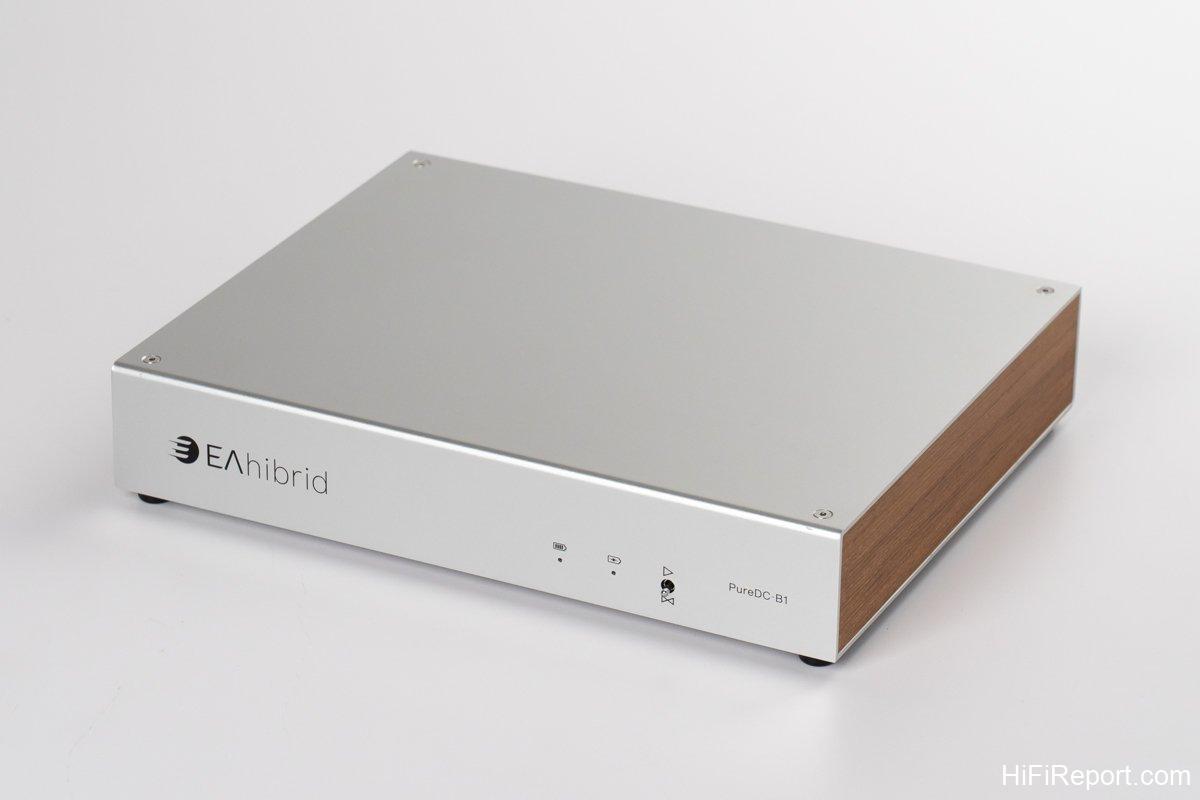
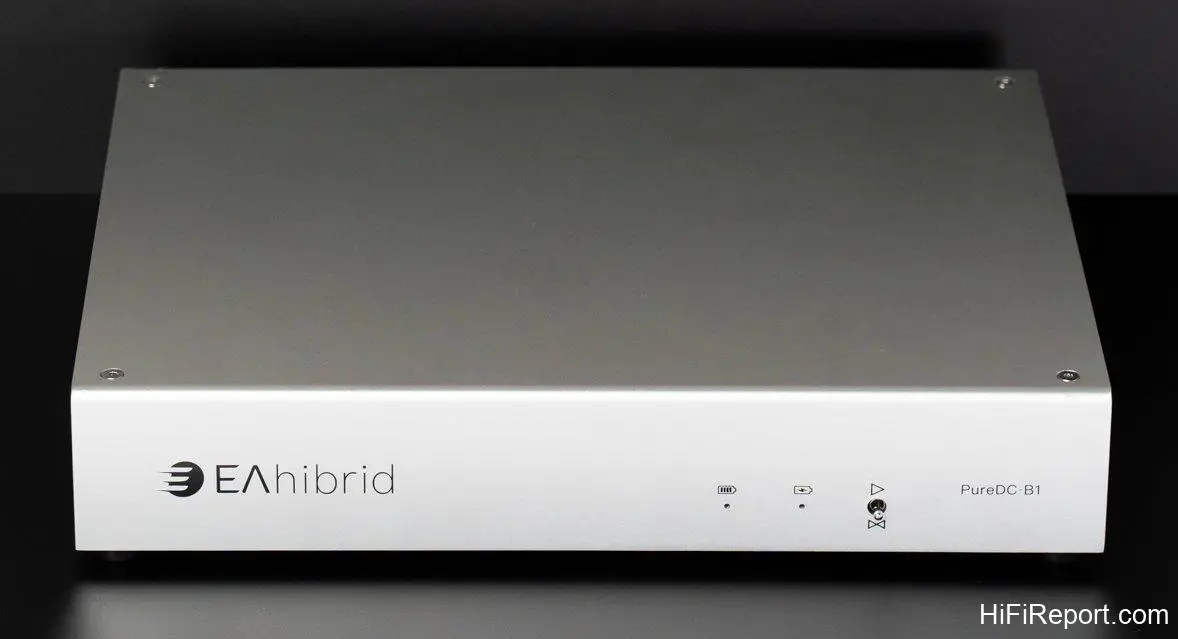
The PureDC-B1 is a DC power supply unit (PSU).
The market is already populated with manufacturers offering DC output linear power supplies, many of which are highly regarded for their immediate positive impact.
EAhibrid, however, has taken a different path, eschewing the traditional linear power supply route in favor of battery power.
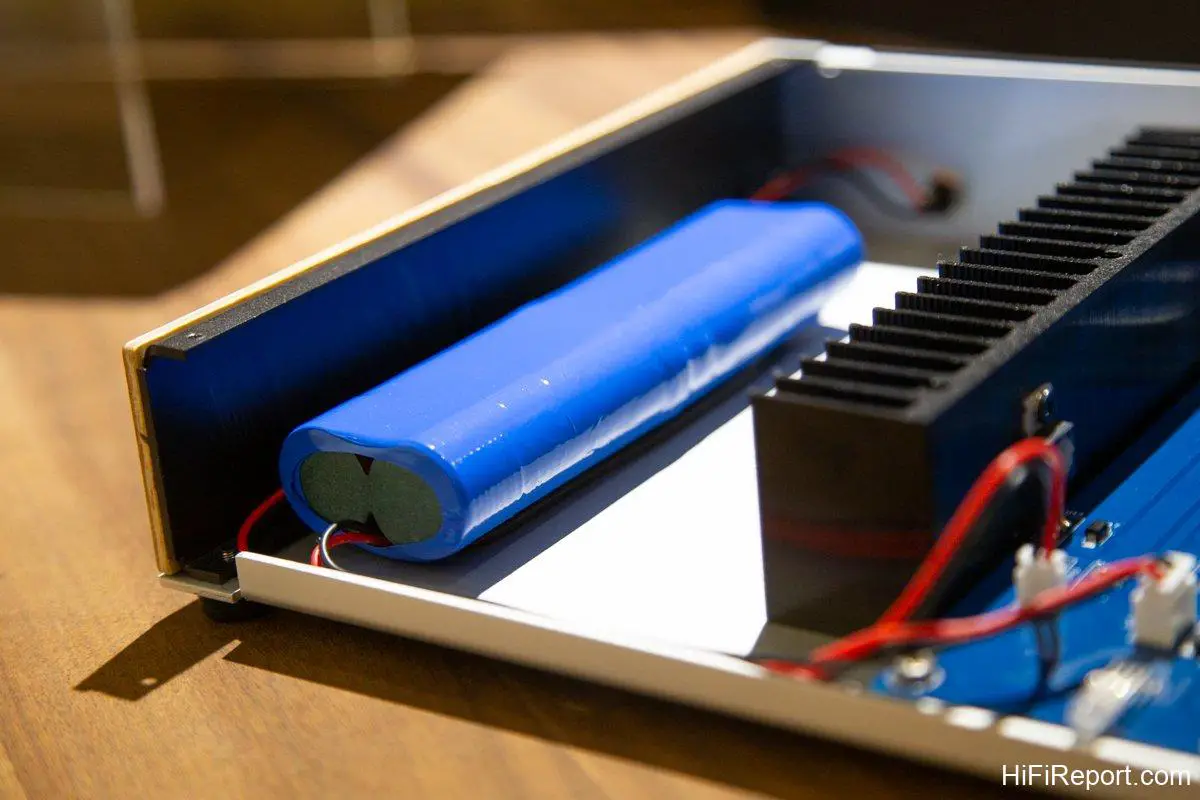
And not just any battery. EAhibrid utilizes the same 2170 lithium-ion batteries found in the Tesla Model 3. These cells boast greater capacity and higher energy density than comparable batteries, along with the advantage of low internal resistance.
The PureDC-B1 incorporates a bank of four 2170 lithium-ion batteries. The manufacturer has indicated plans to release higher-capacity versions with more battery banks in the future.
Hi-End Components for Audiophile Purity
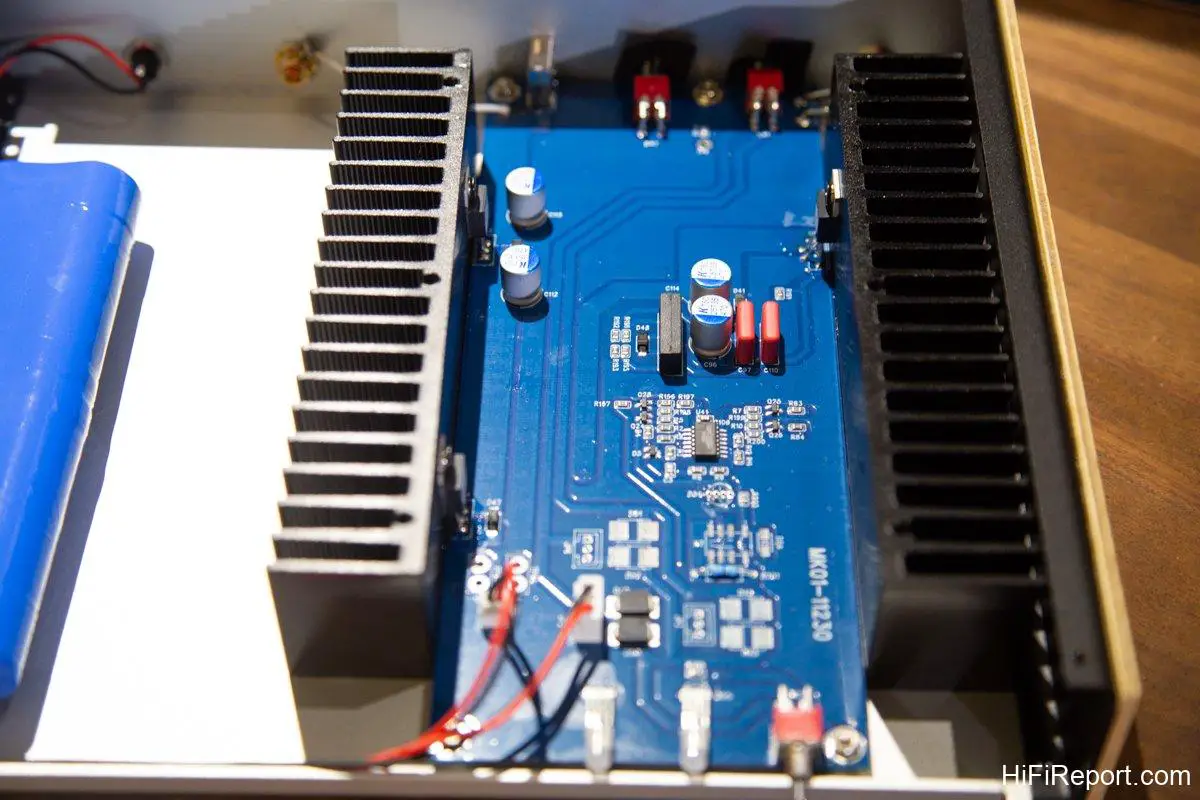
The PureDC-B1 also features a Hi-End grade DC voltage regulation system developed by ENIGMA. The circuitry is populated with audiophile-grade components, including WIMA film capacitors, Kemet organic polymer capacitors, and single-crystal silver conductors for the output wiring.
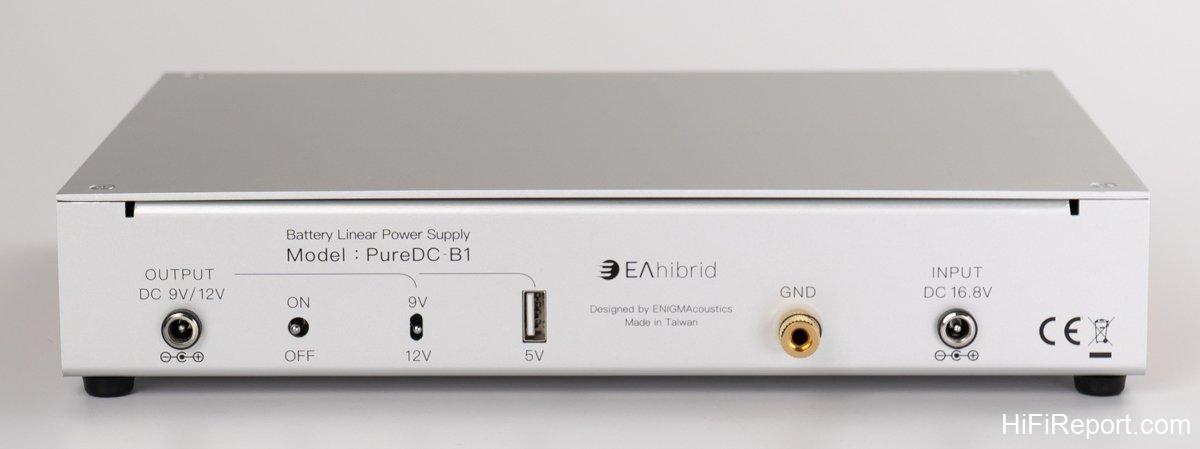
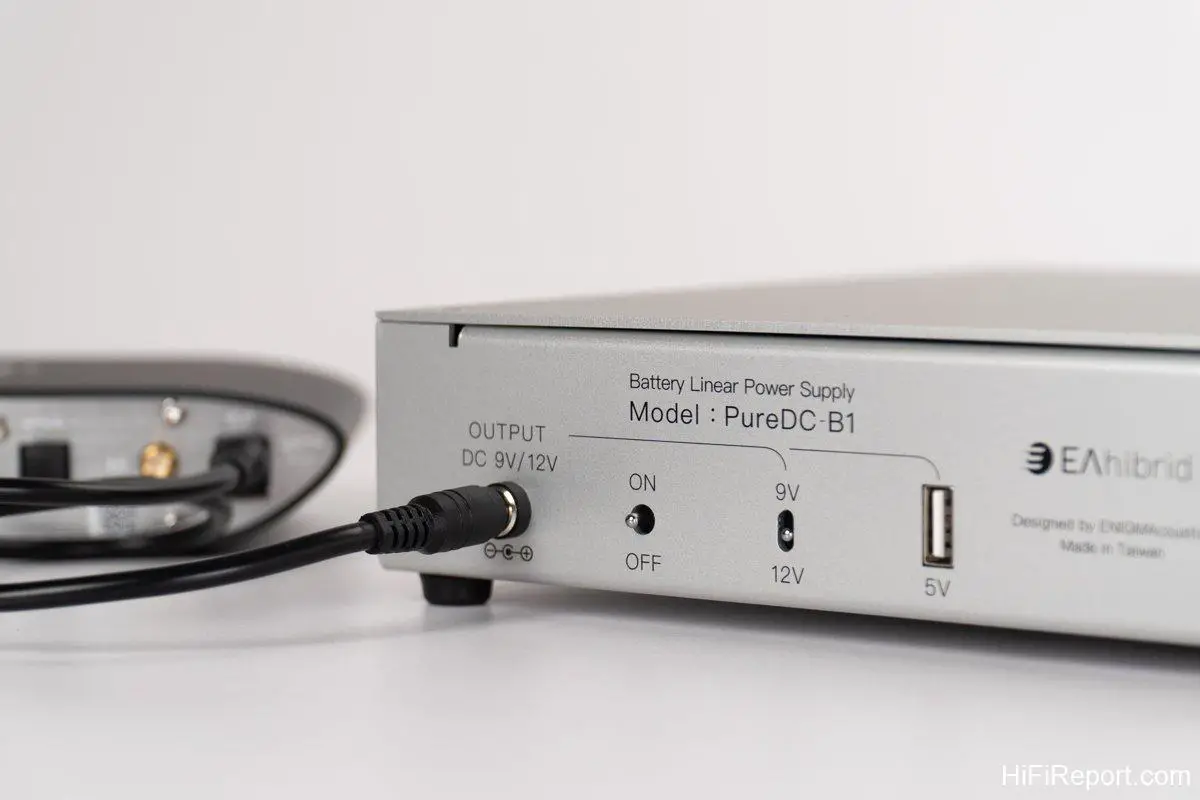
It offers three output ports: one 5V USB, one 9V DC, and one 12V DC.
The 9V and 12V outputs are mutually exclusive; only one can be used at a time. However, if power consumption is low, the 5V USB output can be used simultaneously.
In terms of output current, the PureDC-B1 provides a maximum continuous output of 2.5A, with peak output reaching 10A. The USB output is rated for 1A continuous.
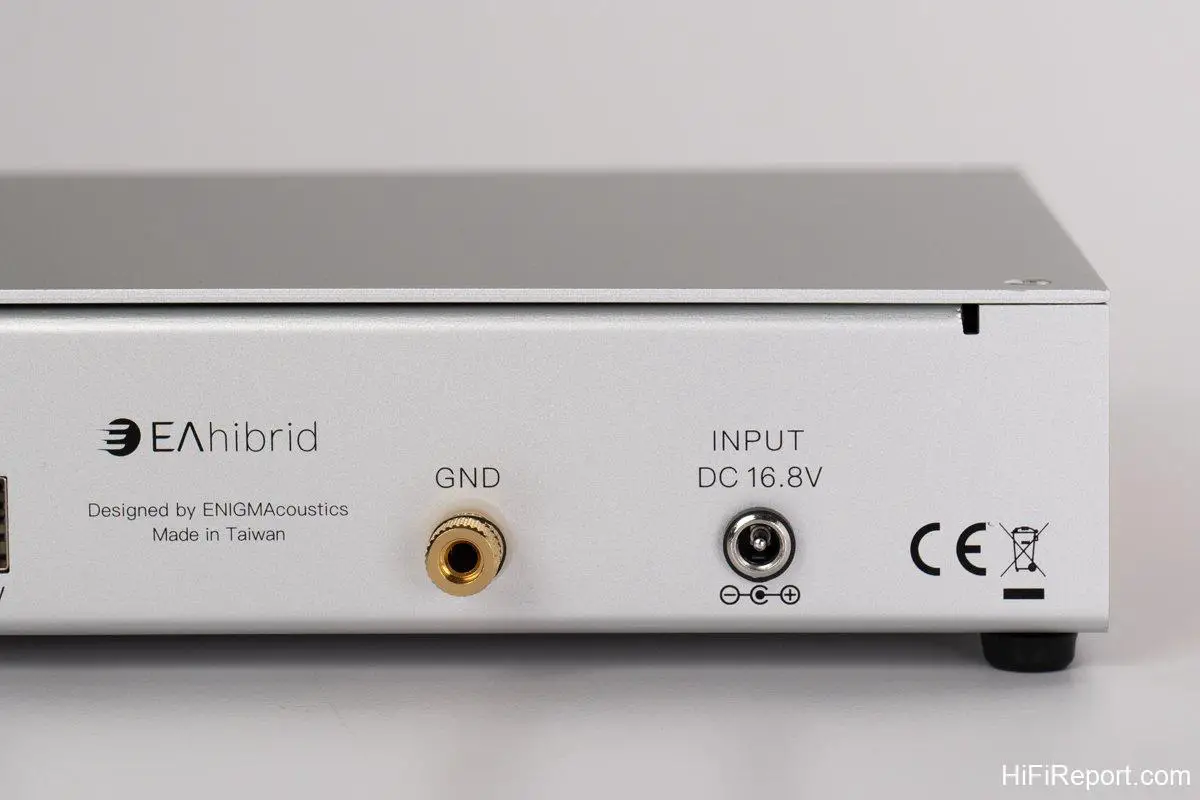
Additionally, a grounding terminal is provided, allowing users to further enhance performance through grounding.
Intelligent Power Management at its Core
The true magic of battery power lies not just in the batteries themselves, but in the power management system. An effective power management system not only maximizes power efficiency but also extends battery lifespan.
The PureDC-B1 incorporates a proprietary Smart Power Management system with intelligent battery protection and charging management. This system ensures that the PureDC-B1 maintains a stable output voltage even as the battery charge level decreases, preventing voltage sag.
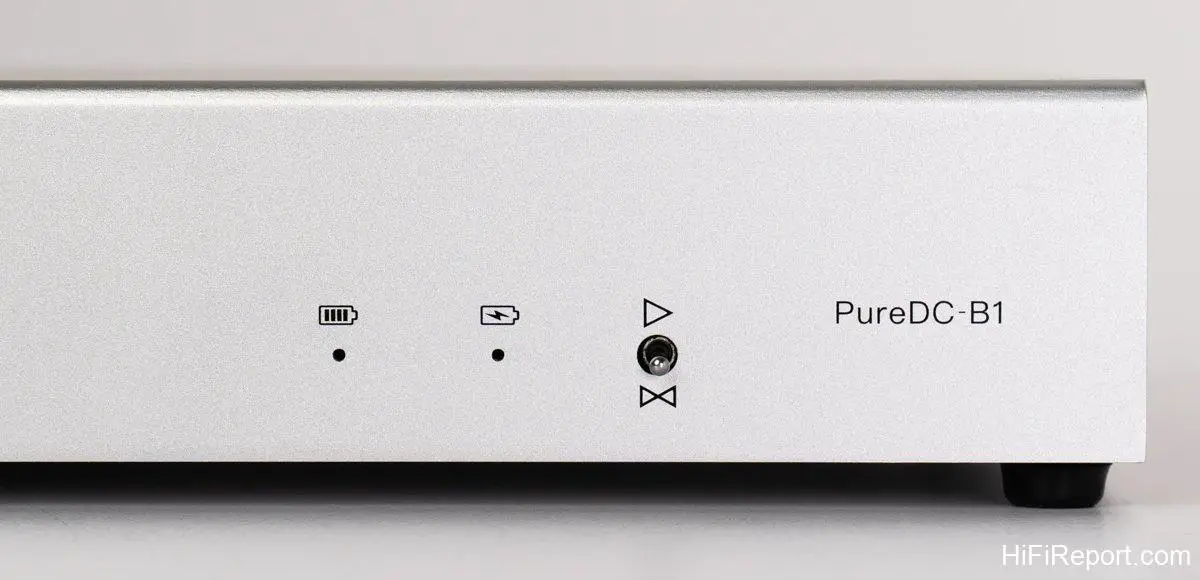
Operation offers two modes. Pure Battery Mode is engaged by flipping the toggle switch on the front panel to the upper “single triangle” position, providing the purest battery-driven power.
Switching to the lower “double triangle” position activates Infinite Playback Mode, where the battery powers the device while simultaneously charging.
EAhibrid states that ENIGMA’s power management buffer design ensures no discernible difference in sound quality between Infinite Playback Mode and Pure Battery Mode.
Furthermore, to maximize the lithium battery’s lifespan and maintain optimal charging and discharging conditions, the manufacturer recommends using Infinite Playback Mode as the default.
Versatile Applications Across Your System
Where can you utilize the PureDC-B1? Virtually any device requiring DC power, whether it’s a 9V or 12V input device with a current draw under 2.5A, or a 5V USB-powered device.
Check the power specifications of your network modem, Wi-Fi router, network switch, TV set-top box, and other devices.
It’s also ideal for externally powered audio equipment, and many users employ it with Raspberry Pi units (5V DC) for streaming audio, significantly improving overall performance.
Prioritize Your Network Path
EAhibrid’s official website suggests prioritizing the Wi-Fi router for PureDC-B1 implementation. However, this recommendation assumes your streaming device connects directly to the router, such as in a network path like: “Modem – Router – (Switch) – Streaming Player.”
If your setup differs, prioritize the network device closest to your streaming equipment in the signal path.
For example, if your configuration is “Modem – Switch – Streaming Player,” you should consider using the PureDC-B1 on the switch (or acquiring a second unit for the modem).
Furthermore, if your streaming device itself is powered by 12V, 9V, or 5V DC, prioritize connecting the PureDC-B1 to that device directly.
In essence, the priority order is: same path, closest device.
First Impression: Pristine Clarity and Transparency
I connected the PureDC-B1 to a Zyxel GS-105 v2 network switch – a very basic, common model. What was the actual impact? I can confidently assure you that you will hear a difference with this DC power supply; I’ve never encountered a DC PSU that didn’t produce audible improvements.
However, different manufacturers impart their own sonic flavor through their design choices.
What are the defining characteristics of the EAhibrid PureDC-B1? In my listening experience, the immediate impression is one of exceptional cleanliness.
Upon implementation, any sense of graininess or harshness vanishes, the background becomes noticeably blacker, and consequently, more musical information emerges.
Take, for example, Yo-Yo Ma and Kathryn Stott’s rendition of “Shenandoah.” The piano begins with single notes, followed by the cello subtly hinting at the melody with pizzicato. Then, the piano transitions to chords, and the cello shifts to arco bowing, and the music gradually unfolds.
The PureDC-B1 made the piano notes sound cleaner, more solid, and more defined. The cello’s lines became sharper and more focused. The musical image sharpened, akin to manually adjusting focus for enhanced clarity.
The level of clarity was such that I could almost visualize Yo-Yo Ma’s expansive vibrato with his left hand and sense his body swaying to the music.
While any DC power supply upgrade can yield similar sonic benefits, in my experience, the PureDC-B1 stands out as the cleanest and most transparent.
Second Impression: Unveiling Finer Details
My second impression was the abundance of detail, or rather, the enhanced clarity of details.
It’s akin to upgrading to a higher-resolution television; details that were previously indistinct now become clear and defined.
This can be attributed to the aforementioned qualities of “cleanliness” and “transparency.”
For instance, listening to Anne Sofie von Otter’s performance of “Dis, quand reviendras-tu?”, Otter’s vocal articulation became noticeably clearer.
French pronunciation often emphasizes the front of the mouth, utilizing the lips and teeth for articulation, contributing to the language’s light and elegant sound.
Listening to her continuous phrases, the enunciation was exceptionally crisp. Most surprisingly, the vibrato and trills became more apparent. Understanding these nuances revealed the depth of artistry in Otter’s performance.
The PureDC-B1 also enhanced Otter’s sonic image, making it more distinct, three-dimensional, and well-defined.
If vocals are a significant part of your musical diet, the PureDC-B1 will bring about substantial improvements.
Third Impression: Bass Performance Elevated
My third notable improvement was in the realm of low frequencies.
Using the Zyxel switch alone, the bass sounded somewhat diffused, whether it was the bass in jazz music or the low strings in orchestral pieces.
There was a sense of something lacking – a slight softness, looseness, thinness, and shortened decay.
However, with the PureDC-B1 in place, using the same Zyxel switch, the bass became noticeably deeper and more extended. The added extension didn’t sound artificially drawn out or sluggish; instead, it felt like the original decay and sustain were now fully restored.
For example, on Oscar Peterson Trio’s “Corcovado” from the *We Get Requests* album, the bass pizzicato sounded crisp yet elastic, with more pronounced plucking force, yet the low-frequency richness was not diminished but rather enhanced.
Transform Your Budget Switch
It’s genuinely fascinating. The component I experimented with wasn’t even a directly audio-related device like a streaming player; it was just a network switch. Moreover, the switch I used was a basic, budget-friendly Zyxel model costing only a few dollars.
Yet, the sonic transformation was so significant.
Through my comparisons, the upgrade provided by the PureDC-B1 was nearly equivalent to replacing the basic switch with an audiophile-grade network switch. To put it more precisely, a budget Zyxel switch paired with the PureDC-B1 delivers performance comparable to a dedicated audiophile switch.
Again, I assure you that you will discern the difference, and you’ll be astonished by its magnitude.
Cable Swapping Matters!
Beyond its core function, the PureDC-B1 offers three avenues for fine-tuning your system.
The first is cable selection.
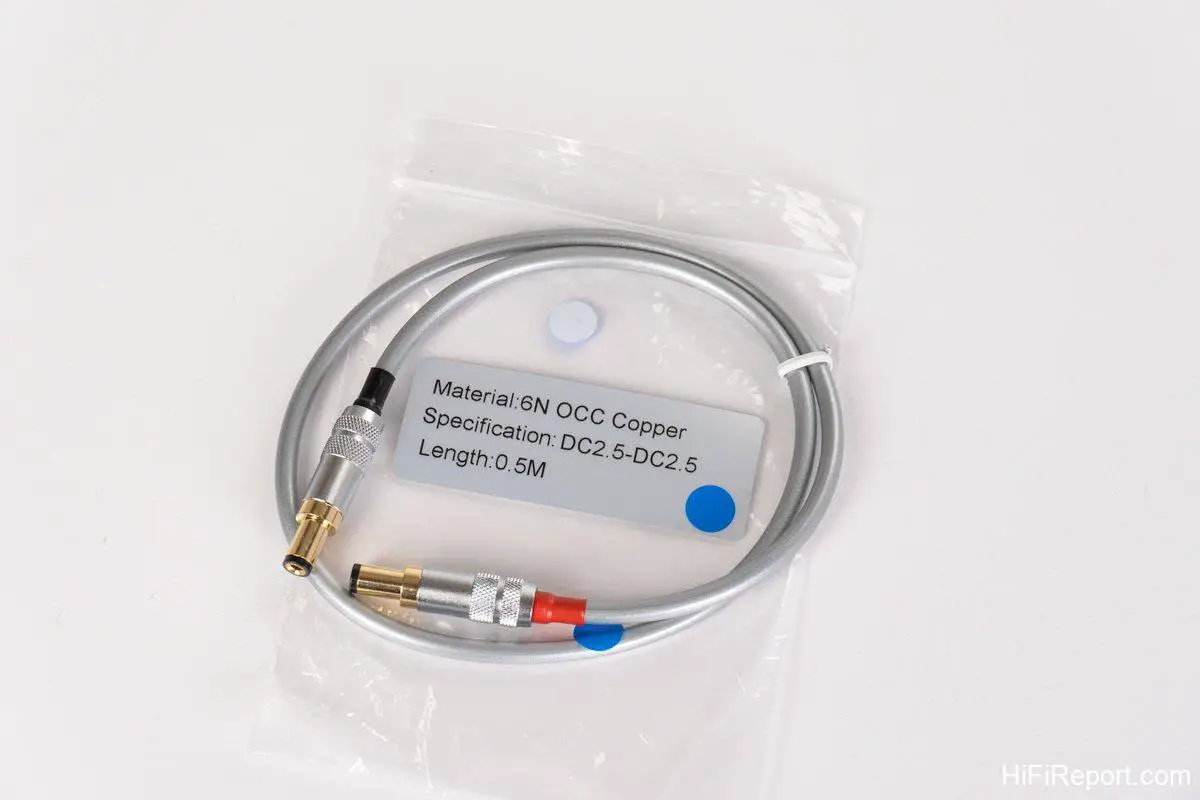
The PureDC-B1 package includes a 0.5m DC power cable with 2.5mm-2.5mm barrel connectors. You can use this cable directly and still experience the benefits I’ve described.
However, substituting it with a higher-quality cable audibly improves performance.
EAhibrid is aware of this “secret” and has partnered with an audio cable manufacturer to produce DC upgrade cables. These cables employ 6N OCC single-crystal copper conductors and are available in 0.5m and 1m lengths, with customizable 2.5mm or 2.1mm connector options.
Do these DC power cables make a difference? Absolutely, they do.
However, I acknowledge that the impact of cable upgrades is not as dramatic as the initial addition of the PureDC-B1 itself. Nevertheless, the cable difference is still clearly audible.
Upgrade cables can enhance image clarity and three-dimensionality, improve micro-dynamics, and add a more refined sonic decay. Considering their affordable price point of just over a thousand NTD (approximately $32 USD), they represent a worthwhile upgrade.
Grounding Makes a Difference!
The second fine-tuning aspect is grounding.
I attended EAhibrid’s launch event at Yosheng Acoustics last year. During the event, EAhibrid founder Paul connected a Kojo Technology Crystal E grounding box to the PureDC-B1.
I privately inquired whether grounding was essential. He simply replied that grounding is effective and audibly noticeable.
I remembered this, so I specifically tested the grounding effect.
I used a grounding box I purchased online years ago through a group buy. After connecting it, the soundstage became more three-dimensional, micro-dynamics became more lively, and separation also improved noticeably.
If you own a grounding box, remember to ground your PureDC-B1.
Isolation/Damping Matters!
The third aspect is isolation or damping footers.
This experiment stemmed from a sudden impulse, just a fleeting thought, yet it warrants a separate paragraph.
Because it genuinely does make a difference. However, whether to use footers, and which type to use, is something you should experiment with yourself.
I tested two types of footers: carbon fiber footers and stainless steel spikes (with bottom pads).
Carbon fiber footers tended to make the sound more lively, while stainless steel spikes sharpened the sonic outlines and transient response.
If you purchase a PureDC-B1 and have spare footers on hand, it’s worth experimenting.
(As a side note, using footers under your network switch also alters the sound – this is not a myth, it’s genuinely true!)
A Tesla-Grade Power Supply Awaits Your Ears
If you’ve established a streaming audio system in your home, I recommend focusing on the power supply for the modem, router, and switch in your network path.
Based on my experiments, upgrading the power supply for just the switch can bring about significant sonic improvements.
What if all three were upgraded? That’s an experiment for you to conduct.
The market offers numerous DC power supplies, but EAhibrid’s PureDC-B1 uniquely utilizes the same 2170 lithium-ion batteries found in Tesla electric vehicles. In a market saturated with linear power supplies, battery power provides a distinct product differentiation.
If you agree with the strategy of using battery power for low-power devices like these, what are you waiting for? The PureDC-B1 is ready to help you unlock the beauty of the streaming music world.
Specifications
* Type: DC Power Supply
* Power Source: Battery Powered
* Battery Type: 2170 Lithium-ion Battery
* Outputs: 9V/12V DC (2.5A continuous, 10A peak), 5V USB Type-A (1A continuous, 1.5A peak)
* Input (Charging): 16.8V/2A
* Dimensions: 276 x 245 x 50 mm
* Weight: 2.55 kg