
ELAC SUB 1020 Review
It’s become incredibly common for home theater AVRs to feature two subwoofer outputs. Even mid-range or entry-level models often allow you to set up a .2 system with dual subwoofers. This widespread availability of dual subwoofer outputs has even led to some new flagship AVRs and surround processors exploring the possibility of a .4 configuration, incorporating four active subwoofers.
Why are manufacturers increasingly prioritizing the quantity of subwoofers? Because using multiple subwoofers offers several distinct advantages. Firstly, in large or semi-open spaces, multiple subwoofers may be necessary to generate sufficient low-frequency energy to fill the room adequately.
Secondly, it significantly benefits sound quality. When a system employs two subwoofers, they effectively “share the workload” in producing bass frequencies. This reduces the strain on each individual unit; their internal amplifiers require less power output, and the driver cones undergo less extreme excursion. As a result, both subwoofers operate within a more ideal range, delivering more linear, precise bass without sounding strained or “shouting.”
Thirdly, multi-sub setups offer the potential for “modal averaging.” Every room, based on its dimensions, possesses unique acoustic characteristics (Room Modes) that profoundly affect loudspeaker performance, especially subwoofers. Without measurement equipment, placing a single subwoofer in most locations will result in a distorted frequency response curve, characterized by peaks (excessive energy) and dips (insufficient energy).
However, using multiple subwoofers in a space provides an opportunity for balancing and compensating for these anomalies. This is the essence of “modal averaging,” which can yield a smoother frequency response curve. Successfully filling in those problematic dips, in particular, can make the bass sound considerably fuller and tighter.
Fourthly, if you’re a fan of intense, visceral low-frequency impact and are less concerned with achieving a perfectly flat frequency response or absolute sonic balance, a dual or multi-subwoofer configuration will deliver a noticeably more powerful, chest-thumping bass experience.
Given these numerous benefits, AVR manufacturers have increasingly focused on incorporating dual, or even more, subwoofer outputs in recent years, with dual outputs now practically standard. Finding suitable subwoofers isn’t difficult; brands like the German-based ELAC place a strong emphasis on them, currently offering 14 models (not including the SUB 1020) on their official website.
Introducing the ELAC SUB 1020: The Affordable .2 Dream
The real challenge often lies in the limited budget of many consumers – the desire is there, but the funds are not. This is precisely where the SUB 1020 shines. Offered by ELAC, a single unit costs well under $600, and even two units come in at just over $950. Realizing the dream of a .2 system has never been easier. Consequently, for this month’s review, we decided to evaluate the SUB 1020 in a .2 configuration, borrowing two units from the manufacturer.
Design, Amplification, and Key Features
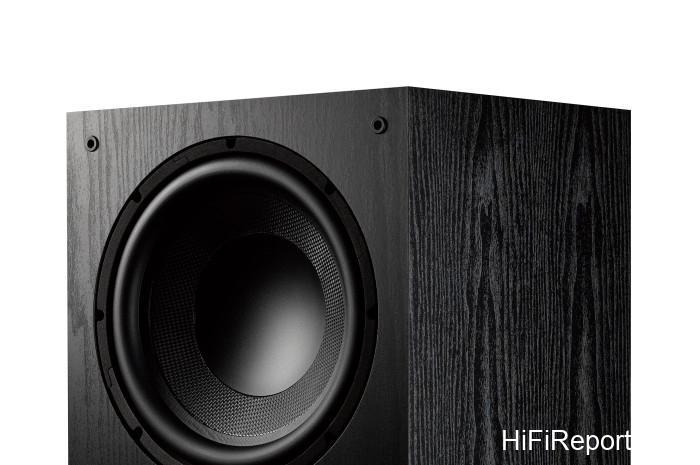
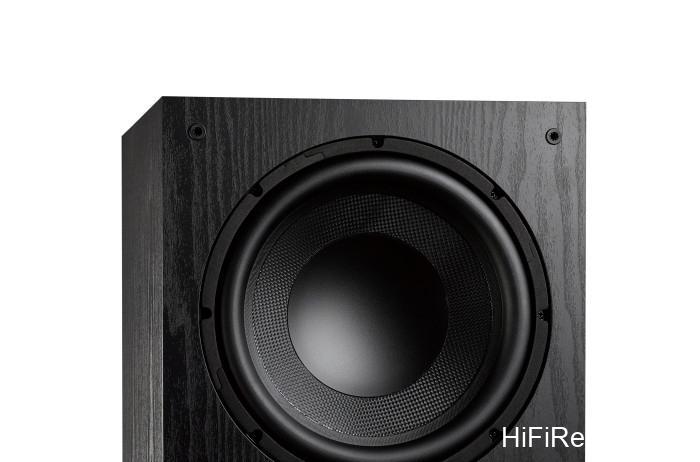
Let’s take a closer look at the SUB 1020. It features a classic cubic cabinet design finished in a subtle black wood veneer. The front houses a 10-inch long-throw woofer with a cone that feels like a woven material. The overall design of the SUB 1020 is quite compact, meaning it doesn’t occupy excessive space. Its longest dimension is only 43.2 cm (about 17 inches), so fitting two in a listening room presents no difficulty.
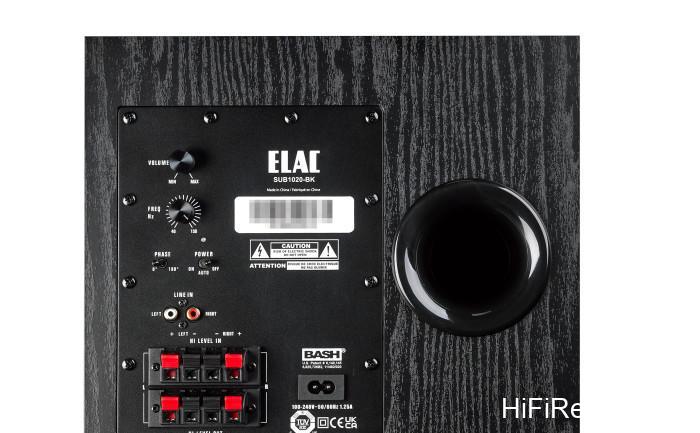
The SUB 1020 utilizes a bass-reflex design with a circular rear-firing port on the back panel. Air will be expelled from this port during operation, so it’s essential to avoid placing the rear panel directly against a wall. A clearance of at least 30 cm (about 12 inches) is recommended for optimal performance.
Internally, the amplifier employs ELAC’s proprietary BASH technology. BASH stands for “Bridged Amplifier Switching Hybrid.” According to ELAC, this circuit topology combines the advantages of both Class D and Class AB amplifier designs to deliver an efficient yet audiophile-quality circuit. The amplifier is rated at 120 watts.
Connectivity and Versatility
Turning to the rear panel, the SUB 1020 offers essential adjustments for volume, phase (0/180 degrees), and crossover frequency (40Hz to 150Hz). The input section is somewhat unique. In addition to the common RCA low-level inputs (L/R/LFE), it also includes high-level speaker inputs, utilizing binding post terminals. What is the purpose of these?
Typically, when connecting a subwoofer to an AVR, you use the RCA low-level input, running a cable from the AVR’s “Subwoofer Pre-out” to the subwoofer’s “L/R/LFE” input. But what if your source is a two-channel audio system without a dedicated subwoofer pre-out? This is where the high-level speaker inputs come into play. This means the SUB 1020 can be integrated into two-channel audio systems (including karaoke amplifiers) to form a 2.1 setup.
This capability boosts the low-frequency energy when listening to music (or singing), resulting in a fuller sound and significantly expanding the SUB 1020’s usability – a feature omitted on many modern subwoofers.
How do you actually wire it up? It’s straightforward. You connect the left and right channel speaker outputs from your amplifier to the upper set of binding post inputs on the SUB 1020’s high-level input section. Then, you run cables from the lower set of binding post outputs on the SUB 1020 to the binding posts on your main speakers. In this configuration, the crossover frequency is controlled by the dial on the subwoofer’s back panel.
You’ll need to know the low-frequency limit of your main speakers to set an appropriate crossover point and find the correct volume level to ensure a seamless blend between the subwoofer and your left/right channels.
Setup and Placement for the .2 Review
Returning to our .2 review setup, since we planned to configure two subwoofers in a home theater environment, we didn’t need the high-level inputs. As mentioned earlier, we simply connected them from the subwoofer outputs of the AVR.
So, how should you place these two subwoofers? It’s important to note that many AVRs offering dual subwoofer outputs simply provide parallel outputs that cannot be individually configured for distance, volume, and other parameters. If your AVR is of this type, it’s best to place the two subwoofers side-by-side or stacked to ensure that both are equidistant from the listening position and receive the same signal at the same level, maintaining correct distance and volume settings.
If your AVR allows for individual configuration of distance and volume for each subwoofer output, placement becomes more flexible, allowing you to position them in different locations around the room. However, unless you have measurement equipment or extensive tuning experience, corner or wall placement is generally recommended for subwoofers. Using the boundary gain from the walls makes it easier to achieve robust low frequencies.
Subsequently, using the AVR’s automatic room correction to “cut peaks” significantly increases the likelihood of achieving a flatter frequency response curve.
For this test, I opted for the safest approach. First, I used REW software (along with a measurement microphone) to find the location in the room where a single SUB 1020 yielded the flattest frequency response. Then, I used both subwoofers side-by-side in that optimal position. This ensures that both subwoofers are operating in the best possible location regarding frequency response and minimizes the potential for the two subwoofers’ energies to cancel each other out.
Speed and Power Impress
Frankly, given the very modest price of the SUB 1020, I didn’t have particularly high expectations. However, after using it, its performance exceeded what I anticipated. For instance, playing the album “Kodo,” which tests both the speed and energy of a subwoofer, a single SUB 1020 delivered a commendable performance. The taiko drum hits possessed substantial energy, and during rapid drum rolls, I could clearly discern the distinct gaps between individual strikes.
The dynamics between strong and weak hits were also well-differentiated; the sound didn’t just blur into a single mass during fast passages.
Next, I introduced the second subwoofer. At this point, it’s crucial to remember that using two subwoofers isn’t about achieving excessive, boomy bass. The combined low frequencies produced by the two units should still maintain a certain balance with other frequency ranges. You should still be able to clearly hear the definition and layers within the bass lines. If the clarity and layering of the bass are compromised, or if you hear booming sounds, then the bass level is likely too high.
After careful calibration, the combined low frequencies from the two subwoofers were not excessive, and the frequency response curve remained balanced. However, the difference in listening experience was noticeable. The bass produced by the two subwoofers was richer, fuller, and possessed better density. Drum hits felt more powerful, and the vibration of the drum skins seemed more intense, resulting in more impactful low frequencies.
Listening to popular music, the electronic bass felt larger and the punch was more forceful, significantly enhancing the sensory impact and enjoyment.
This transition to a .2 setup is also highly beneficial for movie sound. For example, playing “Terminator: Salvation,” the signature metallic “ching, ching, ching…” sound effect felt more authoritative. When A-10 Warthogs appeared in the film, their engine roars sounded much more potent. The scene involving the Metal Giant was particularly impressive; the various low-frequency sounds it emitted while moving felt more menacing.
When it fired lasers that caused a truck explosion, the sound effect demonstrated greater explosive power. Overall, the sense of scale and impact in the sound mix was significantly improved compared to using just a single subwoofer.
Limitations, Value, and Recommendation
However, the SUB 1020 is ultimately an entry-level speaker priced just over $500, so it’s not perfect. I must point out its limitations, such as its constrained low-frequency extension (the manufacturer’s specifications only go down to 37Hz). I felt there was still room for improvement in the visceral impact of the very lowest frequencies. Nevertheless, considering its price point, I believe the performance of a subwoofer costing just over $500 is highly commendable and offers exceptional value.
Its excellent price/performance ratio leads me to give it our “Best Recommendation,” making it a great choice for consumers with limited budgets who wish to explore the benefits of a .2 system.
Specifications
* Bass-reflex cabinet design
* 10-inch long-throw woofer
* BASH amplifier technology
* 120 watts maximum output power
* High-level speaker inputs included
* Adjustable crossover and phase
* Design: Bass Reflex
* Driver: 10-inch Long-Throw Woofer
* Maximum Output Power: 120W
* Frequency Response: 37Hz~200Hz
* Crossover Frequency: 40Hz-150Hz
* Amplifier Technology: BASH Amplifier Circuit
* Input Terminals: L/R/LFE RCA Terminals, High-Level Speaker Terminals
* Dimensions: 36.9 × 36.2 × 43.2 cm (14.5 x 14.3 x 17 inches)
* Weight: 11.12 kg (24.5 lbs)