
Estelon YB MK II Review
I’ve visited Estonia once; its capital, Tallinn, feels like something out of a fairy tale with its old town architecture. For most people, however, Estonia is quite distant. Yet, the Estelon brand bridges that gap. Founded in 2010, its creator, Alfred Vassilkov, resides in Tallinn. He’s an engineer with over two decades of experience in loudspeaker design.
We know Estonia was formerly part of the Soviet Union, where most people worked for state-owned enterprises, and Alfred Vassilkov was no exception. After the dissolution of the Soviet Union, the private economy flourished, and many skilled individuals sought entrepreneurial opportunities. Alfred Vassilkov also established a studio in 1991, designing speakers for others.
After nearly 20 years of this work, on a bright and sunny Sunday morning in 2010, Alfred Vassilkov announced to his family at the dinner table: “Let’s start a company!” And so, Estelon was born.
Estelon’s Design Philosophy and Unique Materials
Estelon registered as a company in 2010, and their first speaker, the XA, was launched in 2011. It immediately captivated audiences with its beautiful, flowing lines and vase-like shape, instantly grabbing the attention of audiophiles. I’m sure many speaker designers saw this form factor and felt a pang of regret for not having thought of using such a shape for a speaker themselves. Estelon’s speaker shape isn’t just for show; it’s designed based on the functional requirements of a loudspeaker.
Once this design was finalized, all subsequent models followed the same shape and material philosophy, differing only in size. This approach is similar to Avalon – they rely on a single strategy, but that strategy is a “killer move.”
Estelon’s slender, streamlined, vase-like form not only avoids any parallel internal surfaces, significantly reducing the formation of standing waves within the cabinet, but its rounded cabinet also eliminates straight lines or sharp edges, which drastically minimizes sound wave diffraction issues.
Furthermore, Estelon places the midrange driver at the top, with the tweeter located below it, which differs from the traditional approach of putting the tweeter at the very top. Alfred Vassilkov’s placement makes sense; he says it reduces interference from the first reflection. To be honest, I don’t entirely grasp the physics behind it, but I like this arrangement.
After all, the midrange driver handles most musical instruments and human voices, and having its height aligned with or slightly above the ear helps with the height presentation of the soundstage.
The Estelon cabinet is narrowest at the tweeter position, widens slightly for the midrange, and widens further for the bass driver. This design also allows for a wider dispersion angle for the drivers’ sound waves. Additionally, due to the streamlined cabinet lines, the cabinet itself becomes a sound-diffusing entity, making the speakers easily disappear into the soundstage. What’s even more impressive is the placement of the bass driver at the very bottom of the cabinet.
This positioning, being closer to the floor, can enhance the low-frequency output. Except for the flagship Extreme and the smallest floorstanding speaker, the YB MK II, which have side-mounted bass drivers, all other models feature front-mounted bass drivers.
The manufacturer recommends positioning the two bass drivers of the YB MK II facing inwards. This is said to enhance low-frequency quantity and cohesion. However, users can also experiment with placing the speakers with the bass drivers facing outwards depending on the needs of their listening space to find the optimal positioning.
Looking at the overall design of Estelon speakers, it’s clear that they don’t rely solely on aesthetics for appeal; rather, the form is designed according to the loudspeaker’s functional requirements – this is the principle of “Form Follows Function.” Therefore, from the launch of their first speaker, the XA, in 2011 until now, Estelon cabinets have only varied in being slightly larger or smaller, slimmer or wider, taller or shorter, while the overall shape has remained largely consistent.
Why are Estelon cabinets able to be so beautifully crafted? Because they are made from a composite material primarily consisting of marble powder. This material is easy to mold and possesses excellent internal damping, minimizing cabinet vibrations. Writing this, I can’t help but admire Alfred Vassilkov again – how did he come up with this idea? Using cement, slate, MDF, or other composite materials makes it very difficult to achieve such streamlined cabinets.
Yet, he managed to conceive of combining marble powder with other materials, allowing for the creation of beautiful cabinets using molds. I’m not saying that cabinets made from other materials are inferior to Estelon’s; rather, this idea is simply brilliant and solves numerous problems at once.
The Estelon YB MK II Model
It’s no wonder Estelon speakers became an instant sensation upon their launch, also giving people a positive impression of Estonia, this small country by the Baltic Sea – it’s a form of national promotion!
Currently, Estelon’s flagships are the Extreme and Extreme Limited Edition, along with the Forza. These three pairs are considered flagship models. Other models include the X Diamond, XB Diamond, XB, XC Diamond (bookshelf), XC, and the YB. The XA, launched back in 2011, is no longer in production. In 2021, to celebrate their 10th anniversary, Estelon upgraded the X and Y series to MK II status, hence the YB MK II.
There was also an AXD (Active X-over Design) version of the YB developed in collaboration with Devialet, which uses DSP technology for active crossovers, but this version seems rarely mentioned now; perhaps it’s no longer being produced?
The YB MK II is the most affordable floorstanding speaker in their lineup and one of only two floorstanding models (similar to the Extreme) where the bass drivers are positioned at approximately a 45-degree angle on the side. It’s curious; the bass drivers of the other larger siblings are all front-mounted. Why are the YB MK II’s bass drivers positioned at a 45-degree angle?
Of course, you could argue it’s because there’s no room at the bottom front of the cabinet for the bass driver, so it had to be placed on the side at a 45-degree angle. My feeling is that if the YB MK II used two bass drivers, one on each side, it would be exactly like the Extreme. Therefore, the YB MK II’s bass driver placement might be inspired by the Extreme, only the YB MK II uses just one bass driver.
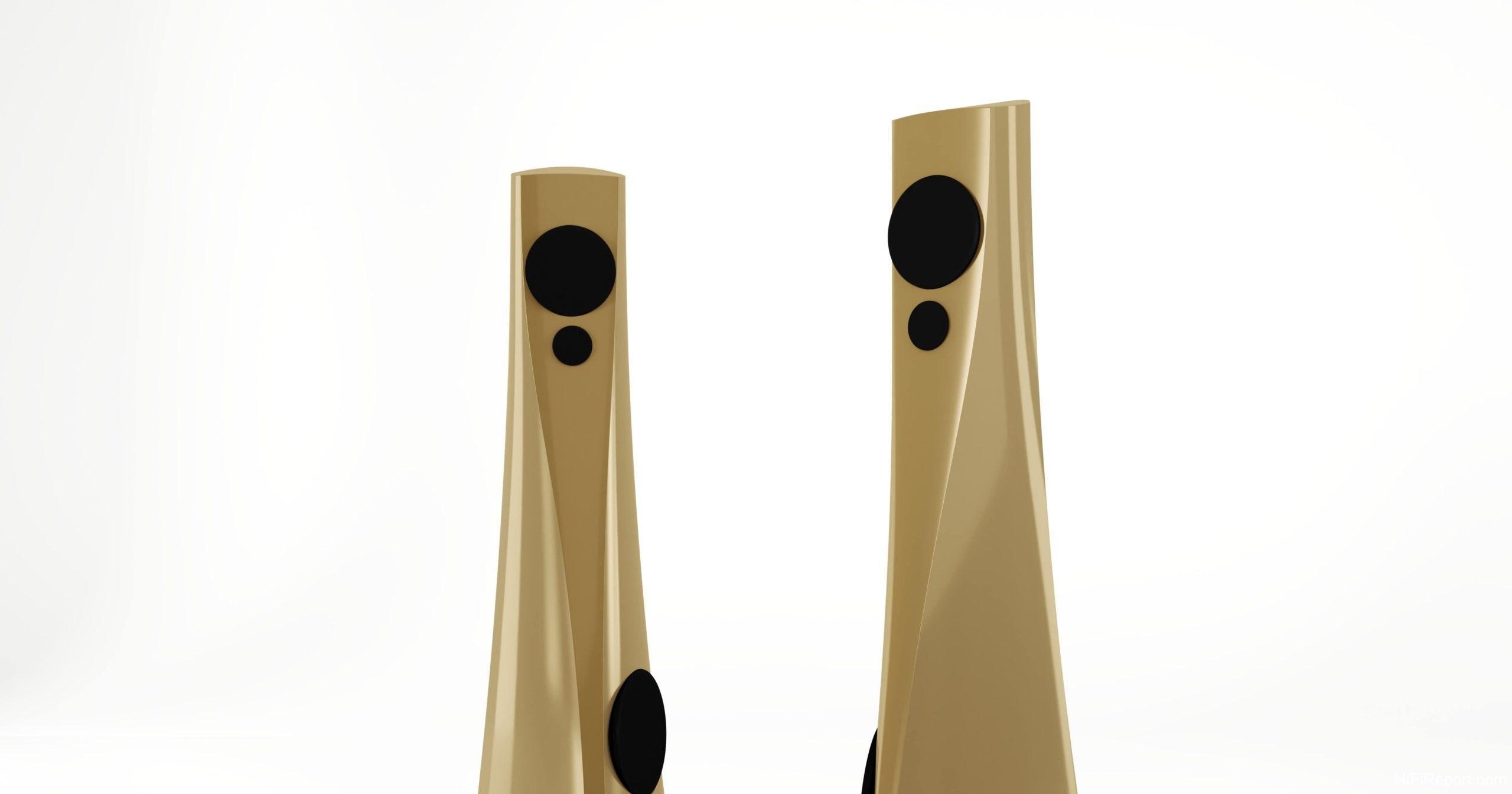
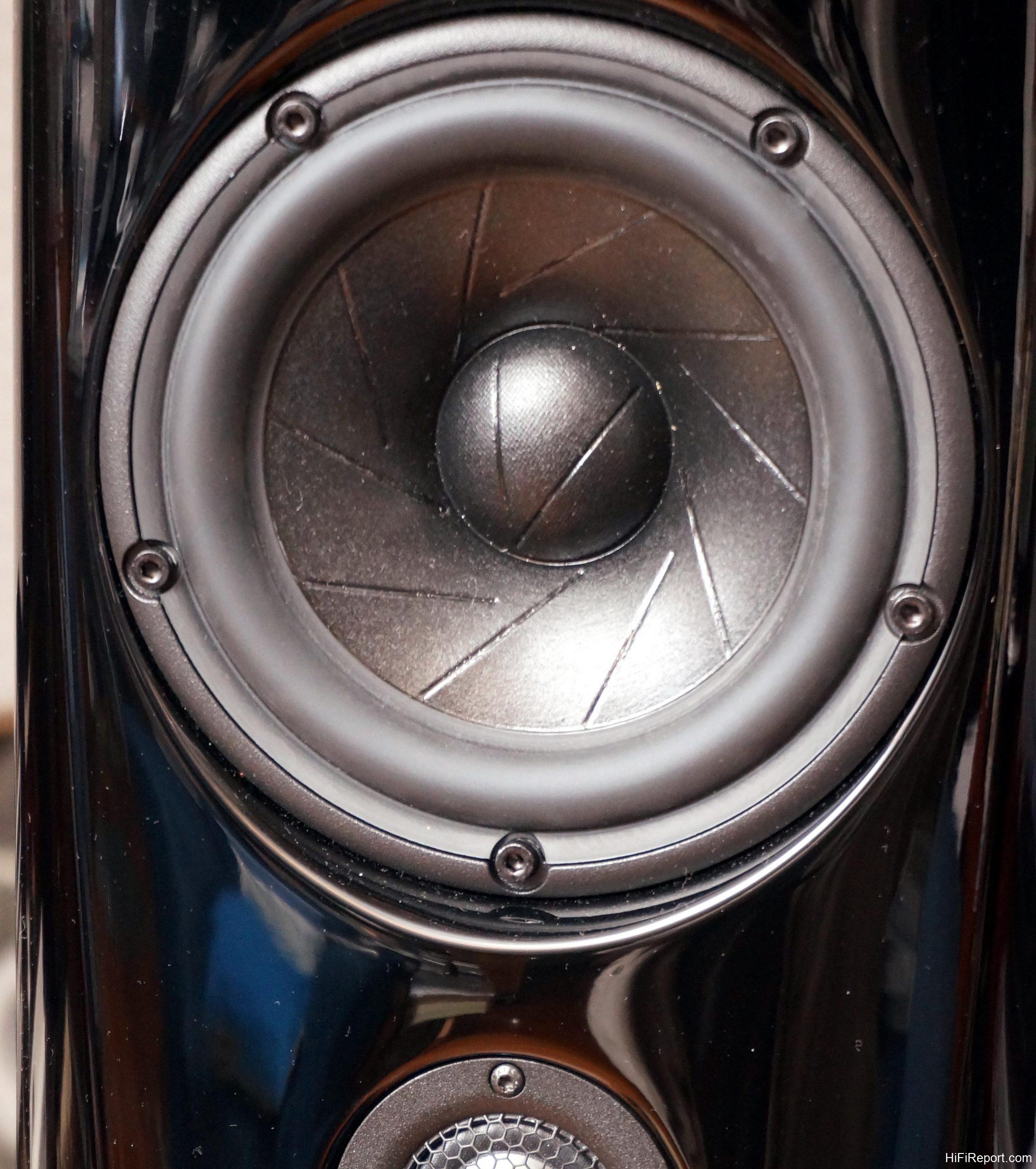
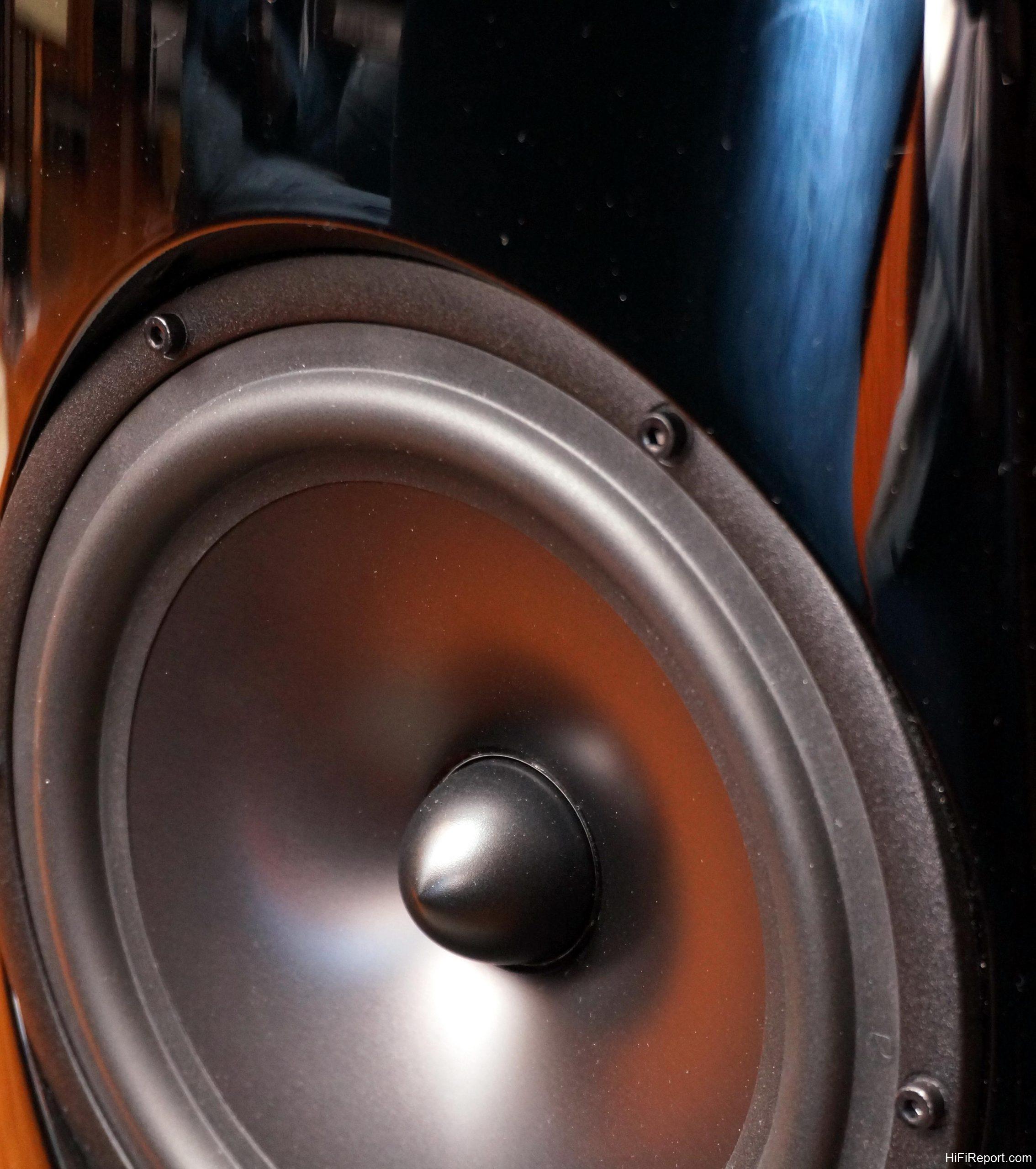
The YB MK II also holds another unique distinction: it’s the only model that doesn’t use German Accuton drivers. Since the beginning, Estelon speakers have consistently used Accuton drivers, whether ceramic, diamond, or aluminum diaphragms. However, the YB MK II’s beryllium tweeter and the Sliced Paper Cone midrange driver are manufactured by Scan-Speak, while the bass driver comes from SEAS. Do Scan-Speak and SEAS drivers outperform Accuton?
I believe this choice was made to reduce costs, as the YB MK II’s price isn’t as high as its larger siblings. However, even without using Accuton drivers, Estelon has shown ample sincerity; the tweeter is already a beryllium diaphragm, and the midrange and bass drivers are also very high-quality products. There’s really nothing to complain about.
So, what are the differences between the previous generation YB and the YB MK II? Visually, there doesn’t seem to be any difference. Internally, the cabinet material has been upgraded to a new marble powder composite material, similar to the X series. This material has even lower vibration, allowing for the reproduction of the finest details. The crossover network uses Mundorf resistors and Mundorf Silver/Gold/Oil capacitors.
Internal wiring uses new pure copper Kubala-Sosna cables (the original YB already used cables from the same brand). As for the high, mid, and bass drivers, they remain unchanged.
Having read this far, I believe you have a solid understanding of Estelon’s design philosophy. Now, let’s turn our attention back to the YB MK II. The YB MK II stands only 126 cm (49.6 inches) tall, is 33.2 cm (13.1 inches) wide, and 39.4 cm (15.5 inches) deep. At this height, when seated on a sofa, the midrange driver is roughly level with the ears, allowing you to hear a very rich mid-frequency range.
The tweeter is positioned close to the midrange driver, allowing for better integration of the high and mid frequencies. This 1-inch Illuminator beryllium diaphragm tweeter has a metal protective grille in front, and there’s also a thin circular disc adhered to the top, presumably to suppress diaphragm breakup. This feature was already present in the previous YB.
The 5.8-inch Scan-Speak Revelator driver is well-known in the industry; the fine slices in the cone are filled with damping glue, a technique used to control midrange cone breakup. The 8.6-inch aluminum diaphragm bass driver comes from SEAS and features a surround designed to suppress resonance; it looks like it can handle quite a bit of power.
The YB MK II’s cabinet is divided into two independent chambers: the mid and high-frequency drivers share one, and the bass driver has its own. Above and below the bass driver, there are MDF support structures that reinforce the rigidity of the bass chamber. The crossover network is located at the very bottom. The YB MK II has crossover points set at 80Hz and 2kHz. It’s rare to see an 8.6-inch bass driver crossed over so low; it’s almost like using a subwoofer.
Perhaps this low crossover point is designed to work in conjunction with the bass driver being placed so close to the floor. The midrange driver handles the widest frequency range, truly being the heart of the speaker. The tweeter takes over from 2kHz. Typically, a 1-inch tweeter’s crossover point is set around 3kHz, but the YB MK II sets it at 2kHz, which is also quite uncommon.
My guess is that raising the crossover point to 3kHz would inevitably increase the load on the upper end of the midrange driver. Since this midrange driver needs to cover down to around 80Hz, whereas typical midrange drivers only cover down to about 300Hz, extending its upper range to 3kHz would normally be within its capabilities. The YB MK II’s crossover network uses point-to-point soldering, keeping connection wires as short as possible, and doesn’t use printed circuit boards.
The crossover between the midrange and bass is third-order, while the crossover between the midrange and tweeter is second-order. The air-core inductors on the crossover are wound with OFC wire, the resistors are wire-wound, and all components are matched between the left and right speakers.
The YB MK II’s base is made of stainless steel with a matte black finish, offering both pointed and flat cones, as well as metal pads to protect the floor. All three drivers have circular grilles with magnets that easily snap into place. The entire speaker looks beautiful from every angle – elegant and captivating, available in several color options. The only minor frustration I experienced was with the YB MK II’s speaker cable terminals.
They are Cardas terminals, which are usually excellent, but they are located at the very bottom of the rear panel. Turning the round knob can be a bit difficult, especially when using thick, “boa constrictor” sized speaker cables; it really takes some effort to secure the cables.
However, this is somewhat unavoidable. If the speaker cable terminals were placed higher up, it would ruin the entire elegant line of the speaker.
Listening Impressions
My listening tests of the YB MK II took place in my large, open-plan living space. To be honest, in such a large room, the YB MK II looked rather “petite.” However, this also has its advantages, as the large space reduces boundary effects, allowing me to better hear the “true sound” of the YB MK II. The amplifiers used for pairing were the Pass X350.5 and the Vitus SIA-030 integrated amplifier (switchable between 30 watts Class A and 200 watts Class AB).
Digital sources included the emmLabs TSDX SE CD transport and DAC2 SE digital-to-analog converter, as well as the Weiss DAC502 streamer and DAC.
Initially, I didn’t pay attention to which side the bass drivers should face and placed the speakers with the bass drivers facing outwards. Later, reading the manufacturer’s recommendation, I repositioned them with the bass drivers facing inwards. What’s the difference in sound between facing inwards and outwards? In my space, the bass performance was better with the bass drivers facing inwards. Not only was the low-frequency quantity more sufficient, but the bass also felt more cohesive.
This was clearly evident when playing the album “Convergence” by Malia & Boris Blank. So, after listening for a short while, I kept the YB MK II positioned with the bass drivers facing inwards. Of course, if you find the bass quantity excessive, you can always try placing them with the bass drivers facing outwards.
Next, let’s discuss the difference when paired with the two amplifiers. When using the Spectral DMC30SS preamp with the Pass X350.5 amplifier, I immediately noticed that the overall sound profile of the YB MK II was softer than any other Estelon speakers I had heard before. The sound, across the high, mid, and low frequencies, followed a delicate path. However, what I mean by soft isn’t lacking in power or feeling weak.
When it needed to be punchy, it was; when it needed to be clear, it was; when it needed to be impactful, it delivered. It was just genuinely softer than previous Estelons I had experienced. I suspect this is primarily due to the drivers used.
When I switched to the Vitus SIA-030 integrated amplifier, if set to Class A mode, the YB MK II sounded even softer, lacked potency, and the sound wasn’t sufficiently full. Clearly, 30 watts of Class A power wasn’t enough to drive the YB MK II (which has a sensitivity of only 86dB). When I switched to 200 watts in Class AB, the power and fullness returned. The sound felt even softer than when paired with the Pass X350.5, but this softness didn’t blur the outlines of instruments or voices.
The forms remained very clear and cohesive, and the beauty of the sound quality was even better. I ultimately decided to use the Vitus SIA-030 for the final review, prioritizing sound quality performance.
I should also mention upfront that due to my large space, when the YB MK II played large orchestral works, the scale of the music felt slightly diluted. I suspect that in a listening space of 8 pings (approximately 280 sq ft) or smaller, the scale of large orchestral works would be rendered more normally.
The first captivating quality of the YB MK II is its refinement, delicate beauty, and complete lack of aggression, yet it possesses high resolution. It’s like a soft-spoken beautiful woman telling you a story with perfect clarity. This sonic characteristic is particularly enjoyable for listening to string instruments and vocals. For example, when I listened to Leonid Kogan’s “Encores,” the violin wasn’t just clear and delicate; I could also feel the elasticity of the bow-string contact.
More importantly, the “qi yun” ( – a sense of flowing energy and resonance) of the violin sounded beautiful. Although the notes played were below 1kHz, I felt as though the violin’s trailing notes drifted upwards limitlessly, presenting a sound that was both lavish and tenderly beautiful.
When listening to Szeryng’s performance of Paganini’s “Violin Concerto No. 1” with the London Symphony Orchestra, Szeryng’s violin sound was also softened, as if finely polished, increasing its refinement and adding a supple elasticity. Listening to Hilary Hahn’s rendition of Bach’s “Violin Concertos,” similarly, the violin became softer. The straightforward clarity characteristic of Baroque music was infused with delicate beauty and elasticity.
Speaking of elasticity, I can give Nils Lofgren’s “Acoustic Live” as an example. When played through the YB MK II, the steel-string guitar sounded very real. What I mean by real isn’t overly prominent or harsh, but rather very soft and very clear. Anyone who has played a steel-string guitar knows that if the strings are hard, they not only hurt your fingers but are also difficult to play. Good quality strings are flexible, not stiff.
Since the strings are flexible, how can they produce a very forceful sound? Unless effects pedals are used to add flavor. When the YB MK II played this album, the steel-string guitar sounded soft yet clear, with a very tangible contact texture, rich details of the notes, and abundant resonance – very close to reality.
Next, I want to discuss the YB MK II’s captivating performance with vocals. The first example I’ll mention is Jiang Hui singing “One Night in Autumn” (). The recording itself is already softer and more delicate than some of Jiang Hui’s other albums. Listening to it through the YB MK II made it even softer and more refined, making Jiang Hui’s voice sound more gentle and alluring.
When listening to Bob Dylan’s “Oh Mercy,” his typically raw, slightly harsh voice became fuller, imbued with a touch of warmth. This feeling was like changing sandpaper from 400 grit to 600 grit – the sound became finer and more refined.
Listening to The Brothers Four singing “The Brothers Four Live,” their four-part harmonies were softer, more delicate, and more elastic. The harmonies were very rich, with many details, making the overall music sound lusher and more full-bodied. When listening to Leonard Cohen’s “Live in London 2008,” I found that the YB MK II’s characteristic softness and refinement further beautified his voice, adding a warm tint and more “humanity” to his deep, magnetic tone.
Listening to Elvis Presley’s “The Essential Elvis Presley,” his voice wasn’t overly thick or too deep. It sounded magnetic yet clear, more like the voice of a male singer who passed away at 42.
Listening to Jennifer Warnes’ “The Well,” her voice had a warm roundness without sounding flabby, which felt genuinely more realistic. Especially listening to her sing “The Panther,” both the vocals and the accompanying guitar were soft but carried a warm clarity, greatly enhancing the captivating charm of this album.
Next, I want to talk about the YB MK II’s bass performance, which is another captivating aspect. The YB MK II’s bass can be described as harmless to all humanity – the low frequencies extend downwards very naturally and softly. In my space, I didn’t hear any annoying boom or mid-bass/bass peaks. I suspect that even if bass peaks were to occur in a smaller space, they would still sound pleasing due to the softness and natural extension of the bass.
When I listened to Kari Bremnes’ “Gate Ved Gate,” the female voice had a moderate presence, not overly large. The bass was very soft and elastic, deep and clear, with plenty of quantity. The high frequencies were restrained, clear, and beautifully soft. Audiophiles know that the bass on this album is very engaging, but if bass peaks are encountered, the bass can become very bloated.
In my space, I felt that the YB MK II had excellent control over the bass, delivering a continuous, flowing kind of low end rather than an explosive one.
When I listened to Malia & Boris Blank’s “Convergence,” I was quite surprised. The YB MK II was actually able to reproduce the very deep bass present in the recording. These very low frequencies sounded like a clearer ‘shadow’ (I wonder if you can understand what I mean by that?) or like exhaling deeply. The YB MK II only has an 8.6-inch bass driver, but it managed to produce this kind of low-frequency effect.
I’ve heard this album on many audio systems, and it’s usually difficult to reproduce the very lowest bass, often because it’s obscured by higher bass peaks or because the speakers themselves simply can’t extend that low. The YB MK II’s specifications state 30Hz-40kHz. Although it doesn’t specify the dB attenuation at 30Hz, it sounded substantial. I suspect this might be due to the combined effect of the two bass drivers angled inwards and positioned very close to the floor.
Hearing me describe it this way, you might think the YB MK II’s bass is just soft and lacks punch, but that’s not entirely accurate. When I listened to Madonna’s “Immaculate Collection,” the YB MK II’s bass speed was also very fast, with each bass note being distinct and energetic, without blurring together. Listening to Mayumi Itsuwa’s “Koibito,” the thump of the kick drum was also very solid, not soft or weak.
Listening to Teresa Teng’s 1985 Tokyo concert, the bass notes in the music were very clear, and the thump of the kick drum was equally solid, combined with the energetic “da da” sound of the snare drum, filling the accompaniment with vibrant energy and liveliness. So, please don’t think the YB MK II’s bass is soft; it’s just not aggressive.
When playing the cello, the YB MK II sounds very relaxed and natural. The subtle hissing and rustling sounds are reproduced very well, making the cello sound like a wooden instrument rather than an electronic one. Also, the subtle vibrations produced by the player’s finger vibrato are equally clear. For instance, when listening to Pablo Ferrandez’s album “Reflections,” the cello sounded just like this – relaxed and not tense.
The tone wasn’t bright but leaned towards the introspective tone of wood.
Listening to Harriet Krijgh’s cello performance of Richard Strauss’s “4 Lieder,” first one perceives the crystalline warmth of the accompanying piano, followed by the emergence of the cello with a charm akin to a baritone or bass voice. It was also loose and not tense, soft yet carrying many subtle sonic details, as if fine, floating dust surrounded the main lines of the piano and cello. This soft characteristic of the YB MK II when playing the cello is truly relaxing, completely non-aggressive.
How does the YB MK II perform with piano? I would say it’s more Chopin-like than Liszt-like. What does that mean? Crystalline, transparent, warm, with solid, textured notes. The low keys extend naturally but aren’t overly imposing or grand. In other words, the YB MK II’s piano quality is more akin to Chopin’s “Nocturnes” rather than Liszt’s “Transcendental Études”; it’s more lyrical than fiery.
The YB MK II demonstrates excellent soundstage presentation capabilities. I believe this is a blessing for those with smaller spaces. You don’t need to fuss extensively with placement to achieve a sufficiently wide and deep soundstage. When listening to a string quartet, the four instruments are evenly spaced from left to right, not crowded in the center. However, I would recommend toeing the YB MK II slightly inwards to achieve the best sense of instrument and vocal presence.
The YB MK II’s sound quality is excellent, especially when paired with the Vitus SIA-030 integrated amplifier. Whether it’s the sound of violins, cellos, or pianos, it feels as if the purity has increased, becoming more lustrous and sweeter. Vocal textures are like a piece of wood that has been polished more finely; although the grain is clearer, the sound feels more rounded. Where does the YB MK II’s beautiful quality come from?
Naturally, it’s the result of carefully selected drivers and crossover components, along with a cabinet material and design that minimize resonance. To put it more directly, the achievement in sound quality is the result of not overlooking any detail, whether small or large. It’s like Japanese Muscat grapes – from budding onwards, they require meticulous care: pruning excess branches, controlling the number of flower clusters, and finally bagging the grapes.
Even a slight oversight in weather or care can spoil the high sweetness and rich aroma of Muscat grapes. The same goes for speakers; any oversight in any aspect will detract from the sound quality.
Although the YB MK II is their most affordable floorstanding speaker, I believe Alfred Vassilkov has still utilized the best possible materials within a manageable cost, without any compromises. The only performance aspect of the YB MK II that I couldn’t definitively assess was large orchestral works. Due to my large space, the density and thickness of the orchestral sound produced by the YB MK II were somewhat diluted.
If I turned the volume up higher, the YB MK II’s sound quality would start to degrade, showing signs of tension and beginning distortion. Therefore, I estimate that the YB MK II is best suited for spaces up to approximately 8 pings (around 280 sq ft); I wouldn’t recommend it for significantly larger rooms.
I have now listened to Estelon speakers from the largest Extreme to the smallest floorstanding YB MK II, and each model has its own distinct sonic character. Initially, I felt their sound characteristic was quite forward, even slightly aggressive (based on listening at audio shows or other venues). However, after listening to them in my own home, I realized that Estelon’s sound is actually not aggressive at all; instead, it is refined, delicately beautiful, transparent, and precise.
Any impression of forwardness or aggression is almost entirely due to the listening environment. Listening to the YB MK II at home this time reaffirmed that the intrinsic nature of Estelon speakers is one of beauty, precision, and refinement. Now, for the YB MK II, I must also add “delicate beauty.” Ultimately, the Estelon YB MK II is a warm, clear, refined, and delicately beautiful speaker – a true audiophile’s sweetheart.
Specifications and Performance Details
Specifications
* **Product Type:** 3-way, 3-driver sealed floorstanding speaker
* **Launch Year:** 2021
* **Drivers:**
* 1-inch Beryllium diaphragm tweeter x1
* 5.8-inch midrange driver x1
* 8.6-inch bass driver x1
* **Frequency Response:** 30Hz-40kHz
* **Crossover Points:** 80Hz, 2kHz
* **Nominal Impedance:** 6 Ohms
* **Sensitivity:** 86dB (2.83V)
* **Minimum Recommended Power:** 30 watts
* **Power Handling:** 150 watts (average)
* **Recommended Room Size:** 5-10 Pings (approx.
175 – 350 sq ft or 16 – 32 m²)
* **Weight:** 45 kg (99 lbs)
* **Dimensions (WHD):** 332 x 1260 x 394 mm (13.1 x 49.6 x 15.5 inches)