
Eversolo DMP-A6 Master Edition Gen2 Streamer Review
Eversolo has undoubtedly become one of the most talked-about brands in the audio world over the past two years. Their parent company, Zidoo, is a major manufacturer of multimedia players. Leveraging Zidoo’s powerful hardware and software integration capabilities, as well as their expertise in control software development, Eversolo—as Zidoo’s pioneer in Hi-Fi audio—saw its debut streaming player, the DMP-A6, receive widespread acclaim upon its launch.
Its rich feature set and user-friendly interface are more than sufficient for beginner playback needs, and even cater to the audiophile’s joy of exploring and fine-tuning sound. Following its initial success, Eversolo has since released the DMP-A8, the flagship DMP-A10, and ventured into amplifiers, with the recent introduction of the compact integrated streaming amplifier, the Play. While Eversolo’s parent company specializes in multimedia, it’s clear they are well-prepared for their foray into Hi-Fi audio.
Entry-Level Streamer Duo: An Upgrade Comparison
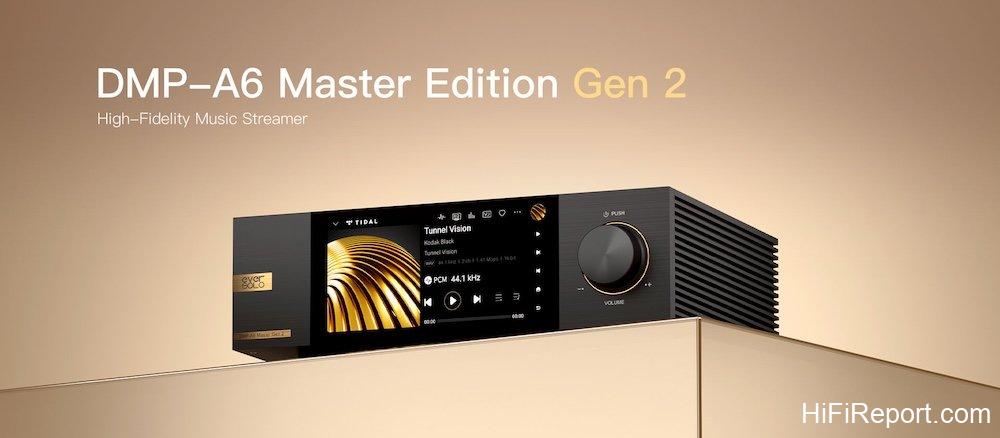
This year, Eversolo has unveiled the second generation of the DMP-A6 Gen2, along with a special Master Edition Gen 2, establishing a dual-pronged attack in the entry-level streaming market. So, what differentiates the standard Eversolo DMP-A6 Gen2 from the DMP-A6 Master Edition Gen2? Outwardly, there are three distinctions.
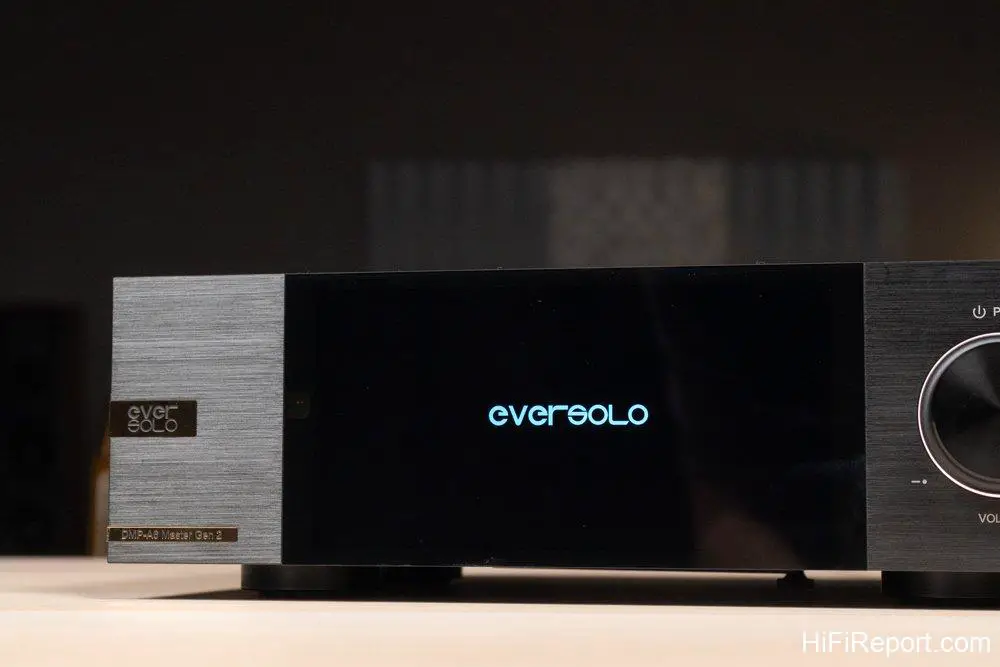
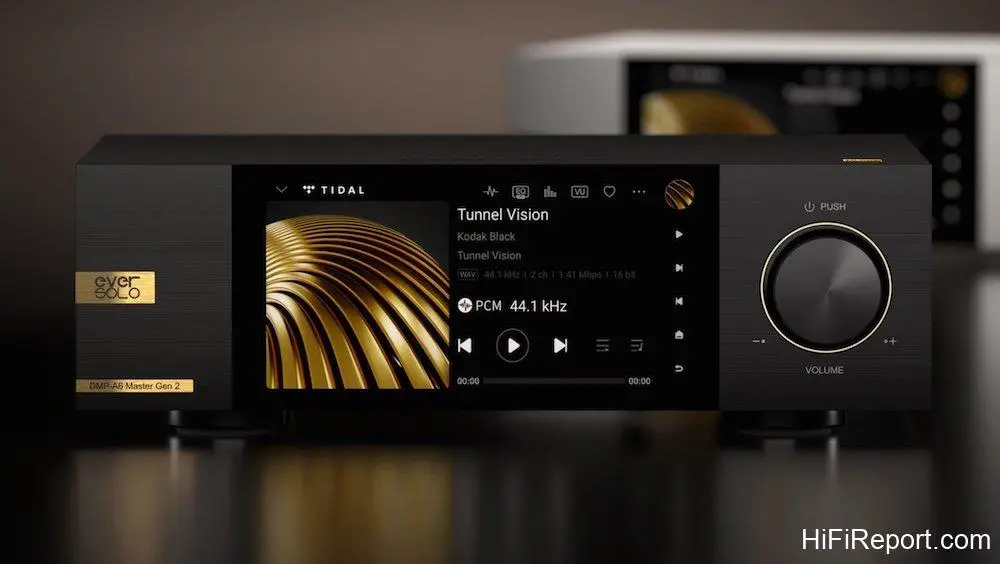
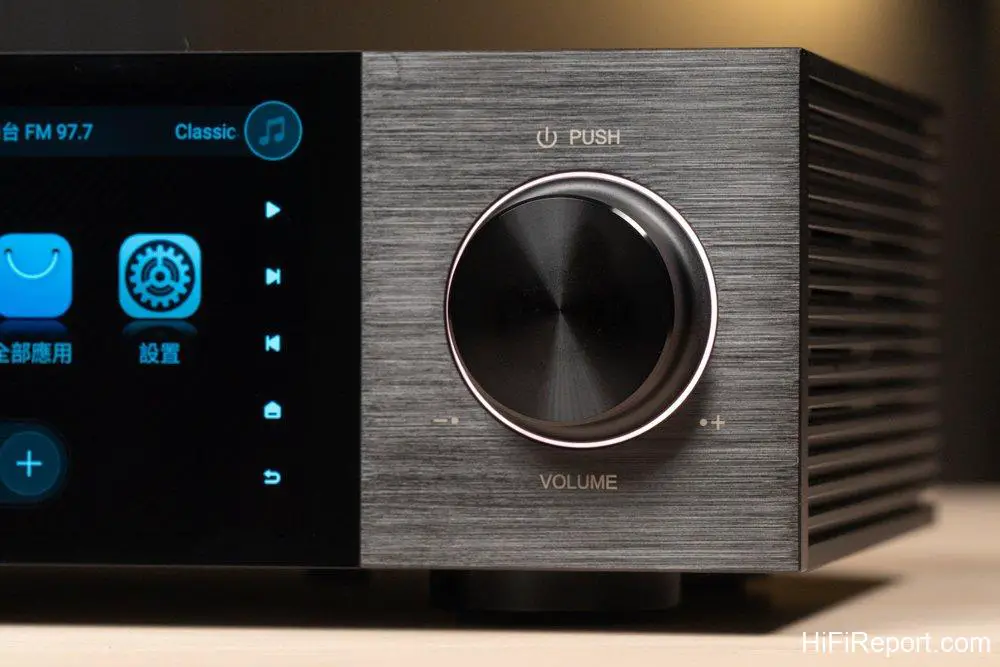
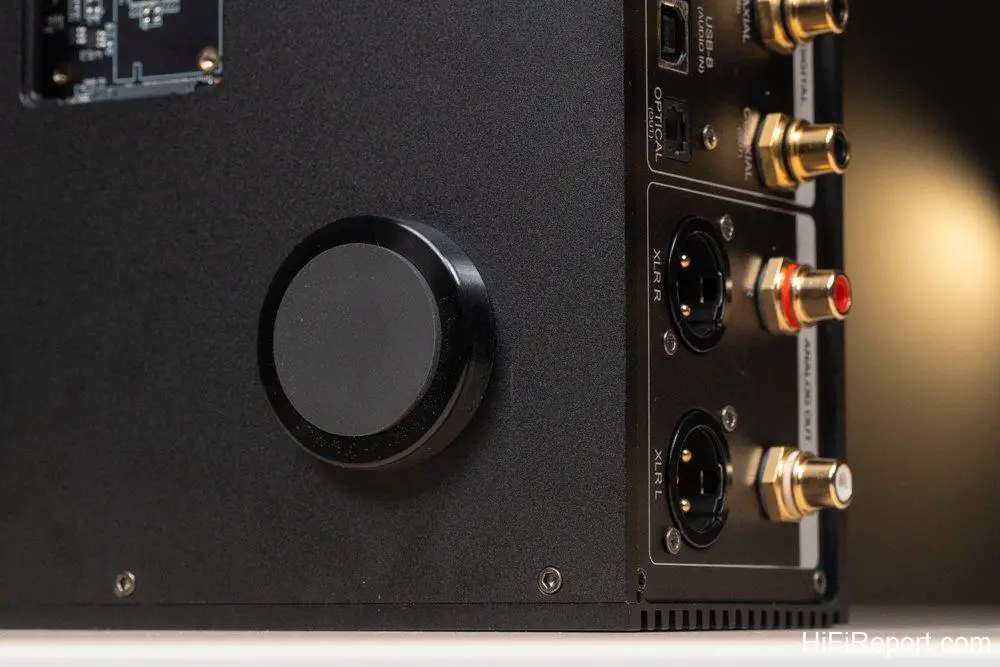
Firstly, the logo. The standard A6 Gen2 features a silver logo, while the Master Edition boasts a gold one, making it easily identifiable at a glance. Secondly, the standard version is only available in black, whereas the Master Edition also comes in a silver finish. This allows users with predominantly silver audio equipment to choose a color that blends more harmoniously. Thirdly, the Master Edition’s volume knob is encircled by an RGB dynamic gradient light ring. Much like ambient lighting in a luxury car, it adds a touch of visual flair and enjoyment to the listening experience.
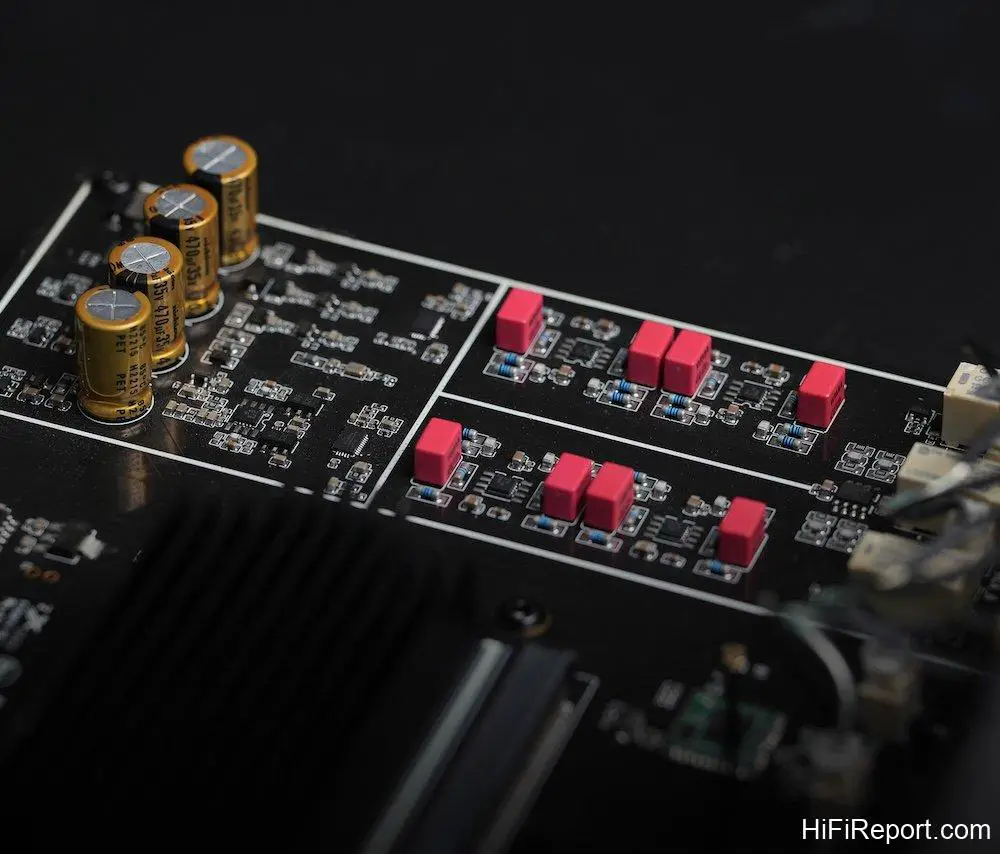
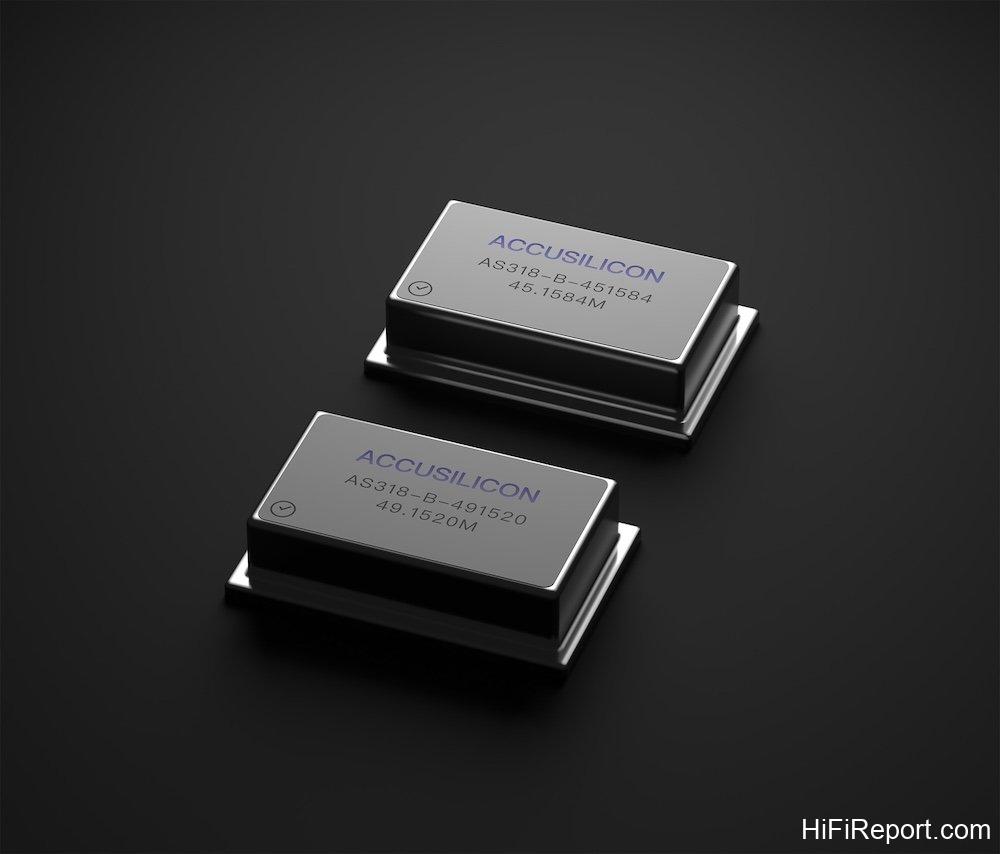
While exterior changes are minor, the internal upgrades are far more significant. The Master Edition features two crucial differences in its circuitry. First, the clocking mechanism differs between the two models. The standard A6 Gen2 employs a dual-clock management system, providing separate clocking for 44.1kHz and 48kHz sampling rates—an already impressive design rarely seen in products at this price point. The Master Edition, however, not only utilizes two clocks but incorporates dual femtosecond clocks, elevating the DMP-A6 Master Edition’s clock precision to a femtosecond level, bringing its performance remarkably close to the DMP-A8.
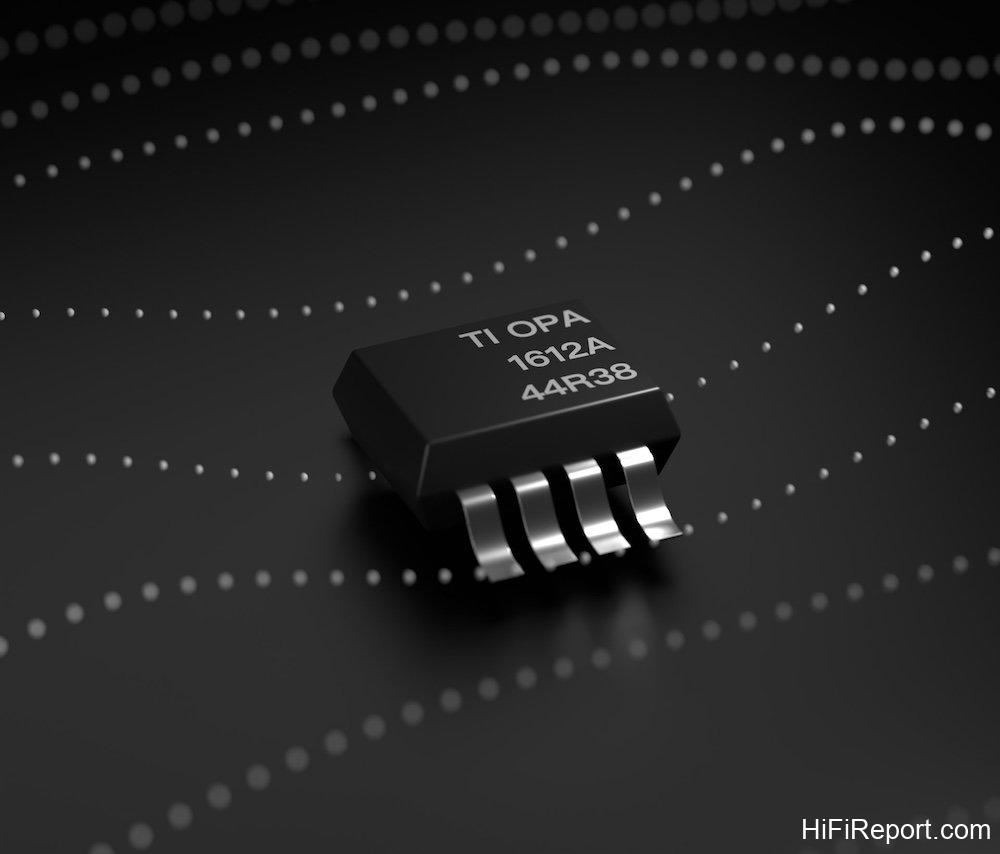
The second difference lies in the operational amplifier chips used. The standard A6 Gen2 uses Texas Instruments’ OPA1642, while the Master Edition features TI’s OPA1612. These two op-amps have different architectures, leading to variations in specifications and performance—the OPA1612 selected for the Master Edition boasts lower noise and lower distortion. It’s worth noting that this OPA chip is also used in the A8. Based solely on the differences in internal clocks and OPA components, we can almost say that the distinction between the second-generation A6 standard and Master editions is that the Master Edition A6 is a step closer to the A8; it’s a micro-upgrade of the DMP-A6 Gen2.
When Kuohsiang first introduced Eversolo in 2023, my colleague Roy penned a review of the DMP-A6. In his conclusion, he wrote: “Whether judged by features-to-price or sound-to-price, the DMP-A6 offers incredible value, standing as an irreplaceable, high-quality machine in its current price range.” He even headlined it as “the only choice in its class.” A few months later, it was my turn to audition the DMP-A8, which boasted higher specifications and a more luxurious configuration. Although the DMP-A8 didn’t receive my “full recommendation” at the time due to its lack of Roon Ready support (a feature I heavily rely on as a reviewer), setting that aside, I still found it impeccable. Even with a price tag more than double that of the DMP-A6, its performance offered exceptional value.
Now, with the Generation 2, the DMP-A6 remains formidable, and arguably even more valuable. The reason is simple: a more attractive price than its predecessor. The first-generation A6 launched with a retail price of $960 USD. The second-generation standard A6 debuted at $870 USD, a direct reduction of $90 USD, effectively a 10% discount. And the second-generation Master Edition A6? Priced at $1,160 USD, it’s roughly 20% more than the first-gen A6, but for this premium, you get upgraded key components, akin to buying a simplified version of the DMP-A8.
Unchanged Core Design for Multifunctional Integration
The DMP-A6 Master Edition Gen2 carries forward the design philosophy of its predecessors, the A6, A8, and A10, integrating streaming playback, DAC, and preamplifier control functions. This makes it capable of serving as the central hub for music playback, and even the control center for an entire audio system.
Dual DACs, Dual Femtosecond Clocks, and Low-Noise Linear Power Supply
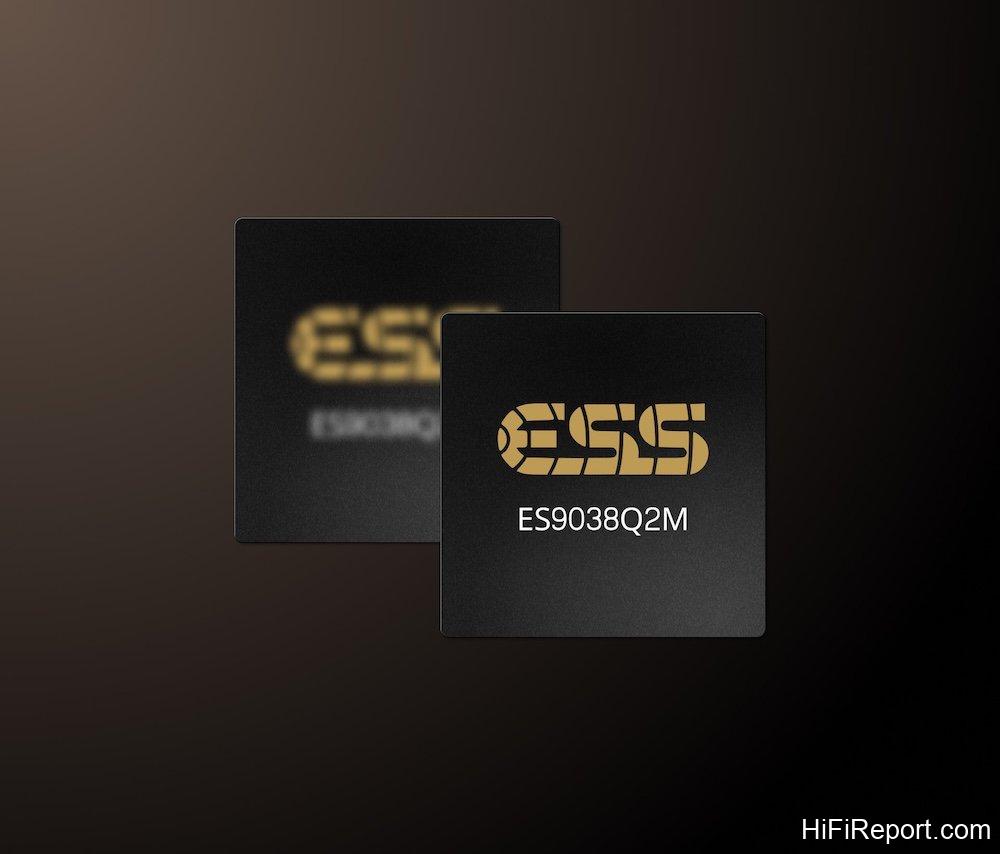
The Eversolo DMP-A6 Gen2 Master Edition is equipped with dual DAC chips, featuring two ESS Sabre ES9038Q2M DACs, with one DAC dedicated to decoding each stereo channel. It supports decoding up to PCM 32-bit/768kHz and DSD512, and can also unfold MQA files, making it compatible with various high-resolution music formats without issue. For precise clocking, the Gen2 Master Edition utilizes two Accusilicon femtosecond-grade clocks, corresponding to 44.1kHz and 48kHz clock rates respectively. Such high-quality clocking components are exceptionally rare in this price segment.
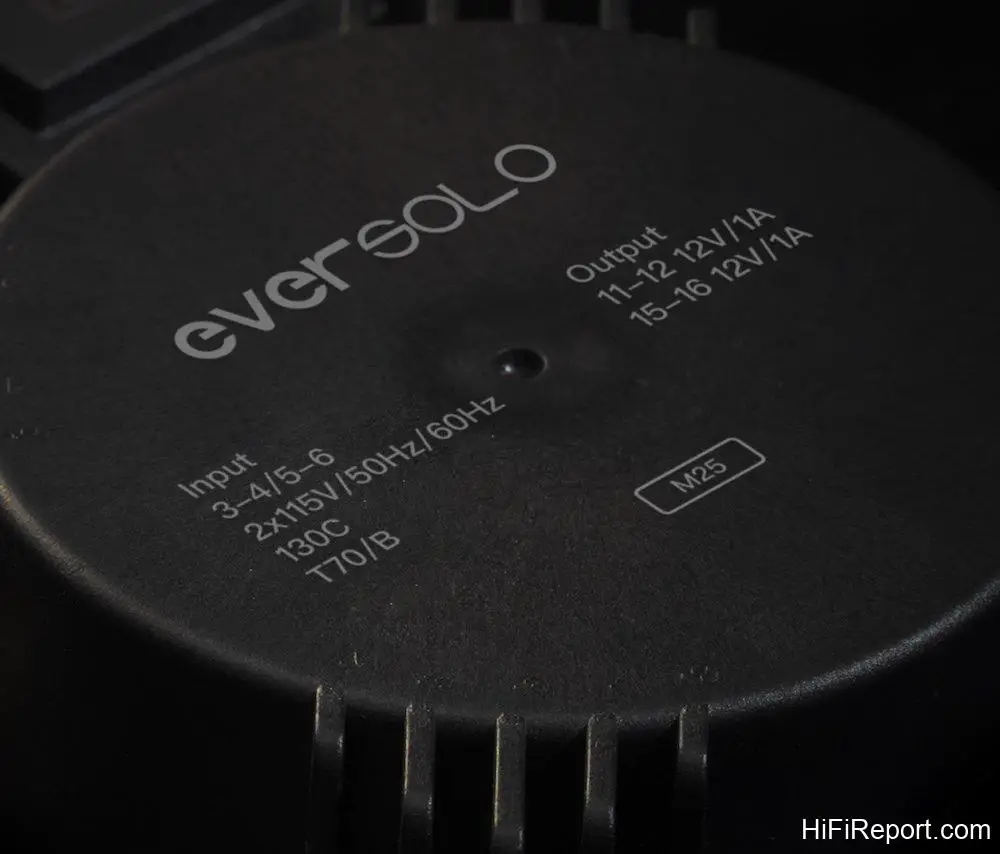
Regarding power supply, the first-generation DMP-A6 used a switching power supply. For the second generation, the power supply has been entirely upgraded to a low-noise linear power supply, reducing the power supply noise floor to below 40uV, ensuring the cleanest possible power delivery to the audio circuitry.
Quad-Core ARM Processor with Ample Memory
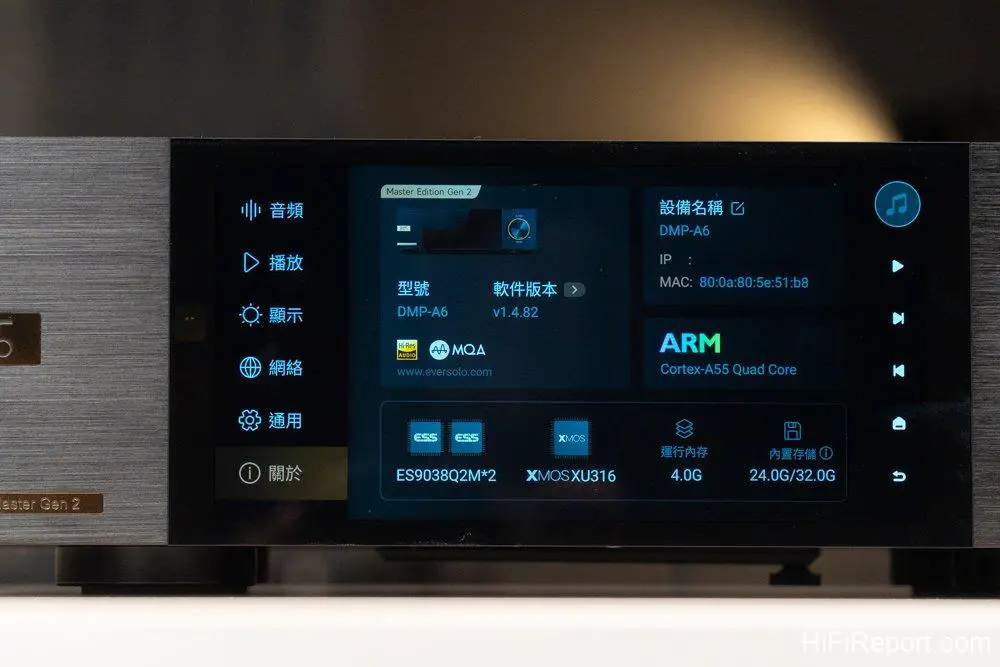
A streaming player’s internal architecture always resembles that of a computer, and the design of its processor-related circuitry significantly impacts streaming performance. The goals are smooth operation, stable functionality, and minimal digital noise. The DMP-A6 Gen2 (both standard and Master editions) employs an ARM Cortex-A55 quad-core processor, coupled with an XMOS XU316 USB audio processor, and features 4GB DDR4 alongside 32GB eMMC storage. This configuration contributes to smooth system operation and supports local caching.
While HiFiReport doesn’t conduct industrial measurements, based on practical experience with the DMP-A6 Gen2 Master Edition, the fluidity of all operations is highly satisfying, and the responsiveness of both the app control and touch interface can be described as instantaneous.
Rich Connectivity: Rip CDs, Connect Hard Drives, Hook Up to Your Computer – No Problem
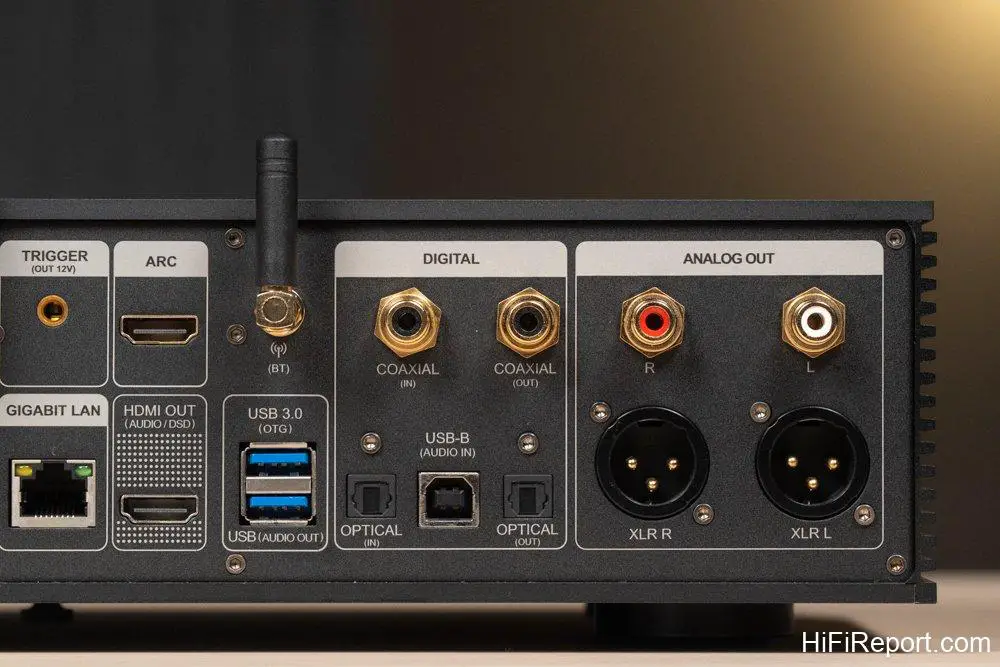
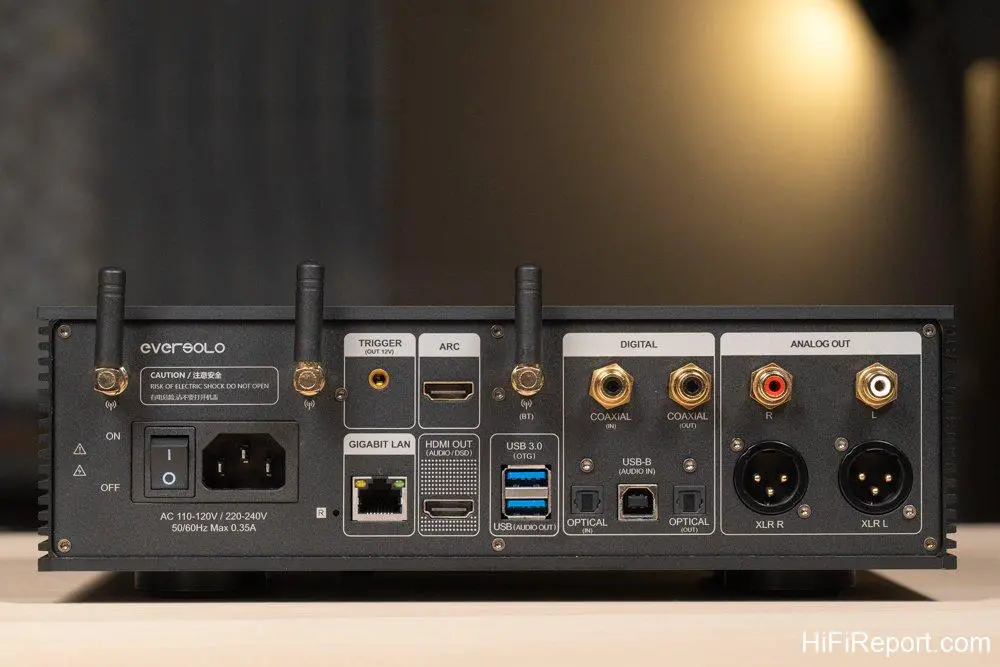
In terms of input and output interfaces, Eversolo has been even more generous with the DMP-A6 Gen2. The Gen2 A6 features two USB 3.0 Type-A ports, making it convenient for connecting external hard drives. Not only for file transfers, but if you want to rip CDs, simply plug in an external optical drive to a USB port. The Gen2 also adds Gracenote database connectivity, allowing for file data extraction while ripping CDs.
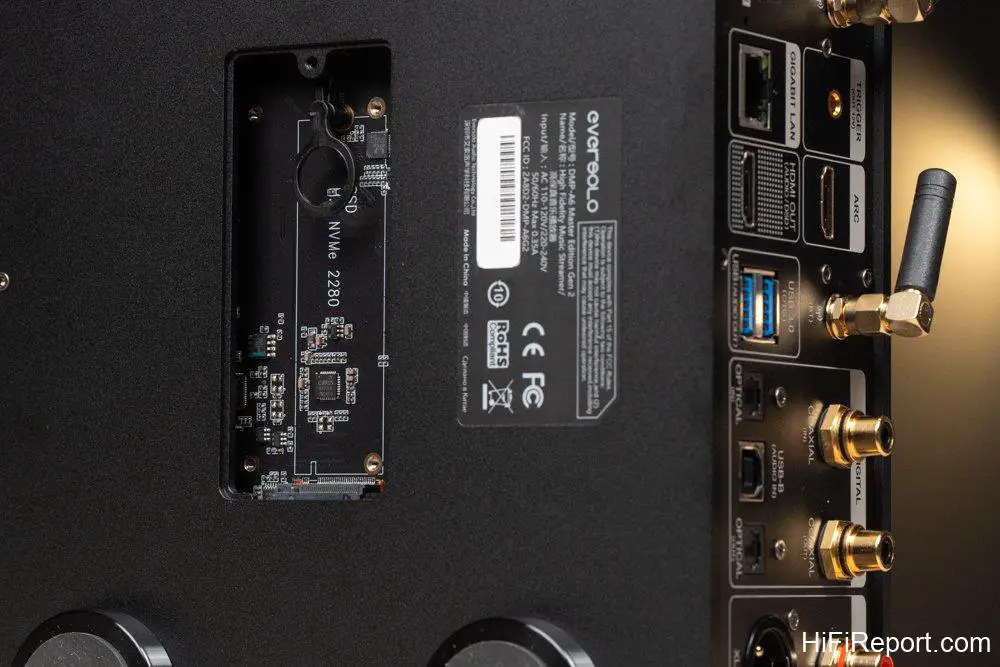
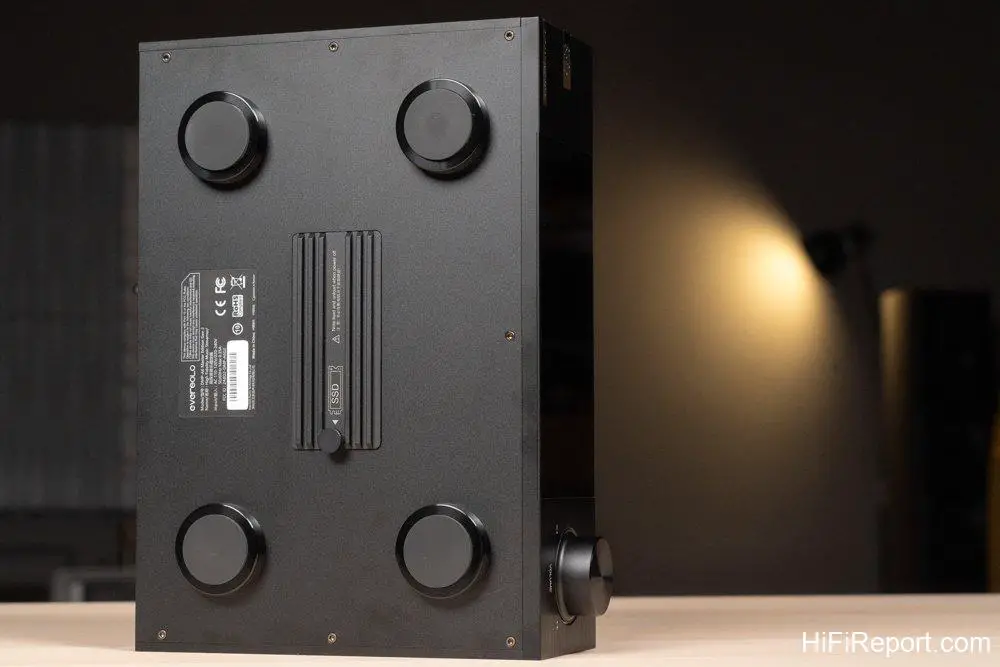
If you wish to store files internally within the A6, that’s also an option. It has an M.2 NVMe SSD slot on the bottom, allowing users to DIY expand storage up to 4TB. After installing an M.2 SSD, the DMP-A6 Gen2 (regardless of whether it’s the Master Edition) can play internally stored music files.
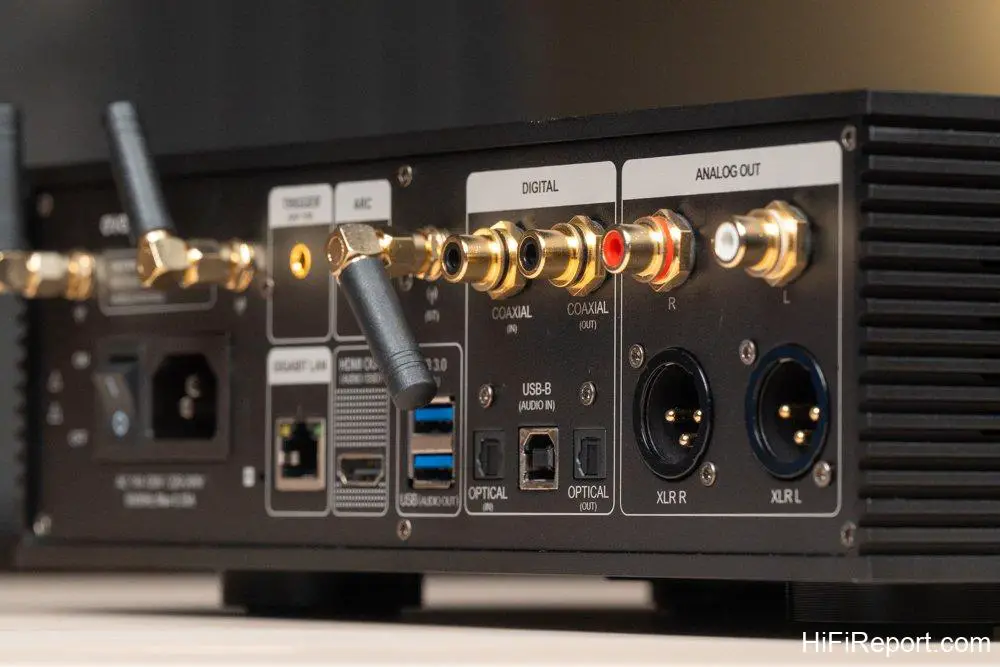
Beyond the USB Type-A ports for hard drives and optical drives, it also includes one USB Type-B port for connecting other streaming devices. If you prefer not to use the DMP-A6 Gen2’s built-in player, you can connect a computer or another streaming transport. In this scenario, the A6 can function as a “dual femtosecond clock, dual DAC chip” decoder. Furthermore, it provides one optical and one coaxial S/PDIF input and output each, ensuring compatibility with traditional digital sources like CD transports.
Multi-Channel Audio Output and TV Connectivity
It also features two HDMI ports. One is an HDMI Audio output that supports multi-channel audio, designed for connecting multi-channel soundbars or AV receivers. With multi-channel audio sources becoming increasingly common, this HDMI output, paired with appropriate equipment, allows for multi-channel audio playback. Additionally, there’s an HDMI ARC port for connecting to a TV. Thus, the DMP-A6 Gen2 can serve not only as a music playback hub but also as a home entertainment center.
WOL Network Wake-Up Functionality
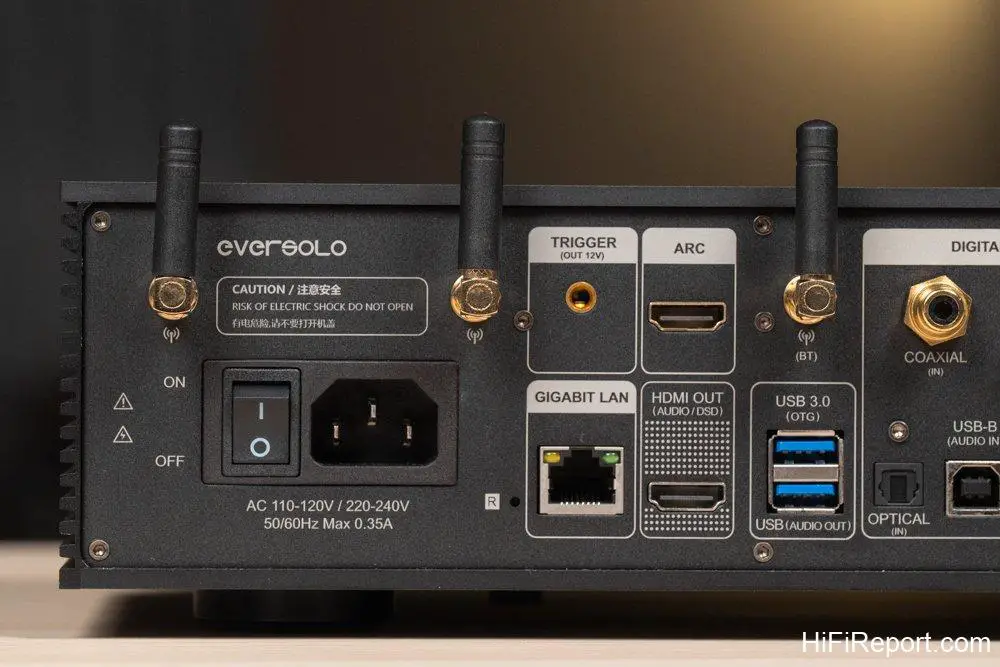
For its most crucial streaming function, Eversolo provides both Ethernet and Wi-Fi connectivity, offering both wired and wireless options. This means that even if the location of your audio system isn’t convenient for running network cables, Wi-Fi will suffice. However, using a wired connection offers the convenience of the WOL (Wake-on-LAN) function. When you want to listen to music, simply open the app on your phone, and the A6 can be instantly woken up.
Comprehensive Streaming Service Support
The range of streaming services it supports is extensive, almost to the point of being exhaustive. It covers DLNA, Tidal, Qobuz, Deezer, HiRes Audio, KKBox, Apple Music, Amazon Music, and virtually all familiar streaming platforms. Additionally, it supports Roon Ready and Tidal Connect. With so many pathways, convenience of use is high, and it appeals to a wide range of users. Eversolo delivers a full suite of features even on its entry-level streaming player.
Fully Balanced Analog Output Circuitry
In addition to network streaming, it also features Bluetooth transmission capabilities, with a built-in Qualcomm QCC5125 chip supporting Bluetooth 5.0. If you wish to share any audio, simply pair via Bluetooth, and you can play it through your audio system. Although it’s a source component priced around $1,000 USD, its analog circuitry is fully balanced. This design leverages common-mode rejection to achieve lower noise and higher output voltage swing for the audio signal, which contributes to improved dynamic performance during music playback. For analog output, it offers one set each of RCA and XLR connections, allowing for flexible pairing with downstream equipment.
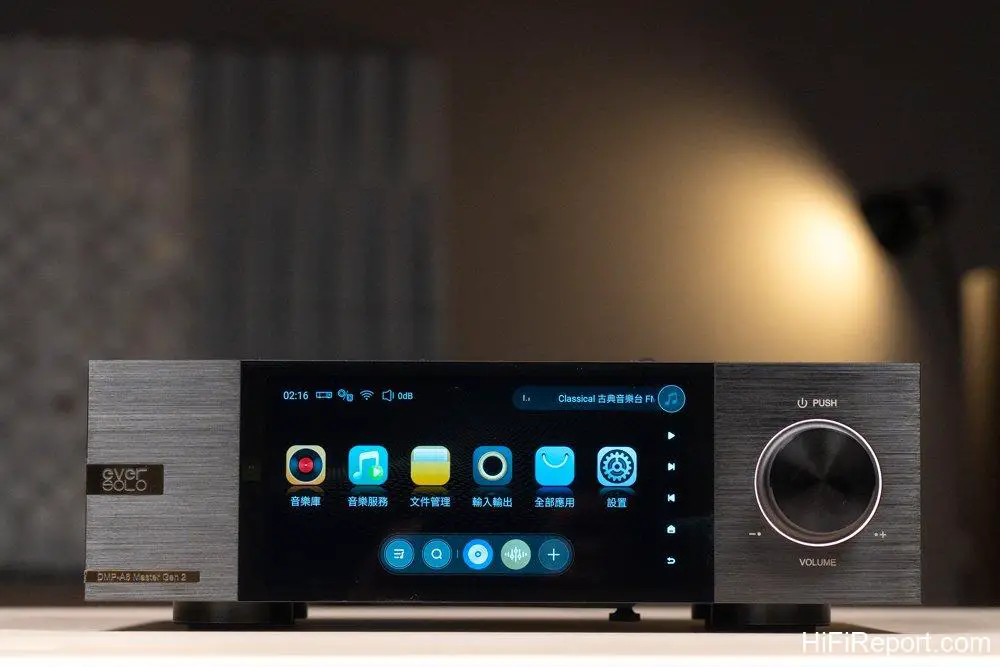
Retina-Grade Six-Inch Touchscreen
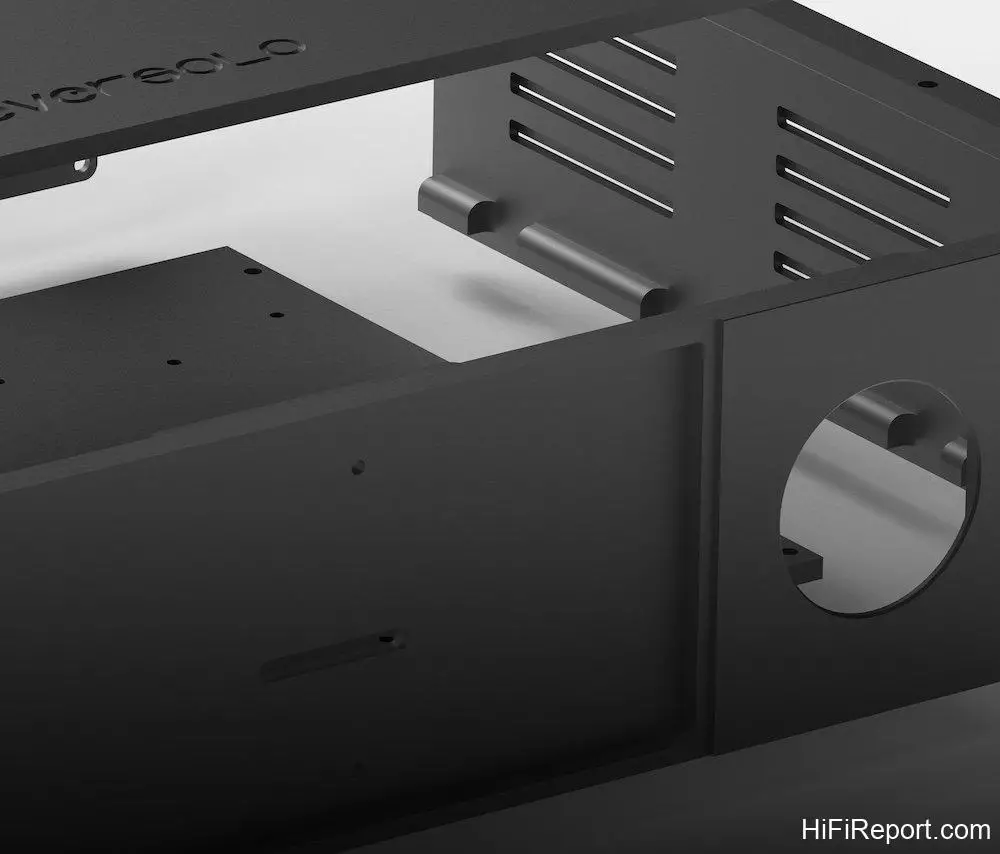
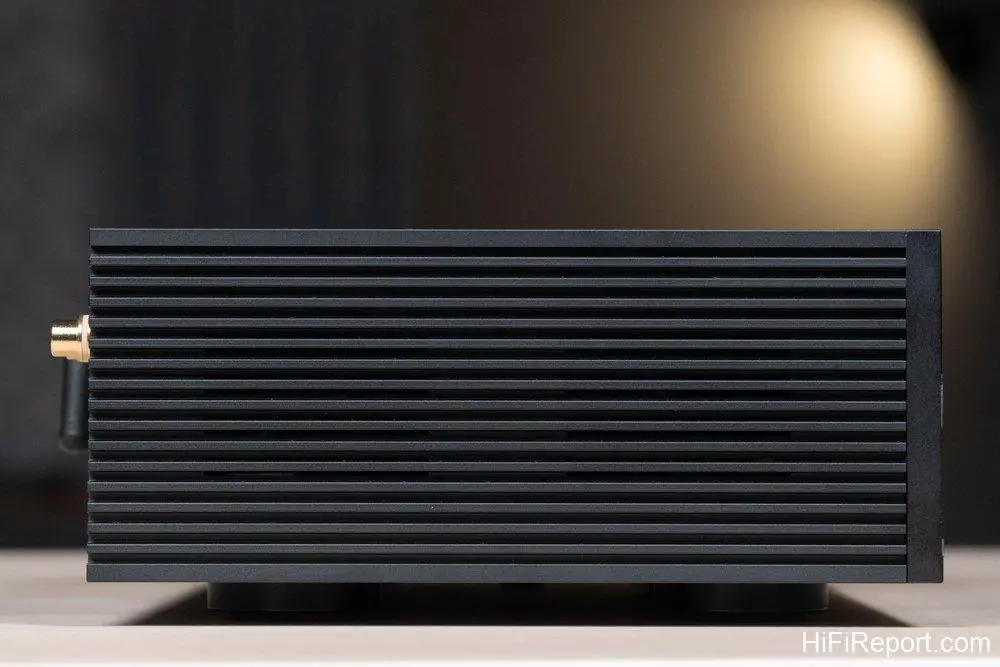
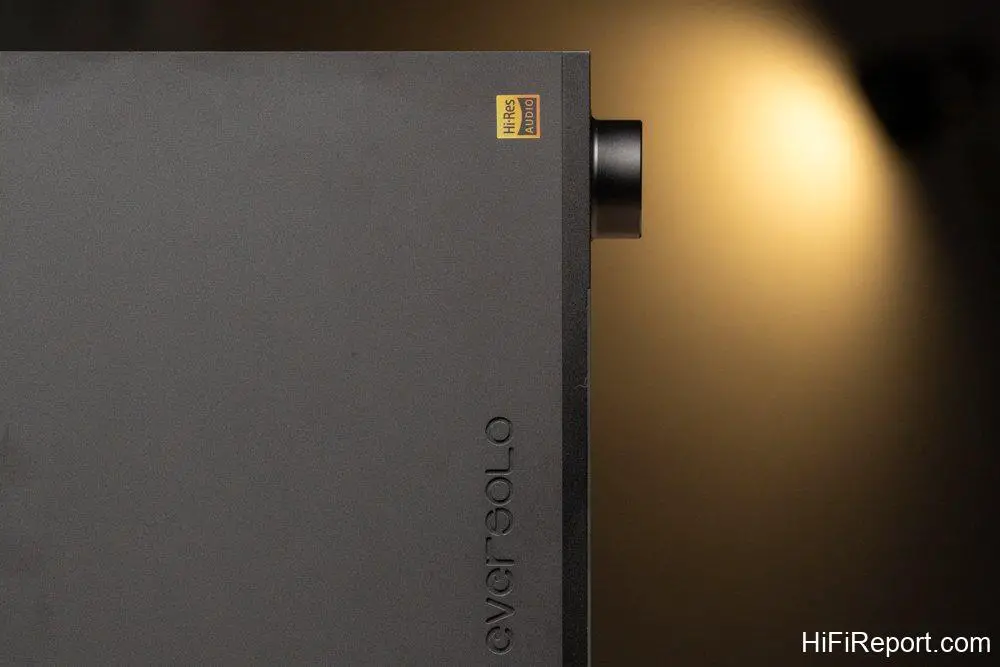
The Eversolo DMP-A6 Gen2 Master Edition maintains the original compact, sleek, simple, yet elegant design of the A6. Its all-aluminum alloy chassis is crafted from aerospace-grade aluminum via CNC machining. Heat sinks are integrated on both sides, and the Eversolo logo is engraved on the top cover. When in operation, the unit exhibits a slight warmth but never gets hot. This suggests either low power consumption or highly effective heat dissipation.
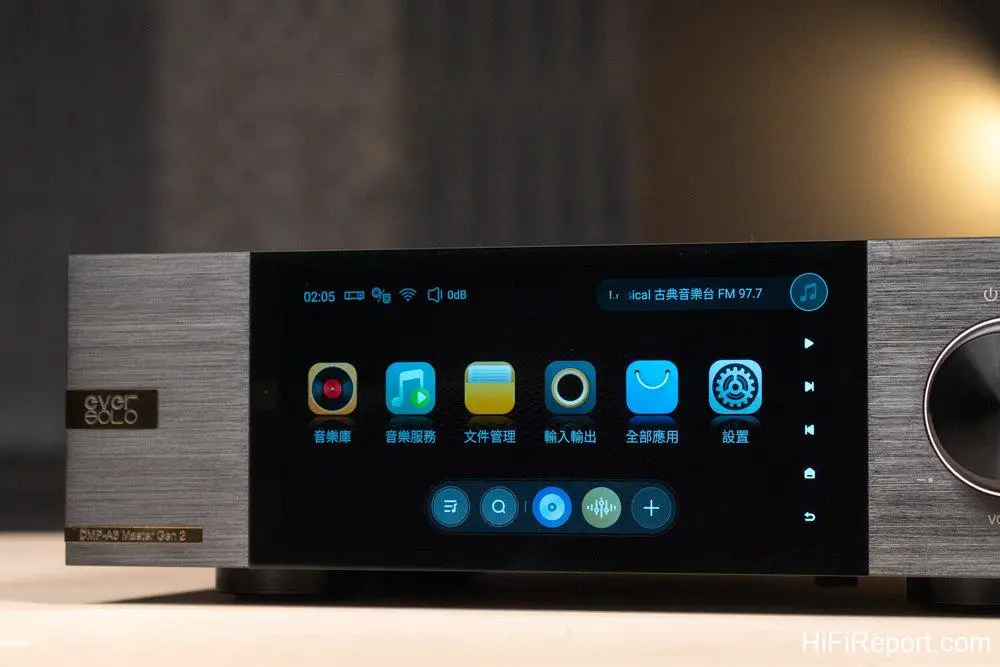
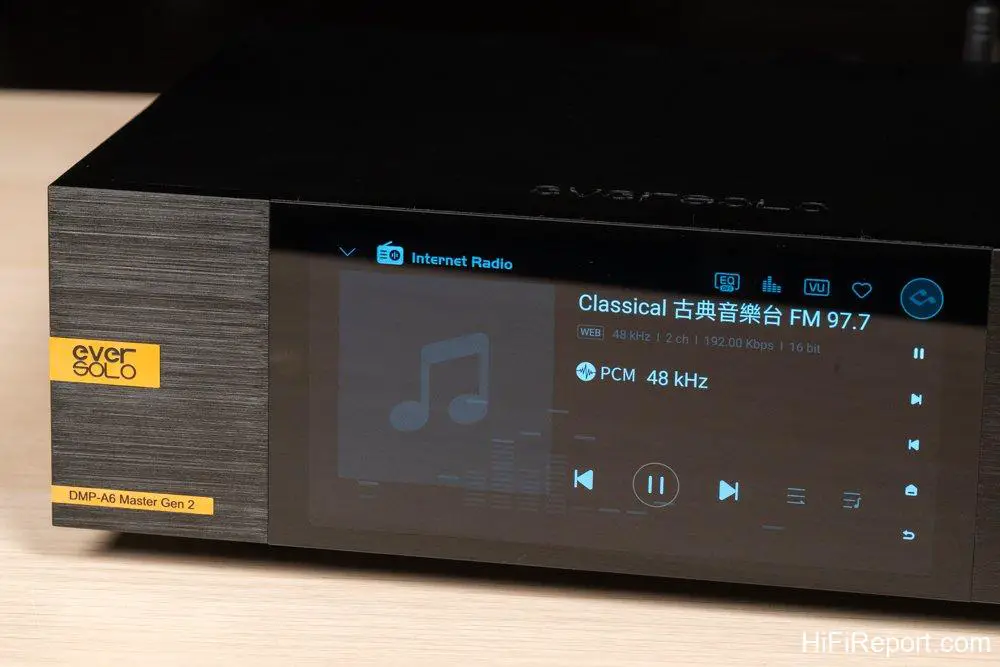
The aluminum front panel features a fine brushed finish, complemented by a clickable three-way knob and a 6-inch full-color touchscreen. The overall operation is highly intuitive and feels premium. A notable detail is the screen’s high resolution and ample brightness, providing a very refined visual experience. The manufacturer claims this screen rivals Apple’s Retina display, and this beautiful touchscreen alone outshines many products in its class.
Proprietary EOS Audio Processing Engine
The internal audio processing architecture utilizes Eversolo’s self-developed EOS engine, designed to restore high-fidelity sound quality as faithfully as possible, ensuring the highest resolution and fidelity regardless of the streaming playback path. Under the architecture provided by this engine, Eversolo also incorporates a powerful DSP capable of various adjustments, including EQ gain, Graphic EQ, Parametric EQ, FIR filters, and left/right channel balance.
Such a wealth of features would be expected on the $3,200 USD DMP-A10, and impressive on the $2,000 USD DMP-A8. But on the $1,000 USD DMP-A6 Gen2, what else can one say but “exceptional value”? “Incredible value”? “Absolutely incredible value”? If you’re not convinced, let me elaborate. The built-in equalizer of the DMP-A6 Gen2 offers both Graphic EQ and Parametric EQ, which are rarely seen in home audio systems. Both types of EQs are tools for adjusting sound frequencies, differing slightly in operation.
Simply put, a graphic equalizer provides fixed frequency points for adjustment, presented with sliders. It’s intuitive to use and more common. A parametric equalizer, on the other hand, is more professional. It allows for more precise adjustments of frequency points, gain, and the affected bandwidth (the “Q factor”). This is used in recording studios for mixing and mastering. Buying an A-6 and getting professional EQ control included—if that’s not value, what is?
Bit-Perfect EVC Output Engine
The A6 also incorporates Eversolo’s self-developed EVC output engine. While the DMP-A8 and A10 feature R-2R pure analog volume control, the DMP-A6 Gen2 utilizes digital volume control. Typically, digital volume control is feared for potentially degrading resolution and diminishing audio details as volume is attenuated. Eversolo understands this concern, and its EVC output engine, developed for its customized Android 11 system, uses a special algorithm to adjust output gain. This ensures that the output signal waveform remains unchanged, maintaining its original form even when the output gain varies. This breakthrough overcomes SRC limitations, enabling bit-perfect playback.
Intuitive Operation with On-Screen VU Meters
All the aforementioned functions can be operated via the touchscreen or through a downloadable mobile app. During music playback, comprehensive information such as track title, artist name, album name, cover art, file format, bitrate, and sample rate are fully displayed. Eversolo has also designed a rare “screen sync” feature. Within the Eversolo app, simply select screen sync to mirror the device’s display on your phone. If you enjoy seeing dynamic VU meters or other indicators respond to the music, the A6 also offers multiple built-in meter display options.
Eversolo’s software, both on the device itself and in the app, is exceptionally well-written. Its fluidity, logical design, and wealth of information consistently impress users.
Neutral, Clean, Clear Layering, Accurate Imaging, Excellent Transparency
I only received the DMP-A6 Master Edition Gen2 for review, without the standard Gen2 or the original A6 for direct comparison. Therefore, my report is based solely on my experience auditioning the Gen2 Master Edition. Overall, the DMP-A6 Gen2 Master Edition’s sound is remarkably neutral and clean. Tonally, it exhibits no discernible or coloration, mirroring my previous experience with the DMP-A8. Its analytical resolution maintains Eversolo’s consistently excellent performance, with clear layering, accurate imaging, and superb transparency.
Initially, I anticipated that its compact size might lead to insufficient dynamic performance. However, connected to a high-end system, it delivered without regret. When playing tracks with grand dynamics, using the analog output directly, even with Wilson Audio Alexia V loudspeakers, there were no issues of insufficient dynamics, a confined soundstage, or loose bass.
Dynamics and Microdynamics Are No Problem
For instance, listening to Kent Nagano conducting the Orchestre Symphonique de Montréal in Dukas’s “The Sorcerer’s Apprentice,” the dynamic contrasts within the music were clearly delineated. At the piece’s opening, as the apprentice recites the spell to animate the broomstick for cleaning, the magical effect is evoked by the gentle playing of woodwinds and violins. This soft passage maintains a clear and distinct sound, with precise detail rendering in every aspect. As the musical texture intensifies, the broom and water bucket’s actions grow more fervent, and the music becomes increasingly passionate. This progression from soft to loud, combined with Dukas’s rich timbres, brilliant harmonies, and multi-part counterpoint, makes the piece exhilarating. The A6 Gen2 Master Edition rendered such music with a sonic picture that in no way betrayed its affordable price.
In Mussorgsky’s “Night on Bald Mountain,” during the segment depicting the witches’ sabbath, woodwinds, brass, and percussion, in addition to the strings, infuse the music with boundless energy and vitality. The A6 handled this music with unwavering composure, presenting a clear soundstage. Even during fortissimo passages and pounding drums, it proceeded calmly and steadily; the soundstage remained stable, and dynamics were instantaneous. It’s a shame I couldn’t compare it directly with the A8 and A10 to truly assess how much the upgraded Master Edition A6 Gen2 closes the gap with the A8, and how much better Eversolo’s flagship A10 truly is.
Clear Soundstage, Distinct Layers, Outstanding Resolution
Not only does large-scale orchestral music sound spectacular, but even richly orchestrated and complex film scores sound on par with more expensive digital sources. Take Hans Zimmer’s score for the film “Inception,” for example, which is replete with dissonances to create a suspenseful atmosphere, deliberately sharp sounds, and unusual surges of low frequency. On the DMP-A6 Gen2 Master Edition, these painstakingly crafted elements by the composer sound truly brilliant and immersive. Moreover, I greatly appreciate its ability to resolve the organization and layering within the music, allowing Hans Zimmer’s adeptly layered compositions to be presented clearly and distinctly, rather than being muddled and incomprehensible. Despite its small size, it adeptly handles deep bass passages, whether it’s a slowly descending bass line or impactful low frequencies.
The Warm, Full, Solid, and Luminous Piano Sound is a Pure Delight!
Listening to Danilo Rea’s “Lirico” album, the piano tones sounded warm, full, and solid. The (cohesion) of the piano notes prevented them from sounding thin; instead, due to its clean character, it particularly highlighted the solidity of each note, allowing them to shine with a beautiful luster. This was especially evident in the higher registers. As for the depressed bass chords, they were heavy and rich, particularly the sustained bass tremolo and chords in the latter half of the second track. The A6 Gen2 Master Edition’s performance was truly “master-class,” not at all resembling an entry-level player. This is where the exceptional value lies. Abundant features, excellent specifications, and carefully selected components are certainly valuable; but for this price, to deliver such piano, such bass, and such unflappable sonic imagery, for us at HiFiReport, it is truly beyond value.
Lively and Natural Sound, Painting a Picture with Rich Detail
The DMP-A6 Master Edition Gen2 also boasts sufficient liveliness, allowing for a strong sense of the vibrant energy present in live concert recordings. Take Sara Bareilles’ “Brave Enough: Live at the Variety Playhouse” album, for example. Sara Bareilles’ vocal style is highly versatile, adapting her vocal and resonance according to the needs of each song. Such details, even more so than articulation, vocal timbre, breath sounds, and breathing, are crucial to the song’s delivery. The A6 Gen2 Master Edition delivers all these nuances without omission. Moreover, because Sara Bareilles constantly interacts with the audience on stage, the audience’s responses, cheers, and applause, together with the performer, create an expansive and dimensional stage. The recreation of the live atmosphere is simply spectacular. When a recording is excellent, we always hope these qualities can be reproduced during playback. I can only say that these two encounters with Eversolo (my previous experience with the A8, and now this) have truly elevated my ceiling of imagination for entry-level streaming players.
A Convincing Musical Masterpiece
A streamer priced even lower than an iPhone, yet capable of providing almost every function required for digital streaming, coupled with diverse EQ capabilities, rich usability, and versatile applications, truly sets a benchmark in its price range. I missed the opportunity to audition the first-generation A6 when it arrived, but this experience with the second-generation Master Edition has truly convinced me: the rave reviews are indeed well-deserved.
If I had to point out a drawback, the only thing I found regrettable is the DMP-A6 Gen2’s lack of a headphone output. Moreover, not just the A6, but the A8 and A10 also lack this feature. Eversolo’s three devices all have built-in analog circuitry, and they also make amplifiers, so why no headphone output? Especially the compact A6, which is ideally suited for desktop use. If it included a headphone output, it would truly be perfect.
Even so, the Eversolo DMP-A6 Gen2 Master Edition, like its predecessor, still offers incredible value! Witnessing the dual femtosecond clocks reducing jitter, and the upgraded OPAs lowering noise floor and distortion—these all bring the entry-level A6’s performance closer to the mid-range A8. If your budget and space are limited, the upgraded new A6 Master Edition is an excellent choice. I am genuinely concerned, quite genuinely, that the A8 might not hold much advantage over the second-generation Master Edition A6, which could prompt a generational update for the A8 as well. I didn’t have the opportunity to compare them, but if you’re curious, you can visit a dealer and compare them yourself.
Specifications
*Type: Wireless Streaming Player
*Network: RJ-45 (10/100/1000Mbps), Wi-Fi 2.4G + 5G dual-band
*Internal Storage: M.2 NVME 3.0 2280 SSD slot, supports up to 8TB
*Memory Configuration: 4GB DDR4 + 32GB eMMC
*Audio DAC: ESS ES9038Q2M x2
*Audio Processor: XMOS XU316
*Operational Amplifier: OPA1642 (Note: Original text states OPA1612 for Master Edition but OPA1642 here, I will retain OPA1642 as per specifications list)
*Power Supply: Low-noise, high-quality linear power supply
*Supported Streaming Functions: AirPlay 2, DLNA, Spotify, Tidal Connect, Qobuz Connect
*Supported Streaming Services: Netease Cloud Music, QQ Music, Apple Music, TIDAL, Qobuz, HIGHRESAUDIO, Amazon Music, IDAGIO, Calm Radio, Internet Radio, TuneIn, Radio Paradise, Deezer, SoundCloud, Presto Music, etc.
*Network Cloud Drives, Network Protocols: WebDAV, UPnP, NFS, SMB, Alibaba Cloud, Baidu Cloud, OneDrive, Dropbox, Emby, Plex, etc.
*Network Streaming and Push: DLNA, Tidal Connect, Roon Ready, etc.
*Control Methods: Mobile APP control, touchscreen control, tablet app control, TRIGGER OUT, WOL
*Digital Inputs: HDMI ARC, Optical, Coaxial, USB Type B, USB Type A (USB Audio supports up to DSD512, PCM 32Bit/768KHz), MQA
*Digital Outputs: Optical, Coaxial, USB, HDMI Audio (DSD64 Native multi-channel / PCM 192KHz multi-channel source code output, up to 5.1)
*Analog Outputs: RCA x1, XLR x1
*Bluetooth Audio Input: Bluetooth 5.0, supports SBC/AAC
*Dynamic Range: > 128dB (XLR), > 124 dB (RCA)
*Signal-to-Noise Ratio: > 128dB (XLR), > 124 dB (RCA)
*Distortion: XLR / <0.00009% (-120dB), RCA / <0.00011% (-119dB) *Dimensions: 187 × 270 × 90 mm