
Fatiwee S-3 Studio Speaker Cable Review
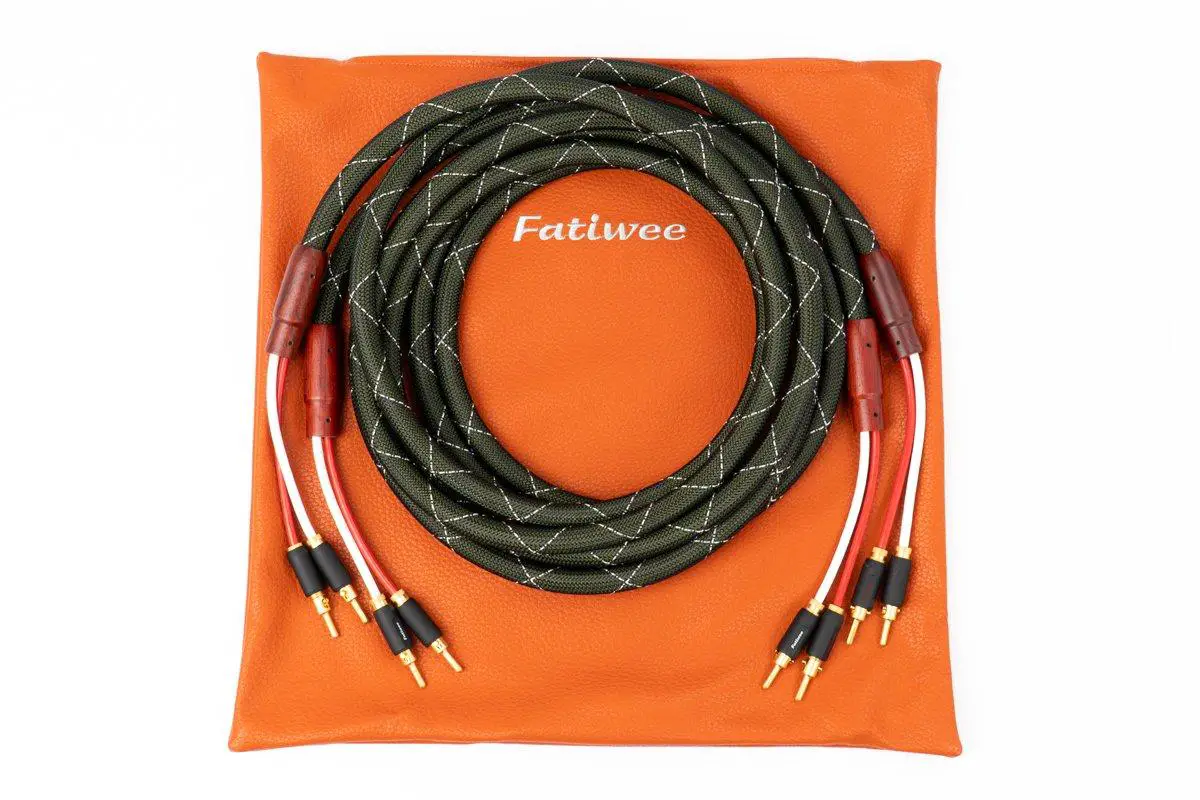
Fatiwee Audio? A new brand? Indeed. This is an audio cable brand introduced by Richcoln Company Limited. I also had the pleasure of encountering it this year. The S-3 Studio speaker cable appears simple and unadorned, yet its sonic performance is remarkably impressive, adding a relaxed, vibrant, dense, and balanced musicality.
Studio Series: Monitoring Focus
Fatiwee’s product line is divided into two main series: Studio and Energy. The S-3 Studio speaker cable under review is the high-end model in the Studio series. For a more budget-friendly option, there’s the S-1 Studio. Compared to the Energy series, the Studio series emphasizes a balanced sonic signature, making it suitable for studio monitoring applications. The Energy series, on the other hand, incorporates elements of Land, Water, Fire, and Wind, offering more room for sonic fine-tuning. For audiophiles, the Energy series might provide greater scope for sonic experimentation.
Core Design Principles
Whether it’s the monitoring focus of the Studio series or the greater sonic adjustability of the Energy series, Fatiwee’s fundamental principles in cable design remain consistent, emphasizing three core concepts: Positive Phase, Sequential Direction, and Resonance Harmony.
Positive Phase, Sequential Direction, and Resonance Harmony Explained
Regarding “Positive Phase,” Fatiwee stresses that every strand of copper wire in the conductor must possess the same crystal orientation before being twisted together. “Sequential Direction” implies that the conductor’s orientation must align with the electrical signal direction. As for “Resonance Harmony,” it involves utilizing resonant energy materials to imbue the cable with a unique sonic character.
Fatiwee emphasizes that their directional philosophy doesn’t deviate from conventional cable design theories. It’s understandable, as many cables are marked for directionality, indicating the conductor’s crystal orientation should follow the signal flow. However, the third concept, utilizing resonant energy materials, is Fatiwee’s exclusive technological secret.
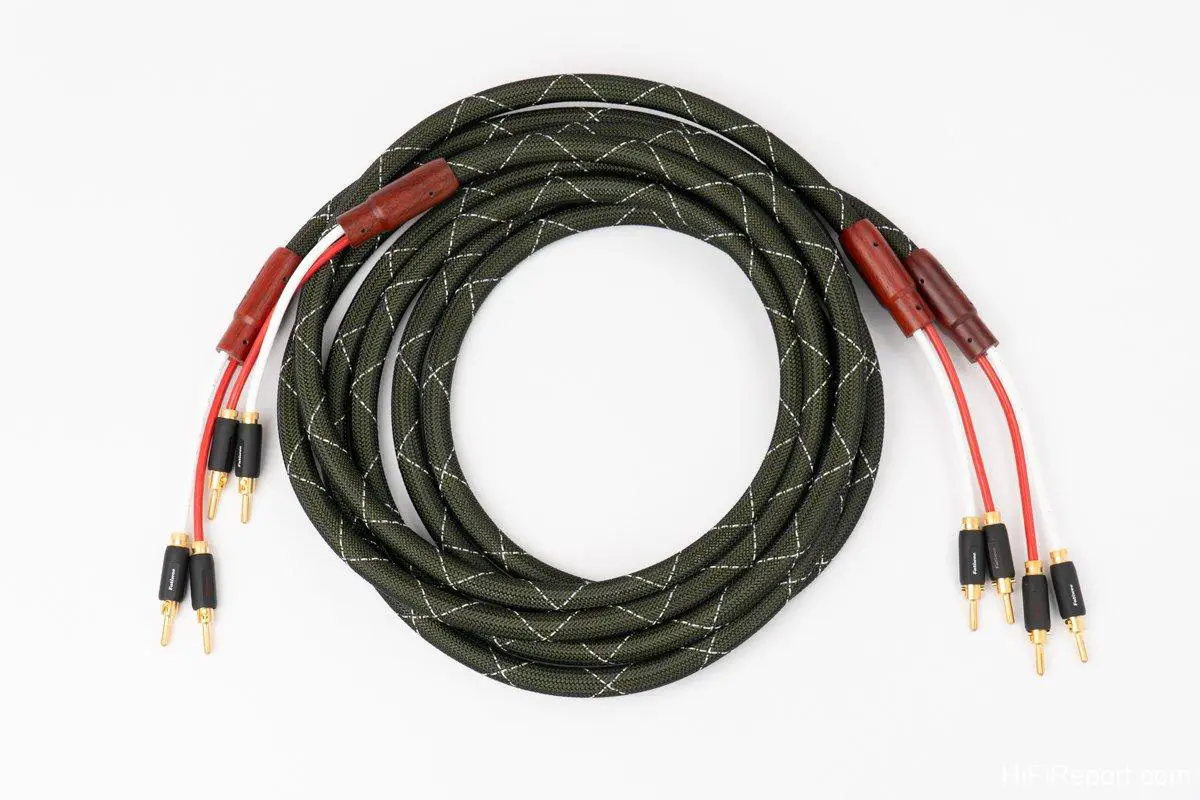
What kind of material possesses resonant properties that can achieve sonic tuning? It sounds esoteric and vague, and some might dismiss it as mere marketing hype, especially given the long-standing controversies surrounding audio cables. Fatiwee states that the S-3 Studio speaker cable employs 6N OCC single-crystal copper conductors, multi-strand winding, and varying wire gauges to achieve sonic balance. This description of the cable’s construction, based on conductor material theory, seems plausible and not outlandish. However, the mention of resonant energy materials is less clear. But just because something is not immediately understood doesn’t mean it lacks validity. The ultimate test lies in listening.
Wood Connectors: A Tactile Delight
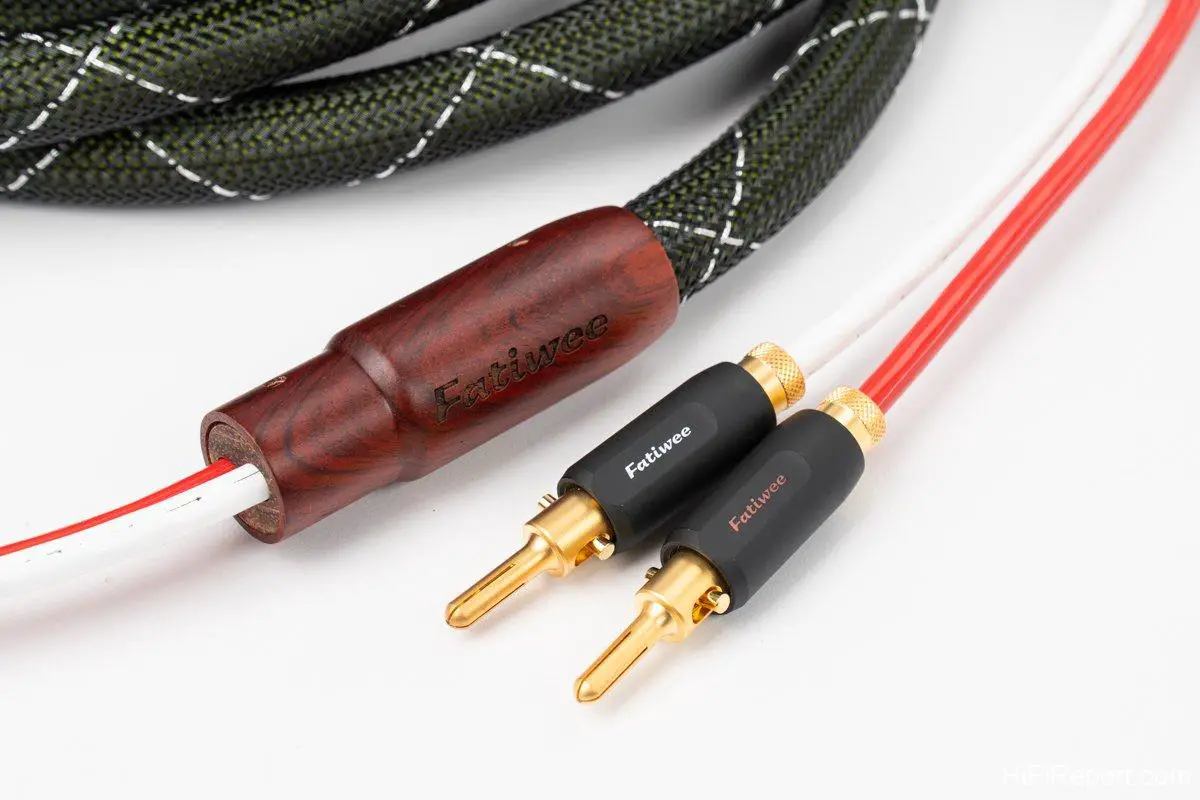
In terms of appearance, the S-3 Studio speaker cable’s gauge isn’t particularly thick, yet it feels substantial. The cable itself is relatively flexible, making routing behind equipment and speakers easy, avoiding wrestling matches with stiff, bulky cables. The review sample arrived with banana plugs, branded with the Fatiwee logo, indicating custom components. The wooden locking rings offer a pleasant tactile feel and likely contribute to sonic tuning. In recent years, some cable manufacturers have favored natural materials for connectors, focusing on resonance control. Fatiwee’s choice of wood for the S-3 Studio’s speaker connectors likely reflects a similar tuning philosophy.
However, because the review sample of the S-3 Studio was equipped with banana plugs, it couldn’t be used with the Wilson Audio Alexia 2 speakers. Therefore, the Dynaudio Contour 60 speakers were brought in instead, paired with the Ear 868P preamplifier and 509 II power amplifier. The source components were the YBA 450T CD transport and Merging NADAC digital-to-analog converter.
Simpler Music for Easier Cable Evaluation
When evaluating speaker cables, I recommend starting with music that has simple instrumentation. The simpler the instrumentation, the fewer extraneous variables there are, making it easier to discern the cable’s sonic characteristics. Therefore, it’s best to avoid using orchestral music for initial comparisons and instead opt for simpler musical pieces. I recommend starting with Bach’s “Unaccompanied Cello Suites,” due to their simple instrumentation, which makes sonic differences more apparent.
There are numerous recordings of Bach’s “Unaccompanied Cello Suites,” with Yo-Yo Ma alone recording it three times. I listened to his second recording, “Inspired by Bach.” In the familiar “Prelude” from Suite No. 1, the cello’s elegant voice flowed beautifully. With the S-3 Studio speaker cable, the cello’s melodic lines became even clearer and smoother. The sense of quietness in the musical background was excellent. Because it was a simple cello solo, the S-3 Studio rendered a beautifully defined cello image, focused centrally between the Contour 60 speakers. The 3D imaging was full-bodied, and the cello’s bowing was natural, delineating smooth melodic contours.
Enhancing Musical Vibrancy
Listening to Bach’s “Unaccompanied Cello Suites” through the S-3 Studio, I didn’t perceive Fatiwee as adding emphasis to any particular frequency band. Instead, the presentation was of a neutral and balanced musical texture. If you’re looking for the S-3 Studio to boost the bass or treble of your system, it might not have a significant effect. However, the S-3 Studio noticeably enhances the vibrancy of string instrument bowing. You can sense an added richness to the cello’s flowing lines. If you feel your audio system struggles to reproduce a lifelike cello, sounding consistently dry and lacking substance, the S-3 Studio is worth a try.
Guitar and Piano Performance
Moving on to another piece with exceptionally simple instrumentation, I listened to the “Million Dollar Baby” soundtrack. The first track, “Blue Morgan,” features only a steel-string guitar solo, a blues piece with double-string fingerpicking in sixth intervals. The S-3 Studio presented a beautiful guitar resonance, and the plucking and fingerpicking had ample force. Following this, “It’s Nice Viewing” features a piano solo. The notes were rich and full-bodied, while also conveying the spaciousness of the recording environment. As the orchestra enters, the S-3 Studio faithfully reproduced the changes in the recording space. The midrange richness and brilliance were remarkably pleasant and easy on the ears.
Soundstage and Spatial Detail
To say the S-3 Studio excels in rendering the recording space is underscored by the spatial transitions during the piano and orchestral interplay. The recording meticulously captures these spatial nuances. During the piano solo, the recording positions the piano closer to the listener, with the spatial effects of the sustain pedal emerging later in the theme, expanding the piano’s perceived space. This then seamlessly transitions to the broader soundstage of the orchestra. The S-3 Studio delicately reveals these recording techniques, from the intimate guitar to the expansive piano and the subsequent orchestral entry, portraying the evolving musical landscape with remarkable subtlety.
Vocals with Intimate Warmth
Moving to vocals, I selected Carol Kidd and Nigel Clark’s collaboration “Tell Me Once Again,” listening to the jazz standard “Stormy Weather.” With the simple arrangement of female vocals and guitar, the S-3 Studio presented the midrange with excellent density. Carol Kidd’s voice was sweet and captivating, accompanied by the warm tones of the nylon-string guitar. These speaker cables possess a warm character, lending the vocals a comfortable intimacy.
Switching to jazz, I listened to Miles Davis’s classic “Kind of Blue,” specifically the opening track “So What.” The piano was positioned on the left, drums on the right, double bass slightly left of center, and Miles Davis’s trumpet slightly right of center. The other brass instruments were layered in the rear of the soundstage. While the overall soundstage presentation is primarily determined by speaker placement, and not attributable solely to the S-3 Studio, the cable deserves credit for its image focus and tonal brilliance. The brass instruments exhibited a bright yet comfortable sheen, and the contrasting timbres of the saxophone and trumpet, with their interplay of light and shade, enhanced the music’s vibrancy—a delightful aspect of the S-3 Studio’s sonic contribution.
Tight and Energetic Bass
To assess bass performance, I listened to “The Stockfisch DMM-CD/SACD Vol.1,” selecting Chris Jones’s “No Sanctuary Here.” This track is frequently heard at audio shows due to its strong mid-bass presence, which can showcase a system’s scale and power.
Listening through the S-3 Studio, I didn’t find that it significantly increased the bass quantity. However, the tightness and focus of the bass frequencies were notably improved, lending a more energetic quality. Stockfisch recordings from Germany are renowned for their full bass response. If an audio system already has abundant bass, it can become uncontrolled and boomy. However, the S-3 Studio doesn’t aim to boost bass quantity; instead, it takes a tighter approach, resulting in a punchy and well-defined mid-bass with added agility and dynamic impact.
Wide Dynamic Contrast
For classical music, I chose the Brahms Piano Trio No. 1 performed by Pires, Dumay, and Wang Jian. The first movement begins with the piano leading, introducing the romantic main theme. The cello then joins, echoing the theme, and the two instruments weave a lush tapestry. Subsequently, the violin takes over the theme, with Dumay’s violin playing intensifying the music’s tension. The piano and cello simmer beneath the surface, gradually building the musical intensity.
Listening to Brahms, one often senses a deep undercurrent of melancholy beneath the romantic melodies. The S-3 Studio effectively conveyed the emotional contrasts within this piano trio. In moments of introspection, the timbre was somber, while during peaks of intensity, the dynamic range was powerful. This contrast between strong and weak, soft and hard, truly captured the essence of Brahms.
Adding Musical Flavor and Vibrancy
My first encounter with Fatiwee, through the S-3 Studio, reveals a cable designer with a clear understanding of music. The cable doesn’t seem to artificially color the sound by boosting bass or treble. Instead, the focus is on musical balance and faithfully reproducing the original recording. Beyond fidelity, the density and vibrancy of the sonic texture are perhaps the S-3 Studio’s most compelling attributes. If you consistently feel your audio system sounds somewhat lifeless, lacking vibrancy and sounding rather flat, consider trying the S-3 Studio speaker cable. It could well inject a touch of flavor and vitality into your music.
Specifications
* Type: Speaker Cable
* Conductor: 6N OCC
* Outer Diameter: 14.5 mm