File: Magnat MTT 990 Direct-Drive Turntable Review
Analog Warmth
Imagine a leisurely summer afternoon: a Magnat MTT 990 direct-drive turntable paired with a Linn Selekt DSM all-in-one amplifier, a “Kind of Blue” vinyl spinning, and a frosty Heineken in hand. This is the epitome of relaxation – especially when you’ve silenced your phone notifications, placed your iPhone far away, disconnected from the digital network, and escaped the hustle and bustle. Pure analog music enjoyment at its finest.
However, this idyllic scene might be more appealing to middle-aged folks. For the younger, digital generation, perhaps battling it out in a game of “Arena of Valor” while lounging in bed is the ultimate pleasure?
Turntable Adjustment
It’s undeniable that modern life is deeply intertwined with the digital realm. Music consumption has largely shifted to digital streaming, granting access to countless albums at your fingertips, eliminating the need to purchase CDs or even vinyl records. Yet, paradoxically, as digital music becomes ubiquitous, freely accessible, and virtually limitless, a growing number of audiophiles are turning back to analog vinyl. Perhaps they are a rebellious minority, or perhaps they are simply unmoved by the coldness of complete digitization. The tangible warmth of a vinyl record in hand resonates deeply with the hearts of Hi-Fi enthusiasts.
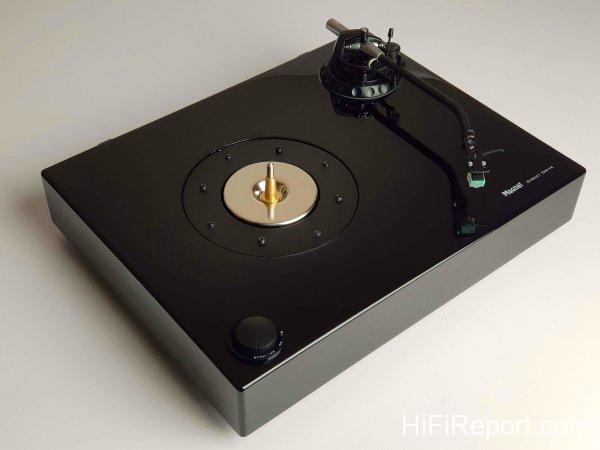
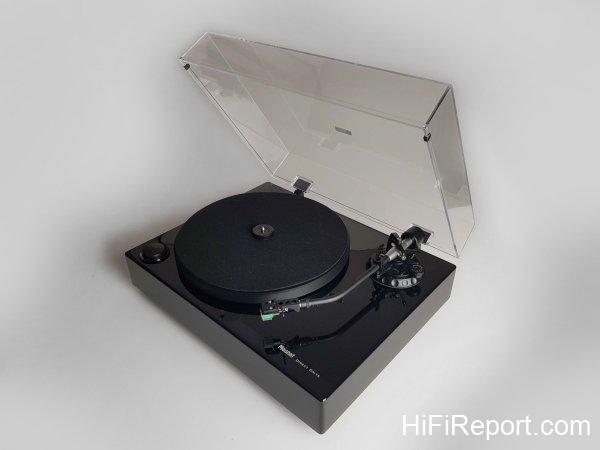
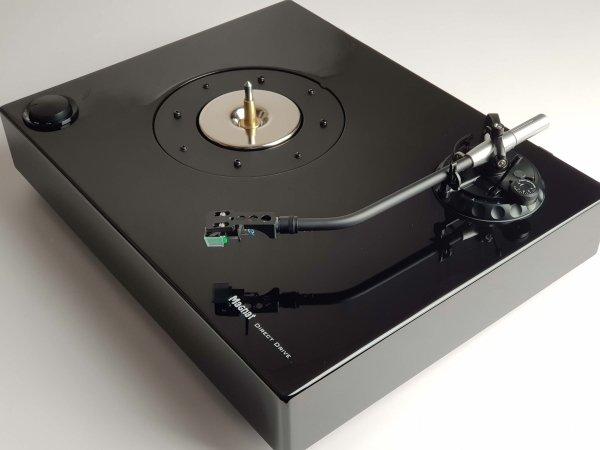
German manufacturer Magnat has recognized this trend. Although it caters to a niche market, their MTT 990 direct-drive turntable is packed with comprehensive adjustment features, allowing vinyl aficionados to fully explore the potential of their turntable and tonearm, all while maintaining an accessible price point. Before delving further into the MTT 990, I must commend Magnat. Offering such a wealth of user-friendly adjustments and robust build quality in the MTT 990, while keeping the price under $1,550 USD (the suggested retail price is approximately $1,543.8 USD based on a 49,800 NTD price), is truly commendable. Given that vinyl enthusiasts are a smaller demographic compared to those buying digital music sources, the limited sales volume naturally necessitates higher profit margins to sustain production. However, Magnat has priced the MTT 990 very attractively, aiming to entice more Hi-Fi enthusiasts into the world of analog vinyl.
Turntable Adjustment
Unlike digital CDs or streaming music, analog vinyl requires more than just purchasing records. Turntable setup and adjustment are crucial. The sound produced by the same turntable can vary significantly depending on who sets it up. The key prerequisite is that the turntable itself must offer sufficient “adjustment features” for vinyl experts to fine-tune and optimize performance.
The MTT 990, while positioned as an entry-level to intermediate model, boasts fine-tuning capabilities comparable to high-end turntables. This is where Magnat’s ingenuity shines – their ability to incorporate advanced technology into their products and strive for affordability.
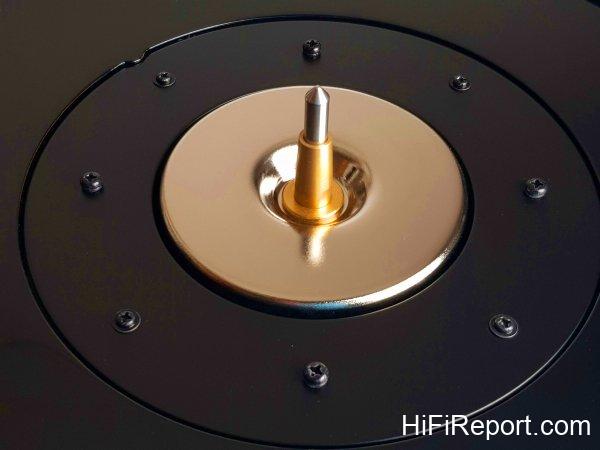
What adjustment features does the MTT 990 offer? Basic speed control with 33 and 45 RPM switching is standard, but it also includes 78 RPM. While 78 RPM records are even older and mostly mono recordings, they are still collected by a dedicated few. Magnat aims to cater to all vinyl enthusiasts, so all three speeds are provided. The advantage of a direct-drive turntable is the ease of speed switching, which is conveniently done via the controls on the MTT 990.
For a playful experiment, try playing a 33 RPM record and switching to 45 RPM. The music will speed up, and the pitch will rise comically, sounding like Donald Duck singing.
Of course, this is just for fun, but the quick and easy speed switching of direct-drive turntables was why they were favored by radio stations. Radio DJs could cue the stylus to the correct position before a broadcast segment, and then instantly start the music by simply turning on the turntable power. This eliminated the “pop” noise of the stylus dropping onto the record.
10-inch J-Shaped Arm
Next, let’s discuss the MTT 990’s tonearm. Magnat has opted for a J-shaped tonearm, and a 10-inch arm, slightly longer than the more common 9-inch arms.
At the 2018 audio show, while assisting Magnat’s International Marketing Manager, Eric Suh, as a translator, the MTT 990 was among the featured products. He mentioned that Magnat had compared straight arms, S-shaped arms, and J-shaped arms. They concluded that the J-shaped arm offered the smallest “tracking error angle,” hence their choice, and they further lengthened it to 10 inches.
Standard features like stylus pressure and anti-skate adjustments are naturally included. Four large rubber isolation feet, adjustable for height, allow for precise leveling of the turntable.
Furthermore, Magnat has incorporated a VTA fine-tuning lock, a feature rarely seen in this price range.
VTA Fine-Tuning
What is VTA fine-tuning lock? VTA stands for Vertical Tracking Angle, and it refers to the height adjustment of the tonearm base. Ideally, when the stylus is in contact with the vinyl, the tonearm should be parallel to the record surface. If the VTA is too high, the tonearm’s rear will be raised, resulting in increased high frequencies but reduced low frequencies. Conversely, if the VTA is too low, the bass will be emphasized, and the treble diminished. Neither of these scenarios is ideal unless you have specific sonic preferences. The optimal VTA setting is generally considered to be when the tonearm is parallel to the record surface when playing.
One might ask, if the ideal VTA height is a one-time adjustment, why is fine-tuning necessary? The answer lies in record thickness. Early vinyl records were typically 120 grams. During the oil crisis, raw material prices increased, and record companies reduced record weight to 100 grams. Today, audiophile vinyl often favors 180-gram pressings. These records, despite having the same diameter, vary in thickness. When played on the same turntable, this thickness difference necessitates VTA adjustment.
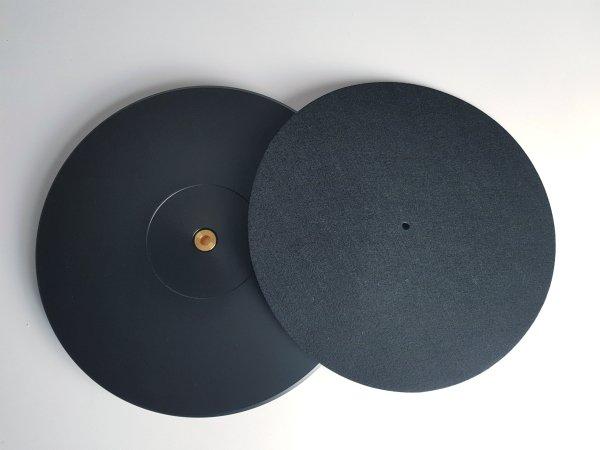
Additionally, the MTT 990 comes with a wool mat. You can listen to vinyl with or without it, and this choice will also affect the VTA.
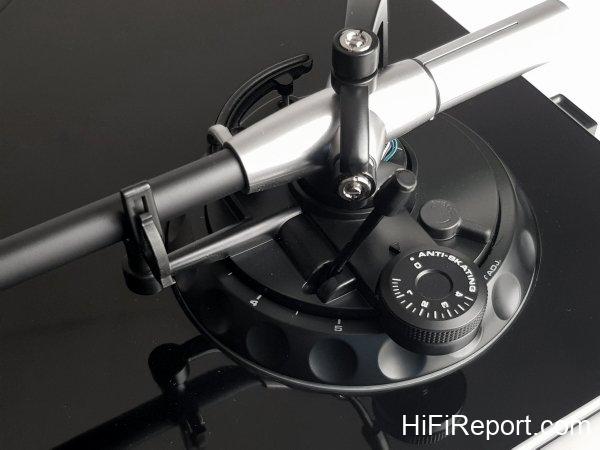
The VTA fine-tuning on the MTT 990 is well-executed. The tonearm base has a locking switch; to the right is locked, to the left is unlocked. Once unlocked, you can rotate the dial on the tonearm base to adjust the VTA height. The dial is marked with scales, allowing you to compare the sonic differences at various settings. After finding the ideal VTA, you can lock it in place to prevent accidental adjustments.
VTA fine-tuning lock is not exclusive to the MTT 990, but it’s a feature rarely found on turntables under $1,550 USD. This is a testament to the exceptional value of the MTT 990. With such extensive tonearm adjustability, it’s a fantastic device for delving into the art of turntable setup for years to come.
SME Headshell
Magnat equips the MTT 990 with an Audio Technica MM cartridge. For convenient cartridge swapping, they utilize a standard SME headshell. You can purchase multiple headshells and pre-mount different cartridges, precisely aligned. Changing cartridges becomes effortless; simply loosen the screw in the middle of the tonearm and swap headshells.
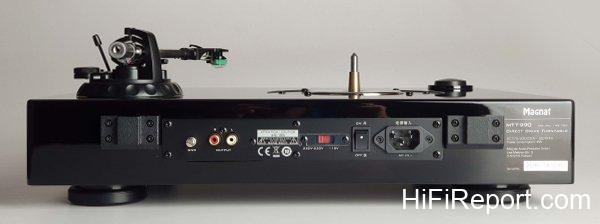
While not a Magnat exclusive design, the use of the SME standard headshell reflects their understanding of vinyl enthusiasts’ penchant for cartridge experimentation. It’s a user-friendly design choice for cartridge aficionados.
Vibrations are the bane of turntables. Unwanted resonances can distort the music, muddy the sound, and reduce transparency.
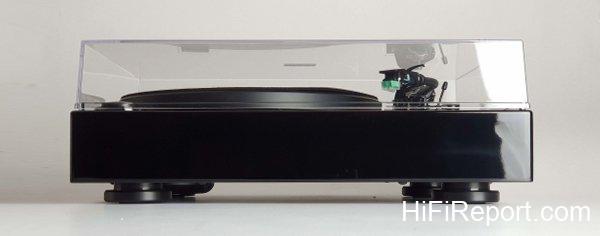
The MTT 990 appears to be a standard-sized turntable, yet it weighs a substantial 11 kg, indicating a solid build.
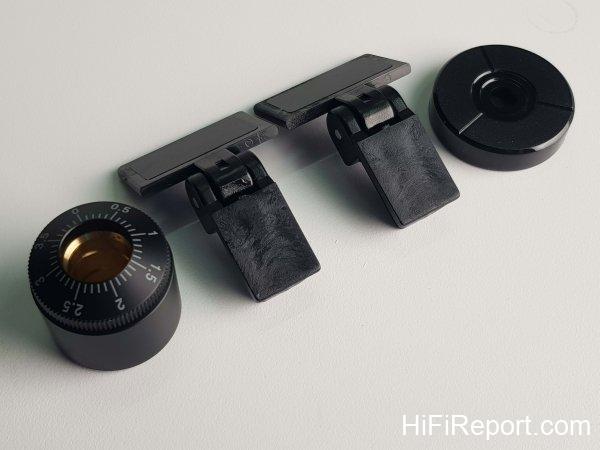
The turntable plinth is constructed from MDF, while the platter is made of resin polymer, rather than the more common metal platters. Magnat argues that metal platters have higher resonant frequencies. Therefore, they opted for a resin polymer with high internal damping to minimize platter resonance and coloration of the record signal retrieval.
Direct-Drive Motor
Finally, let’s discuss the MTT 990’s direct-drive motor.
In the past, direct-drive turntables were often entry-level products, while belt-drive turntables were comparatively more expensive. However, high-quality direct-drive motors were readily available and affordable due to mass production. Today, belt-drive turntables are more prevalent, and direct-drive turntables are less common, making direct-drive motor components more costly. Magnat has chosen a high-torque direct-drive motor, enabling the MTT 990 to reach the correct speed almost instantly upon startup.
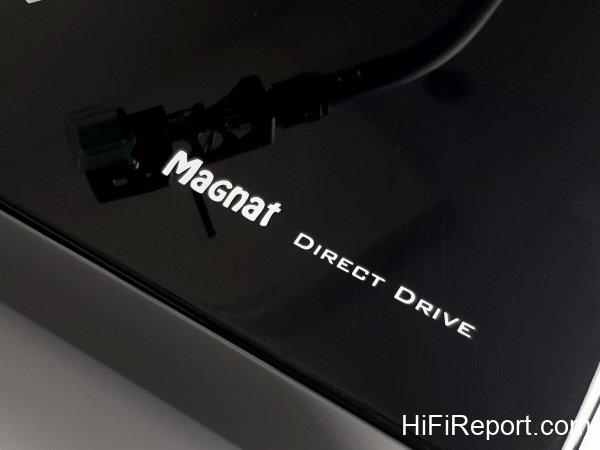
However, higher torque direct-drive motors can generate more operational noise. Magnat addresses this issue using a traditional method: encasing the motor in a heavy, sound-isolating enclosure to block motor noise. This design approach is conceptually simple, but it increases production costs. If the MTT 990 were priced at $23,000 USD, Magnat’s high-cost construction would be expected. But at around $1,550 USD, the MTT 990 offers exceptional value, wouldn’t you agree?
MM Cartridge Output
Having covered the design and features of the MTT 990, it’s time to discuss its sonic performance.
I opted for a straightforward setup, using only the Linn Selekt DSM with its built-in MM phono stage, directly driving Wilson Audio Alexia 2 speakers.
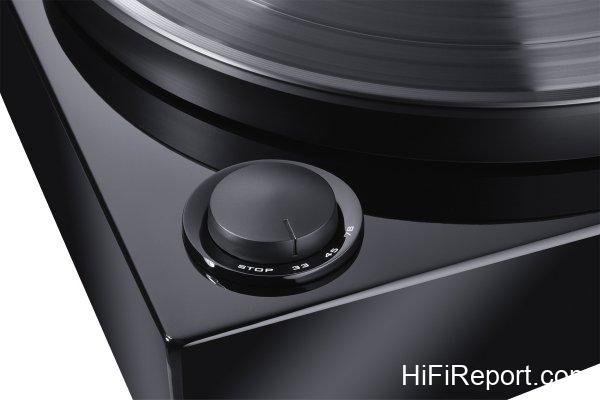
The MTT 990 comes with an Audio Technica AT95E MM cartridge, which has a 3.5 mV output. This is considered medium to low output for an MM cartridge, so a phono stage with adjustable gain is recommended.
In my initial setup, without adding gain to the MM phono stage, the Linn Selekt DSM’s volume had to be almost maxed out. Ultimately, I set the MM phono stage gain to +10dB, which brought the volume level in line with CD or digital streaming sources.
Before using the MTT 990, I followed the user manual to install the headshell and platter. Before playing music, remember to adjust the stylus pressure, anti-skate, and VTA.
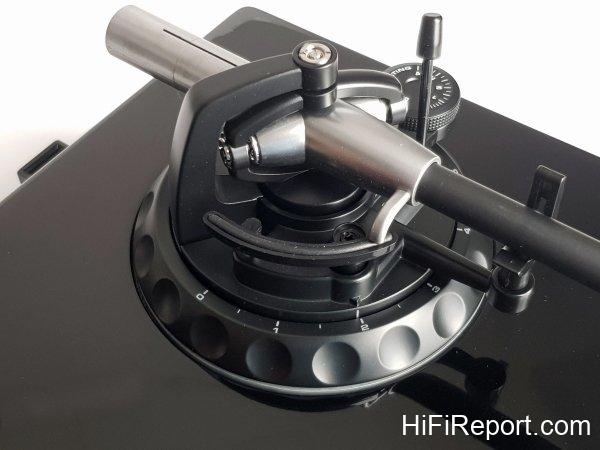
The MTT 990 includes an Audio Technica AT95E cartridge. The recommended stylus pressure range is 1.5-2.5 grams. I started at 1.5 grams but felt the sound density was lacking. I increased it to 2 grams, which improved the mid-bass in the desired direction. I then tried 2.5 grams, which felt slightly excessive, making the sound too tight. I settled at 2.2 grams, which was closer to my preference.
Stylus pressure adjustments within the manufacturer’s recommended range are generally safe for records. The optimal stylus pressure is subjective. Generally, for a richer, more robust sound, increase the stylus pressure. Finding your ideal stylus pressure requires personal experimentation.
Next is anti-skate. If you prefer a simpler approach, set the anti-skate value to match the stylus pressure. However, this is not a rigid rule. Some audiophiles prefer no anti-skate and set it to zero. Others prefer a lower anti-skate setting. Experimentation and listening are key to finding your preferred setting.
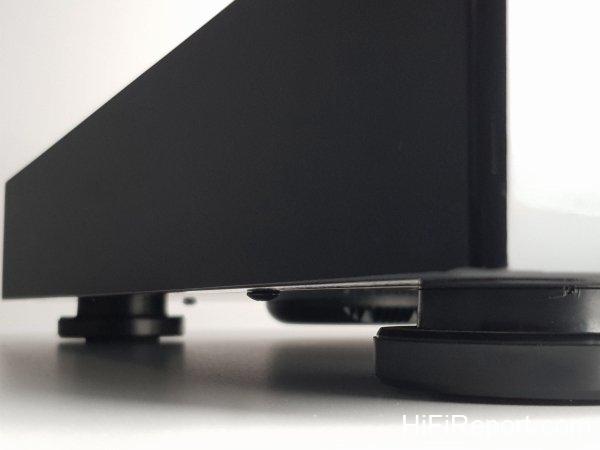
VTA adjustment is where the MTT 990 truly shines in its price category, offering a valuable feature for fine-tuning. When the stylus is on the record, the tonearm tube should ideally be parallel to the platter surface when viewed from the side – neither tail up nor head up. This is a good starting point for VTA. Of course, if you have personal sonic preferences regarding tonal balance, you can further experiment with VTA. The flattest VTA might not always be your preferred sound. The world of vinyl is fascinating, with numerous adjustment techniques to explore. Feel free to experiment and find the sound that pleases you most.
Jazz Performance
Direct-drive turntables have long been favored by jazz enthusiasts. I used to own a Technics SL1200, and it was during that time that I listened to jazz most frequently. So, after setting up the MTT 990, I pulled out Miles Davis’s “Kind of Blue” and started with “So What” on side A.
Indeed, direct-drive turntables are a perfect match for jazz! The bass is punchy and articulate, with the double bass sounding solid, energetic, and springy. This contrasts beautifully with Miles Davis’s bright trumpet playing, with each note possessing thickness and weight. A side of the record, just over twenty minutes, flew by quickly.
Switching to Joyce DiDonato’s crossover classical album “Songplay” on Erato, I started with “Se tu m’ami” on side A. The piano opens formally, like a classical piece, but then jazz drums and double bass join in, instantly transforming it into swinging jazz. Joyce DiDonato’s mezzo-soprano vocals, singing along with the swinging rhythm, are both graceful and playful. The direct-drive turntable’s low-frequency prowess is characterized by its clean, dynamic, and energetic nature. It makes listening to jazz a true pleasure.
Piano Stability
Is direct-drive only suitable for jazz? Certainly not. I switched to Beatrice Rana’s “Bach Goldberg Variations.” The young pianist chooses a slower tempo, similar to Glenn Gould’s interpretation.
Choosing this record was actually a test! Because the direct-drive motor directly drives the platter, any motor vibration transmitted to the platter can be easily detected as sonic instability, especially in solo instrument recordings. In the slow tempo of the “Goldberg Variations” theme, the piano’s three-beat swaying rhythm and sustained notes can reveal any inconsistencies. If the decaying notes waver slightly after the piano hammer strikes, it indicates that motor vibrations are affecting signal retrieval.
I listened intently, and the MTT 990 impressed me. The notes decayed steadily and naturally, without any discernible wavering. The transitions between notes were seamless. The MTT 990’s heavy motor isolation design proved effective. The piano tone was pure and truthful, with solid note density.
Classical Music
What about strings? Rest assured, vinyl’s ability to render the smoothness of strings is renowned. I put on Anne-Sophie Mutter’s early recording of “Vivaldi: The Four Seasons.” The opening movement of “Spring” bursts with vibrant energy. The MTT 990 filled the room with warm, smooth string melodies. Although paired with the entry-level AT95E MM cartridge, the high-frequency extension was surprisingly good, aided by the Selekt DSM’s MM phono stage. The violin tone had appropriate brightness, while the string ensemble possessed a relaxed texture, achieving a good balance between transparency and warmth.
Could it handle large-scale orchestral works? I selected “Berlioz: Symphonie Fantastique,” the Munch/Orchestre de Paris reissue. Side B features the powerful fourth movement, “March to the Scaffold.” The timpani drums beat out a heavy rhythm, representing the solemn march towards execution. The strings play a weighty melody, intertwined with woodwind passages, rising and falling like the weary emotions of those facing execution. Then, the brass section blares out the climax. Resolution is at hand! What is coming, must come! The MTT 990’s bass response was stable and solid, with clear and distinct timpani notes. The Orchestre de Paris brass section had a brilliant timbre, creating beautiful contrast. As the music progressed, the notes became more intense. The MTT 990 conveyed the music’s tension with dense sound, urging towards the peak. At the climax, the music abruptly stops, and a recurring woodwind motif emerges from the depths of the soundstage, followed by rolling timpani and snare drums, signaling the execution is complete!
Sound Preference
While the MTT 990 is not a high-end turntable, at a suggested retail price of around $1,550 USD, no other turntable in this price range offers more comprehensive adjustment options, particularly the VTA fine-tuning lock, which is a rarity.
Magnat emphasizes “The Science of Sound,” and the MTT 990 embodies practical design elements. Each adjustment option serves a purpose. If you are keen to explore the intricacies of turntable and tonearm setup, the MTT 990 is undoubtedly the most feature-rich direct-drive turntable in its price class. As for the sound, disregard my descriptions. Vinyl is all about adjustment. Fine-tune it to achieve your preferred sound!
Specifications
* Type: Analog Turntable
* Drive System: Direct Drive
* Speeds: 33 1/3, 45, 78 RPM
* Speed Variation: +/– 2%
* Wow and Flutter: 0.08%
* Signal-to-Noise Ratio: 65dB or higher (A-weighted)
* Platter Material: Resin Polymer
* Platter Diameter: 305 mm
* Tonearm Type: Static Balanced J-shaped arm
* Tonearm Material: Aluminum Tube
* Stylus Pressure Range: 0 to 4g
* Anti-skate Adjustment: Yes
* VTA: Fine Adjustment 6mm
* Cartridge Type: MM type (Audio-Technica AT 95E)
* Headshell Weight: 9 g
* Dimensions: 450 x 367 x 162 mm
* Weight: 11 kg