
Focal Aria EVO X 5.1 Review
The Aria series has long served as a cornerstone in Focal’s loudspeaker lineup, positioned strategically between the Kanta series and the more recently launched Vestia. While it might appear to reside in the entry-level segment, Focal seems to hold a special fondness for this line. Upon its initial release, it uniquely featured the brand’s specially developed Flax Cone mid-range driver.
Even during significant events like Focal’s 40th anniversary, the Aria series wasn’t overlooked; a special Aria K2 edition, incorporating the K2 Sandwich Cone driver, was introduced to offer high-end technology to entry-level enthusiasts, further refining the series’ design over time.
This year marks the introduction of the Aria EVO X series, arguably the most comprehensive evolution to date. It inherits a significant amount of technology trickled down from the Kanta series, with some driver technologies even originating from the higher-tier Sopra range. This infusion of technology grants the Aria EVO X an unprecedented ability to punch above its weight class. The distributor, confident in the Aria EVO X’s capabilities, was eager to introduce it to consumers.
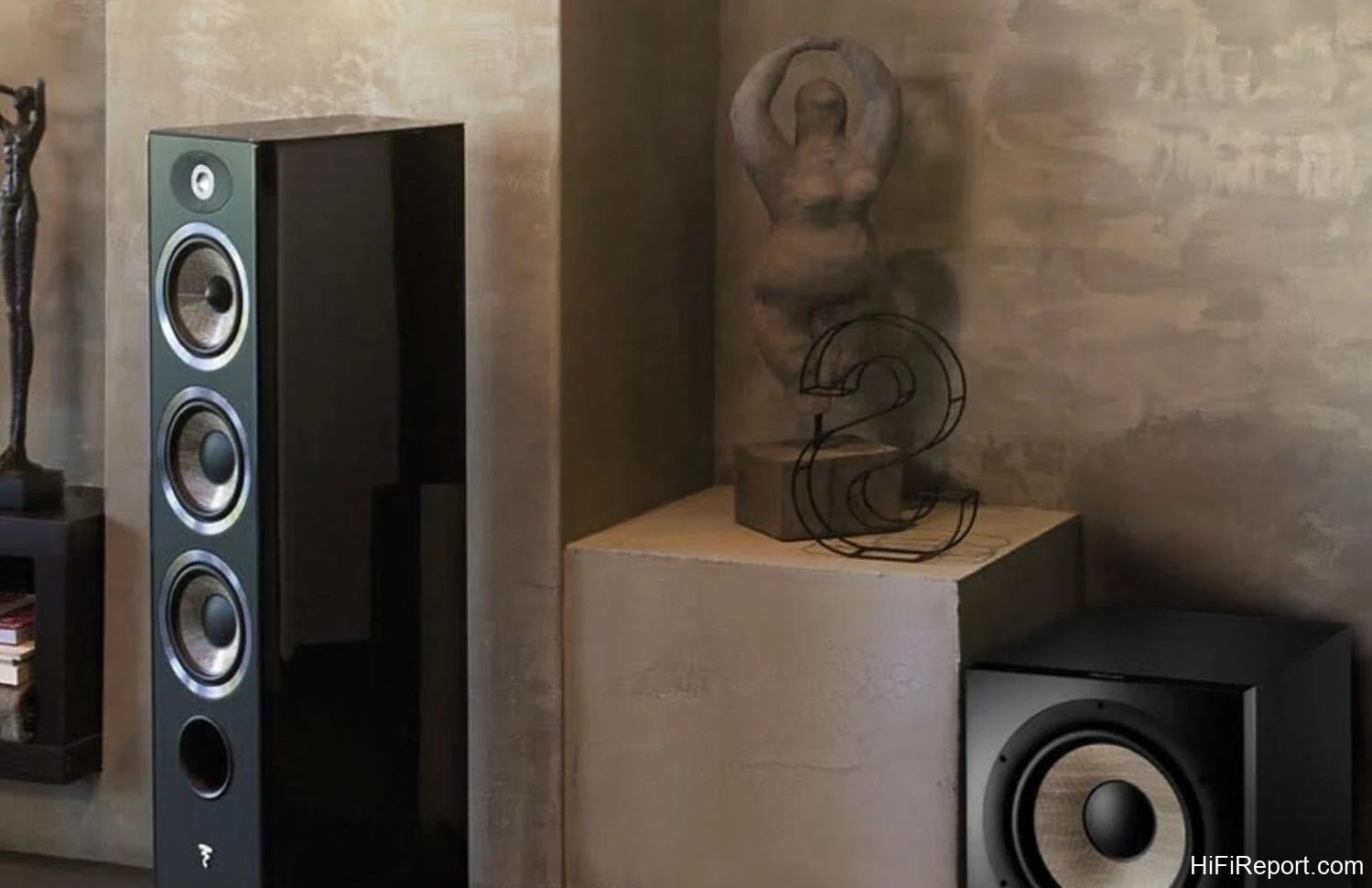
Following our reviews of some individual models over the past two months, they sent us the new Aria EVO X N3 floorstanding speakers as the main channels, paired with the N1 surrounds, the Center channel, and the Sub 1000F active subwoofer to form a 5.1 channel home theater system – the most complete configuration we’ve tested so far.
Model Lineup and Positioning
The Aria EVO X series comprises three floorstanding models: the N4, N3, and N2, with a somewhat unique hierarchy. The N3, which we are reviewing here, is a 3-way, 5-driver design. It serves as the successor to the Aria 936 and boasts the most bass drivers and the tallest cabinet among the three models. However, it is positioned just below the 3-way, 4-driver N4, making it the second-tier floorstanding speaker in the Aria EVO X series. How should prospective buyers choose between them?
Based on my experience, the N4, featuring 8-inch bass drivers, offers a larger cabinet volume and larger drivers, enabling it to move significantly more air and generate a more formidable sound pressure level, making it ideal for larger spaces. The N3, while having one more bass driver than the N2, uses 6.5-inch drivers across the board.
Theoretically, this doesn’t necessarily increase overall bass quantity but, through the division of labor among multiple drivers, enhances responsiveness and delivers superior low-frequency control.
Design, Aesthetics, and Cabinet
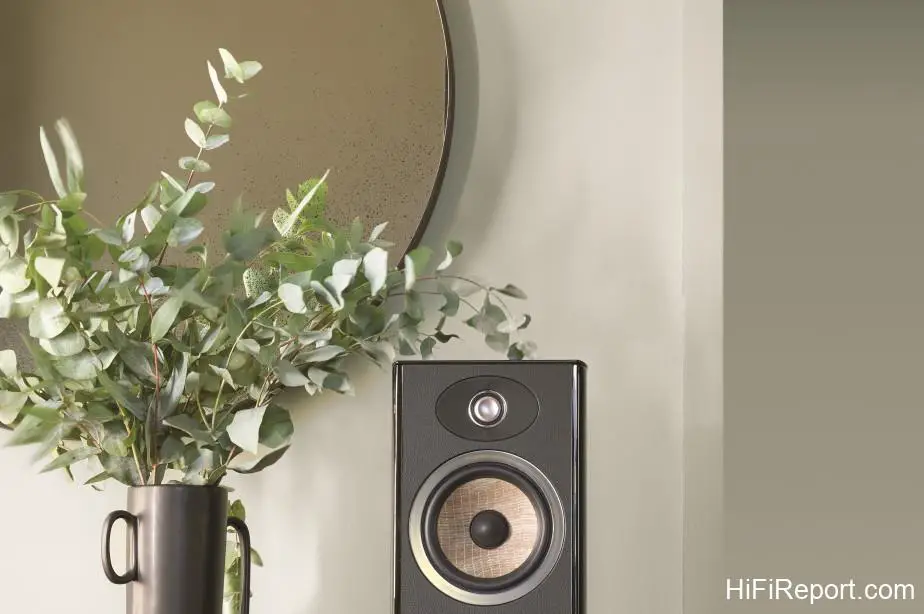
Visually, the Aria EVO X benefits from Focal’s signature French aesthetic and craftsmanship, a distinct advantage. Taking the N3 as an example, the top panel features a black gloss finish, the front baffle is wrapped in exquisite leather, and the side panels boast elegant curved lines. This not only lends a sense of fluid beauty to the speaker but also helps reduce diffraction effects, leading to a clearer, more precise soundstage and imaging.
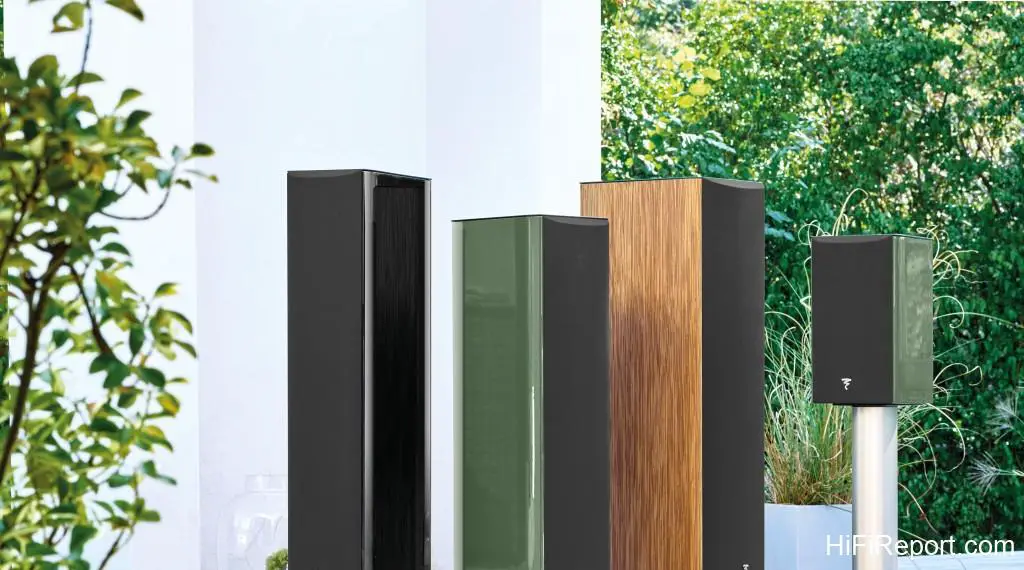
The side panels are a key decorative element on the N3, available in three finishes: Black High Gloss, Prime Walnut, and Moss Green. These, combined with the leather, gloss, and metal elements, create a layered, sophisticated look that completely elevates the Aria EVO X beyond the typically understated appearance of speakers in this price range.
The N3 employs a bass-reflex design with the port located on the front baffle. This configuration allows users to position the speakers closer to the wall, saving space. Additionally, the N3, unlike the smaller N2, features a dual-port design. This is likely intended to vent cabinet airflow more quickly, reducing coloration caused by the back wave of the bass drivers. Finally, the speaker is mounted on an aluminum alloy base plate that provides a slight upward tilt.
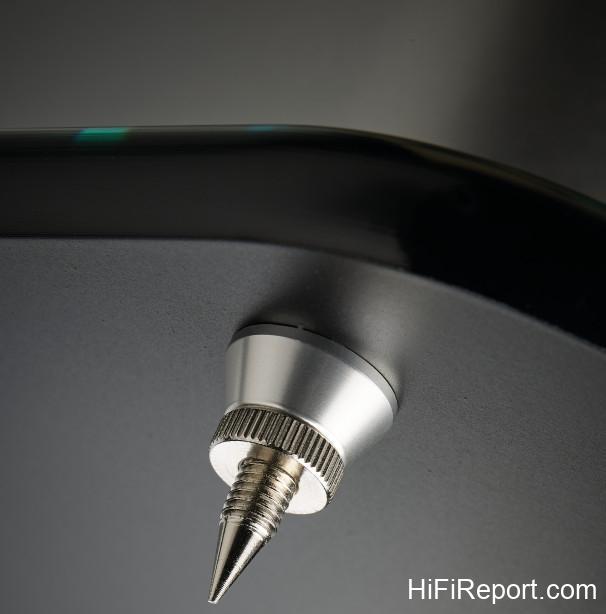
This base features attractive metal spikes, allowing for precise leveling and decoupling the cabinet from the floor, preventing external vibrations from affecting the speaker.
Key Driver Innovations: TAM Tweeter
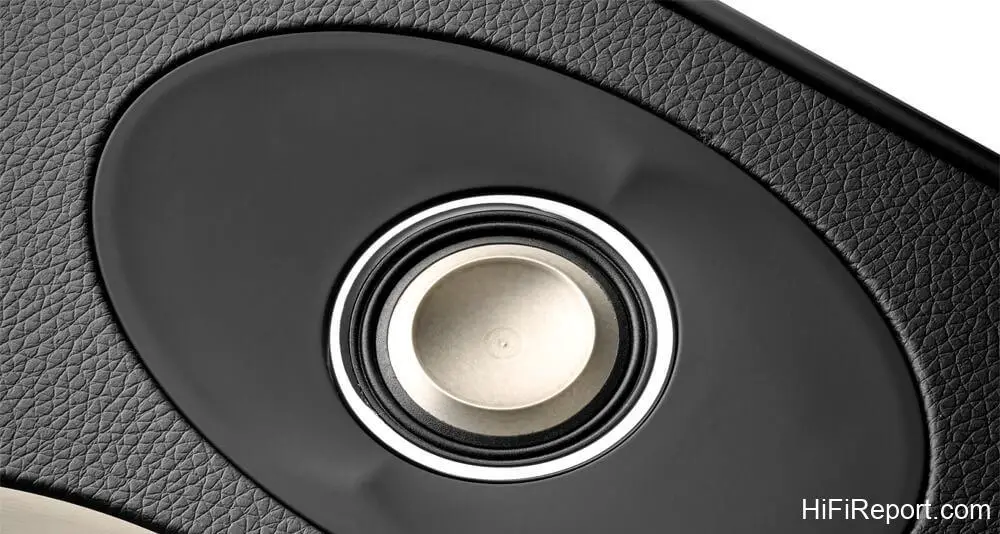
The Aria EVO X represents significant advancements in driver design compared to its predecessor, the Aria. Leading the charge is a newly developed TAM (Aluminum/Magnesium) inverted dome tweeter. Due to Magnesium’s excellent damping properties, this Aluminum/Magnesium alloy is lighter than previous aluminum diaphragms, pushing the breakup point to a much higher frequency, well beyond the range of human hearing.
This allows the tweeter to reproduce higher frequencies with greater purity and sweetness. The Al/Mg alloy also boasts higher rigidity than pure aluminum, suggesting improved speed and consequently, enhanced high-frequency precision.
Furthermore, the tweeter’s diaphragm structure has evolved from the previous TNF inverted dome to Focal’s next-generation “M-shaped” profile. This M-shaped structure is more complex to manufacture and was previously reserved for Focal’s higher-end Sopra and Utopia series. Focal has generously shared this technology with the Aria EVO X. Besides enhancing diaphragm rigidity, it significantly widens the sound dispersion angle.
When speakers are placed in an open living space, the off-axis response becomes more consistent. The TAM tweeter also features an improved absorption chamber behind the dome with a more open structure, allowing for faster dissipation of back waves and reducing resonant coloration.
A closer look at the tweeter reveals an oval-shaped waveguide surrounding it. Upon closer inspection, it’s not a simple oval but a unique double-heart shape. Focal claims this design refines the focus of high-frequency sound waves, mitigating interference from room reflections and increasing the speaker’s adaptability to different environments.
This means you can still experience good image focus even when not seated in the exact sweet spot, allowing everyone in the room to enjoy excellent sound quality.
Key Driver Innovations: Flax Cone Technology
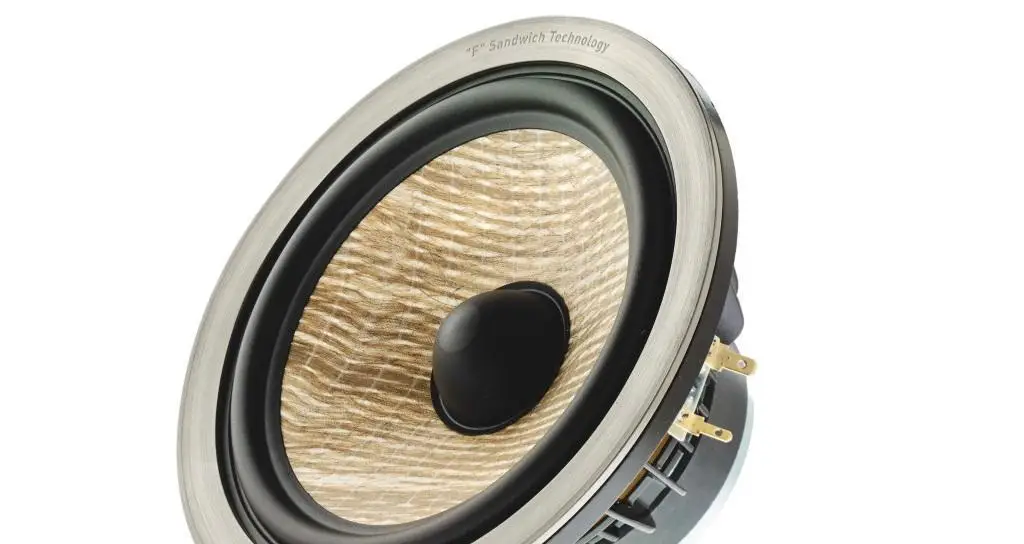
For the mid-range, the N3 features a 6.5-inch Flax Cone driver with a linen fiber cone. This technology, introduced in 2013, has been a staple for a decade, known for its signature neutral and uncolored sound. Inheriting principles from the flagship W Cone, the Flax Cone utilizes an ultra-thin linen core sandwiched between two layers of glass fiber.
Unlike drivers made from a single material, the Flax Cone’s sandwich structure simultaneously achieves high rigidity, lightweight, and excellent damping characteristics. Compared to the W Cone used in the Utopia series, it delivers comparable performance advantages at a more accessible price point.
I personally also appreciate the aesthetic of the Flax Cone; the linen material looks warmer and more natural, making the speakers feel less like cold electronic equipment and allowing them to blend easily with home décor.
Bass Driver Design and Performance
Perhaps the most significant advantage of the N3 lies in its bass design. It is equipped with no fewer than three 6.5-inch bass drivers. While these also feature Flax Cone diaphragms, they have a longer excursion, and their surrounds incorporate the flagship TMD (Tuned Mass Damper) technology. Looking closely at the driver surround, you’ll notice two prominent raised rings. In cross-section, these are effectively two circular damping masses.
These masses are precisely weighted to play a critical role during driver operation, counteracting excess amplitude in the surround and reducing distortion generated by the driver’s long excursion.
Moreover, the N3 isn’t simply about adding an extra bass driver compared to the N2. The specifications reveal a shift in crossover points from 290Hz and 2.4kHz to 260Hz and 3.1kHz. This indicates a wider bandwidth for the mid-range driver, which in turn reduces the workload on the tweeter, minimizing distortion in the lower treble. Simultaneously, the bass drivers are better able to handle the frequencies they excel at, reinforcing low-frequency control.
Center and Surround Speaker Design
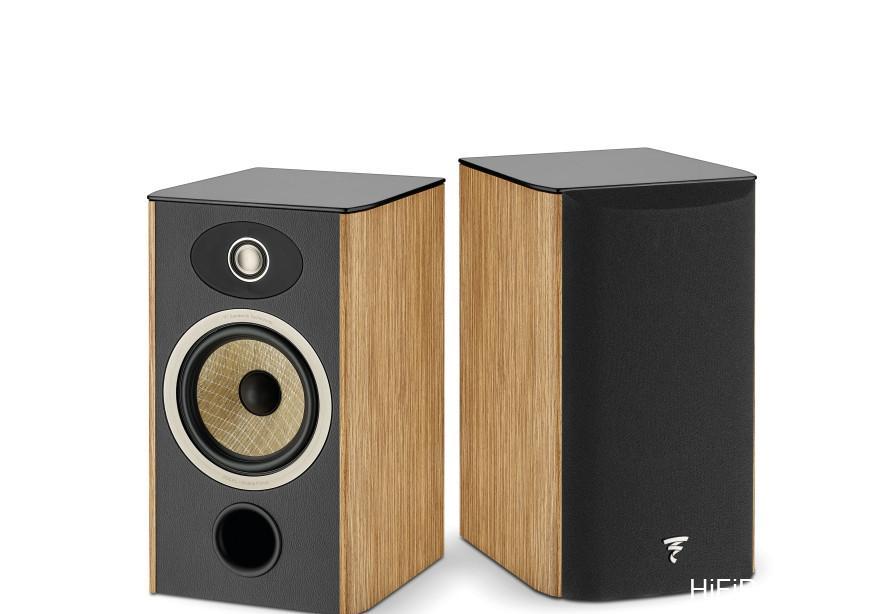
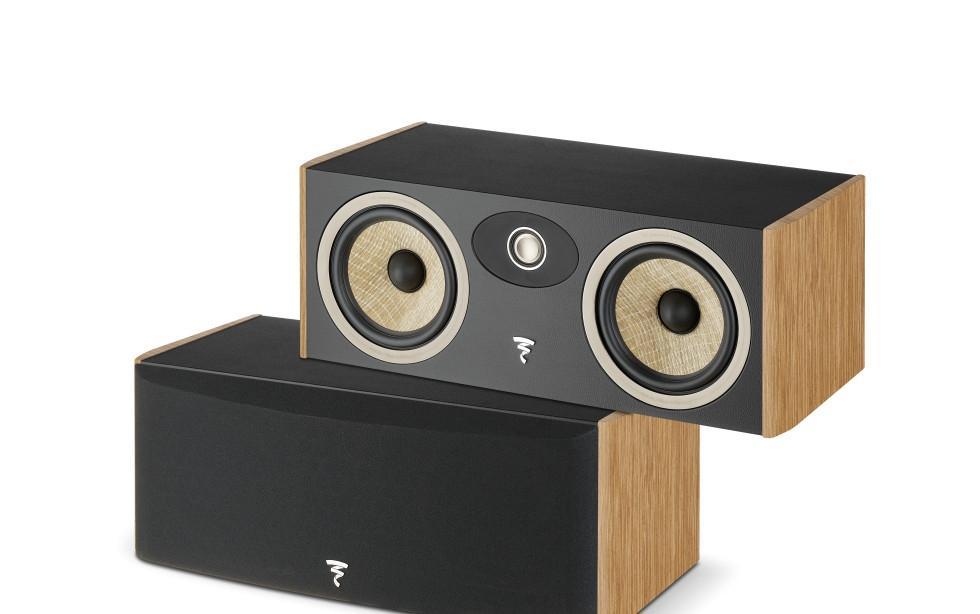
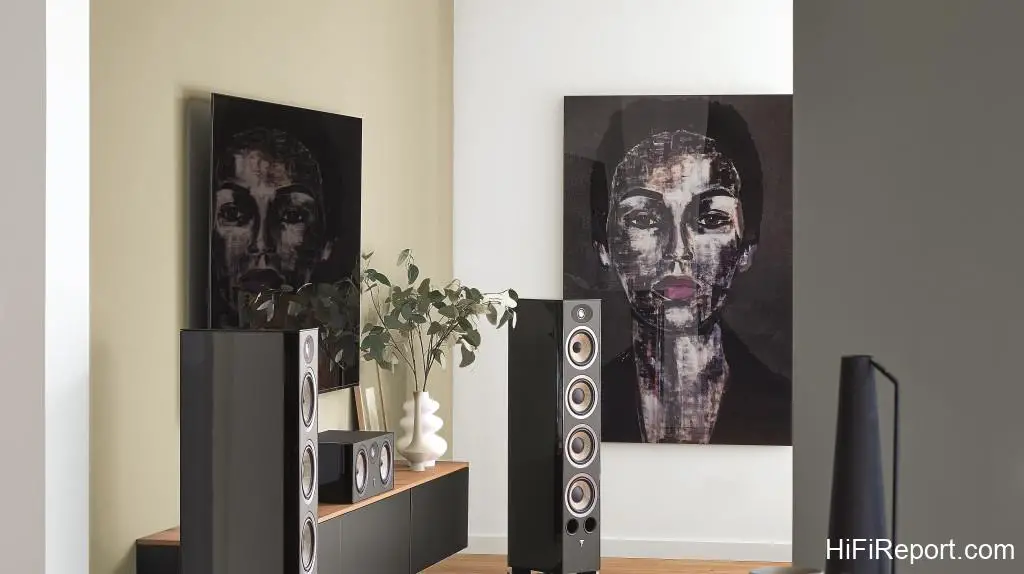
Turning to the N1 surround speakers and the Center channel in this system, both utilize the TAM Aluminum/Magnesium tweeter paired with two 6.5-inch Flax Cone mid-bass drivers. The N1 surround speakers are slightly larger than typical bookshelf speakers, which allows them to produce a fuller sound output. Used as surrounds, this contributes to a more solid and enveloping rear soundfield. The Center channel, while featuring a slim, flat design, maximizes cabinet depth.
This design not only allows users to place it conveniently below a TV without obstructing the view but also maintains sufficient cabinet volume to provide adequate sound pressure and richness for movie soundtracks. A careful look reveals that the tweeter on the Center channel is positioned slightly higher, adjusting the driver’s radiation angle. This ensures optimal focus even if the center channel is placed on a relatively low TV stand, a design clearly tailored for typical living room setups.
Subwoofer Details: Sub 1000F
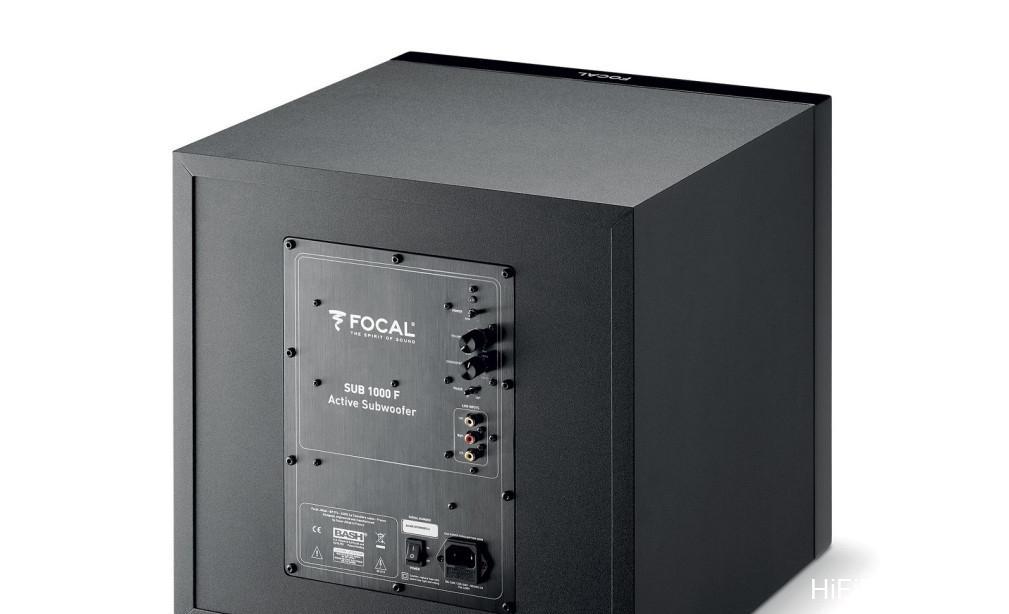
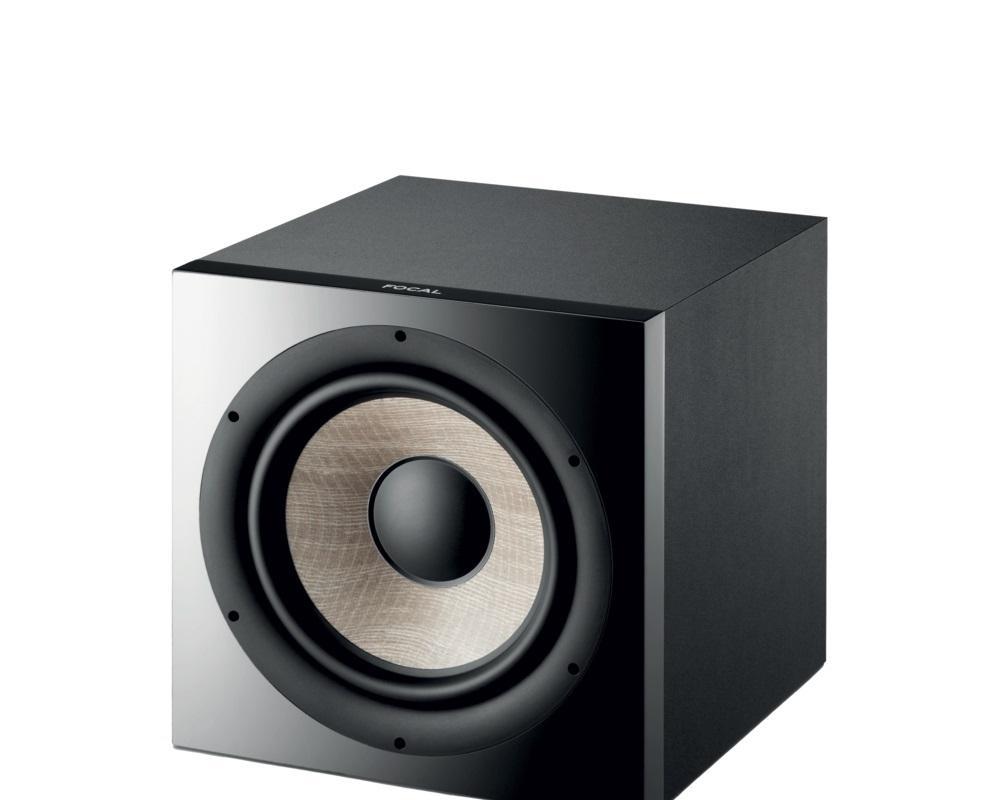
For the Aria EVO X system, Focal has specifically chosen the Sub 1000F active subwoofer. This model features a sealed cabinet and is equipped with a 12-inch long-throw bass driver. Like the Aria EVO X speakers, it also uses a Flax Cone diaphragm with the linen sandwich structure. Besides enhancing the seamless integration between the subwoofer and the other channels, the diaphragm itself benefits from the advantages of being lightweight and rigid.
Coupled with the excellent damping properties of linen, this helps the driver maintain a fast and clean low-frequency response. To ensure the driver performs to its full potential,
The Sub 1000F includes a built-in 1000-watt BASH Class D amplifier. This amplifier boasts characteristics of high transient response and precision, providing better control over the driver. On the rear panel, in addition to a single LFE input, the Sub 1000F also features stereo RCA inputs. This allows users to connect two subwoofers to the pre-out outputs of an AVR, assigning one to the left channel’s bass information and the other to the right.
In theory, this configuration can result in a more precise low-frequency texture when listening to music.
Listening Impressions: Music Performance
For this review, I paired the system with a Denon AVR-X6800 AVR, using a Sony A80J 4K OLED TV as the source. I first focused on the performance of the main N3 floorstanding speakers, testing their musical capabilities in Pure Direct mode. Having recently reviewed the step-down N2, I expected to have a good understanding of the N3’s sonic signature. However, I was genuinely surprised by how much difference the addition of just one bass driver made!
Not only did the speed and dynamic impact of the bass improve significantly, but the mid-range and high frequencies also sounded fuller, resulting in a much more balanced overall frequency response. I strongly recommend that users with the budget prioritize the N3 for their main channels; there’s simply no contest.
For example, playing Martha Argerich’s performance of Rachmaninoff’s “Piano Concerto No. 1,” the powerful opening orchestral tutti had much better control and definition. The somewhat diffuse and indistinct energy I remembered was gone. Not only did the bass retain Focal’s characteristic airy elasticity, but the absence of standing wave interference also highlighted the smooth, nuanced texture of the strings, maintaining clear layering from the high frequencies down to the low.
The piano notes were round and transparent, with a crisp, rapid attack that perfectly complemented Argerich’s powerful playing style, making complex passages sound remarkably articulate. The high notes were full and vibrant, retaining their sweetness and brilliance even during the most intense moments, while the low notes possessed a tangible weight. The resonance of the piano body was clear and natural, conveying a strong sense of scale!
Simultaneously, the N3 exhibited the Aria EVO X’s characteristic expansive soundstage, vividly reproducing the subtle spatial reverberations and hall ambiance, creating a remarkably realistic portrayal of the performance environment.
Similarly, when playing Van Halen’s “Hot For Teacher” from the album “1984,” the explosive opening double bass drum kicks hit like rapid-fire punches to the chest. Despite the intense energy, they felt effortless and unrestrained, clearly conveying the physical impact of the drums. The beater striking the head sounded full and incredibly elastic, maintaining excellent control even at breakneck speed. All the energy felt firmly contained, without any sense of being out of control.
The heavily distorted guitar riffs, which often sound harsh and muddy, seemed much smoother, with the texture of the pick attack feeling fuller and more elastic. This stripped away the raw aggression typically associated with metal music, presenting a relaxed and unhurried texture.
Listening Impressions: Home Theater Performance
Next came the eagerly anticipated 5.1 channel home theater test. I initially set the crossover point for the main channels at 40Hz and the other channels at 80Hz to maximize the bass contribution from the N3s. Watching the naval battle sequence in the movie “Midway,” I was immediately impressed by the Aria EVO X system’s excellent dispersion, which created an open and natural environmental soundscape. Following the perspective of the sailors, I felt immersed in the vast expanse of the ocean.
From the distant calls of birds to the nearby lapping of waves, I could clearly discern their direction and distance.
When the scene shifted to the air raid, the Aria EVO X’s surround effect proved equally outstanding. Following the bomber’s perspective, I could hear mortar shells whizzing around me during the rapid descent. Even within the expansive soundstage, the sound effects retained a solid, full-bodied presence, with smooth, well-defined outlines and no hint of roughness.
When the Japanese ships were hit by artillery fire, the incoming effects were incredibly impactful. Following the intense dynamics, I could feel the deep, full-bodied bass generated by the blazing inferno. The debris from the damaged ships was rendered with greater clarity. It was evident that using the larger N3 floorstanding speakers as the main channels significantly improved the transient response of the sound effects.
Even with sudden, massive increases in sound pressure, there was no sense of losing control. Throughout the test, I also noticed that setting the surround channels’ crossover at 80Hz resulted in a more substantial rear soundstage. The seamless transition between speakers was effortless, and the enveloping effect was even more breathtaking.
This demonstrates that the Sub 1000F subwoofer not only delivers excellent bass dynamics but also integrates perfectly in terms of speed with each channel, enabling the system to produce explosive sound effects that combine both detail and scale.
Many home theater enthusiasts prefer using large speakers as their main channels, a preference that often makes me a little wary. On one hand, I worry that larger speakers are more prone to generating standing waves, and on the other, I fear the home theater sound might lose its balance. However, the Aria EVO X series completely overturned my preconceptions.
I was genuinely surprised that using the large N3 floorstanding speakers as the main channels resulted in a more comprehensive and superior quality, both for music and movies. Not only did they avoid generating standing waves, but they actually elevated the level of control. This improvement in sound quality was something I hadn’t anticipated.
If you appreciate Focal’s characteristic fast, neutral, and precise sound, then this Aria EVO X multi-channel system is undoubtedly the highest value-for-money option.
Specifications
Aria EVO X N3 (Pair)
* Type: 3-way, 5-driver bass reflex
* Drivers: 1 x 1″ TAM Aluminum/Magnesium tweeter, 1 x 6.5″ Flax cone TMD surround mid-range driver, 3 x 6.5″ Flax cone bass drivers
* Frequency Response: 39Hz – 30kHz
* Low Frequency Cutoff: 32Hz (-6dB)
* Crossover Points: 260Hz, 3.1kHz
* Sensitivity: 92dB
* Nominal Impedance: 8 ohms, Minimum 2.8 ohms
* Recommended Amplifier Power: 40-300 Watts
* Dimensions: 1150 x 294 x 371mm
* Weight: 29 kg
Aria EVO X N1 (Pair)
* Type: 2-way, 2-driver bass reflex
* Drivers: 1 x 1″ TAM Aluminum/Magnesium tweeter, 1 x 6.5″ Flax cone TMD surround mid-bass driver
* Frequency Response: 55Hz – 30kHz
* Low Frequency Cutoff: 47Hz (-6dB)
* Crossover Point: 2.8kHz
* Sensitivity: 89.5dB
* Nominal Impedance: 8 ohms, Minimum 4.6 ohms
* Recommended Amplifier Power: 25-125 Watts
* Dimensions: 390 x 225 x 280mm
* Weight: 8.5 kg
Aria EVO X Center
* Type: 2-way, 3-driver bass reflex
* Drivers: 1 x 1″ TAM Aluminum/Magnesium tweeter, 2 x 6.5″ Flax cone TMD surround mid-bass drivers
* Frequency Response: 57Hz – 35kHz
* Low Frequency Cutoff: 50Hz (-6dB)
* Crossover Point: 2.8kHz
* Sensitivity: 91dB
* Nominal Impedance: 8 ohms, Minimum 4.3 ohms
* Recommended Amplifier Power: 40-200 Watts
* Dimensions: 200 x 533 x 245mm
* Weight: 10.5 kg
Sub 1000F
* Design: Sealed, Active Subwoofer
* Driver: 1 x 12″ Flax cone bass driver
* Low Frequency Extension (-6dB): 22Hz
* Frequency Response (+-3dB): 24Hz – 160Hz
* Inputs: RCA LFE, RCA Stereo
* Crossover: 40-160Hz (Adjustable)
* Phase: 0 / 180 degrees (Adjustable)
* Amplifier: 1000 Watt BASH amplifier
* Dimensions: 400 x 450 x 420mm
* Weight: 21.5 kg