
Focal Azurys Closed-Back Headphones Review
Focal is fast becoming a headphone brand.
Having only entered the headphone market in the last decade, Focal gained significant traction with their Utopia model. Since then, they’ve continued to leverage the Utopia’s design language, releasing a stream of successive headphone models.
Compared to other traditional headphone manufacturers, Focal’s headphones truly stand out in terms of aesthetics.
Whether something looks good is subjective, but in terms of design, Focal’s efforts in layering, lines, geometry, color matching, and materials are evident and tangible.
That’s why I say Focal is increasingly resembling a true headphone brand.
There’s another reason for this assertion.
It’s not just about making attractive products with decent sound that sell well.
The two headphone models Focal released this year each have their distinct market positioning and slightly different intended uses.
After auditioning both headphones sequentially and contemplating their purpose, I came to appreciate the thoughtful consideration Focal puts into their product planning.
This is why, at the beginning of the article, I praised their headphone-making skills – and did so twice.
New Models: Hadenys & Azurys
These two new products consist of the Hadenys, an open-back home listening headphone, and the Azurys, a closed-back portable headphone, which is the subject of this review.
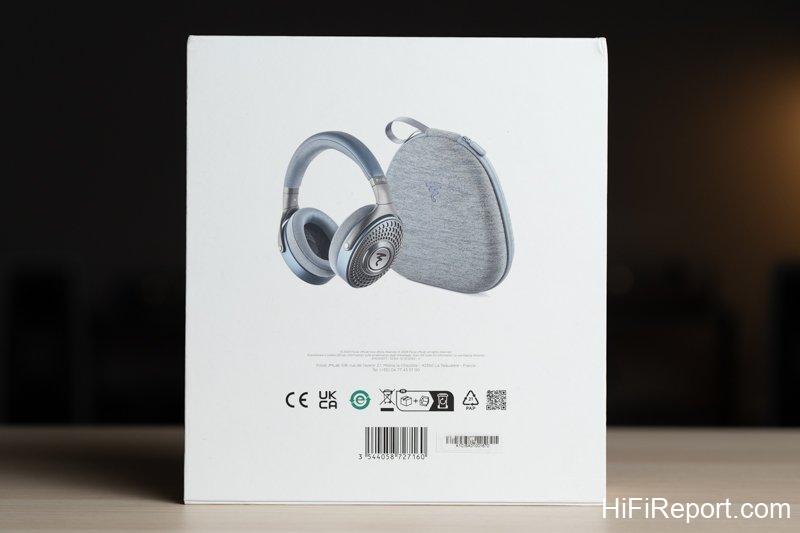
Curiously, these two headphones, released concurrently (one open, one closed), appear quite similar in packaging, design, accessories, and specifications.
While the colors are obviously different, the Hadenys seems to exhibit slightly finer craftsmanship.
Spec-wise, they are also largely similar.
Yet, there’s a considerable price difference.
The Hadenys is priced in Taiwan at NT$26,600, while the Azurys is NT$19,990; the latter’s price is roughly three-quarters of the former. Converting this, the Hadenys is about $830 USD and the Azurys is about $625 USD.
I will tell you later that even at a 25% lower price, the Azurys’ sound is by no means inferior to the Hadenys; each has its own strengths.
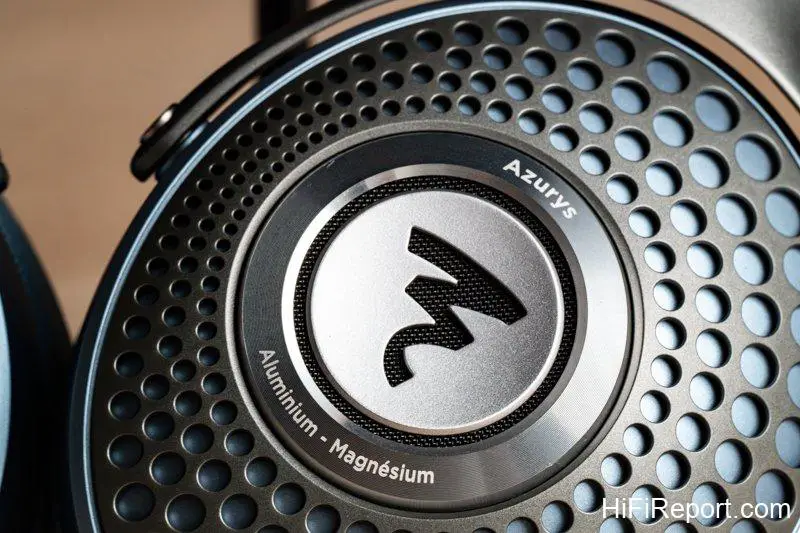
Aluminum/Magnesium ‘M’ Dome Driver
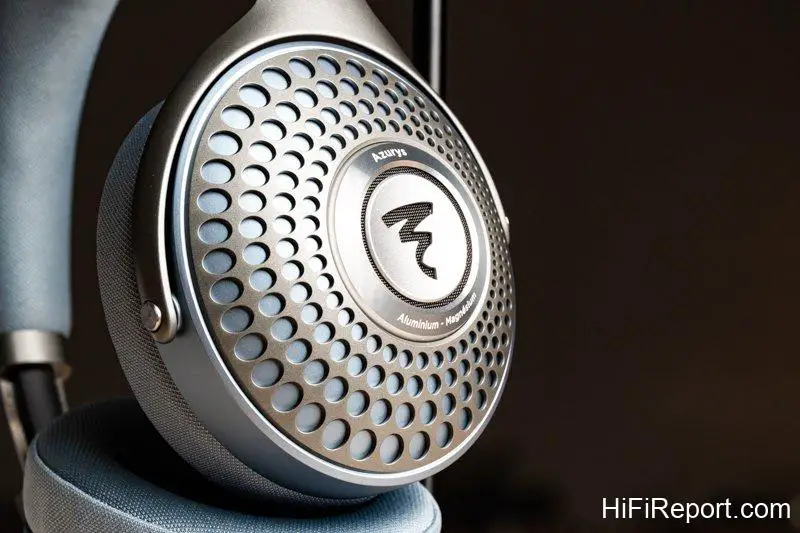
The Azurys is also equipped with a 40mm aluminum/magnesium ‘M’ dome dynamic driver.
The frequency response data is even more impressive, and thanks to the closed-back design, the Azurys offers deeper bass.
The 26-ohm impedance and 100dB sensitivity specifications are also identical to the Hadenys.
Based on these two numbers alone, one might infer that it is “not difficult to drive,” and indeed, this is the case – it sounds excellent simply powered by a laptop’s headphone jack.
In fact, the Hadenys is quite similar; both are relatively easy-to-drive headphones.
Azurite Blue Elegance
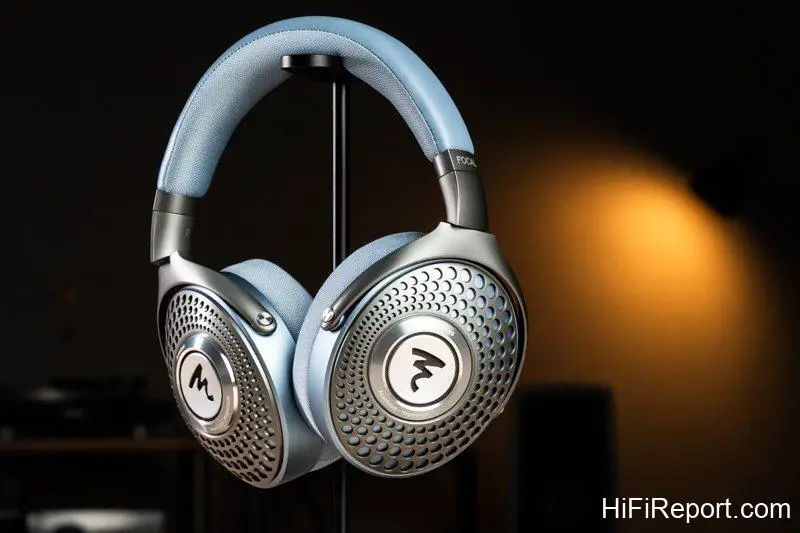
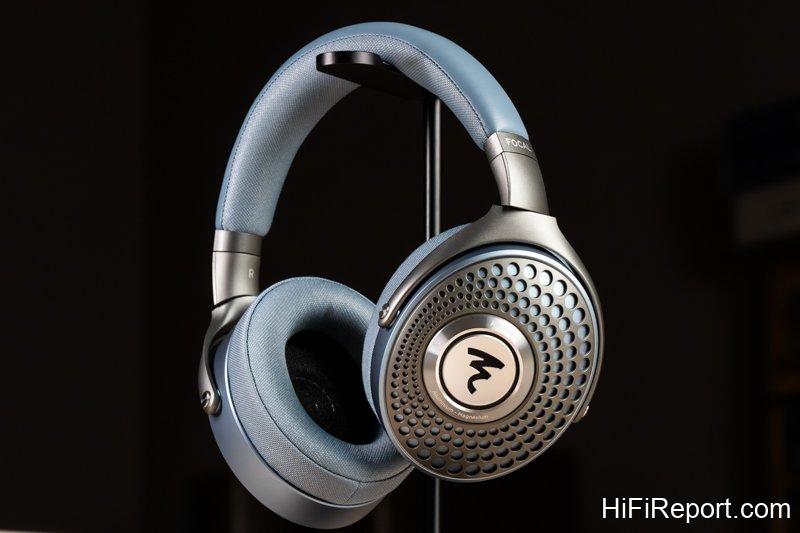
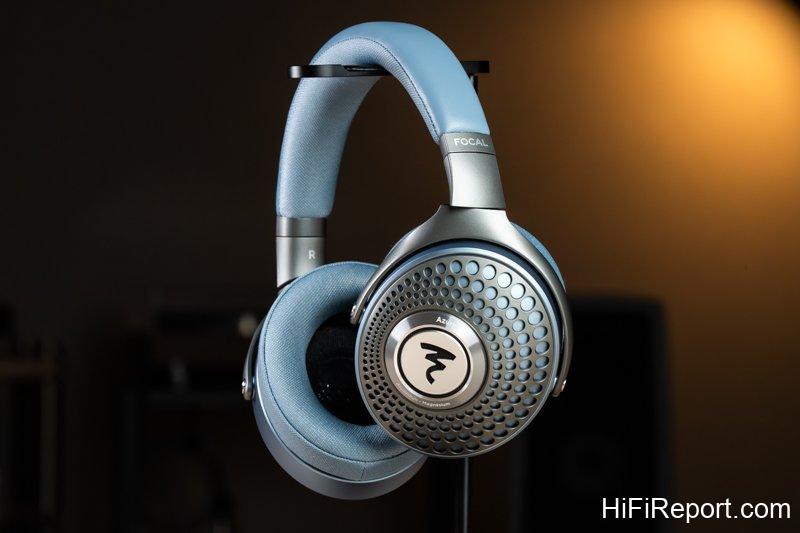
The size and form factor of the Azurys are similar to the Hadenys, with the color being a gentle, elegant sky blue.
The manufacturer states that the inspiration for this blue color and the name “Azurys” comes from the mineral Azurite.
Gemstone and crystal enthusiasts believe that Azurite possesses healing properties, not only aiding physical recovery but also enhancing psychic abilities, creativity, inspiration, and confidence.
Ah, such a romantic touch from the French.
Looks Good, Feels Comfortable
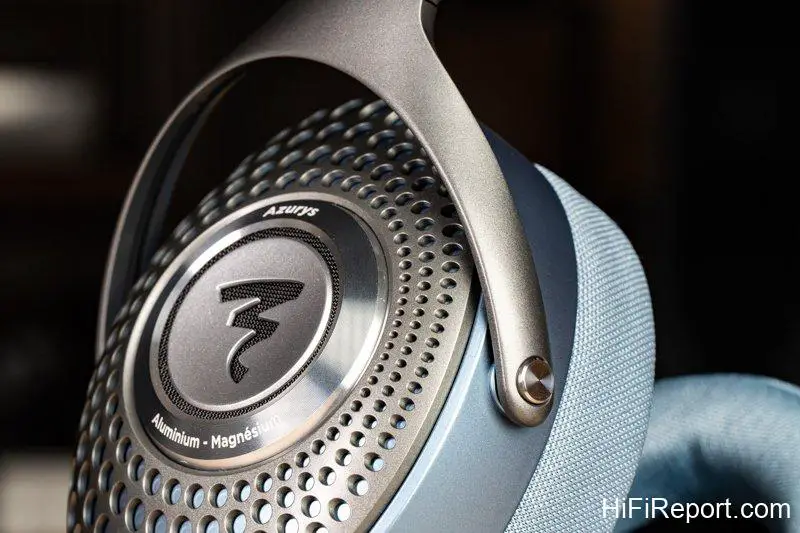
On the outer side of the closed Azurys earcups, the Focal logo is centered, surrounded by concentric circles, creating a harmonious and pleasant design with a touch of dynamism, featuring a gray perforated cover layer over a light blue base.
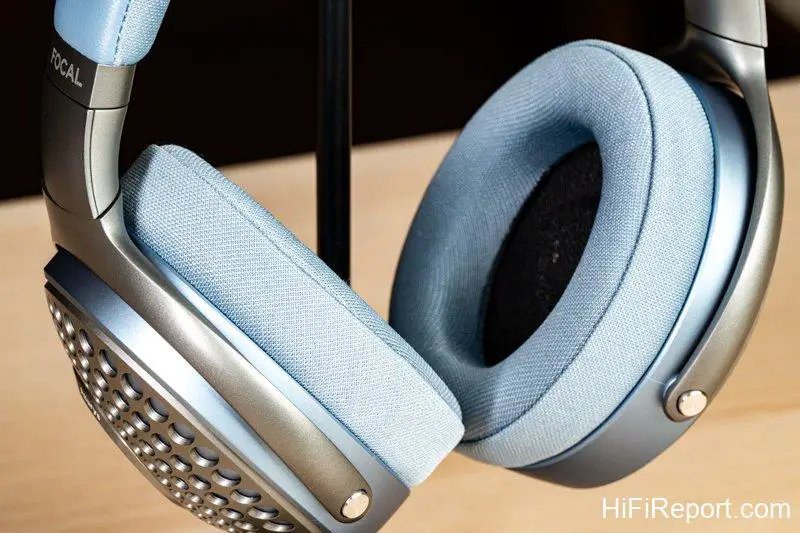
The earcup pads are soft and comfortable, with memory foam providing excellent seal and conformity. The fabric surface is a fine, breathable light blue material.
I must say, this blue is truly beautiful – so beautiful that looking at it, wearing it, and touching it makes me fear getting it dirty.
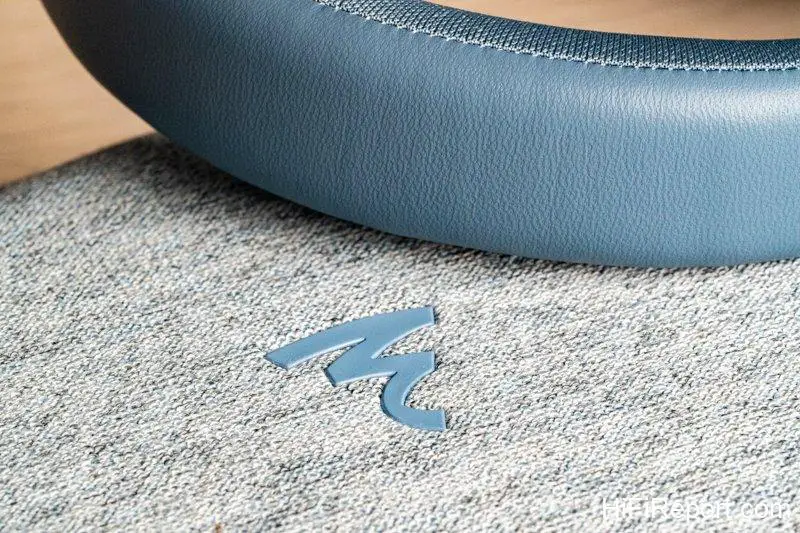
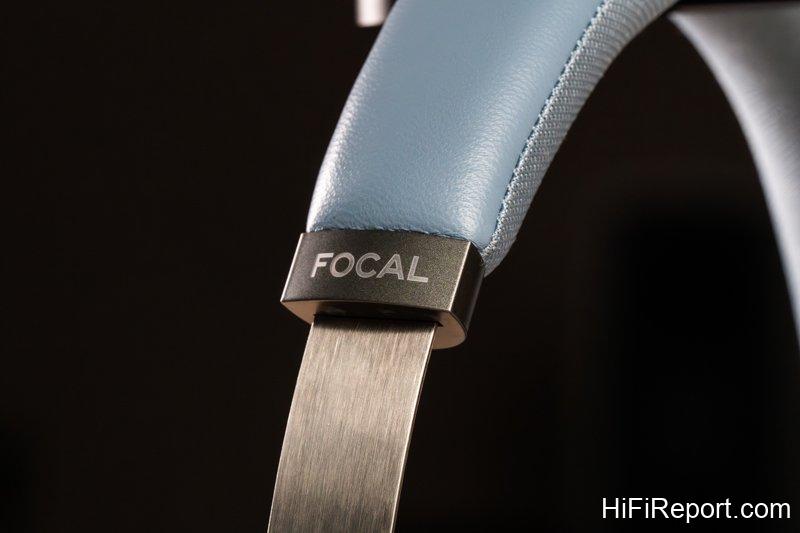
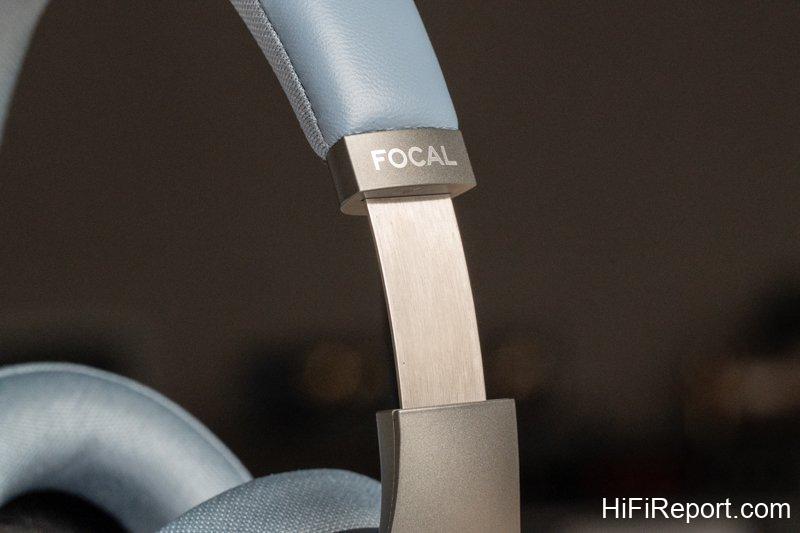
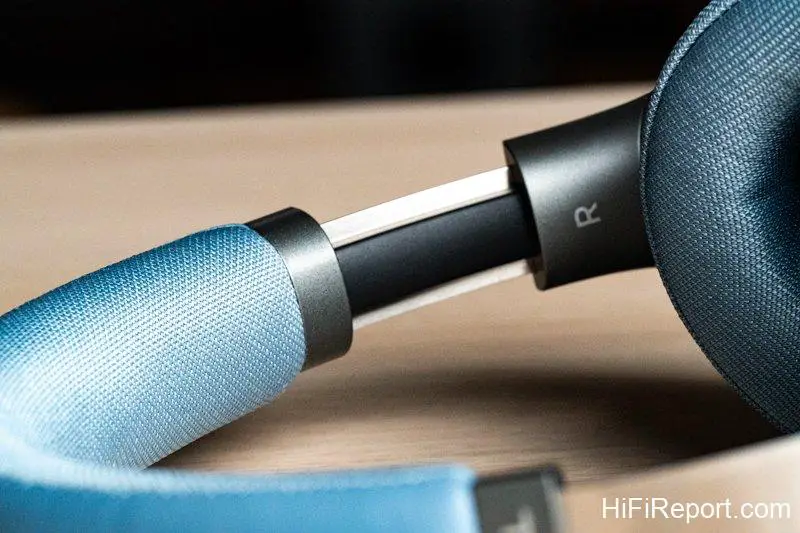
The headband’s metal frame is made of magnesium alloy, making it light yet sturdy. The inner side of the headband is covered with a skin-friendly, breathable fabric, while the outer side is wrapped in dyed blue genuine leather, offering not only wearing comfort but also a premium texture.
Detachable Cable & Folding Design
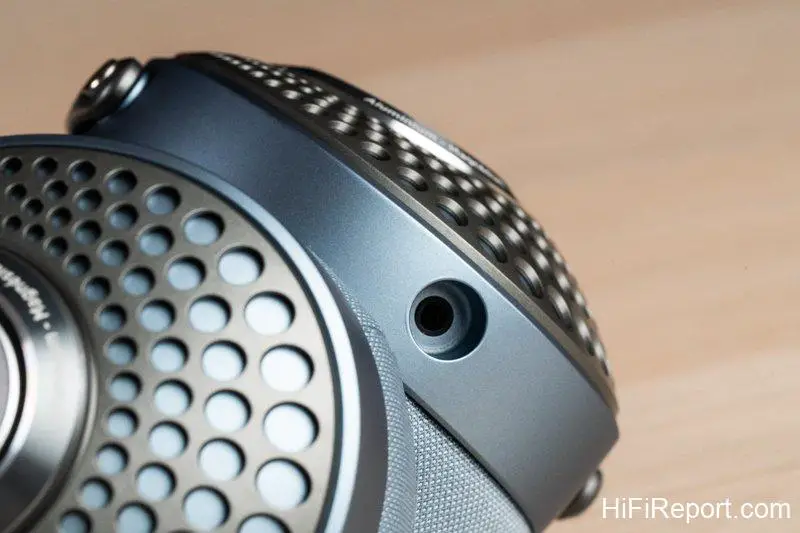
The headphone cable is detachable and connects to a single earcup. It’s 1.25 meters long and uses a 3.5mm mini-jack connector, the most common type.
Interestingly, the cable includes a microphone and in-line remote control, allowing you to take calls while listening to music and adjust the volume.
In the era dominated by Bluetooth headphones, I had almost forgotten about microphone-equipped headphone cables.
Now, circumaural headphones are making a comeback on the streets, becoming a fashion statement for personal style.
Choosing wired headphones over Bluetooth circumaural headphones further highlights a unique taste.
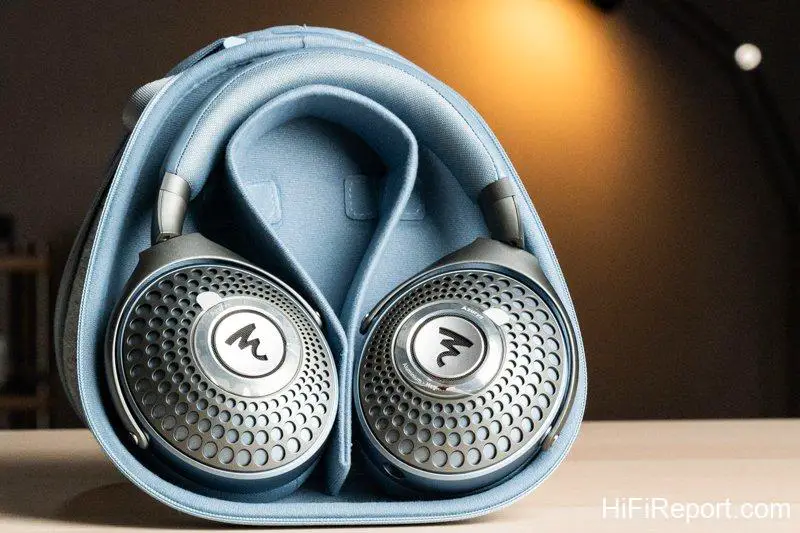
For convenience on the go, Focal has also designed a matching zippered carrying case for the Azurys.
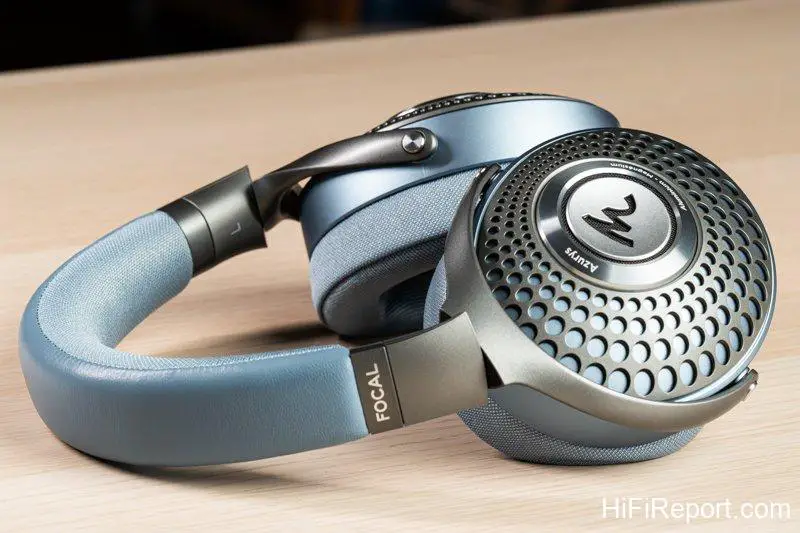
The Azurys’ earcups can fold inwards, and after rotating 90 degrees, they lie flat, significantly reducing the overall height.
This allows the carrying case to be flatter and take up less space.
Engaging Sound, Open Soundstage
The sound of the Azurys can be described as engaging.
For a closed-back headphone, its soundstage is remarkably open, offering a sense of spaciousness comparable to open-back headphones, but with the passive noise isolation that open-backs lack.
Its sound is balanced, lively, and adept at rendering sound images and defining their contours.
It presents music effortlessly, without feeling compressed or tense, and without the constrained, in-my-head sensation.
The tone is natural, with a slight hint of brightness; this is a less common tuning direction among the Focal headphones I’ve encountered recently.
Even the concurrently released open-back Hadenys leans towards a warmer, thicker sound signature.
However, the Azurys’ sound, while retaining a good foundation of thickness, offers a gentler, brighter, and more vibrant presentation.
Detailed and Articulate Presentation
I thoroughly enjoyed listening to jazz with the Azurys, appreciating its relaxed and lively character while still presenting stable and tangible sound images.
Take Henri Texier’s album “Heteroklite Lockdown” as an example. Texier is one of the most respected double bass players today. This jazz trio recording features a simple setup of saxophone, bass, and drums.
The sound images were full, solid, and possessed a strong sense of presence.
Sebastian Texier, Henri’s son, plays the saxophone. He exhibits moderate improvisation within a defined framework. The saxophone sounds round, full, and concrete.
The drum strikes and cymbal clashes were solid and impactful, and the metallic texture of the cymbals was clear but not piercing, floating and dissipating with a warm tone, showcasing lively dynamics.
As for Texier’s double bass, it had a clear sense of individual notes, especially during solo passages, where the texture of the bass was distinctly rendered, which was particularly impressive.
Lifelike Imaging & Presence
Listening to Antonio Forcione Quartet’s “AFQ: In Concert” album, the Azurys’ excellent passive isolation, combined with its skin-friendly and comfortable fit, led me to listen through the entire album without noticing the time.
It brought forth a lively and energetic performance.
Antonio Forcione leads his quartet, which includes his guitar, double bass, and drums, along with a cello, a somewhat unusual combination.
Overall, the Azurys’ tonality is still warm, but it doesn’t just offer a hazy, sepia-toned feel. Instead, it’s tuned with a higher color temperature, which is the source of its vitality.
However, the appropriate warmth and substance make it very listenable. That’s one reason I could listen for so long.

Furthermore, it can convey the vitality and tension of the music. The percussion is lively, and the lead guitar is unrestrained.
The solid bass has both weight and textural resolution, painting a clear and distinct picture of the double bass and drum kit while giving them heft.
As for the cello’s timbre, it carries a slight nasal quality.
The quartet’s live performance provides a clear sense of stage positioning, which was surprisingly discernible even on the closed-back Azurys.
This ability to create an open-feeling soundstage is truly a noteworthy advantage.
Natural and Enduring Vocals
The Azurys also excels in rendering vocals.
It offers clear and informative detail without overly emphasizing the upper-mid frequencies of the voice.
Instead, it provides a very healthy thickness in the mid-range, allowing vocal nuances like breath sounds and sibilance to be present without being overly prominent, which lays the foundation for comfortable, long-term listening.
Taking Mika Nakashima’s 15th-anniversary album as an example, Japanese pop recordings can sometimes emphasize the upper-mid range.
Listening with the Azurys, it felt like the upper-mids were slightly subdued, yet this didn’t hinder the clear portrayal of Mika Nakashima’s vocal form. In fact, this tuning made her singing more impactful.
It feels as though it slightly sets the vocals back, creating some distance, which reduces aggressiveness and naturally increases listenability.
Clear Vocals, Dynamic Drums, Emotional Rendition
Listening to Joe Cocker’s compilation album, it’s easy to appreciate how well the Azurys balances detailed information and sonic thickness.
Joe Cocker’s voice is raspy and strained, yet this gives it a heavy, intense emotional quality.
Without that vocal texture, or if it were polished too much, Cocker’s singing would lose much of its character.
However, the compilation includes not only well-recorded new tracks but also some older recordings.

Early rock recordings often have limited bandwidth and a mid-centric character.
The Azurys allowed me to fully enjoy this Joe Cocker compilation, regardless of the era of the song.
For instance, in “Unchain My Heart,” a heavily blues-influenced track, Cocker’s almost a cappella introduction reveals the texture of his voice clearly.
As the tempo picks up, the powerful drum rhythm sounds crisp and satisfying.
In “Sorry Seems to Be the Hardest Word,” the deep emotion of the ballad is fully expressed through his vocal runs, phrasing, and how he uses different vocal techniques to convey feeling.
Piano Timbre & Texture
The Focal Azurys also excels at reproducing orchestral music.
Take Lang Lang’s “The Disney Book” album, which features adaptations of classic Disney scores for piano and orchestra.
Focal’s aluminum/magnesium diaphragm gives the piano a unique metallic shimmer characteristic of their headphones.
When Lang Lang’s piano reaches into the higher register, whether it’s a fleeting note or a dazzling arpeggio, it sounds brilliant and magnificent.
The solid texture of the piano notes, combined with a bright and clear tone, captures the essence of the instrument perfectly.
As for the orchestral accompaniment, it is restrained and doesn’t overpower the piano, allowing Lang Lang’s performance to take center stage. The orchestra primarily provides harmony and support.
However, the layering between the piano and the orchestra is clearly delineated, with the piano placed slightly forward and the orchestra set back.
The smooth and supple texture of the strings is very pleasing to listen to.
In dynamic passages where brass and percussion join in (such as in “Let It Go”), the sound is dense, solid, and clear, without becoming muddy.
And I was doing all this listening using just the headphone output of my Macbook Air – I hadn’t even connected a headphone amplifier yet!
Excellent Even Direct from Laptop
So, would using a DAC/headphone amplifier make it even better? Yes, it would.
I’ll tell you outright: Yes, it would.
There’s too much interference inside a laptop, and the DAC performance isn’t as good. Connecting an external DAC/amp will improve the listening experience.
The difference lies in dynamics, resolution, layering, extension, bass solidity, and image clarity.
However, I can confidently state: simply using a laptop’s headphone output already sounds very good.
Evolving as a Headphone Brand
Focal is increasingly behaving like a headphone brand.
I say this partly because their range of headphone products is expanding, and partly because while their headphone prices are becoming more accessible, the sound quality remains high.
The Azurys is priced just under the NT$20,000 mark (around $625 USD). Will we see even more affordable Focal headphones in the future? However, where Focal surpasses many “so-called headphone manufacturers” is in their exterior design and product quality.
Look at the sameness of other headphone brands (especially Japanese manufacturers), and then look at the inherited taste within the Focal headphone family. One can only say: French style is French style.
Specifications
* **Type:** Closed-back circumaural headphones
* **Driver:** 40mm Aluminum/Magnesium ‘M’ dome dynamic driver
* **Frequency Response:** 15Hz – 22kHz (+/- 3dB)
* **Total Harmonic Distortion:** <0.3 % @ 1 kHz / 100 dB SPL * **Impedance:** 26 Ω * **Maximum SPL (peak@1m):** 100 dB SPL * **Weight:** 306g

- Exceptional Sound Quality: Aluminum/Magnesium “M” dome speakers deliver precise, clear, and immersive hi-fi sound engineered for audiophiles.
- Handcrafted in France: Expertly made in Focal’s French workshops, ensuring superior craftsmanship and attention to detail.
- Luxurious Comfort: Genuine leather headband, breathable braided textile, and memory foam earpads provide unmatched comfort and insulation for extended listening sessions.