
Focal Clear Mg Review
There are many Hi-End speaker brands out there, but manufacturers like Focal, who excel in both speakers and headphones, are rare indeed. Focal has invested years into headphone research and development, successfully transferring their Hi-End speaker technology entirely into their flagship Utopia headphones. From the diaphragms and magnetic systems to the headphone chambers, they all adhere to Focal’s unique acoustic structures.
In recent years, the company has also trickled these technologies down to their mid-range headphone lineup.
Browse the Focal website and you’ll find a dazzling array of headphone models, arranged from high to low. The open-back range includes Utopia, Clear, and Elear, while the closed-back models feature Stellia, Radiance, Celestee, and Elegia. While their external appearance might seem similar at first glance, closer inspection reveals that each model boasts exquisite craftsmanship and thoughtful design nuances.
You might be surprised to learn that among Focal’s extensive headphone range, the most popular and best-selling model is the Clear, arguably the plainest-looking in the family. The reason is quite simple: most headphone enthusiasts prefer open-back designs. Compared to closed-back structures, open-back headphones offer a more expansive soundstage and naturally relaxed detail retrieval.
The Clear sits just below the flagship in Focal’s open-back lineup. Not only does its design incorporate significant technology inherited from the Utopia, but its price is also just one-third of the flagship. More importantly, as headphones increasingly trend towards compact, user-friendly designs for “mobile listening,” the Clear features lower impedance and higher sensitivity compared to the flagship, allowing for excellent sound quality even with a moderately powerful portable player.
Consequently, it is frequently used by enthusiasts as a benchmark for Focal headphones.
As mentioned previously, while the Clear headphones offer a neutral and natural sound quality with a reference-level standard, their appearance is relatively understated, perhaps overshadowed by other Focal models. This year, thanks to the company’s intensive R&D efforts, Focal has finally revamped the “Clear” – the model most requested by enthusiasts – launching two new versions simultaneously: the home-use Clear Mg and the professional Clear Mg Professional.
Not only is the exterior design more visually appealing than the original Clear, but the internal design also incorporates numerous advancements. This review focuses on the home-use Clear Mg.
Design Details
Let’s start with the aesthetics. The Clear Mg features a bronze finish throughout. The exterior of the headband is wrapped in fine lambskin, while the interior and ear pads use a skin-friendly microfibre material, perforated for breathability. The headphones are remarkably lightweight at just 450 grams, ensuring comfortable wear for extended periods.
Looking further out, the previous Clear model had a simple grey mesh structure on the outer earcups, making it one of the most understated Focal designs.
However, the new Clear Mg is anything but discreet! The open-back outer earcups now feature a hexagonal honeycomb grille, adding a metallic sheen. While auditioning these in the office, several colleagues passing by couldn’t help but stop and ask about them – their appearance is truly captivating.
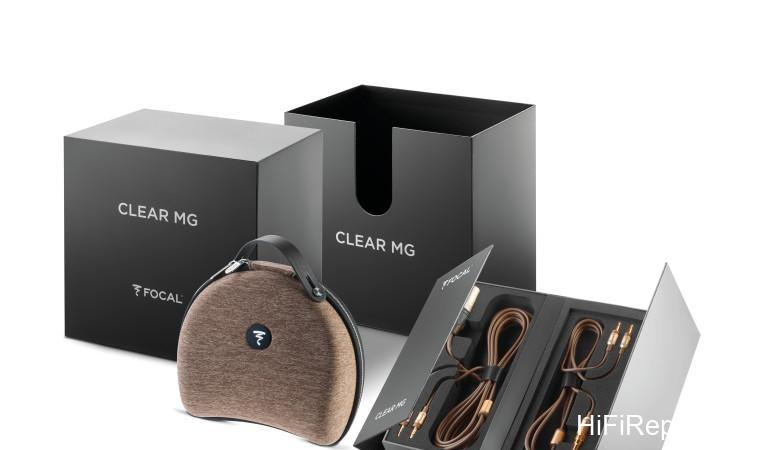
The headphones use a standard 3.5mm stereo jack for detachable cables, making it convenient for advanced users to upgrade. Focal includes two OFC (Oxygen-Free Copper) headphone cables: a 4-pin XLR balanced cable (3 meters) and a 3.5mm single-ended cable (1.2 meters). The 6.3mm cable is omitted in favor of a 3.5mm to 6.3mm adapter.
Internal Upgrades
But don’t think the Clear Mg is just about improved looks; the internal design is the real upgrade! As many know, Focal headphones are renowned for their pure Beryllium dome drivers, which offer ultra-low mass and high rigidity, without the ringing distortion often associated with metal diaphragms, resulting in a refined and brilliant high-frequency character.
However, due to the high cost of beryllium, currently only the flagship Utopia (open-back) and Stellia (closed-back) models feature this material. Other models primarily use aluminum-magnesium alloy diaphragms.
Why use an aluminum-magnesium alloy diaphragm? The reasoning is similar to that for beryllium. According to Focal, metal diaphragms typically produce ringing points at specific frequencies, which can result in an irritating listening sensation. Aluminum alloy diaphragms have a ringing point within the range perceptible to the human ear.

By adding magnesium to create an aluminum-magnesium alloy diaphragm, the ringing point is shifted away from the human ear’s sensitive frequencies, allowing the driver to produce more pleasing sound. Furthermore, aluminum-magnesium alloy is harder than pure aluminum, likely resulting in superior driver speed. This demonstrates that magnesium is also an excellent material for diaphragm construction.
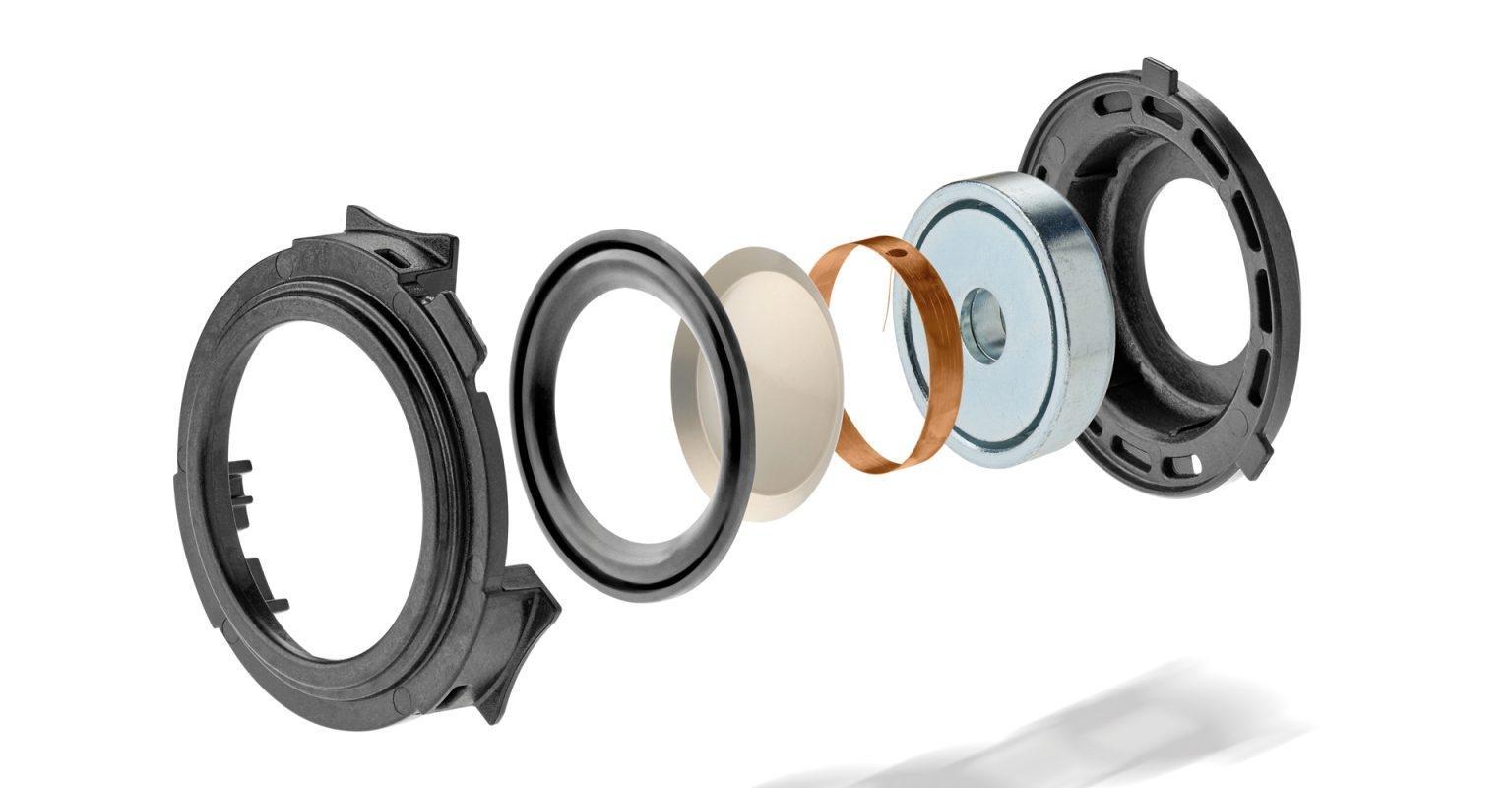
The new Clear Mg utilizes Focal’s latest 40mm magnesium alloy diaphragm, with “Mg” being the chemical symbol for magnesium. This material boasts better damping characteristics and lower mass than previous aluminum-magnesium alloys, improving transient response and providing enhanced bass performance. The diaphragm also features Focal’s patented “M Shaped Dome” profile. Unlike the inverted dome metal tweeters in Focal speakers, this diaphragm shape closely resembles the human eardrum.
The extremely thin edge of the diaphragm creates the “M” bend, allowing sound waves to diffuse uniformly during playback, reducing pressure on the eardrum and resulting in a more linear distribution across the three frequency bands. Additionally, all Focal headphone drivers maintain a consistent “frameless voice coil” design, where the voice coil is wound directly with copper wire and bonded into a cylindrical shape, directly driving the diaphragm.
This significantly reduces voice coil weight, making the driver more responsive and the sound more direct.
Listening Impressions
I recently reviewed the older Clear model in our office, also penned by myself. I also own a pair of Focal Stellia closed-back headphones, which provided an excellent opportunity to compare them directly with the new Clear Mg. For testing, I used my familiar reference headphone amplifier/DAC, the COS H1, with an I-O Data Soundgenic music server as the source and a CrystalConnect Diamond USB cable.
This consistent system allowed for a clearer comparison of the sonic characteristics of the three headphones.
First off, I must be honest: as a Stellia owner who has reviewed several Focal headphones, my experience has been that models equipped with aluminum-magnesium alloy diaphragms tend to have a gap in treble extension, sound density, and bass solidity compared to the top-tier models featuring beryllium diaphragms. Of course, comparing them directly might seem unfair given the significant price difference.
However, when comparing Focal’s mid-range headphones to other brands, their sound quality remains outstanding and distinct.
So, I initially approached this audition expecting a degree of “downgrade.” But after a period of run-in, I was genuinely astonished. The Clear Mg’s performance is remarkably close to that of the high-end Stellia!
Starting with small-scale chamber music, I played Schumann’s String Quartets. The Clear Mg’s treble performance was particularly impressive. You can feel the rich harmonic details layering to create smooth, linear string lines. The sound has a brilliant sheen but is completely free of any harshness. Compared to the original Clear, it possesses a refined, vivid quality that feels much more distinctly “Focal.”
The Clear Mg’s extension and resolution at both the high and low ends are also superior to the old Clear. Furthermore, its mid-range density is high, with a neutral and natural texture. Violins reveal delicate fibrous details and a woody timbre. The open-back structure lends an airy quality to the bow-string friction details, painting a more realistic and picture of the instruments.
The soundstage is also a significant evolution for the Clear Mg. Focal headphones haven’t typically pursued the extremely expansive soundstage found in many open-back designs, but the Clear Mg’s soundstage, both in width and depth, feels more outward-projecting than the previous Clear.
Next, the Clear Mg adds more impact to the Clear’s somewhat reserved bass, resulting in a more substantial sound. The density of the bass in an open-back headphone is genuinely rare. For example, listening to “Aja,” the second track from Steely Dan’s album *Aja*, you can hear the electric bass notes are full and weighty, with deeper extension. The energy is solid, and you can also perceive the subtle vibration of the strings.
During the track’s aggressive jazz drum solo, the kick drum hits are full of weight, impacting the eardrum with each stroke. Miraculously, there’s no sense of pressure; the bass texture is relaxed, fast, and elastic – utterly exhilarating to listen to!
Similarly, playing Saint-Saëns’ Symphony No. 3 conducted by Myung-Whun Chung, you experience a transparent and dimensional space, conjuring a miniature concert hall in your mind. In the second movement, the strings sound dense and fluid, and the dynamic contrasts of the performance are rendered with excellent responsiveness.
Even the deep rumble of the organ’s lowest frequencies possesses a clear, lingering quality, without any excessive energy masking other sections of the orchestra, allowing the listener to savor the rich layers of the performance.
This Clear Mg is the finest Focal headphone I’ve listened to recently. It builds upon the old Clear by adding more vivid sonic qualities. Its extension at both extremes, dynamics, and detail retrieval are all satisfying, bringing its performance very close to Focal’s top-tier models. If you appreciate Focal’s passionate and energetic sound signature, I believe the Clear Mg is currently the most compelling value in their headphone lineup.
Test Results
From the RAW and HEQ frequency response curves of the Focal Clear Mg, it is evident that the headphone exhibits a balanced distribution across the three frequency bands. Compared to the older Clear, it shows more mid-bass energy below 100Hz with a slower roll-off. There’s also less dip in the 5kHz-6kHz region, which is particularly sensitive to the human ear.
This indicates that the Clear Mg indeed provides richer bass, better low-end extension, and a brighter treble character in listening tests. The high-frequency extension of the old Clear was relatively more reserved.
The waterfall plot and spectrogram of the Clear Mg demonstrate its excellent transient response. The energy distribution is quite balanced across the entire frequency range, and the decay time is very short. This translates to a low-coloration sound character in listening, capable of accurately conveying the original essence of the music. This is also the secret behind the pure and transparent sound quality of Focal’s high-end headphones.
Specifications
* Type: Open-back circum-aural headphones
* Drivers: 40mm Magnesium M Shaped dome
* Impedance: 55 Ohms
* Sensitivity: 104dB SPL / 1mW @ 1kHz
* THD: <0.25% @ 1kHz / 100dB SPL * Frequency response: 5Hz – 28kHz * Weight: 450g