
Focal Diva Utopia Review
Frankly, I wasn’t surprised at all when Focal launched the Diva Utopia active speaker. Given Focal’s prowess in speaker design and Naim’s expertise in amplification, a domestic active speaker system felt long overdue (they’ve had studio active monitors for over two decades). The real surprise for me is how long it took them to finally unveil the Diva Utopia.
Priced at $39,999, the Diva Utopia sits below the Linn 360 ($100,000) but clearly above all KEF’s wireless active DSP speakers. This positioning suggests they aren’t targeting the mass consumer market but remain squarely focused on the Hi-End segment.
This marketing strategy makes sense; with their brand image and pricing, Focal and Naim couldn’t possibly compete in the budget or mid-range active speaker space, which is already crowded with brands, many originating from the professional monitoring world.
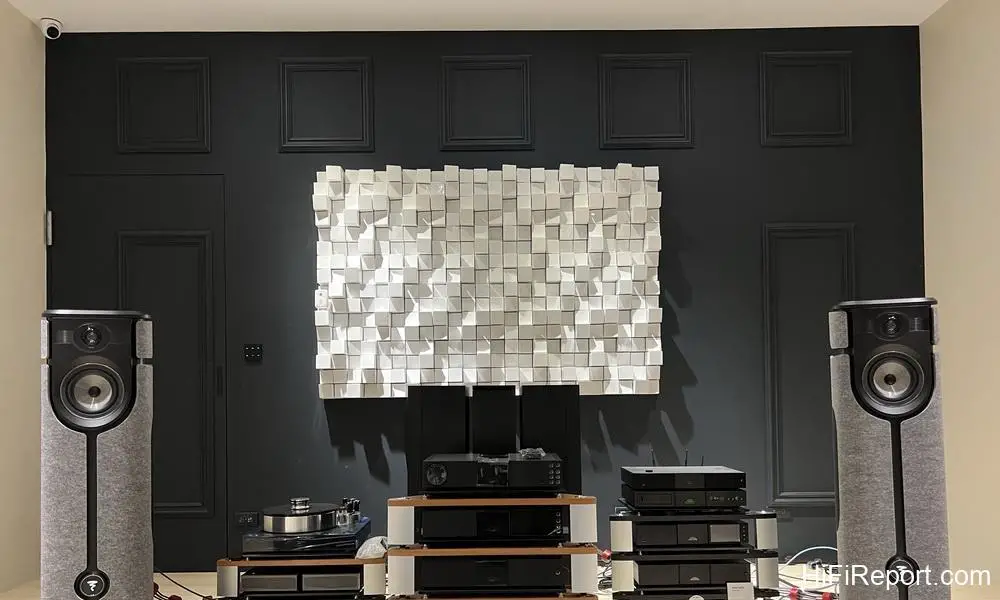
The $39,999 Value Proposition
At first glance, the $39,999 price tag might seem steep. However, upon closer examination, the cost becomes quite reasonable. Why? You can effectively break the Diva Utopia down into four main components: first, the passive speaker itself; second, the Naim amplifiers; third, the DSP, DAC, and ADC modules; and fourth, the streaming player. Consider the wireless connection between the two speakers as a bonus throw-in.
If you were to divide $40,000 by three, you could notionally allocate $13,000 for the passive Focal speaker component, $13,000 for the integrated Naim amplification (400W Class AB per speaker), and another $13,000 for the ADC/DAC/DSP plus streaming section, all bundled as Naim products. Just try looking up what kind of passive Focal speaker you could get for $13,000, or which Naim 400W stereo power amplifier, or what Naim streaming player, for that amount.
Active vs. Passive Advantages
By integrating all these functionalities into a single unit, the Diva Utopia saves on the cost of separate amplifier and streamer chassis. All these features are cleverly housed within the speaker cabinet. Not only does this significantly reduce the overall component count and likely manufacturing cost, but it also enhances functionality. Where does it get stronger? Take the DSP, for example.
The internal DSP in the Diva Utopia handles crossover filtering, phase correction, and even allows for App-controlled room correction (though perhaps not full-fledged DRC, it offers substantial functionality). This goes far beyond the capabilities of traditional passive speakers.
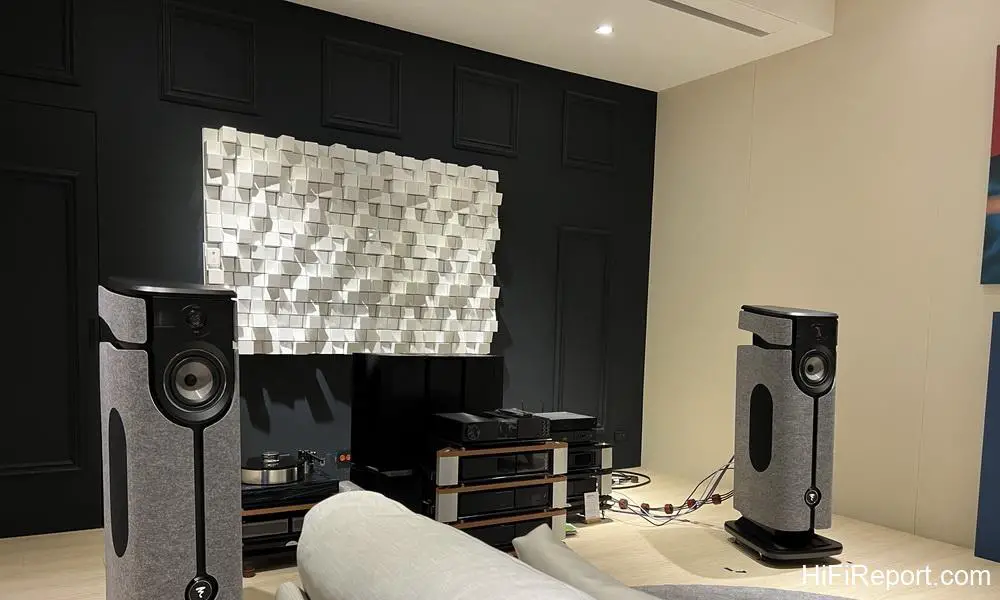
Keep in mind, the biggest weakness of traditional passive speakers is the passive crossover network. The Diva Utopia replaces this with a DSP-based electronic crossover. This approach dramatically improves phase coherence and imaging precision compared to traditional designs.
Furthermore, using dedicated amplifiers – a 75W amp directly driving the tweeter, another 75W amp for the midrange, and a 250W amp for the four bass drivers operating in push-pull configuration – delivers performance far superior to a single 400W amplifier attempting to drive all six drivers simultaneously. A key reason for this lies in the ‘directness’: music signals are processed by the crossover network and then sent directly to the dedicated amplifiers powering each individual driver.
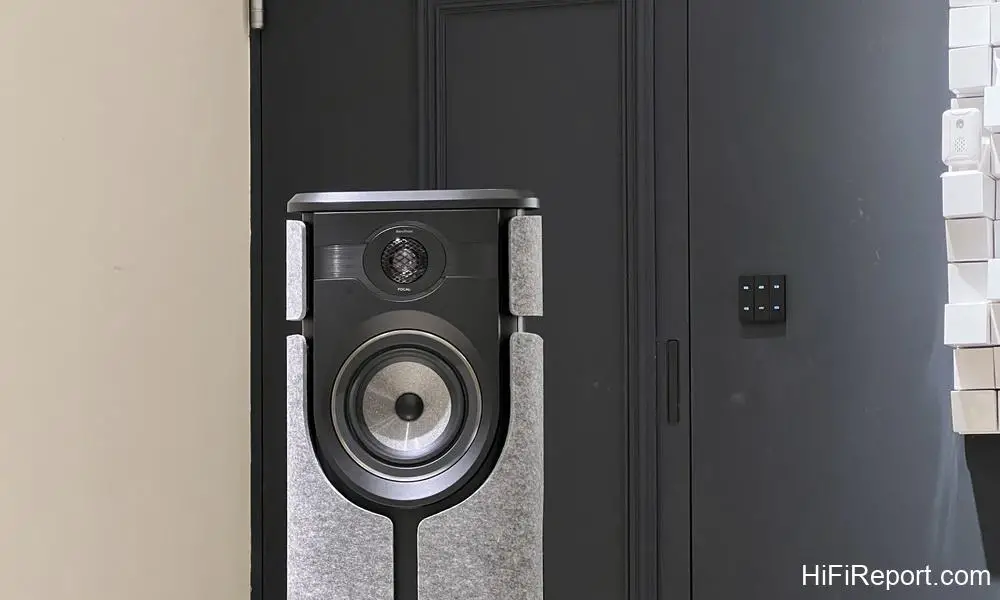
Driver Technology
Having briefly touched upon the Diva Utopia’s benefits, let’s delve into its design. Starting with the drivers, the tweeter retains the beryllium diaphragm, but with a new shape: the M-shaped inverted dome. According to Focal, this shape reduces distortion and improves dispersion, and the voice coil is larger than previous beryllium tweeters, measuring 25mm.
To complement this beryllium tweeter, the Diva Utopia’s tweeter enclosure employs what Focal calls “Infinite Acoustic Loading,” designed to minimize the effect of the tweeter’s back wave. Looking closely at the tweeter’s metal grille, you’ll notice glimpses of red and black, along with a central ribbon. Focal claims this represents the Chinese philosophical concept of Yin and Yang.
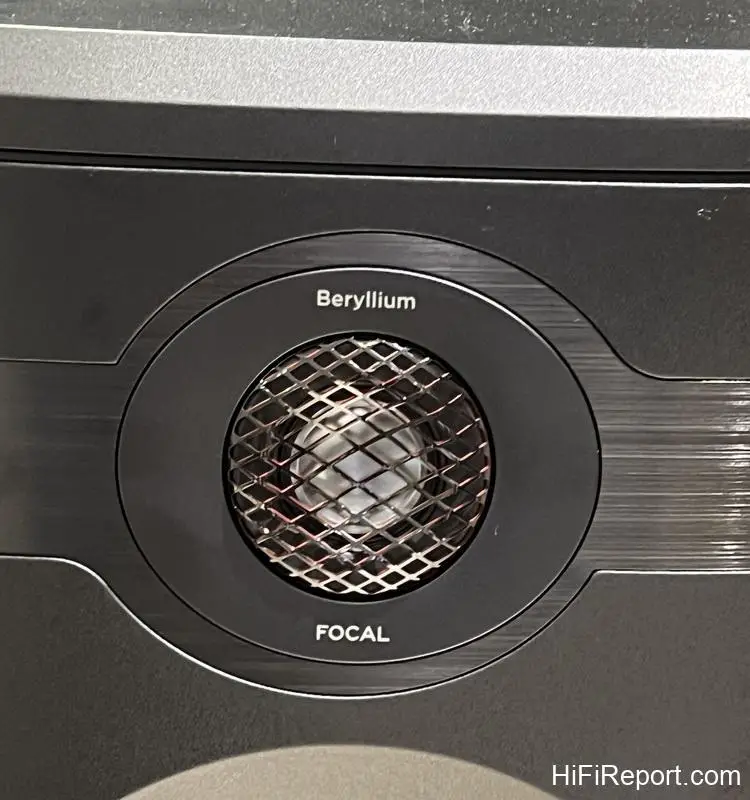
While I’m not sure how Yin and Yang directly relate to the tweeter’s sound performance, it’s certainly one marketing point, perhaps appealing to the East Asian market.
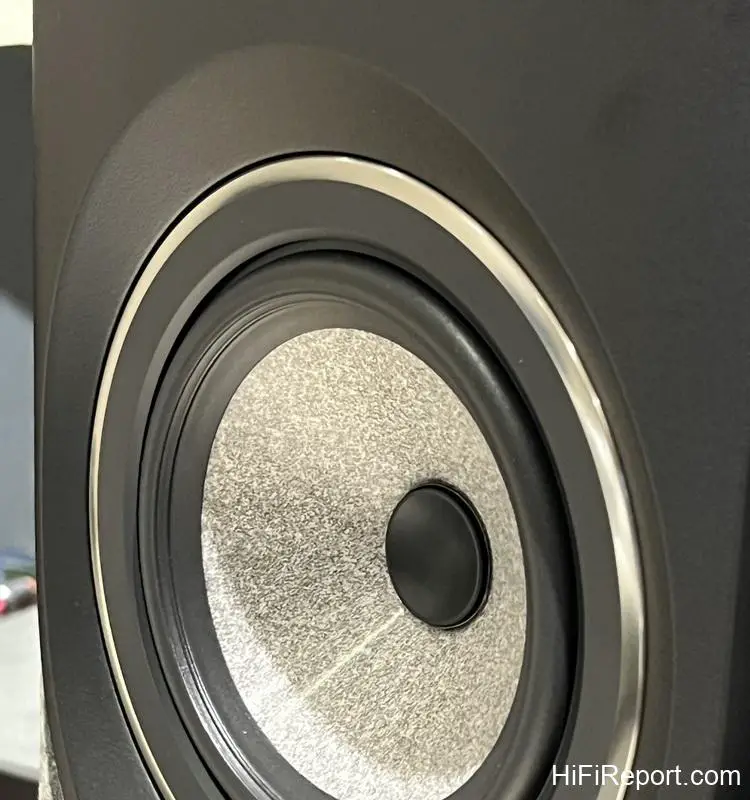
Moving on, both the midrange and bass drivers in the Diva Utopia utilize 6.5-inch W-cone drivers. Although the size is the same, the dust cap dimensions and design differ, indicating they are tailored for their respective frequency ranges. The “W” in W-cone refers to the material structure: a foam core sandwiched between two layers of W material, resulting in a diaphragm that is both lightweight and rigid, helping it handle high power.
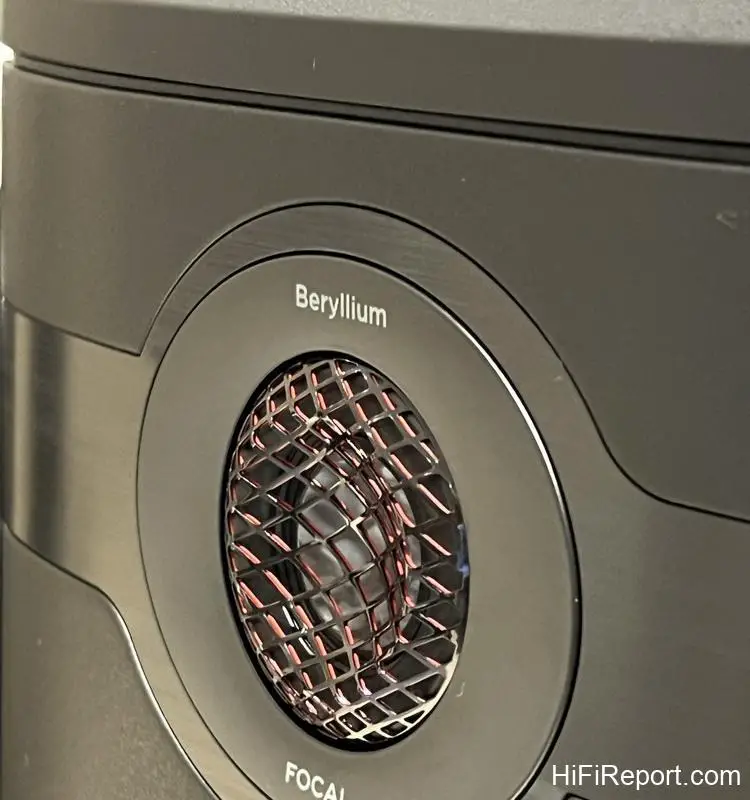
This W-cone technology, developed in 1995, is still in use today. Several other renowned speaker manufacturers also use bass drivers with a foam core interlayer, although they use different names. I witnessed the hand-crafting process myself during a factory visit to Focal years ago.
Naim Power
The Diva Utopia’s bass drivers are positioned on the left and right sides, with two drivers on each side. These four drivers operate in a push-pull configuration, similar to the side-mounted bass drivers used by KEF, which helps reduce cabinet vibration. These four bass drivers are powered by two 125W Class AB amplifiers, totaling 250W. The tweeter and midrange drivers are each driven by separate 75W Class AB amplifiers. Thus, each speaker unit houses a total of 400W of Class AB amplification.
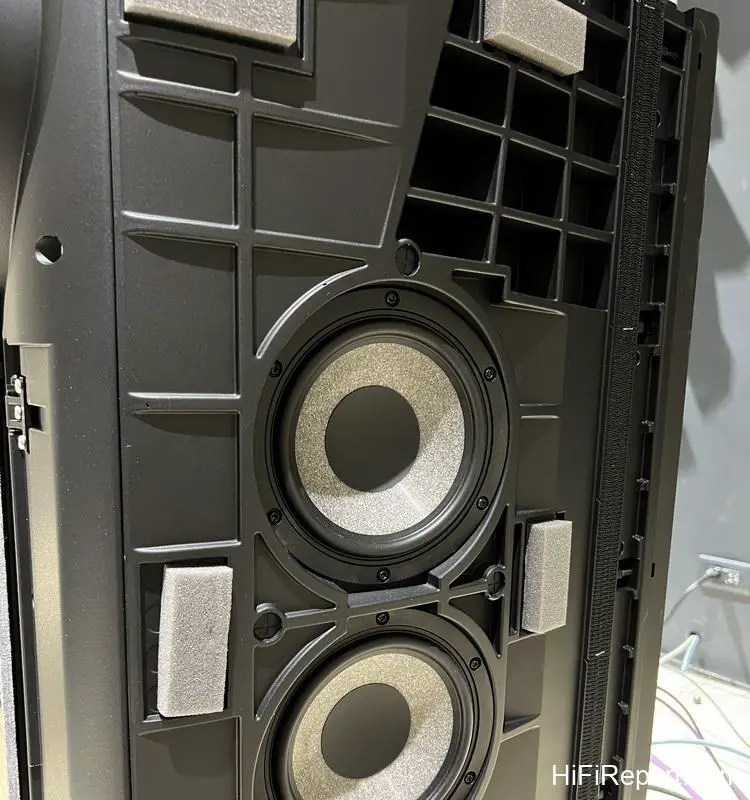
All circuit boards are mounted on the Diva Utopia’s rear heatsink. A large toroidal transformer provides power. This full-height heatsink not only dissipates heat but also acts as the structural spine of the Diva Utopia cabinet, significantly enhancing its rigidity.
Innovative Construction
Now, let’s talk about the Diva Utopia’s cabinet construction. Traditionally, Focal speaker cabinets have been made from MDF or wood, crafted to furniture-grade standards. To meet the high demand for cabinets, Focal established its own cabinet factory in France, but even this couldn’t keep up. Therefore, when designing the Diva Utopia, they decided against using MDF (a choice also influenced by the cabinet’s complex shape and the internal space needed for the circuit boards).
Instead, they opted for mold injection casting using Polymer material. The benefits of this material include excellent rigidity, hardness, and low vibration. Furthermore, since the cabinet is mold-casted, internal bracing can be designed and integrated from the outset, making the Diva Utopia’s cabinet exceptionally sturdy.
Stable Foundation
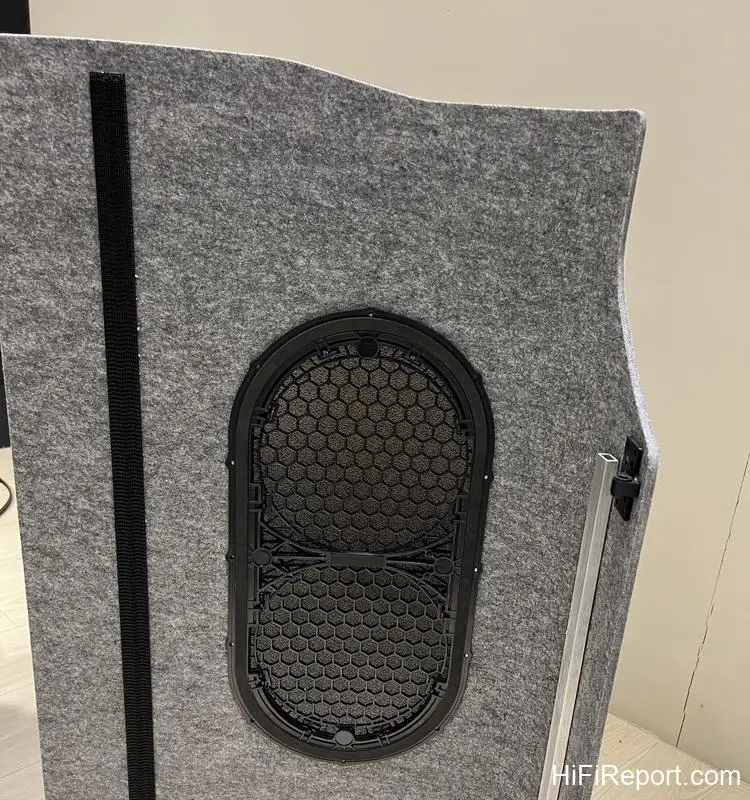
However, this wasn’t quite enough, as the base still needed significant weight for stability. Consequently, the Diva Utopia’s base is made from cast aluminum, weighing nearly 10 kilograms, successfully anchoring the entire speaker firmly. Bass reflex ports are integrated into the cast aluminum base and the bottom of the cabinet, allowing the bass drivers’ back waves to exit.
Beyond the practical benefits, using Polymer casting for the cabinet also provided an immediate solution to Focal’s wooden cabinet factory capacity bottleneck. Had the Diva Utopia’s cabinets added to the demand, I believe Focal’s cabinet shortage problem would have become even more severe.
Functional Aesthetics
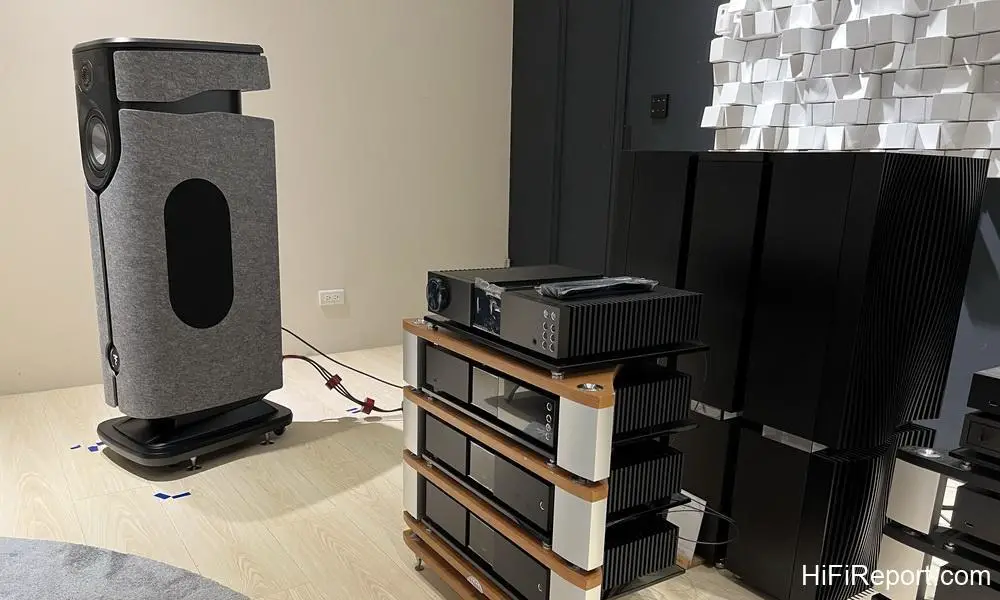
Another unique design element of the Diva Utopia is its grey felt grille on the outside of the cabinet. This was co-designed with German company Becker Brakel, one of the renowned manufacturers of molded wood and non-woven materials. They used OEKO-TEX® certified felt material, pressure-molded into the Diva Utopia’s beautiful double-curve grille shape.
Perhaps you’re wondering what OEKO-TEX® certification is. It’s a standard established by the Austrian Textile Research Institute (OTI) together with 14 related environmental textile associations in 22 countries. Its main focus is green environmental protection, organic materials, and harmlessness. It has four classes: Class I for baby products, Class II for products in direct contact with skin, Class III for products not in direct contact with skin, and Class IV for decorative material products.
I assume the Diva Utopia’s grey grille is certified to Class IV.
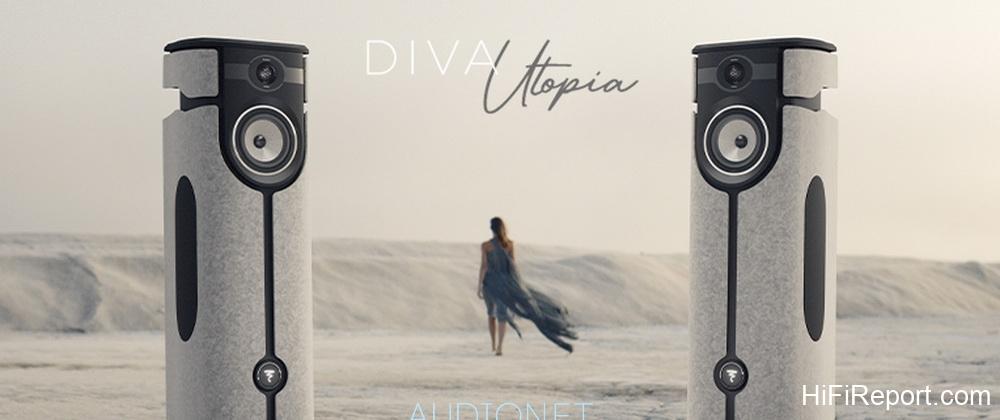
Why do I consider the grey felt grille a clever design? Because it simultaneously solves Focal’s challenge of offering custom special colors for their cabinets. Think about how many speaker models Focal has. If each model offered five cabinet colors, how much pressure would that put on the cabinet factory’s painting and finishing operations? Adding special colors for the Diva Utopia would surely overwhelm the factory.
Thus, the Diva Utopia’s grille is designed to attach with Velcro, making it easy to remove and allowing users to change the grille themselves. Doesn’t this alleviate the factory’s pressure from manufacturing special colors? Currently, only the grey felt grille is available, but more colors will be offered in the future, allowing the Diva Utopia to blend more seamlessly with home décor.
Digital & Analog Connectivity
As soon as the Diva Utopia is plugged into power, the Focal logo centrally located at the bottom front of the cabinet illuminates, indicating it’s ready to play music. The Diva Utopia system consists of a master and a slave speaker. The master speaker has a variety of terminals on its back panel, while the slave speaker’s back panel only has a single network port for wired connection to the master. If connected via wire, the Diva Utopia is compatible with up to 24-bit/192kHz resolution.
If the master and slave speakers are connected wirelessly using UWB (Ultra-Wideband) technology, the resolution is limited to 24-bit/96kHz. We often worry about unstable wireless transmission and latency issues, but UWB technology should largely mitigate these concerns. I recall the Sonus Faber Duetto, released in 2023, also uses this UWB wireless transmission technology.
If using wireless connection between the master and slave speakers, it’s best to avoid people walking between the speakers during listening.
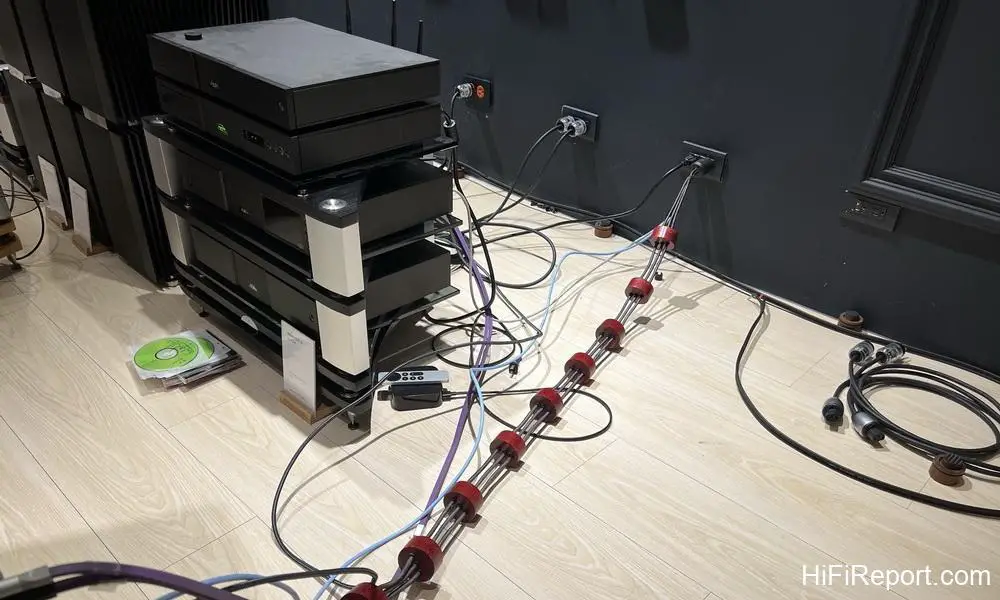
On the back panel of the master speaker, you’ll find an HDMI eARC port, an optical Toslink port, a set of analog RCA inputs, a USB 2.0 Type-A port, one RJ45 network input port, and a second RJ45 port used to connect the “slave” speaker.
The Diva Utopia supports various wireless transmission protocols, including Bluetooth (supporting aptX™ Adaptive, SBC, AAC), AirPlay 2, Google Cast, UPnP, etc. For streaming music playback, it offers direct integration with Spotify Connect, Tidal Connect, Qobuz, QQ Music, among others. Unfortunately, it doesn’t support KKBox. The HDMI eARC port allows connection to a TV, enabling the Diva Utopia to play TV audio.
Naturally, the RCA inputs can be used for vinyl records or other analog sources, although analog signals entering the Diva Utopia will first undergo A/D conversion. Oh, and the Diva Utopia also supports DSD64 and DSD128, but surprisingly does not support Roon or MQA. I’m quite curious about the lack of Roon support.
User Interface
The Diva Utopia comes with a remote control and can also be controlled using the Focal & Naim App, as well as Google Assistant and Siri voice assistants. The App includes built-in Room Correction and ADAPT (Adaptive Acoustic Personal Tuning) features. The ADAPT function becomes visible in the App only after your mobile device is connected to the Diva Utopia.
The setup process is quite straightforward. You first need to input the distances between the speakers and the rear wall, side walls, the distance between the speakers themselves, and the distance between the speakers and the listening position. Then, simply follow the on-screen instructions. The App emits simple test signals to help the user determine if the high, mid, and low frequencies are centered, and if the left and right channels are balanced. Finally, there’s a Room Correction step.
I’m still not entirely clear how this function operates, but following the instructions involved adjusting a circle until the word “Optimum” was displayed, indicating the optimal sound setting had been reached. Perhaps this final step involves automatic adjustment by the internal DSP? It’s crucial to remember that before performing these adjustments, proper speaker placement must be completed first.
Only after the speaker positions are finalized should you begin the step-by-step adjustments guided by the App.
First Listen – Setup & Placement
I visited the Sound United FPBN (“Focal Powered By Naim”) flagship store on Dihua Street on the afternoon of December 2nd, 2024, for a review session. As is my habit, I first listened for a while, then used pink noise for testing, and finally adjusted the speaker placement based on the frequency response curve. Initially, the speakers were placed 160 cm from the rear wall (measured from the front baffle).
At this position, the frequency response curve showed a significant dip between 31Hz and 63Hz (due to Speaker Boundary Interference Response – SBIR). This resulted in the music’s bass lacking fullness and solidity, feeling less elastic, the soundstage depth not being fully realized, and the 3D positioning of instruments within the soundstage not being clearly defined.
I moved the speakers forward, placing the front edge 200 cm from the rear wall. At this point, the entire sound perception changed. According to SBIR calculations, the center point of bass cancellation should shift downwards to approximately 43Hz, effectively making the frequency range above 50Hz fuller. However, this wasn’t the absolute best listening position. If the listening position could be moved back by more than one meter, a better frequency response curve could be measured.
Based on the conditions of this listening space, I believe that moving the speakers forward to 250 cm or even 300 cm, with a corresponding shift back in the listening position, would yield even better audio performance. However, the sofa blocked the way, preventing movement to 250 cm, let alone 300 cm. Besides myself, the Sound United Chairman, Mr. Zhuang, the store manager, and a lady I didn’t know were present.
I took turns letting the three of them sit in the “sweet spot” to listen to a few tracks, confirming that the audio performance from the Diva Utopia was already excellent, sufficient for me to begin my review session.
Sound Characteristics – Overall
The first thing I want to say is that the Diva Utopia’s sound is very vivid, just like the Focal speakers I’ve heard before. But beyond vividness, the sound is fuller, more elastic, and has a greater sense of weight. When I listened to Alanis Morissette’s “You Oughta Know,” the sheer ‘oomph’ of the kick drum was highly enjoyable – it was solid, very elastic, and impactful. The crispness of the steel guitar also had a masculine beauty, yet it was sweet and not at all aggressive.
Listening to Dido’s “Don’t Believe in Love,” the bass bounce was irresistible, full and powerful.
Soundstage & Imaging
Secondly, the Diva Utopia boasts a wide soundstage with excellent 3D dimensionality. When I listened to Dominique Fils-Aimé’s “Nameless,” the Diva Utopias seemed to disappear entirely, with the solo vocal, harmonies, and accompanying instruments seemingly filling the entire soundstage. Listening to Yosi Horikawa’s “Bubbles,” the electronic ping pong balls were incredibly distinct and palpable, with positioning as precise as a “nail struck dead center.”
Despite so many balls bouncing around the soundstage, there was no confusion, and the sound even extended beyond the speakers.
Scale & Dynamics
Thirdly, the Diva Utopia presented music with a grand scale and powerful presence. Listening to “Norbu” from the “Himalaya” movie soundtrack, the music entered with a sweeping, majestic force. The drums, though powerful, maintained a clear form. When the vocals entered, they were distinctly layered from the accompanying instruments, with no sense of congestion.
Tone & Timbre
Fourthly, the Diva Utopia’s tone quality is beautiful. Listening to Christoph Koncz performing Mozart’s Violin Concerto No. 5, Isabelle Faust playing Beethoven’s “Kreutzer” Violin Sonata, and Edgar Moreau’s “Great Dramatic Sonata,” whether it was the piano, violin, or cello, they all produced a beautiful sound quality – clear, sweet, and smooth – much like the feeling I used to get listening to Naim amplifiers.
Energy & Control
Fifthly, the Diva Utopia’s sound is very lively, as if every note played is infused with energy. It doesn’t sound soft or lifeless, and the control is excellent. When I listened to Lils Mackintosh’s “Pack Your Memories,” the female vocalist has a rather low range, and the accompanying bass also plays low notes. By rights, this kind of track could easily sound too soft and lacking in energy.
But the Diva Utopia played it back with great vitality and elasticity, and the singer’s voice had plenty of power.
Layering & Definition
The Diva Utopia demonstrated excellent layering and positioning. Listening to Exit North’s “Bested Bones,” the male vocalist also has a low voice, but it was clearly separated from the accompanying strings, electric piano, subtle percussion, drums, and bass. Even when electronic bass appeared, it was clearly distinguishable from the acoustic bass, without everything blending together.
Impact & Authority
The Diva Utopia possesses immense energy. From the first listen, it felt like it was being driven by multi-hundred-watt amplifiers, and the control was superb. When I listened to The Fairfield Four’s “These Bones,” the deep, raw male vocal harmony seemed to completely detach from the speakers, with every voice full of power.
To be honest, such powerful low-frequency vocals are hard for ordinary speakers to handle, but the Diva Utopia remained “unfazed,” playing them steadily without any sense of compression or approaching distortion.
A New Benchmark
During that day’s review session, since I was sharing the listening time with three others, I didn’t get to listen to a large number of tracks myself. However, it was more than sufficient to judge the Diva Utopia’s various sound characteristics. Based on my experience listening to many passive Focal speakers (including their flagships), I believe its sound performance surpasses that of a $40,000 passive Focal speaker.
This “assessment” isn’t just based on my “subjective” listening experience; theoretically, this is also the case. Because a $40,000 passive Focal speaker would suffer significantly in sound performance if paired with an unsuitable amplifier. The Naim amplifiers inside the Diva Utopia are “custom-tailored,” eliminating any issues of improper matching. So, in many ways, buying the Diva Utopia offers more tangible benefits than buying separate passive speakers and amplifiers.
Oh, and the Diva Utopia also supports multi-room networking for simultaneous use, although I didn’t explore this feature during this review.
As Focal stated in their promotional material, “Diva Utopia marks the beginning of a new era.” The Diva Utopia indeed announces the arrival of a new era for Hi-End speakers. The Diva Utopia will be officially unveiled at the Yuanshan Hotel Audio Show from December 12th to 15th, 2024. If you plan to attend the show, don’t forget to go listen.
Technical Details
* 3-way, six-driver, bass-reflex active speaker system.
* Launched in 2024.
* Features one 27mm Beryllium inverted dome tweeter, one 6.5-inch W-cone midrange driver, and four 6.5-inch W-cone bass drivers.
* Tweeter driven by a 75W Class AB amplifier.
* Midrange driven by a 75W Class AB amplifier.
* Four bass drivers driven by a 250W Class AB amplifier.
* Built-in ADC, DAC, and DSP modules.
* DAC supports up to 384 kHz/24 bit.
* Compatible with various formats (WAV, FLAC, AIFF, ALAC, MP3, AAC, OGG, DSD64, DSD128).
* Connectivity includes HDMI eARC, Toslink optical, RCA analog, USB Type A, and two RJ45 ports.
* Wireless connectivity includes Bluetooth 5.3, AirPlay 2, Google Cast, UPnP, Spotify via Spotify Connect, TIDAL via TIDAL Connect, and QQ Music via QPlay.
* Dimensions: 121 x 42 x 56 cm (Height x Width x Depth).
* Net weight: 64 kg per speaker.
* Importer/Distributor: Sound United.