
Focal On Wall 300 & Sub 600P Review
In recent years, many audio manufacturers have heavily promoted in-wall speakers. The reason is simple: they lack the traditional cabinet structure and can be concealed within walls, taking up no space during installation. This makes them ideal for users who prioritize maintaining the aesthetic appeal of their interiors. Consequently, audio companies often plan complete in-wall speaker systems for clients when a new home is being built.
While adopting in-wall speakers offers a permanent solution, many audiophiles remain hesitant. Installation lacks flexibility, requiring drilling into inner walls and running cables, making it difficult to install if not planned beforehand. Modifying or upgrading the system after installation is also less straightforward. Furthermore, in-wall speakers lack the traditional speaker cabinet, meaning their acoustic characteristics differ from conventional loudspeakers.
To achieve a balance between acoustics and aesthetics, some audiophiles opt for wall-mounted speakers instead. These speakers retain a traditional cabinet structure but can be installed without altering the decor, effectively saving space.
Introducing the Focal On Wall 300 Series
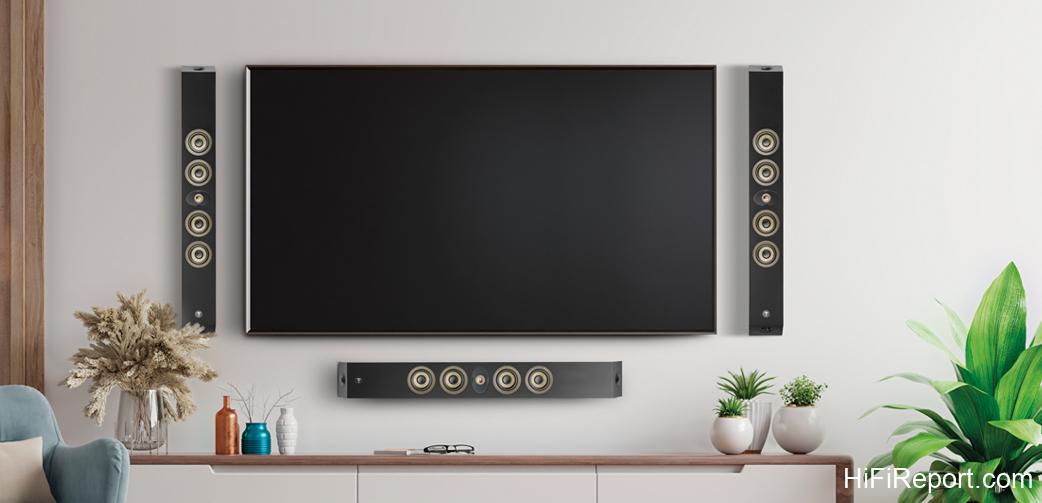
French speaker giant Focal has long recognized the importance of this market segment. Following their entry-level Sib Evo 2.0, they recently introduced two higher-end series: the On Wall 300. The larger model is the On Wall 302, and the smaller is the On Wall 301. These speakers are designed for direct wall mounting and are perfectly suited for both two-channel listening and building a home theatre system.
For spaces where wall mounting isn’t convenient, Focal offers dedicated Stands with a sleek design that matches the speakers. Mounting the speakers on these stands transforms them into floorstanding-like units that are surprisingly space-efficient. For this review, the distributor provided three On Wall 302 units and a pair of On Wall 301s, along with a Focal Sub 600P active subwoofer, forming a 5.1 channel theatre system. The sound performance promised to be exceptional.
Design and Features of the On Wall 300
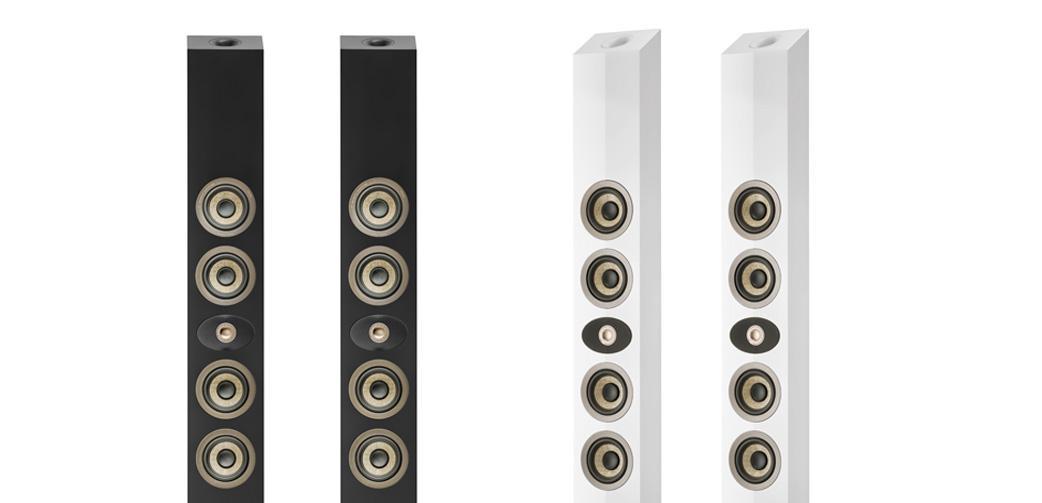
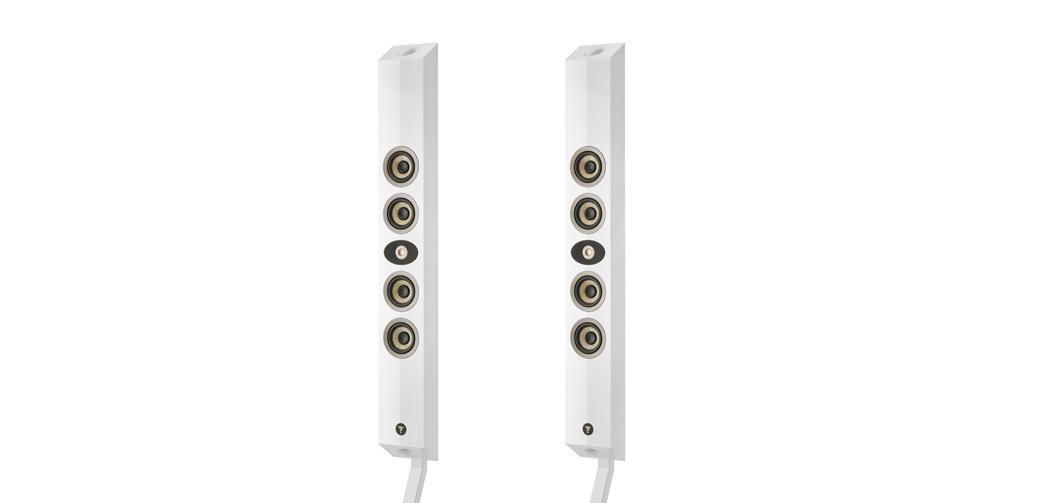
The On Wall 300 series speakers truly maximize the advantages of wall-mounted designs. First, both the 302 and 301 share the same aesthetic, available in high-gloss white and matte black finishes, looking significantly more refined than many wall-mounted alternatives. Their slim, elongated cabinet structure is also distinctive. The 302 is longer than the 301 and features more drivers.
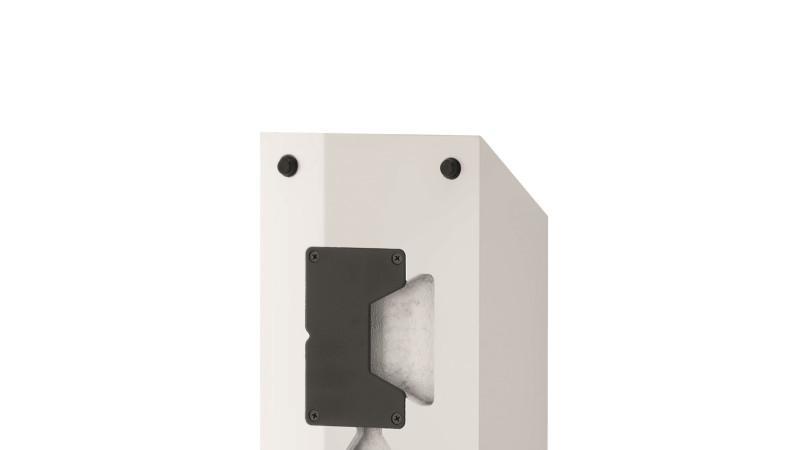
Bass reflex ports are located at the top and bottom of the speaker, making it easy for users to provide ventilation space when wall-mounting. Furthermore, the On Wall speakers have a very narrow baffle, which helps reduce driver diffraction and minimize sound coloration. Both models also feature an MTM driver configuration, with the tweeter centered between the mid-bass drivers.
This arrangement reduces reflections from the ceiling and floor, simulating a point-source radiation pattern for more precise soundstage imaging and clearer sound localization, undoubtedly benefiting theatre audio.
Driver Technology
Regarding driver configuration, the 302 employs a 2.5-way, 5-driver design, featuring one 25mm inverted dome TNF aluminum-magnesium tweeter. This tweeter utilizes Focal’s renowned TNF structure, with the inverted dome enhancing high-frequency dispersion. Additionally, Focal incorporates Poron memory foam, similar to that used in their high-end Utopia Beryllium tweeters, around the outer ring of the tweeter.
This material effectively reduces distortion in the critical 2kHz-3kHz range, where human hearing is most sensitive, resulting in a smoother, more natural sound.
The 302 also houses four custom-designed 100mm Flax Cone mid-bass drivers specifically for the On Wall series, while the smaller 301 uses two. The Flax Cone is Focal’s proud technical breakthrough following their top-tier W Cone technology, initially developed for the Aria series speakers in 2013. Drawing from their W Cone research, Focal discovered that a single diaphragm material couldn’t achieve optimal acoustic properties.
After extensive experimentation, they found that flax fiber is inherently inelastic, offering high plasticity as a core material and exceptional rigidity. By sandwiching the flax core between two ultra-thin layers of fiberglass, they created a standard sandwich structure.
This design results in a diaphragm that is not only rigid and lightweight but also possesses high internal damping. According to Focal, its internal damping is comparable to the well-known Kevlar diaphragms in the industry. To fit the narrow baffle structure, the On Wall’s mid-bass drivers are particularly small, with a diameter of only 100mm. This likely contributes to faster driver response.

The drivers also feature a long-throw surround design, allowing for richer and more robust mid-bass output.
Subwoofer Support
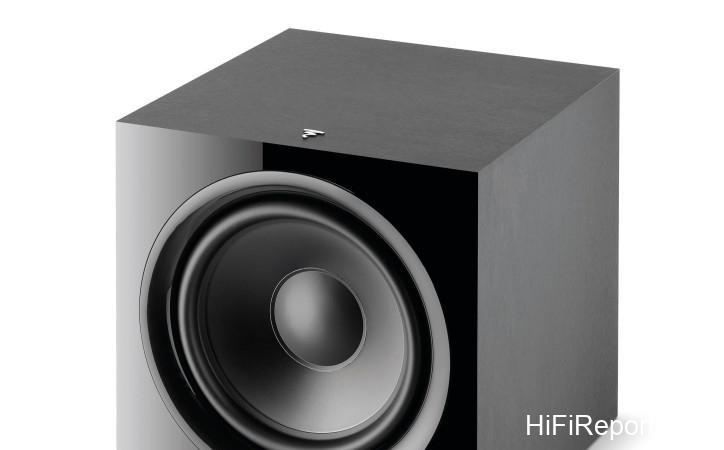
Given the smaller drivers in the On Wall speakers, the accompanying Sub 600P plays a crucial role. This is Focal’s latest subwoofer from the Chora series. Although considered an entry-level model, its design is far from casual. Aesthetically, it features a high-gloss black front panel, while the rest of the cabinet has a matte brushed finish, giving it a simple yet sophisticated look.
The cabinet uses a sealed design, which Focal states is intended to reduce port noise and provide clearer low-frequency detail, with an impressive extension down to 28Hz.
Inside, the subwoofer features a 12-inch Polyflex cone driver paired with a large magnetic system. This diaphragm material is very rigid, capable of handling high sound pressure levels, meaning it’s less prone to cone breakup distortion during large dynamic low-frequency passages. The subwoofer also incorporates a Class D amplifier capable of delivering 600 watts peak output and 300 watts average output, ensuring deep and powerful bass to complement the On Wall speakers.

Flexible Stands
The Stand accessory for the On Wall speakers is constructed entirely from metal and is significantly heavy, which helps reduce external vibrations that could introduce sound coloration. The Stand is also straightforward to assemble. Once the components are put together, you simply hang the speaker onto the stand’s hook. The connection between the hook and the speaker is very secure, ensuring complete stability.
Listening Impressions: Stereo
For the listening test, I placed the On Wall speakers as close to the wall as possible in our No. 1 listening room to simulate wall mounting. The front-end system consisted of an Anthem AVM 90 surround processor and a Proceed Amp-5 five-channel power amplifier, with a Sony A80J 4K OLED TV as the source.
I began by listening in a 2.1 channel configuration. During this time, I also simulated a wall-mounted setup without toe-in and found that the On Wall speakers still exhibited excellent focus. The midrange was fast, displaying a sweet, smooth character, while the high frequencies were transparent and luminous. This presentation style allowed classical music to reveal rich hall ambiance details.
Despite the speakers having relatively small drivers and cabinets, they still produced good body, and with the subwoofer’s assistance, the low-frequency energy and extension were quite impressive. Furthermore, I believe they possess a quality rarely found in traditional theatre speakers: thanks to the narrow cabinet design, they are less susceptible to sound wave diffraction interference, resulting in a remarkably open soundstage.
In stereo recordings, they created a natural and three-dimensional concert hall scene, making the speakers themselves seem to vanish.
Playing Helene Grimaud’s performance of Silvestrov’s “The Messenger,” the piano notes sounded incredibly transparent, with rich resonance from the soundboard between phrases. Each key press exhibited incisive speed with no sense of delay, producing a dense and luminous piano tone. More remarkably, the speakers were exceptional at rendering ambient details.
Even in 2.1 channels, I experienced an excellent sense of hall ambiance and immersion, as if being present in the concert hall, feeling a realistic sense of being there.
Similarly, listening to Barenboim, Mutter, and Ma’s performance of Beethoven’s Triple Concerto, the violin lines were very luminous, retaining sweetness even in the highest registers without sounding harsh or fatiguing. The cello’s nasal tone sounded fresh and tight, without the bloated thickness that can sometimes occur in the midrange. I could clearly hear bow string details and the woody timbre. When the substantial orchestral accompaniment entered, the speakers demonstrated good scale.
Amidst the rich energy, the details of individual instrument performances were never obscured; the texture remained clear and transparent, revealing excellent layering in the performance.
Listening Impressions: Home Theatre
Next, I connected the system in a 5.1 channel configuration to test the speakers’ theatre capabilities. The precise room correction provided by the Anthem system fully showcased the On Wall speakers’ strengths. Transient response was excellent, and the soundstage was transparent and expansive – a necessary condition for a theatre system to deliver realistic audio.
This allowed movie sound effects to appear sharper and denser, preventing complex soundscapes like those found in sci-fi or war films from becoming blurry or chaotic. Instead, they exhibited excellent separation and transparency.
For instance, during the opening scene on the boat in “Saving Private Ryan,” the soundstage felt boundless. The surrounding sounds of waves and splashing water were incredibly realistic, creating a very detailed sense of immersion. Following this, the iconic beach landing sequence created a wide and open battlefield environment. The bullets whizzing by felt sharp and solid, each trailing a long trajectory, making one feel constantly exposed and in danger of being hit.
Furthermore, with the Sub 600P’s assistance, the impact of explosive effects in this theatre setup was remarkable. For example, during shell bombardments, the sudden dynamic bursts were incredibly powerful, and the speakers managed the sound energy with excellent control. Details like dust and debris flying after an explosion were clearly rendered, offering a truly immersive viewing experience.
Conclusion
Many audiophiles are skeptical of wall-mounted speakers, viewing them as a compromise solution for space constraints. However, I believe listening to this Focal On Wall system will completely change your perspective. Not only does it match or exceed the sound quality and aesthetics of Focal’s traditional speakers, but it also offers a significant size advantage.
For those with limited space or who wish to maintain their home’s decor, this system absolutely allows you to build a beautiful and tidy theatre setup without sacrificing sound quality.
Specifications
Focal On Wall 302
* Product Type: 2.5-way, 5-driver wall-mounted speaker
* Drivers: 1 x 25mm TNF inverted dome aluminum-magnesium tweeter, 4 x 100mm Flax cone mid-bass drivers
* Frequency Response: 50Hz – 28kHz
* Sensitivity: 91dB
* Impedance: 8 Ohms
* Weight: 9.4kg (20.7 lbs)
* Dimensions: 138 x 30 x 21 cm (54.3 x 11.8 x 8.3 inches)
Focal On Wall 301
* Product Type: 2-way, 3-driver wall-mounted speaker
* Drivers: 1 x 25mm TNF inverted dome aluminum-magnesium tweeter, 2 x 100mm Flax cone mid-bass drivers
* Frequency Response: 53Hz – 28kHz
* Sensitivity: 87dB
* Impedance: 8 Ohms
* Weight: 7.7kg (17 lbs)
* Dimensions: 91 x 30 x 23 cm (35.8 x 11.8 x 9.1 inches)
Sub 600P
* Product Type: Sealed active subwoofer
* Drivers: 1 x 12-inch Polyflex cone woofer
* Frequency Response: 28Hz – 270Hz
* Inputs: Right, Left, LFE
* Phase Adjustment: 0-180 degrees
* Crossover Frequency: 40Hz – 200Hz (adjustable)
* Weight: 21kg (46.3 lbs)