
Focal Vestia N1 Bookshelf Speaker Review
The phrase “the most expensive thing in audio is the space” resonates deeply with many enthusiasts, myself included. If your listening room isn’t large enough or acoustically treated properly, even the most high-end audio system will struggle to perform at its best. This is why many hobbyists opt for bookshelf speakers to get better sound in limited spaces.
Indeed, for smaller rooms, bookshelf speakers offer many advantages. While their low-frequency extension may not match floorstanding speakers, they are less prone to generating standing waves and make it easier to achieve better sound quality and imaging. In the last issue of the magazine, I reviewed a Focal Vestia multi-channel home theater system. This is Focal’s new entry-level speaker series launched this year, and it’s simply stunning.
Beyond its beautiful, fashionable appearance and accessible price point, it retains all the pure and elegant sound quality Focal is known for. And the fact that it’s made in France? High quality without a high price. It’s probably the most value-packed entry-level speaker system I’ve heard recently.
Within that theater system was a pair of Vestia N1 bookshelf speakers. Priced at under 1,500 USD (approx. 45,900 NTD), their craftsmanship and materials are derived from the same lineage as the larger Vestia N4 floorstanders, resulting in an incredibly refined finish. Out of curiosity during the review, I hooked them up to a two-channel amplifier system.
I quickly realized their sonic capabilities are far beyond just serving as surround speakers; they are absolutely impressive for pure music playback.
Combine their excellent sound quality with a compact size and beautiful aesthetic – isn’t this exactly the speaker many entry-level audiophiles are searching for? Just as I mentally added them to my recommended list of bookshelf speakers, the distributor seemed to read my mind, scheduling a dedicated review for the Vestia N1 bookshelf speakers this month. Naturally, I immediately accepted the assignment, eager to share their strengths with everyone.
Design and Craftsmanship
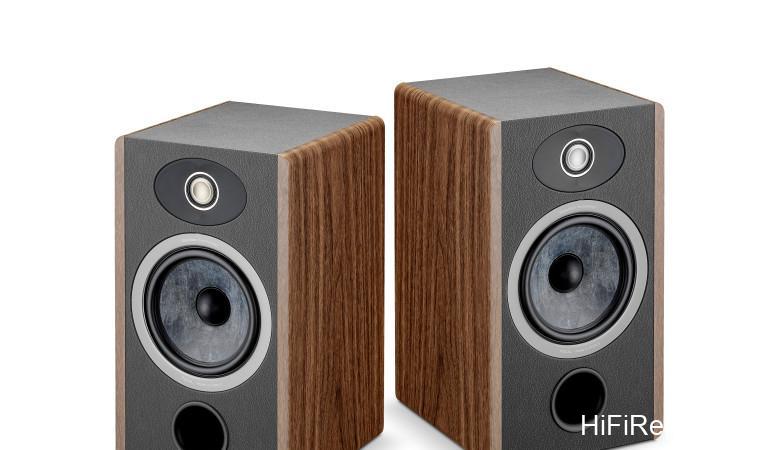
Although this publication has featured Focal Vestia speakers multiple times, I’ll briefly recap their design for readers. The Vestia line comes in three finishes: dark wood, light wood, and black high-gloss. The speaker design is highly recognizable, instantly exuding a sense of French simplicity and romance. The cabinet surface is wrapped in a synthetic leather-like material, complemented by real wood side panels for decoration.
Typically, budget bookshelf speakers tend to look rather plain, and their simple boxy cabinets can sometimes even have rough edges. But the Vestia N1 is different. Not only is its design beautiful, but it also maintains its manufacturing in France, with absolutely no compromise on craftsmanship.
Upon closer inspection, you’ll notice the leather-like wrapping is applied smoothly and meticulously, and the edges of the wood panels are elegantly rounded, adding a sense of fluidity to the speaker’s form.
The Vestia N1 pair sent by the distributor for this review featured the dark wood finish, combining walnut grain with black wrapping. The front panel is kept as minimalist as possible, with magnetically attached grilles. The mid-woofer is surrounded by a metal trim ring, leaving no visible screws or holes on the surface. It looks unfussy yet features subtle layers of detail.
If your space has a brighter aesthetic, you can opt for Focal’s newly introduced light wood finish, which pairs white leather-like material with light wood panels, offering a distinctively fresh and elegant look.
Dual-Heart Waveguide Structure Reduces Reflection Smear
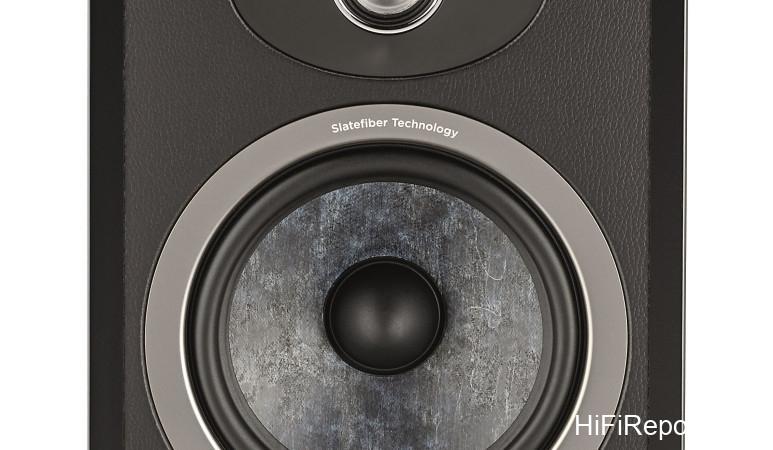
Despite being an entry-level series, Vestia doesn’t compromise on materials, evolving from Focal’s classic driver structures. The Vestia N1 employs Focal’s latest TAM (Aluminum/Magnesium) tweeter. Unlike the higher-tier Aria series, the driver diaphragm isn’t purely inverted; it’s similar to the “M Shape” design found in Focal headphones. Viewed in cross-section, the diaphragm is raised around the edge and indented in the center, forming an “M”.
This shape enhances overall rigidity and widens the sound wave dispersion angle, offering greater flexibility in speaker placement. Furthermore, Focal has been using aluminum-magnesium for its tweeters for years. This material shares the advantage of beryllium diaphragms: break-up distortion occurs at extremely high frequencies, beyond human hearing. This allows the tweeter to combine the extension of metal drivers with a softer, less harsh high-frequency sound.
Behind the TAM tweeter, a special absorption chamber is incorporated to quickly absorb backwaves from the driver, reducing coloration and resulting in a purer high frequency. The Vestia N1’s tweeter is also surrounded by an oval rubber frame with a subtle waveguide effect. This frame features a unique dual-heart-shaped groove design, which helps mitigate reflection interference from the baffle and cabinet, and avoids narrowing the sound dispersion.
This design contributes to the Vestia N1’s open and detailed high-frequency performance.
For the mid-woofer, the Vestia N1 inherits the design from the Chora series, featuring a 6.5-inch Slatefiber cone driver. To develop this driver, Focal invested heavily in new automated manufacturing equipment, solely for use in their entry-level product line. This demonstrates Focal’s commitment to quality even in their more affordable speakers. Slatefiber uses a familiar sandwich structure. The center of the cone is made of extremely lightweight recycled carbon fiber.
This carbon fiber is not woven, appearing in an irregular pattern rather than the usual grid. Focal engineers precisely control the fiber direction to enhance rigidity. Visually, it resembles granite, hence the name “Slate”. Layers of Thermoplastic Polymer are pressed onto both the front and back of the carbon fiber to further increase cone rigidity while achieving perfect damping characteristics. This design gives the speaker its precise and fast mid and low-frequency performance.
Finally, the Vestia N1 places the bass reflex port on the front panel. This allows users to position the speaker closer to a wall, saving space while also potentially increasing low-frequency energy.
Listening Experience
Beyond its aesthetic appeal and compact size, the Vestia N1 boasts a high sensitivity of 89.5dB, making it amplifier-friendly. For listening tests, I used our smaller audition room, pairing it with a Lumin D2 streaming DAC/preamp and a Keces S300+ power amplifier to drive the speakers. After listening, I found this system produced a warm and smooth sound that was a perfect match for Focal’s sonic signature.
Playing Swiss pianist Beatrice Berrut’s arrangement of Mahler’s Symphony No. 5 from the album “Jugendstil,” the piano sounded round and transparent. The note attacks weren’t sharp or tight; instead, they were smooth, unhurried, flowing like water. The higher keys exhibited a rich shimmer, with lingering sustain and string resonance between phrases, accompanied by natural room acoustic details.
The subtle variations in the pianist’s touch were reproduced with exquisite detail, from quiet passages to forceful low-key strikes, showcasing strong dynamic contrast. The resonant hum of the piano body was both clear and powerful, capturing the full timbre and beauty of the instrument.
The Vestia N1 also excelled at reproducing chamber music. For instance, on the second track of the “Brodsky Quartet – Golden Oldies” album, an arrangement of a Bach Prelude, the violin lines were silky and refined. Bow strokes revealed clear texture, and chords were played with excellent separation, far from being flat or uninspired. Throughout the performance, you could sense the distinctive “nobility” of Focal’s high frequencies.
Each trailing note carried transparent overtones, and in transitional passages, the fresh sweetness was particularly moving and elegant. The cello was rendered with a taut, lean quality; the wooden body resonance exhibited excellent density and vibration, without any bloat or sluggishness. Even during fast passages, details remained clear and unhurried.
These speakers are also adept at conveying the atmosphere of live music. Playing “Wee,” the third track from the Ethan Iverson Quartet live performance at The Village Vanguard, the sounds of the audience’s chatter and clinking glasses were rendered naturally, with clear positioning, creating a realistic environmental ambience.
The opening trumpet performance felt intimate; subtle mouth shapes and breath details during quiet passages were remarkably realistic, making you feel as if you were in the front row, easily drawn into the musicians’ emotions. The trumpet’s tone was relaxed and rich, with a slight edgy metallic bite during intense passages, accompanied by the sizzling rhythm of the cymbals, adding to the jazz’s fervor.
Simultaneously, the double bass plucks had excellent control; the low frequency wasn’t a vague energy but possessed a solid shape, with fast, clear, and “meaty” attacks, laying down a lively, swinging rhythm for the piece.
Finally, when I put on the progressive metal band Polyphia’s album “New Level New Devil,” the Vestia N1’s low-frequency prowess was fully unleashed. Playing the final track, “G.O.A.T.,” the electric bass immediately leaped out with a sharp, crackling sound. The notes were solid, full, and incredibly fast, while the kick drum’s thuds were short, sharp, and weighty! You felt the impact of each hit without any sense of flabbiness – that’s the characteristic low-frequency texture of Focal.
Furthermore, the electric guitar arrangements and rhythms in this track are complex, severely testing a speaker’s transient response. During the rapid guitar runs, the plucked notes remained round and sweet, without any blurriness or confusion. Regardless of how energetic the music became, the details remained meticulously organized. This smooth, uninhibited musical quality is perhaps Focal’s strongest weapon.
After listening to the Vestia N1, I found that under typical listening conditions, it’s easier to get a good sound from it than from the floorstanding models in the same series, especially regarding imaging and low-frequency control. This makes it more approachable for those with smaller spaces. Furthermore, looking at bookshelf speakers in the same price range, I believe very few can match its sonic elegance and beauty.
So, if you still think the Vestia N1 is only suitable as a surround speaker for a home theater, you are severely underestimating it. For two-channel listening, it absolutely has the capability to stand on its own!
Specifications
* Type: 2-way, 2-driver bass-reflex
* Drivers: 1″ TAM (Aluminum/Magnesium) tweeter x1, 6.5″ Slatefiber mid-woofer x1
* Frequency Response: 56Hz – 30kHz (+/-3dB)
* Low Frequency Cut-off: 48Hz (-6dB)
* Crossover Frequency: 2.8kHz
* Sensitivity: 89.5dB (2.83V/1m)
* Nominal Impedance: 8 Ohms, minimum 4.5 Ohms
* Recommended Amplifier Power: 25-120 Watts
* Dimensions: 219 x 260 x 387mm
* Weight: 17.5 kg / pair