
Fosi Audio GR70 Tube Headphone Amplifier Review
My first encounter with the Fosi Audio brand was online. Late last year, HiFiReport decided to expand its services beyond its established written reviews by launching an official video channel. While this step was taken a bit later than some, we’ve been fortunate enough to see some initial success – we’re easily pleased! This success has only fueled our motivation to continue.
It was around this time that Fosi Audio reached out to us through the video platform. They mentioned an upcoming product and inquired about our interest in trying it out. To be perfectly honest, I was initially unfamiliar with the brand. However, a quick online search revealed that this company has quite a compelling story.
A Rapidly Growing Emerging Brand
Hailing from Shenzhen, China, Fosi Audio was established in 2017. In its inaugural year, the company launched its first product, the V1.0 stereo amplifier. This palm-sized device packed a 50W x 2 output and was surprisingly affordable. In just a few short years, the brand has expanded from small amplifiers to a comprehensive audio product line that includes DACs, headphone amplifiers, preamplifiers, and speakers. They’ve even developed their own R&D center and hold over 100 international patents.
The brand’s founder, Ryan, is a young individual born after 1995. Eight years ago, in his early twenties, he started Fosi Audio from a small office space under 10 square meters in Shenzhen. Driven by his passion for music and the belief that “Hi-Fi should be accessible to more people,” he founded the company. From initial handmade prototypes and in-depth component research to achieving remarkable sales figures on Amazon, Ryan has propelled an emerging brand onto the international stage in a mere eight years.
“Approachable” Product Positioning
Ryan firmly believes that “Good sound shouldn’t be a luxury.” In contrast to audiophile-grade equipment that chases “ultimate sound,” Fosi Audio leans towards an “approachable” philosophy. Their products are designed to be functional, user-friendly, offer commendable sound performance, and maintain a relatively affordable price point – a defining characteristic of the brand.
And now, Fosi Audio’s latest creation, the GR70 tube headphone amplifier, has arrived at our editorial department. As you might have guessed by now, the GR70 continues to champion a high cost-performance ratio. With a retail price of $199.99 on their official website, it presents a truly competitive option for a tube headphone amplifier, especially considering its refined build quality.
A Stable and Refined Exterior Design
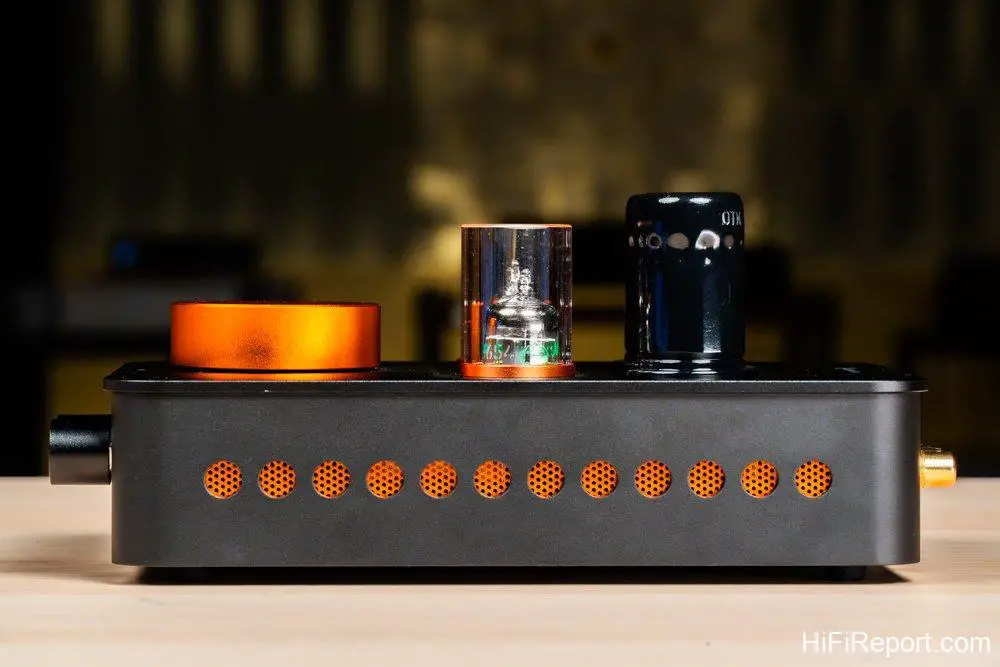
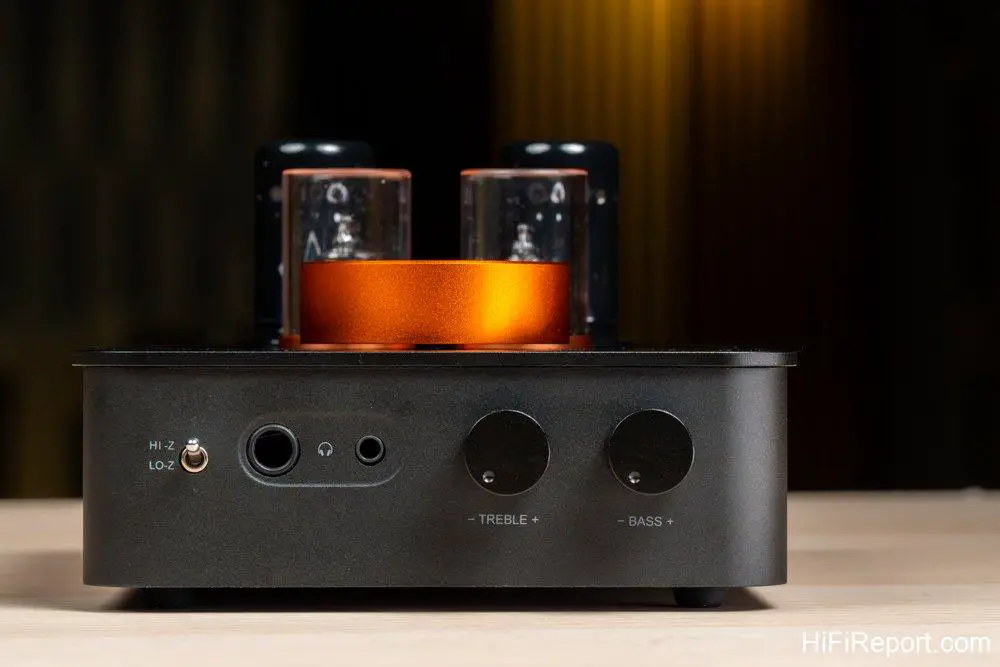
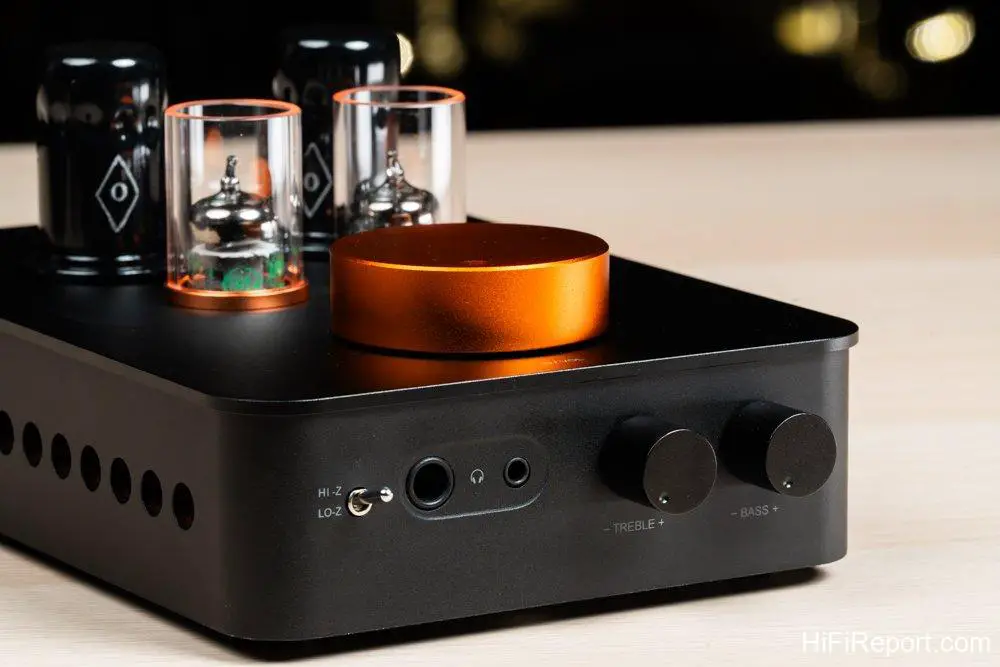
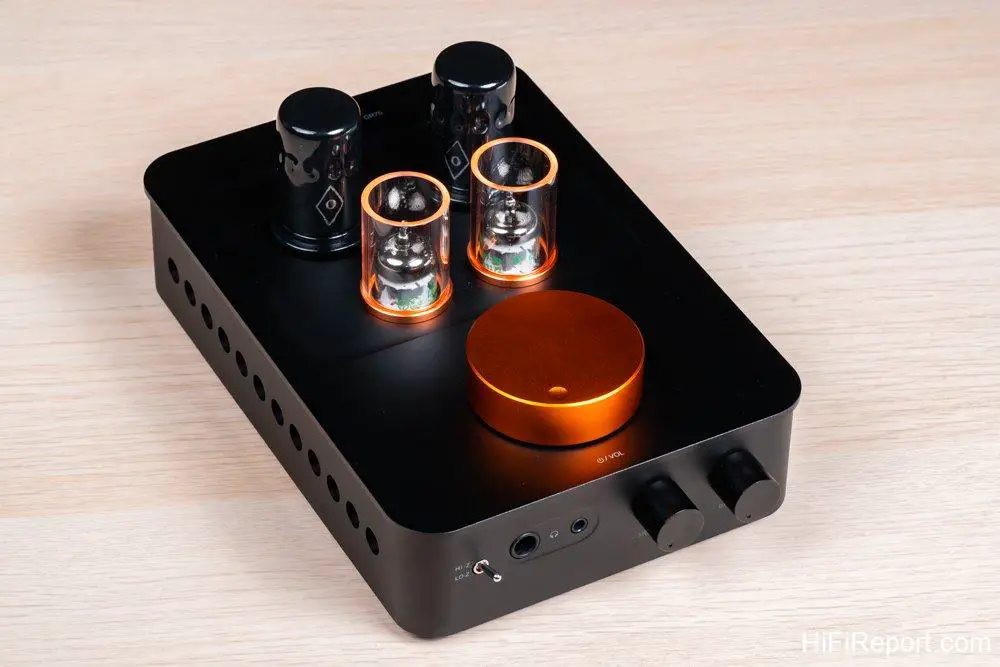
Let’s begin with the exterior design. The palm-sized GR70 features Fosi Audio’s signature black and orange color scheme, with black as the dominant color accented by orange. This combination exudes a sense of stability and refinement. The black chassis is CNC-machined from aluminum alloy, and the precision of its construction is impressive, with no visible seams.
The left and right sides of the chassis are adorned with a row of ventilation holes to ensure proper airflow, maintaining a stable operating temperature and preventing overheating. These vents are further enhanced by orange protective grilles. A closer inspection of the front and rear panels reveals no visible screws; they are cleverly concealed on the underside of the chassis, contributing to the amplifier’s minimalist and aesthetically pleasing appearance. Even before powering it on, the GR70 scores high marks for its design.
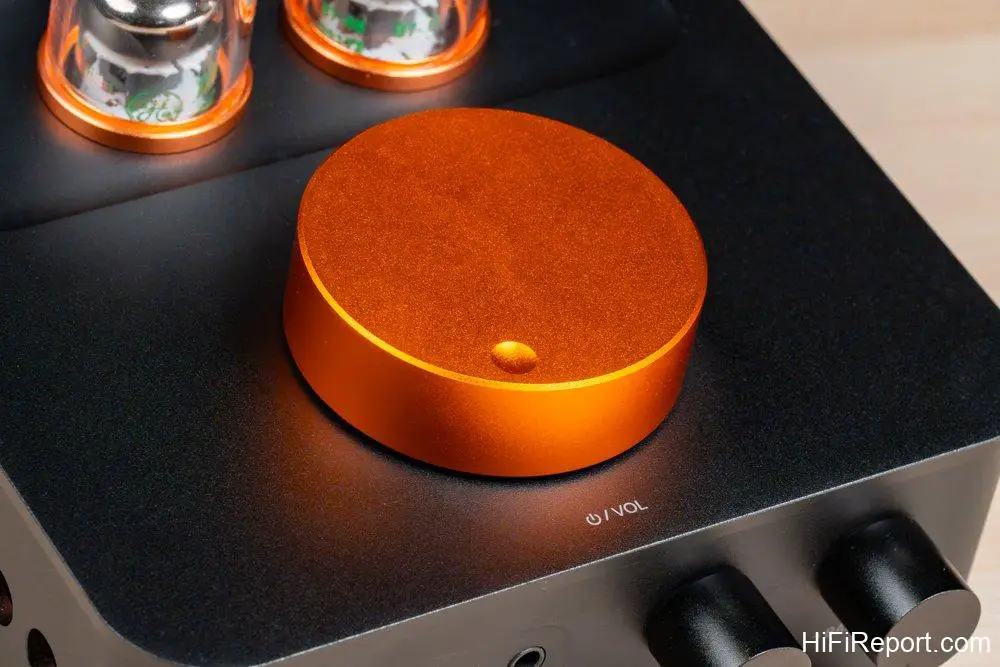
Another element that caught my eye was the large, metallic volume knob on the unit. Its stepless volume adjustment ensures smooth transitions in loudness, preventing sudden jumps in volume. While the website photos show a black knob, the unit sent to our editorial department features a striking orange version, which is visually more appealing and eye-catching.
Pure Analog Tube Headphone Amp with Preamp Functionality
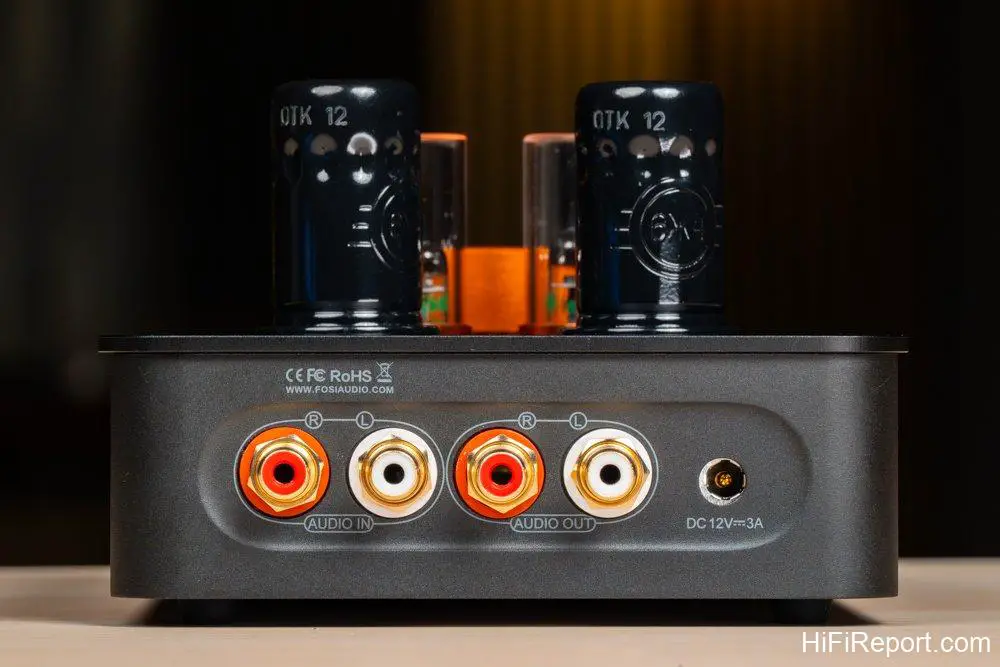
Turning to its functional aspects, the GR70 is a purely analog tube headphone amplifier, lacking built-in DAC or Bluetooth capabilities. This means you’ll need to pair it with a DAC or another source component. The rear panel houses a set of RCA analog inputs and a set of RCA analog outputs, allowing you to use the GR70 as a preamplifier for your existing audio system.
Power is supplied via an external DC linear power adapter. In the future, you have the option to upgrade to a different linear power supply, but be sure to adhere to the manufacturer’s specified requirements of 12V/3A.
Switchable High/Low Impedance Settings
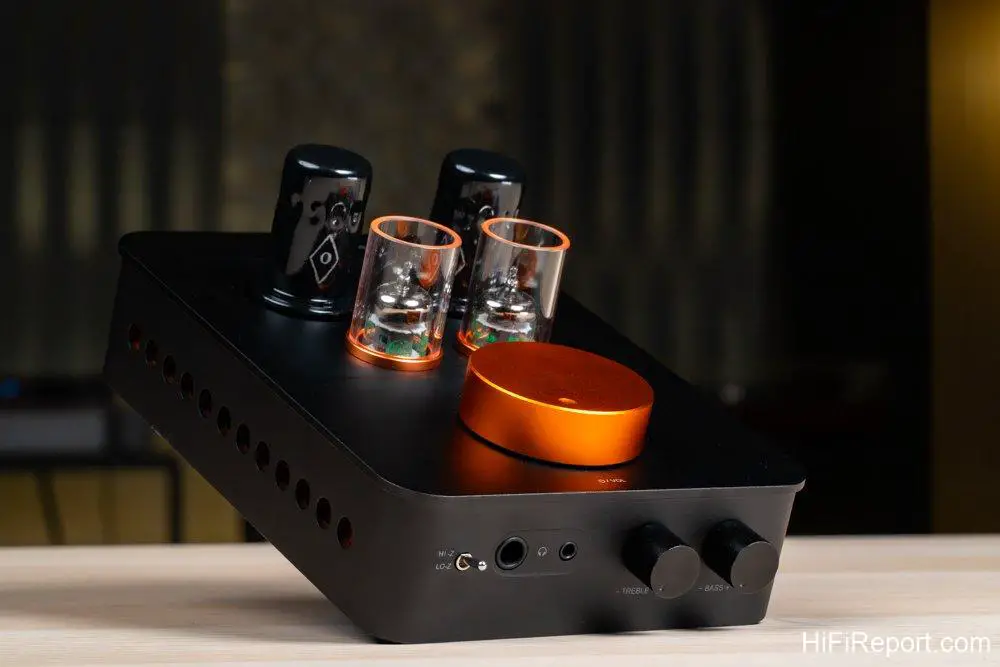
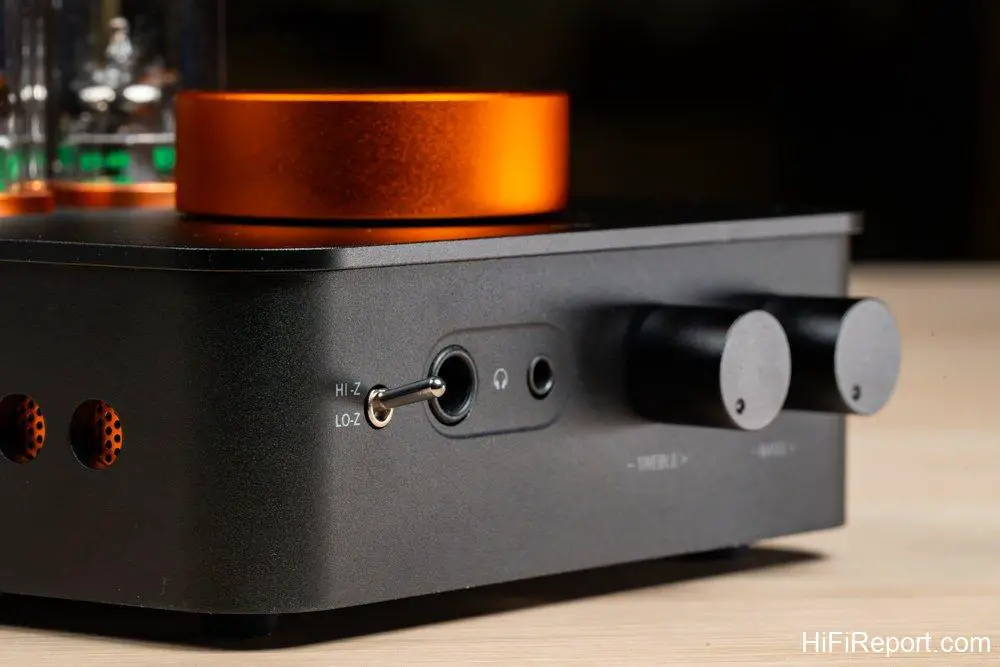
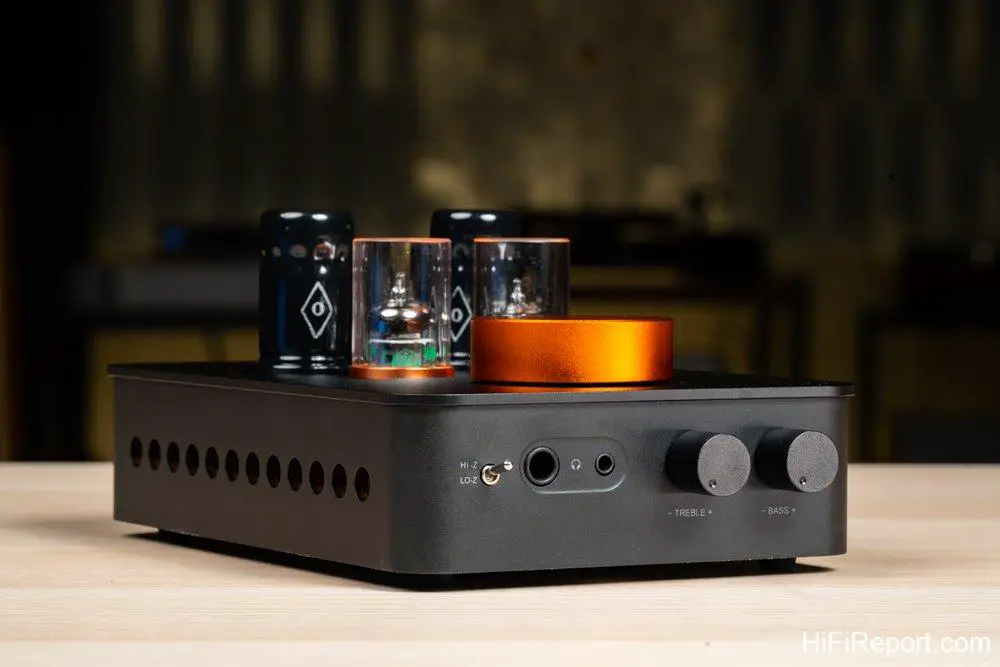
The front panel offers both 3.5mm and 6.35mm single-ended headphone outputs. The rated output power is 90mW (@32 ohms), with a maximum output power of 300mW (@32 ohms). A toggle switch on the left side is responsible for switching between high and low impedance modes. The manufacturer recommends the “LO-Z” low-impedance mode for headphones ranging from 16 to 120 ohms, and the “Hi-Z” mode for headphones between 120 and 300 ohms.
If you find the sound to be muffled or the soundstage lacking width when pairing with your headphones, the first step should be to check if the impedance matching switch is set correctly.
Adjustable Bass and Treble
For those who wish to experiment with different sound signatures, the right side of the front panel features bass and treble adjustment knobs. These allow users to tailor the tonal balance according to their listening preferences. For instance, boosting the treble can enhance the clarity of instruments and create a more vivid sense of airiness, while increasing the bass can result in fuller low frequencies and a more substantial vocal presence. Conversely, if the music’s treble feels too sharp or the bass is overly dominant, these knobs can be used for subtle adjustments.
These bass and treble controls are not only applicable to the headphone output but also function when the unit is used as a preamplifier.
5654W Signal Tubes + 6Ж4 Power Tubes
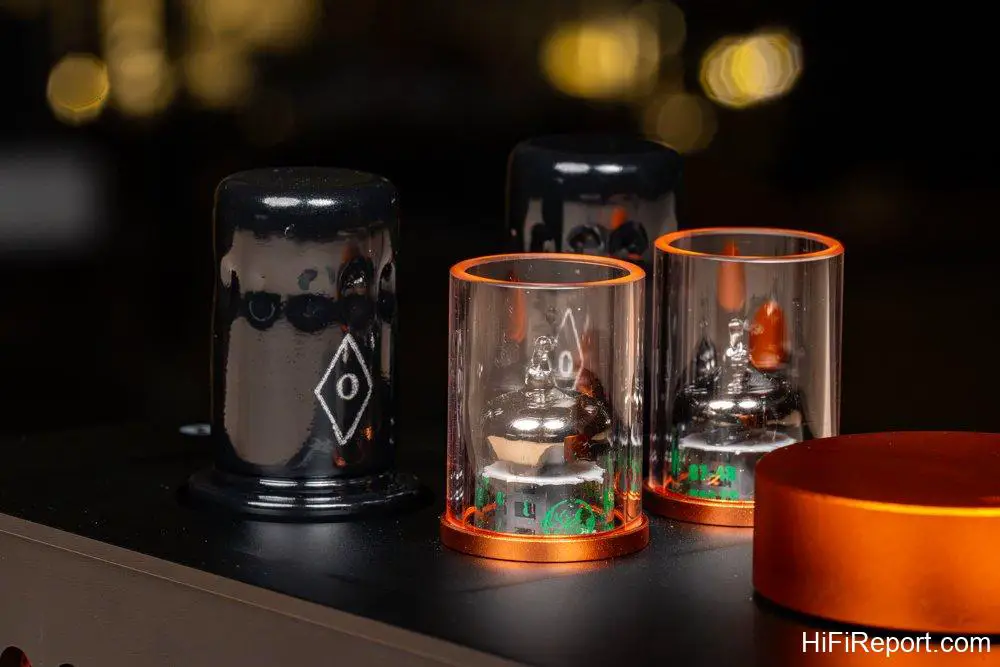
In terms of its tube configuration, the GR70 houses four vacuum tubes within its compact chassis. The front row features American GE JAN 5654W signal tubes, while the rear row is equipped with Sovtek 6Ж4 power tubes, enclosed in a metal casing. Naturally, you can experiment with swapping out different vacuum tubes to discover varied sonic characteristics.
It’s worth noting that vacuum tubes require a period of time to reach a stable operating state after power-on. Once the filaments have preheated, the internal operating conditions of the tubes stabilize, leading to a smoother and more natural sound. The manufacturer includes a reminder sticker on the unit, advising users to preheat for approximately 20 seconds before listening. To facilitate this, they’ve implemented a protective mechanism that delays audio output for 20 seconds after each power-on (so don’t worry if you don’t hear anything immediately – it’s not a malfunction!). Personally, I tend to give it a little extra time for preheating.
“Seeing” the Warmth of the Sound
After the warm-up period, the entire GR70 chassis becomes slightly warm to the touch, comfortably warm but not hot. As a side note, with the recent cool weather, occasionally resting my hand on the edge of the casing for warmth has been surprisingly therapeutic. However, it’s crucial to remember that the vacuum tubes themselves get the hottest, so absolutely avoid touching them with bare hands! For safety, the manufacturer thoughtfully includes a cylindrical transparent acrylic protective cover. This prevents accidental contact with hot tubes and adds another layer of visual depth to the overall appearance. Especially in dimly lit environments, the soft orange glow reflected through the acrylic cover creates a gentle and ritualistic ambiance, as if one can “see” the warmth of the sound.
Paired with the Fosi Audio Q6 DAC
As previously mentioned, the GR70 is a pure headphone amplifier and preamp, without integrated DAC functionality. Therefore, the manufacturer recommends pairing it with their V3 monaural power amplifier and Q6 DAC. For this listening session, however, the focus was primarily on headphone performance, so I only borrowed an additional Q6 DAC. Like the GR70, the Q6 is a miniature desktop unit, but it’s even more compact, meaning they take up minimal desk space when placed together.
It incorporates an AKM AK4493S DAC chip, supporting high-resolution audio files up to PCM 32-bit/394kHz and DSD512. Digital input options include three: optical, coaxial, and USB-C. For analog output, it features a set of RCA outputs plus a subwoofer output. The official retail price is $84.99, also positioning it as a high-value proposition.
A Clean, Black Musical Background
With the specifications out of the way, let’s move on to evaluating the GR70’s sonic performance. For headphone pairings, I primarily used the Sennheiser HD 800 S, supplemented by the final D8000 Pro and the Audio-Technica ATH-R50x monitoring headphones.
During my listening sessions, the first thing I noticed about the GR70 was its remarkably clean sonic foundation. I detected virtually no audible hiss or background noise, even when switching to the ATH-R50x; the background remained clean and silent, devoid of any noticeable noise floor.
Violins with a Warm, Luminous Glow
Beginning with classical music, I played “Chopin: Nocturne, OP.27, No.2,” performed by Yu-Chien Tseng. From the very first notes, I was struck by the quiet, black musical canvas. Tseng’s violin performance was clearly focused in the center, with the piano gently accompanying from a slightly further position, creating a spacious and relaxed soundstage. The violin’s string tone was dense and warm, producing a soft, smooth sound at higher registers that lacked any harshness.
Switching to Vivaldi’s “The Four Seasons,” the violin strings maintained their dense and delicate texture, exhibiting a warm, lustrous quality in the higher notes. The orchestra provided a gentle, steady accompaniment in the background, highlighting the violin’s prominence. The airy high notes of the violin seemed to extend beautifully to the very end, creating a thoroughly enjoyable listening experience.
Vocals are Full-Bodied Without Sacrificing Clarity
Returning to the HD 800 S for vocal performances, I played Song Dongye’s “Anhe Bridge.” The initial drum beats sounded deep and detailed through the GR70, with ample low-frequency impact. The bass wasn’t overly fast-decaying but also free from any muddiness, best described as “bouncy” in its texture. Song Dongye’s voice then entered, his husky tone imbued with a warm, substantial presence. The vocals were full-bodied without sacrificing clarity.
Switching to the D8000 Pro and setting the impedance to “LO-Z,” the opening drum beats remained deep and bouncy, with what felt like audible details of the drumhead’s vibration. The quantity of bass was even more ample and expansive than before. Song Dongye’s vocals were clearly focused in the center, rich in detail and substance. The soundstage subtly expanded outwards, avoiding being confined to the listener’s head.
Unexpected Low-Frequency Power
Next, I moved to “Queen Mary,” a track frequently heard at audio shows. The GR70, paired with the HD 800 S, delivered an unexpectedly powerful and resolute low-frequency performance. It remained tight and controlled, without any lingering boominess, possessing a clear sense of texture but avoiding excessive, annoying resonance. The sound effects that moved rapidly between the left and right channels were clearly positioned, with a seamless and fluid transition that created a deeply immersive experience.
Finally, I delved into jazz with Miles Davis’s classic album “Kind of Blue,” specifically the track “So What.” When paired with the D8000 Pro through the GR70, the soundstage felt effortless and expansive, with distinct separation between the musicians. The trumpet’s tone was bright yet tinged with warmth, and I could perceive the subtle variations in blowing intensity. The cymbal work alongside was delicate and rich, with a soft, non-abrasive metallic sheen.
Switching to the HD 800 S, the trumpet’s tone became warmer, with a greater sense of brass thickness. Consequently, the double bass plucks were more bouncy and textured, with clear articulation. It’s evident that different headphone pairings can reveal distinct sonic characteristics.
An Affordable Entry-Level Choice
Overall, the Fosi Audio GR70, both in its aesthetic design and sonic performance, exudes a genuine sense of dedication. It successfully captures the warmth characteristic of tube amplifiers while maintaining excellent clarity. Its clean soundstage and commendable performance across the entire frequency spectrum make it suitable for both low and high-impedance headphones. Crucially, the GR70’s price point is not prohibitive. If you’re eager to experience the allure of tube sound without committing to an investment of thousands or tens of thousands of dollars, this unit presents a remarkably accessible option.
I’ve decided to keep it! If you’re interested in tube headphone amplifiers or are searching for an entry-level model, this is certainly worth considering.
Equipment Specifications
Fosi Audio GR70
Type: Tube Headphone Amplifier
Tubes: 5654W x2, 6Ж4 x2
Inputs: RCA
Outputs: RCA, 3.5mm Headphone, 6.35mm Headphone
Rated Power: 90mW (@32 ohms)
Headphone Impedance: Low-Z Mode (16~120 ohms), High-Z Mode (120~300 ohms)
Frequency Response: 20Hz~20kHz (±1dB)
Signal-to-Noise Ratio: ≥97dB
Dynamic Range: ≥97dB
Distortion: ≤0.26% (RCA Out), ≤0.5% (Phone)
Noise Floor: ≤40uV (RCA Out), ≤60uV (Phone)
Crosstalk: -69dB (RCA Out), -69dB (Phone)
Power Input: DC 12V/3A