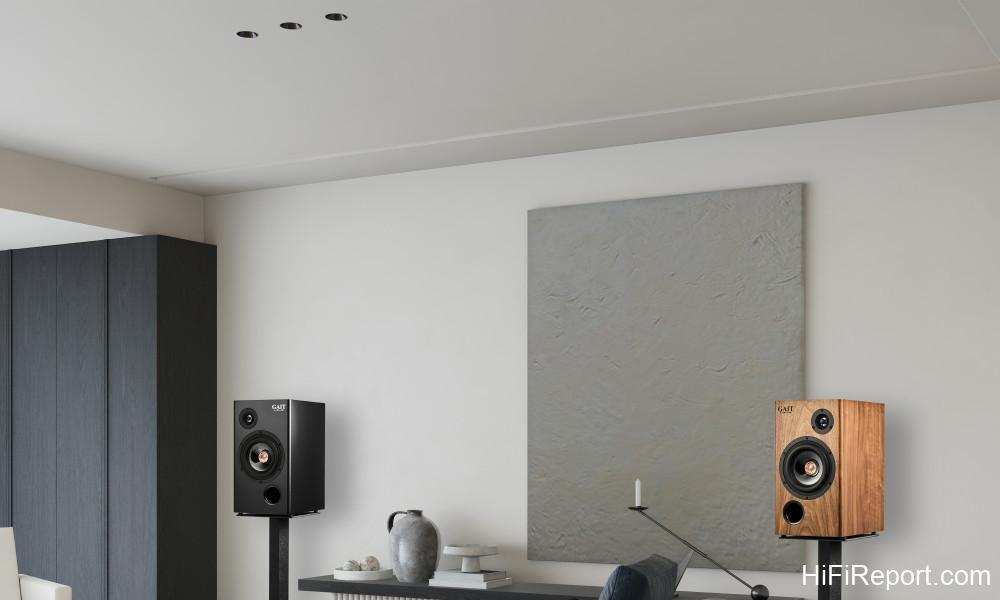
GAIT Alala BSP-24 Bookshelf Speaker Review
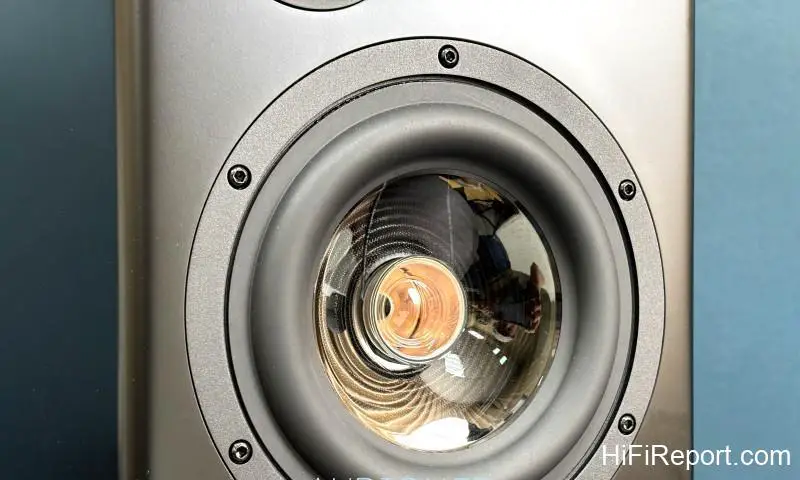
The Alala BSP-24 bookshelf speaker featured in this review is truly unique. Its diaphragms are completely transparent glass, allowing you to look directly through them at the internal voice coils and spiders.
What makes it even more extraordinary is that glass isn’t just used for the mid-bass driver—the tweeter uses a glass diaphragm as well. Anyone seeing this for the first time will naturally wonder: Can glass really be crafted into speaker diaphragms? Won’t it shatter? And how good can it actually sound?
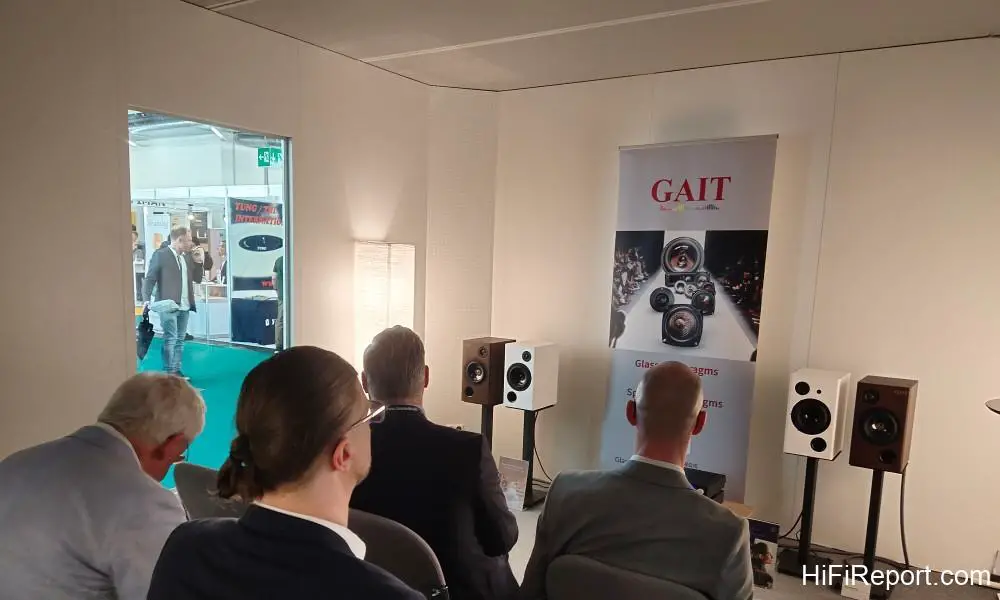
We first encountered these glass-diaphragm speakers a few years ago at high-end audio shows in Taiwan, and later spotted them at the Munich High End Show in Germany, which thoroughly sparked our curiosity.
A few months ago, we interviewed the manufacturer behind these glass diaphragms, GAIT (Glass Acoustics Innovation Technology). It turns out that GAIT’s glass diaphragms are anything but ordinary.
Instead of using off-the-shelf glass, GAIT selects specialized raw materials and applies proprietary processing techniques to engineer glass diaphragms specifically optimized for loudspeaker applications. Boasting exceptional acoustic properties, this technology opens an exciting new chapter in diaphragm design and is well worth every audiophile’s attention.
Specialized Material Science and Acoustic Performance
GAIT’s material selection is far from conventional. They source specialized glass formulations from world-renowned manufacturers such as Corning, NEG, and Schott. By introducing a precise ratio of alumina during the melting process, the physical and chemical properties of the glass are significantly enhanced. This improves structural hardness while laying a solid foundation for superior acoustic behavior.
GAIT then utilizes patented processing techniques to craft the glass into ideal thicknesses, shapes, and weights tailored specifically for speaker drivers.
Because these diaphragms were engineered for loudspeaker demands from the ground up—with raw material selection and downstream processing fully controlled in-house—GAIT’s glass diaphragms possess outstanding acoustic properties that rival or exceed common traditional materials.
Take sound velocity (the speed at which acoustic wave energy propagates through a material), for example. Materials with higher acoustic velocity react more nimbly to dynamic signal changes, translating into greater dynamic range and richer micro-detail. GAIT’s glass diaphragms achieve a higher speed of sound than common alternatives like titanium, aluminum, or paper.
Another critical factor is damping—the material’s ability to dissipate unwanted residual vibrations. Damping must be carefully balanced: if damping is too low, the diaphragm rings continuously, resulting in a smeared, sluggish presentation; if damping is too high, acoustic energy is over-damped, making the sound dull and lifeless.
Ideal damping brings the diaphragm to a swift rest within a natural timeframe, maintaining clarity and authenticity. GAIT’s glass achieves an impressive damping coefficient of 0.015, remarkably close to high-end diamond diaphragms—an outstanding acoustic metric that may come as a surprise to many audiophiles.
Design and Features
GAIT created the Alala BSP-24 bookshelf speaker primarily as a showcase of technological capability—a flagship product designed to demonstrate the full potential and advantages of glass diaphragms to both industry manufacturers and consumers.
As you might expect, GAIT spared no effort in engineering this speaker, while keeping the price as accessible as possible to encourage adoption. GAIT frequently uses the BSP-24 at major international events like the Munich High End Show, where its listening rooms regularly draw packed crowds.
Beyond the glass diaphragms, the BSP-24 features a traditional 2-way, 2-driver architecture. The 1-inch tweeter utilizes an ultra-thin glass diaphragm measuring just 0.05 mm thick. Thanks to precisely engineered acoustic properties, it achieves an impressive high-frequency extension up to 45 kHz.
The mid-bass duties are handled by a 6.5-inch glass diaphragm driver. To maximize low-frequency extension, the cabinet employs a bass-reflex design, with the port conveniently positioned on the front baffle. This allows flexible placement close to rear walls without boominess. Visually, the speaker is available in two finishes: Matte Black and Walnut.
Sound Performance and System Pairing
I began my audition by pairing the BSP-24 with the NAD M10V3 streaming integrated amplifier, which produced excellent results. The BSP-24 delivered a sense of speed and transient agility rivaling metal-cone drivers, completely free of lag or sluggishness. Crucially, it avoided the overly bright or sharp top-end harshness that sometimes afflicts metal diaphragms.
When playing midrange vocal tracks, the presentation was lively, expressive, and pleasingly organic, maintaining a convincing touch of natural warmth. Overall, the sound signature remains strictly neutral with a slightly rational lean—a textbook, well-balanced sonic tuning.
I also tried pairing it with the Cambridge Audio EVO 150 streaming integrated amplifier. Offering a bit more power reserve, the EVO 150 yielded a slightly more relaxed, open soundstage, accompanied by a slightly warmer and fuller vocal texture. By comparison, the NAD M10V3 delivered tighter imaging focus and punchier energy, demonstrating distinct strengths for each pairing.
Throughout these listening sessions, the BSP-24 demonstrated excellent transparency to upstream components, faithfully reflecting slight changes in electronics, cabling, or isolation feet (such as IsoAcoustics decouplers), with subtle upgrades yielding tangible improvements in sound refinement.
Musical Impressions
Listening to the first track, *Polonaise Brillante*, from James Ehnes’s album *Wieniawski/Sarasate: Transcriptions for Violin and Piano*, yielded marvelous results. The speaker generated a palpable sense of soundstage depth, rendering the piano in a believable acoustic space with a smooth, agreeable tone.
The solo violin took on a distinctly delicate, crystal-clear character packed with micro-details, yet without a hint of brightness or ear-fatiguing harshness—creating a deeply engaging musical experience.
With its strong sense of spatial dimension and refined instrument textures, the BSP-24 seemed well-suited for jazz. Playing “The Girl from Ipanema” from *We Get Requests* by The Oscar Peterson Trio confirmed this impression, producing an inviting performance that felt like a live jazz set right in front of the listening seat.
From the opening ensemble passage, individual instruments were clearly localized across the soundstage with distinct width and depth. The piano sounded sweet and natural, while the double bass vibrated with elastic, textured low-end energy, exhibiting top-tier audiophile qualities.
To evaluate vocal integration with jazz instrumentation, I played “Fly Me to the Moon” by Hali Loren from her album *Live at Cotton Club*. The instrumental backing retained its smooth, relaxed charm, while Loren’s vocals projected prominently with razor-sharp focus.
Subtle vocal nuances—breath intake, pitch transitions, and lip sounds—were rendered vividly. Both instruments and vocals felt delightfully alive, capturing the relaxed, intimate ambiance of a live jazz club.
Placement and Room Tuning
During initial placement experiments on dedicated stands placed far from the back wall, I noted that the BSP-24 leans toward a conservative bass response in free space. However, this trade-off preserves exceptional bass cleanliness, control, and articulation.
Additionally, the tweeter and mid-bass driver are not aligned vertically on a single axis; the speaker uses an offset tweeter design. While offset tweeters offer distinct acoustic benefits, they are particularly sensitive to toe-in angles. Finding the sweet spot requires methodical adjustments, as minor repositioning can yield noticeable tonal shifts.
Considering that GAIT created these speakers to demonstrate the real-world advantages of glass diaphragms to the broadest audience possible, I reasoned that evaluating them in a typical consumer setup might be most practical. I placed the speakers on either side of a TV console facing straight ahead with zero toe-in.
This setup yielded surprisingly great sound with minimal fuss. Precise imaging was easily achieved, and proximity to the console and rear wall nicely filled out the low frequencies. While this sacrificed a degree of soundstage depth, it made for a much more practical daily setup with a tuning tailored to popular listening habits.
The main requirement is ensuring proper vibration isolation—using dedicated decoupling feet under the speakers prevents unwanted cabinet-to-furniture resonance.
Given that the front-ported reflex design allows placement close to back walls or even near corners, I tested their performance under HDMI ARC streaming for home theater and gaming. Close boundary placement trades away a small amount of midrange clarity for significantly enhanced low-end weight and punch. Paired with the NAD M10V3, the speakers delivered impressive impact, solid weight, and an engaging cinema experience.
Conclusion
Through thorough testing, the engineering performance of GAIT’s glass diaphragms proves indisputable. Developed by a specialized technical team, these diaphragms achieve remarkable acoustic metrics that translate into an accurate, neutral, and balanced presentation. The high frequencies possess the transient speed and resolution of metal cones without any of the harshness.
When set up in conventional living environments, the Alala BSP-24 performs admirably for both music listening and movie playback. Should third-party speaker manufacturers adopt these glass diaphragms into higher-end, uncompromised cabinet designs, the ultimate performance potential could be staggering. GAIT’s glass diaphragm technology is a compelling breakthrough worthy of serious attention from both audio manufacturers and audiophiles alike.
Key Highlights
* Uses GAIT’s proprietary ultra-thin glass diaphragm technology
* Exceptional acoustic velocity for rapid transient response
* Optimized damping factor for clean, natural sound decay
* Ultra-thin 0.05 mm glass tweeter diaphragm
* High-frequency extension reaching up to 45 kHz
* Front-ported bass-reflex cabinet for placement flexibility
* Available in both passive and active configurations
Specifications
* Design: 2-way, 2-driver bookshelf speaker
* Cabinet Type: Bass-reflex (front-ported)
* Drivers: 1″ ultra-thin glass diaphragm tweeter, 6.5″ glass diaphragm mid-bass driver
* Sensitivity: 87 dB
* Recommended Power: 70–200 W
* Frequency Response: 45 Hz – 45 kHz
* Crossover Frequency: 2.4 kHz (3rd-order analog filter)
* Dimensions (W x H x D): 220 x 390 x 300 mm
* Weight: 10.7 kg (23.6 lbs)
* Finishes: Walnut (01W), Matte Black (01B)