
Gresim Hibiki-65 Active Vibration Isolation Platform Review
For seasoned audiophiles who feel they’ve reached a plateau in their pursuit of audio excellence, the Japanese-made Gresim Hibiki-65 Active Vibration Isolation Platform warrants serious attention. This may well be the pivotal component that elevates your already meticulously tuned high-end audio system to unprecedented heights.
Gresim = Great Sound Improvement
I first encountered instrument-grade active vibration isolation platforms at an audio exhibition several years ago, applied to turntables. It piqued my interest immediately. At the time, I knew it was a product from Kurashiki Kako Co., Ltd. of Japan, called e-Stable Mini. It was designed for high-precision laboratory measurements and stabilizing high-magnification electron microscopes, ensuring image clarity unaffected by imperceptible vibrations. It was also widely used in nano-scale manufacturing wafer fabs. It was clearly an industrial-grade product. However, some ingenious audiophiles repurposed it for turntables, pioneering a novel approach to vibration elimination and achieving remarkable results.
News of audiophiles using professional-grade active vibration isolation platforms on turntables reached Japan. This led to the fine-tuning of the industrial model and the launch of Hibiki-65 under the brand Gresim. The size was increased to accommodate more high-end turntables and audio equipment, and the color was changed to a deep, sophisticated black. The brand name Gresim stands for “Great Sound Improvement,” derived from the abbreviation Gre-S-Im, representing its mission to deliver exceptional sonic enhancement.
Although I was intrigued by active vibration isolation platforms, I hadn’t had the opportunity to experience one personally until after the 2022 audio exhibition, when a Hibiki-65 unit was arranged for a two-week loan. This provided the chance to thoroughly investigate and audition it. The Hibiki-65 made me realize that the pursuit of audio perfection is still full of unexplored possibilities, and that leveraging high-tech industry applications can unlock unexpected breakthroughs.
The Ubiquitous Issue of Vibration in Audio
The detrimental effects of vibration on audio equipment have long been a popular topic among audiophiles. This has led to the proliferation of various tweaks and accessories designed to mitigate vibration. From cones and footers to a variety of composite materials, audiophiles employ both hard and soft approaches. HiFiReport’s previous upgrade of the Wilson Audio Alexia 2 speaker spikes, for instance, initially seemed like a minor improvement, but the newly designed Audio Diode from Wilson Audio proved surprisingly impactful, making the upgrade worthwhile.
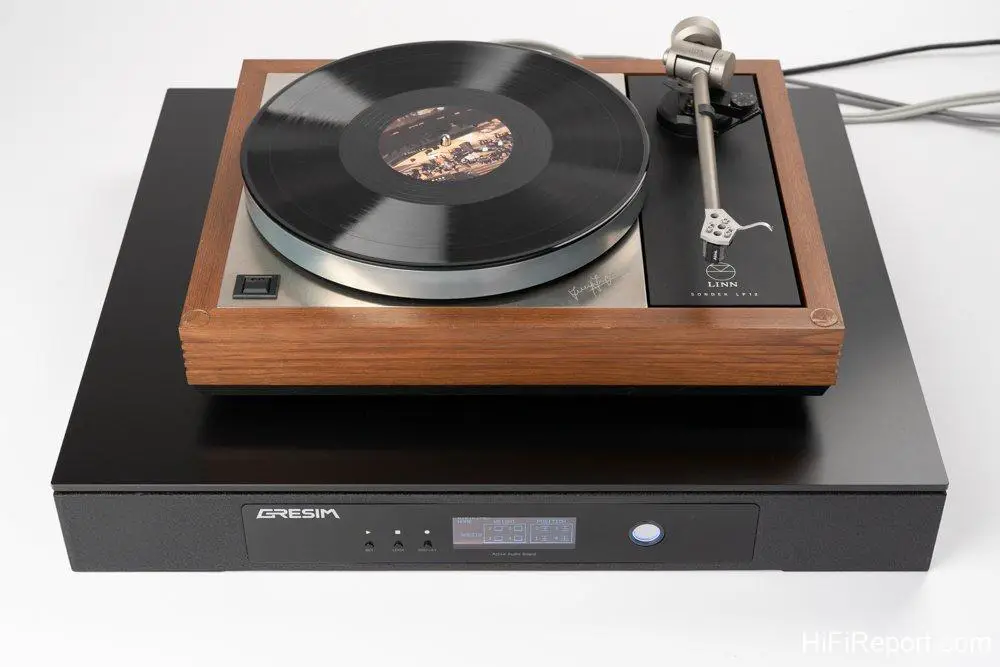
I believe most seasoned audiophiles possess a collection of cones or footers made from metal, wood, or carbon fiber. These vibration damping or isolation devices are all “passive” solutions, primarily relying on spikes or mass to alter resonance characteristics and achieve sonic tuning effects.
I’ve experimented with many of these tweaks, and they are all effective to some degree. However, the results vary depending on the equipment, requiring users to experiment and listen extensively to discover their nuances.
Passive cones or footers, due to their small contact area, are primarily effective in handling mid-to-high frequency vibrations. They are less effective against longer wavelength low-frequency vibrations. However, human ears are more sensitive to mid and high frequencies, which explains why various vibration isolation tweaks, each with their own subtleties, can thrive in the market, showcasing diverse approaches and sonic characteristics. These tweaks are generally reasonably priced, making them fun and harmless to experiment with.
Eliminating “Imperceptible Vibrations”
However, Gresim’s background is different. Its parent company, Kurashiki Kako Co., Ltd., established in 1964, is affiliated with Mazda Motor Corporation, producing engine mounts, vibration isolators, and other vibration control equipment. The new brand, Gresim, applies decades of vibration management expertise to the audio realm, using active vibration isolation to eliminate “imperceptible vibrations.”
In the audio world, vibrations can be considered from two perspectives. The first is internal vibration within audio equipment, or “line level” vibration. For example, mains power is typically 110V/60Hz, and the power itself vibrates at 60Hz. These vibrations exist within the equipment and continuously generate various resonances during circuit conduction. These line-level vibrations are often imperceptible.
Therefore, in addition to shielding, audio cables often incorporate damping materials to suppress power supply resonance.
The second source of vibration originates from the listening environment. For example, sound waves generated during music playback can feed back into the equipment. Walking around the room can also cause floor vibrations, and vibrations from traffic outside can transmit through the building, all creating what we call “imperceptible vibrations.”
Audiophiles use cable elevators to lift audio cables off the floor, aiming to reduce the impact of floor vibrations on sound quality. These practices are all based on sound principles.
(Image Source: Gresim Official Website)
6-Axis Active Vibration Isolation
Passive vibration isolation devices, based on their shape and material properties, can only address specific frequency ranges of vibration and cannot comprehensively handle complex, fluctuating external vibrations. However, the Hibiki-65 operates on a different principle. It is an active vibration isolation platform that employs 6-axis active control to counteract external vibrations. Three axes are translational, and three are rotational, actively canceling all vibrations transmitted to the Hibiki-65’s platform in six directions.
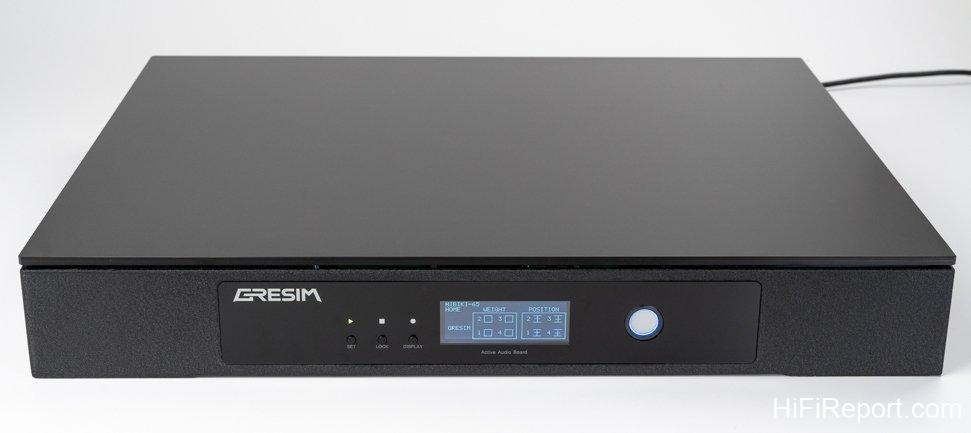
The vibration cancellation effect of the Hibiki-65 is not visually discernible during operation. It simply appears as a platform placed on an audio rack. When activated, it instantaneously and actively cancels external vibrations, addressing those “imperceptible vibrations.” Since these vibrations are imperceptible, the Hibiki-65’s operation is also visually undetectable.
Scientifically Proven Active Isolation
However, considering the industrial-grade e-Stable isolation platform’s application in high-magnification electron microscopes, its effectiveness becomes apparent. For instance, vibrations from footsteps on the floor would undoubtedly affect the focus and imaging of a high-magnification electron microscope. Therefore, laboratories equip themselves with e-Stable platforms to eliminate these unseen vibrations and enhance the imaging performance of electron microscopes.
Being an industrial or laboratory-grade product adapted for audio, the manufacturer provides detailed measurement data. In essence, Hibiki-65’s active vibration isolation can effectively remove vibrations across the entire frequency spectrum, backed by solid scientific evidence.
From Industrial to Audiophile Grade
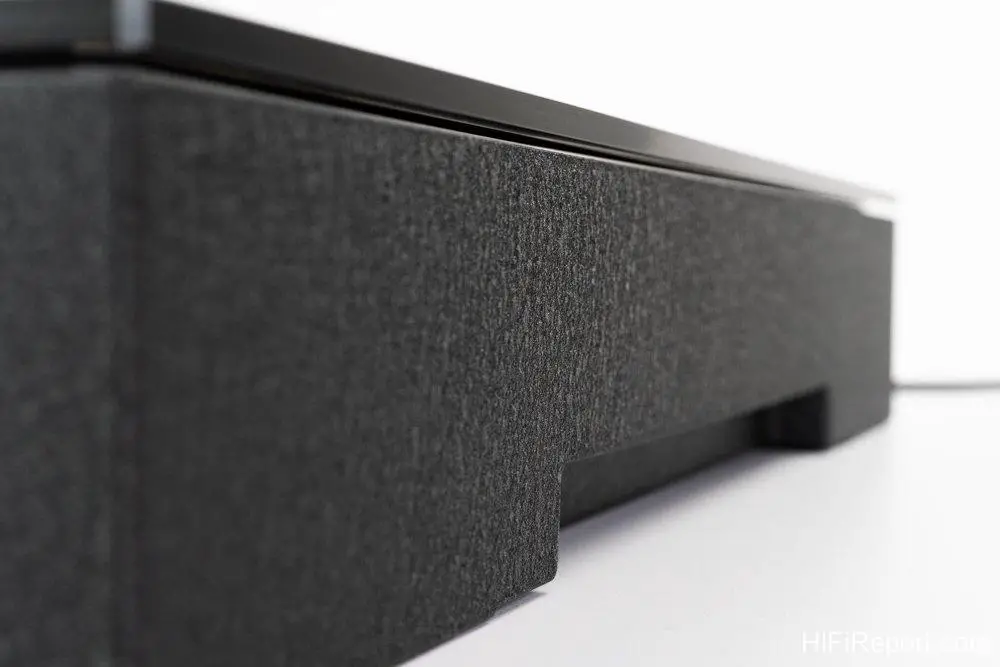
The Hibiki-65 evolved from the industrial-grade e-Stable Mini. The fundamental design principles remain the same. The original e-Stable Mini came in two sizes: MINI-450F with an area of 400 x 500 mm and the larger MINI560-F at 500 x 600 mm. The Hibiki-65, measuring 600 x 500 mm, is likely derived from the MINI560-F, sharing the same platform area and 100 kg weight capacity. However, due to the swapped length and width dimensions, the Hibiki-65’s control panel is located at the front, while the MINI560-F’s is on the side.
Considering the price, the MINI-560F has a reference price of 450,000 NTD, while the Hibiki-65 is priced at 780,000 NTD (approximately $24,375 USD). The price difference is significant. If side operation is not a concern, the MINI-560F could be a more economical choice.
When the Hibiki-65 was delivered to the editorial office, I directly inquired whether the Hibiki-65 only differed in appearance and control panel position. The distributor mentioned they had also asked the manufacturer, and the response was that the internal design is fundamentally the same. However, considering that the Hibiki-65 is designed specifically for audio equipment, the active vibration isolation parameters have been slightly adjusted to better suit audio applications.
What parameters were changed? The distributor was unsure, suggesting it might be the isolation frequency. However, the manufacturer did not disclose specifics. Nevertheless, comparing the MINI-560F and Hibiki-65 reveals subtle differences in sonic texture. Unfortunately, I only had the Hibiki-65 on loan and not the MINI-560F, so a direct comparison was not possible. For this initial review, focusing solely on the Hibiki-65 and evaluating its performance seemed more prudent. If it proved truly exceptional, considering the more affordable MINI-560F later would be a sensible next step.
Xiaogao Audio’s Early Endorsement
Before auditioning the Hibiki-65, I had already discussed it with Xiaogao Audio at an audio exhibition. Xiaogao himself uses it and enthusiastically endorsed the Hibiki-65, actively promoting it. Xiaogao’s turntables are primarily of the rigid platter type, reinforcing my belief in the Hibiki-65’s effectiveness. But what about suspended turntables, like the LP-12, which inherently vibrate as part of their design, contributing to the “suspended” turntable sound signature? Would the active vibration isolation of the Hibiki-65 be effective in this case? I was curious.
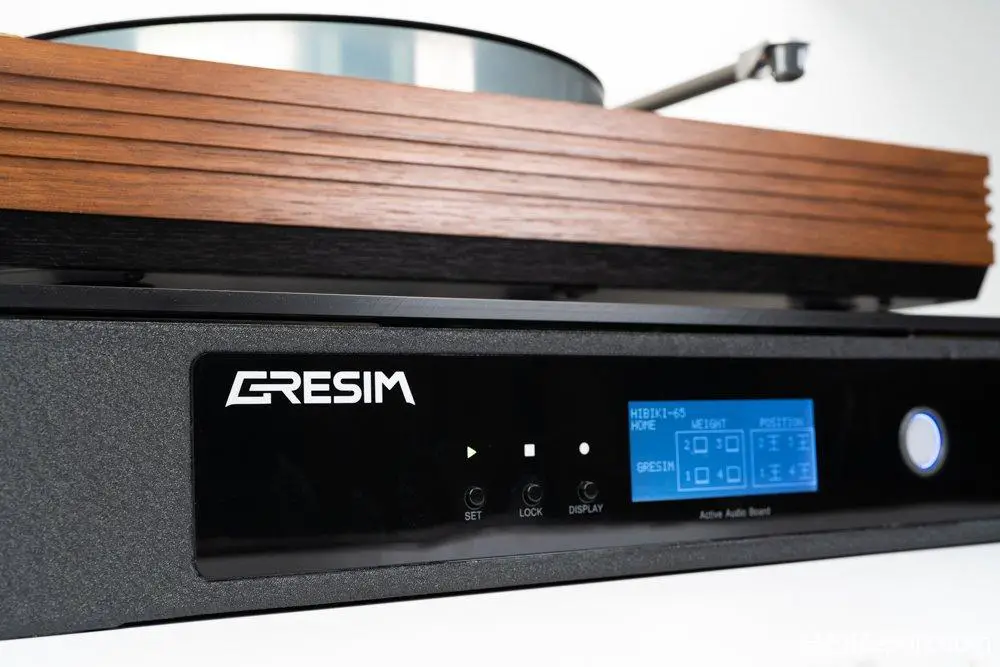
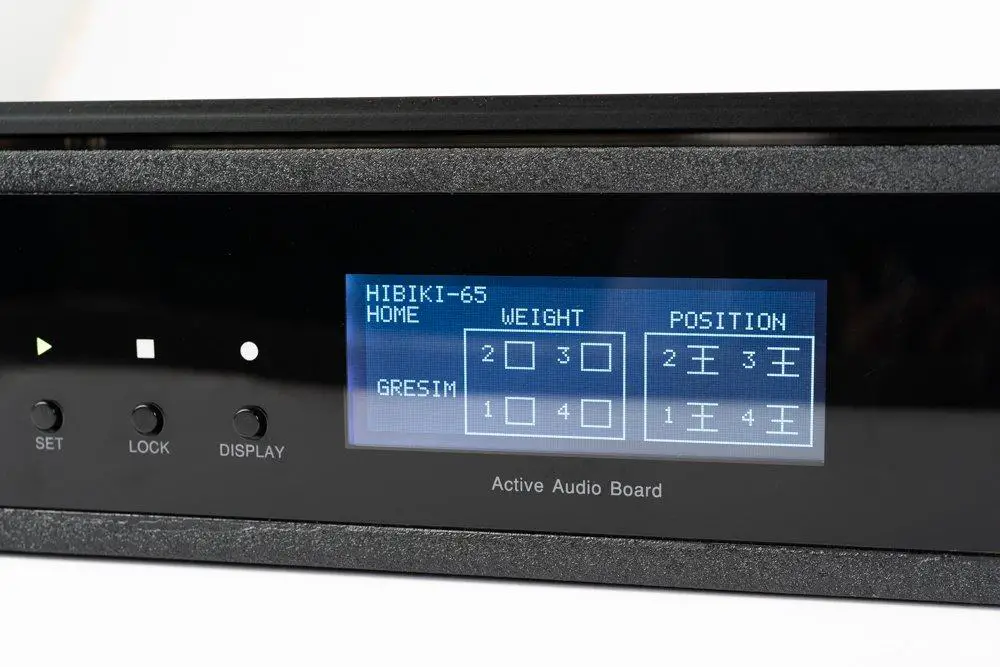
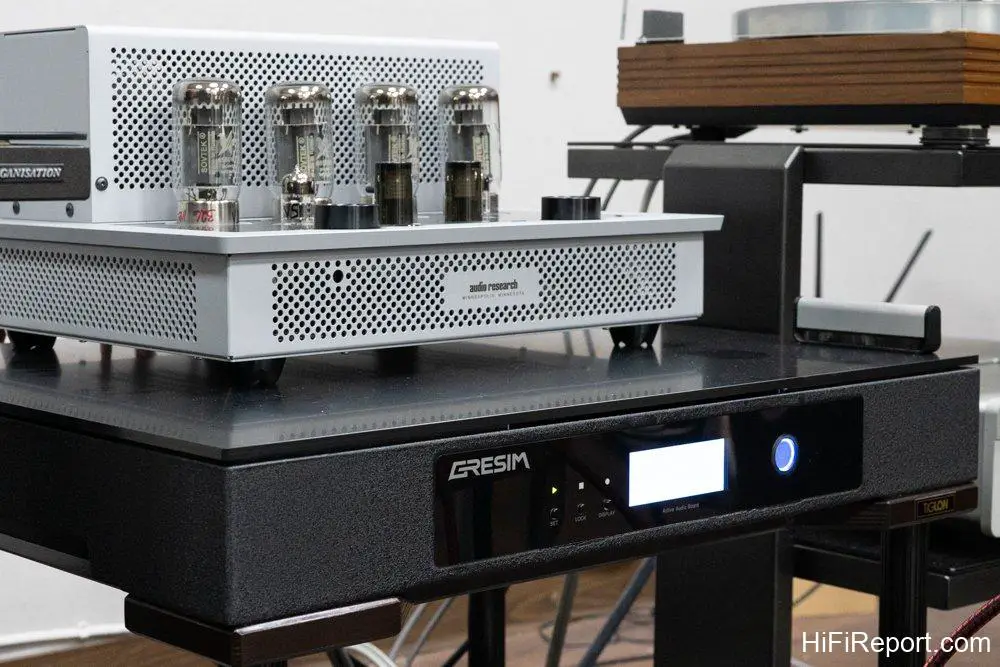
Guangyi Technology installed the Hibiki-65 at the editorial office, placing it on a Tiglon audio rack. Setup was straightforward. After powering it on, simply pressing the “Leveling” button initiates automatic horizontal calibration. Note that this is relative leveling, so the audio rack itself should be pre-leveled.
Once leveling is complete, pressing the “Start” button (resembling a play button) activates the Hibiki-65’s 6-axis active vibration isolation. The platform emits a motor sound during activation, taking about a minute to reach a stable operational state, automatically detecting and actively eliminating imperceptible vibrations.
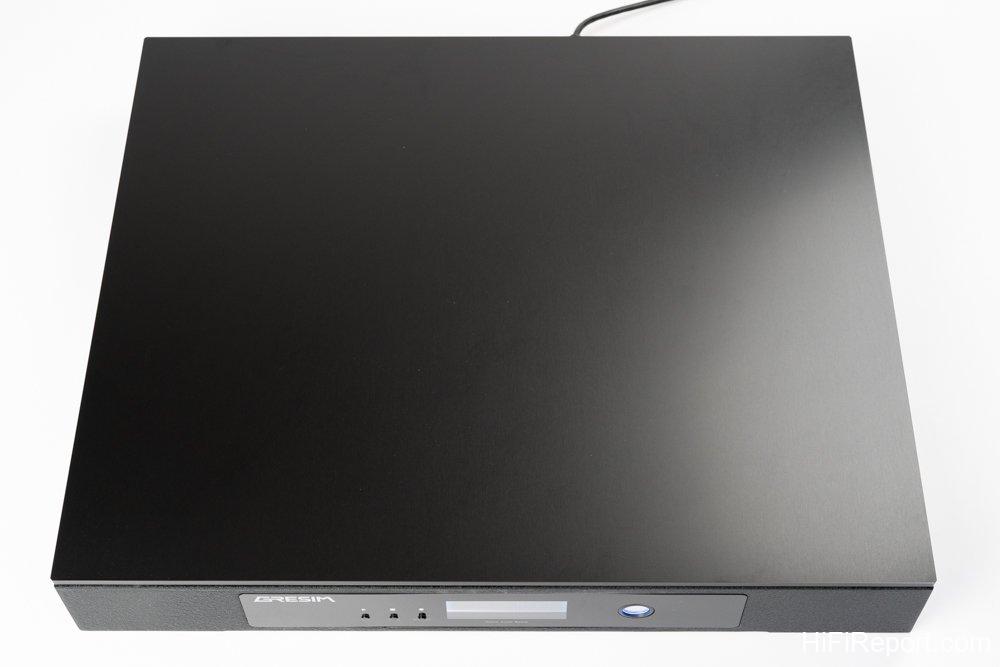
For regular vinyl listening, simply keep the Hibiki-65 in the “Start” mode for continuous vibration cancellation. When not in use, it can be powered off. However, upon restarting, the active vibration isolation needs to be re-engaged, requiring about a minute to enter the operational state.
It’s important to note that when the vibration isolation is active, the 6-axis system is constantly working. Moving the turntable or the Hibiki-65 while active could potentially damage the isolation platform. It is recommended to disengage the 6-axis isolation, allowing it to return to a relaxed state, before moving the turntable or the Hibiki-65.
Significant Improvement with Rigid Turntables
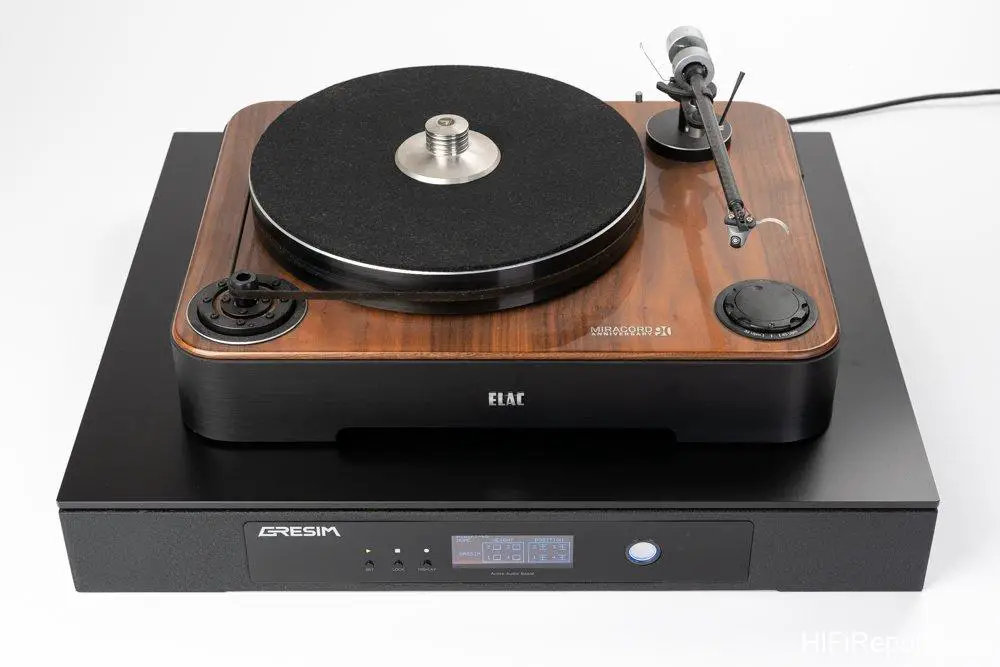
I selected three records to evaluate the Hibiki-65: Katja Werker’s “Contact Myself 2.0,” Bill Evans’ “Waltz for Debby,” and Beethoven’s Triple Concerto performed by Yo-Yo Ma, Anne-Sophie Mutter, and Daniel Barenboim. Two turntables were used: an Elac Miracord 90 (rigid platter) and a Linn LP-12 Klimax (suspended). The Miracord was fitted with a Goldring Legacy cartridge, and the LP-12 Klimax with a Linn Akiva.
Starting with the rigid platter Miracord 90, I listened to one track from each of the three records, comparing the sound with the Hibiki-65 both off and on. Before starting, I verified the tracking force and VTA, setting the tracking force to 1.8g, approximately the midpoint of the recommended range. I first adjusted the Miracord 90 to achieve a satisfying sound without the Hibiki-65 active, then proceeded to make comparisons.
Paired with the Miracord 90, the sonic improvement was as expected. With the Hibiki-65 active, the soundstage became more focused and refined, the sonic density increased, and the soundstage expanded in height, width, and depth. The speakers disappeared more naturally into the room, and high-frequency details became clearer and more delicate.
For example, in “Contact Myself,” with its simple instrumentation, the acoustic guitar is positioned to the left of the soundstage, and the vocals are centered. Engaging the active isolation increased channel separation, making the two guitars on the left and right more distinct, and the note articulation more pronounced. The depth contrast with the soundstage background enhanced the 3D spatiality of the recording.
Moving to “Waltz for Debby,” listening to “My Foolish Heart” on side A, this older analog vinyl recording benefited significantly from the Hibiki-65. The instrumental imaging became more focused and refined, but the instrument sizes did not shrink; instead, they became more prominent and dynamic. The delicate yet continuous brush strokes on the drums, subtly placed behind the piano, and the richer, more resonant character of the double bass plucks were all enhanced.
Even before activating the Hibiki-65, I had already meticulously adjusted the Miracord 90 to my satisfaction. However, upon engaging the Hibiki-65, the noticeable improvement was genuinely exciting, realizing there was still room for sonic elevation.
Next, I listened to Beethoven’s Triple Concerto with Yo-Yo Ma, Mutter, and Barenboim, focusing on the third movement, Rondo. This track was more challenging because it is on side B, track two. However, to appreciate the subtle shifts in recording positions of the three instruments, the faster-paced third movement was preferred over the first. Despite the slight inconvenience of precisely cueing the stylus, the third movement was selected.
With the Hibiki-65 engaged, the soundstage’s spatial extension noticeably expanded. The overall musical background became quieter, clarifying the positions of the instruments within the orchestra. The third movement of Beethoven’s Triple Concerto begins with a cello solo, followed by the violin taking over the same melody, and then an orchestral interlude leads to the piano solo, with the violin and cello providing embellishments. Without the Hibiki-65, the Miracord 90 could already present the relative positions of the three solo instruments and a respectable scale and spatiality of the orchestra. However, upon activating the Hibiki-65, the sense of speakers completely disappearing into the room became more pronounced. The intense movements of the soloists during performance, subtle noises from fingers on the fingerboard, and even slight breaths, all contributed to a more immersive and live-like listening experience.
Effective with Suspended LP-12 Klimax Too
Okay, it was expected that the Hibiki-65 would show significant improvements with rigid platter turntables. Now, it was time to test it with the LP-12 Klimax (suspended turntable). Was it effective? Surprisingly, yes, it was effective, although the difference was less dramatic than with the Miracord 90. I believe there are two reasons for this. First, the LP-12 Klimax is inherently a much higher-caliber turntable than the Miracord 90. Therefore, the Hibiki-65’s contribution was more of a refinement, whereas with the Miracord 90, the improvement was more substantial and noticeable.
Second, the difference lies in the nature of suspended versus rigid turntables. I suspect the Hibiki-65 is inherently more effective with rigid turntables than suspended ones. I even anticipated minimal difference when used with the LP-12 Klimax, but actual listening revealed that the Hibiki-65 is effective with both types.
Noticeable Improvement with EAR 868P Preamplifier
After evaluating the Hibiki-65’s impact on turntables, there was still time for further testing. So, I removed both the Miracord 90 and LP-12 Klimax and placed an EAR 868P preamplifier on the Hibiki-65 to assess its effect.
Was it effective? Yes, very effective! The soundstage’s spatial expansion and the 3D imaging were further enhanced. The musical background became quieter and blacker, and instrumental contrasts became more vivid. Vacuum tubes are inherently vibration-sensitive amplification components. Paired with the active vibration isolation of the Hibiki-65, the improvement was indeed remarkable.
Elevating Audio Performance to New Heights
By applying instrument-grade active vibration isolation platforms to audio equipment, the Hibiki-65 carves a unique path, pioneering a new approach to analog audio. I must emphasize that the Hibiki-65 is not a panacea. To fully appreciate its benefits, a solid foundation is essential. The audio system itself must be well-tuned, and turntable setup must be meticulously executed. Only then can the Hibiki-65’s effectiveness be fully realized. For audiophiles who feel they have explored every avenue of system optimization, the Hibiki-65 offers a fresh and intriguing option, assisting in the fine-tuning journey and potentially elevating your audio system to new heights.
Specifications
* Type: Active External Vibration Isolation Platform
* Active Isolation: 6-axis isolation (3 translational, 3 rotational)
* Maximum Load Capacity: 100 kg
* Dimensions: 600 x 500 x 84 mm (W x D x H)
* Weight: 28 kg