
Gryphon Ethos CD Player Review
Immersing oneself in the beautiful sound of the Gryphon Ethos CD player is a truly blissful experience. In the HiFiReport listening room, I spent several weeks of musical happiness with the Ethos CD. I must say, the Ethos CD is an enchanting and aspirational ultimate CD player. As I write this review, the beautiful sound of the Ethos CD paired with a full Gryphon system keeps flooding my mind, leaving me with endless aftertastes.
Digital Upsampling Focus
Gryphon started with phono preamplifiers and later became famous for its Class A amplifiers. The Antileon power amplifier cemented Gryphon’s position in the audiophile world. The red griffin logo seems to be the embodiment of power and beauty, making even the most demanding speakers submit to its command. To summarize Gryphon’s amplifier design philosophy, it would be “Pure Class A, dual mono, fully balanced, zero negative feedback, high power, high current.” However, the same design philosophy cannot be directly applied to CD players, because the focus of a CD player is not driving force, but rather acting as a bridge between digital and analog domains, which is unrelated to high power and high current.
So, what is Gryphon’s core design philosophy for CD players or DACs? The answer is “digital upsampling”!
Benefits of Upsampling
Looking back at Gryphon’s history of digital source development, the CDP-1 launched in 1998 emphasized 88.2 kHz, which is twice the standard CD specification of 44.1 kHz. The Adagio in 2001 raised this to 24 bit/96 kHz, followed by the Mikado CD in 2003, which further increased the upsampling rate to 32 bit/192 kHz. By 2019, the Ethos CD evolved to 32 bit/384 kHz or DSD 128 (CD playback PCM upsampled to DSD 128). If using USB transmission, it can even upsample to DSD 512. For more than twenty years, Gryphon has been striving to increase the bandwidth of digital upsampling.
Why is digital upsampling Gryphon’s core philosophy? The reason lies in the analog filtering at the output stage. By raising the front-end digital sampling frequency, pushing noise far beyond the audible range, a steep, high-slope analog filter can be avoided, resulting in a more natural sound.
Therefore, Gryphon continuously strives to increase the upsampling rate and reduce the complexity of the back-end analog filter, solving problems from the digital source and making the analog flavor more pronounced.
Analog-Inspired Design
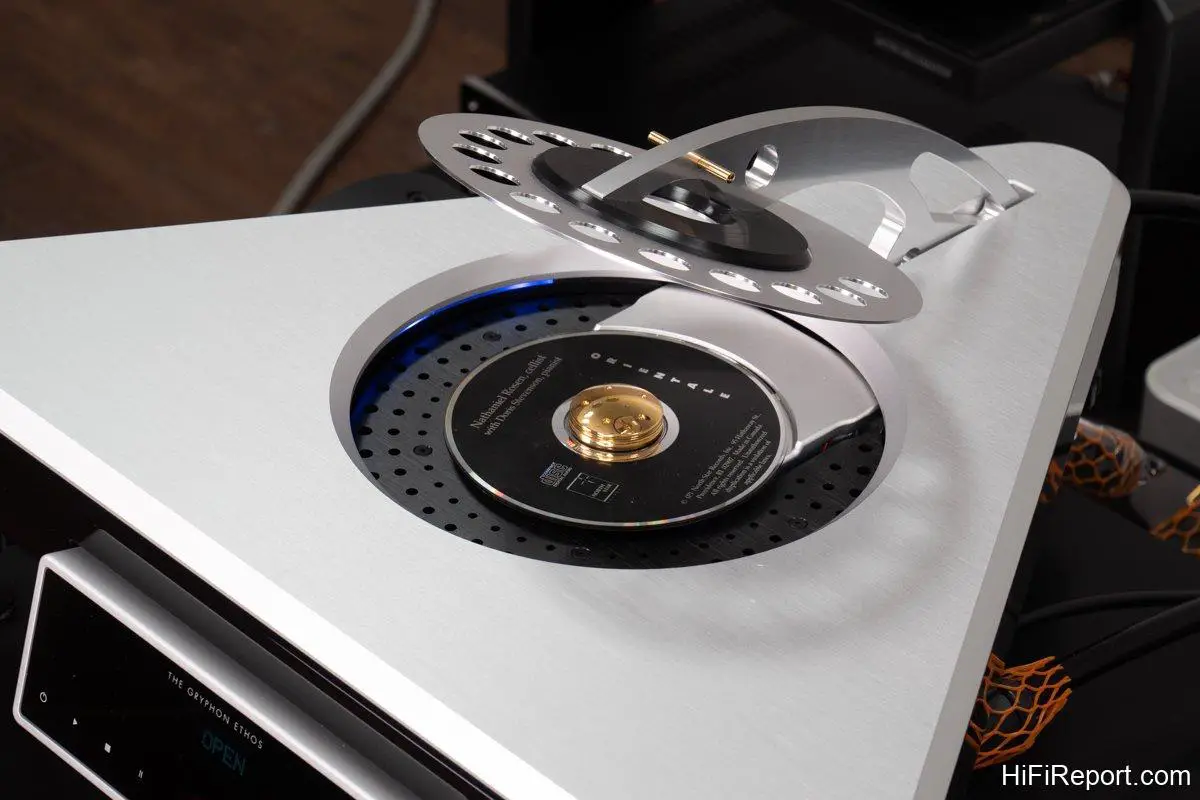
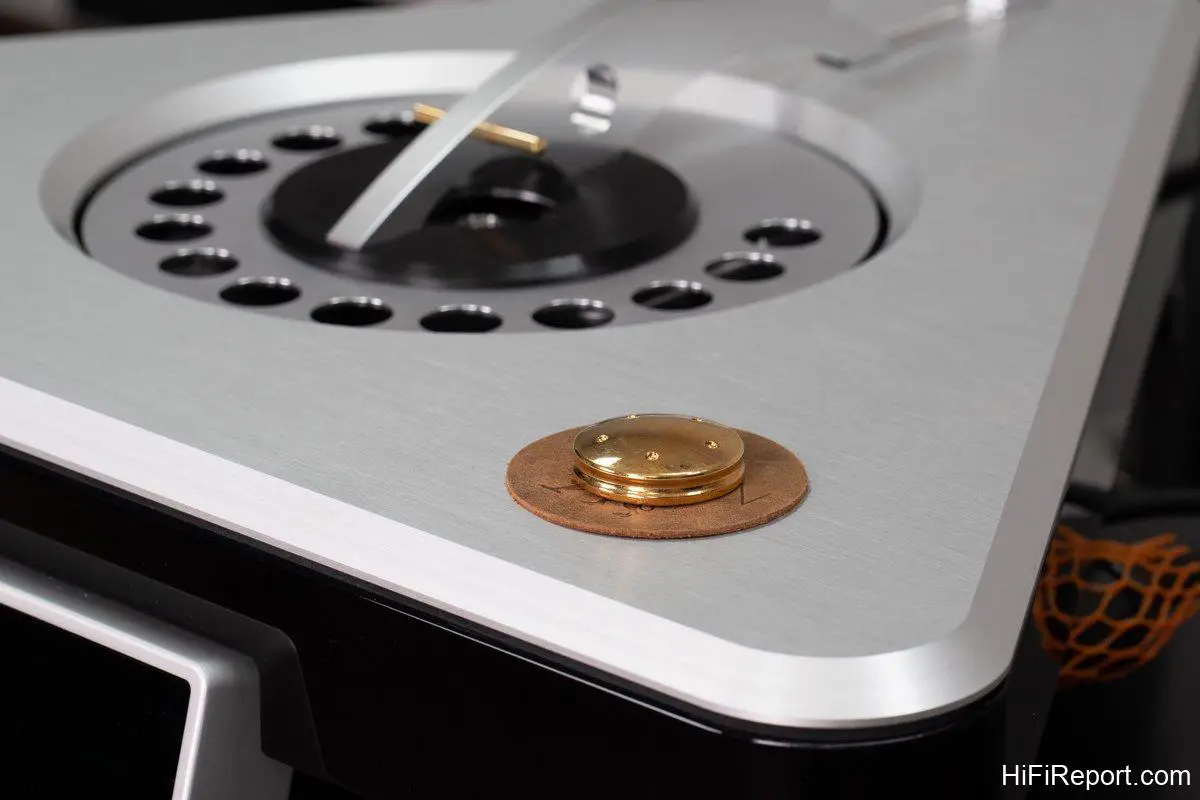
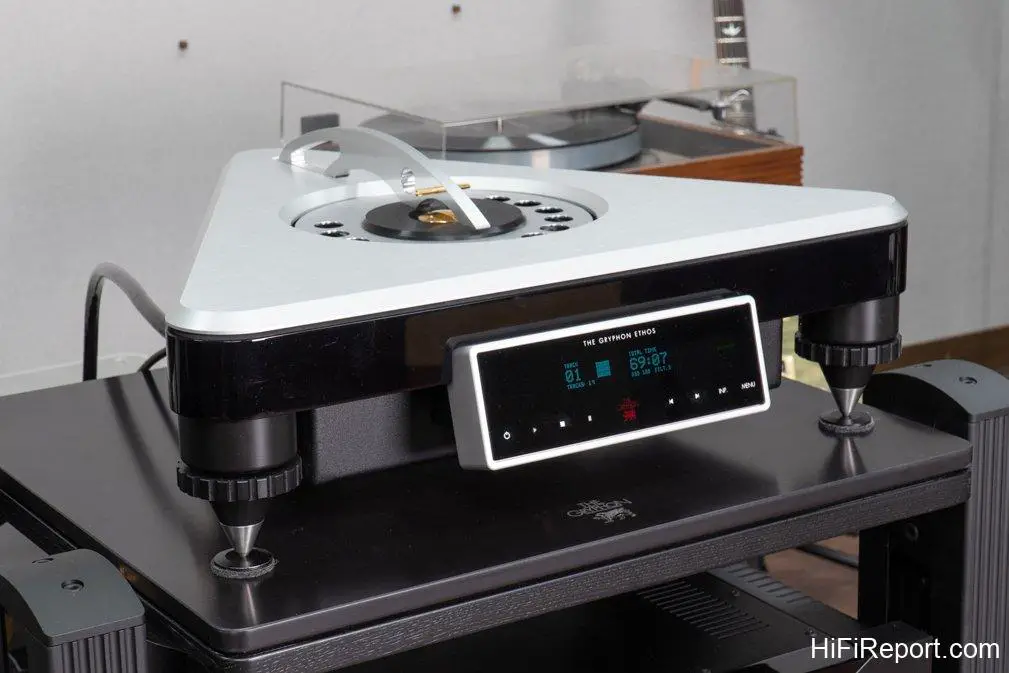
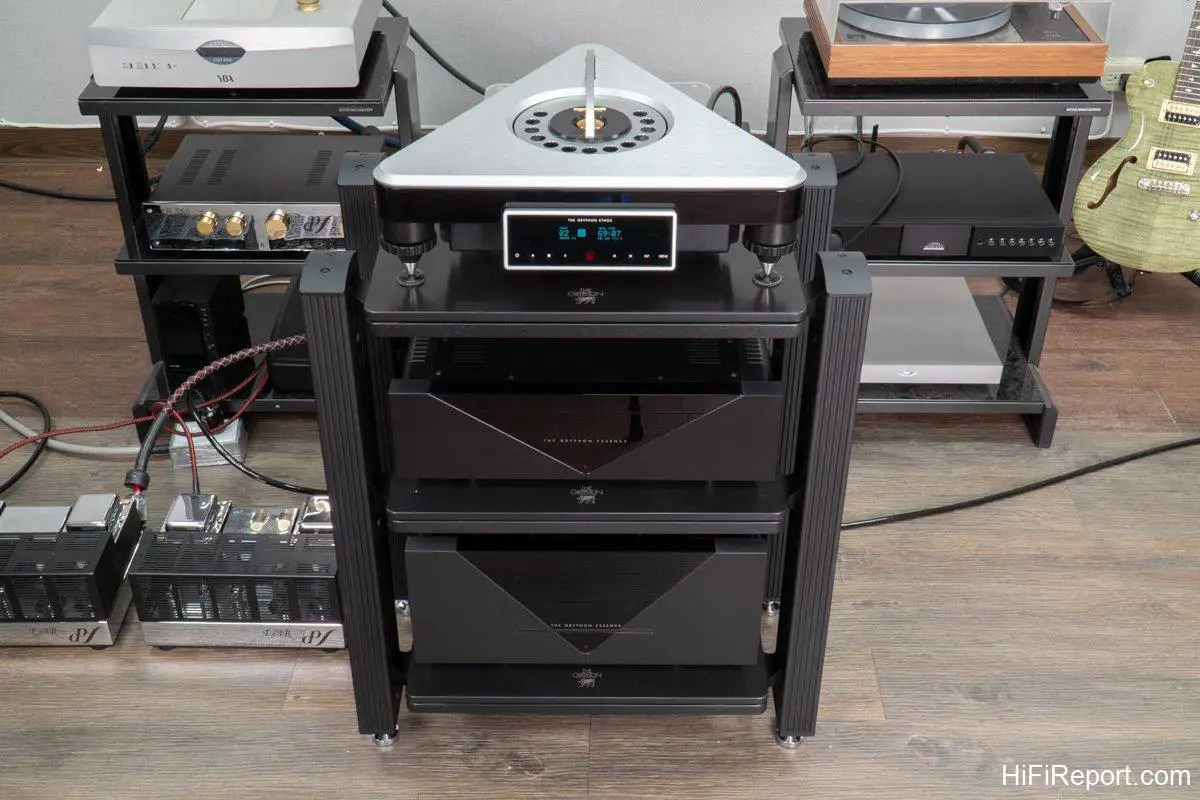
This analog flavor is also reflected in the mechanical design of the Ethos CD. Shortly before the 2019 Munich High End Show, Gryphon released news of the Ethos CD’s arrival. The triangular chassis design used for a CD player was immediately striking and fresh. However, just looking at photos couldn’t convey how beautiful the Ethos CD truly is. Seeing the physical machine at the Munich show was a hundred times more impressive than the pictures. The unibody acrylic chassis, paired with the aluminum top cover, and the circular CD top cover reminiscent of the Star Trek Enterprise spaceship, along with the arc-shaped structure for opening and closing the CD top cover, makes the process of playing a CD on the Ethos CD feel just like playing a vinyl record, full of ritual. Digital or analog, it doesn’t matter; the tactile feel is right, and everything else falls into place.
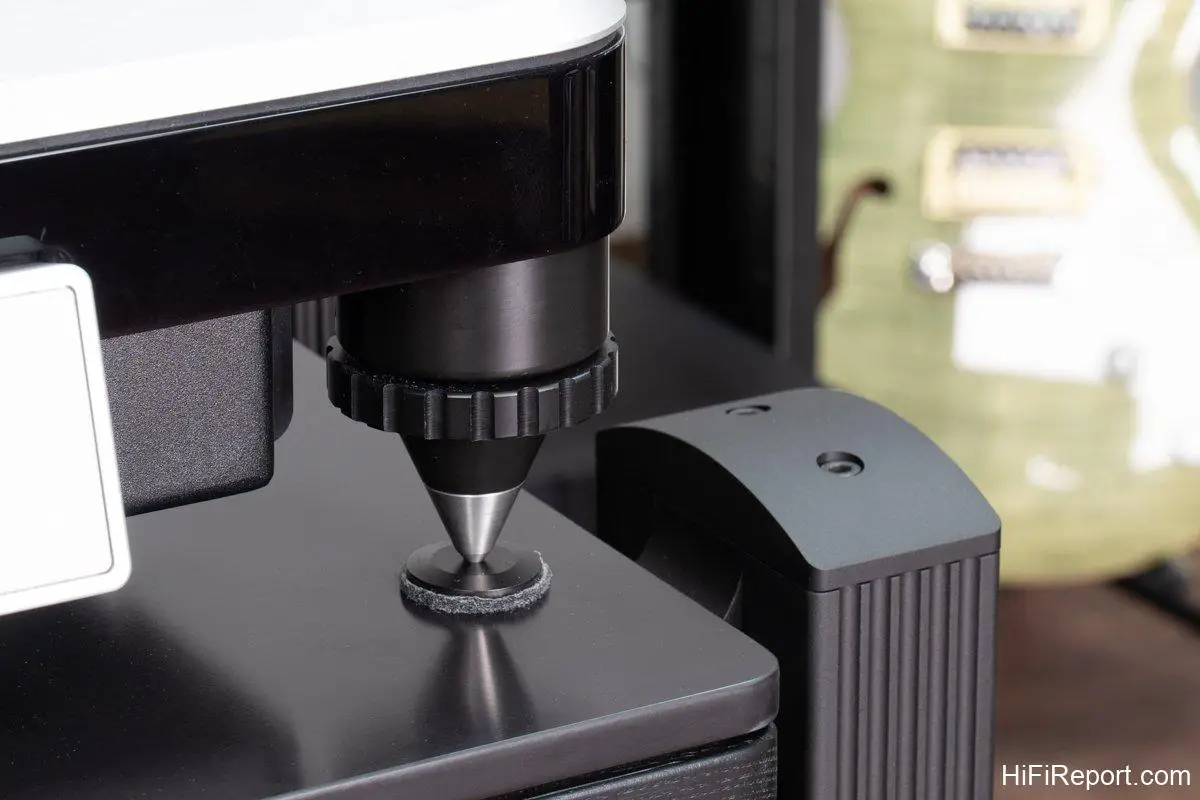
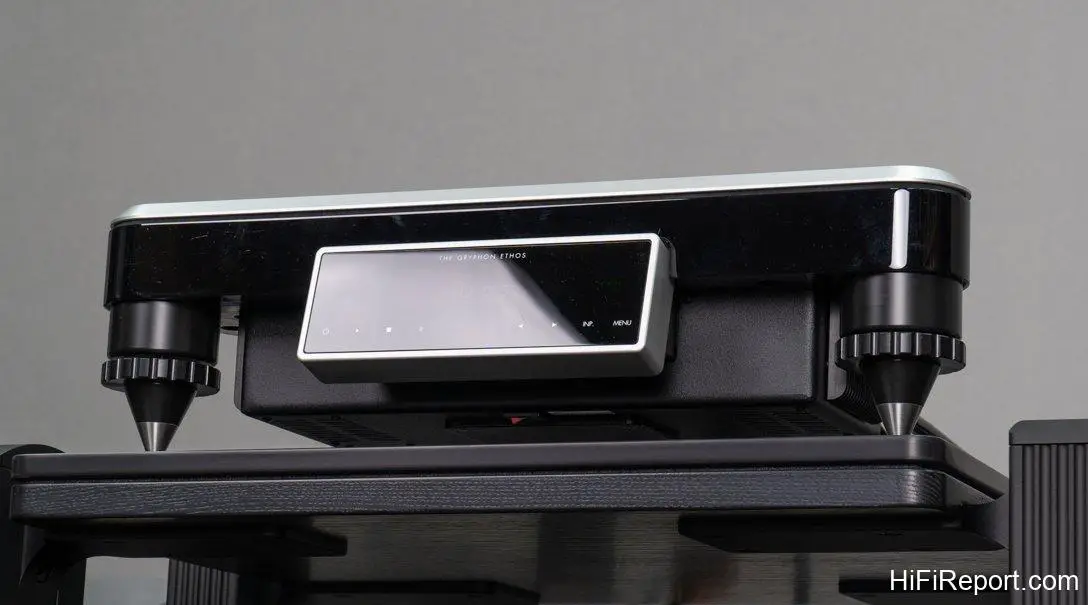
Because of the triangular chassis, a three-point vibration isolation system is naturally employed. The Ethos CD features three Atlas Spikes, made from a mixture of Polyoxymethylene (POM), aluminum, and annealed steel. This material combination allows resonant energy to transmit unidirectionally to the ground, preventing it from reflecting back into the machine. These Atlas Spikes also allow for easy and independent micro-adjustment of the horizontal level, making it as engaging as setting up a vinyl turntable.
CD-Only Design
As a top-tier CD player in the million-dollar price range, the material selection is naturally of the highest standard.
The Ethos CD uses the Stream Unlimited CD-Pro8 transport from Austria, replacing the Philips CD-Pro2 used in the past. There are two reasons for this change: first, the CD-Pro2 is no longer in production, so a new transport mechanism had to be found; second, the CD-Pro8 is arguably the best CD transport mechanism money can buy, going straight to the top-tier specification. Interestingly, however, Gryphon kept the Ethos CD as a pure CD player, rather than SACD/CD compatible.
As a believer in upsampling, the Ethos CD employs asynchronous upsampling, with selectable PCM 384 kHz or DSD 128. The upsampled digital signal is fed into two ESS Sabre ES9038PRO 32-bit DAC chips.
Why two? Remember Gryphon’s emphasis on fully balanced, dual-mono differential circuitry? Therefore, the Ethos CD uses two ES9038PRO DAC chips, one for each channel, operating in a fully balanced differential mode.
Ten Digital Filter Options
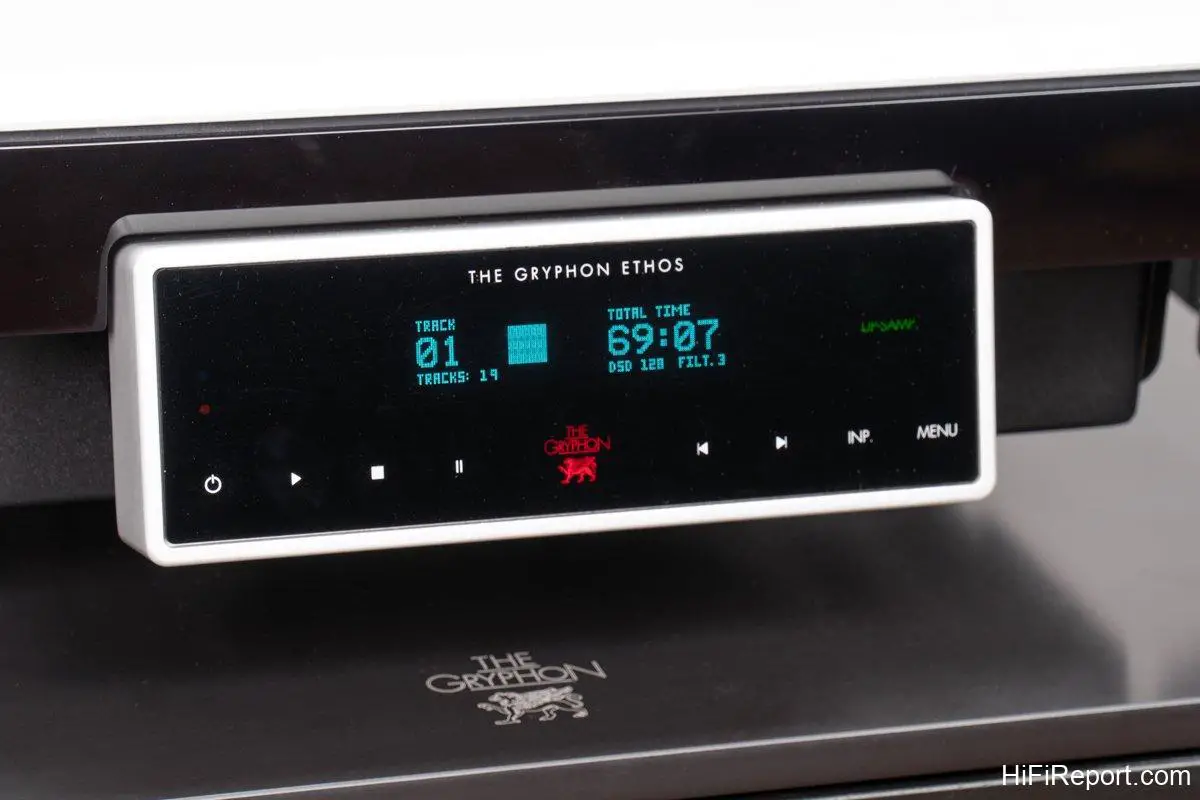
Next comes one of the most exciting features of the Ethos CD: it offers ten selectable digital filter modes, including 7 PCM filters and 3 DSD filters. The default setting for PCM is Hybrid Filter, and for DSD, it is 50 kHz -3dB Bandpass Filter.
These two default settings can be used as starting points. Taking PCM filter 4 as a reference, the smaller the number, the gentler the digital roll-off; the larger the number, the steeper the digital roll-off. In terms of sound performance, smaller numbers tend to produce a softer tone, while larger numbers lean towards analytical and sharp. However, the actual effect also depends on the recording being played and is not always absolute.
This feature means the Ethos CD offers ten tonal variations, much like a vinyl enthusiast with several top-notch cartridges, each excellent but with different characteristics. Vinyl lovers often change cartridges themselves or even use multiple tonearms, matching cartridges to different genres of music. However, with the Ethos CD, there’s no need for such hassle. Simply switch between digital filter modes to get the desired sound – whether you want softness, strength, warmth, or coolness. A CD player with ten adjustable tonal profiles is sure to satisfy your audiophile curiosity.
Minimalist Analog Filter
Because the digital upsampling rate is pushed so high, reaching 384 kHz and DSD 128 (or DSD 256), the final analog filter stage can be very simple. The Ethos CD uses only a single silver mica capacitor for the simplest first-order filter, maximizing the preservation of the analog flavor.
Beyond digital upsampling, fully balanced differential decoding, and the simplest first-order analog filter, the Ethos CD also features two other important design elements: clock correction and power supply.
Regarding clock correction, the Ethos CD uses two independent temperature-compensated crystal oscillator clocks with an accuracy of up to 5 parts per million, eliminating jitter.
As for the power supply, the Ethos CD employs two custom-made toroidal transformers, independently powering the digital and analog circuits, preventing mutual interference. Especially given the Ethos CD’s large VFD display and touch controls, which involve higher clock speeds for digital circuitry, thorough power supply isolation is essential to maintain pure music signal reproduction.
Ritualistic Operation
The design of the Ethos CD has been discussed in detail. Basically, it still follows Gryphon’s long-standing golden rules: dual-mono, fully balanced, pure Class A. However, in digital sources, Gryphon adds high upsampling rates, coupled with the simplest analog filter, to maintain the most natural sound reproduction.
Operating the Ethos CD is full of rich analog charm. Opening the CD top cover is like lifting a tonearm on a vinyl player. Placing the CD in and then placing the CD puck, then closing the top cover, the ritualistic feel is as strong as playing vinyl. Moreover, the pale blue glow of the LEDs inside the disc mechanism, visible through the ( – openwork/ – hollowed-out) area of the CD top cover, along with the rotating golden CD puck in the center, is a truly pleasing composition. It’s simply beautiful.
Exquisite Craftsmanship
I must emphasize again that even though the editorial team has tried their best to capture beautiful photos of the Ethos CD, seeing the physical Ethos CD in person and carefully examining every detail of its craftsmanship is a hundred times more moving than looking at pictures.
During my time listening to the Ethos CD, every time I changed discs, I would wait for the CD to be read before using the touch controls to start playback, savoring the Ethos CD’s meticulous craftsmanship. It’s the warmth of exquisite handcraftsmanship, not the coldness of mass production.
However, to operate PCM and DSD upsampling decoding and digital filter switching, the remote control is more convenient. The Ethos CD’s remote control is made of aluminum, with a substantial feel and a beveled bottom design. The function buttons are simple and practical. When paired with Gryphon’s own pre and power amplifiers, a single remote can control all devices.
Regarding digital upsampling modes, you can switch upsampling on or off, or set PCM or DSD mode, plus digital filter switching. Combining these buttons allows you to set ten different upsampling and digital filter modes.
When you first get started with these ten upsampling and digital filter modes, you might feel overwhelmed. Switching through each mode and listening, each has its own characteristics, making it difficult to decide which one you like best. It’s like the Ethos CD has ten different sonic personalities. Softer tones for jazz, relaxed and swinging; wilder tones for rock, powerful and surging; high-resolution and layered tones suitable for large-scale symphonies, seeing both the forest and the trees; delicate tones for chamber music, bringing peace of mind. It’s like a vinyl enthusiast owning ten cartridges, each with slightly different personalities, swapping them out from time to time to listen, making audio more fun. And the Ethos CD’s ten digital filters are less troublesome; simply switch modes with the remote control, and the sound changes, which is really enjoyable.
Playful Digital Filters
Enthralled, I played around for several days. Finally, I settled on my favorite settings: filter 3 for DSD and filter 3 for PCM as well. This was purely coincidental, but I only finalized my preferred settings for the purpose of writing this review of the Ethos CD. In reality, each filter mode has its own sonic characteristics, and you can really choose based on your mood. I spent more time with DSD filter 3, as it offered natural musical expression, good resolution, and a slightly soft and lingering tone. Of course, this is my personal preference, and anyone fortunate enough to own an Ethos CD will surely find their own favorite sound among these ten digital filters.
Immersive Musicality
Once I found my preferred digital filter settings, I stopped fretting about which one to choose, and my mind could finally settle down to listen to the music. Immersing myself in the Ethos CD, I could better appreciate the sense of tranquility that Gryphon equipment offers.
I would like to mention Starker’s “Bach Cello Suites,” a classic recording that every audiophile should have. Making it sound good on a hi-fi system isn’t difficult, but making it sound real and expressive is not easy.
The Ethos CD presented the cello with a focused and solid form. The delicate sound of bow hair on strings during bowing, the wooden knocking sound of fingers pressing strings on the fingerboard, the playing details were abundant and rich, and the cello tone was full and thick, with natural and refined dynamic variations. The cello’s sound resonated in a quiet and dark background, as if a master was playing right in front of me, so close that even their breathing could be heard. Sitting alone in the HiFiReport listening room, quietly listening to the first suite, the alternating fast and slow cello notes washed away the clutter in my brain, and my mood calmed down with Bach’s music and Starker’s cello.
Slightly Gentle Tonality
To quietly enjoy the Ethos CD, some romantic Chopin is in order. I chose Nobuyuki Tsujii’s live recording from the Van Cliburn International Piano Competition, listening to the romantic second movement, Larghetto. Conductor James Conlon and the Fort Worth Symphony Orchestra calmly opened the prelude, without passion. After all, this was a piano competition, and each pianist had to be treated fairly, without favoritism. Romantic emotions needed to be restrained somewhat. But as soon as the young pianist’s solo began, the romantic emotions were released. The sparkling notes of the right hand, accompanied by the hesitant left hand, punctuated the hesitation Chopin hid in the notes.
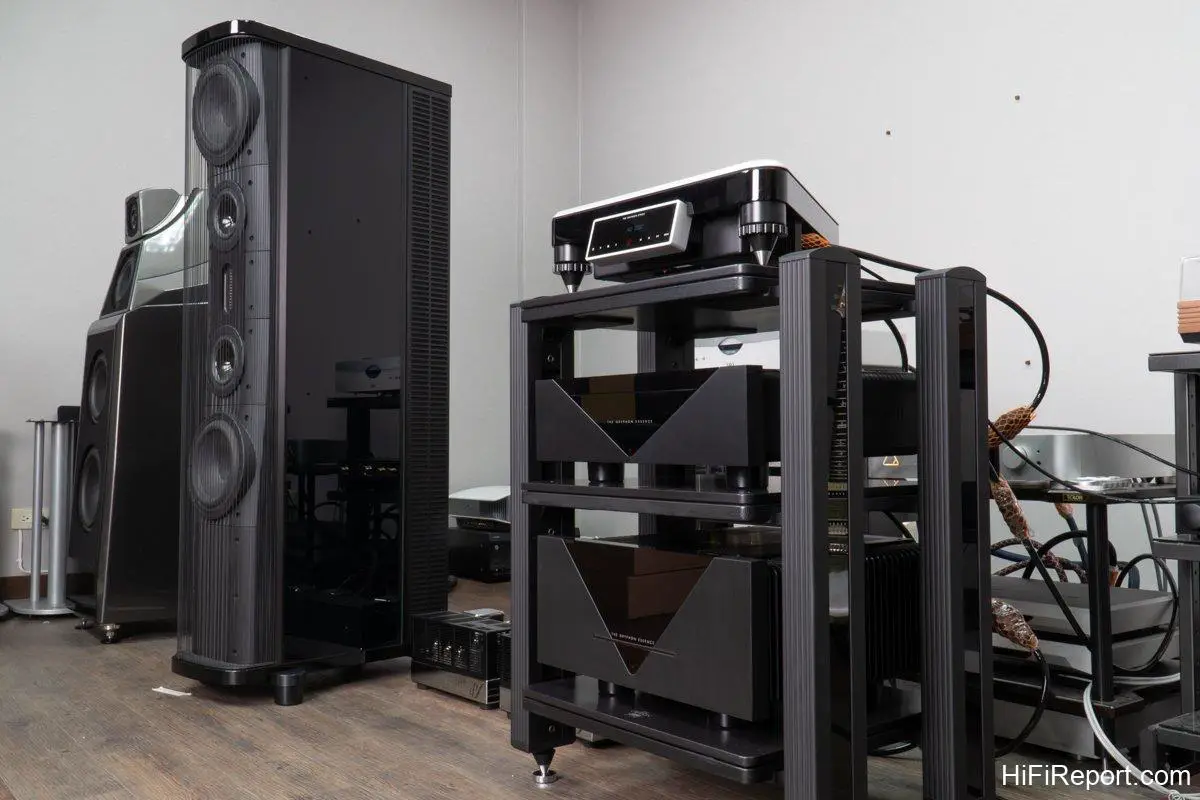
Listening to this live recording with the Ethos CD, the piano’s form was prominent, the piano tone particles full, and the dynamic variations showcased the young pianist’s romanticism. The orchestra in the background was rich and lush, supporting a solid soundstage. The overall tone was slightly dark, but the weaving and layering of the piano’s right and left hands, high and low registers, were clear, like a dimly lit concert hall. I think this is not only a sonic characteristic of the Ethos CD but also the sonic direction of the entire Gryphon system – stable and solid, slightly gentle, laying out rich musical details, allowing listeners to focus on the music.
I would also like to mention Brahms’ Piano Trio No. 1, listening to the version performed by Pires, Dumay, and Wang Jian. The Ethos CD brought out the soft piano, with the cello responding in kind. In the theme featuring only piano and cello, the music was gentle and romantic. When the violin joined, Brahms’ passion surged forth, and the piano and cello danced along, the three instruments erupting with force, as if rolling up a thousand piles of snow. After a burst of passion, it gradually subsided, like autumn leaves slowly falling. With the Ethos CD, paired with a full Gryphon system, especially the Pantheon speakers, Brahms’ dense and weighty notes were truly captivating.
Rich Detail and Layering
Switching to multi-track recordings, listening to the German Stockfisch “DMM-CD/SACD Vol.1,” Chris Jones’ “No Sanctuary Here,” the Ethos CD played it both full and transparent. The opening electric bass was full and thick, expanding the soundstage widely, and the bass’s bouncing force was excellent, setting off the clear brightness of the acoustic guitar. Because it’s a multi-track recording, the harmonies were made wide and deep, using reverb to create a shapeless effect, surrounding the depths of the soundstage, making the lead singer and guitar clearly emerge in the center of the soundstage. These studio mixing and post-production effects enriched the enjoyment of music listening, and on the Ethos CD, you could feel even richer and more diverse recording details.
I would also like to mention the movie soundtrack “Million Dollar Baby.” Being a movie soundtrack, the recording techniques are even more playful. The opening track, “Blue Morgan,” although just an acoustic guitar solo, is recorded very closely. The Ethos CD beautifully conveyed the intimacy of the recording. The notes of the steel-string guitar were full and clear, as if someone was playing right in front of you, but the room reverb wasn’t large, like a guitar solo in a small room. In the subsequent “It’s Nice Viewing,” switching to a piano solo, the recording effects were more pronounced. The room reverb and piano echo effects gradually increased, and the sense of sound space gradually expanded. When the string section entered, the space opened up even more, but the Ethos CD made the cellos and double basses laid at the bottom sound even denser, contrasting with the piano’s melodious and expansive notes, captivating the listener.
Miniature Concert Hall Stage
For another cross-genre classical piece, I listened to violinist Mutter and John Williams’ collaboration “Across The Stars,” specifically the theme for the female lead in “Star Wars: The Force Awakens,” “Rey’s Theme.” The sparkling violin opened, with string instrument pizzicato responses, and the background also had the tinkling sound of a triangle. Then the violin played the theme, with orchestral responses. Because it’s cross-genre classical, the double bass part is deliberately strengthened. The Ethos CD laid the bottom of the music thick and full, and the call and response between the violin solo and the violin section, the layering of front and back, was clear. The brass instruments were placed further back, bringing out a more open soundstage.
Finally, I would like to conclude with the recording of Lupu and Previn’s collaboration on Mozart’s Concerto for Two Pianos K.365, listening to the lively third movement, Rondo. The Ethos CD presented the contrasting bright and dark tones of the two pianos, positioned left and right, laying out an open and transparent soundstage. The string section lightly opened, welcoming the alternating responses of the two pianos. The Ethos CD showcased the proper weight and size of the pianos. The two pianos traded dazzling runs, and the Ethos CD clearly presented the form of each piano. This is the advantage of dual-mono design, maximizing the separation of left and right channels, making the relative position of each instrument clearer. The arrangement of the orchestra sections was also very clear, as if there was a miniature concert hall stage right in front of you.
Ultimate CD Player
With ten digital filter adjustments, the Ethos CD actually has a wide range of tonal variations. I believe everyone can find their favorite settings, and you can also change them at will, switching digital filters when changing music genres, adjusting according to your mood. However, the Ethos CD uses the highest digital upsampling to purify digital noise and retain pure analog output, making the music background quiet and deep, naturally focusing your attention on the music. The quiet background brings out the fluidity of the music, making it more and more enjoyable to listen to. The Ethos CD can be described as an aspirational ultimate CD player! Parting with it is truly reluctant. But it’s okay, keep working hard, and one day I’ll catch up to it.
Specifications
* Type: CD player (with USB input)
* Supported maximum sampling rate: PCM 32 bit / 384 kHz, DSD 512
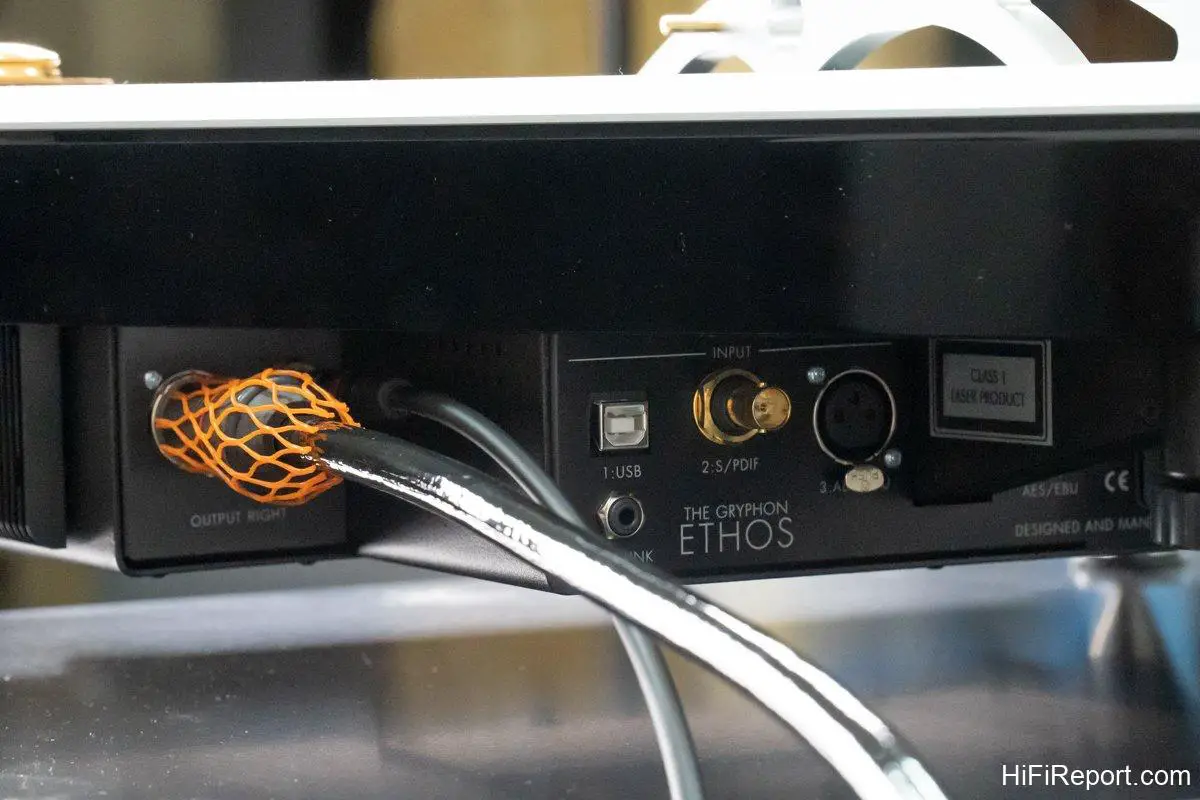
* Digital inputs: USB x 1, AES/EBU x 1, BNC S/PDIF x 1
* Digital output: AES/EBU x 1
* Analog outputs: RCA, XLR
* Output level: Single-ended 1V or 2V, Balanced 2V or 4V
* Total harmonic distortion: < 0.01 % (0 dBFS), < 0.003% (-6 dBFS)
* Dimensions: 480 x 176 x 453 (W x H x D) mm
* Weight: 13.7 kg