
Harman Kardon Enchant System Review
The complete Harman Kardon Enchant system, a four-piece ensemble, truly lives up to its name. “Enchant” is designed to mesmerize you, compelling you to dive headfirst into the captivating world of Dolby Atmos 3D surround sound.
Just how enchanting is the Enchant series? These days, nobody has the patience for lengthy audio reviews, so let’s get straight to the point.
The Enchant series boasts three major points of allure. First, the four-piece setup is space-saving, aesthetically pleasing, and easy to place. Second, with the Harman Kardon One App, the 3D soundstage setup can be completed in under ten minutes. The system automatically adjusts the sound field; the app merely connects the four Enchant components. Third, once you hear the simple four-piece Enchant system seamlessly working together to produce a remarkably lifelike Dolby Atmos 3D immersive listening experience, you’ll understand precisely how soundbars have utterly dominated the multi-channel market, leaving traditional AV receivers and passive speakers struggling to compete.
Regarding the last point, I must clarify: a high-end multi-channel surround processor, paired with powerful amplifiers, full-range speakers, and a suitable subwoofer, remains the ultimate path for achieving the pinnacle of multi-channel audio performance. However, the reason soundbars have overtaken traditional multi-channel setups is that **with the same budget**, you simply cannot assemble a system that can rival the performance of a similarly priced soundbar. Add to this the soundbar’s ease of use – plug in the power, connect the HDMI cable, and it’s instantly ready. It tucks neatly under a flat-screen TV, and you can install it yourself. Why spend more money running cables, mounting speakers, hiding wires, and cluttering your room with numerous speakers?
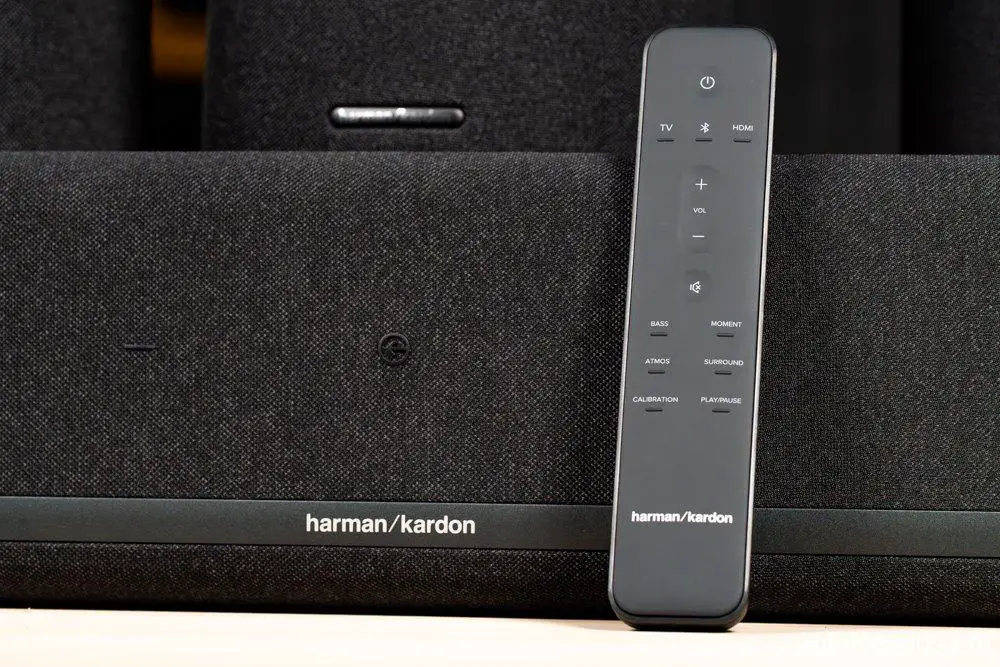
Simplicity, ease of use, and hassle-free setup are the secret weapons driving the soundbar’s dominance. In the past, most people would argue that soundbars couldn’t match the sound quality of traditional speakers. However, technology constantly evolves to meet human needs. Harman Kardon’s new Enchant series has shattered my preconceived notions about multi-channel systems. When I learned that this four-component Enchant package costs less than $2,150 USD combined, my jaw nearly dropped. Based on sound quality relative to price, even doubling the budget for an AV receiver and speaker setup, I honestly can’t think of any combination that could outperform the Enchant. It’s that old marketing adage: technology is always driven by human needs. Everyone wants to experience Dolby Atmos, whether it’s 5.1.2, 5.1.4, 7.1.4, and so on. If these numbers mean nothing to you, it implies you haven’t delved into Dolby Atmos. But if you understand these figures, you know they represent the number of speakers and subwoofers. The last digit is the height channel, the middle is the subwoofer, and the first digits are the traditional speakers. The sum indicates the total number of speakers required.
Seriously, how many people have room for eight speakers in their home? That’s the minimum for 5.1.2. More channels scare off many potential users. Yet, a soundbar can surprisingly pack so many speakers into a compact form factor and ingeniously use driver projection angles to create a “virtual” sound field.
With that said, let’s focus on the main unit, the Enchant 1100.
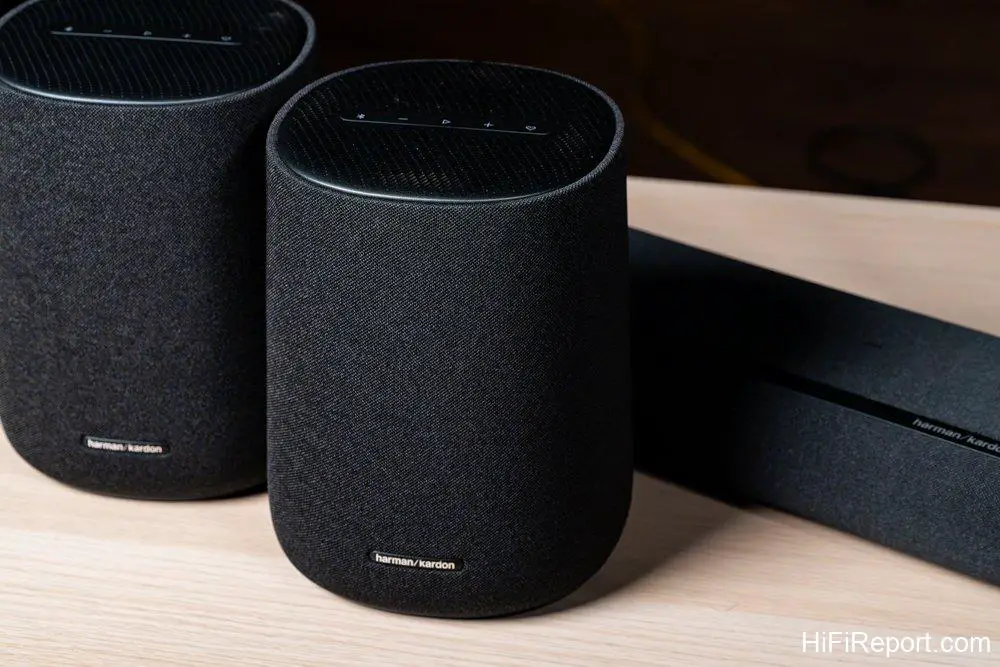
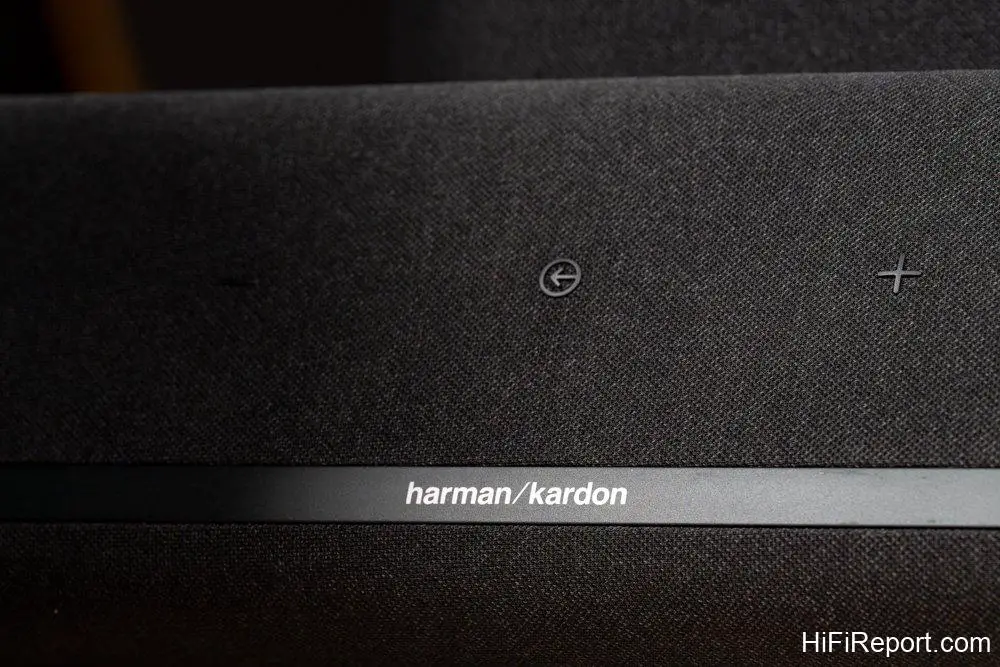
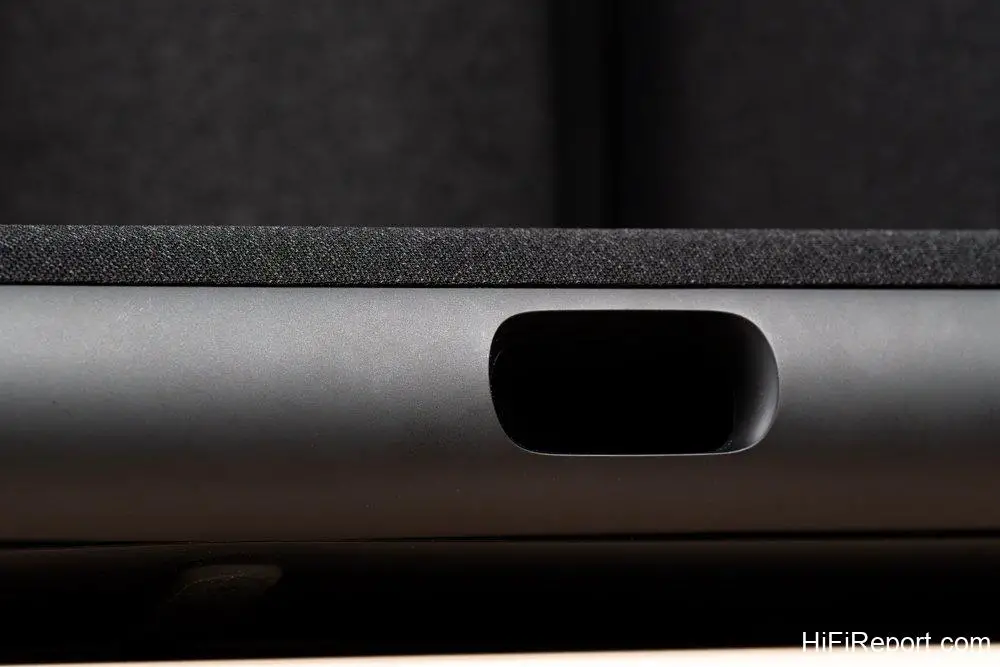
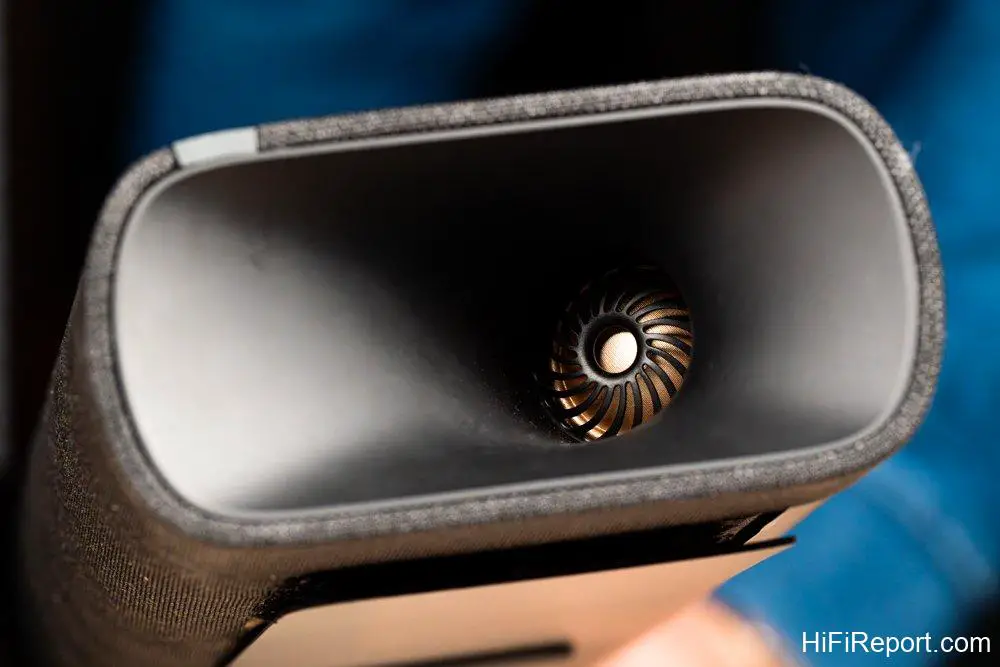
It’s a long, rectangular bar with a fabric wrap that enhances its design and aesthetic appeal. Inside, it houses six 55 x 90 mm racetrack drivers, three 25 mm tweeters, and two upward-firing 70 mm full-range drivers – a total of 11 drivers.
How much power is dedicated to driving these 11 drivers? A respectable 315 Watts! And the suggested retail price? $1,070 USD.
Just considering the number of drivers inside the Enchant 1100 and the total driving power of 315 Watts, it already feels like great value for money! To truly enjoy multi-channel sound, you need a subwoofer. You can wirelessly connect the Enchant Sub, which features a 6.5-inch woofer. While it doesn’t look intimidating externally, it’s quite easy to place. The downward-firing Enchant Sub has cone-shaped protrusions at the bottom, allowing the downward-directed bass to disperse in a 360-degree pattern.
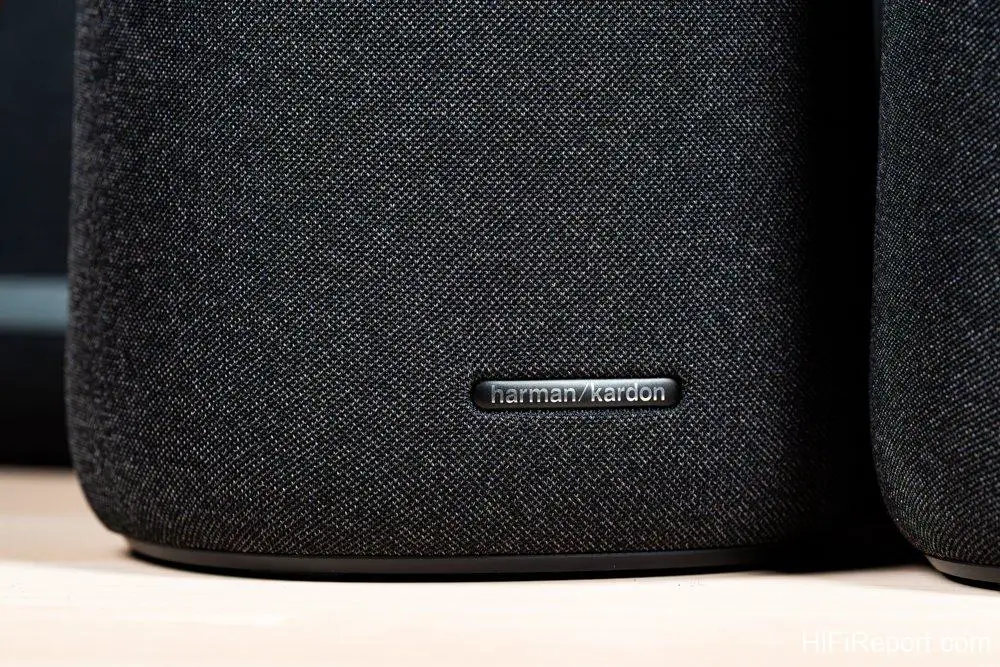
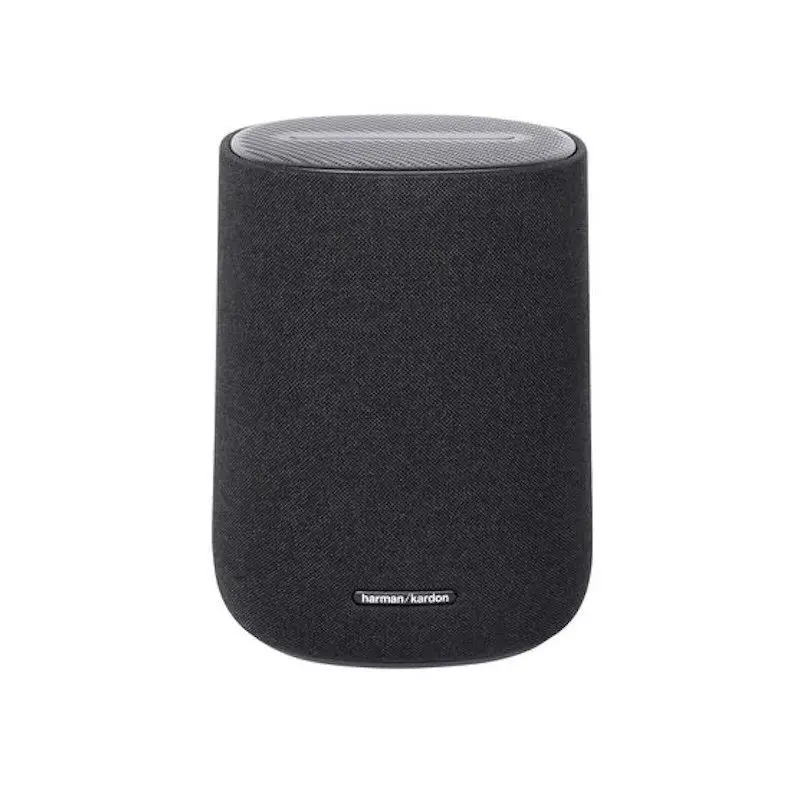
Frankly, using just the Enchant 1100 and Enchant Sub provides a decent virtual 3D multi-channel sound field. However, if you add a pair of Enchant Speakers behind the listening position, connecting all four speakers into a multi-channel system using the Harman Kardon One App and then performing automatic spatial acoustic calibration, the four-piece Enchant package will absolutely make you exclaim: playing Dolby Atmos is *this* simple! The Enchant Speakers, used as rear surrounds, can actually provide a 3D immersive listening effect for Dolby Atmos from a single speaker. Of course, this is a highly virtualized Dolby Atmos 3D sound field. The focus of the soundstage localization can only be described as discernible height, not necessarily a strong sense of 3D immersion. But for a mini-speaker priced at $300 USD each, achieving this effect is already quite good.
Speaking of the complete four-piece Enchant system, the highlight that almost got me “Enchanted” was the “Dolby Atmos in Ten Minutes” setup! Unbox the equipment, place it, plug it in – that takes about five minutes. Download the Harman Kardon One App, connect to Wi-Fi, find the Enchant 1100, Enchant Sub, and the two Enchant Speakers, set them up as a group, and then let the app perform the 3D soundstage spatial acoustic calibration. This part takes about a minute. In roughly ten minutes, the Dolby Atmos system is assembled and configured.
Is it really that simple? Yes, it is. However, I must be honest, the actual installation process took slightly longer than ten minutes because when the One App found the two Enchant Speakers, it discovered they needed firmware updates. Each update took about five minutes, adding an extra ten minutes for firmware updates. The Enchant 1100 and Enchant Sub were already on the latest firmware, so they didn’t require update time.
Using the One App is very smooth. The app is clearly optimized for phone screens, so it feels very “phone-like” if you use it on an iPad or larger tablet. However, with the One App, you’ll likely find the included physical remote unnecessary because the One App already provides full remote control functionality. Furthermore, for deeper settings like audio adjustments or music playlists, the One App offers more features than the physical remote.
Although I received the complete four-piece Enchant speaker system, you have various options for configuration. For example, you could start with just one Enchant Speaker to dip your toes into Dolby Atmos and experience the sense of 3D immersive sound. Or, buy a pair of Enchant Speakers for better effect. Later, you could add the Enchant 1100 Soundbar and Enchant Sub. If you have a limited budget, you can gradually build up the system and find enjoyment step by step. However, for the complete four-piece package costing less than $2,150 USD, buying it all at once is more convenient.
The One App also has a “Party Mode” setting. If you want to throw a party at home, you can link all your Harman Kardon speakers to work together.
When using the Enchant four-piece system, the wireless connection between the four components is excellent, and I encountered almost no disconnections. This is thanks to Harman Kardon’s proprietary Multibeam wireless streaming technology. In the early days of wireless audio transmission, the main problem was the increasingly complex wireless signal environment, leading to easy interference and causing disconnections or intermittent audio. Multibeam seems to have solved this issue, at least in my usage, where I never experienced the subwoofer or surround channels disconnecting, causing the soundstage to shift or lose bass.
Furthermore, the Enchant 1100 supports Dolby Vision. So, as long as your projector or flat-screen TV also supports Dolby Vision, you can enjoy even better image quality. There’s a lot of technical detail about Dolby Vision, but simply put, the visual enhancement means richer color gradation, stronger image dynamic contrast, and a difference in picture quality that’s immediately apparent.
Since this is a soundbar system, let’s start with movies. I selected “Godzilla Minus One” from Netflix. When the original Godzilla first appears, its size isn’t yet immense. The Enchant four-piece system reproduced a sufficient amount of low frequency. In contrast, when Godzilla appears in Japan and becomes gargantuan, the low-frequency weight is even stronger. For the relatively compact size of the Enchant Sub, it delivers impressively deep bass extension, effectively conveying the oppressive sound of Godzilla’s footsteps – certainly worth the price.
When Godzilla unleashes its atomic breath, the sound of buildings collapsing from a distance and the myriad of collisions from debris created a clear and impactful cinematic audio experience. The tragic soundtrack, the distant roar of Godzilla, and the protagonist’s crying out reinforced the film’s montage, highlighting human insignificance before Godzilla.
Or take “Spider-Man: No Way Home.” When Doctor Strange prepares to reverse the multi-verse and send all of Spider-Man’s foes back to their respective universes, Spider-Man grabs the relic to stop him. The two enter the mirror dimension controlled by Doctor Strange. The magical 3D space visuals are perfect for showcasing the 3D spatial sense of Dolby Atmos. The Enchant four-piece system reproduced the sound movement of the characters. The music was in the plane, while various sound effects added height and moved up and down with the visuals. When Spider-Man returns to Doctor Strange’s space, the vocal variations clearly showed Spider-Man in an open space and the villains confined in glass cells, their voices carrying the hum of an enclosed space.
For enhancing movie audio, the most noticeable improvement from the Enchant four-piece system is the dialogue, which is clearly positioned at the front of the soundstage. Next is the height of the soundstage. The Enchant four-piece system easily disappears into the room, leaving only the sound objects moving and changing height.
Using the default mode and the One App’s automatic calibration for the Enchant four-piece system, I felt the treble was slightly aggressive. Perhaps the manufacturer wanted dialogue to sound clearer, but that was my perception. This is where the equalizer comes in handy. It appears the One App’s equalizer is a simple three-band control, but it’s actually more sophisticated. You just need to drag the high, mid, and low frequencies up or down, and the One App automatically smooths the curve.
Going back to “Spider-Man: No Way Home,” before the Green Goblin emerges from Norman’s body, Spider-Man’s spider-sense kicks in, along with the sound of his heart beating within him and the reversed sounds of all the characters. The Enchant four-piece system filled out the internal drama’s sound effects with thumping bass. Of course, it wasn’t an overwhelming tidal wave, but for a Dolby Atmos system set up in just ten minutes, it was pretty impressive.
The 3D movie audio enhanced the connection between the characters’ sound movement and the visuals. The Enchant four-piece system effortlessly boosted the sense of space and delivered the immersive audio of Dolby Atmos, drawing me deeper into the film and heightening the emotional response to the plot changes.
Let’s try something more action-packed: “Venom: Let There Be Carnage.” When the symbiote catches up to Venom, falling from the Airbus at high altitude to the ground, followed by the symbiote’s pursuit, the tight plot combined with the Enchant four-piece system, from the waterfall plunge to the underwater fight scene, the 3D audio movement truly drew me in completely. While I was auditioning the Enchant four-piece system, everyone in the office could feel the subwoofer’s power, booming away, making the movie audio feel very lively.
Effortlessly enjoying Dolby Atmos movies is the expected outcome when choosing the Enchant four-piece system. However, my subsequent audition of Dolby Atmos Music was surprisingly good! Although Dolby Atmos has been around for some time, I never really got enthusiastic about trying it because it seemed too cumbersome. Just thinking about all the speakers felt daunting. But with the Enchant four-piece system, it was simple and convenient. I picked some Dolby Atmos Music from Apple Music and was genuinely startled by the expansive and deep soundstage rendering. How could the Enchant four-piece system perform so well?
Moreover, the key point is that Dolby Atmos Music added a fresh dimension to familiar music. I’d like to mention John Coltrane and Johnny Hartman, an album I’m very familiar with. In fact, my entry into the audiophile world years ago was closely tied to this record. However, when I played the new Dolby Atmos version on Apple Music, the changes in soundstage space brought a strong sense of novelty to the recording. Besides the front soundstage, the physical rear surround Enchant Speakers created a broad sense of space, which was quite different from listening in two channels. The feeling of being right in front of Johnny Hartman singing was fascinating.
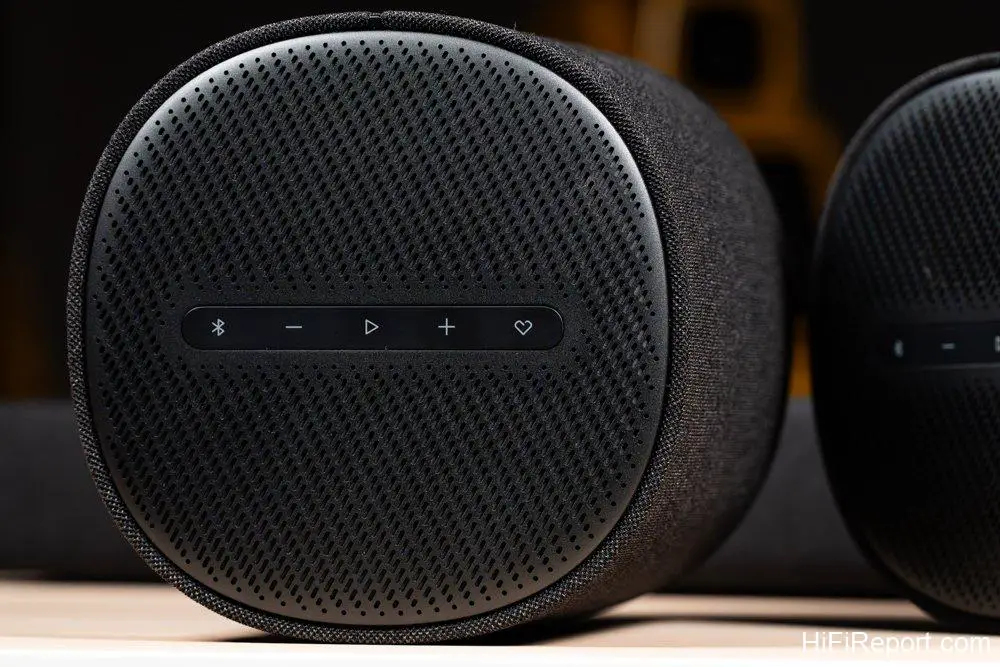
Of course, given the size of the Enchant 1100, achieving the excellent sound density of a high-quality two-channel system is difficult. But overall, the Enchant four-piece system has a thick and substantial mid-range. Coupled with the adjustable three-band EQ and the automatically smoothed frequency transitions, you can tailor the mid-range thickness to your personal preference. While soundbars were often criticized for lacking sonic weight, the Enchant four-piece system’s performance with Dolby Atmos Music exceeded my expectations for a soundbar of its size.
How about classical music? I found “The Best Of Dolby Atmos” playlist on Apple Music, which consists entirely of classical pieces. Starting with something simple, I chose Barenboim playing Chopin’s Nocturne No. 2 (Op. 9, No. 2). This is a piece many people know well. The Enchant 1100 in the front produced piano keystrokes with good density, while the spatial sense created by the physical rear surround speakers added width and height to the recording venue. I couldn’t help but turn up the volume to expand the piano’s image. It sounded good. In the past, listening to classical music with soundbars often felt dry and thin. This Enchant four-piece system doesn’t have that problem, reproducing the piano’s weight quite well.
Switching to John Williams conducting the Vienna Philharmonic’s “Imperial March,” the majestic Stormtrooper march, the Apple Music app lit up with the Dolby Atmos icon. The Enchant four-piece system generated a sufficiently large soundstage, the speakers completely disappearing into the space. The strings and brass sections intertwined to create the march’s grandeur. The Enchant 1100 and Enchant Sub constructed the scale of the orchestra at the front, while the rear height channels elevated the soundstage, making it feel as though the listener was closer to the orchestra. Dolby Atmos provided a fascinating depiction of the 3D soundstage.
What are the strengths of the Enchant four-piece system? Easy installation, easy setup, and getting a Dolby Atmos multi-channel system up and running in ten minutes are results of technological advancement. In terms of sound performance, I can only say that even with twice the budget of the Enchant four-piece system, you might not be able to assemble a 5.1.2 multi-channel system with superior sound. Furthermore, the Enchant isn’t just about clear movie dialogue and powerful effects; more importantly, using it for Dolby Atmos Music guarantees a fresh, 3D immersive experience of familiar tunes.
Specifications
* **Enchant Speaker**
* Power Supply: 100~240V AC, ~50/60Hz
* Transducers: 1 x 1″ (25mm) tweeter, 1 x 3.6″ (92mm) woofer, 2 x 2″ (50mm) full range
* Total Output Power (RMS@THD1%): 90W
* Frequency Response: 52Hz~20kHz(-6dB)
* Bluetooth Version: 5.2
* Bluetooth Transmitter Frequency Range: 2400MHz~2483.5MHz
* Dimensions (W x H x D): 163 x 205 x 163 mm
* Weight: 2.16 kg
* **Enchant Sub**
* Transducer: 1 x 6.5″ (164mm) woofer
* Output Power (RMS@THD1%): 100W
* Power Supply: 100~240V AC, ~50/60Hz
* Dimensions (W x H x D): 305 x 378 x 225 mm
* Weight: 6.7 kg
* **Enchant 1100**
* Transducers: 6 x (55×90) mm racetrack drivers, 3 x 1″ (25 mm) tweeters, 2 x 2.75″ (70 mm) up-firing full-range drivers
* Total Output Power (RMS @ THD 1%): 315 W
* Output Power (RMS @ THD 1%): 8 x 30 W (woofers and full-range) + 3 x 25 W (tweeters)
* Bluetooth Version: 5.3
* HDMI Specification
* HDMI Video Input: 1
* HDMI Video Output (with Enhanced Audio Return Channel, eARC): 1
* HDMI HDCP Version: 2.3
* HDR Pass Through: HDR10, Dolby Vision
* Audio Specification
* Frequency Response: 52Hz~20kHz(-6dB)
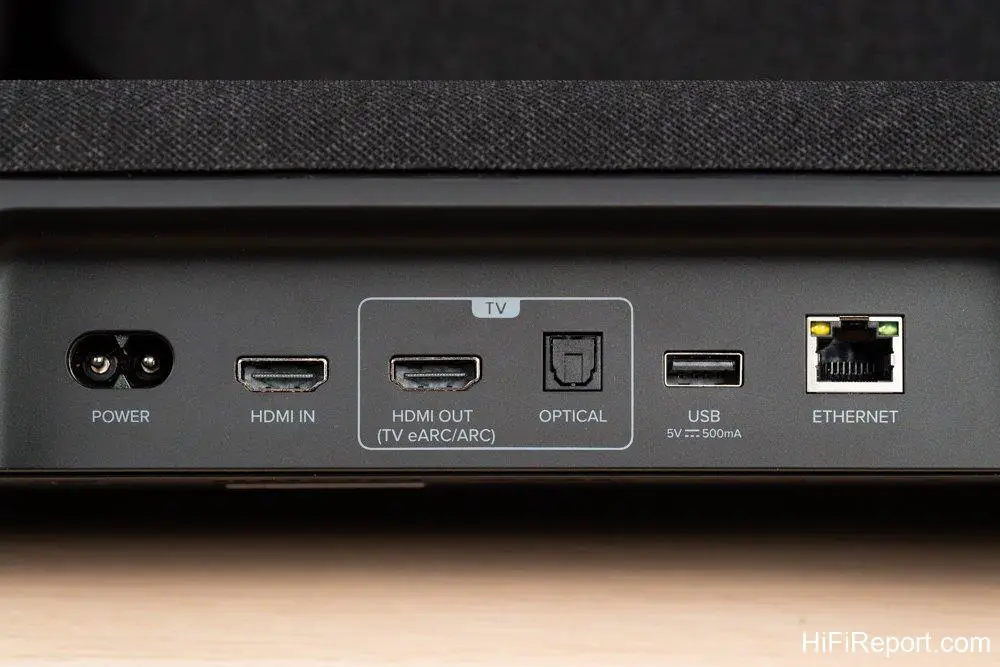
* Audio Inputs: Optical, Bluetooth, and USB (USB playback available in US version. For other versions, USB is for service only.)
* Power Supply: 100~240V AC, ~50/60Hz
* Dimensions (W x H x D): 1150 x 65 x 130 mm
* Weight: 4.6 kg