iFi Audio Go Bar Portable DAC/Amp Review
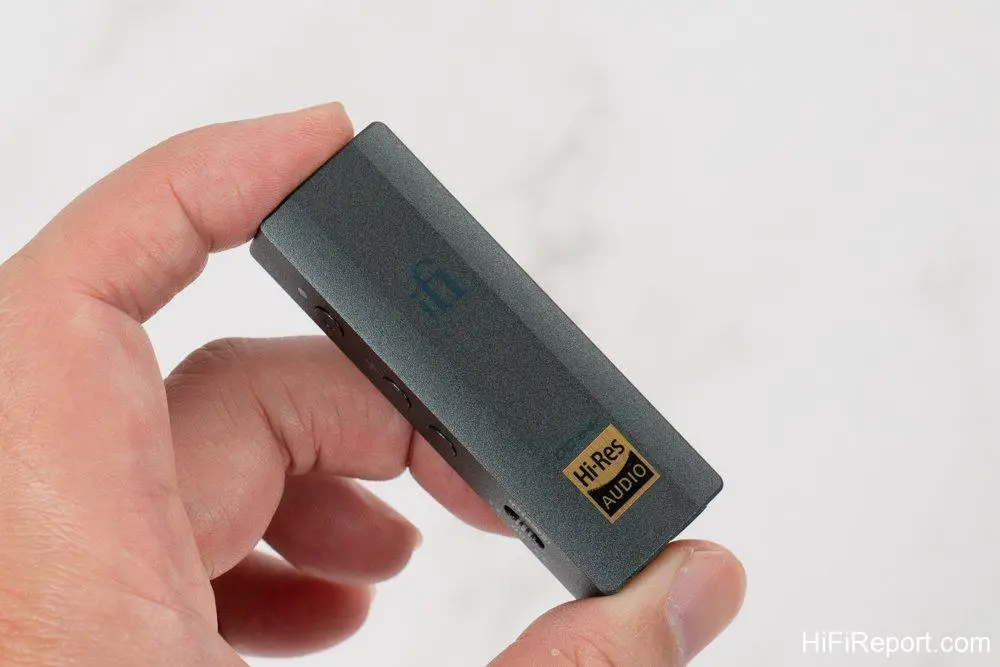
iFi Audio, a company dedicated to both portable and desktop audio solutions, is no stranger to the realm of portable headphone amplifiers. However, recent trends at iFi have leaned decidedly towards miniaturization. Following the release of the Go Blu, a Bluetooth portable headphone amp smaller than a Dupont lighter, iFi has swiftly unveiled the Go Bar portable DAC/amp. Just how small is it? Picture a finger – that’s about the size we’re talking.
Compact Size, Powerful Performance
While the market isn’t devoid of portable DAC/amps sharing a similar footprint to the Go Bar – and indeed, some are even tinier – it’s safe to say that few can rival the Go Bar when it comes to sheer performance.
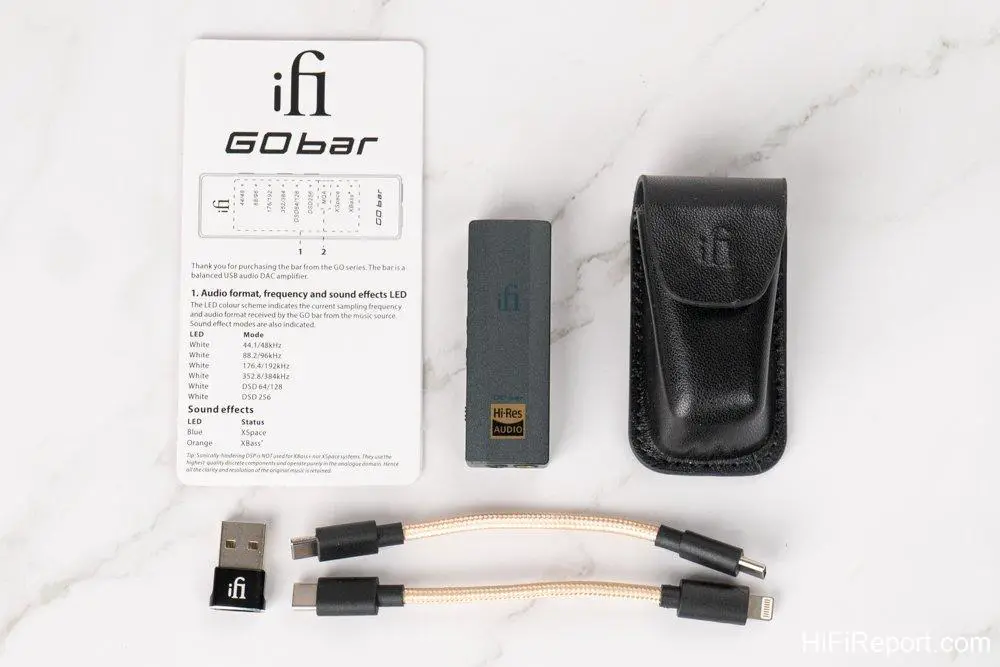
The Go Bar is specifically engineered for seamless integration with smartphones, tablets, or computers. A USB-C port is located at the top, allowing connection to these devices using the included short USB cables, transforming them into high-fidelity portable audio setups.
Included with the Go Bar are two short connection cables: USB-C to USB-C and Lightning to USB-C. Furthermore, a USB-C to A adapter is provided, ensuring compatibility with a wide array of portable devices. For audio output, both 3.5mm single-ended and 4.4mm balanced jacks are available.
Despite its diminutive size, the Go Bar houses a powerful 16-core XMOS microcontroller. This chip not only acts as the USB receiver but also takes charge of intricate digital signal processing. The iFi engineering team has further refined the XMOS processor’s firmware to ensure optimal synergy with the internal 32-bit Cirrus Logic DAC chip.
The Go Bar boasts impressive specifications, offering full support for high-resolution audio playback. It handles PCM formats up to 32-bit/384kHz, Native DSD256, and 2x DXD, alongside complete MQA decoding capabilities.
Exquisite Craftsmanship and Clear Status Display
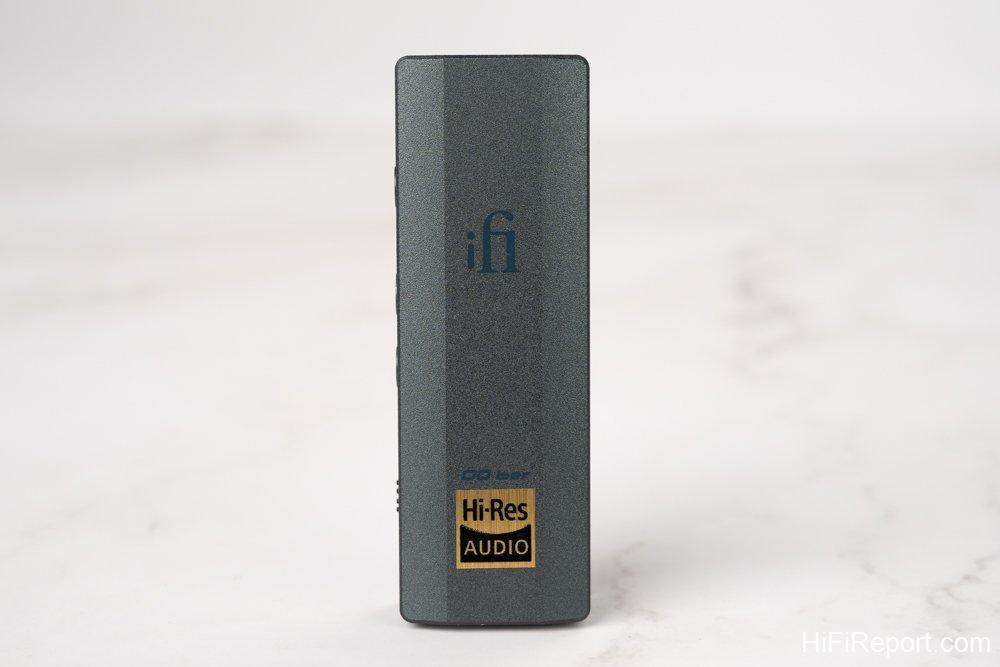
The Go Bar’s chassis is meticulously crafted from aluminum alloy, with a finely anodized surface that exudes a premium feel.
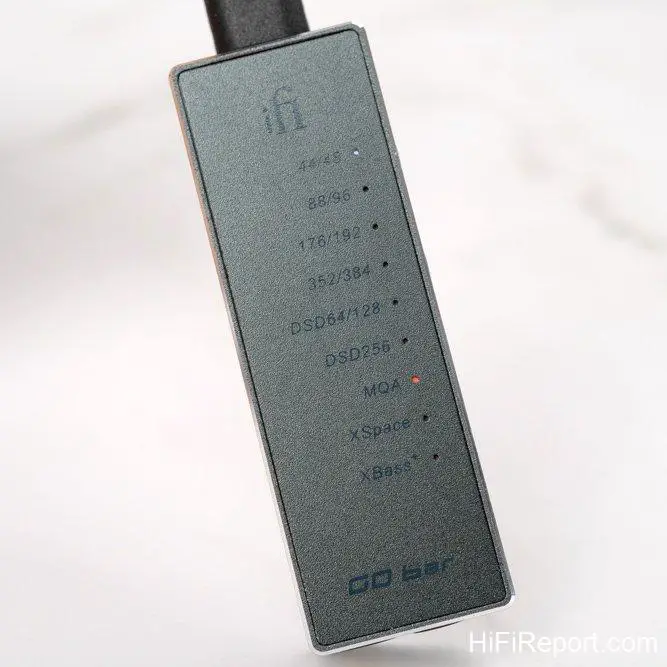
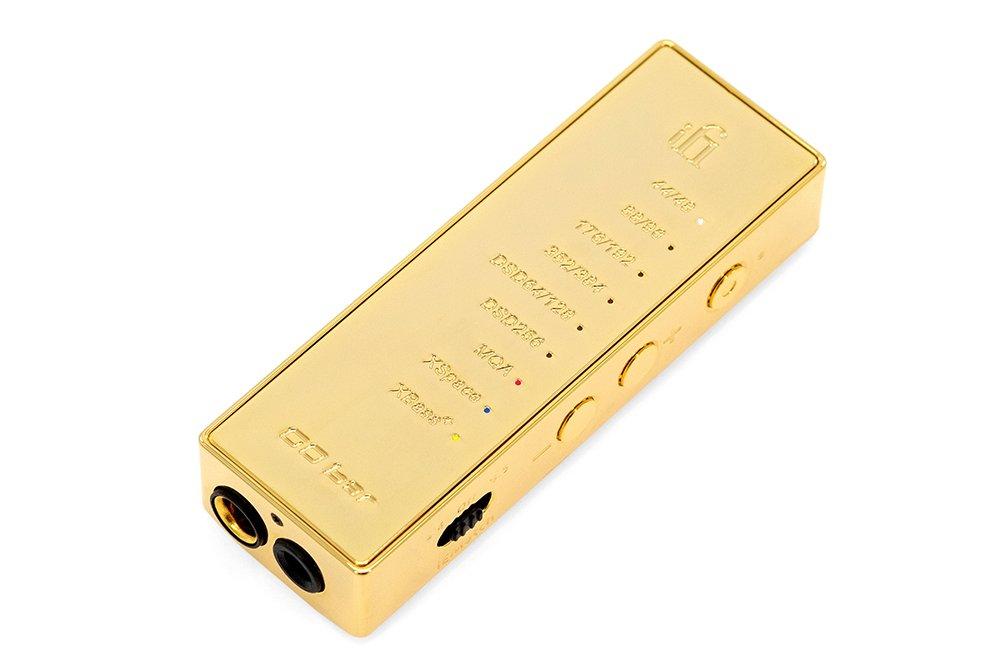
Along the bottom face of the Go Bar, you’ll find a neat row of tiny perforations, each housing an LED indicator. These LEDs are surprisingly informative, displaying crucial playback details such as the current music format, sampling rate, active filter mode, MQA decoding status, and even volume level.
A total of nine LED indicators are arranged in a row, from top to bottom: 44/48, 88/96, 176/192, 352/384, DSD64/128, DSD256, MQA, XBass+, and XSpace. When playing PCM or DSD audio, the LED corresponding to the current sampling rate illuminates in white.
The MQA indicator conveys more nuanced information. Beyond simply signaling playback of un-decoded original format, standard MQA, or MQA Studio, it also cleverly displays the selected digital filter mode. The Go Bar offers four distinct digital filter options: Bit-Perfect, Standard, Minimum Phase, and Gibbs Transient Optimized. When toggling between these modes using the side buttons, the MQA LED subtly changes color to denote the active filter, providing intuitive visual feedback.

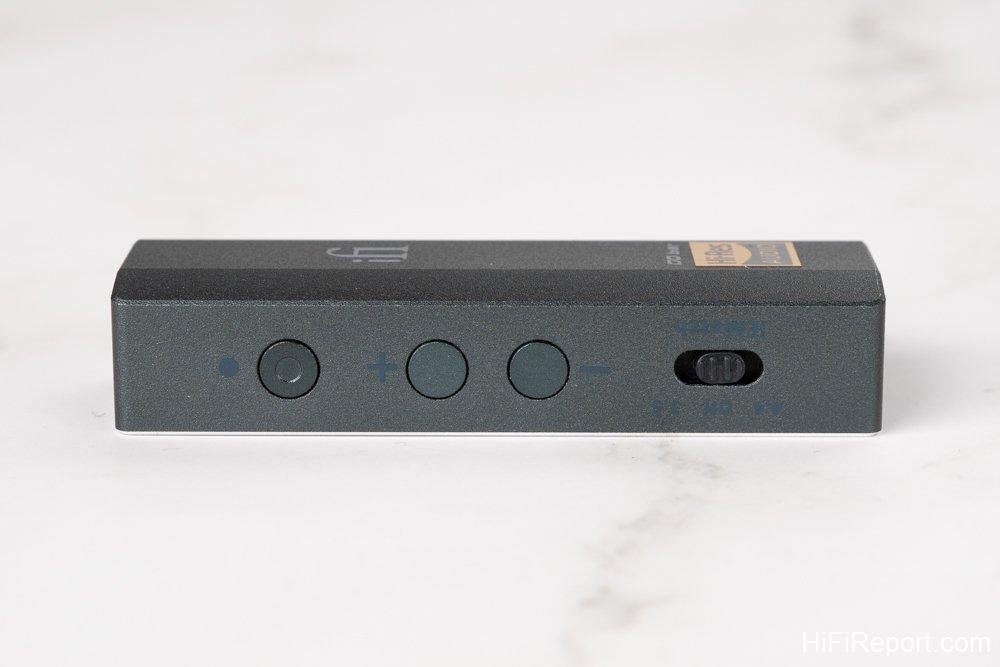
The Go Bar’s side panel features “+” and “-” buttons for volume adjustment. But how is volume level indicated via the LEDs? Ingeniously, the six LEDs normally representing sampling rates (44/48, 88/96, 176/192, 352/384, DSD64/128, DSD256) also double as volume indicators. These LEDs illuminate only when the “+” or “-” buttons are pressed. DSD256 represents the minimum volume, with more LEDs lighting up as the volume increases, culminating in all the way up to 44/48 indicating maximum volume.
Once the volume adjustment is complete, the volume LEDs gracefully extinguish, reverting to their primary function of displaying the current sampling rate.
Dedicated XBass+ and XSpace LEDs indicate the activation status of these respective features. XBass+ is designed to enhance low-frequency reproduction, while XSpace aims to impart a more expansive and open soundstage, a quality often lacking in headphone listening.

Both XBass+ and XSpace are proprietary iFi audio technologies, now incorporated into the Go Bar to enrich the overall listening experience and offer users greater sonic customization.
Balanced Circuit and iEMatch
Despite its compact form factor, the Go Bar employs a fully balanced analog output circuit. Left and right channels are not only independent but also symmetrically laid out, minimizing signal path crosstalk and contributing to a lower noise floor.
Furthermore, the Go Bar incorporates iFi’s proprietary S-Balanced technology, which effectively reduces crosstalk and noise by up to 50% even on the 3.5mm single-ended output.
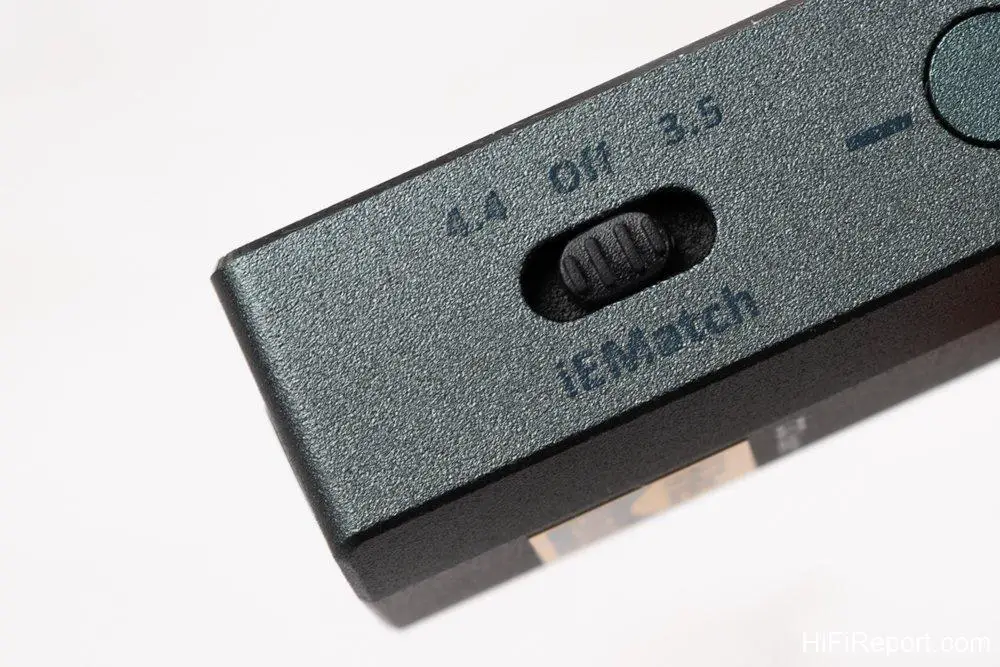
Adding to its versatility, the Go Bar features iEMatch technology. This function provides output power attenuation and background noise reduction, making it ideally suited for use with high-sensitivity in-ear monitors (IEMs).
The iEMatch function is implemented via a three-position toggle switch. The center position disables iEMatch, while toggling to the left (4.4 position) engages iEMatch for the 4.4mm output, and toggling to the right (3.5 position) activates iEMatch for the 3.5mm output.
Go Bar Gold Limited Edition
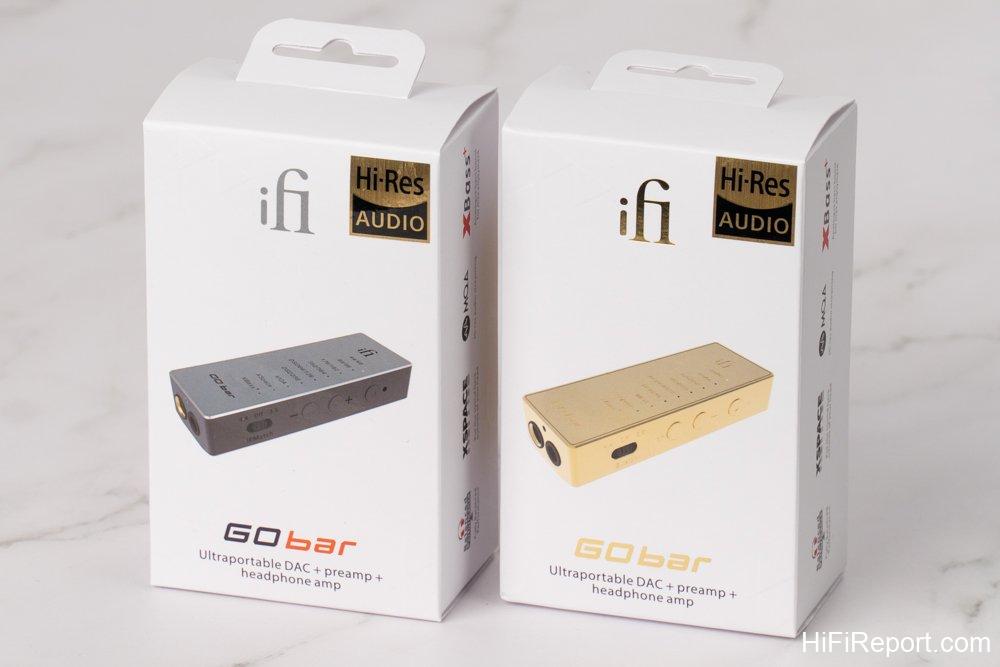
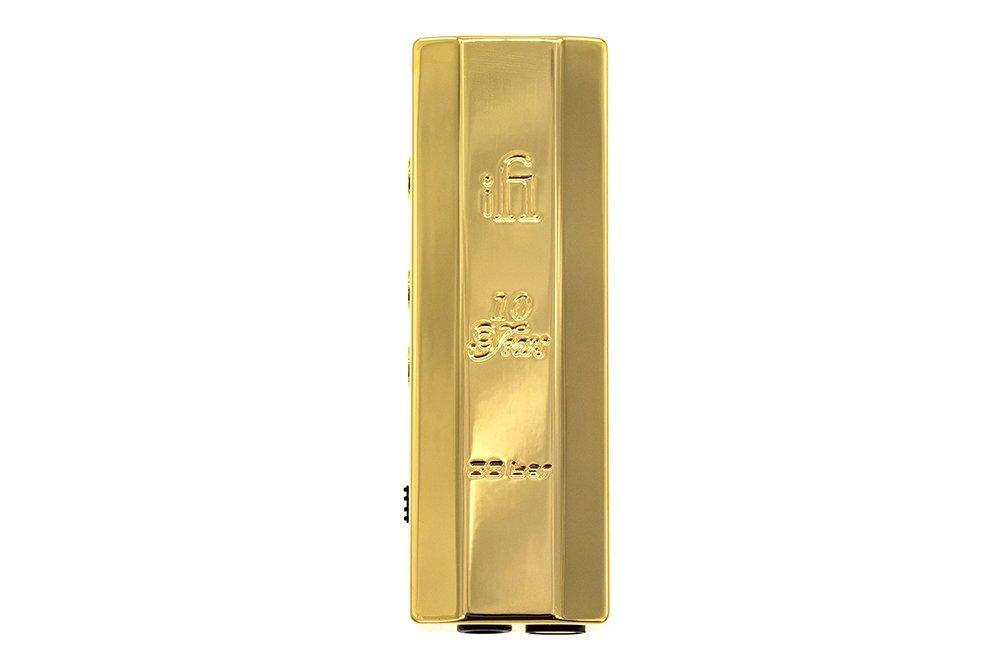
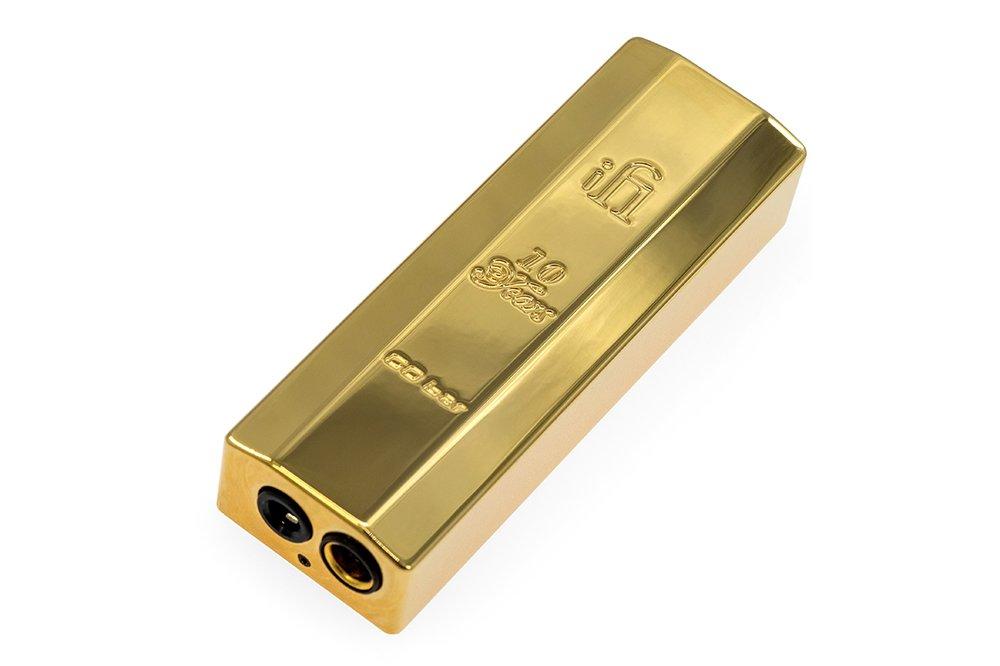
Accompanying the standard Go Bar was a special edition “Gold” Go Bar. What exactly is this? It’s a limited edition version created by iFi to commemorate their 10th anniversary, with a global production run of just 1000 units. Functionally identical to the standard Go Bar, the Gold Edition distinguishes itself with a copper chassis, lavishly plated in gold, giving it the visual appeal of a miniature gold ingot.
Given copper’s higher density, the Gold Go Bar tips the scales at 40 grams heavier than the standard version – a weight increase exceeding the total weight of the standard Go Bar itself! This added mass should theoretically offer enhanced resonance control.
Furthermore, the Gold Edition Go Bar benefits from enhanced power supply filtering, resulting in an even cleaner power delivery.
(Image credit: iFi Audio) (Image credit: iFi Audio)
Impressive Bass Control
Listening tests were conducted in my office, utilizing my Windows desktop computer as the primary source. Connection to the Go Bar was established using the provided USB cable.
Given the Go Bar’s full MQA decoding capability, Tidal streaming service, readily available on my computer, served as the music source for the listening evaluation. My usual go-to headphones, the Philips Fidelio X1, were selected for this test.
Why pair the Go Bar with the rather substantial Fidelio X1 headphones? Simply put, the synergy was immediately apparent and sonically captivating. Once connected, I found no desire to switch to any other headphones.
The Fidelio X1 is known for its somewhat generous and expansive bass response. If a headphone amplifier lacks precision in low-frequency control – failing to delineate bass lines, contours, and layers – the sound can easily become muddy and indistinct. However, the Go Bar dispelled any such concerns. Its bass control capabilities are remarkably impressive, especially considering its diminutive size.
Using Mika Nakashima’s “Best” compilation album as a reference, track 2, her breakout hit “Star,” features intentionally full and prominent bass frequencies. Playing this track through the Fidelio X1, one should expect a rich and substantial low-end presentation. Powered by the Go Bar, I indeed experienced the anticipated bass weight. Crucially, the Go Bar also exhibited exceptional control over the low frequencies, rendering bass contours and lines with impressive definition. The resulting sound was robust and energetic, avoiding any hint of muddiness or bloat.
Beyond its bass prowess, the Go Bar also imparted distinct form and shape to individual instruments and vocal elements. Its excellent separation capabilities ensured that even during the song’s most intense and climactic passages, the musical structure remained clear, coherent, and well-defined.
To provide a stark contrast, I then plugged the Fidelio X1 directly into my computer’s headphone jack and replayed “Star.” The resulting sonic presentation was, to put it mildly, a muddled mess. Instrument separation vanished, vocals became indistinct and lacked presence, and the overall sonic character was noticeably unclean and grainy. Continuing to listen in this configuration proved to be a rather unpleasant experience, prompting a swift return to the Go Bar.
Simply Remarkable Performance
The direct comparison immediately highlighted another key strength of the Go Bar: its remarkably low background noise. This translated to a clean sonic canvas, allowing for a wealth of detail and subtle tonal nuances to emerge effortlessly. The resulting sound was not only high-fidelity but also natural and authentic, devoid of any artificial coloration or processing artifacts.
This aspect genuinely surprised me. Considering the Go Bar’s diminutive size and the fact that it draws power solely from the computer’s USB interface, the level of sonic refinement it delivers is truly remarkable. The audio signal, once processed by the Go Bar, transformed into a rich and textured sound, far from being sterile or lifeless. It was sufficiently resolving and nuanced to allow for critical listening, even with demanding classical music pieces – a feat that belies its portable nature.
Beyond critical listening, I also discovered the Go Bar’s utility in accurately discerning the sonic characteristics of different headphones.
During the evaluation, I also experimented with the Audio-Technica ATH-M50x closed-back professional monitoring headphones and the Moondrop KXXS metal-shelled in-ear monitors. The Go Bar facilitated clear differentiation between these headphones, revealing their unique qualities in terms of timbre, texture, soundstage dimensions, spatial presentation, frequency balance, and more, adding an element of enjoyable headphone exploration to the listening experience.
Finally, I switched to the limited edition Gold Go Bar, one of only 1000 units worldwide, to discern any sonic differences compared to the standard version.
The most significant difference lay in the overall sonic texture. The Gold Edition demonstrably exhibited a superior level of refinement, boasting enhanced luster, density, and a more substantial sonic weight. While the standard version already possessed a pleasant sweetness in its timbre, the Gold Edition elevated this characteristic, resulting in an even richer and more opulent sound.
Furthermore, the Gold Edition presented a more clearly defined and three-dimensional sonic image, with sharper outlines and a heightened sense of realism.
Pleasing Overall Sound
During the listening sessions, I also connected the Go Bar to my Android phone (which still thankfully retains a headphone jack) to directly compare the audio quality of the Moondrop KXXS plugged directly into the phone versus when routed through the Go Bar.
This comparison, even after a brief listen, reveals a stark and undeniable difference – the improvement is substantial.
In direct comparison, the phone’s direct output sounded somewhat harsh and fatiguing. The sound was thinner, with a simplistic and uninspired texture. While adequate for casual listening during commutes, it fell short for attentive music enjoyment.
Introducing the Go Bar into the chain, however, dramatically elevated the listening experience. The sound became richer and more inviting, not only cleaner and more textured, but also imbued with a touch of warmth and added body. A pleasing smoothness was also introduced, making the overall sonic presentation far more enjoyable.
Price-wise, the Go Bar isn’t inexpensive, especially when compared to iFi’s previous portable amplifier offerings – in fact, it could even be considered premium for its category. However, its true value lies in its exceptional portability. Its remarkably compact size allows you to carry it with you virtually unnoticed, while still delivering a high level of sonic performance.
Well played, iFi! With the Go Bar, they continue to solidify their leading position in the portable audio realm, raising the bar for competitors to follow.
Specifications
* Type: Portable DAC/Headphone Amplifier
* Input: USB-C
* Supported Hi-Res Formats: 384kHz PCM, DSD 12.3MHz, DXD, MQA
* Outputs: 3.5mm, 4.4mm
* Max Output Power: Balanced 475mW@32Ω / 7.2V@600Ω, Unbalanced 300mW@32Ω / 3.8V@600Ω
* Signal-to-Noise Ratio: 132 dBA (Balanced)
* Total Harmonic Distortion: Balanced < 0.002% (6.5mW/2.0V @ 600Ω), Unbalanced < 0.09% (100mW/1.27V @ 16Ω)
* Frequency Response: 20Hz - 45kHz (-3dB)
* Dimensions: 65 × 22 × 13.2 mm
* Weight: 28.5 g