
Integra DTM-7.4 and ELAC Elegant BS 305 Review
This particular combination wasn’t suggested by my fellow editors; it’s something I discovered myself. In fact, it was the distributor, Yuhuan Digital Audio, who approached me first. They asked me to listen to the ELAC Elegant BS 305 speakers and offer advice on matching them, as they have lower sensitivity and aren’t easily driven by just any amplifier. Since our magazine has access to more equipment, they wanted to know how best to advise customers purchasing these speakers.
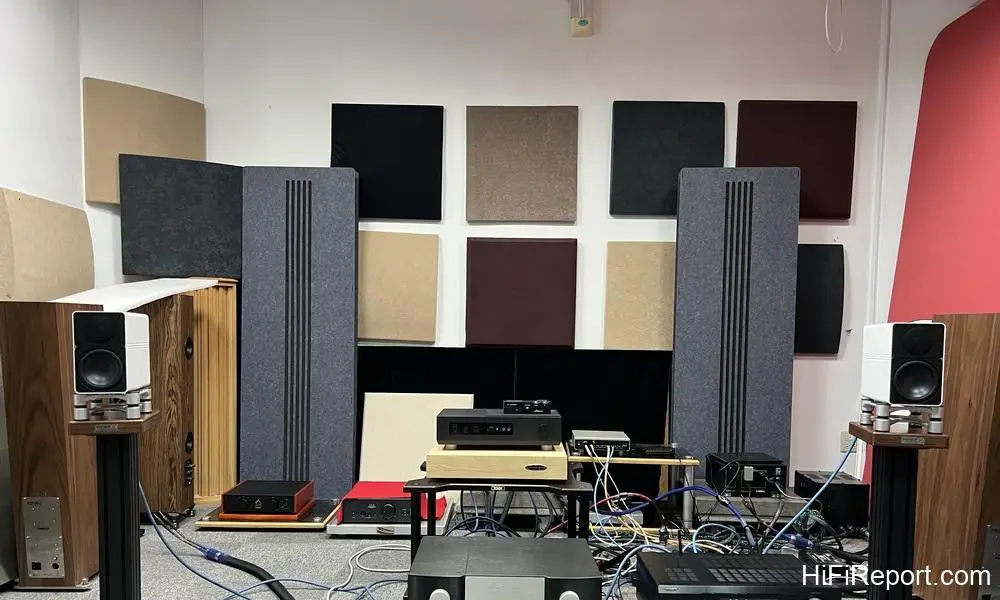
The Integra DTM-7.4 integrated amplifier came into play during the pairing tests conducted at the magazine office.
ELAC BS 305 vs BS 312 Comparison
Upon seeing the BS 305, I immediately thought of ELAC’s famous Elegant BS 312, as both feature aluminum cabinets. The primary difference lies in the drivers used. My guess is that because the BS 312 is so well-known but carries a substantial price tag (over USD 2800), ELAC decided to introduce the BS 305 with a similar aluminum enclosure but less expensive drivers, aiming to capture the entry-level market.
I made a quick comparison between the two pairs. The BS 312 measures 123x208x282mm, while the BS 305 is 123x208x270mm, differing only in depth. The former weighs 7.2 kg, and the latter 5.5 kg – another slight difference. The BS 312 costs over USD 2800, whereas the BS 305 is only about USD 1244. Clearly, the price difference is significant.
Of course, the lower price has a reason. The BS 312 uses the sixth-generation Jet air-motion transformer tweeter and ELAC’s proprietary crystal-shaped aluminum cone for the mid-bass driver (115mm AS-XR Cone). This contrasts sharply with the BS 305, which employs a 25mm soft dome tweeter and a 115mm AS Cone.
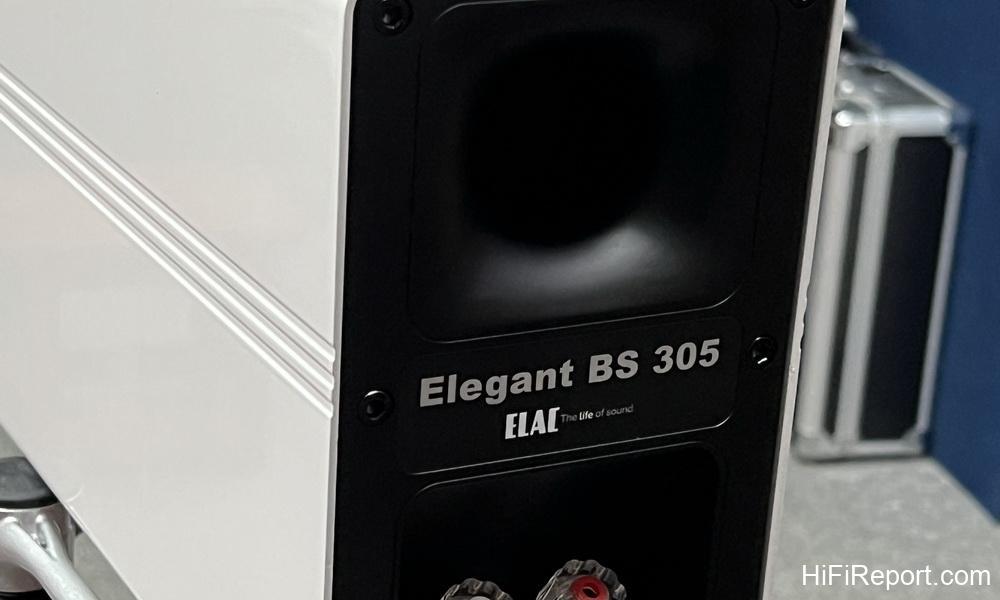
In the past, I often witnessed Shangyi (another distributor, presumably related) showcasing the BS 312 at audio shows, using it to punch above its weight class, leading listeners to believe the sound was coming from nearby floorstanding speakers, or prompting them to search for a subwoofer because a typical small speaker couldn’t produce such a grand musical presence.
Therefore, my mission was twofold: firstly, to test if the BS 305 could also exhibit that “punching above its weight” musical presence like the BS 312. Secondly, to find the best pairing amplifier – and by “best,” I mean finding a combination that offers exceptional value for money.
Sensitivity Challenge
Let me first state that the BS 312 is genuinely not easy to drive well. Its sensitivity is only around 86dB, measured at 4 ohms with a 2.83V input. Compared to a typical 8-ohm speaker, its actual sensitivity might be closer to 83dB, making it a difficult speaker to drive. Why such low sensitivity? Partly due to the drivers themselves, and partly because of the very small cabinet size. In other words, the BS 312 sacrifices sensitivity for its small and exquisite appearance.
Consequently, at audio shows, Shangyi always drives them with their own Linear Acoustic amplifiers, known for their strong driving capability.
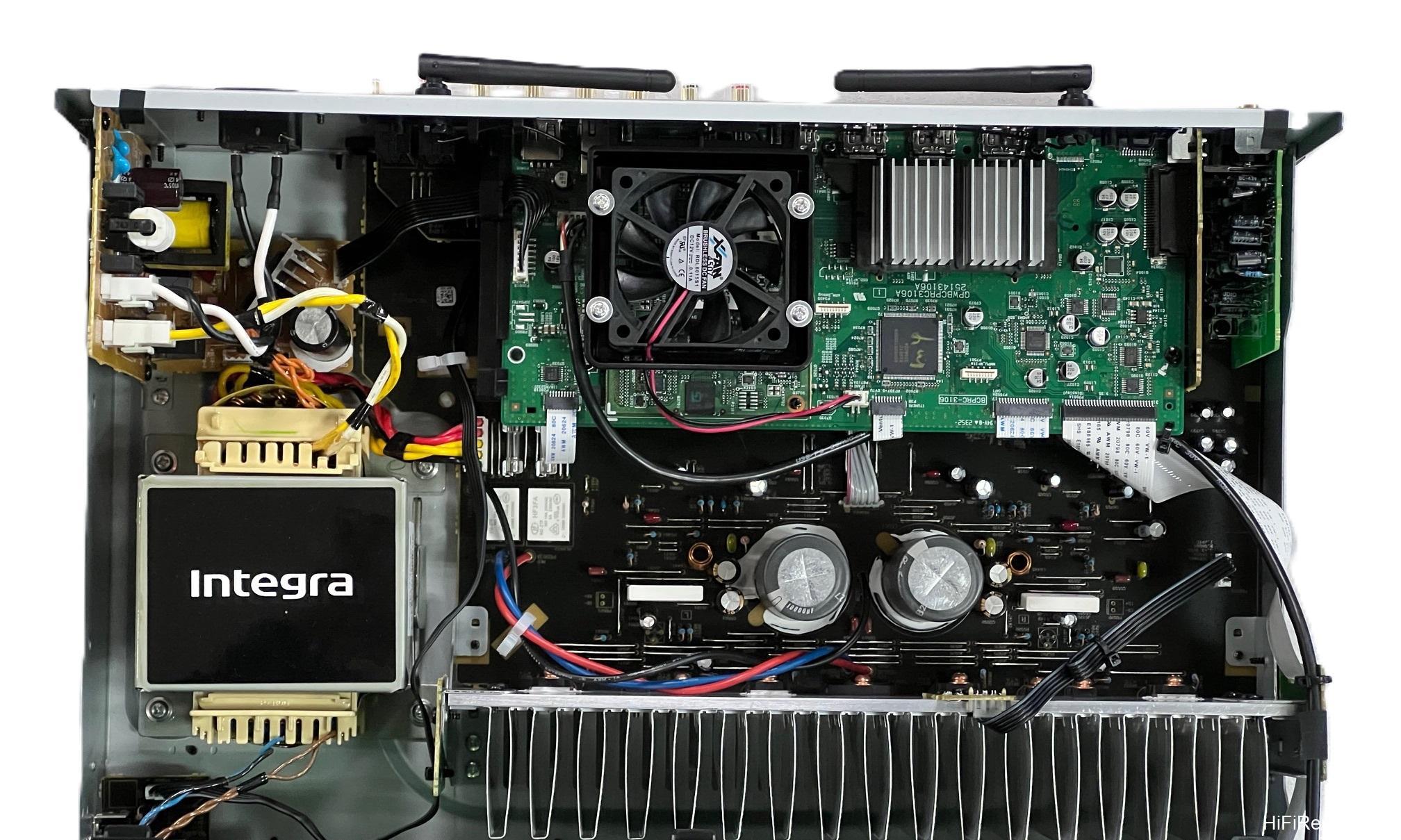
And the BS 305? Its sensitivity is also 86dB, measured at 4 ohms and 2.83V, meaning it’s just as challenging to drive as the BS 312. This suggests that even with its lower price, getting good sound from the BS 305 requires an amplifier with sufficient power and grip.
The Integra DTM-7.4
So, which amplifier can truly drive the BS 305 well? Or rather, what’s the best amplifier to pair with the BS 305? I conveniently rounded up a few amplifiers available in the magazine’s listening room, including the Integra DTM-7.4, to test with the BS 305. During the pairing process, I discovered that the DTM-7.4 is a piece of equipment well worth recommending, so before continuing, I want to introduce the DTM-7.4 first.
The full name of the Integra DTM-7.4 is Hi-Fi Network Stereo Receiver. “Hi-Fi” needs no explanation. “Network” indicates its ability to play streaming music. “Stereo Receiver” is less common; typically, you see surround receivers. I rarely encounter two-channel receivers. What is a Receiver? It’s an integrated amplifier with a built-in radio tuner. Models with AM/FM tuners are usually limited to North American markets; Taiwan imports North American models, so they also have AM/FM.
Additionally, the DTM-7.4 has many other features that also qualify it as a “Receiver.”
DTM-7.4 Features and Capabilities
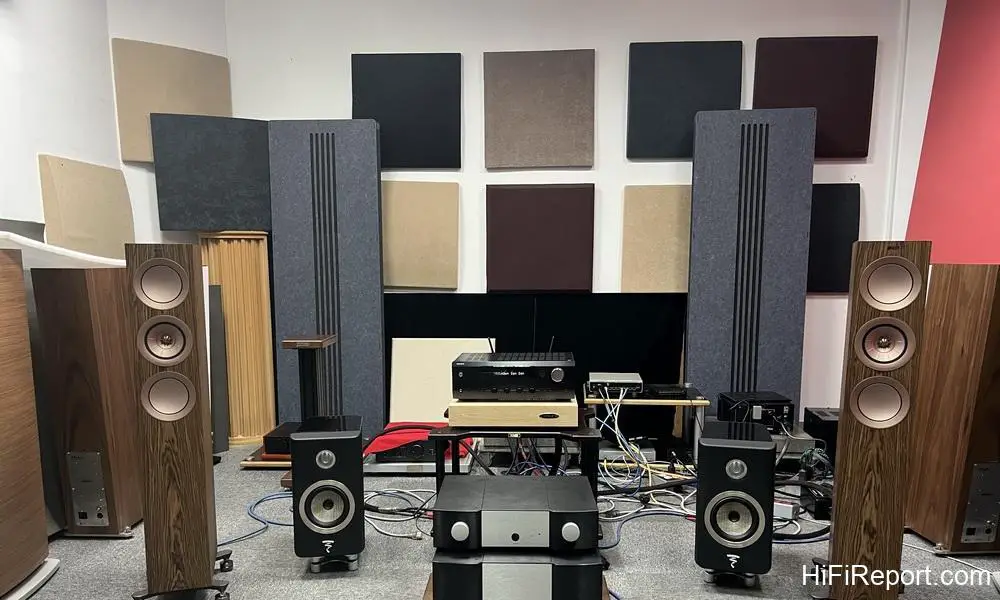
Let’s talk about the features of the DTM-7.4. It’s a two-channel amplifier delivering 110 watts per channel. It can receive music via Bluetooth, play streaming services like Tidal, Qobuz, Spotify, and Amazon, and access internet radio (so AM/FM isn’t essential). It can also connect to a TV via ARC (Audio Return Channel), allowing the TV’s audio to play through the DTM-7.4 and the speakers.
Furthermore, it can directly play music files stored on a USB flash drive and stream music from a music server. The DTM-7.4 is Roon Ready certified, allowing integration with Roon. It includes built-in Chromecast and AirPlay 2 for streaming and multi-room audio capabilities.
The DTM-7.4 supports Spotify, Amazon Music HD, Tidal, Deezer, Pandora, and TuneIn internet radio. Notably, it uses a high-end DAC chip, the AKM 32bit/768kHz AK4452 (an 8-channel chip used for 2 channels). Finally, the DTM-7.4 employs Class G amplification, not the traditional Class A, AB, or D.
A Brief History of Integra
Some might be unfamiliar with the Integra brand, so let me briefly touch upon their history. Integra is a brand under Onkyo, a veteran Japanese company founded in 1946 (the year after World War II ended). Initially called Osaka Denki Onkyo Company, it officially changed its name to Onkyo in 1971 for its 25th anniversary. Few realize that as early as 1969, Onkyo launched another brand, Integra, introducing the classic 701 integrated amplifier.
However, it wasn’t until 1999 that Integra made a name for itself in the US with custom installation surround sound receiver systems.
After many years of operation, in 2021, a joint venture between Premium Audio Company, a subsidiary of US-based VOXX International Corporation, and Sharp, acquired Onkyo and Integra for USD 30.8 million. PAC holds a 75% stake and is responsible for product development and marketing, while Sharp holds 25% and handles manufacturing and supply chain management.
Onkyo vs Integra: The Custom Installation Angle
Having covered the brief history of Integra, let me clarify a common point of confusion. Many people must have noticed the similarity between some Onkyo and Integra models. For instance, the DTM-7.4 and the Onkyo TX-8470 are essentially twin brothers – identical in appearance, internal design, and power output. Why is this? It’s quite simple: Integra is geared towards the custom installation market, while Onkyo targets the general home market. What’s the difference?
Custom installation requires integration with control systems, which the general home market typically does not. If a buyer doesn’t need control system integration, forcing that feature upon them would be both wasteful and increase costs.
Thus, although the DTM-7.4 and Onkyo TX-8470 are twins, if you require integration with a control system, the DTM-7.4 is recommended. Conversely, if not, the Onkyo TX-8470 is suitable. However, the local distributor prices both amplifiers identically at around USD 1150. Given this, I would naturally choose the DTM-7.4! While I might not need control system integration now, it could be useful later if I decide to integrate it with my home’s central control.
Class G Amplification
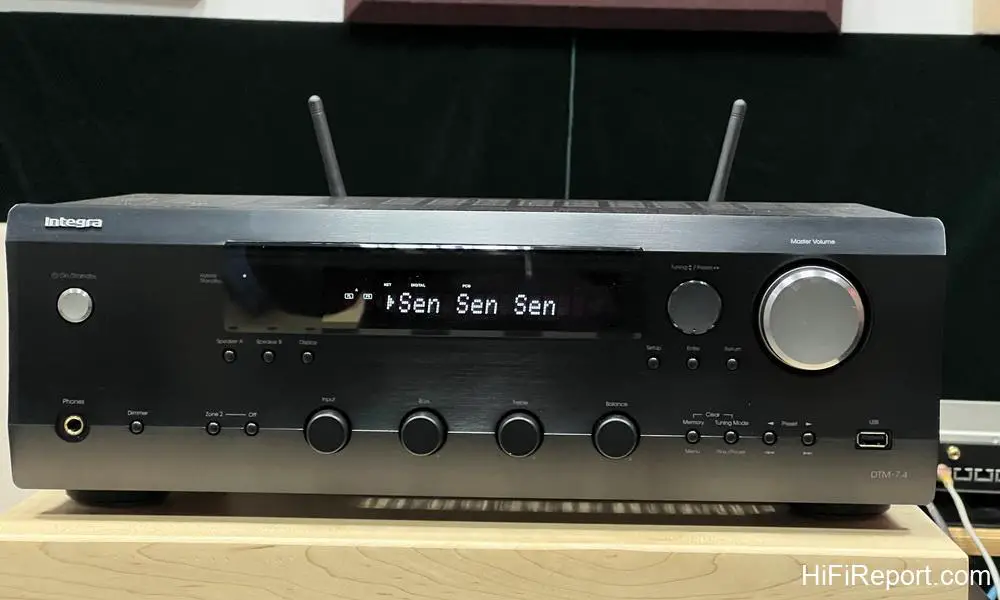
Let’s return to the design philosophy of the DTM-7.4. Its exterior resembles other Onkyo/Integra AV receivers, and the front panel design is similar. Without explanation, one might mistake it for a traditional AV receiver. From an engineering perspective, the DTM-7.4 is essentially an “AV Integrated Amplifier” that has removed the multi-channel power amplifiers, streamlined multi-channel related circuitry, and enhanced the two-channel power supply and audio purity.
Although it’s primarily a two-channel audio device, it can connect to a TV via the ARC terminal, integrating with video to some extent, making it somewhat of an “AV” hybrid.
The primary highlight of the DTM-7.4 is its Class G amplification, rather than the common Class A, AB, or D amplification. What are the pros and cons of these different amplification methods? Generally, Class A is considered to offer the best sound quality but is the most power-hungry (low energy efficiency). Class AB is a hybrid of A and B, providing good sound quality without excessive power consumption.
Class D is energy-efficient (high energy efficiency); historically, its sound quality was considered inferior to Class A and AB, but modern Class D amplifiers have significantly improved and can now compete in terms of distortion and sound quality. Regarding weight, for the same power output, Class A is the heaviest, followed by Class AB, and Class D is the lightest. The weight difference mainly stems from the power supply.
Class G amplification, developed by Hitachi, was initially named Class E but was later changed to Class G because Classes E and F already existed. The main characteristic of Class G amplification is that it divides signal amplification into two paths: low-power and high-power. When the music signal level is low, the low-power amplification circuit is engaged; when the signal level is high, the high-power circuit activates.
Because there are two sets of outputs (high and low) at the output stage, two sets of power supplies (high and low voltage) are also required.
Addressing Class G Concerns
If you have a basic understanding of different amplification classes, you might immediately wonder if Class G amplification, when switching between high and low-power outputs, suffers from crossover distortion similar to Class B or AB amplification. Yes, it does! This is a challenge engineers must address. However, if we can accept the crossover distortion in Class AB, there’s no reason we shouldn’t accept the “quasi-crossover distortion” in Class G amplification.
The key is that while Class G amplification’s energy efficiency isn’t as high as Class D, it’s higher than Class AB, and the sound quality is comparable to Class AB. This is a boon for portable devices where power consumption is critical, and it also reduces power consumption in traditional amplifiers, contributing positively to environmental protection. However, Class G amplification is not unique to Integra; Arcam, JBL, and Onkyo also feature models using Class G.
DTM-7.4 Controls and Connectivity
On the DTM-7.4’s front panel, the power switch is on the top left, the volume control on the right. Next to it is the Cursor button (up, down, left, right, and center for selection). Below are the associated Setup and Return buttons. Below the power switch is the headphone jack.
There are also buttons for display window brightness, Zone 2 activation/deactivation, input selector knob, Bass, Treble, and Balance adjustment knobs, Menu button, Memory button, Play/Pause button (for USB playback), and previous/next track buttons (for USB). The USB slot is on the far right. Frankly, this design is incredibly user-friendly, almost made for newcomers to audio. Apart from the menu, controls are intuitive!
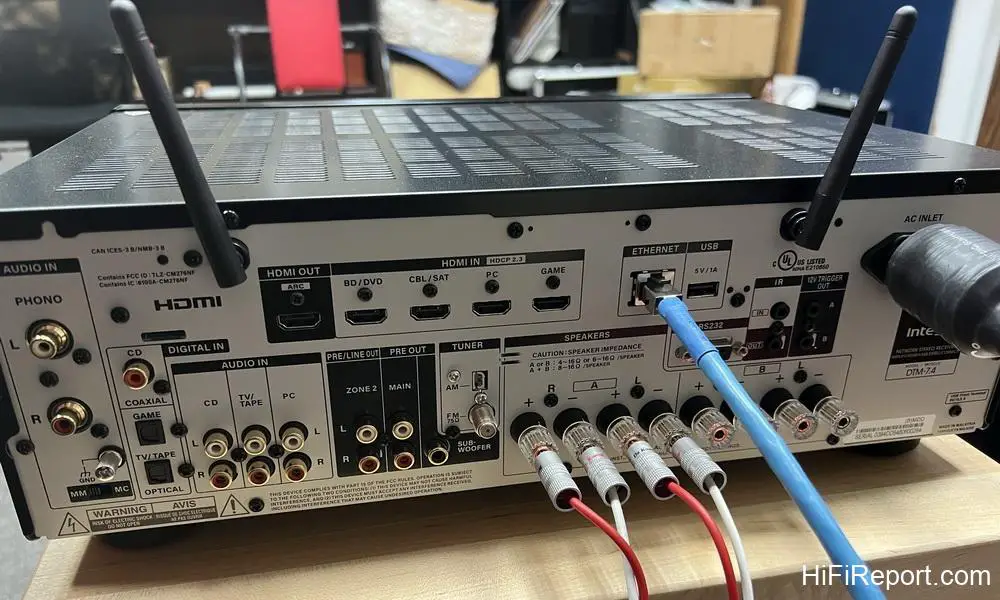
Moving to the rear panel, you won’t find XLR balanced terminals, which is typical for an amplifier in this price range. On the far left are the phono input terminals (with built-in MM/MC phono stage), four HDMI inputs and one output, three sets of RCA analog inputs, a subwoofer output, a network terminal, Zone 2 output, various digital output terminals, and two sets of speaker terminals (A and B). These terminals are more than sufficient for connecting various sources.

In addition to the functions mentioned above, the DTM-7.4’s rear panel includes an RS232 terminal, used for connecting to control systems. The DTM-7.4 is compatible with multiple control systems, including Control4, Crestron, Savant, ELAN, Domotz, and nine others. It’s also compatible with Google Home. These features are not found on the Onkyo TX-8470.
Pairing and Listening Impressions
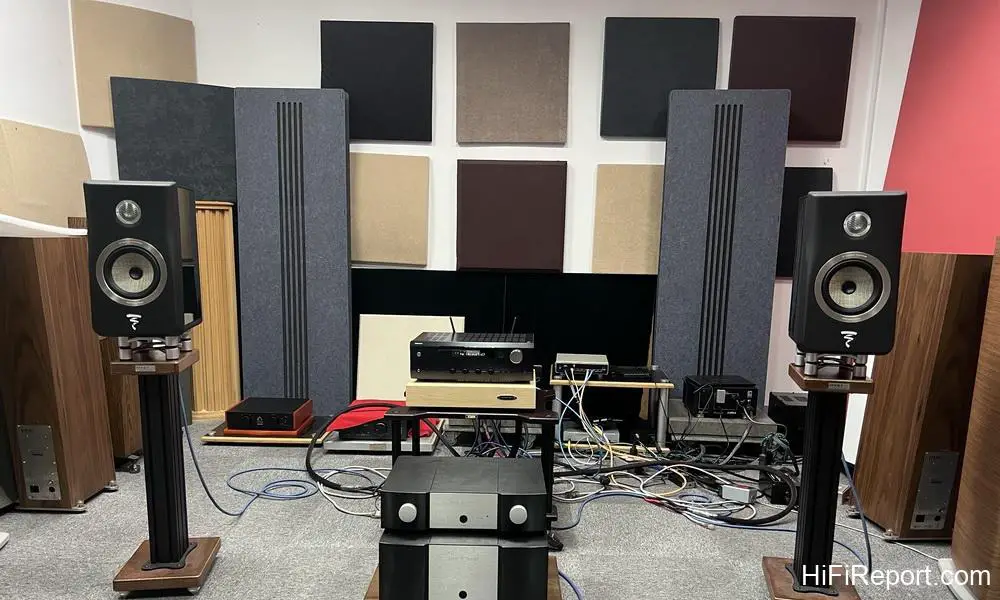
Now, let’s discuss the listening experience during the pairing process. Initially, the BS 305 was the main focus, but the DTM-7.4 has unexpectedly become the star. I paired the DTM-7.4 with the KEF R 5 Meta speakers (approx. USD 5000) and Focal Kanta N1 (approx. USD 8688) from the listening room, as well as the ELAC BS 305. Although the DTM-7.4 is only around USD 1150, it paired very well with the KEF R5 Meta. The bass performance was excellent – supple yet taut and solid.
The midrange vocals and violin had a sweet quality (without using the treble or bass tone controls). Driving them felt effortless, even when listening to heavy metal like The Hu’s “Wolf Totem,” the amplifier didn’t falter.
Listening to Alanis Morissette’s “You Oughta Know,” the kick drum sounded very solid. With Perlman playing Shostakovich’s “Violin Concerto,” the violin tone was quite sweet. Isabelle Faust’s performance of Beethoven’s “Kreutzer Sonata” also featured sweet violin and piano. Listening to Fazil Say’s “Sen Sen Sen,” the piano was crisp and powerful, with a focused image and good physical presence; the female vocalist’s voice was also sweet and rich.

Clearly, the DTM-7.4 and KEF R5 Meta are a great match.
How about the DTM-7.4 driving the Kanta N1? Although these are relatively “large” bookshelf speakers, the DTM-7.4 drove them effortlessly. The soundstage was expansive, the music lively, and the high frequencies were particularly sweet, though sibilance was slightly more prominent. This sonic characteristic has always been a strength of Focal speakers due to their high sensitivity and the use of a Beryllium tweeter combined with light and rigid mid-bass drivers.
In this pairing, the Kanta N1 didn’t produce as much bass quantity as the KEF R5 Meta, but for a bookshelf speaker, it was already quite powerful.
The DTM-7.4 and BS 305 Pairing
As for the DTM-7.4 paired with the BS 305, compared to the previous two combinations, the bass quantity is naturally less. However, the mid and high frequencies possess their own unique characteristics. The DTM-7.4’s high frequencies have excellent quality; sibilance is not strong, and the violin sings with a sweet tone. The midrange is very full; it’s hard to imagine such a small speaker producing such a broad midrange.
If listening only to music with less emphasis on the lower frequencies (like “Sen Sen Sen” with just piano and voice), I would feel there’s little difference between the BS 305 and the R5 Meta or Kanta N1. In fact, the soundstage feels even wider because the BS 305’s small size allows it to easily disappear into the music. However, don’t assume the BS 305 lacks bass entirely. I believe its high, mid, and low frequencies are well-balanced, so listening to most music won’t feel inadequate.
Frankly, in absolute terms, the DTM-7.4 performs best when paired with the KEF R5 Meta. If the listening space is not small and the budget allows, it’s an excellent combination. However, when the DTM-7.4 is paired with the BS 305 and used in a listening space of about five pings (approx. 16.5 sq m), the combined price of just over USD 2188 is, in my opinion, highly attractive.
The DTM-7.4 itself is feature-rich, capable of improving TV audio, playing streaming music and vinyl records, integrating with home control systems, and offering a subwoofer output for a 2.1 channel setup. Adding a subwoofer would significantly transform the BS 305’s performance. Frankly, it’s a very cost-effective option.
Driving the BS 305: The Power Match
Regarding the BS 305, there’s no denying that these small speakers are challenging to drive. I tried driving them with a 50-watt amplifier in the listening room, and it simply didn’t work. While the volume could be turned up, the music felt insubstantial, lacking physical presence and weight. I also used a 150-watt amplifier, which provided sufficient power, but the high frequencies didn’t sound as sweet, and the sound wasn’t as lively.
Clearly, attention must be paid not only to driving power but also to the sonic characteristics of the pairing. Why don’t I name the specific amplifiers I tested? Because I fear some people might automatically assume they are simply bad and incapable of making the BS 305 sound good, which would be unfair.
The magazine office also has a Linear Acoustic pre/power amplifier setup, which drives the BS 305 without any issues and performs exceptionally well. The problem is, how do you justify pairing an amplifier costing hundreds of thousands of NT dollars (thousands of USD) with speakers costing less than USD 1244? In any case, I tested all the comparably priced amplifiers available in the listening room, and none seemed to surpass the DTM-7.4.
Ultimately, the DTM-7.4, priced at around USD 1150, is the most suitable partner for the BS 305, excelling in terms of driving capability, sonic synergy, and features.
Conclusion
In conclusion, the Integra DTM-7.4 is a streaming stereo receiver with excellent value for money. It can be paired with various speakers and is a fantastic choice for those just starting their journey into two-channel music. The ELAC BS 305, however, is pickier; it requires a powerful amplifier that also matches its sonic characteristics. It’s also not ideal for very large spaces.
Specifications
**ELAC Elegant BS 305**
* 2-way bass-reflex bookshelf loudspeaker
* Drivers: 1x 25mm soft dome tweeter, 1x 115mm mid-bass driver
* Frequency Response: 42 – 23,000 Hz
* Nominal Impedance: 4 ohms
* Sensitivity: 86dB (2.83V)
* Crossover Frequency: 3500Hz
* Dimensions: 208x123x270mm
* Weight: 5.5 kg
* Reference Price: Approx. USD 1244
* Distributor: Yuhuan Digital Audio
**Integra DTM 7.4**
* 2-channel streaming integrated amplifier
* Output Power: 110 Watts per channel (8 ohms, Class G)
* Features: Streaming playback, Subwoofer output, Roon Ready, Control system integration, 4 HDMI inputs, 1 output, 8K video support, ARC connectivity with TV
* Dimensions: 435x149x328mm
* Weight: 9.0 kg