
ISOtunes Sport Advance Bluetooth Shooting Ear Protection for Gun Range Review
The ISOtunes Sport Advance is an active ear plug system that pairs foam noise isolation with a seven-level microphone passthrough and Bluetooth 5.0 audio, aimed at shooters, hunters, and shop workers who need long-duration hearing protection without losing the ability to talk or stream.
The Short Answer
The ISOtunes Sport Advance pairs foam ear plugs with an active microphone system that relays conversation and cuts impact noise at the source. The single reason to pick it over most competing active ear plugs is battery endurance: up to 10 hours on one charge, a figure that outlasts a full shooting session or a work shift without a recharge. The main trade-offs are the foam-tip comfort during very long wear and a coarse volume ladder, but the core noise protection and audio passthrough perform as the specs promise. For anyone who needs sustained protection plus Bluetooth streaming, this is a practical, well-supported choice backed by nearly a thousand owner reviews.
What We Like / What We Don’t
What We Like
- 26 dB passive NRR foam core with active cutoff on sudden impact sounds
- Up to 10 hours of battery life on a single charge
- Bluetooth 5.0 connectivity for music, podcasts, and phone calls
- IP67 rating against dust, sweat, and water
- Seven adjustable passthrough levels for fine-tuning situational awareness
What We Don’t
- Foam tips run thick and can feel scratchy after several hours of wear
- Large gap between the muted setting and the first audible volume level
- Lightweight plastic housing raises long-term durability questions
- No printed or digital instructions for initial range setup
- Outdoor microphone pickup is sensitive to wind noise
Made for Whom
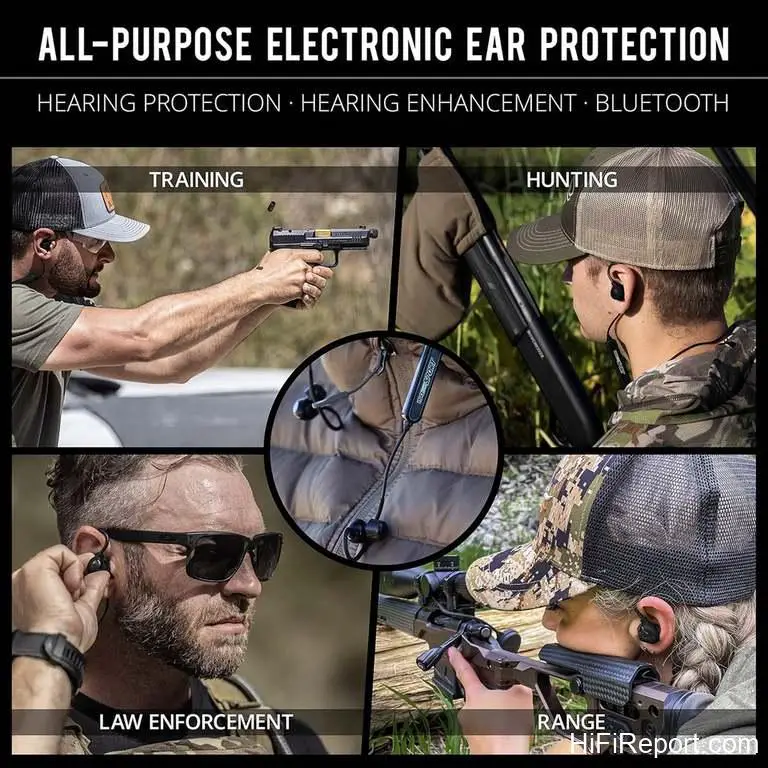
The clearest fit is the practical shooter or hunter who works the range for hours and wants to talk to a partner or listen to a podcast without pulling out ear protection. Owners who shot clay targets or plinked with steel confirmed that the foam plugs handle the report while the microphone levels let them hear range calls and movement in the woods. The system scales down for lighter duties: a motorcyclist who wants music under a helmet, or a person who simply wants to sit and listen to a book at the range while staying protected. One Australian clay shooter called these the first pair that “do what I need,” noting that at the minimum volume setting the passthrough mirrors normal hearing and anything above that feels like super hearing.
The second profile is the workshop or job-site worker around constant grinding, hammering, and engine noise. A welder in a fabrication shop gets the same benefit: the active cutoff triggers before the peak hits the eardrum, and the Bluetooth feed keeps a music track running underneath. The IP67 shell handles the sweat and dust of a hot shop floor, and the 10-hour battery means a full shift without a top-up. One owner in heavy machinery reported the plugs handled the constant noise better than the routine of swapping standard foam plugs in and out.
The anti-profile is anyone who cannot tolerate an in-ear device for more than an hour or two. Several reviewers with smaller ear canals described even the smallest foam tips as thick and scratchy after extended wear. If standard foam plugs already hurt after twenty minutes, the Sport Advance will not fix that, and the active electronics cannot compensate for a poor physical seal.
Copyright hifireport.com. Republishing, scraping, or reselling this text is prohibited.
Design and Comfort
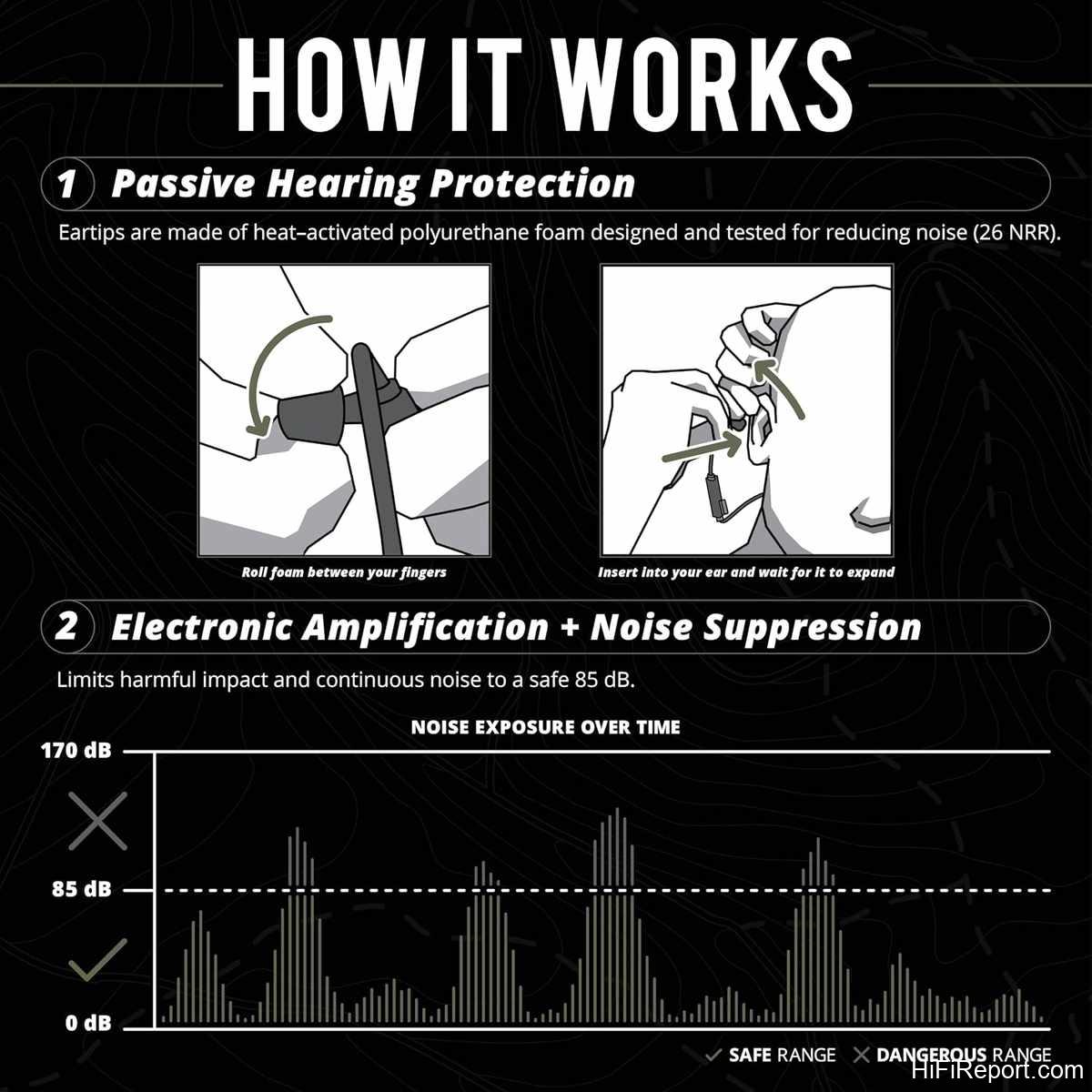
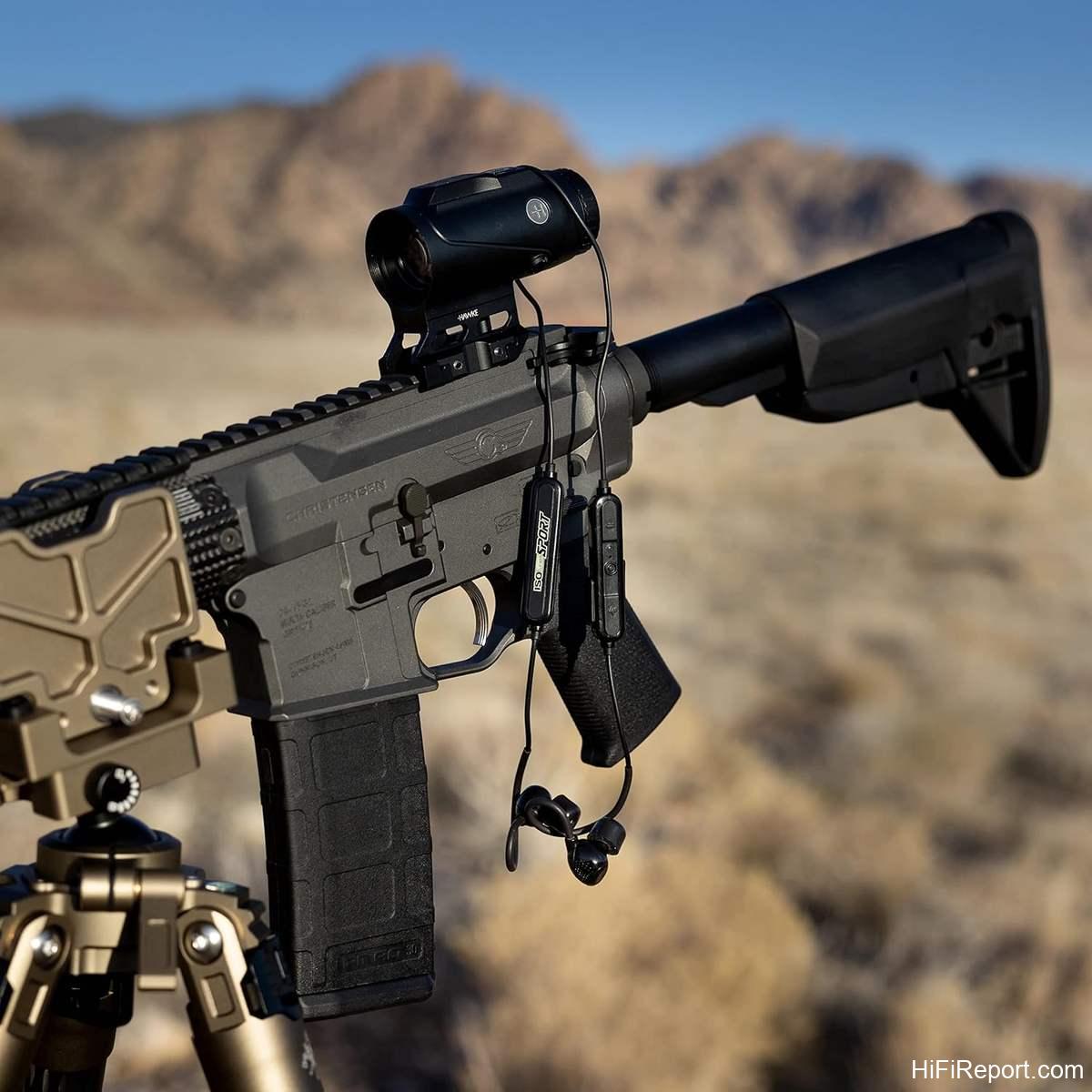
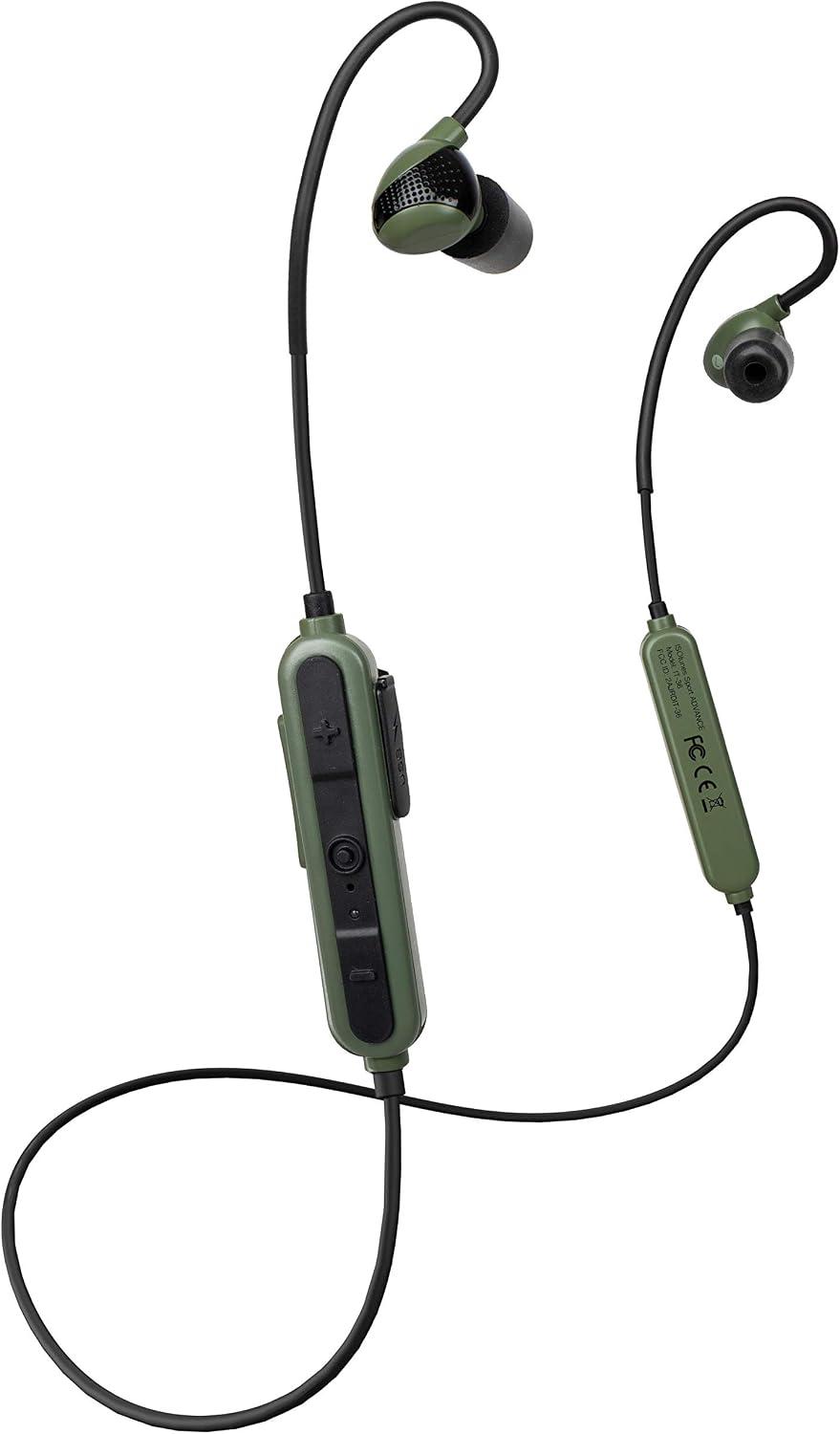
The unit sits as a pair of in-ear modules connected by a thin cable that drapes over the outer ear, with a small inline controller and a hook clip that attaches to a collar or cap. The foam tips come in multiple sizes, and owners consistently note that getting a proper seal on first insertion matters: push the plug in, hold it for a few seconds while the foam expands, and the isolation locks in. One Canadian reviewer specifically called out that step, advising new users to press the earbud in firmly and hold until the foam seals before expecting full noise protection. The cable length is enough to rest on the neck without the weight pulling the tips loose, though it is shorter than the loop style used by some competitors, so the controller dangles in front of the chin unless you clip it to a hat or use the included wire hook.
Over a full shift or a long range day, comfort splits by ear shape. Owners with average-to-larger canals report forgetting they are wearing the plugs after the first few minutes. One clay shooter noted the controller can be clipped to the back of a shooting cap to keep it off the rifle stock, a small but useful trick for positional work. Owners with smaller canals find the smallest foam tip presses and scratches after two or three hours, and one reviewer in a hot, dirty shop found that even the smallest tips hurt after several hours of continuous wear. The IP67 shell handles sweat and light rain without issue, which matters for outdoor hunting or a shop floor that gets dirty fast.
Sound: What to Expect
Music and Bluetooth Audio
The Bluetooth 5.0 link to a phone or tablet handles streamed music and calls with what multiple owners call “surprisingly good” clarity for a device this small. The connection to an iPhone, in one owner’s words, is “nice and stable.” The volume is capped at a safe ceiling that prevents over-driving the eardrum, and at that ceiling the sound is clean and the incoming call audio is intelligible. The outgoing side is where it falls short: a directional microphone with echo cancellation blocks the room noise on your end, but people on the other end hear a flat, tinny version of your voice. For a range or shop environment that is acceptable. For a work video call where your voice quality matters, it will sound muted.
Microphone Passthrough and Limitations
The seven-level dial sets how much ambient sound the directional microphones relay through. At the lowest audible level the passthrough mirrors normal conversational volume, and stepping up adds clarity for range calls or movement in brush. Outdoors, the mic picks up gusts and sharp transients that clip the signal, producing brief bursts of distorted audio that owners learn to ignore. The active cutoff triggers almost instantly on a gunshot or hammer blow, but the recovery back to full passthrough volume takes several seconds. The volume steps are coarse: the jump from muted to the first audible level is large enough that some owners go from total silence to uncomfortably loud with one click, and intermediate fine-tuning is limited to the seven discrete levels.
Noise Cancelling
The ISOtunes Sport Advance protects through a two-layer system: the passive foam plug delivers a 26 dB NRR baseline, and the active electronics detect an impact spike and mute the microphone within a fraction of a second. In practice, owners at the range describe the cutoff as near-instantaneous: a shot from a neighboring lane registers as a brief dull thump rather than a sharp crack, provided the foam is seated properly. One owner who compared the Sport Advance against a Walker Razor X retractable system found the power cut-off to be “almost instantaneous” on both, with no meaningful difference in the silenced state.
The system is not an active noise-cancelling headphone; it suppresses percussive peaks while passing steady ambient sound at the level you choose. For the gun-report-and-conversation mix of a typical range or workshop, that split is the right tool. One shooter who expected the plugs to block everything found that at a higher passthrough setting, a shot from a few stalls down still hit the ear hard; dialing the level to zero and re-seating the foam resolved the issue. The takeaway is that the passthrough level you choose directly determines how much of the report gets through.
Battery and Charging
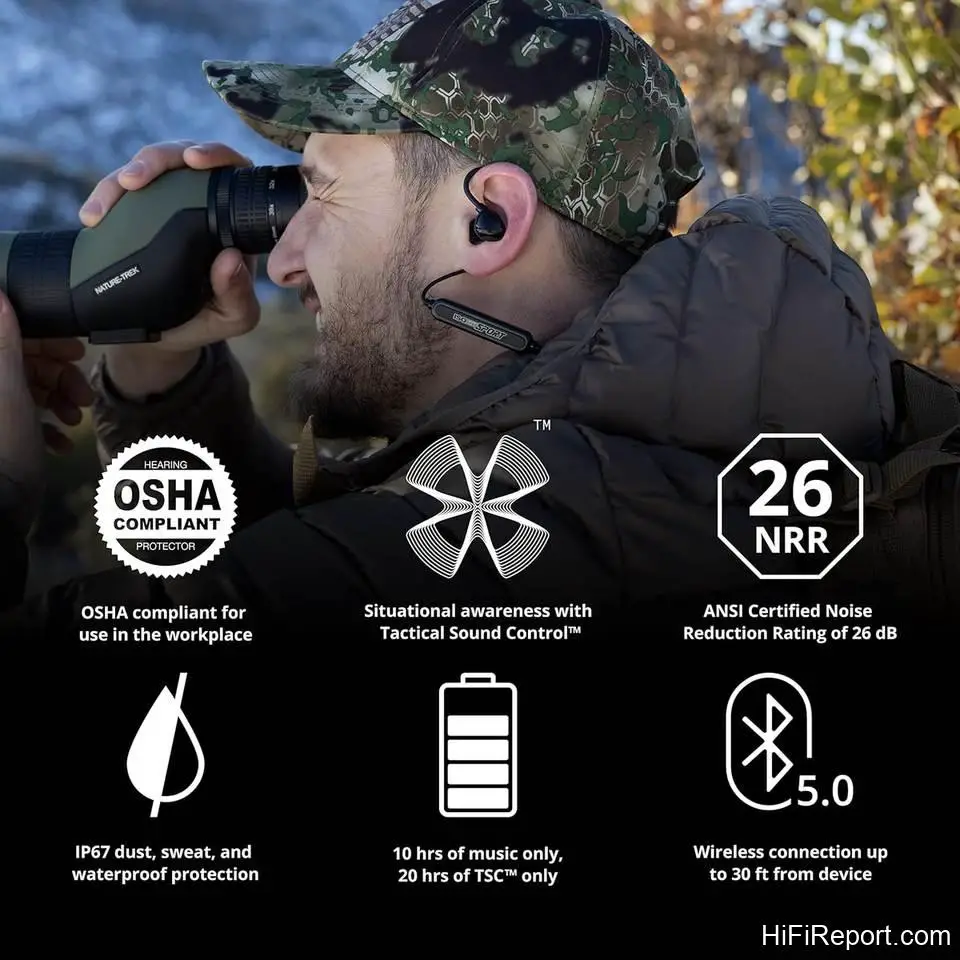
The rechargeable lithium-ion pack in the Sport Advance is rated for up to 10 hours on a full charge, and owners who tracked their usage confirmed the claim holds under real load. One user ran the plugs for nine hours of active streaming, external-mic conversation, and phone calls in a loud shop and still had charge at the end of shift. Another reported 8 to 10 hours a day for several consecutive days without plugging in. A third pulled out of a four-hour range session with the unit still going strong, and a welding-shop owner estimated two to three days of full-time use on a single charge. Charging is a matter of returning the pair to the included carrying case, which doubles as the dock. By comparison, one owner’s Walker Razor X muffs died after an hour and a half, making the Sport Advance’s endurance the standout feature.
What Customers Are Saying
The dominant praise theme is endurance and reliability. Owners who use the plugs at the range, on a motorcycle, or in a fabrication shop consistently report that the battery outlasts the session, and several compared the Sport Advance favorably against over-ear muffs that lose power after ninety minutes. A secondary theme is customer service: at least three reviewers described a defective first unit, whether crackling audio, a loose wire, or reduced performance, and said ISOtunes replaced the set within a couple of days. One instance involved a unit purchased months earlier and legitimately out of warranty; the company sent a replacement within hours anyway. The foam-tip comfort and the passive isolation get steady approval once the correct size is seated.
The complaint side centers on two issues. First, build quality: two owners received sets where one earbud crackled or the wire was loose, and a third noted the plastic housing feels lighter than expected. Second, the active system’s behavior under specific conditions: one shooter reported that gunshots from a few stalls down still felt like a slap to the ear until he dialed the passthrough to zero and re-seated the foam. Another owner in a high-noise machinery environment found the constant hum at higher amplification levels uncomfortable after an hour, to the point of a headache. Neither issue is solvable through settings; the firmware is fixed, and the foam is the final seal.
So, Buy or Pass
The Sport Advance earns its place if your priority is a pair of ear plugs that will not die mid-session and that let you stream audio or talk to a partner without removing anything. The 10-hour battery claim holds up under real use, the IP67 shell shrugs off sweat and rain, and the Bluetooth link is stable enough for a long podcast or a series of phone calls at the range. The two things that will push a buyer toward a different product are the coarse volume stepping and the foam-tip pressure on smaller canals, both matters of personal tolerance rather than design flaws. The customer-service track record adds a layer of confidence: when a unit does fail, the replacement process is fast and the pushback is minimal.
For most shooters, hunters, and shop workers who already tolerate standard foam plugs, the Sport Advance is a meaningful step up. It adds hours of endurance and a Bluetooth feed without the bulk of over-ear muffs, and the IP67 rating means it holds up when the weather or the shop floor turns. Best for anyone who needs a single pair of ear protection that lasts a full shooting or work day, streams audio, and withstands the elements.
Copyright hifireport.com. Republishing, scraping, or reselling this text is prohibited.
Specifications
- Noise reduction rating: 26 dB NRR (passive)
- Battery life: up to 10 hours per charge
- Battery type: rechargeable lithium-ion
- Bluetooth version: 5.0
- Water and dust rating: IP67
- Passthrough levels: 7 adjustable
- Microphone: directional with echo cancellation
- Form factor: in-ear foam plug with over-ear cable
- Included: multiple foam tip sizes, carrying and charging case, clothes hook clip
Quick Questions
Will the Sport Advance replace over-ear muffs for a full day at the range?
Yes, for most shooters. Owners who compared the two report the foam plugs handle the report once properly seated, and the 10-hour battery outlasts a typical session. You lose the physical seal of a cup and gain the ability to stream audio and talk without removing anything.
Can I take a phone call while wearing the Sport Advance in a loud shop?
The incoming audio is clear, and the directional mic with echo cancellation blocks most percussive noise on your end. Owners note that your outgoing voice sounds muffled to the other person, so for important calls a short pause is the wiser move.
Do the foam tips need replacing over time?
Yes. Several owners flagged that the included foam degrades and loses its seal, so periodic replacement of the tips is part of routine maintenance to keep the 26 dB NRR intact. The plastic cone tips in the box are not meant for shooting; use the foam.
What happens if a unit arrives defective?
ISOtunes has a track record of replacing faulty sets quickly, sometimes within a couple of days and outside the stated warranty window. Multiple reviewers described first units with crackling audio or loose wires that were swapped without pushback from the company.

- TACTICAL SOUND CONTROL: Block impact noise with audio passthrough technology. TSC enables conversation and environmental awareness while suppressing percussive noises from gun ranges or other hunting and shooting related activities. Also features passive noise isolation of 26 dB noise reduction rate (NRR).
- ALL DAY BATTERY: ISOtunes Sport ADVANCE Features a lightweight rechargeable lithium-ion battery with up to 10 hours of battery life on a full charge. Certain to provide you with hearing protection for long sessions at the shooting range.
- BLUETOOTH CONNECTIVITY: Seamlessly connects to your phone, computer, or tablet for easy on the go use and control of your music or phone calls. Uses Bluetooth 5.0 technology.