
JBL Spinner BT Turntable Review
Want to delve into the world of vinyl but find yourself daunted by the paraphernalia? The need for a separate phono amplifier, the finicky process of setting stylus pressure, and the tangle of signal cables connecting turntable, phono stage, and amplifier can indeed seem overwhelming. Fear not, JBL’s new Spinner BT turntable arrives as a genuine “plug-and-play” solution. It effortlessly sweeps away those traditional barriers to vinyl enjoyment, leveraging Bluetooth wireless transmission. Simply power it up, pair it, and you’re instantly immersed in the rich sound of vinyl records.
In fact, upon completing the Spinner BT setup, my immediate thought was to acquire one for my son’s listening pleasure at home.
Traditional Vinyl: The Hurdles
My son, a recent university entrant, expressed interest in exploring vinyl. I duly transported my Elac Miracord 90 from the office, accompanied by my trusty EAR 834 phono stage, a veteran of over two decades of service. However, upon reaching his room, the setup stalled before it even began. His space was limited, geared towards active speakers connected to his computer. The Miracord 90 proved too large for his desk, relegated to a bedside table.
Further complications arose. Signal cables would need to stretch across the room, and both the Miracord 90 and 834P required mains power. No configuration seemed quite right. Consequently, these two pieces of vinyl equipment languished as mere ornaments, their voices unsung.
Seamless JBL Bluetooth Integration
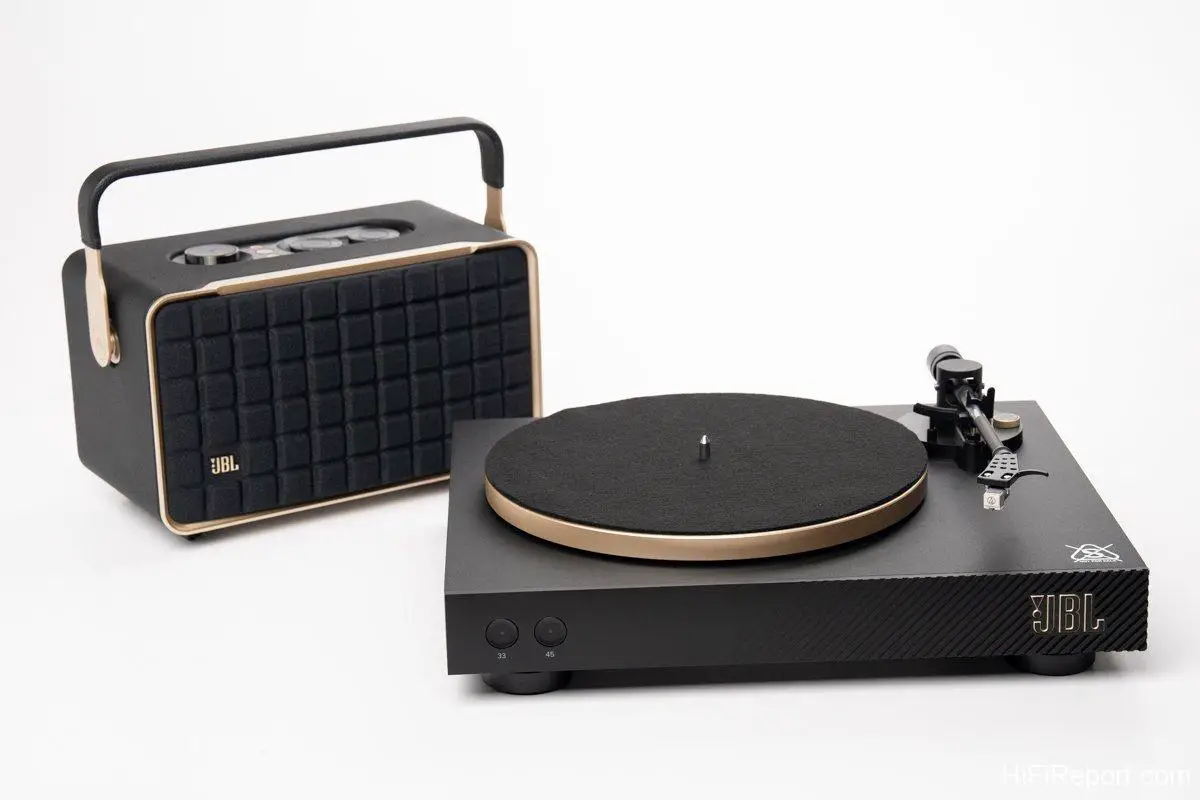
For younger generations venturing into vinyl, these practical challenges are very real. However, the Spinner BT deftly sidesteps these analog entry barriers, embracing Bluetooth 5.2 with aptX HD, the current pinnacle of wireless audio fidelity. Just connect the power, initiate Bluetooth pairing – and allow me to note, for this HiFiReport review, I partnered the Spinner BT with the JBL Authentics 300 speaker.
How straightforward is it? Power on both the Spinner BT and Authentics 300, press the Bluetooth pairing button on the Spinner BT, followed by the Bluetooth pairing button on the Authentics 300. Within mere seconds (though I confess I didn’t time it precisely), the devices were communicating flawlessly.
Simplified Setup: No Gauge Needed
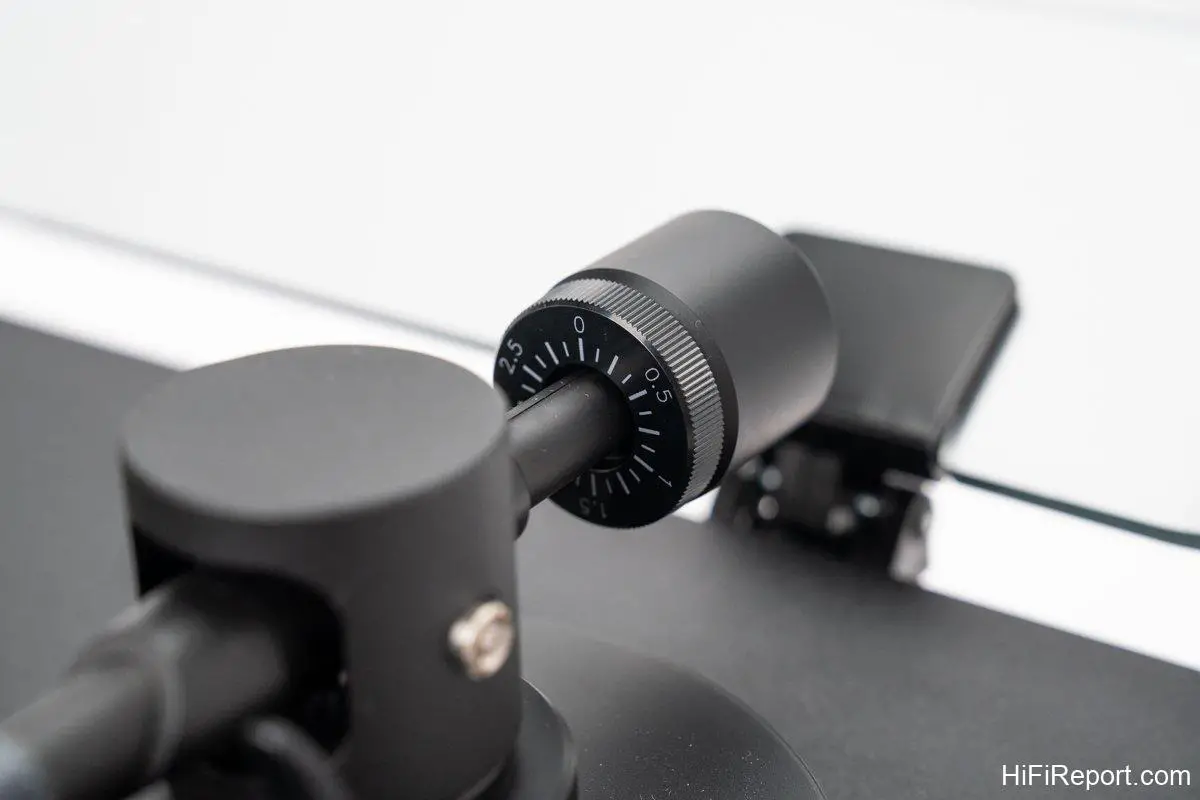
Crucially, resist the immediate urge to play a record. First, stylus pressure must be addressed. But what if a stylus gauge isn’t readily available? JBL has preempted this concern. During counterweight installation (the black metallic ring at the tonearm’s rear), ensure the central groove aligns with the “0” mark. Then, slide it inward by two notches and rotate the counterweight clockwise one full turn. This approximates a 2.5-gram stylus pressure. Subsequently, adjust the anti-skate dial (located to the right of the tonearm base) to roughly 2-2.5 grams. Now, you’re primed to enjoy vinyl playback.
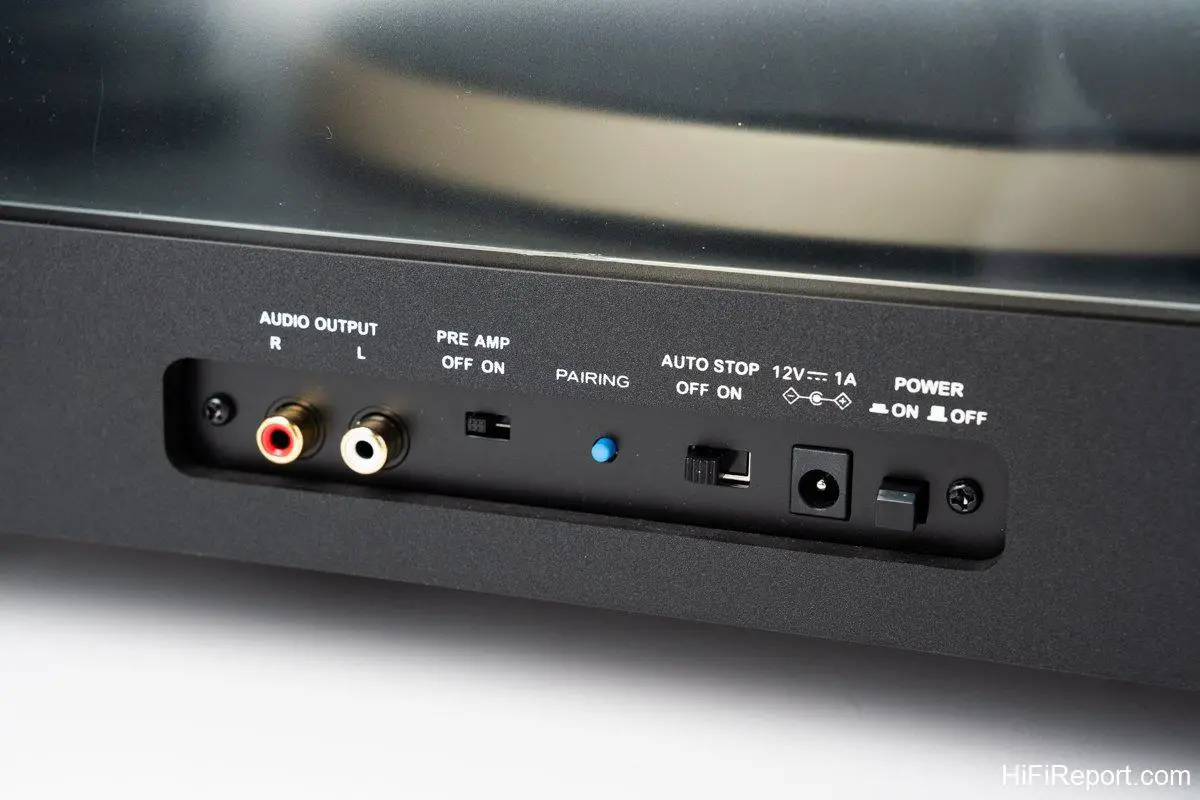
Should you opt to forgo JBL’s Bluetooth ecosystem and integrate the Spinner BT with your existing amplifier and speakers, RCA outputs are provided. In such scenarios, note that if utilizing an external phono preamplifier, the “Preamp” switch on the Spinner BT’s rear panel must be set to “Off,” disabling the internal stage. Conversely, for direct RCA connection from the Spinner BT, ensure the built-in MM phono stage is engaged for proper audio output.

Auto Stop: Not Quite Bedtime Ready
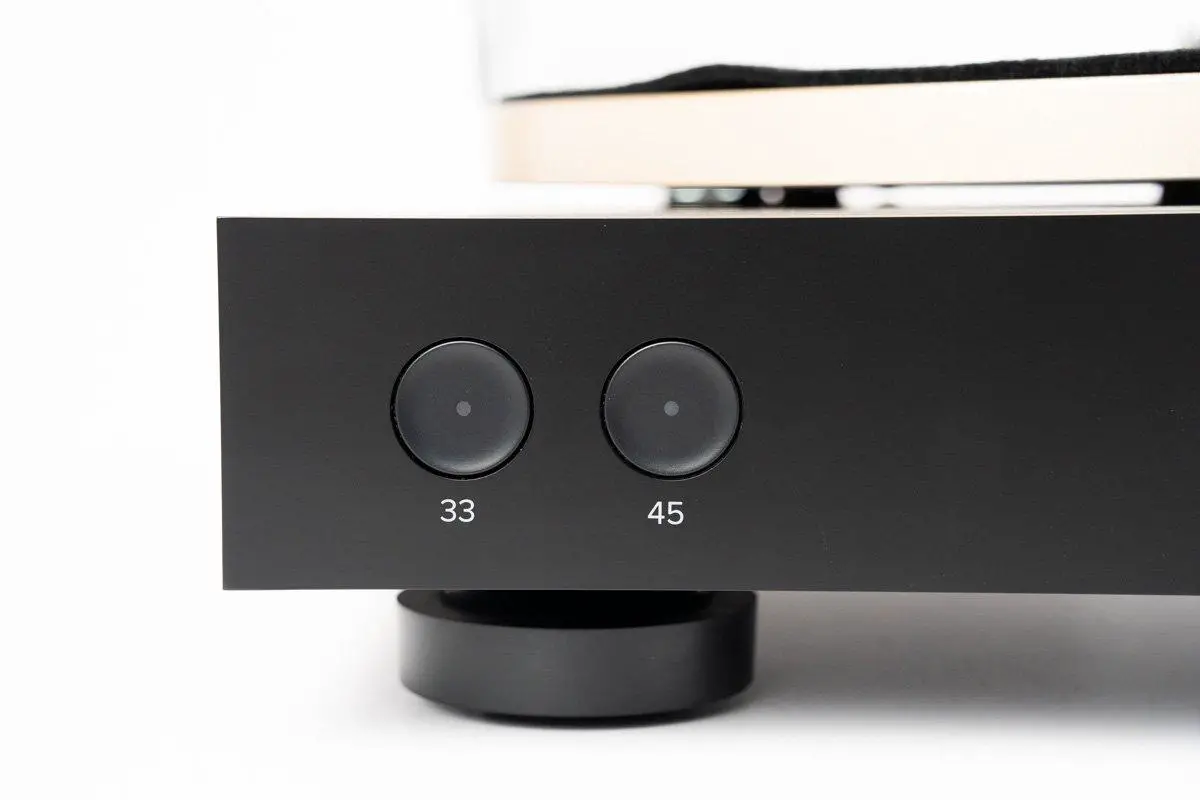
The Spinner BT’s rear panel also hosts an “Auto Start/Stop” toggle. Disabling this feature means the platter, once initiated (via the 33 or 45 RPM front panel buttons), will spin continuously until manually stopped. Engaging “Auto Start/Stop” activates automatic operation based on tonearm position. Moving the tonearm inward starts the platter; lifting and returning it to its rest halts rotation.
However, the “Auto Start/Stop” is solely governed by tonearm position. It will not automatically stop when the stylus reaches the record’s run-out groove. Manual intervention is required – lifting the tonearm and returning it to its rest position is necessary to halt playback.
Initially, I anticipated automatic stop at the record’s end, but this proved incorrect. On two occasions, the platter continued spinning endlessly in the run-out groove until I manually intervened. Therefore, drifting off to sleep while enjoying vinyl still carries the risk of overnight stylus wear.
Tonearm Versatility: Detachable Headshell
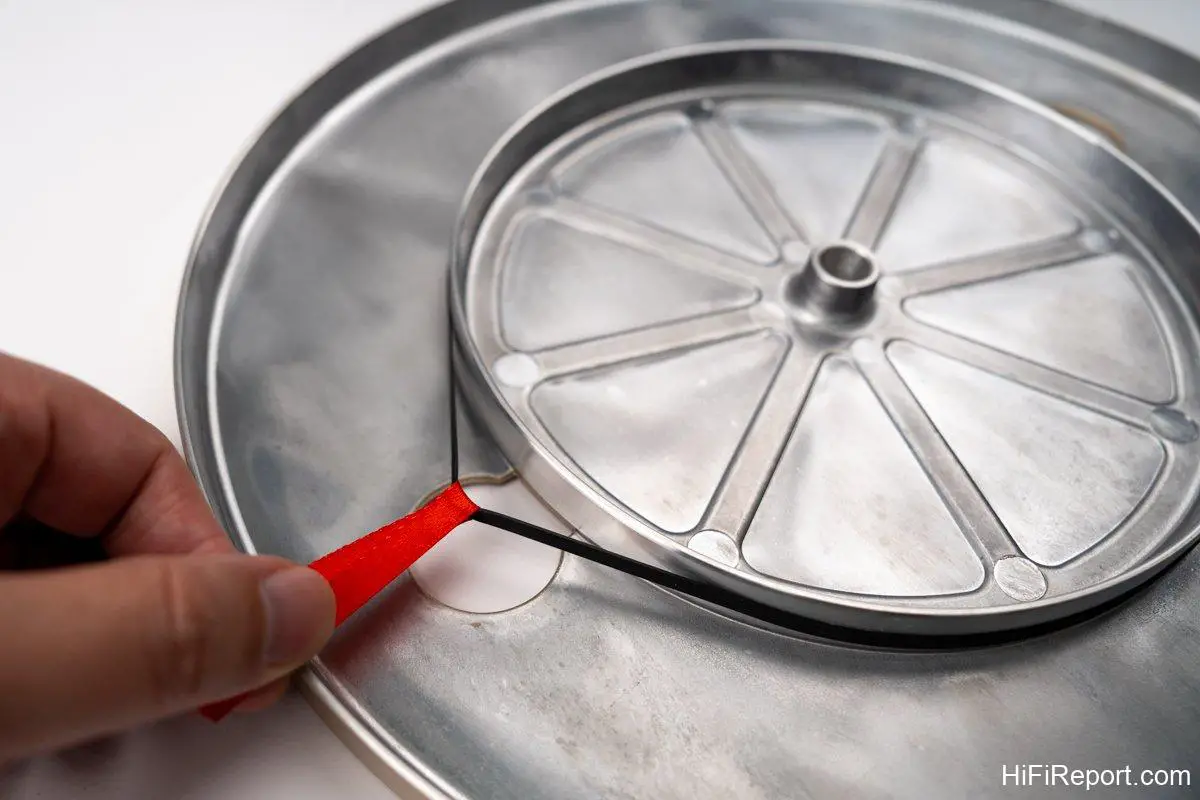
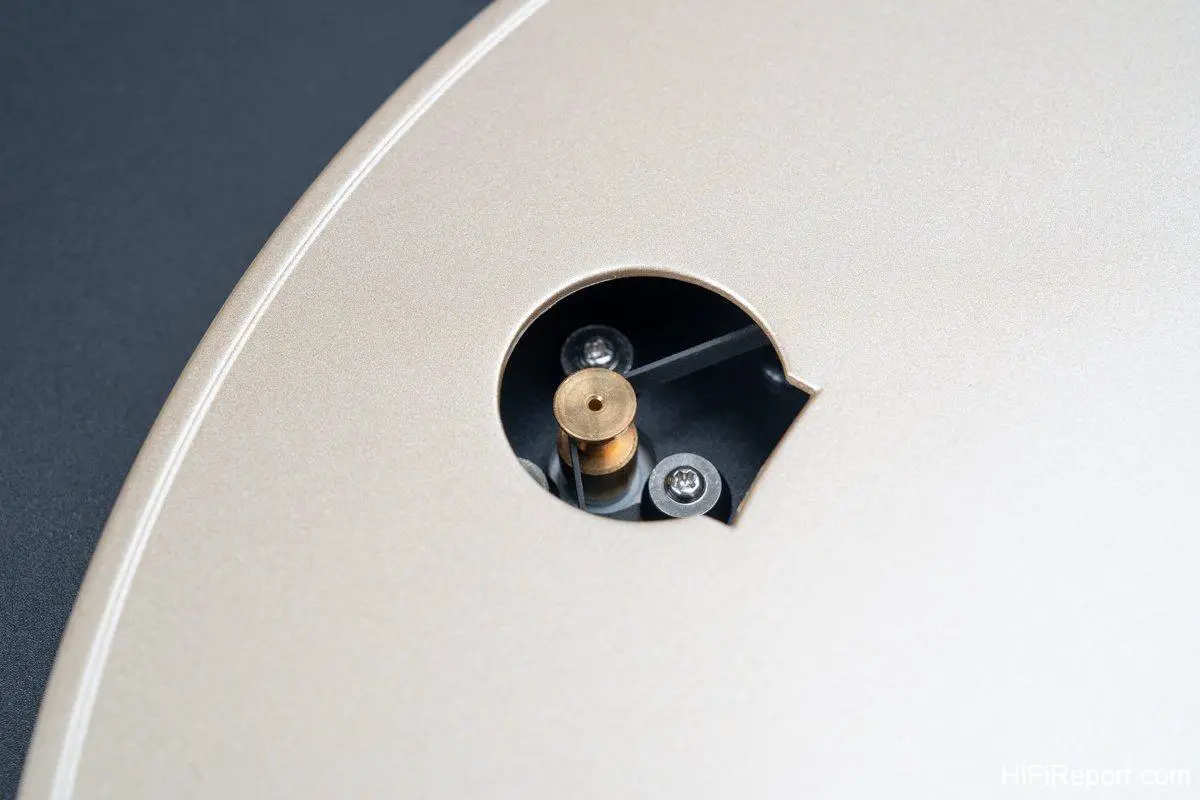
Having addressed the Spinner BT’s user-friendliness, let’s delve into its construction. The platter is crafted from die-cast aluminum, belt-driven, with JBL thoughtfully including a guide wire on the belt to simplify motor spindle attachment through the platter’s central aperture. Remember to place the included felt mat atop the aluminum platter.
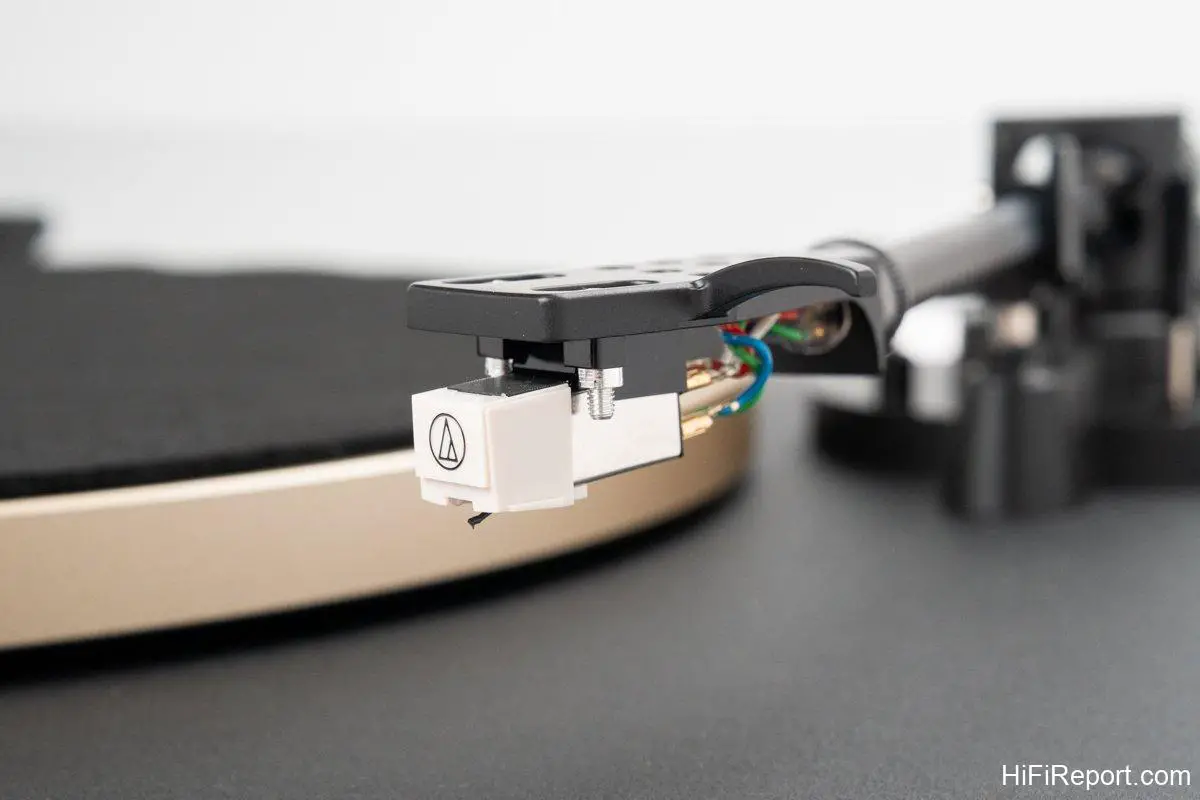
The Spinner BT features a tonearm with a detachable headshell. It arrives equipped with an Audio Technica AT3600L MM cartridge, a respectable performer in its own right. For cartridge upgrades, acquiring additional headshells is advisable, facilitating swift cartridge swaps. Loosening the screw at the headshell’s rear allows for easy removal and replacement with a pre-mounted alternative.
Given the Spinner BT’s price bracket, esoteric moving coil (MC) cartridges are unlikely pairings. However, exploring affordable moving magnet (MM) options from Ortofon or Grado opens avenues to nuanced sonic exploration.
Substantial Build: 5.2 kg Weight
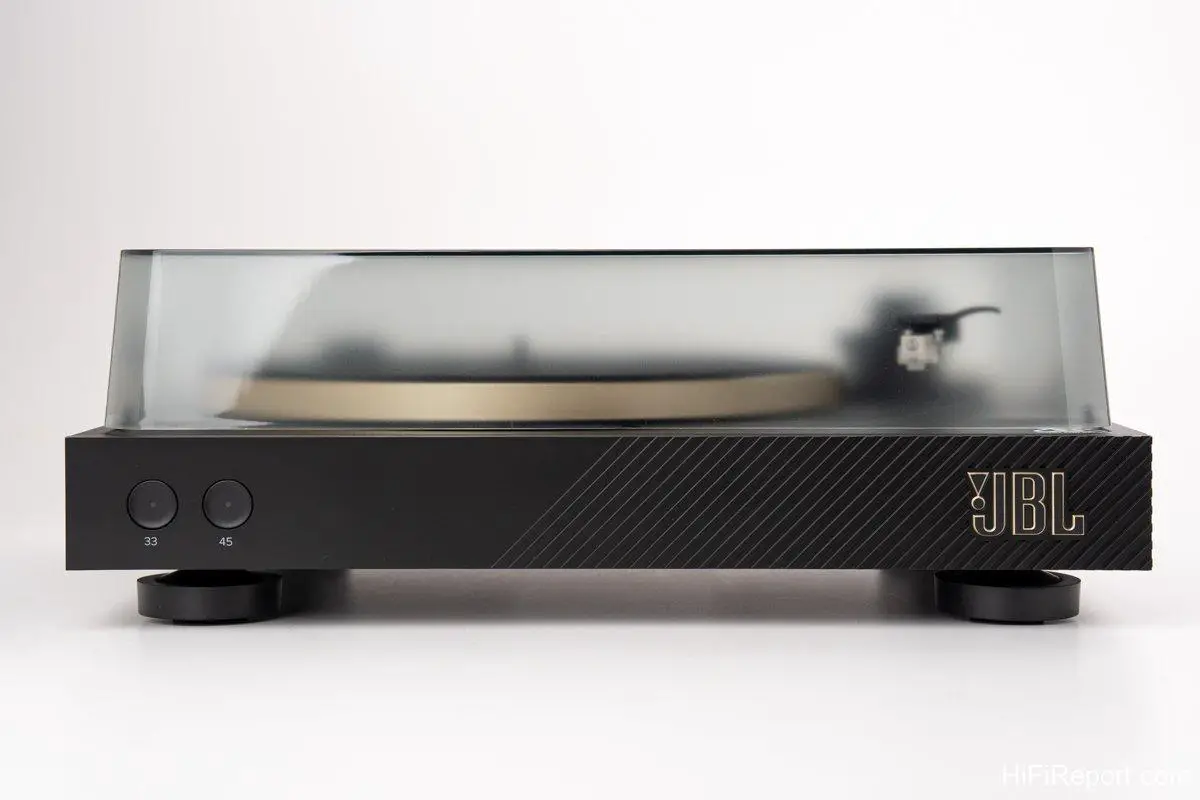
The Spinner BT’s approachable price point might suggest a typical entry-level turntable. Yet, unboxing it revealed a surprisingly substantial build quality. The plinth is constructed from MDF, lending considerable heft. The entire unit weighs a reassuring 5.2 kg. Many entry-level turntables in this category often utilize lightweight plastic chassis, but JBL’s Spinner BT feels built to a standard, seemingly prioritizing sonic integrity over mere cost-cutting. A turntable’s mass is pivotal in achieving sonic density, preventing the lightweight, insubstantial sound often associated with cheaper plastic models.

A final, crucial point: the Spinner BT includes an elegant transparent dust cover, designed to protect the turntable and minimize dust accumulation. However, during listening sessions, it is imperative to completely remove the cover. Playback with the cover partially open or fully closed degrades sonic performance significantly. The stylus tracing the record groove generates minute analog vibrations. A partially open or closed dust cover introduces unwanted resonances, muddying the audio, diminishing clarity, and robbing the music of its vibrancy.
Analog Warmth via Bluetooth
Time for critical listening! The Spinner BT and JBL Bluetooth speaker pairing is undeniably convenient. The Authentics 300, recently reviewed, represents a price-appropriate match. Even via Bluetooth digital transmission, the inherent character of the MM cartridge and turntable imparts a welcome analog warmth. Listening to John Mayer’s “Sob Rock” album, specifically “Last Train Home,” the opening track, the Spinner BT immediately infused a rich analog character. For direct comparison, switching to Apple Music on an iPhone reveals a cleaner, purely digital rendition of “Last Train Home,” yet devoid of the Spinner BT’s distinctive vinyl texture – that subtle sense of the stylus engaging with the groove. It’s not extraneous noise, but a distinctly analog quality. This nuanced vinyl coloration enriches “Last Train Home” via the Spinner BT, lending a fuller, more satisfying sonic tapestry.
Continuing with “Shouldn’t Matter But it Does,” the acoustic guitar strums chords, accompanying Mayer’s melancholic lyrics. A song of heartbreak, emotions I thought long since processed, yet the lingering ache remains. The E major key underscores the poignant mood. Compelled, I picked up my guitar, joining in. Listening through the Spinner BT while playing along, immersed in the music, was genuinely uplifting. Chords needed? E, G♯m, C♯m, A – that’s the verse; the chorus chords are for you to discover.
Pop and Rock Prowess
MM cartridges can often be surprisingly well-suited to pop and rock, perhaps even more so than some MC designs. Switching to Chris Jones’ “No Looking Back,” recorded and mastered by Stockfisch Records in Germany, provided a vinyl-exclusive experience, unavailable on Apple Music for direct comparison. Listening to the title track, “No Looking Back,” the crispness of the steel-string guitar, underpinned by a solid bass foundation, and Chris Jones’ heartfelt vocals were captivating.
The Authentics 300 isn’t audiophile-grade, yet it’s remarkably synergistic with the Spinner BT. The guitar’s crystalline highs, paired with a slightly nasal mid-bass, evoked nostalgic memories of dorm room listening sessions in my university days, albeit with analog cassettes then. Now, the Spinner BT and Bluetooth speaker pairing, while not striving for high-end fidelity, delivers a genuinely engaging musical experience.
Vinyl’s inherent allure makes it easy to lose oneself, track after track. Moving onto “Moving You Out,” a blues-infused breakup song in standard 12-bar blues form, featuring layered guitars – one strumming chords, the other a slide guitar – the Spinner BT, despite its affordability, exceeded expectations. It avoids the sonic thinness often associated with budget turntables, presenting a substantial midrange with pleasing body. Even during the guitar solo, the layered texture of the three guitars remained discernible. For this level of vinyl playback at this price, it’s a worthwhile investment.
Vinyl Coloration: A Delightful Tint
Transitioning to “A Shade Of Blue,” a live recording by the Tsuyoshi Yamamoto Trio from Tokyo’s Gotanda Cultural Center Hall in December 2021, featuring musicians whose combined age surpasses two centuries. Listening to the jazz standard “Misty,” the Spinner BT effortlessly conveyed the swinging jazz ambiance. The musicians’ relaxed rhythms, the piano’s familiar “Misty” melody, and the subtle interplay of double bass and drums were all rendered with ease. The Spinner BT and Authentics 300, possibly the most affordable system I’ve auditioned recently, proved surprisingly captivating. While not achieving absolute “live” realism, the Spinner BT’s vinyl character is undeniable. Even with analog-to-digital Bluetooth transmission, the stylus-induced analog warmth remains richly present.
Continuing the vinyl journey, the “Whiplash” soundtrack’s brassy big band jazz energy, imbued with a slightly mellow tone, sounded richer and more immersive. Joan Baez’s self-titled debut album showcased her youthful yet sincere vocals. My focus was drawn to the 0-45 Martin guitar gracing the album cover.
Bob Dylan’s debut album, similarly bearing the sonic hallmarks of its recording era, featured “You’re No Good” as the opening track. Dylan’s raw, self-accompanied performance, harmonica in tow, reminded me that the studio-era Bob Dylan likely never envisioned his distinctive voice achieving international superstardom.
A reminder: limited edition “The Original Debut Recording” releases from Joan Baez and Bob Dylan are available – act quickly if interested.
Entry-Level Excellence: Years of Enjoyment
Why would an entry-level turntable like the Spinner BT warrant the editor-in-chief’s attention? Simply, I insisted on reviewing it. The Spinner BT’s robust build and reasonable price piqued my interest. I wanted to assess the current state of entry-level vinyl playback. Honesty compels me to state that the Spinner BT isn’t positioned to compete with high-end turntables. However, for those seeking an entry point into vinyl, the Spinner BT offers years of enjoyable listening. The inclusion of Bluetooth, especially when paired with JBL Bluetooth speakers, renders vinyl entry remarkably accessible.
Beyond home enthusiasts, the Spinner BT is also ideally suited for “hipster cafes” seeking to emulate the Japanese “jazz kissa” ambiance. Achieving a vinyl-centric atmosphere without significant expense is now easily attainable with the Spinner BT.
Son’s Vinyl Setup: Mission Accomplished
Will I purchase the review sample? Unquestionably! The Miracord 90 and 834P will return to office duty, while my son will enjoy the Bluetooth-enabled Spinner BT at home. Wiring and power concerns are resolved. His burgeoning vinyl collection is finally ready to sing.
Specifications
* Type: Turntable (Bluetooth Transmission)
* Platter: Die-cast Aluminum
* Tonearm: Detachable Headshell, Adjustable Counterweight, Anti-skate
* Cartridge: Audio Technica AT3600L
* Analog Output: RCA
* Wireless Output: Bluetooth 5.2, Qualcomm aptX HD
* Phono Amplifier: Built-in MM Phono Stage
* Signal-to-Noise Ratio: Less than 65 dB
* Drive System: DC Belt Drive
* Power Supply: 12 V DC 1A
* Dimensions: 155 × 435 × 368 mm (W×H×D)
* Weight: 5.2 kg