
Jeff Rowland Model 735 Amplifier Review
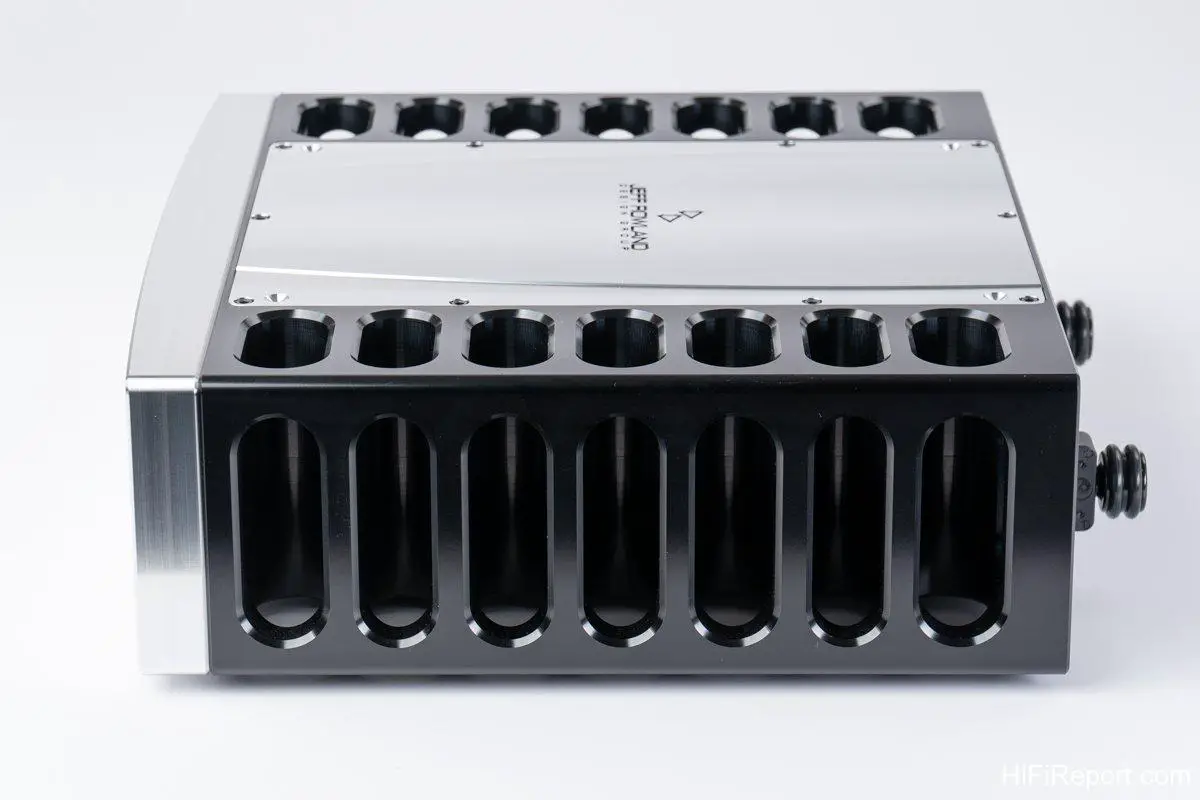
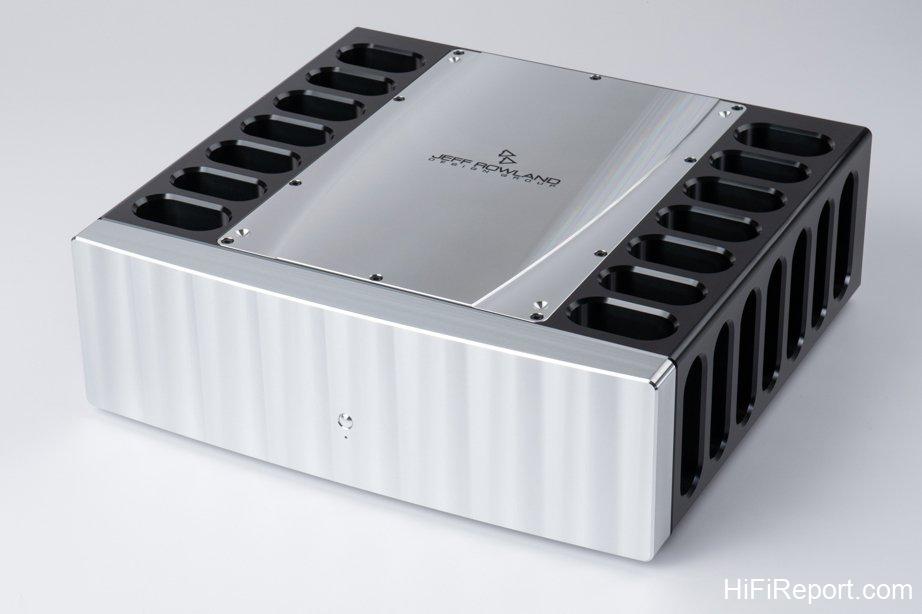
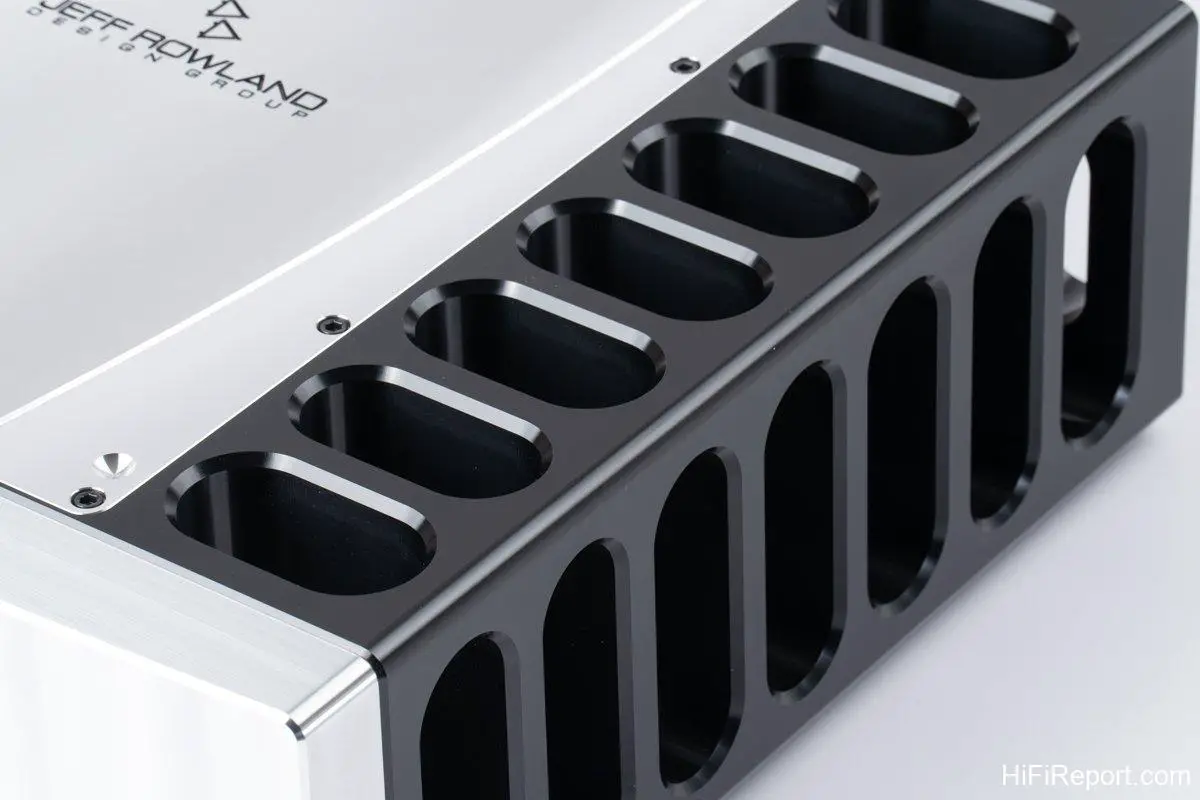
Jeff Rowland equipment always stands out with its highly recognizable visual signature. The silver-white chassis panels, adorned with wave-like ( – texture), coupled with the ( – hollowed-out) heatsinks, resemble metallic sculptures. The Model 735 monoblock power amplifier under review is no exception. This is Jeff Rowland’s time-tested formula for success; classic designs are timeless and beautiful from any angle.
2020 Debut Monoblock
The Model 735 is a brand-new monoblock power amplifier that debuted in 2020. Originally slated for unveiling at the Munich High End Show, the event was unfortunately canceled for two consecutive years due to the pandemic. Consequently, I hadn’t had the chance to see it in person until it was recently sent for review, finally allowing me to experience it firsthand. Being a freshly unboxed unit, I allowed it a warm-up period of one to two weeks before commencing serious listening.
Jeff Rowland’s current power amplifier lineup comprises six models. Four of these models end with the suffix “25,” including the Model 125, 625 S2, 825, and 925. Two models bear the “35” suffix: the Model 535 and Model 735. It’s clear that the “35” suffix denotes the new generation of Jeff Rowland designs. It’s likely that the “25” series will gradually evolve into “35” series products. However, Jeff Rowland is known for a slow pace of model updates; a complete transition may take another decade. Why is the update cycle relatively slow? Wouldn’t launching new products more frequently be better? Introducing new models could stimulate sales, and annual updates could boost business, right? Actually, that’s not how high-end audio operates. If you market equipment as reference-grade and then update it every year, it undermines credibility—are you changing the reference standard annually? Therefore, reputable high-end audio brands responsibly and carefully manage product generational shifts. Unless there is a significant technological breakthrough, they refrain from frequent model revisions.
Lundahl Transformer Collaboration
Consider the Model 735; its update is rooted in the discontinuation of the long-popular Model 725 in 2018. The reason for this discontinuation was simply the depletion of component stock. Jeff Rowland had to decide whether to retire the Model 725 or develop a successor. Given the robust market demand for the Model 725, abandoning it was not a viable option, thus necessitating a successor model.
Around that time, Jeff Rowland was designing his Conductor phono preamplifier, collaborating closely with Lundahl in Sweden to research specialized transformers. He found that the custom transformers for the Conductor, designed for amplifying the minute signals of MM and MC cartridges, while maintaining extremely low noise, could be adapted for preamplifier or power amplifier use. With less demanding amplification in those contexts, the noise floor would be even lower. Consequently, Jeff Rowland embarked on designing the Model 735, building upon the foundation of the Model 725.
Custom Input Transformer
The input transformer Jeff Rowland commissioned from Lundahl utilizes a cobalt-based amorphous core, replacing the original mu-metal lamination core. While this sounds straightforward, its execution is complex. The sheer variety of transformer types and structural possibilities meant Jeff Rowland couldn’t simply swap in any new transformer. Instead, he meticulously auditioned numerous transformers to identify the most suitable type. Fortunately, Per Lundahl, the owner of Lundahl, personally engaged in discussions with Jeff Rowland about the Model 735’s transformer requirements, providing numerous versions for testing, ultimately leading to the Model 735’s creation.
Therefore, knowing the Model 735 incorporates a cobalt-based amorphous core transformer doesn’t automatically mean you can achieve similar sonic results simply by using such a transformer. This input transformer is specifically designed and manufactured for the Model 735. Exceptional sound is not solely attributable to a single component.
A truly outstanding amplifier is not merely an assembly of rare parts, but rather the result of a holistic design approach by the engineers.
Bandwidth and Distortion
Regarding the Model 735, Jeff Rowland mentioned in an interview that the new input transformer demonstrably enhances overall musical resolution and richness in subjective listening. However, lab measurements indicated a slight increase in low-frequency harmonic distortion compared to the previous model. Jeff Rowland pointed out that high-frequency harmonic distortion is more problematic as it’s readily perceptible to the human ear, whereas low-frequency harmonic distortion is comparatively easier to manage.
Why employ a custom Lundahl input transformer? The aim is to create an isolation interface between the amplification circuitry and the external environment, preventing interference from entering the signal path at its origin. Furthermore, with the escalating pollution from radio waves—cellular, Wi-Fi, Bluetooth—EMF interference is pervasive. In addition to using input transformers to block noise interference, the Model 735 also limits high-frequency extension to 90 kHz, ensuring signal amplification purity. “Limited” to 90 kHz—still significantly beyond the 20 kHz human hearing range! The Model 735 also features optimized error-correction circuitry, further reducing distortion above 30 kHz. In the Model 735’s product press release, Jeff Rowland stated that while distortion above 30 kHz presents the most rigorous challenge for measurement instruments, he believes that even these minute distortions, inaudible to humans, are worth measuring to expand our understanding of amplifier circuit behavior.
This reflects the hallmark of a high-end audio luminary. Even with established renown, the spirit of scientific inquiry persists, with meticulous instrument testing to identify and rectify even the most subtle imperfections.
The Model 735’s circuit board inherits the ceramic multi-layer design from the Model 725, albeit with minor layout modifications. The power supply section utilizes a 1,500-watt DC high-efficiency switching power supply, capable of delivering 330 watts into 8 ohms and 650 watts into 4 ohms. It also incorporates Jeff Rowland’s proprietary Power Factor Correction, reducing mains supply harmonic noise distortion by 99%.
It’s important to note that the Model 735’s power cord is a 20-amp specification. The factory provides a suitable cord, but when considering replacement, ensure you select a cord with the corresponding rating.
Soft Damping Feet
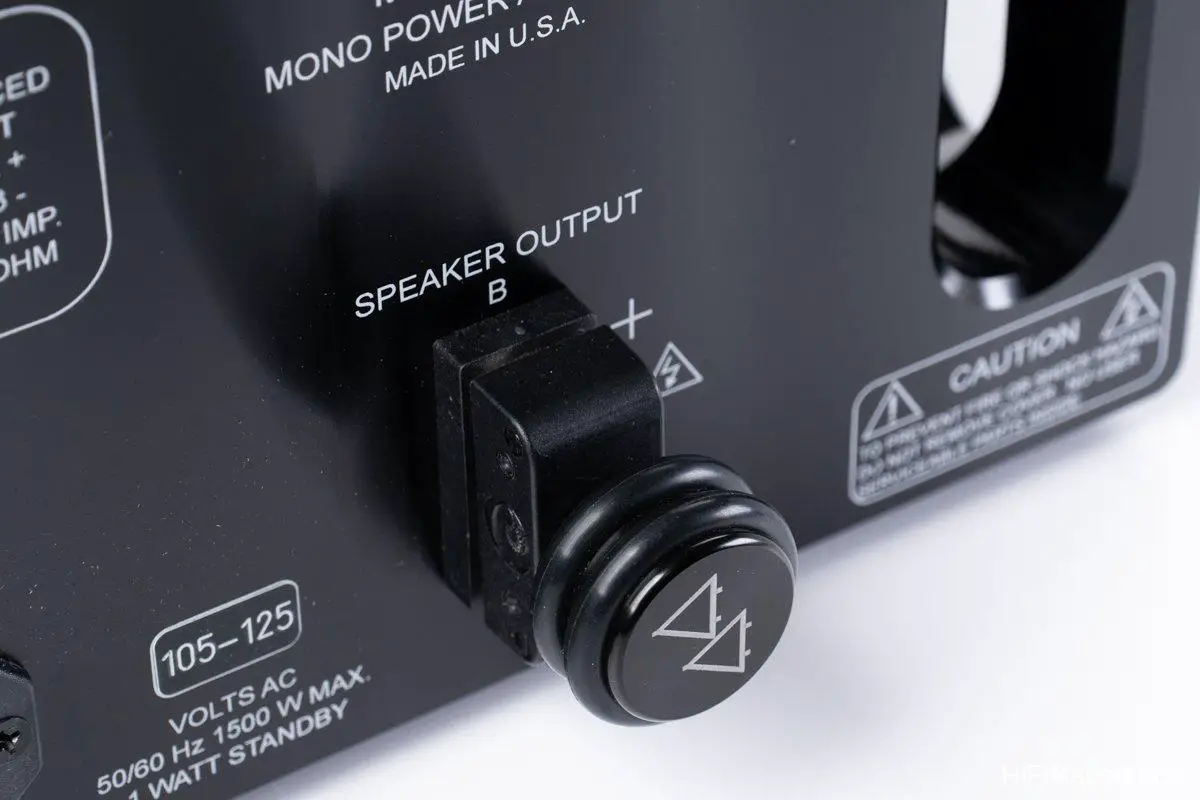
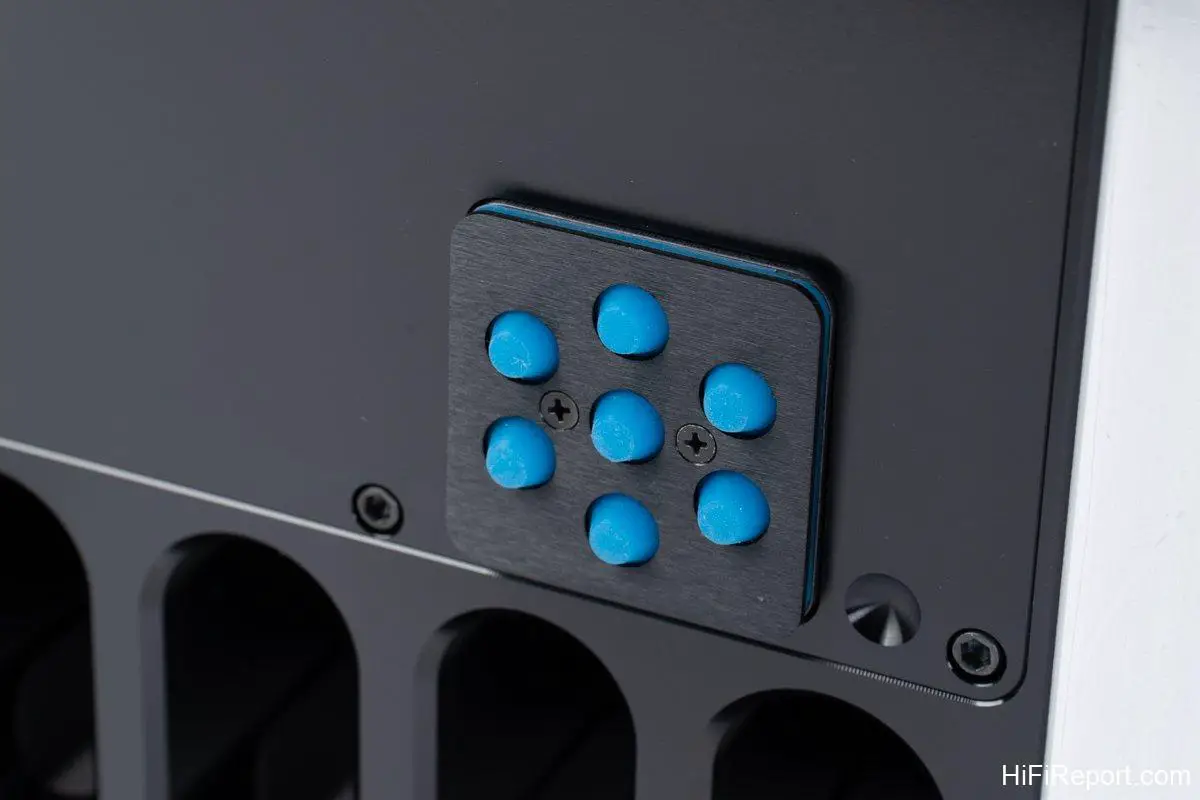
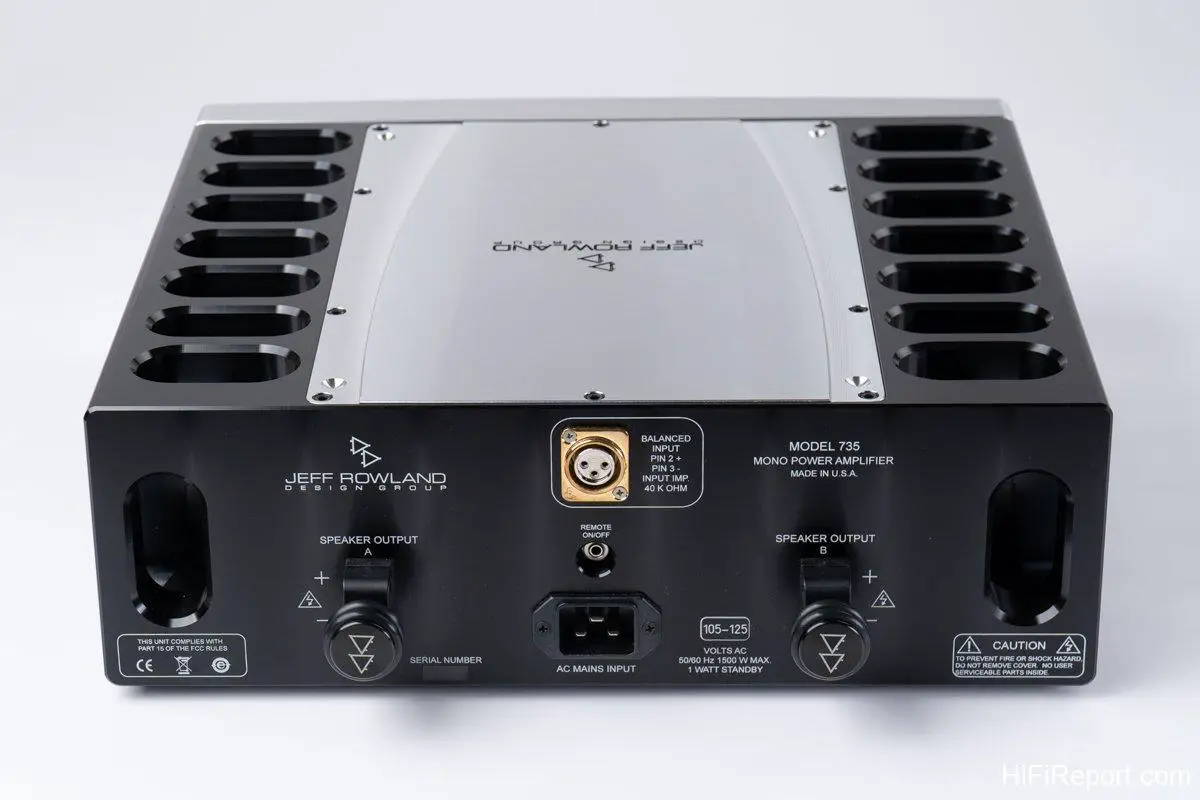
For inputs, the Model 735 offers a single set of XLR balanced inputs, employing gold-plated connectors for enhanced conductivity. Below the XLR input is a 12V trigger, enabling integration with automated control systems. The speaker binding posts are custom-made, large Cardas terminals, substantial in size and easy to secure. The unit’s base utilizes specialized damping feet to isolate vibrations, employing soft damping rather than rigid spikes.
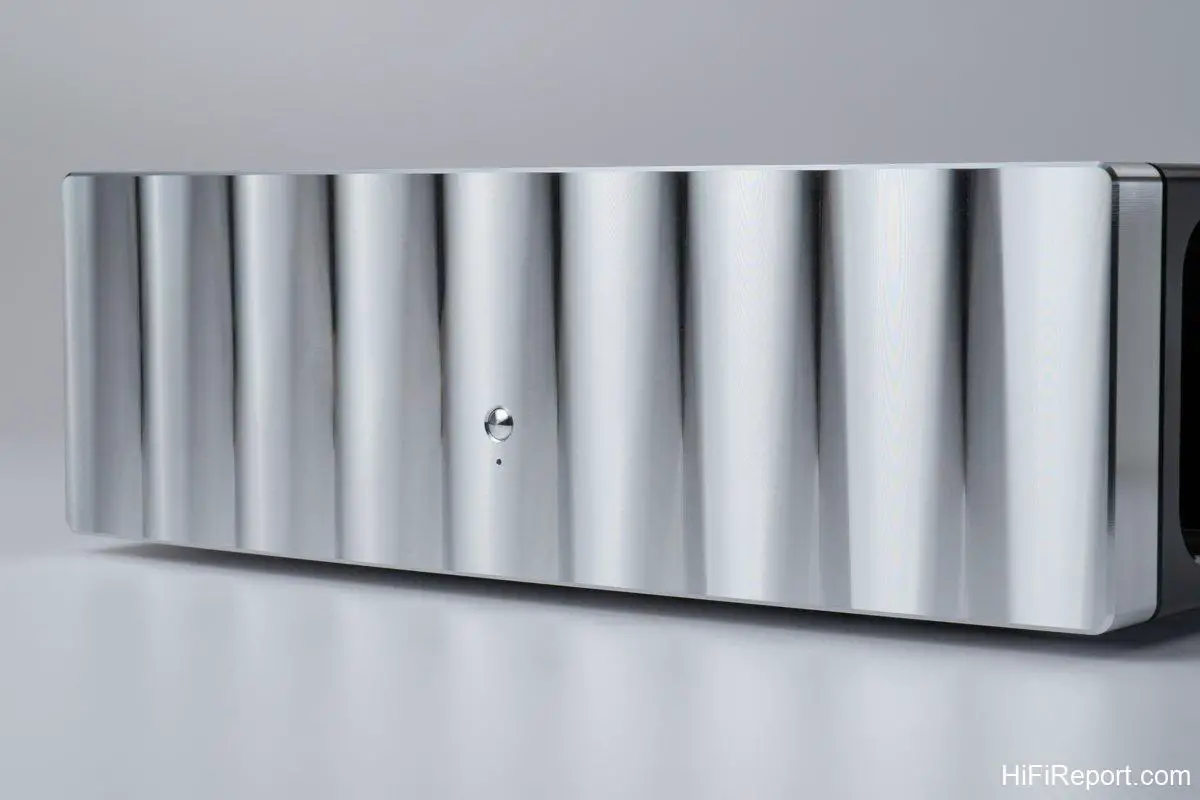
The chassis design maintains Jeff Rowland’s signature aesthetic, combining aluminum alloy with a black enclosure. Visually, the Model 735 presents minimal changes; it’s instantly recognizable as a Jeff Rowland product. The weighty aerospace-grade aluminum chassis is substantial, with impeccable machining quality. The front panel features the iconic wave pattern, a visual effect—it’s actually smooth to the touch. The physical unit is even more striking than in photographs. While acknowledging the photographer’s efforts, some items must be seen in person to truly appreciate their superior aesthetics compared to images.
Effortless Performance
After a relaxed run-in period for the Model 735, it was time for critical listening. And indeed, the warm-up period itself was a pleasure. This sense of ease and musical enjoyment is truly the domain of high-power, high-end systems. The Model 735, with its substantial 330 watts (8 ohms) and 650 watts (4 ohms), paired with Wilson Audio Alexia 2 speakers, delivered an effortlessly comfortable and controlled performance.
Initially, the Model 735 was auditioned with Jeff Rowland’s own Carpi S2-SC preamplifier. Later, switching to the EAR 868P preamplifier revealed an unexpected synergy. While the Model 735 sounded smooth with the Carpi S2-SC, the 868P pairing brought out a more prominent and full midrange, presenting an overall sonic image with a healthy robustness and a pleasing tonal match. Consequently, the majority of the listening sessions were conducted using the 868P.
Natural Sweetness
The Model 735’s sonic signature is pure and clean, yet not sterile or clinical. It possesses a comfortable sweetness, akin to the refreshing taste of pure spring water from a pristine mountain source. Perhaps this characteristic is why, when paired with the 868P, it accentuated the warmth of the tube preamplifier, further highlighting the Model 735’s inherent clear sweetness. This sweetness was particularly pronounced when listening to violins.
For example, in Lakatos’s album “Lakatos,” his adaptation of Brahms’s “Hungarian Dance No. 5,” imbued with Eastern European flair, becomes even more exotically flavored in Lakatos’s interpretation. The Model 735 rendered the nuanced fingerwork and bowing techniques of the violin solo with a full and focused sonic image, rich in detail. From sustained legato notes to rapid, intricate passages, the Model 735 masterfully conveyed the intensity of the violinist’s touch.
Even without violin playing experience, one can appreciate the technical demands evident in the rapid, intricate passages, observing the dazzling interplay of left and right hands. Yet, each note remains remarkably clear and effortless. Through the Model 735, Lakatos’s earnest performance, brimming with Gypsy spirit, and his rapid exchanges with the cimbalom, showcased both virtuosity and heightened emotion. The Model 735 effortlessly reproduced the music’s dynamic range, from quiet passages to crescendos, with clarity and naturalness, and a lingering sweetness in the upper midrange.
Recording Transparency
While I’ve described the Model 735’s upper midrange as possessing a natural sweetness, its overall sonic character is actually quite neutral. It’s an amplifier that faithfully reproduces the inherent qualities of the recording.
Take, for instance, Allan Taylor’s “Win or Lose,” released by Stockfisch. Digitally remastered from precious analog master tapes, it retains the full-bodied nature of analog recordings. Consider “Angellia’s Cantina,” which opens with fingerstyle acoustic guitars. The arrangement is captivating, the guitar notes are full and rounded, but with attentive listening, one can discern various recording enhancements that add to the music’s vibrancy.
Listening through the Model 735, and referencing the album liner notes showing Allan Taylor with a Martin D-41 guitar, the recorded guitar sound is rich and full. Yet, the note articulation in the upper midrange remains distinct and clear. I suspect this is achieved by blending in more sound from piezo pickups, while the guitar’s resonance is captured separately using condenser microphones—possibly even multiple microphone setups recorded simultaneously. These synchronized guitar tracks are then mixed together, creating a guitar sound that is both full and clear, with precise note definition.
High Resolution
The Model 735 demonstrates exceptional recording discernment. “Win or Lose” is a 1984 recording, and Allan Taylor mentioned that it was essentially a live recording, captured from start to finish, with only the harmonies added later. Consequently, the entire album has a live feel, but the recording also incorporates spatial reverb effects to create a relatively wide soundstage. Compressors were certainly used extensively on the guitars to enhance articulation and impact. These recording techniques are clearly revealed by the Model 735.
Switching to “The Stockfisch DMM-CD/SACD Vol. 1” and listening to track twelve, Allan Taylor’s “Like A Cloud,” released in 2013—nearly two decades after “Win or Lose”—the Model 735 reveals that Allan Taylor’s voice, compared to his younger self, has lost some brightness and gained a touch of world-weariness. The multi-track recording setup results in a quieter background, with lower noise than analog master tape recordings, and instruments exhibit greater clarity and contrast. This indicates that the Model 735 itself adds minimal coloration, allowing listeners to clearly identify the recording’s vintage. For example, recordings from the 1980s often featured more pronounced reverb, while post-2000 recordings tend to prioritize natural soundstage presentation over exaggerated effects.
Expressive Vocals
To further assess its capabilities, I listened to a recording with extremely complex post-production: the “Les Misérables” movie soundtrack, specifically Samantha Barks’s rendition of “On My Own.”
This movie soundtrack was recorded live on set, capturing the actors’ vocals, and then sent to London for post-production. The orchestra was recorded separately and subsequently mixed with the actors’ singing. The recording engineering was incredibly challenging, earning mixing engineers Simon Hayes, Andy Nelson, and Jonathan Allen not only an 85th Academy Award nomination but also a well-deserved win.
Through the Model 735, the orchestral soundstage was expansive. The film scene for “On My Own” is a rain-soaked monologue. Samantha Barks, with her stage background, possesses a stunning voice. The Model 735 effortlessly focused her vocal power at the center of the soundstage. Subtle raindrop sounds in the background and the orchestra harmoniously complemented her voice. Although the recording environment for this movie soundtrack is entirely artificial, the mixing and post-production are so masterful that no flaws are discernible. The Model 735’s clean and transparent sonic character highlighted Samantha Barks’s voice, making it both prominent and deeply emotive.
Excellent Soundstage
A key advantage of monoblock power amplifiers is exceptional channel separation, significantly enhancing soundstage reconstruction. I’ll cite “Bach Trio,” a collaboration between Yo-Yo Ma, Chris Thile, and Edgar Meyer, as an example. Recorded in a converted barn studio, the album has a natural and open sense of space, particularly the natural upward extension of the soundstage, which makes the musical background appear even blacker. This naturally created soundstage space, inherent in the recording itself, sounded exceptionally natural on the Model 735, effortlessly making the speakers disappear within the acoustic space.
The instrument combination in “Bach Trio”—cello, double bass, and mandolin—is quite unusual. The cello and double bass occupy similar frequency ranges, while the mandolin is significantly higher. The mandolin is notably bright, and the interplay and contrast between the cello and double bass are not easy to reproduce effectively.
Listening to Trio Sonata No. 6 BWV 530, the Model 735 presented a broad and full lower register. As both cello and double bass are low-frequency instruments, they contrast vividly with the crystalline tones of the mandolin. The high and low frequency ranges are distinctly delineated. However, the Model 735’s ability to accurately reproduce timbral qualities in the low frequencies is exceptional. The double bass is full and expansive, while the cello’s lines are clear and defined, with no blurring of their timbres. This demonstrates the Model 735’s high standard in rendering texture and detail in the low-frequency range.
Discernible Recording Differences
Listening to Anne-Sophie Mutter and John Williams’s “Across the Stars,” the emotional expressiveness of the violin playing is truly captivating. Being a classical crossover recording, the low frequencies are subtly enhanced for added fullness, and the Model 735 clearly conveyed this enhanced low-end richness, contrasting it with the bright and brilliant violin.
Listening to “Rey’s Theme” from “Star Wars: The Force Awakens,” the violin opens in a minor key, with pizzicato double bass providing full and solid note articulation, creating a high-contrast juxtaposition with the fresh and bright violin, enhancing the emotional impact. The solid sound of the brass section supports the violin melody from the rear of the soundstage. The Model 735 presented a spacious and expansive soundstage while precisely focusing the violin at the center, combined with the recording’s intentionally enhanced low-frequency depth, creating a grand musical panorama.
For comparison in accurate recording reproduction, I turned to Antal Doráti conducting the London Symphony Orchestra in Stravinsky’s “The Firebird.” I listened to the Mercury Living Presence reissue. That era was pure analog recording, with limited “sweetening” possibilities, unlike today’s digital plug-in capabilities for subtle soundstage manipulation. Recording engineers of that era relied on microphone placement and manual editing, purely analog techniques. Listening to this recording through the Model 735, the low-frequency range of the older analog recording is not as full and rounded as “Across the Stars,” and the sound is more direct.
The sonic character is more direct, and the vintage of the recording is still palpable. The timbre is drier, but the soundstage presentation is more precise. The low-frequency level is noticeably lower, and the timpani’s speed is brisk. Listening to track nineteen, “The Firebird’s Chase,” the Model 735 expanded the soundstage widely, allowing the speakers to disappear naturally into the space. The interplay of brass and string sections, rising and falling, creates dramatic effects. By track twenty-three, the finale, the sections gradually build to a grand climax, conveying a festive and jubilant atmosphere. This is a recording I know intimately, and listening to it on the Model 735 felt fresh and vividly conveyed the musical vitality of the analog era.
Pure Musical Enjoyment
During my time with the Model 735, this monoblock power amplifier demonstrated top-tier channel separation, accurate and expansive soundstage reproduction, strong recording vintage discernment, and a high degree of musicality. It’s no surprise that Jeff Rowland emphasized in an interview that technology and design are secondary to simply enjoying the music. Indeed, let master engineers like Jeff Rowland handle the technical complexities. Audiophiles are fortunate; owning a set of Model 735s provides not only effortless power but, more importantly, allows for unadulterated musical enjoyment, finding satisfaction in every listening session. Isn’t life grand?
Specifications
* Type: Monoblock Power Amplifier
* Output Power: 330 watts into 8 ohms, 650 watts into 4 ohms
* Frequency Response: 5 Hz to 90 kHz
* Total Harmonic Distortion: 0.001% (2 kHz to 20 kHz)
* Overall Gain: 26 dB
* Damping Factor: Greater than 500
* Signal-to-Noise Ratio: 95 dB
* Dimensions: 146 × 394 × 413 mm (H×W×D)
* Weight: 24.5 kg (per channel)