
Kali Audio LP-6 Active Studio Monitors Review
Although this marks my first experience with Kali Audio, an American audio brand, the LP-6 active speakers have immediately impressed me as offering unbelievable sonic performance for their price. I am confident that within this budget, assembling a passive speaker system with comparable sound quality would be a challenging, if not impossible task. Their studio monitor-grade accuracy also positions them as an ideal entry point into the world of high-fidelity audio for discerning listeners.
Unbeatable Performance Value
Kali Audio emerged onto the audio scene in January 2018, specializing in professional studio monitor speakers. Based in Burbank, California, in close proximity to numerous Hollywood-serving recording studios, Kali Audio maintains strong ties with these professional facilities, leveraging their expertise in the design of their products. Their objective is clear: to engineer accurate and transparent monitor speakers while delivering an unparalleled performance-to-price ratio.
This concept of performance value, often referred to as C/P ratio, is not commonly associated with the realm of Hi-End audio. Many Hi-End brands pride themselves on a “no-compromise” approach, striving for the best possible performance regardless of cost. This philosophy inevitably leads to escalating prices, making entry into Hi-End audio increasingly expensive. However, the professional recording market has witnessed a surge in demand for affordable yet high-quality monitoring solutions, driven by the proliferation of home studios and the booming content creator market. Kali Audio’s focus on delivering exceptional performance value is a direct and strategic approach to capture this burgeoning market segment.
Unbelievable Value Proposition
The LP-6, the model I evaluated, represents Kali Audio’s most accessible monitor speaker. Yet, upon discovering its suggested retail price of under NT$20,000 (approximately USD $620) alongside its impressive specifications, I was genuinely taken aback. At this price point, even a decent pair of passive speakers might be a stretch, yet the LP-6 incorporates a bi-amplified design, sophisticated DSP sound field control, and a comprehensive suite of monitoring features. Even for seasoned DIY enthusiasts, sourcing the individual components—drivers, amplifier modules, DSP, and enclosure—would likely exceed Kali Audio’s remarkably competitive retail price. The value proposition is truly astounding.
What exactly does the LP-6 package encompass? It’s a two-way active speaker system featuring a 1-inch silk dome tweeter and a 6.5-inch paper cone woofer. Each driver is powered by a dedicated 40-watt Class D amplifier module and governed by sophisticated DSP, managing the electronic crossover, overall system tuning, spatial EQ (Boundary EQs), and user-adjustable high and low-frequency shelving. Simply tallying the cost of these components underscores the incredible value proposition of the LP-6!
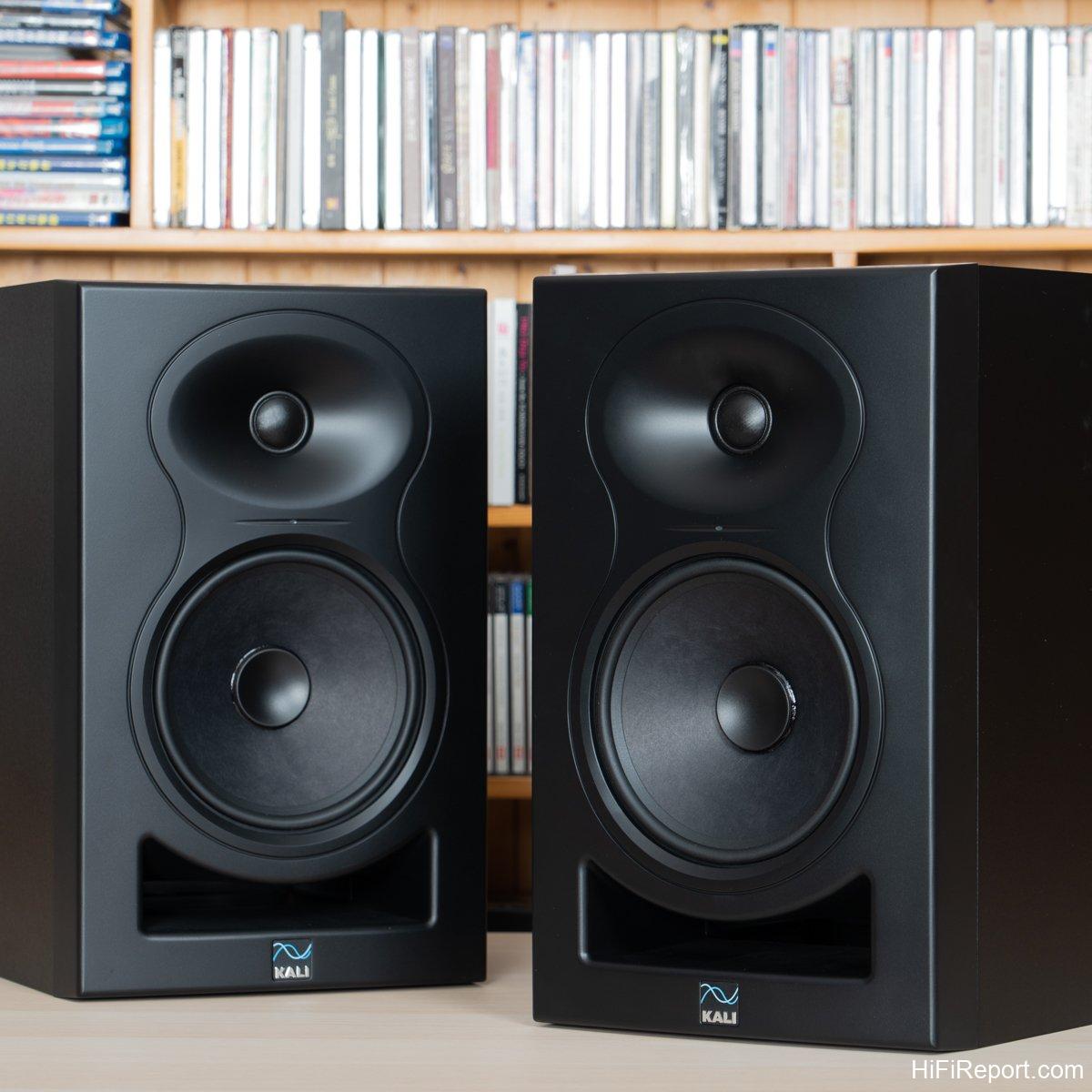
Professional Design and Engineering
Furthermore, every aspect of the LP-6 embodies purposeful design, with specifications presented in a language familiar to professional audio engineers and musicians. Consider the LP-6’s output capability: it can generate 85 dB SPL at a distance of 2.9 meters while maintaining 20 dB of headroom.
What does this translate to in practical terms? The LP-6’s maximum sound pressure level is 115 dB. Assuming a typical monitoring level of 85 dB SPL, the 20 dB of headroom provides ample dynamic reserve to handle transient peaks from instruments like drums, or sudden loud sound effects such as explosions or thunder. The 2.9-meter listening distance indicates suitability for single or dual-person workspaces. For collaborative projects with three individuals, the LP-8 model, designed for a 3.6-meter listening distance, offers an even greater headroom margin by an additional 2dB.
Utilizing professional studio monitors like the LP-6 not only provides ample SPL and headroom, but also safeguards against speaker damage. The LP-6 incorporates a built-in limiter. Should the output level exceed the speaker’s safe operating threshold, the limiter engages automatically, producing audible distortion to signal excessive input levels, prompting volume reduction. While continued operation at excessively high levels, even with limiter activation, could theoretically still cause damage (given each driver’s independent amplification), most users would instinctively reduce the volume, not just to protect the speakers, but more importantly, to safeguard their hearing, which is far more critical.
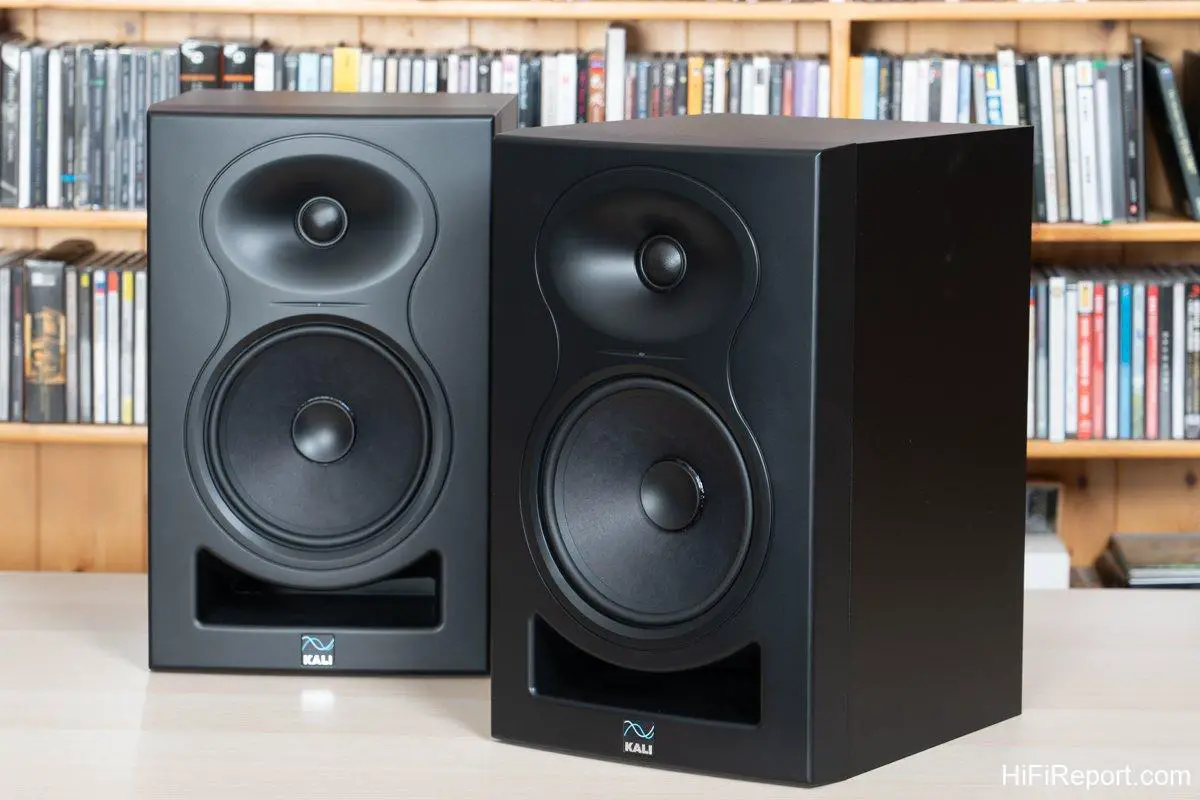
In terms of cabinet design, the LP-6 employs a generously sized, front-firing bass port. This strategic placement minimizes port turbulence and associated noise. The large port opening ensures consistent air velocity through the port, contributing to extended low-frequency response while preserving clean and dense low-frequency reproduction.
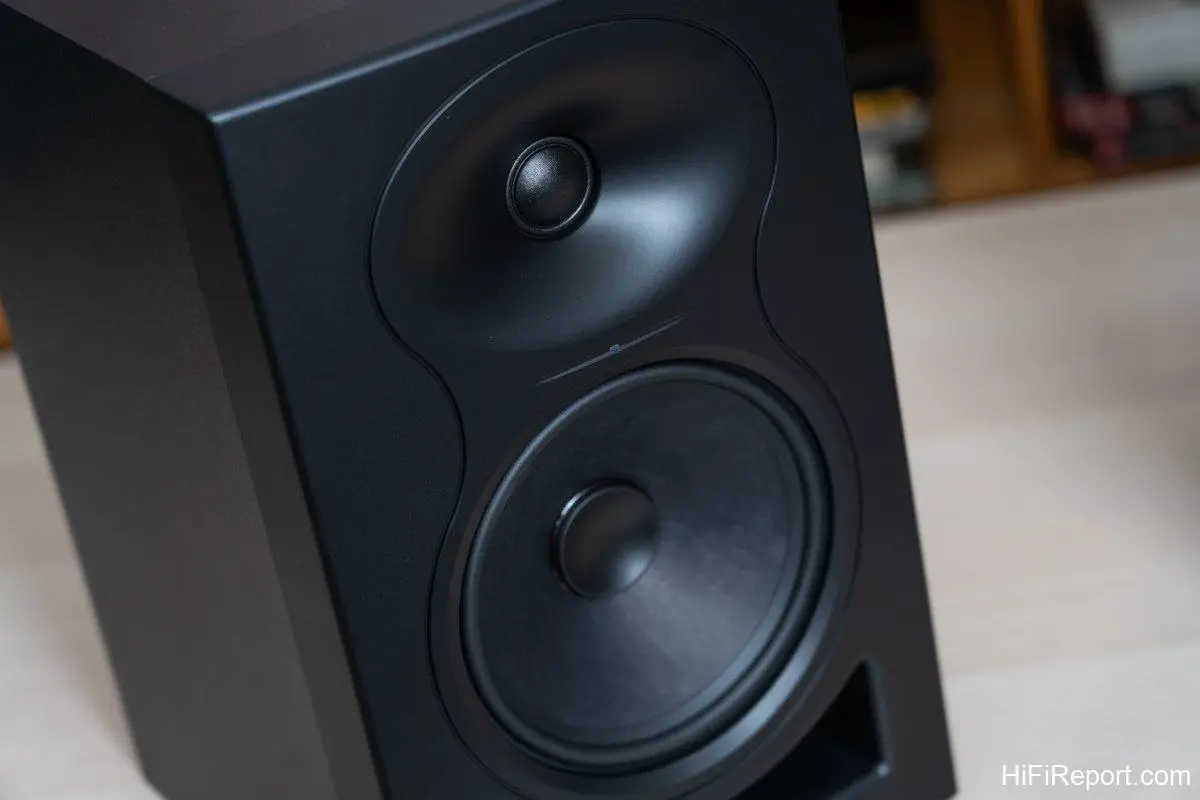
The tweeter is integrated within a 3D Imaging Waveguide, optimizing direct high-frequency dispersion and precise imaging. The paper cone woofer features a large voice coil and magnet structure, enhancing driver linearity and contributing to improved dynamic range and sonic clarity.
This product description transcends mere marketing claims; it communicates with discerning users using professional terminology. Every design element is grounded in solid acoustic principles.
DSP Room Correction
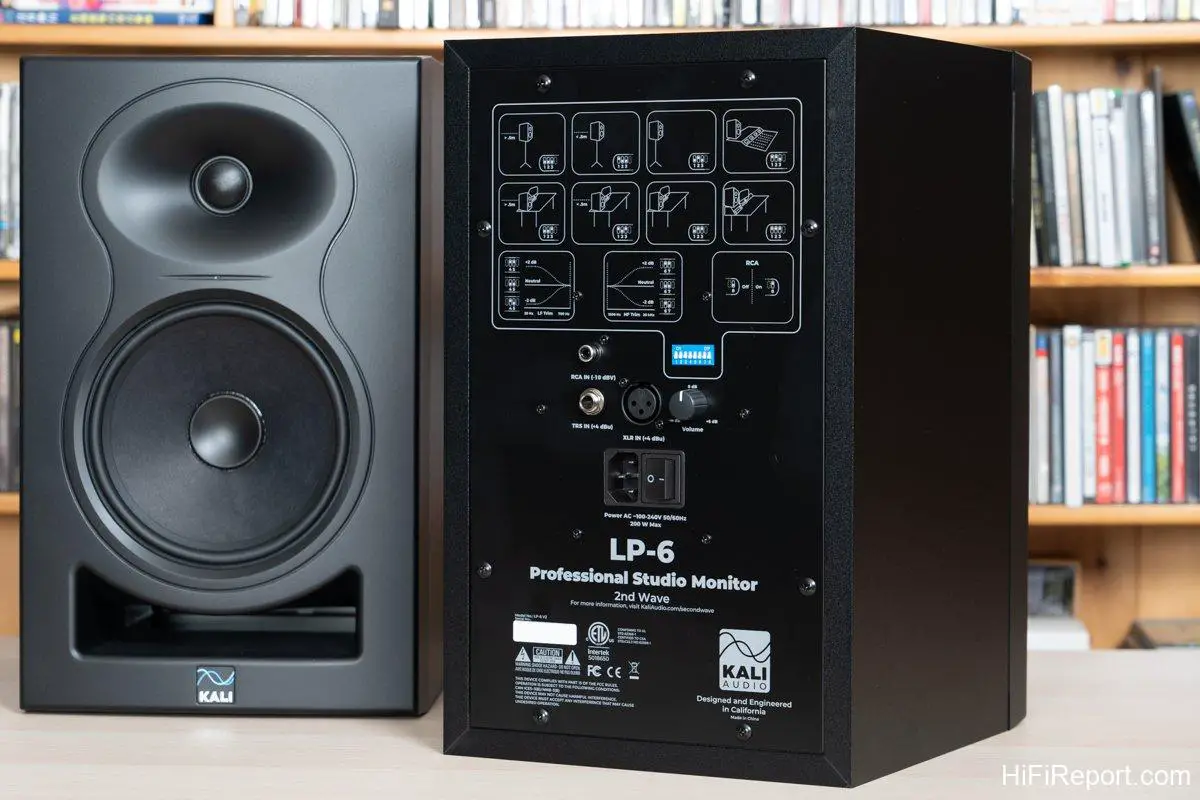
Arguably the most compelling feature of the LP-6 is its Boundary EQ system, short for Boundary Compensation EQs. These settings, accessible via rear-panel DIP switches, enable tailored EQ compensation to optimize the LP-6’s performance in various acoustic environments and placements.
For audiophiles, speaker placement is paramount. In any listening space, the sound reaching our ears is a composite of direct sound and reflections. Minimizing the time difference between direct and reflected sound arrivals enhances soundstage definition and image focus. While meticulous speaker placement can optimize performance in dedicated listening rooms, studio monitors often face placement constraints, typically residing on workstations or desks, often in nearfield configurations. Boundary EQs are designed to provide tailored EQ compensation based on common placement scenarios, mitigating acoustic anomalies introduced by room boundaries.
How does one configure Kali Audio’s Boundary EQs? The process is remarkably user-friendly. The LP-6’s rear panel features an intuitive diagram illustrating eight placement scenarios. Simply consult the diagram, identify the scenario that most closely resembles your speaker placement, and replicate the corresponding 1-3 DIP switch settings.
These presets are based on measurement data collected from real-world placements by Kali Audio at the renowned Village Studios in Los Angeles. This iconic studio, with over six decades of history, has hosted legendary artists such as The Rolling Stones, B.B. King, and Bob Dylan. Contemporary icons like Lady Gaga, Coldplay, and John Mayer have also graced its studios. The LP-6’s Boundary EQs are meticulously derived from measurements taken in various locations within The Village Studios, providing accurate and effective DSP compensation presets.
Is it too much of a marketing stretch to suggest that owning the LP-6 is akin to possessing the sonic signature of The Village Studios? Perhaps a touch hyperbolic, but it certainly underscores the professional pedigree embedded within these speakers.
2nd Wave Upgrades
Regarding the LP-6’s design evolution, the 2nd Wave revision warrants attention. LP-6 units manufactured after May 1, 2021, represent the 2nd Wave, incorporating six key enhancements compared to the original 1st Wave generation. Firstly, the power module has been upgraded, yielding a 3 dB increase in maximum SPL without compromising driver integrity. Secondly, the power module’s noise floor has been reduced by 12 dB, resulting in quieter operation. Thirdly, a thinner diaphragm coating improves driver efficiency. Fourthly, the cabinet finish has been changed to a sleek matte black. Fifthly, DSP processing has been refined for a smoother high-frequency response. Sixthly, input sensitivity has been reduced by 3dB, allowing for greater headroom and output.
When considering an LP-6 purchase, verifying whether it’s the 2nd Wave version is advisable, as 1st Wave units are not upgradeable due to significant component changes including power module, DSP and drivers.
The preceding overview, based on the LP-6’s technical specifications, reveals the speaker’s inherent flexibility to address diverse nearfield monitoring requirements. The rear panel DIP switches also offer ±2 dB high-frequency trim, alongside input selection between RCA and balanced XLR/TRS. It’s important to note that the RCA input operates at -10 dBu consumer level, while XLR and TRS inputs are at +4 dBu professional level. Furthermore, XLR and TRS inputs cannot be used concurrently, only one input type should be connected at any given time.
Minimalist Setup, Nearfield Performance
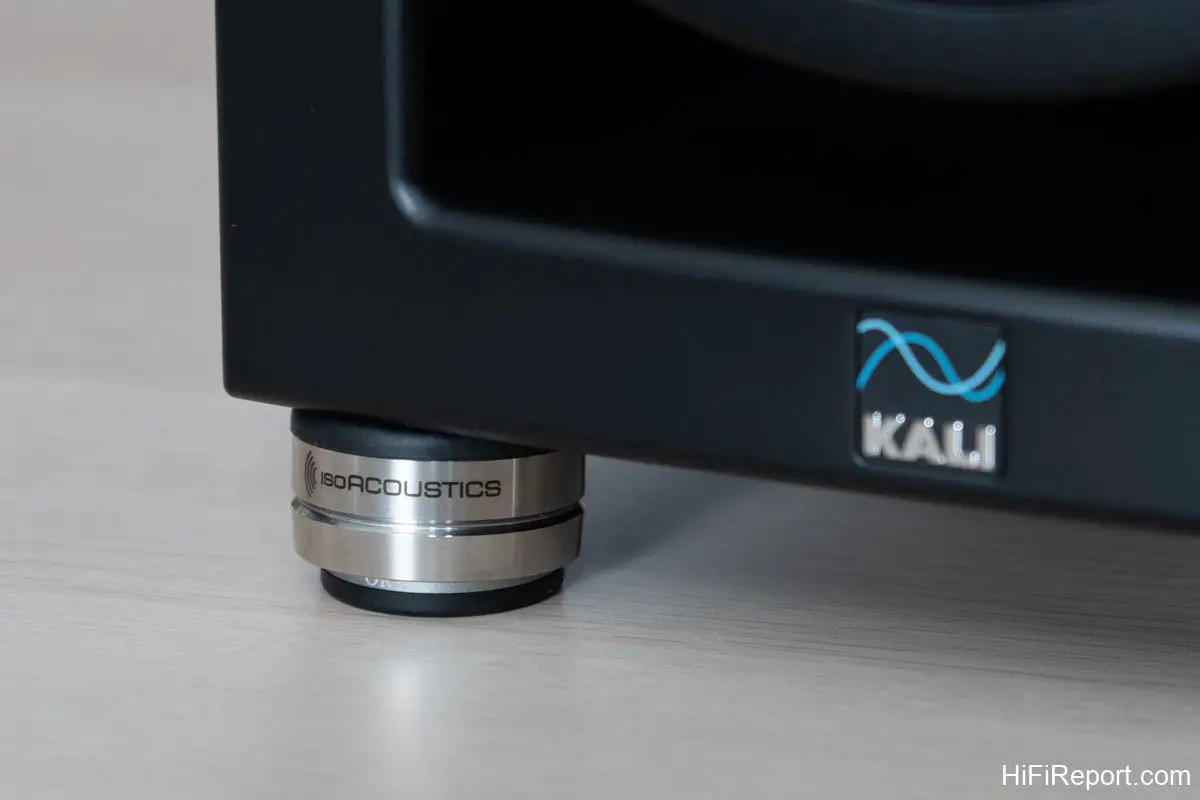
During my audition of the LP-6, I opted for a minimalist setup, utilizing an iFi Go Blu as a DAC-preamp, placed on an IKEA desk, forming a simple two-component system. However, the large surface area of the IKEA desk caused vibrations from the LP-6 to resonate through the desktop. To mitigate this, I placed IsoAcoustics Orea isolation feet beneath the LP-6s to minimize vibration transfer and by elevating the speakers, further enhance bass clarity.
The LP-6’s sonic performance proved genuinely surprising. Even in a nearfield configuration, it delivered a tangible and articulate 3D soundstage with remarkable imaging precision. My listening position, approximately 0.5-1 meter from the speakers, simulated a typical home recording environment at a workstation.
For example, listening to Katja Werker’s “Contact With Myself 2.0,” a live recording from Stockfisch Records, on the opening track “Yes,” the guitar is clearly positioned to the left of the soundstage, the bass emanates from the center, another accompanying guitar occupies the right channel, and Werker’s vocals are rendered with clarity and focus in the center.
The 3D soundstage projected by the LP-6 resides primarily between the speaker plane, offering a focused and well-defined sonic picture rather than an expansive, boundless panorama.
Using a cinematic analogy, the LP-6 is akin to watching a high-resolution movie on a 27-inch desktop monitor, while HiFiReport’s reference Wilson Audio Alexia 2 speakers would be comparable to a massive 300-inch projection screen. While the scale of the soundstage differs considerably, both systems exhibit excellent imaging accuracy. The LP-6 presents a more compact soundstage, but the detail retrieval and precise placement of instruments and vocals within that space are remarkably clear and accurate. The Alexia 2, conversely, expands the soundstage to an enormous scale. This comparison is inherently unequal, as these speakers are not in the same performance category. However, the LP-6’s imaging precision was surprisingly impressive, far exceeding expectations for its class.
Revealing Recording Quality
As studio monitors, Kali Audio emphasizes the LP-6’s design goal of minimizing coloration and maintaining tonal neutrality. Whether the LP-6 aligns with your personal demands of tonal neutrality is subjective and best determined through individual audition. However, in my listening experience, the LP-6 readily reveals the inherent sonic characteristics of different recordings. For example, Stockfisch recordings exhibit a notably full mid-bass response and a more intimate soundstage presence, contributing to a sense of warmth and immediacy.
Conversely, switching to Opus 3’s “Test CD 4,” specifically “Reunion Blues,” a recording renowned for its expansive soundstage, depth, and dynamic range, the LP-6 faithfully reproduced the enhanced spatial cues and ambience captured in the recording, noticeably more pronounced than the Stockfisch recordings. The Opus 3 recording also presented a comparatively lower recording level. These are critical considerations for studio monitoring, and the LP-6 effectively highlights the distinct recording philosophies and technical approaches of these two audiophile labels.
High Output, Robust Performance
Despite its modest 6.5-inch woofer, the LP-6 delivers impressive bass performance. Listening to Michael Jackson’s “Billie Jean,” the LP-6 adeptly renders the intricate layers of production. The kick drum possesses substantial impact, the electric bass exhibits a textured, almost overdriven character, reminiscent of subtle compressor artifacts. Michael Jackson’s vocals are firmly anchored in the center, underpinned by expansive synthesizer chords, with backing vocals responding dynamically from the rear of the soundstage. The interplay of forward and reverse recording techniques creates a complex and engaging stereo soundfield. Moreover, the LP-6 maintains linearity across a wide volume range; clarity remains excellent even at low listening levels, and scales effortlessly with increasing volume. The LP-6 is capable of reaching truly high SPLs, potentially exceeding safe listening levels. If you require speakers capable of high-output, uncompromised performance, the LP-6 will deliver without breaking a sweat at higher volumes.
To further illustrate its capabilities, consider John Mayer’s live concert recording “Where the Light Is.” Listening to “Slow Dance In the Burning Room,” the LP-6 accurately portrays a focused and well-defined soundstage. John Mayer’s Fender Stratocaster takes center stage, with another guitar subtly positioned to the left. By attentively following the electric guitar’s spatial shifts, one can easily discern Mayer’s lead lines from the supporting melodies of the other guitarist. For musicians transcribing by ear, focusing on the centrally imaged guitar notes through the LP-6s pinpoints Mayer’s contributions. The slight perceived emptiness on the right side of the soundstage may reflect the actual stage configuration, faithfully captured by the recording engineer, preserving the live stage ambiance.
Fun to Listen, Incredible Value
My time with the LP-6 was genuinely exciting. Not because it represents the absolute pinnacle of sonic achievement, but because it delivers such accurate and enjoyable sound reproduction within an incredibly accessible price bracket. If your studio monitor experience is limited to classic Yamaha NS-series speakers, the LP-6 offers demonstrably superior DSP implementation, finer parameter control, and greater adaptability to diverse acoustic environments. They are undoubtedly a monitoring powerhouse for home studios. For those venturing into Hi-Fi for personal enjoyment, the LP-6 represents a remarkably high-value active speaker option. By eliminating the need for a separate amplifier, they simplify setup and offer a streamlined path to high-quality sound. And since they are likely connected to your computer already, consider using them for streaming services like Netflix or Disney+ – you’re guaranteed to elevate your streaming experience significantly.
Specifications
* Type: 2-way, 2-driver bass-reflex active bookshelf speaker
* Drivers: 1 x 1-inch silk dome tweeter, 1 x 6.5-inch woofer
* Frequency Response: 39 Hz – 25 kHz
* Crossover Frequency: 1.5 kHz
* Built-in Amplifier: 80 Watts (40+40) Class D
* Max SPL: 115 dB
* Input Connectors: RCA, TRS, XLR (each x 1)
* Dimensions: H 359 x W 222 x D 260 mm
* Weight: 7.05 kg