
Kali IN-5 Active Speaker Review
Love at First Listen
Yes, this pair of Kali Audio IN-5 active speakers wasn’t just borrowed by HiFiReport for a review; our editorial team actually purchased them to serve as nearfield listening reference monitors.
During a visit to the HiFiReport recording studio, recording engineer Xu Yusheng gave me a listen to his newly acquired IN-5s. I was instantly captivated. Priced under $1000 USD, I immediately decided to buy a pair for our editorial department as reference speakers.
You might wonder, doesn’t HiFiReport already have Wilson Audio Alexia 2s and Dynaudio Contour 60s? Why the interest in IN-5s? The answer lies in different price points, sizes, and applications. I had been seeking high-quality active nearfield monitors, specifically professional studio-grade ones. While there were many brands and models I admired, budget considerations held me back. Then, the Kali LP-6 emerged, delivering outstanding sound and exceptional value. I was close to purchasing them, but our editor-in-chief suggested waiting to audition the slightly more expensive IN-5s before making a final decision. After hearing just one track at the HiFiReport studio, I was convinced.
What? Under $1000 USD? Not buying them would have been a disservice. Purchase confirmed, and speakers delivered.
Urgent Purchase: Limited Stock
Another compelling reason for my immediate purchase was their limited availability. I was informed that the current stock was nearly depleted, and the Kali factory hadn’t provided delivery dates for new orders, likely due to ongoing pandemic-related disruptions, port congestion, and chip shortages. Given their current availability, securing a pair became a priority.
Are the pricier IN-5s significantly superior to the LP-6s? I must acknowledge that both the LP-6 and IN-5 are exceptional nearfield monitors. Their frequency response and dynamic range are remarkably similar. If budget is a primary concern, the LP-6 is already an excellent choice. However, my preference for the IN-5 stems from its coaxial three-way design. The IN-5’s soundstage and imaging are noticeably more precise, effortlessly revealing subtle nuances within recordings.
Hyper-Realistic Imaging
Kali Audio describes this as “hyper-realistic” imaging, emphasizing its ability to accurately reproduce the placement of instruments within the recording, creating a remarkably lifelike soundstage. Even with recordings created entirely from digital sources, music producers can precisely position sounds in the mix, and the IN-5s vividly reveal these spatial manipulations, making the soundstage feel almost tangible.
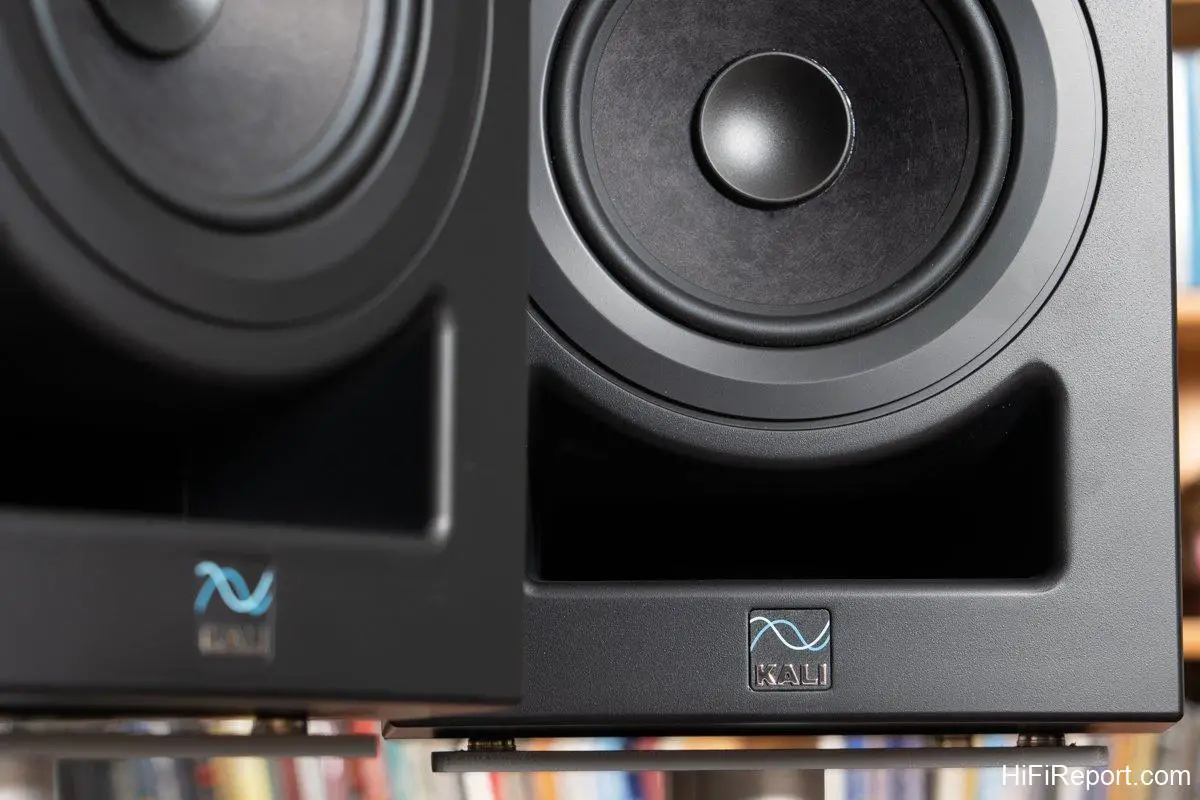
If you have the opportunity to experience the IN-5s “up close,” you’ll understand what I mean by “instruments feeling within arm’s reach.”
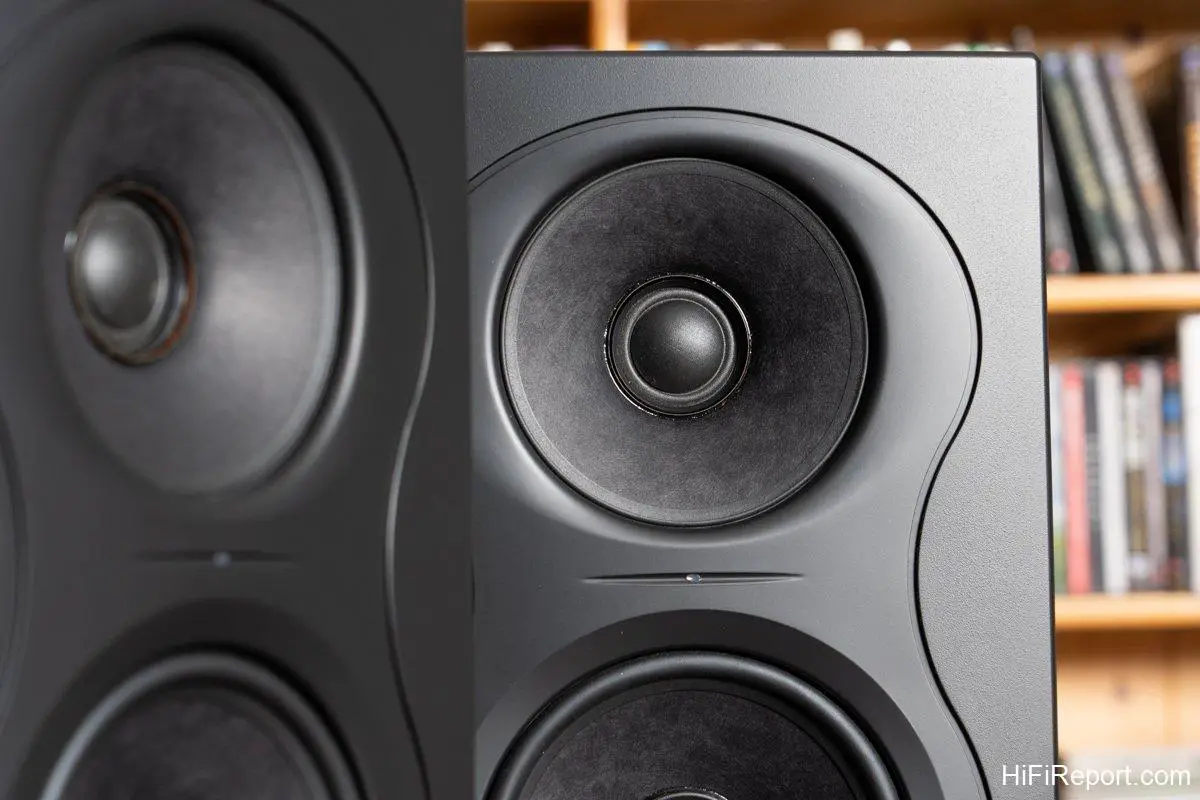
While the LP-6 also offers commendable soundstage and imaging, the IN-5’s coaxial driver design provides a technical advantage. Although the LP-6 is also a point source design, incorporating a waveguide for the tweeter to enhance the integration of mid and high frequencies, there remains a slight physical separation between the tweeter and mid-bass driver. In contrast, the coaxial design of the IN-5 places the tweeter and midrange driver at the identical point and axis, theoretically representing the ideal point source configuration, thus achieving even greater precision in 3D soundstage and imaging.
What exactly does “more precise” entail? And by how much? Regrettably, it’s not easily quantifiable. Listening to the LP-6s in isolation as nearfield monitors, you would likely perceive them as highly accurate. However, in the realm of audio equipment, comparisons often highlight differences. When juxtaposing the LP-6 and IN-5, the enhanced precision in 3D soundstage and imaging becomes immediately discernible. The difference is apparent within a song or two, requiring no extensive A/B testing.
Tri-Amp and DSP Boundary EQ
The IN-5’s price point is particularly surprising. For under $1000 USD, you get a three-way coaxial design, incorporating tri-amplification internally. The tweeter and midrange each receive 40 watts, while the woofer is powered by 60 watts, totaling 140 watts per speaker. The cost of these amplifier modules alone would be substantial, not to mention the integrated DSP digital crossover and the development of Boundary EQs. If you still find yourself lamenting the high cost of audio equipment, consider Kali Audio’s active speakers – every dollar spent is demonstrably worthwhile.
Kali Audio’s inclusion of Boundary EQs is another compelling technical highlight, adding to their exceptional value proposition.
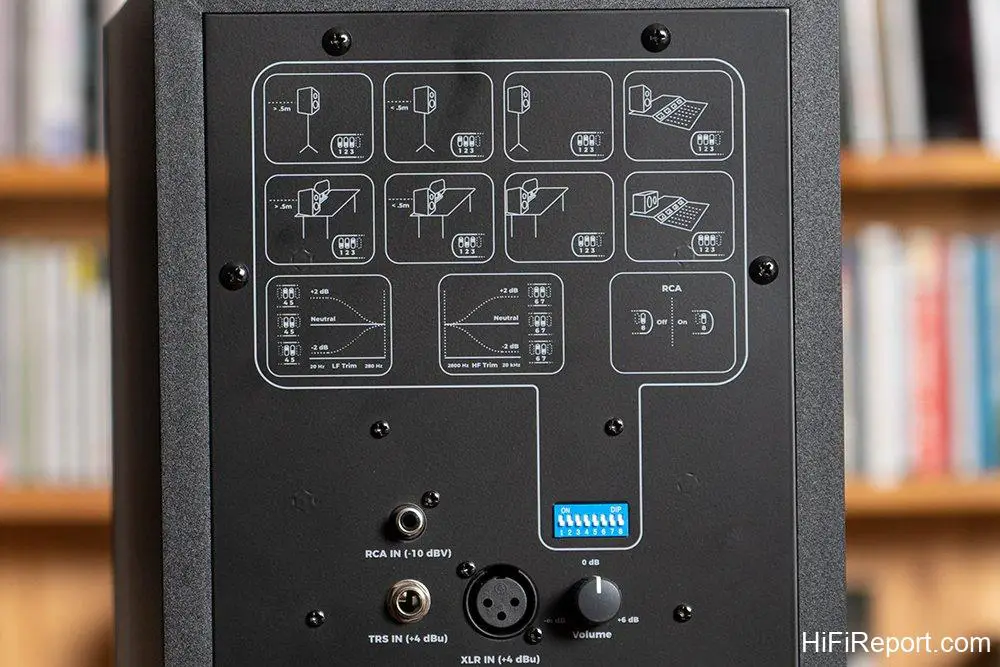
Both recording studios and home listening environments grapple with similar challenges: room acoustics and speaker placement. Boundary EQs address these issues by digitally compensating for speaker placement. When positioned away from walls, low frequencies are allowed to extend fully; when placed close to walls, low frequencies are attenuated to mitigate bass standing waves. Setup is remarkably straightforward: simply compare your speaker placement to the diagrams on the rear panel and adjust the corresponding DIP switches.
The Boundary EQ settings are derived from measurements Kali Audio conducted at The Village Recording Studio in Los Angeles. The Village, a studio with over six decades of history, has witnessed the peak of American pop and rock music. From the Rolling Stones, B.B. King, and Bob Dylan, to contemporary artists like Coldplay, Lady Gaga, and John Mayer, all have recorded at The Village. If you appreciate these artists, listening through the IN-5s might evoke the ambiance of The Village recording sessions.
Beyond the digital equalization provided by Boundary EQs, the IN-5’s inherent design facilitates easy placement. With the front-firing bass reflex port, even placed against a wall, they are less susceptible to low-frequency standing wave issues. The generously sized port opening also minimizes air turbulence noise.
As I noted in my LP-6 review, every design aspect of Kali Audio products is grounded in acoustic principles, and the IN-5 is no exception.
Paired with High-End Gear
Upon bringing the IN-5s home, I decided to deviate from desktop listening and treat them as conventional home bookshelf speakers. I paired them with an extravagant system: a YBA CDT450 transport and Merging NADAC as the source, complemented by an mbl Noble C11 preamplifier. I doubt many would assemble such a system – each component costing ten to twenty times more than the IN-5s. However, my intention was to explore the IN-5’s capabilities when driven by top-tier equipment.
Rest assured, I will later switch to a more “budget-friendly” setup to underscore the IN-5’s exceptional value.
Paired with the C11 preamp, the midrange frequencies became richer and more substantial, with a newfound sense of refinement in the timbre. Listening to Mutter and John Williams’ “Across the Stars,” specifically “Rey’s Theme,” the solo violin’s tone was dense and radiant, the highs bright and soaring. As the melody descended into the lower register, the contrasting tonal shifts were clearly articulated. Being a crossover recording, the double bass pizzicato was intentionally emphasized, and the IN-5s accurately conveyed the recording’s stylistic choices. The added “sweetness” was also precisely rendered. The recording’s layering was beautifully presented, with the brass section positioned slightly behind, expanding the soundstage’s width, contrasting with the focused and beautifully rendered solo violin in the center. Such remarkable sound quality is astonishing for speakers priced under $1000 USD.
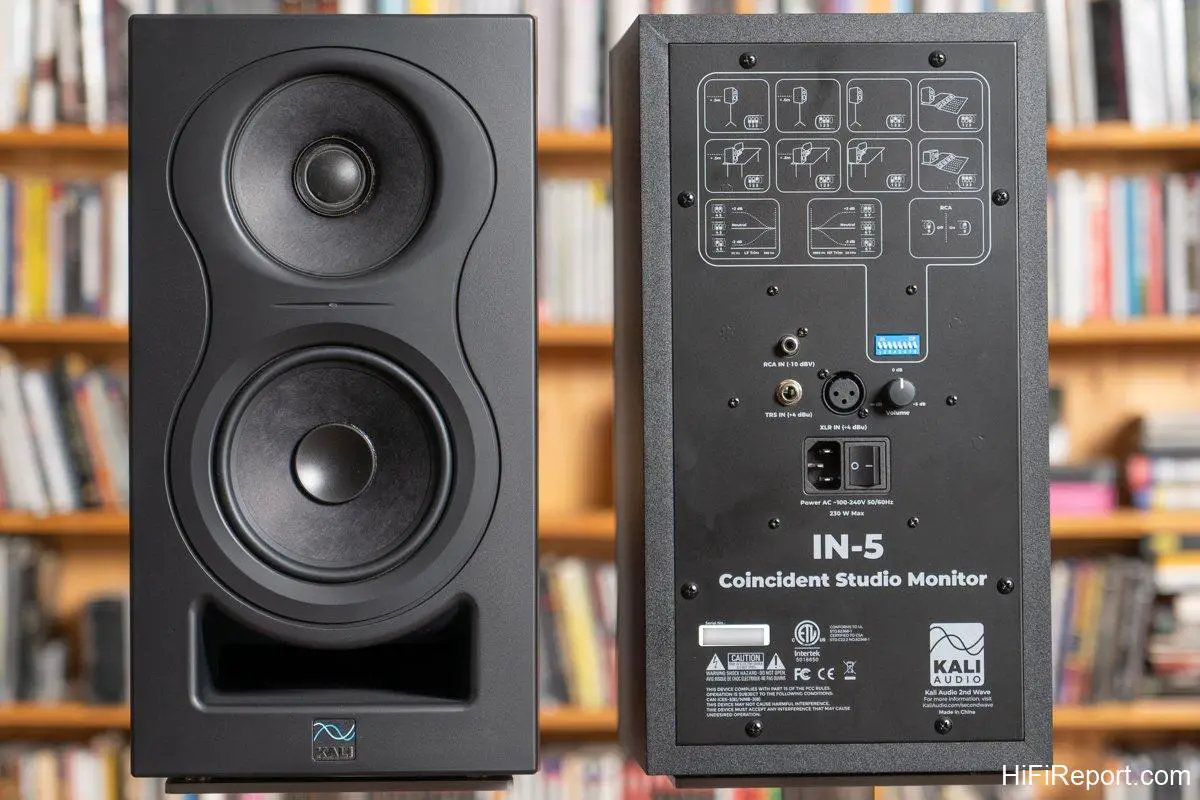
Enhanced Imaging Precision
Switching to Katja Werker’s “Contact Myself 2.0,” a live recording from Stockfisch Records featuring guitarist Gert Neumann, engineered by Stockfisch’s owner Gunter Pauler. Listening to “Yes,” the acoustic guitar in the intro is positioned to the left. Observing the album cover, it’s clear Katja Werker is accompanying herself. As she begins to sing, a second guitar emerges on the right side of the soundstage, while the fretless bass is focused in the center-rear. Having listened to the same track when reviewing the LP-6s, the IN-5’s imaging precision is noticeably enhanced.
I experimented by moving my head around the center listening position, carefully trying to discern if Katja Werker’s vocals were slightly off-center to the left, given the guitar’s distinct leftward placement, suggesting potential slight leftward bias in her self-accompaniment. However, it was subtle, only a minor leftward deviation. I suspect the post-production might have compensated to center the vocals, with only the delicate lip sounds perceived as slightly left-biased. Indeed, the IN-5’s allure lies in these minute details, reproducing them with almost microscopic accuracy.
Detailed and Abundant Sound Effects
Shifting to some bass-heavy music, I played Michael Jackson’s “The Way You Make Me Feel.” The IN-5s showcased their precision, with the opening sound effects and electronic drums panning dynamically between the left and right channels, a focused rhythmic element in the center, and synthesizer chords in the background expanding the soundstage’s width. Michael Jackson’s vocals are anchored centrally, with a multitude of electronic sound effects embellishing the left and right channels, and backing harmonies broadening the soundstage. Michael Jackson’s recordings are truly iconic; with each listen, one can appreciate the recording engineers’ meticulous crafting of sound effects, making the music rich, full, and vibrant. It’s no wonder they achieved classic status.
Alright, I acknowledge that some might consider pairing the IN-5s with mbl, Merging, and YBA as overkill. Feeding them such high-caliber sources could make almost any active speaker sound impressive. So, let’s transition to a more budget-conscious setup. I’m employing the editor-in-chief’s “secret weapon”: the ifi Go-Blu, a portable Bluetooth wireless DAC priced at $193 USD. Streaming via Airplay – this should qualify as budget-friendly, right?
Excellent with Budget Bluetooth DAC
Listening to “The Way You Make Me Feel” once more, now through the Go-Blu, the IN-5’s precise soundstage imaging remains compelling. The primary difference lies in a slight reduction in midrange fullness and high-frequency refinement. Alas, this is expected; superior sound quality often comes at a premium. However, the Go-Blu offers three digital sound modes, including a bass boost. Engaging bass enhancement does improve the low-end fullness, but the sonic refinement can’t quite match the C11.
Crucially, even when paired with a budget-friendly wireless Bluetooth DAC like the Go-Blu, and streaming Apple Music via Airplay, the IN-5s maintain their precise imaging and strong monitor character. Furthermore, the IN-5s are remarkably sensitive to volume variations, and the dynamic range nuances within recordings are clearly conveyed. Even with complex orchestral pieces, they allow you to appreciate both the overall composition and individual instrumental details.
Accurate Orchestral Layering with Mahler
What’s the ultimate challenge for speakers in orchestral music? Mahler! Let’s listen to the fifth movement of Mahler’s Symphony No. 5, using the HiFiReport version conducted by Bernstein with the Vienna Philharmonic. The movement opens with sustained brass notes, followed by the thematic motif echoed by the woodwinds. As the woodwinds play, the brass continues to provide a sustained underlying harmony. The IN-5s present the details of each instrument with remarkable clarity.
As the string section enters, the soundstage expands in width. The woodwinds and brass remain centrally positioned, with cellos and double basses to the right and violins to the left. Mahler orchestrates these sections to interweave the theme, then intertwine with the brass and woodwinds. The IN-5s faithfully reproduce each section with distinct layers and clear separation.
The soundstage layering reproduced by the IN-5s is undeniably first-rate. However, low-frequency extension is naturally limited by the speaker cabinet size. Considering the finale of Mahler’s Symphony No. 5, the magnificent and opulent orchestral textures reveal the constraints in deep bass extension. While the orchestral sections are still presented with beautiful layering, the impact of the timpani and the definition of the rapidly struck bass drum cannot match larger floor-standing speakers. No issue – if you desire more low-frequency presence, simply add a subwoofer, which will undoubtedly fill in the full energy of the timpani and bass drum.
Excellent Value for Home Audio
Although Kali specializes in studio monitors, my experience reviewing both the LP-6 and IN-5 demonstrates their excellent suitability for home use, and at a very accessible price point. Even without a high-end preamp, they can be easily paired with a budget wireless Bluetooth DAC like the Go-Blu, playing directly from your phone or computer, and accessing streaming services like Tidal, Spotify, and Apple Music. Moreover, the Boundary EQs and adjustable high/low frequency DSP further enhance the IN-5’s adaptability to various acoustic environments. I must conclude that, within the same budget, I cannot conceive of a superior bookshelf speaker and amplifier combination than the IN-5. They offer truly exceptional value!
Associated Equipment
Source: YBA CDT450 CD Transport
DAC: ifi Go-Blu / Merging NADAC
Preamplifier: MBL N11
Cables: Tromba Cypher-OCC USB Cable / Xsymphony Precision One Power Cable
Accessories: Tiglon TMR-2 Audio Rack / MYSTJ Audio CMS Audio Rack / ASI Tuning Devices
Specifications
* Type: 3-way Coaxial Driver Bass Reflex Active Speaker
* Drivers: 1 x 1-inch Silk Dome Tweeter, 1 x 4-inch Coaxial Midrange, 1 x 5-inch Paper Cone Woofer
* Frequency Response: 39 Hz – 25 kHz
* Crossover Frequencies: 280 Hz, 2.8 kHz
* Built-in Amplifier: 140 Watts (40+40+60)
* Max SPL: 115 dB
* Input Terminals: RCA, TRS, XLR (each x 1)
* Dimensions: H 382 x W 282 x D 206 (mm)
* Weight: 8.43 kg