
KEF LS60 Review
Celebrating their 50th anniversary, KEF introduced the LS50 bookshelf speaker (officially launched in 2012). This groundbreaking model later spawned the active wireless version, the LS50 Wireless (2016). In 2021, KEF further refined the concept with the LS50 Meta, incorporating their innovative Metamaterial Absorption Technology (MAT) to absorb 99% of the unwanted backwave from the tweeter.
The LS60 Wireless arrives as a fitting tribute to KEF’s 60th anniversary. It launched as a wireless speaker right out of the gate, also featuring the Meta technology. While initially planned for 2021, the LS60 Wireless made its debut in 2022, a year behind schedule. Notably, it is KEF’s first-ever floorstanding active wireless speaker.
Design & Tech
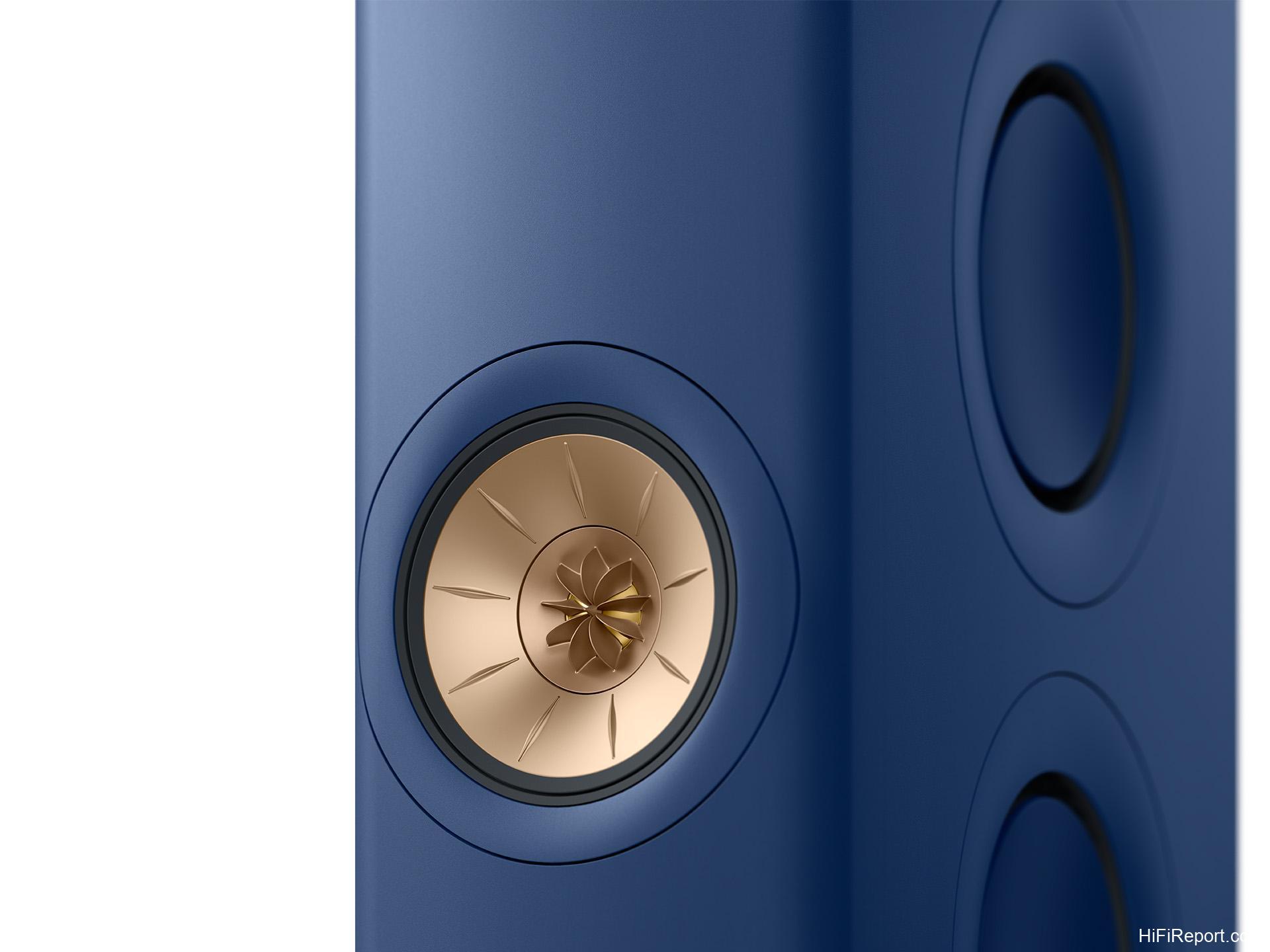
Unlike the LS50, the LS60 Wireless is a floorstanding speaker. Its design philosophy closely mirrors that of the flagship Blade, featuring a narrow front baffle housing a single Uni-Q driver, flanked by two bass drivers on each side. KEF refers to this specific configuration as Single Apparent Source Technology.
It’s not unreasonable to think of the LS60 Wireless as a rectangular-cabinet version of the Blade, infused with wireless active DSP capabilities (dubbed KEF’s Music Integrity Engine), all at a significantly more accessible price point.
KEF has a history of collaborating with renowned designers for their commemorative models. The flagship Muon was designed by the celebrated British industrial designer Ross Lovegrove (born 1958), while the Blade was the work of American designer Eric Chan. The LS50 Wireless Nocturne featured a design by prominent Dutch designer Marcel Wanders (born 1963). For the LS60 Wireless, KEF enlisted the talents of Michael Young (born 1966), who also designed the LSX series.
Born in Sunderland, a small city in Northeast England, Young graduated from Kingston University in 1992 and founded Michael Young Studio the following year, quickly establishing a strong reputation in the UK and Irish industrial design scene. In 2006, he relocated to Hong Kong, where he continues his work. The LS60 Wireless’s striking aesthetic is a result of his design expertise.
The LS60 Wireless boasts a remarkably understated elegance. Standing 1,070mm tall, its front baffle is a mere 130mm wide, precisely the width of the 12th generation 4-inch Uni-Q Meta driver (with a 19mm tweeter and a mid-range surround-to-surround diameter of 100mm). The cabinet depth is a slim 160mm. On each side, two 5.25-inch bass drivers (120mm surround-to-surround diameter) are implemented, utilizing KEF’s Uni-Core bass technology.
The integration of the Uni-Q and Uni-Core technologies forms the core of their Single Apparent Source Technology.
This technical term signifies that all drivers essentially emanate sound from the same point in space, creating a large, coherent point source. Observe closely: the Uni-Q coaxial driver is positioned precisely between the two sets of Uni-Core bass drivers. This specific arrangement is crucial for achieving the Single Apparent Source.
The advantage of this approach, much like a large coaxial driver, is that high, mid, and low frequencies arrive at the listener’s ears nearly simultaneously, resulting in pinpoint imaging. Furthermore, the ‘sweet spot’ is significantly wider than with conventional speakers.
Uni-Core is more than just two bass drivers bolted back-to-back. These drivers are effectively Siamese twins, not two separate units. They share a common magnetic system. However, the voice coils are independent; one has a larger diameter, the other a smaller one. When the two diaphragms move in phase piston-like motion, the voice coils retract and nest within each other, preventing collision.
This ingenious design allows them to share the magnetic system while remaining tightly coupled, effectively cancelling out vibrations generated by their piston movement. Each LS60 Wireless employs two sets of Uni-Core bass drivers, contributing to a bass performance that is truly exceptional and goes beyond typical expectations.
Power & Cooling
The LS60 Wireless is an active DSP wireless speaker. The tweeter is powered by a 100W Class AB amplifier, the midrange by a 100W Class D amplifier, and the two sets (four drivers total) of bass drivers are driven by a potent 500W Class D amplifier. This means each speaker is driven by a total of 700W of power. The integrated DSP handles the crossover filtering for the drivers, phase correction, and system control.
This DSP-based crossover is significantly more precise than traditional passive crossovers and introduces far less phase distortion. You might wonder how the amplifiers within the seemingly sealed LS60 Wireless cabinet manage heat dissipation. Look closely at the speaker’s base; it is elevated, creating a gap between the cabinet and the bottom plate. This gap is specifically designed to draw in cool air.
Hot air is vented through the gap at the top of the golden back panel, creating an efficient convection cooling system.
Connectivity & Control
The LS60 Wireless offers extensive streaming music platform support, including Apple Music, Qobuz, Tidal, Spotify, Deezer, Amazon Music, and QQ Music, as well as various internet radio stations and podcasts. Wireless connectivity options include Wi-Fi, AirPlay 2, Google Chromecast, and Bluetooth. You can stream directly using Spotify or Tidal Connect, it’s Roon Ready, and you can also use third-party streaming apps like Tencent QPlay or M Connect.
The connectivity options are truly comprehensive.
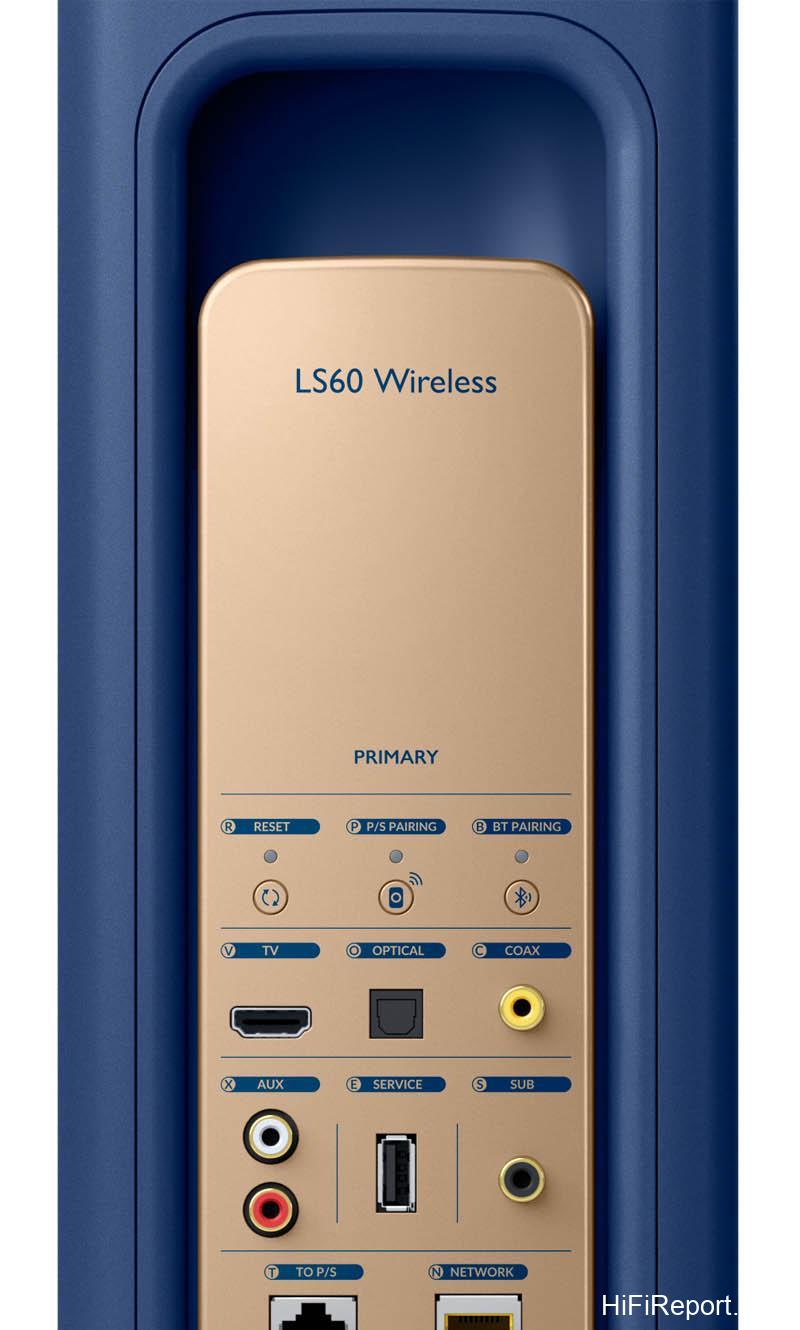
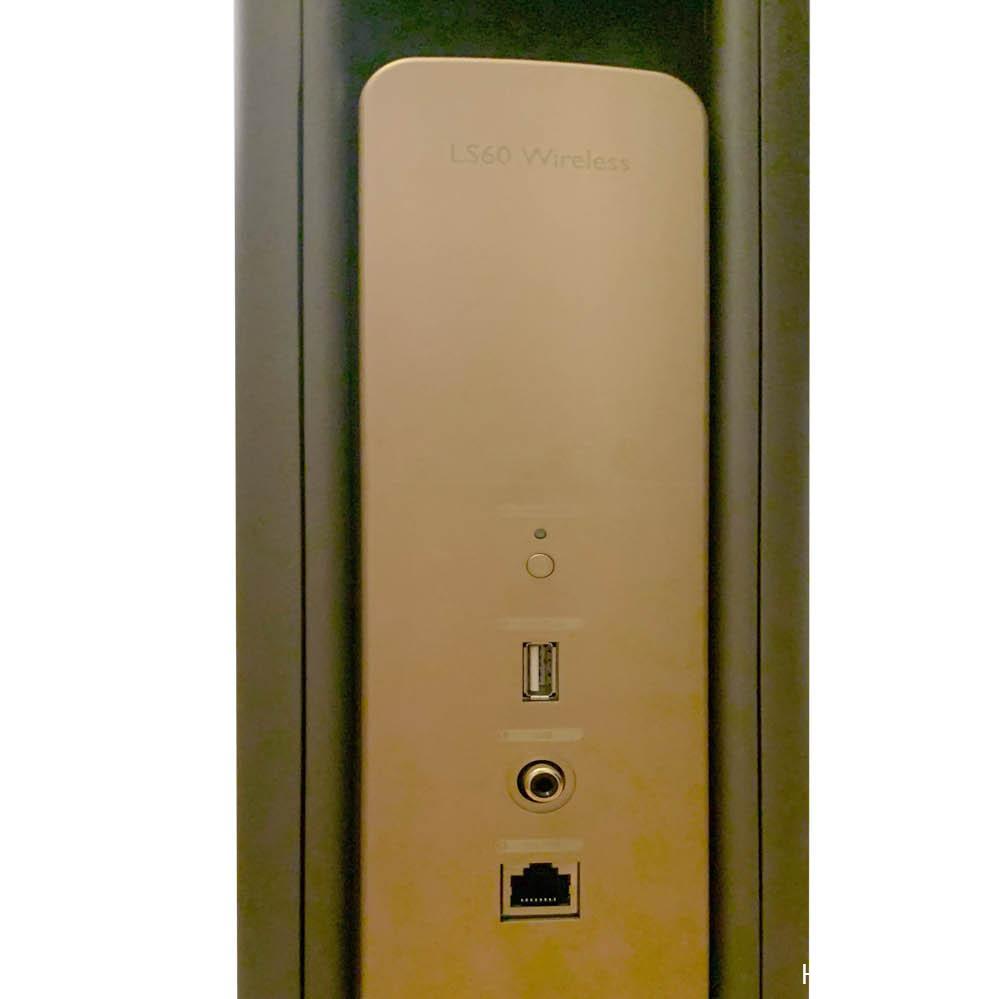
On the upper rear panel, there are three small buttons: one for Reset, one for pairing the primary and secondary speakers, and a final one for Bluetooth pairing. A quick tip: if you plan to use HDMI eARC, you’ll need to go into your TV’s menu or quick settings and find the audio output setting (the name varies by TV manufacturer). Change the output from the TV’s internal speakers to output sound to an external audio system.
This will ensure the TV audio is output via the eARC terminal to the LS60 Wireless.
The KEF Connect App is worth mentioning. It includes EQ adjustments with two modes: Normal and Expert. In Normal mode, you can adjust the distance from the wall, the room type (absorbent, moderate, spacious), the room size (less than 20sqm, 20-40sqm, greater than 40sqm), as well as balance control and whether a subwoofer is being used.
The Expert mode offers more detailed adjustments, such as treble trim (+/-3dB), phase correction, subwoofer extension (cut, standard, boost), balance control, subwoofer output (one or two), high-pass frequency (50-120Hz), low-pass frequency (40-250Hz, 80Hz default), subwoofer gain (+/-10dB), and subwoofer polarity. It even asks if you’re using the KEF KW-1 wireless subwoofer adapter.
While the KEF Connect App is excellent, I conducted my listening without using any EQ or other settings, preferring the speaker’s unadulterated sound.
Subwoofer Integration
Both the primary and secondary LS60 Wireless speakers have an RCA subwoofer output, allowing you to connect one or two subwoofers. However, in my opinion, this is largely unnecessary. The LS60 Wireless’s bass is already incredibly sufficient in quantity and depth. Listening in my large open-plan space, the bass was more than adequate. In smaller rooms, adding a subwoofer would be even less necessary.
Unless you desire the feel of even greater air displacement for enhanced intimacy and envelopment, the LS60 Wireless is fantastic on its own without any additional subs.
Wired vs Wireless
The LS60 Wireless primary and secondary speakers can connect wirelessly, but I highly recommend using a wired connection. Firstly, it’s more stable. Secondly, it allows for higher-resolution transmission. With a wired connection, the LS60 Wireless can handle up to 24/192 resolution. If connected wirelessly, it drops to 24/96. Regarding playback support, the LS60 Wireless supports PCM up to 24/384, DSD, and MQA decoding.
I tested my own music files one by one and found that PCM playback not only reached 24/352.8 but also 32/352.8. DSD playback reached 11.2MHz (DSD256), which is as high as my current DSD file collection goes. MQA decoding goes up to 352.8kHz. With such high-resolution playback capabilities, what more could you possibly ask for?
Setup
I conducted my listening of the LS60 Wireless in my own home. For placement, besides the obvious position next to the TV, for critical listening, I spaced the two speakers approximately 2.5 meters apart (center to center). I used a significant toe-in angle. This was partly to prevent the two sets of Uni-Core bass drivers from ‘firing at each other’ and partly because a greater toe-in angle can yield a deeper soundstage.
Listening Notes
It had been a while since I listened to the soundtrack of the epic Indian film “Baahubali”. After setting everything up, I immediately selected it from my NAS. As the first female solo ended and the powerful music began, honestly, I was taken aback. The potent drumming, the vast musical landscape washing over me like a tidal wave, the sheer sound pressure was far beyond my expectations for the LS60 Wireless.
Such immense sound pressure, such clear and forceful drums, and such a wide and deep soundstage are typically the domain of speakers many times its size. I was astonished that the LS60 Wireless, with its diminutive cabinet, could unleash such formidable energy. And crucially, the drumming was absolutely clean, without any hint of distortion.
Initial Impact and Dynamic Range
How can the LS60 Wireless, with such small drivers and body, produce such immense sound wave energy and handle intense impact so well? I suspect the DSP crossovers and corrections are highly effective. Based on the passive crossover of the Blade Two Meta, the active DSP crossover points in the LS60 Wireless are likely similar, with the bass drivers handling frequencies below around 450Hz, where they cross over with the Uni-Q coaxial driver.
Since the coaxial driver doesn’t have to handle the midrange and bass frequencies below 450Hz, it can be played at very high volumes without easily distorting.
Furthermore, those four Uni-Core bass drivers aren’t just producing boomy bass. When I put my ear close to the bass drivers, I noticed that much of the sound of vocals, cellos, orchestral instruments, and pianos also emanated from them. These four bass drivers’ contribution allows the LS60 Wireless to deliver massive musical energy. And the Uni-Q coaxial driver, under the control and correction of the DSP, exhibits reduced distortion at high volumes.
Consequently, the sound is neutral, precise, and refined, entirely devoid of aggression.
After “Baahubali”, I selected Li Tai-Hsiang’s album “Since I Met You”. My purpose in listening to this album was to test the LS60 Wireless’s performance with tenor and soprano voices, as well as the quality and timbre of violins, cellos, and pianos. Many audio systems can make the tenor and soprano on this CD sound shrill and harsh, and the violin, cello, and piano can sound overly hard. But the LS60 Wireless?
The tenor and soprano voices were surprisingly soaring yet full-bodied and rich, not sharp and thin.
Similarly, the lines of the violin and cello were rounded, warm, with a woody character, and the bowing texture was clear, not thin and sharp. The piano notes were rounded beads, possessing excellent solidity. To be honest, the LS60 Wireless displayed a full and rich character across the high, mid, and low frequencies, making this album “Since I Met You” sound better than its price might suggest.
I mean it; looking at the LS60 Wireless’s form factor, you might think the sound it produces couldn’t possibly be full, expansive, and rich. But in fact, it delivers exactly this kind of sound, and it’s both warm and neutrally beautiful.
Still wanting more, I then listened to the live recording of Lo Ta-Yu’s Beijing concert. Starting with “Beijing Night”, the drums and atmosphere were immediately expansive and wide. Moving to the song “East Wind”, the initial drumming was so clear, and the audience’s shouts and ambient noise were equally distinct, never becoming blurred. This is a truly impressive performance. When Lo Ta-Yu’s voice entered, it was again incredibly full-bodied. This is truly remarkable.
Reaching “Rolling Red Dust”, a song with a vast choral arrangement, the LS60 Wireless was able to render the layers, clearly separating different vocal sections in depth. This kind of mid-frequency performance is truly beyond the capability of most speakers. The combination of the Uni-Q driver and Uni-Core bass in the LS60 Wireless results in both the mid and low frequencies being so wide, full, and impactful. This level of performance will absolutely surprise most people, including myself.
Vocals sung loudly didn’t break up, and drums hit forcefully didn’t collapse. I believe this is thanks to the internal DSP control doing its job.
Next, I specifically chose Chiang Hui’s album “Chiang Hui’s 10 Lovers Across the Century Duets”. This album features duets with ten different male singers, with recordings taken from various albums. This provides an excellent test of the LS60 Wireless’s ability to differentiate between timbre and recording quality. As the music started, the full-bodied thud of the kick drum combined with the bass line hit me powerfully.
I believe this kind of air-moving thump that hits your chest is something no one dislikes when listening to pop music, clearly demonstrating the LS60 Wireless’s fullness in the lower midrange and bass regions.
Since this album is a compilation, each track has a different recording sonic signature. The LS60 Wireless was able to clearly present the unique recording characteristics of each track, including the variations in Chiang Hui’s voice from song to song. To be honest, listening to this album, I actually felt the bass was slightly excessive. These paired Uni-Core bass drivers are truly potent, managing to fill even my large open space.
Anyone who hasn’t heard them live in my home would surely find this hard to believe.
When I listened to “Ella and Louis”, Ella’s voice was surprisingly full-bodied, rather than the typically thin sound I’ve heard elsewhere. While I could still hear clear sibilance in Louis’s phrasing, his overall vocal timbre was rich with body. No, I should say both singers’ voices were rich with body, possessing a warm tone rather than being hard and sharp. The LS60 Wireless’s ability to render these older recordings with such fidelity is truly impressive.
Vocal and Midrange Performance
I specifically selected Leonard Cohen’s album “You Want It Darker” to test this. When I listened to the title track of that album, I was quite surprised. Why? Because the LS60 Wireless presented the vocals and bass with great clarity and sufficient quantity. You see, in this song, Cohen’s voice can easily become blurred, sounding excessively deep and unnatural, and the accompanying male chorus can become muddy.
However, the LS60 Wireless rendered them very clearly. Both the bass and vocals were clear, and they were presented with magnitude. This level of neutrality and resolution is usually only achievable with high-end audio systems. Yet the LS60 Wireless, priced around $7,499, easily achieves clarity and fullness without any muddiness. This compels me once again to credit the internal DSP for its control and correction.
Bass Performance and Resolution
Let’s try some jazz! I listened to Tsuyoshi Yamamoto Trio’s “Misty”. The piano recording sounded superb, the bass was captivating, and although the drum kit wasn’t the main focus, it still commanded attention. I’ve heard this album on audio systems costing hundreds of thousands of dollars, and the LS60 Wireless’s ability to perform so far above its price point simply astonished me.
I imagine that most people who buy the LS60 Wireless, even if they experience great sound, might not realize the speaker’s full capability, as the price might limit their imagination, assuming the LS60 Wireless’s performance is only worth its sticker price.
Another piano recording: Paul Badura-Skoda’s “The Last Chopin”. The piano truly sounded woody! By “truly sounded woody,” I mean it wasn’t rigid but warm and sweet, with incredibly rich harmonics, very much like a real piano. This album was Badura-Skoda’s last recording, made at the Songshan Cultural and Creative Park Performance Hall in Taipei, with engineer Jao Ruey-Shuen of Arquitech Recording Studio.
I’ve listened to this album many times, and yet I was still amazed that the LS60 Wireless could reproduce the piano so realistically. Even though I had a sense of the LS60 Wireless’s excellent performance, I couldn’t help but marvel.
Time for cello! I listened to Yo-Yo Ma’s album “Brazil”. The cello sound produced by the LS60 Wireless was truly beautiful. Even the subtle bowing vibrations were rendered, and it sounded warm and woody. A system costing hundreds of thousands would be no better. Listening again to Yo-Yo Ma’s “Appalachian Journey”, the sound quality of the violin, cello, and double bass was exquisite, all carrying sweetness and a lustrous liquidity.
The violin from the LS60 Wireless was refined; while not flashy or forward, it was very pleasant to listen to and certainly didn’t lack sweetness.
Next, I listened to Mutter’s performance of Beethoven’s Violin Concerto with Masur and the New York Philharmonic. The violin’s lines were rounded and well-defined, not thin and threadlike, and again, sweet and liquid. The accompanying orchestra was rich, full-bodied, and substantial, grounded by a solid bass foundation. Checking with an SPL meter, it was typically in the 80+ dB range, often exceeding 90+ dB, and peaking above 100+ dB during climaxes.
I was surprised that the LS60 Wireless could reproduce the violin concerto at such high volumes without becoming chaotic. Clearly, the Single Apparent Source Technology is no marketing gimmick.
Following that, I listened to Heifetz playing Tchaikovsky’s Violin Concerto. The LS60 Wireless produced a rich and expansive sound, not thin or shrill at all. In particular, the violin’s lines were round and full-bodied, rather than being thin and hard like wire. From this violin concerto, I confirmed again that the LS60 Wireless’s high frequencies are refined, not overtly flamboyant or forward. While not providing breathtaking excitement, the sound is neutral and highly listenable.
Next up were Saint-Saëns’s Violin Concerto No. 3 and Paganini’s Violin Concerto No. 1, performed by Shaham with Sinopoli conducting the New York Philharmonic. The violin was expressive, soft-textured, sweet, and refined. The orchestra was dense and detailed. This kind of soft-textured beauty is perhaps more graceful and moving than what traditional paper or plastic cone drivers can achieve.
Anyone who claims metal drivers inherently sound metallic should listen to the LS60 Wireless; it will surely make you feel like you’ve been given a resounding slap across the face.
Instrumental Realism and Genre Performance
Finally, I listened to Liszt’s “Dante Symphony” with Sinopoli conducting the Staatskapelle Dresden. The heavy, full-bodied, wide orchestral sound was truly difficult to associate with the LS60 Wireless’s small cabinet. With my eyes closed, I would have thought it was the ATC or DynamiKKs! speakers behind them doing the talking.
Verdict
The KEF LS60 Wireless is truly an outstanding active speaker system. Its sound isn’t outwardly projecting or overtly flamboyant. Instead, it is neutral, refined, wide, full-bodied, and substantial. Neither vocals nor instrumental performances feel aggressive. The sound is precise, and instruments like the violin, cello, and piano sound incredibly realistic. Vocals sound pure and full-bodied, as if stripped of coloration.
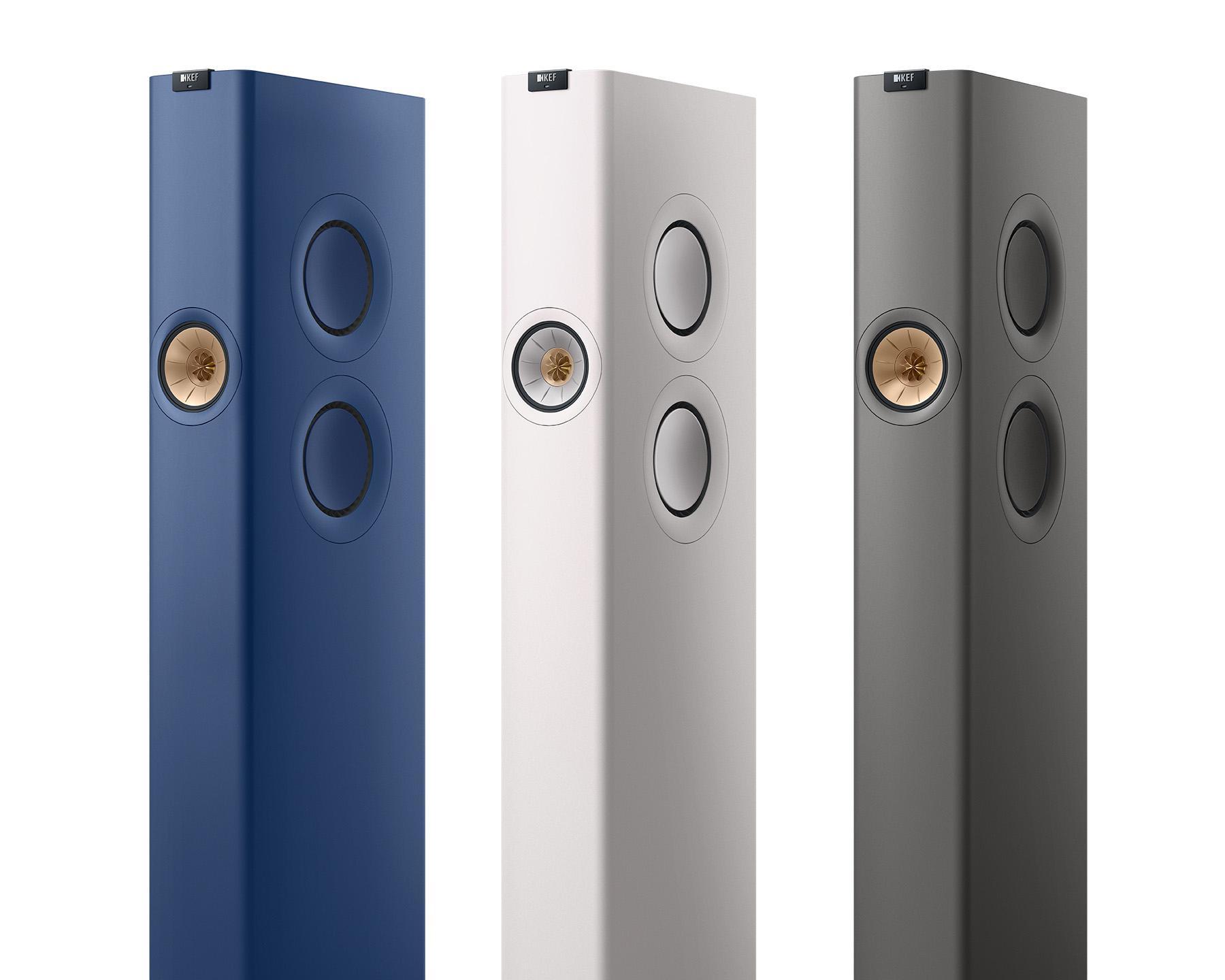
Its features and specifications are incredibly comprehensive, and it’s available in three colors – Titanium Grey, Mineral White, and Royal Blue – to complement various home decors. Honestly, its overall meticulous design, ease of control, and exceptional sound performance could easily make other audio systems priced under $15,000 bow down in submission.
Specifications
* Product Type: 3-way, 5-driver streaming active floorstanding speaker
* Launch Year: 2022
* Drivers Used: 4-inch Uni-Q coaxial driver ×1, 5.25-inch Uni-Core bass driver ×4
* Input Terminals: HDMI eARC ×1, Optical ×1, Coaxial ×1, Analog RCA ×1, RJ45 ×1, Wi-Fi, Bluetooth
* Output Terminals: SUB ×2
* Built-in Amplifier Power: Treble Class AB 100W, Midrange Class D 100W, Bass Class D 500W (per speaker)
* Frequency Response: 31Hz – 24kHz (±3dB, 85dB/1m)
* Maximum Decoding Resolution: PCM 24bit/384kHz, DSD 256
* Weight: 31.2 kg (per speaker)